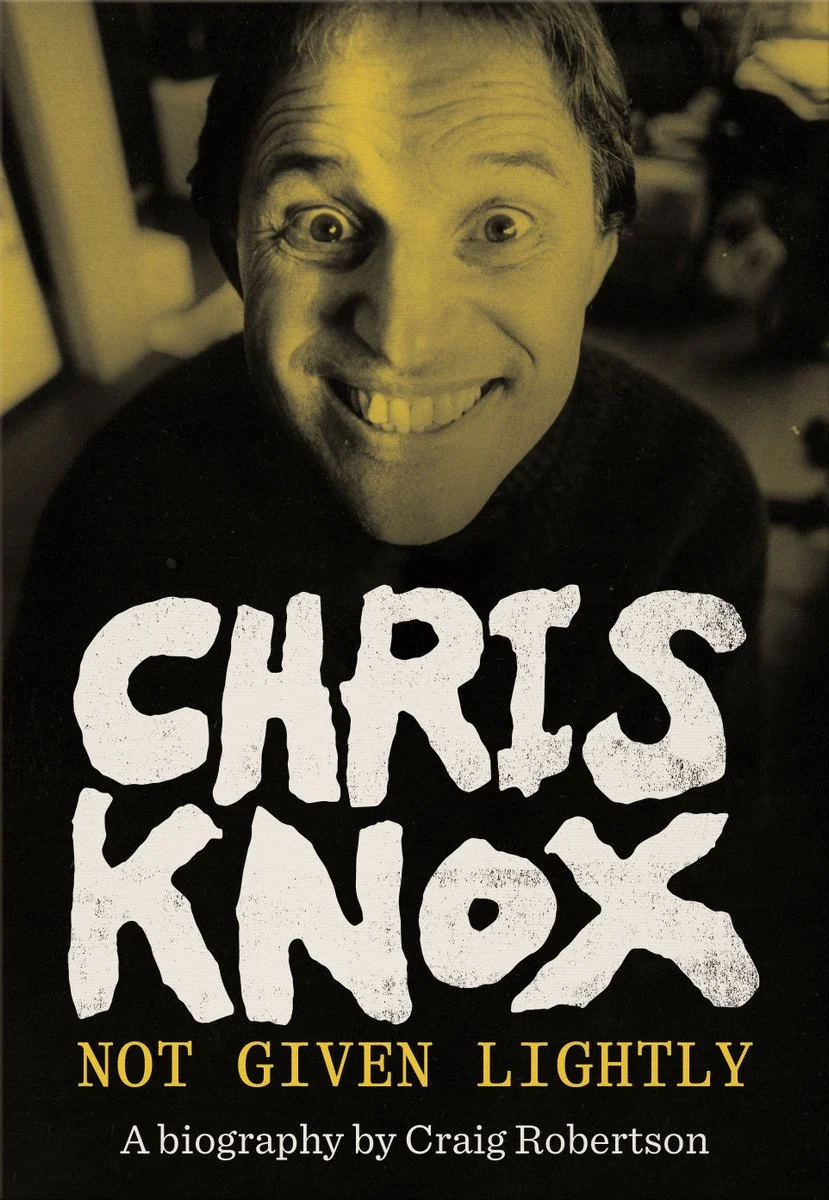
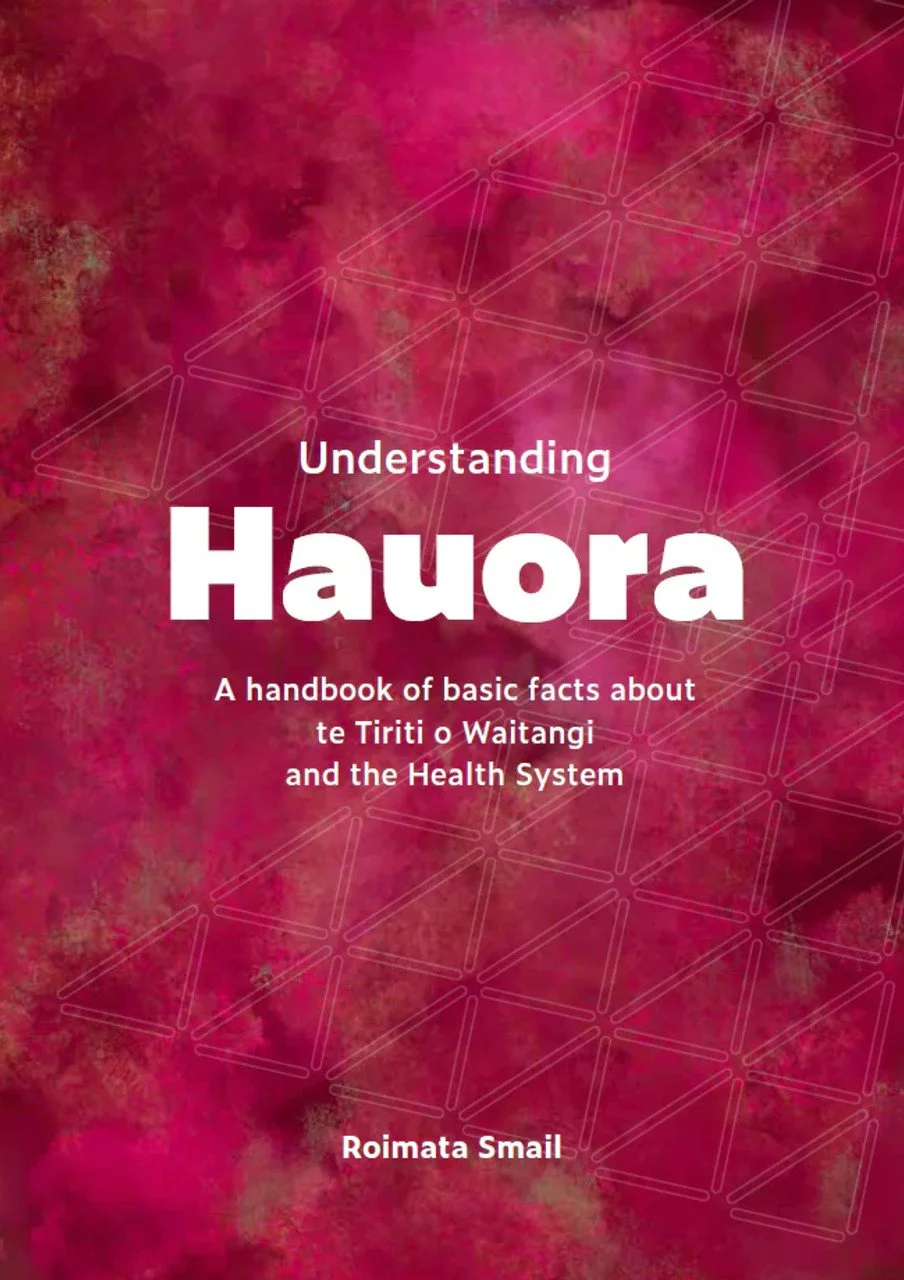
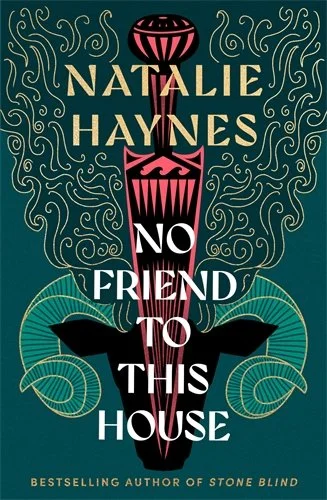
Volume Focus: BOOKS REWRITING BOOKS

A selection of books from our shelves that get their literary juice by reworking other works. Click through to find out more:

Dedalus [Ulysses by James Joyce (with appearances by Hamlet)]

James [The Adventures of Huckleberry Finn by Mark Twain]

Perfection [Things by Georges Perec]

Great Expectations [Great Expectations by Charles Dickens]

Call Me Ishmaelle [Moby-Dick by Herman Melville]

Autobiography of Red [fragments by Stesichoros]

A Ghost in the Throat [‘Caoineadh Airt Uí Laoghaire’ by Eibhlín Dubh Ní Chonaill]

Beasts of England [Animal Farm by George Orwell]

P.S. Just arrived! Sea, Poison [The Sea and Poison by Shusaku Endo]

OTHER INSTANCES OF VOLUME FOCUS
VOLUME BooksVolume Focus
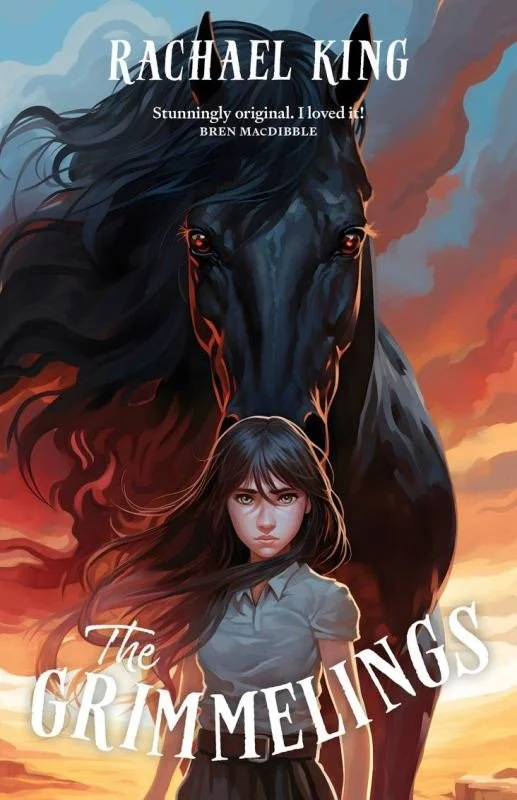
THE GRIMMELINGS by Rachael King — review by Stella

Ella loves horses. She loves her gran Grizzly and her home in a southern rural town. She’s most at home on her pony Magpie and cantering across the hills, especially at her favourite time of the day — the grimmelings — a time when magic can happen. Yet she’s lonely and wishes for a friend for the summer. Mum’s busy, and grumpy, looking after everyone and running the trekking business; Grizzly’s getting sicker, although she still has time to tell Ella and her little sister Fiona strange tales and wild stories of Scotland; and the locals think they are a bunch of witches. Ella knows there is power in words and when she curses the bully, Josh Underhill, little does she know she will be in a search party the next day. With Josh missing, and a strangely mesmerising black stallion appearing out of nowhere, this is not your average summer. When Ella meets a stranger, she strikes up an unexpected friendship. Has her wish come true? Why does she feel both attracted and wary of this overly confident boy, Gus? With Josh still missing, Mum’s made the lake out of bounds. That’s the last place Dad was seen six years ago. The lake with its strangely calm centre is enticing. What lurks in its depths — danger or the truth? Rachael King’s The Grimmelings is a gripping story of a girl growing up, of secrets unfolded, and a vengeful kelpie. Like her equally excellent previous children’s book, Red Rocks, King cleverly entwines the concerns of a young teen with an adventure story steeped in mythology. In Red Rocks, a selkie plays a central role, here it is the kelpie. King convincingly transports these myths to Aotearoa, in this case, the southern mountains, and in the former novel, the coast of Island Bay. There are nods to the power of language in the idea of curses, but more intriguing, and touching, are the scraps of paper from Grizzly with new words and meanings for Ella — and for us, the readers. Words are powerful and help us navigate our place in the world and ward off dangers when necessary. Yet the beauty of The Grimmelings lies in its adventure and in the courage of a girl and her horse, who together may withstand a powerful being, and maybe even break a curse. Laced with magical words, intriguing mythology, and plenty of horses, it’s a compelling, as well as emotional, ride.

GET THE GRIMMELINGS
EXPANDING HORIZONS with DRAGONS

Where can you fly through portals, confront monsters, make dragons your friends, adventure alongside amicable beasts, and be saved from danger by ingenuity, a little luck, and a good dose of knowledge? In books, of course. To celebrate the magnificent Taniwha landing, here’s a selection of books from our shelves.

Gavin Bishop’s books are always excellent. His new picture book, Taniwha, is a wonderful collection of pākūrau to expand your horizons, of creatures monstrous and tricky, as well as kaitiaki — protectors of people and the land and sea. Here you will find Tuhirangi who travelled with Kupe and lives in the depths of Te Moana a Raukawa, the tale of Moremore, son of Pania, who takes the shape of a shark, and the different natures of Whātaitai and Ngake — the taniwha of Te Whanganui o Tara. Beware the hunger of Tūtaeporoporo and the rage of Hotupuku. Superb illustrations, a glossary, and splendid story-telling.

Get your Taniwha
 

If dragons are your game, look no further than Dragonkeeper by Carole Wilkinson. Set in the Han Dynasty, a slave girl finds out she is descended from a long line of dragonkeepers. Adventures ensue as Ping is set a great quest by an ancient dragon — a quest that will require bravery and heart. Along the way Ping will discover talents she possesses which will surprise not only her, but those she encounters on her journey.
(This is the first in an excellent series.)

BE a Dragonkeeper
 

Impossible Creatures: The Poisoned King is not to be missed nor triffled with. Head through the portal to a world of magical creatures, danger and intrigue. Well-paced action, humour, and emotional complexities make the nuanced writing of best-sellling author Katherine Rundell hard to put down. Open this book to a map of islands surrounded by mythical ceatures, and a warning!

“They would have said it wasn’t possible. They would have said she didn’t have it in her. It was in her, but deep. What’s under your house, if you were to dig? Mud and worms. Buried treasure. Skeletons. You don’t know. The girl dug into the depth of her heart and there she found a hunger for justice, and a thirst for revenge.”

Irresistible!

Get the impossible
 

If you like graphic novels, Young Hag from the wonderful illustrator and writer Isabel Greenberg is a delight. It’s an alternative Britain of dragons and wizards, but the magic is fading. When a changeling is discovered in the woods, Young Hag, the youngest in her family of witches, is sent on a quest to discover the source of these magical problems. Greenberg ingeniously reinvents the women in Arthurian legend, transforming the tales of old into a heart-warming coming-of-age story.

BE A Young HAG
 

A Wizard of Earthsea by Ursula Le Guin is now available as a graphic novel. Thoughtfully adapted by illustrator Fred Foreman, this will appeal to fans of the classic and those new to it.
Ged is on the path to being a mage, but to do so he must master his powers and confront a shadow-beast which he has let loose when toying with spells beyond his ability. Foreman captures the complexities of this coming-of-age story bringing the darkness and light of Le Guin’s story onto the page with a brooding colour palette, sweeping vistas, raw emotion, and visual details of the magical and natural world.

Journey with GED
 
OTHER EXPANDING HORIZONS
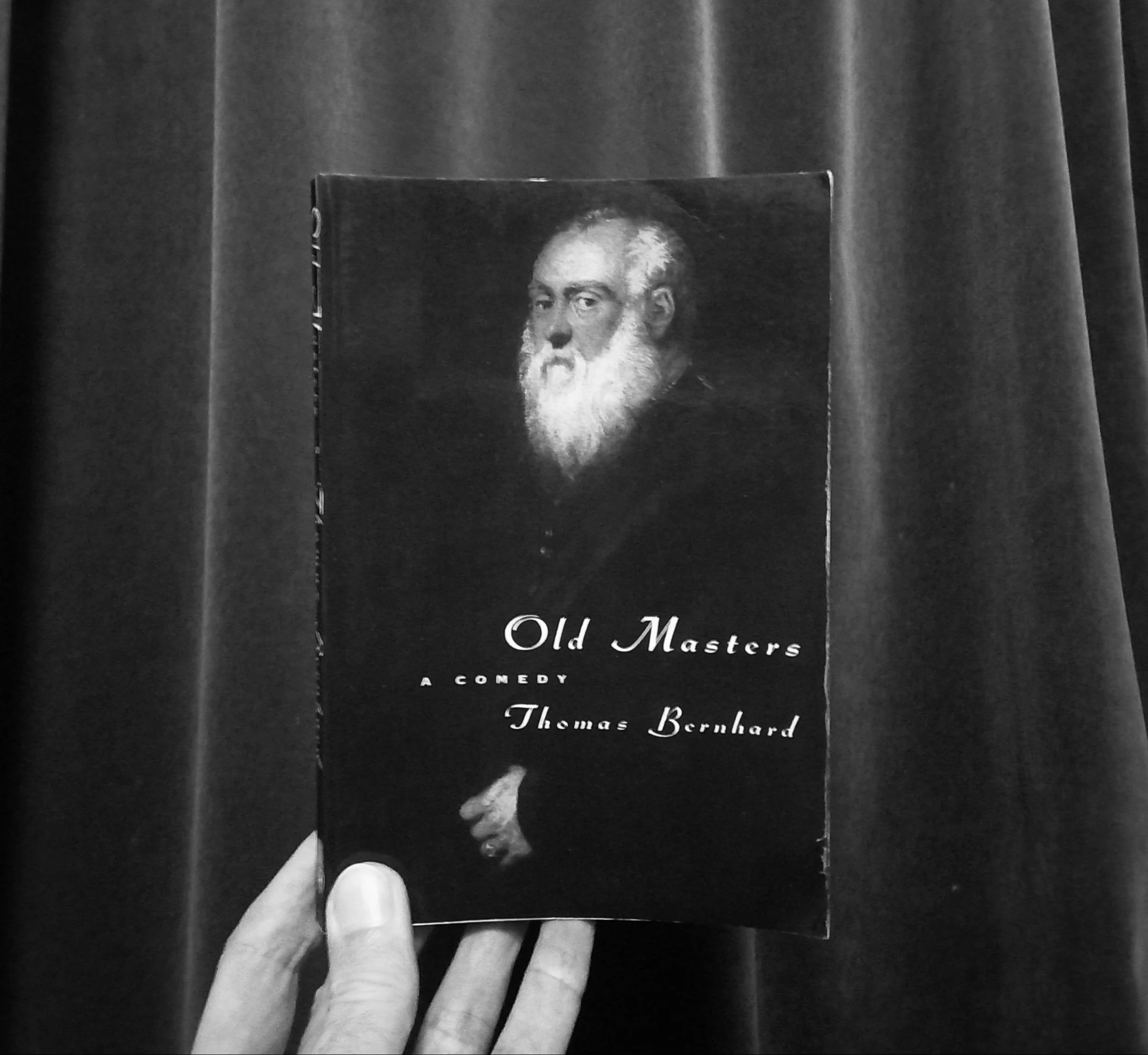
OLD MASTERS by Thomas Bernhard (translated by Ewald Osers) — reviewed by Thomas

It is very tiring to get everything done properly, he said, it is exhausting and, really, a waste of time to get everything done properly, but it is just as exhausting and just as much a waste of time to get everything done not properly, to do a mediocre job, so to speak, he said. As not doing anything at all does not seem to be an option available to me, despite its attractions, he said, as doing nothing is fraught with its own existential dangers, so to call them, I may as well do everything properly, he said. This is a terrible trap. I will exhaust myself and waste my time whether I do things properly or not, nobody will notice whether I do things properly or not, I am uncertain if I can tell whether I am doing things properly or not myself, but they would notice if I do nothing at all. Perhaps what I call properly is in fact mediocre, I aspire to the mediocre but fall short, or I aspire to excellence and fall short, it makes no difference, I fall to the same point, somewhere below the mediocre, far below excellence, I fall to my place in the order of things whether I aspire to the mediocre or to the excellent, I may as well aspire to excellence, whatever that means, and fail more grandly, he said, though he was unsure if this failure was more grand or more pathetic. He had, he said, entertained the intention, at least briefly, of writing a proper review of Old Masters by Thomas Bernhard, he had been rereading Old Masters not merely but at least partly for the purposes of writing this review, and he had even, while researching this review or this book, discovered what seemed to him to be a video game in which he could move around the  galleries of the Kunsthistorisches Museum in Vienna, although there were some galleries he could not enter for some reason, perhaps he had to advance to another level or perhaps he was just clumsy, avoiding the gallery attendants, searching for the location in which almost the entire book is set: the bench facing the painting White-Bearded Man by Tintoretto. Using the navigation arrows provided for the purpose by Google, he found, the player of the game can become well acquainted with the endless parquet flooring of the Kunsthistorisches Museum, with the marble staircases and gilded cornices and door-frames of the Kunsthistorisches Museum, and with much of what Reger, the dominant voice if not the narrator of Bernhard’s book, dismisses as its collection of “Habsburg-Catholic state art. The Kunsthistorisches Museum is entirely in line with the artistic taste of the Habsburgs, who, at least where painting is concerned, had a revolting, totally brainless Catholic artistic taste,” writes Bernhard as Atzbacher quoting Reger, Atzbacher being the book’s narrator, even though pretty much all he does is quote what Reger has at some time said. He must concentrate on his review, he thought, I am determined to write a proper review, he said aloud, forgetting that he had already reviewed the book with a proper review, or in any case something slightly closer to a proper review than what he felt himself now capable of, not that that is saying much, some years before. Old Masters is an entirely musical book, he wrote, starting at last in a sensible way, despite being set in a painting gallery it is entirely musical both in its phrasing and in its structure, if there is a difference between the two, he thought, drifting from the task, the musical form of the book is what matters, he wondered if he could say the form is all that matters, that form is all that ever matters. Old Masters is narrated in one unbroken paragraph by Atzbacher, about whom we learn little, he wrote, but the voice that reaches us is the voice of Reger, an elderly music reviewer, who has arranged to meet Atzbacher on their regular bench in front of the White-Bearded Man but on an irregular day, they normally meet there on alternate days only. Atzbacher arrives early in order to watch Reger waiting for him from the next room, and the first half of the book consists of Atzbacher telling us what Reger has previously told him, of Reger speaking through Atzbacher, so it seems, just as Reger also speaks, as Atzbacher notes, through the museum attendant Irrsigler: “Irrsigler has, over the years, appropriated verbatim many, if not all, or Reger’s sentences. Irrsigler is Reger’s mouthpiece, nearly everything that Irrsigler says has been said by Reger, for over thirty years Irrsigler has been saying what Reger has said. If I listen attentively I can hear Reger speak through Irrsigler.” As with Irrsigler so with Atzbacher, he thinks, Atzbacher seemingly unaware of the irony. Old Masters is a very funny book, he thinks, Reger’s reported opinions amount to a stream of invective against pretty much everything held in esteem in the society in which Reger lives, and in which Bernhard lived, separated as they are only by tense, admiration, after all, being for Bernhard a form of mental weakness. “There has virtually been no culture in Vienna for a long time, and one day there will really be no culture of any kind left in Vienna, but it will nevertheless be a cultural concept even then. Vienna will always be a cultural concept, it will more stubbornly be a cultural concept the less culture there is in it,” writes Benhard as Atzbacher as Reger and perhaps again as Bernhard. Well, he thought, as with Vienna so with Nelson, though I will not write that down, he thought. Heidegger, Stifter, Bruckner, Vienna’s public lavatories, restaurants, politicians, all are derided in the most amusing fashion and at length, he wrote, in this first section, in the words of Reger as remembered by Atzbacher as he watches Reger waiting for him to arrive. This might even be Bernhard’s funniest book, he thought, the way Reger’s ridicule surges through it, builds and collapses. When Atzbacher keeps his appointment with Reger, Reger’s rants continue via Atzbacher, but at one step less remove, the rants continue but the tone changes, subtly, Old Masters might be Bernhard’s both least and most subtle book, he thought, the least subtle because of Reger’s ranting but the most subtle because of the modulation in that ranting, all in this one paragraph, the rant no longer filtered by Atzbacher’s memory is more extreme, nastier, less enjoyable, clumsier, is the fact that I can go along with Reger’s rants in the first half a mark against me, he wondered, and if so am I redeemed by being put off when we meet Reger himself in the second, so to speak, when we meet Reger in the raw, so to speak, he wondered, and Atzbacher intercuts what Reger says to him at this time in the gallery with recollections of what Reger has said to him previously at the Ambassador cafe, and the depth of Reger’s unhappiness since the death of his wife is expressed in sequences of sentences, each ending “...Reger said at the Ambassador then,” repeated like sobs, and the unhappiness flows through and gives depth to the rest of the book, which principally concerns the difficulties of carrying on living is a world devoid of value, Old Masters is perhaps Bernhard’s funniest book and his saddest. “Oh yes, Reger said, the logical conclusion would invariably be total despair about everything. But I am resisting this total despair about everything, Reger said. I am now eighty-two and I am resisting this total despair about everything tooth and nail, Reger said.” Reger’s vitriol is a survival mechanism, he wrote, to despise is to survive, that is clumsily put, he thought, too clumsily put to write down. “One’s mind has to be a searching mind, a mind searching for mistakes, for the mistakes of humanity, a mind searching for failure. The human mind is a human mind only when it searches for the mistakes of humanity, Reger said. A good mind is a mind that searches for the mistakes of humanity and an exceptional mind is a mind that finds the mistakes of humanity, and a genius’s mind is a mind which, having found these mistakes, points them out and with all the means at its disposal shows up these mistakes.” Reger despises nothing more than old masters, so Reger says, and this is why he has sat on his bench at the Kunsthistorisches Museum every other day for thirty years. “Art altogether is nothing but a survival skill, we should never lose sight of this fact, it is, time and again, just an attempt to cope with this world and its revolting aspects, which, as we know, is invariably possible only by resorting to lies and falsehoods, to hypocrisy and self-deception, Reger said. … All these pictures, moreover, are an expression of man’s absolute helplessness in coping with himself and with what surrounds him all his life. … All these so-called old masters are really failures, without exception they were all doomed to failure.” Our obsession with art, he thought, if we have an obsession with art, or with celebrity, if we have that, or with sport performers, so to call them, or with wealthy people, or actors, or singers, is not with how these apogees of achievement are more successful than us, more skilled, more wonderful, more spiritual even, whatever we mean by that, but with the flaws, the weaknesses, vices and misfortunes that make them like us after all, failures, and we are reassured that not even great success, however that is measured, not even great skill, not even great fame would stop us from being failures, and so we need not therefore even strive for these things, they would not in any case save us, so to speak. When the worst happens, though, we are devastated but it is not true to say that we do not also feel relief, and this is the saddest thing of all, he thought. “Reger was looking at the White Bearded Man and said, the death of my wife has not only been my greatest misfortune, it has also set me free. With the death of my wife I have become free, he said, and when I say free I mean entirely free, wholly free, completely free, if you know, or if at least you surmise, what I mean. I am no longer waiting for death, it will come by itself, it will come without my thinking of it, it does not matter to me when. The death of a beloved person is also an enormous liberation of our whole system, Reger now said. I have lived for some time now with the feeling of being totally free. I can now let anything approach me, really anything, without having to resist, I no longer resist anything, that is it, Reger Said.” Atzbacher accepts the ticket Reger offers him to attend a performance of Kleist’s The Broken Jug, a work also mocking human faillings, at the Bergtheater that evening, but, Atzbacher says, “The performance was terrible,” ending the book with the first opinion he has expressed that might be his own, though, given the formative influence of Reger upon him, can any opinion be his own, can anyone’s opinion anyway be considered their own, he wondered. I will give up on this review, he decided, I cannot write the review properly he realised, whatever could constitute properly, perhaps I could have done so once but I can do so no longer, at least not today, the only day I have to write it, he thought, my mind no longer performs in that way. He had spent a long time playing the Kunsthistorische Museum game but he could not find the painting of the White Bearded Man
GET YOUR COPY
Book of the Week: HOW TO SAVE DEMOCRACY IN AOTEAROA NEW ZEALAND by Geoffrey Palmer

Unfortunately we need this book now more than we ever thought that we would — and we need it more by the day. Geoffrey Palmer draws on his experience as former Prime Minister, Minister of Justice, and Attorney-General to get people thinking about the state of New Zealand’s democracy. Palmer offers rare insights into the machinery of power and its vulnerabilities, and rather than surrendering to pessimism, he presents a roadmap for renewal. At a time when authoritarianism rises globally and the rule of law faces unprecedented threats, Palmer’s message is clear: ordinary citizens hold the key to democratic revitalisation through civic engagement and vigilance. This collection of thoughtful essays challenges readers to reclaim their role in governance. Palmer argues that regardless of which parties hold power, without public awareness and participation, democratic institutions will continue to weaken.

GET YOUR COPY
Volume Focus: "IT'S POLITICAL."

“It’s political,” say ministers both prime and sub-prime, trying to disparage collective action taken by workers in the health, education, and public service sectors (as if politics were some kind of dirty thing). They are right in this at least: politics is and should be the ways we work together with those whose interests we share to make the world better for us all. Are the outcomes of our political structures expressing this?
Here is a selection of books from our shelves. Click through to find out more about them:

Mutual Aid

Pakukore: Poverty by Design

How to Save Democracy in Aotearoa New Zealand

Pedagogy of the Oppressed

The Invisible Doctrine

Fierce Hope: Youth Activism in Aotearoa

Nature, Culture, and Inequality

Kia Mau: Resisting Colonial Fictions

Protest Tautohetohe

CHOOSE YOUR POLITICS
OTHER INSTANCES OF VOLUME FOCUS
VOLUME BooksVolume Focus
NEW RELEASES (22.10.25)

All your choices are good! Click through to our website (or just email us) to secure your copies, and we will dispatch your books by overnight courier or have them ready to collect from our door in Church Street, Whakatū.

Lili Is Crying by Hélène Bessette (translated from French by Kate Briggs) $30
Lili is Crying, Hélène Bessette's debut novel, explores the fraughtness and depth of the troubling relationship between Lili and her mother Charlotte. With a near-mythic quality, Bessette's stripped-back prose evokes at once the pain of thwarted love — of desire run cold — and the promise of renewal. Lauded by critics on its initial publication in 1953 for its boundary-pushing style,  Lili is Crying marked the beginning of a singular writing career. Bessette's work is here translated into English for the first time. [Paperback with French flaps]
”In Hélène Bessette’s novel Lili is Crying, the tears are unavoidable. They’re in the title, and ten pages in, I was emailing everyone I could about the book. It felt electric and urgent, as if Bessette should have long been in my canon, with Ingeborg Bachmann or Elizabeth Hardwick, Lynne Tillman and Annie Ernaux. Lili shares the cartoon’s casual violence, which is not to say the novel is comic, though at times it is, yes, darkly funny. It is beautiful, brutal.” —Jennifer Kabat, 4 Columns
”Kate Briggs’s deft translation brings Hélène Bessette’s novel into English for the first time. Bessette plays with line breaks and typography, exercising what Eimear McBride refers to in her beautiful introduction as ‘formal indiscipline’. Lili is Crying is the loudest book I have ever read. From Lili’s ‘desperate sobs’ to the ‘trumpeting love’ of Lili and the shepherd, the writing rattles like a set of cutlery in a tumble dryer. Miraculously, all the noise coheres into an elegant symphony.” —Oonagh Devitt-Tremblay, Literary Review 
”I’m grateful to Kate Briggs for her translation of Lili is Crying – a tragic, comic, invigorating book with an eccentric staccato style that blurs speech and thought.” —Kathryn Scanlan

GET YOUR COPY
 

The Möbius Book by Catherine Lacey $40
A genre-bending story about breaking — both of the heart and literary form itself. The sudden, devastating breakup of a relationship in the winter of 2021 left Catherine Lacey depressed and adrift. She began cataloguing the wreckage of her life and the beauty of her friendships, a process that led to the writing of fiction that was both entirely imagined and strangely, utterly true. She soon realised that she was writing about her relationship with faith. Betrayed by the mercurial partner she had trusted and suddenly catapulted into the unknown, Lacey's appetite vanished completely, a visceral reminder of the teenage emaciation that followed the ending of her belief in God. Bending form, both she and her fictional characters recall gnostic experiences with animals, close encounters with male anger, grief-driven lust and the redemptive power of platonic love and narrative itself. A hybrid work that is both non-fiction and fiction with no beginning and no ending, The Möbius Book troubles the line between memory and imagination with an open-hearted defence of faith's inherent danger. [Hardback]
 ''A deliciously weird mix of theology, allegory and dark humour; The Moebius Book is every bit as brilliant and electrifying as everything Lacey has ever written.'' —Sara Baume
''A page-turner in both directions, The Moebius Book explores some of the most propulsive questions at the core of human intimacy. I was absolutely spellbound.'' —Leslie Jamison
>>Read from either end!
>>Infinite regress.
>>Now and next.

GET YOUR COPY
 

Orlanda by Jacqueline Harpman (translated from French by Ros Schwartz) $26
There's a voice in Aline's head — a voice that wants out. Brash, boisterous and sexually adventurous, this voice seems to be the antithesis of Aline, a prim literature professor for whom each day promises to be as quiet and conventional as the last. That is until, after thirty-five years of imprisonment, her alter ego breaks free. Taking on a life of his own, Orlanda — Aline's second self — slips into the taut, rugged body of a young man. As Aline continues unaware, Orlanda follows, dragging gleeful chaos in his wake, vowing to leave both their existences forever altered. From the author of I Who Have Never Known Men. [Paperback]
>>Chaos ensues.

GET YOUR COPY
 

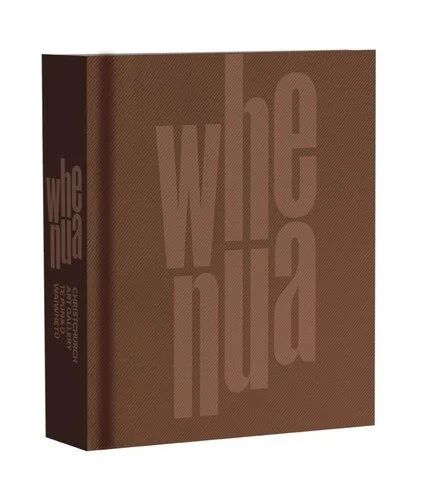
Whenua $70
At nearly 400 pages, this beautifully designed book from the Christchurch Art Gallery Te Puna o Waiwhetū is rich with large images of paintings, prints, sculptures, weaving, carving, ceramics, photographs and moving image artworks. The landscapes of Aotearoa New Zealand have long been a powerful source of inspiration for artists. This major new book explores the importance of whenua in our art history through the work of more than 100 of this country’s most celebrated artists. Beginning in Te Waipounamu and reaching outwards, across Aotearoa and beyond to Te Moana-nui-a-Kiwa, the Pacific, Whenua thoughtfully explores ideas of identity and belonging, kaitiakitaka, land use, migration, environmentalism and activism through a selection of important historical and contemporary artworks. A vibrant and very readable range of texts, interviews and perspectives by leading writers—including Su Ballard, Emalani Case, Huhana Smith, Cosmo Kentish-Barnes, Lily Lee, Hana O’Regan, Rebecca Rice, Matariki Williams and many more—provides insight into the many ways that whenua is fundamental to the visual language and identity of the arts in Aotearoa. Artists include: Mark Adams, Rita Angus, John Gibb, Bill Hammond, Louise Henderson, Ralph Hotere, Lonnie Hutchinson, Robyn Kahukiwa, Emily Karaka, Doris Lusk, Riki Manuel, Colin McCahon, John Miller, Buck Nin, John Pule, Bridget Reweti, Baye Pewhairangi Riddel, Olivia Spencer Bower, Margaret Stoddart, Bill Sutton, Wi Taepa, Areta Wilkinson and many more. Beautifully presented and full of both iconic and surprising images. [Hardback]
>>Look inside!

GET YOUR COPY
 

The Rest of Our Lives by Ben Markovitz $38
What’s left when your kids grow up and leave home? When Tom Layward’s wife had an affair, he resolved to leave her as soon as his youngest daughter turned 18. Twelve years later, while driving her to Pittsburgh to start university, he remembers his pact. He is also on the run from his own health issues, and the fact that he’s been put on leave at work after students complained about the politics of his law class — something he hasn’t yet told his wife. So, after dropping Miriam off, he keeps driving, with the vague plan of visiting various people from his past — an old college friend, his ex-girlfriend, his brother, his son — on route, maybe, to his father’s grave in California. Pitch perfect, quietly exhilarating and moving, The Rest of Our Lives is a novel about family, marriage and those moments which may come to define us. [Paperback]
Short-listed for the 2025 Booker Prize.
”It’s clear author Ben Markovits has spent time teaching. This novel speaks like a much-loved professor, one whose classes have a terribly long waitlist. It’s matter of fact, effortlessly warm, and it uses the smallest parts of human behaviour to uphold bigger themes, like mortality, sickness, and love. The Rest of Our Lives is a novel of sincerity and precision. We found it difficult to put it down.” —Booker Prize judges’ citation
The Rest of Our Lives is another quiet triumph, an elegant, devastating book that lays bare the way time calcifies our failures, how we find ourselves trapped not by circumstance but by the slow erosion of the will to escape. Markovits has long been one of our most under-appreciated novelists; this is yet more proof that he deserves far greater recognition.” —Alex Preston, Guardian
>>Read an extract.
>>Watch a bit.  
>>On writing about middle age.

GET YOUR COPY
 

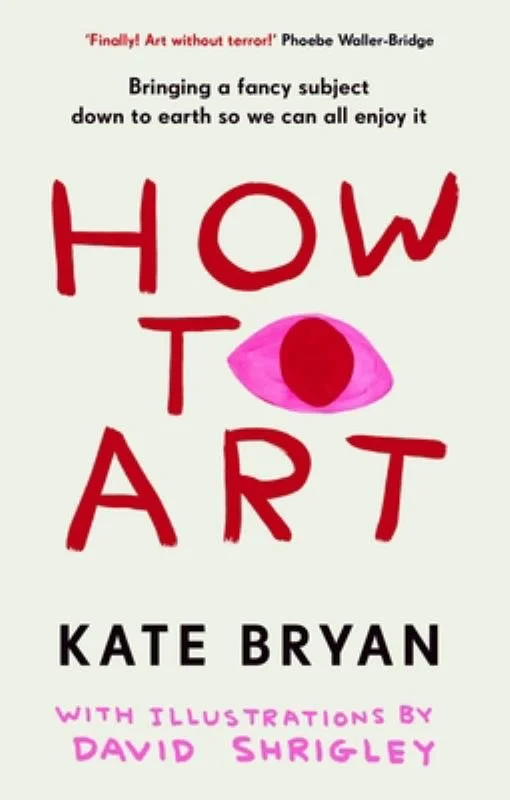
How To Art: Bringing a fancy subject down to earth so we can all enjoy it by Kate Bryan, illustrated by David Shrigley $40
A funny, inviting and full-colour book about art for people who don't know about 'art'. Featuring original artworks by David Shrigley What is art, where do I find it, and once I'm in front of it, what am I supposed to think about it? Kate Bryan is a self-confessed art addict who has worked with art for over twenty years. But before she studied art history at university, she'd been into a gallery just twice in her life and had no idea she was entering an elitist world. Now, she's on a mission to help everybody come to art. Like playing or listening to music, or cooking and eating great food, reading or watching films, making art or looking at other people's deserves to be an enriching part of all our lives. So here, in How to Art, is a nifty way to take art on your own terms. From where it is to what it is, to tips on how to actually enjoy really famous artworks like the Mona Lisa, to how to own art and make art at home, through to vital advice for making a career as an artist and even how to make your dog more cultural, How to Art gives art to everyone, and makes it fun. Laced throughout with original artworks by the very down-to-earth artist David Shrigley. [Hardback]
>>Look inside.
”Finally! Art without terror!” —Phoebe Waller-Bridge

GET YOUR COPY
 

Will There Ever Be Another You by Patricia Lockwood $38
Amid a global pandemic, one young woman is trying to keep the pieces together — of her family, stunned by a devastating loss, and of her mind, left mangled and misfiring from a mystifying disease. She's afraid of her own floorboards, and ‘What is love? Baby don’t hurt me’ plays over and over in her ears. She hates her friends, or more accurately, she doesn't know who they are. Has the illness stolen her old mind and given her a new one? Does it mean she'll get to start over from scratch, a chance afforded to very few people? The very weave of herself seems to have loosened: time and memories pass straight through her body. "I'm sorry not to respond to your email," she writes, "but I live completely in the present now.” Will There Ever Be Another You is the phosphorescent story of one woman's dissolution and her attempt to create a new way of thinking, as well as an investigation into what keeps us alive in times of unprecedented disorientation and loss.” [Paperback]
”This novel offers moments of hilarity, scenes of rich drama, and a dazzling number of references. It is determined to be less than the sum of its parts. It is deliberately perverse, refusing to hang together. Lockwood is not arguing that the centre cannot hold: she is showing that it does not hold.” —Claire Monagle, Australian Book Review
>>Long Covid from the inside.
>>Unclear moral standing.

GET YOUR COPY
 

The Midnight Timetable by Bora Chung (translated from Korean by Anton Hur) $37"
A novel-in-ghost-stories, set in a mysterious research centre that houses cursed objects, where those who open the wrong door might find it's disappeared behind them, or that the echoing footsteps they're running from are their own. An employee on the night shift at the Institute learns why some employees don't last long at the centre. The handkerchief in Room 302 once belonged to the late mother of two sons, whose rivalry imbues the handkerchief with undue power and unravels those around it. The cursed sneaker down the hall is stolen by a live-streaming, ghost-chasing employee, who later finds he can't escape its tread. A cat in Room 206 reveals the crimes of its former family, trying to understand its own path to the Institute's halls. But Chung's haunted institute isn't just a chilling place to play. As in her astounding collections Cursed Bunny and Your Utopia, these violent allegories take on the horrors of animal testing, conversion therapy, domestic abuse, and late-stage capitalism. Equal parts bone-chilling, wryly funny, and deeply political. [Paperback]
Timetable will absorb you in the shadows of its imagination, marvellous oddness, humour and heart. It's a wild midnight tour of a uniquely brilliant and exquisitely demented world, terrifying and enchanting — a world I did not want to leave!” —Gerardo Samano Cordova
>>Waiting for the bus.
>>From the graveyard shift.

GET YOUR COPY
 

Israel on the Brink: Eight steps for a better future by Ilan Pappe $39
Israel can’t go on like this. 7 October and Israel’s subsequent invasion of Gaza laid bare the cracks in its foundations. It was unveiled as a country unable to protect its citizens, divided between messianic theocrats and selective liberals, resented by its neighbours and losing the support of Jews worldwide. While its leaders justify bombing campaigns, atrocities and manmade famine in the Gaza Strip, Israel is becoming a pariah state. Its worst enemy is not Hamas, but itself. Ilan Pappe paves a path out of the Jewish state, rooted in restorative justice and decolonisation, including the release of all Palestinian prisoners, the end of illegal settlements, and building bridges with the Arab world. The future can be one of peace, not endless war. [Paperback]
”When you think that everything that could be said has been, Ilan Pappe provides this eye-opening, original and, most importantly, hopeful book.” —Eyal Weizman, author of Hollow Land: Israel's Architecture of Occupation
Ilan Pappe supplants slogans for a single democratic state with a detailed program comprising eight mini-revolutions. This is a bold undertaking and offers abundant ground upon which to debate a vision and transform it into a program. Even, and especially, for those in disagreement, Israel on the Brink offers a point of departure to take seriously the work of decolonization.” —Noura Erakat, author of Justice for Some: Law and the Question of Palestine
Ilan Pappe's Israel on the Brink is a tour de force, essential reading for anyone who seeks to understand the disintegration of the Zionist project and its consequences. Pappe, one of the foremost scholars on the Israel-Palestine conflict, has authored a series of ground-breaking and important books. This one is no exception.” —Chris Hedges, Pulitzer Prize-winning former Middle East bureau chief for the New York Times
>>Other books by Ilan Pappe.
>>In conversation with Avi Shlaim.

GET YOUR COPY
 

Broken Republik: The inside story of Germany’s descent into crisis by Chris Reiter and Will Wilkes $39
For many years, the post-war recovery of Germany was an inspirational story. All of Europe looked on with admiration and envy as the nation rebuilt and set standards for the rest to follow. Companies such as Mercedes-Benz, Siemens and Bayer rose to become global titans, while the country's political leaders earned respect around the world — even their football teams were the best. Such was its success that when the Berlin Wall fell, it appeared to reunify almost seamlessly. Where Germany led, the rest followed. But, even at its zenith, there were signs of trouble. So, when events started to turn against Germany, the whole edifice began to crumble. As political and business leaders benefited from the status quo, they couldn't see the problems heading their way. Volkswagen's emissions fraud tainted its industrial reputation; abandoning nuclear power left the country at the mercy of Russia for its energy needs; and a growing divide between rich and poor stoked international tensions that opened the door to the rise of the far-right AfD party. Journalists Chris Reiter and Will Wilkes have been reporting for years on the problems the country faces. Germany is not alone in this, but it is singularly ill-equipped to deal with them. [Paperback]
”A splendid book by authors who long ago detected Germany's fragility — and aimed at readers who take no pleasure in the sight of its precipitous decline.” —Yanis Varoufakis

GET YOUR COPY
 

The Floral Dream: A guide to growing cut flowers in New Zealand by Olivia McCord $50
A practical and inspiring guide for New Zealand home gardeners who dream of growing their own cut flowers. Whether the reader is new to gardening or already has dirt under their nails, this book offers down-to-earth advice on how to grow beautiful blooms in the back yard. It begins with preliminary advice on garden layout, soil preparation, a planting calendar and crucially, sowing seeds. At the heart of the book, though, is detailed advice on growing the specific flowers that flourish in New Zealand conditions, with the author's recommendations on favourite varieties. These include focal flowers that serve as the main attraction in arrangements, filler flowers that add volume and texture, and foliage varieties that provide greenery and structure. The book finishes with advice on how to pick and arrange flowers, as well as instructions for creating spectacular bouquets. Nicely done and full of good information and photographs. [Hardback]
>>Look inside!

GET YOUR COPY
 
BROWSE OTHER NEW RELEASES
VOLUME BooksNew releases
VERA, OR FAITH by Gary Shteyngart — Review by Stella

Meet Vera. She has lists. One list for Daddy and another for Anne Mom. Ten reasons each for staying together. Except one list only gets to 6. Vera is 10; she’s a brainiac — side-lined at school as ‘Facts Girl’ and trying to keep her ‘monkey brain’ in check. She’s Korean-American and half-Jewish with Russian grandparents. Vera, her little brother Dylan (cute, but mostly annoying), and her Daddy, Igor Shmulkin, and step-Mom Anne Bradford, a progressive blue-blood, live a modern comfortable life in an American city not too far in the future. Daddy’s trying to save a literary journal — hoping for the Rhodesian Billionaire to come through. Anne Mom is just trying to keep the household running smoothly while corralling her friends into good causes. As Daddy and Anne Mom descend into daily battles, Vera is having her own internal battles. Will she ever have a best friend? Will she find her birth mother, Mom Mom, before it’s too late? Is it safe on the streets anymore? America is in freefall, although for Vera at her good school, in her room of her own, in a safe neighbourhood, and with Kaspie (her AI device named after Gary Kasparov) at hand, it’s all at a distance. Until it’s not. Vera, or Faith is a very funny, but biting, satire. Observed through the eyes of a girl sideways to the world, Vera is the perfect vehicle for this look at a messed-up world, not that you will despair outright. You will be too busy laughing, liking Vera, and cheering her on. Fingers crossed that she wins the debate with her new-found friend, encouraging her to keep asking questions of her chess companion Kaspie (made in Korea), and to keep using that ‘monkey brain’ to solve the puzzle of Mom Mom. Yet the world will crash down, and ultimately Vera, who is a ten-year-old girl will find solace where she least expects it. So this is a sad, funny, good story with a rumbling darkness, a thunder clap of what is to come if we aren’t very careful.

You need Vera, or Faith
POETICS OF WORK by Noémi Lefebvre (translated from French by Sophie Lewis)

How should we occupy ourselves, he wondered, whatever that means, lest we be occupied by someone else, or something else, how do we keep our feet, if our feet at least may be said to be our own to keep, by leaning into the onslaught or by letting it wash through us? Too many metaphors, if they’re even metaphors, he thought, too much thought thought for us by the language we use to think the thoughts, he thought, too many ready-made phrases, who makes them and why do they make them, and what are their effects on us, he wondered, where is the power that I thought was mine, where is the meaning that I meant to mean, how can I reclaim the words I speak from those against whom I would speak them? No hope otherwise. The narrator of Noémi Lefebvre’s Poetics of Work happens to be reading Viktor Klemperer’s Language of the Third Reich, in which Klemperer demonstrates that the success of, and the ongoing threat from, Nazism arose from changes wrought on the ways in which language was used and thus upon the ways people thought. Whoever controls language controls thought, he thought, Klemperer providing examples, authority exerts its power through linguistic mutation, but maybe, he thought, power can be resisted by the same means, resistance is poetry, he shouted, well, perhaps, or at least a bit of judicious editing could be effective in the struggle, he thought, rummaging in the drawer of his desk for his blue pencil, it’s in here somewhere. Fascism depends on buzzwords, says Klemperer, buzzwords preclude thought, and the first step in fighting fascism, says Klemperer, is to challenge the use of these buzzwords, to re-establish the content of discourse, to rescue the particular from the buzzword. Could he think of some current examples of such buzzwords, he wondered, and he thought that perhaps he could, perhaps, he thought, if such terms were removed from discourse and the wielders of these buzzwords had no recourse but to say in plain language what they meant, these once-were-wielders would be revealed to be either ludicrous or dangerous or both ludicrous and dangerous and the particulars of a given situation could be more clearly discussed. That is a subversive thought, he thought, to edit is to unpick power. “There isn’t a lot of poetry these days, I said to my father,” says the narrator at the beginning of Poetics of Work. A state of emergency has been declared in France, it is 2015, terror attacks have resulted in a surge of nationalism, intolerance, police brutality, the narrator, reading Klemperer as I have already said, is aware of the ways in which language has been mutated to control thought, power acts first through language and then turns up as the special police, it seems. What purchase has poetry in a language also used to describe police weaponry, the narrator wonders. “I could feel from the general climate that imagination was being blocked and thought paralysed by national unity in the name of Freedom, and freedom co-opted as a reason to have more of it.” Freedom has become a buzzword, it no longer means what we thought it meant, but even, perhaps, well evidently, its opposite. “Security being the first of freedoms, according to the Minister of the Interior, for you have to work.” You have to work, is this the case, the narrator wonders, you have to work and by working you become part of that which harms you. The book progresses as a series of exchanges between the narrator and their father, the internal voice of their father, of all that is inherited, of Europe, of the compromise between capital and culture, of all that takes things at once too seriously and nowhere near seriously enough. “He’s there in my eyes, he hunches my shoulders, slows my stride, spreads out before me his superior grasp of all things,” the narrator says, embedded in their father, struggling to think a thought not thought for them by their father, their struggle is a struggle for voice, as all struggles are. “I am like my father but much less good, my father can do anything because he does nothing, while I do nothing because I don’t know how to defend a person who’s being crushed and dragged along the ground and kicked to a pulp with complete impunity, nor do I know how to get a job or write a CV or any biography, nor even poetry, not a single line of it.” What hope is there? Is it possible to find “non-culture-sector poetry”, the narrator wonders, or even to write this “non-culture-sector” poetry if there could be such a thing? What sort of poetry can be used to come to grips with even the minor crises of late capitalism, for instance, if any of the crises of late capitalism can be considered minor? “I watched the water flow south, and the swans driven by their insignificance, deaf and blind to the basic shapes of the food-processing industry, ignorant that they, poor sods, were beholden to market price variation over the kilo of feathers and to the planned obsolescence of ornamental fowls.” The book sporadically and ironically gestures towards being some sort of treatise on poetry, it even has a few brief “lessons,” or maxims, but these are too half-hearted and impermanent to be either lessons or maxims, perhaps, he thought, they might qualify as antilessons or antimaxims, if such things could be imagined, though possibly they ironise an indifference to both. “Indifference is a contemplative state, my father said one day when he’d been drinking.” Doing nothing because there is nothing to be done, or, rather, because one cannot see what can be done, is very different from doing nothing from indifference, but the effect is the same, or the lack of effect, so something must be done, the narrator thinks, even if it is the case that nothing can in the end be done. For those to whom language is at once both home and a place of exile, the struggle must be made in language, or for language, resistance is poetry, or poetry is resistance, I have forgotten what I shouted, I will sharpen my blue pencil, after all one must be “someone among everyone,” as the narrator says. “There’s a fair bit of poetry at the moment, I said to my father,” the narrator says at the end of Poetics of Work. “He didn’t reply.”

GET YOUR COPY
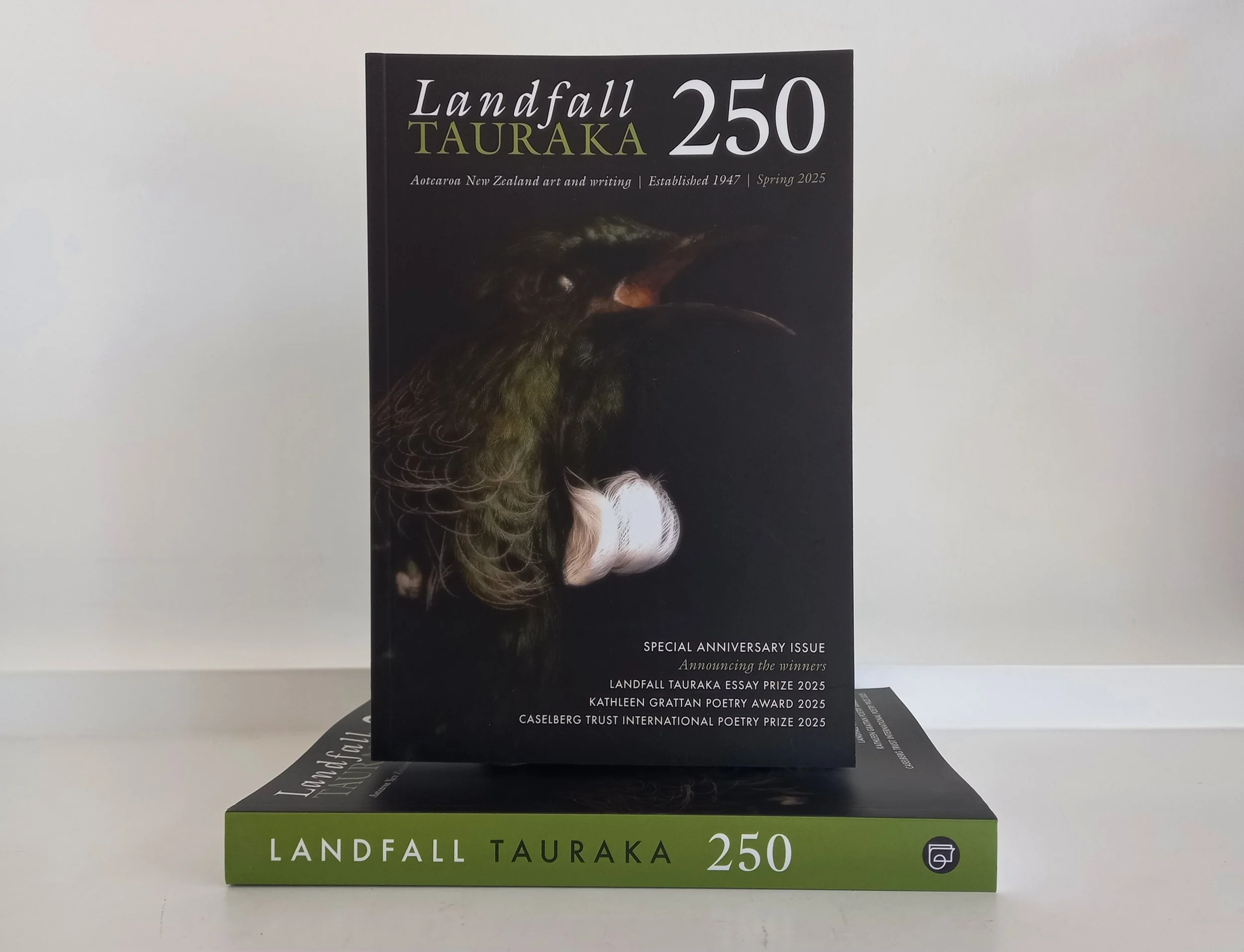
Book of the Week: LANDFALL TAURAKA 250

Aotearoa’s longest-running arts and literary journal honours its milestone 250th issue with a new name, a new design, cover art by Fiona Pardington and an exciting bumper issue. Landfall Tauraka 250 is filled with contributions from emerging and established writers and artists. Alongside the new writing, art and reviews from across the motu, the commemorative 250th issue debuts the Landfall Tauraka Craft Interview — a kōrero between Bill Manhire and editor Lynley Edmeades — and features reflections from cherished writers on the journal’s enduring impact. It also announces the winners of three major literary awards: the 2025 Caselberg Trust International Poetry Prize; the 2025 Kathleen Grattan Poetry Award; and the 2025 Landfall Tauraka Essay Prize. Landfall Tauraka was founded in 1947 as a periodical dedicated to New Zealand poetry, fiction, essays, art, criticism and reviews. The journal has been in continuous publication for nearly 80 years. In that time, it has become a living taonga, a record of creative and critical expression in Aotearoa, and a platform for an extraordinary range of voices.

GET YOUR COPY OF LANDFALL TAURAKA 250
NEW RELEASES (16.10.25)

All your choices are good! Click through to our website (or just email us) to secure your copies, and we will dispatch your books by overnight courier or have them ready to collect from our door in Church Street, Whakatū.

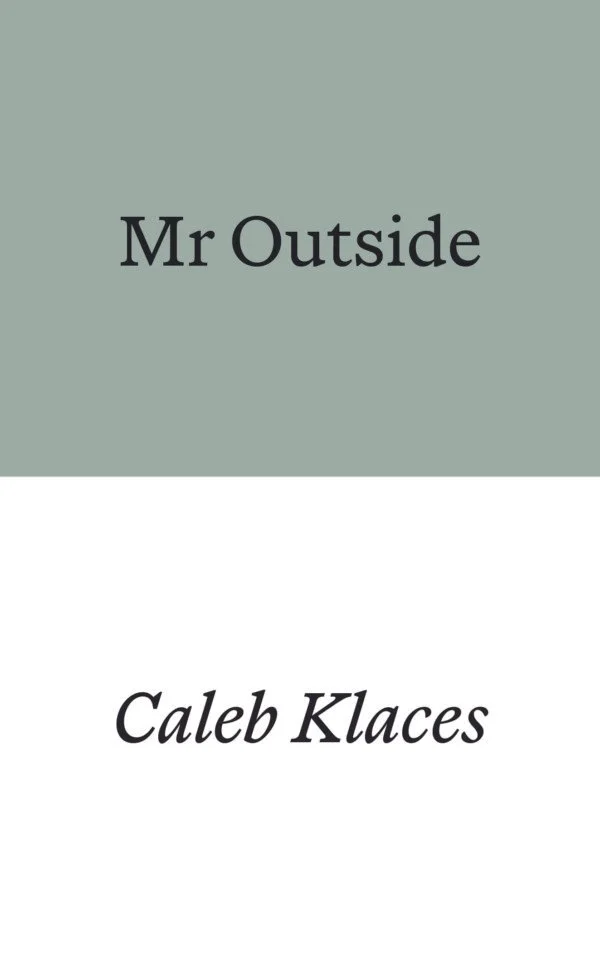
Mr Outside by Caleb Klaces $40
During a time of restricted movement, the narrator of Mr Outside visits his reclusive father Thomas who is packing up to move into a care home. As father and son grapple with the task, long-buried conflicts resurface. Thomas, a poet and former radical priest, slips between affection and fear, while the narrator struggles to find the words he’s been holding back. Yet amidst confusion and grief, moments of humour and connection emerge, as both men discover new ways to listen. Told through a striking combination of text and image, Klaces’s distilled novel explores the stories we tell about our lives, intimacy in crisis, and the fragile line between reality and delusion. Based on the life of his own father, Mr Outside is poignant, profound, and unexpectedly funny; a tender meditation on endings, the limits of understanding, and the act of letting go. [Paperback]
”I can’t remember the last time a book moved me to tears, but Mr Outside did so more than once. With each page awash in bittersweet detail, Klaces evokes the raw and distant intimacy between fathers and sons with tenderness and insight and captures the inevitable yet cataclysmic rupture of the loss of a parent as honestly and effectively as anything I’ve ever read. It’s heartbreaking and beautiful and comforting all at once. I could not recommend it more highly.” —Kevin Powers
”I was utterly absorbed by this riveting, wonderful book, and thought about little else during the days I read it. The prose is unsparing — clear yet enigmatic, clipped yet voluminous. Every page carries a startling moment or detail. By the end of it, you’re left with a sense of the turbulence and bewildering beauty of a whole life. Mr Outside is a major achievement.” —Martin MacInnes
”A novel of extraordinary clarity. What Klaces has achieved here is remarkable. His precise, compelling language miraculously shapes a truth you’d think no language could do justice to: that the price for incredible love is incredible loss.” —Lisa McInerney

GET YOUR COPY
 

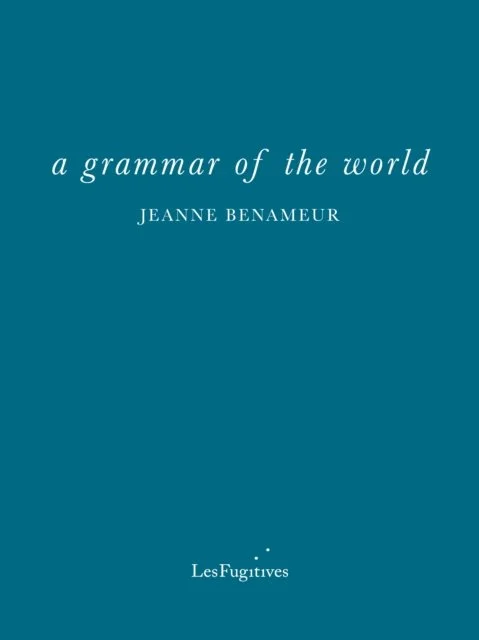
a grammar of the world by Jeanne Benameur (translated from French by Bill Johnston) $45
For Benameur in these poems, the Egyptian goddess Isis advances with her along the seashore, unifying the past and the present, inside and outside, memory and imagination, trauma and hope, the blue of the sky and the blue of the sea. She is unity rediscovered. Drawing on subjects as diverse as the author's childhood traumatic flight from the Algerian War of Independence in the late 1950s, the modern migrant crisis, the transformative power of writing and the long history of the Mediterranean, a grammar of the world is brought into harmony by the central mythological figure, who personifies a careful reknitting of the world and repairing of ancient wounds through the act of writing. [Paperback with French flaps]
”In Jeanne Benameur's language all is fluttering, gentle and stirring. Places are foremost, they precede us, then history settles in and the writing unfurls.” —Cécile Coulon
”For Benameur, the backwash of Algerian history flows back into the sea of inner feelings.” —Yasmine Chouaki
>>See more!
>>The Child Who.

GET YOUR COPY
 

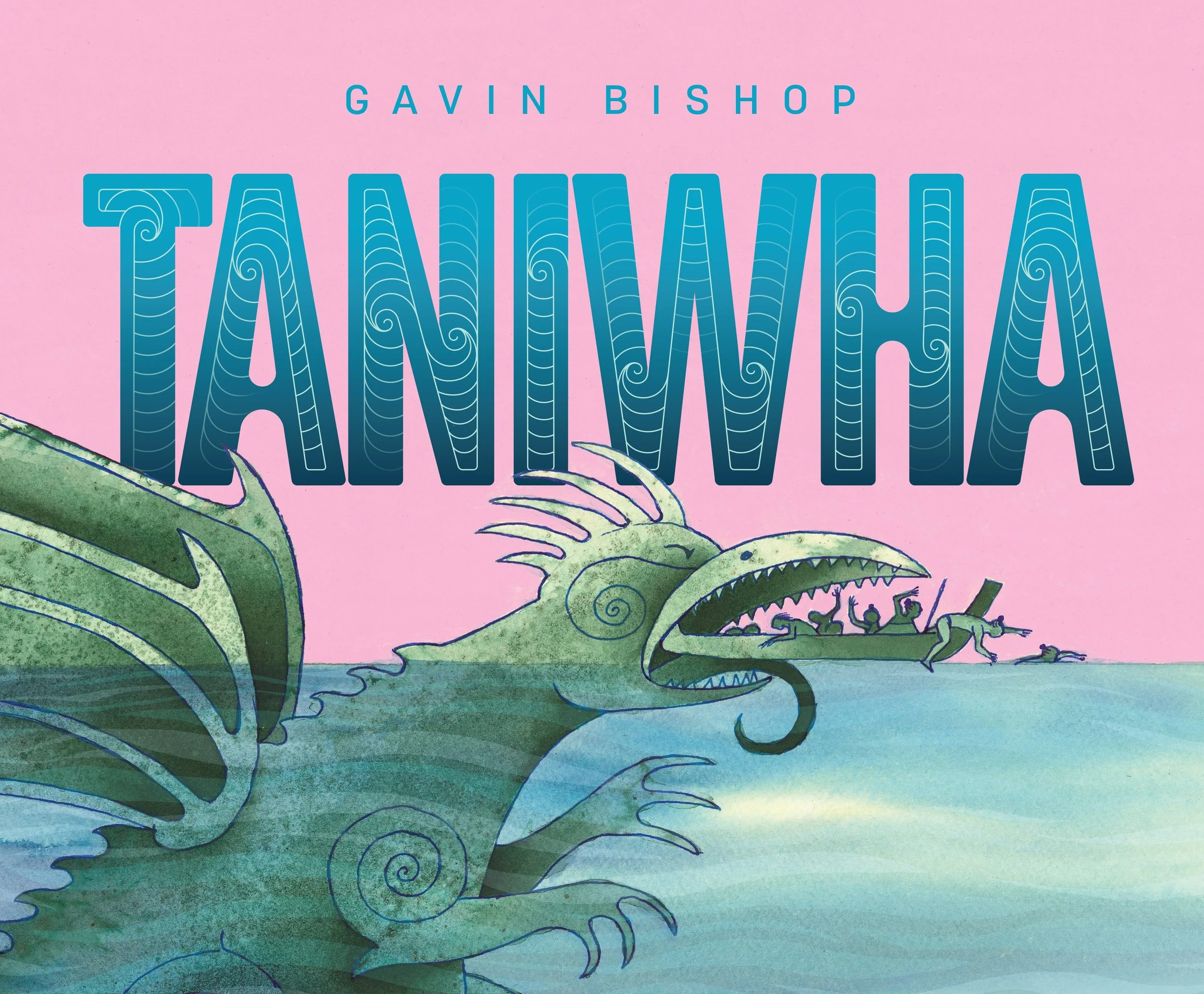
Taniwha by Gavin Bishop $40
Monster-sized and monster-filled, this beautifully illustrated book, retells a variety of tales about the taniwha of Aotearoa, from the guardians who accompanied waka voyages to present-day inhabitants of the whenua and moana. Taniwha are all around us. They are good at hiding or changing their shape. They can be very tricky. If you want to meet one, you have to know what to look for and where to look. Describing how the landscape was shaped, and exploring relations between Māori and the sometimes friendly, but more often terrifying, supernatural creatures, these traditional stories are brought to life with Bishop’s lively and inventive illustrations. [Hardback]
>>Look inside!
>>Other superb books from Gavin Bishop.

GET YOUR COPY
 

Vaim by Jon Fosse (translated from Nynorsk by Damion Searls) $38
Jatgeir travels from the fishing village of Vaim to the city in search of a needle and thread. Cheated twice, he returns to his boat, where he falls asleep as waves rock the hull. Soon he is awakened by a voice: a woman is calling his name from the quay. There stands Eline, the secret love of his youth — and the namesake of his boat — with a packed suitcase. Eline pleads to come aboard. In what follows, this single encounter reverberates across three stories: three narrators, three deaths. The first new work from Jon Fosse since he was awarded the 2023 Nobel Prize in Literature, Vaim is a spectral novel that wanders and watches, imbued with things half-seen, perhaps not of this world yet still caught in its rhythms. The first in a trilogy of novels, it continues his investigation into the human condition: the subtle encounters that come to define our lives and our deaths, and what lies in the threshold between what is and what is longed for. [Paperback with French flaps]
”Reading Jon Fosse is always a curious and wondrous experience. Vaim is no exception: it ferries the reader along the stream of the ‘ordinary’ mind, from which suddenly shines forth a luminous beyond.” —Xiaolu Guo

GET YOUR COPY
 

Blackout by Yann Chateigné Tytelman (translated from French by Clem Clement) $40
Spring 2020. In lockdown in a mountain village with his partner and young child, art critic and curator Yann Chateigné Tytelman becomes haunted by the wordless and stoic ghost of his father. He takes this time of withdrawal from the rhythms of everyday life and work to meditate on silence in our lives, silence in art, in literature, music and in philosophy. In a series of short fragments, he circles the void at the heart of modern society, brought into sharp focus by the spectre of disease and death hanging over a stilled world.
”It all started with a letter to my father. It had been about ten years since his death, and I suddenly felt like writing to him about the silence, his silence, the silence between us. It started in 2020, as a necessity. The silence, then, was striking. It resonated with other erased voices, other voids, other emotions. I thought I would not be able to stop. Neither diary, nor essay, nor short story, Blackout is a weaving, a braid made of these lines of silence, and tells, in fragments, the story of a dispossession, of an entry into darkness.“ —Yann Chateigné Tytelman. [Hardback]
 “A moving account of a son's search for his father's ghost, as well as a riveting enquiry into the notions of silence and absence in music, literature and visual art. Extraordinary.” —Jude Cook
”A haunting, delicately woven elegy; a luminous act of love written into the void. Let it draw you in. Let it speak to your own silences.” —Suzanne Joinson
”Silence is etymologically rooted in the idea of being quiet and still, of attending. The defining 'absence of sound' came much later. There are reasons why retreats are often predicated on silence. They seek to face directly the fear we have — identified so keenly by Jung — of the journey to the interior that 'silence' prompts. There is no such thing as absolute silence, of course. In an anechoic chamber, you become the sound you hear: your lungs, your heart, your eyelids. Tytelman's remarkable meditation on the presences made vivid by absence understands this instinctively, emotionally, intellectually and even metaphysically. He listens beyond listening. We carry our own silence and that of others like organs. We make our own silences and harvest them. In his haunted and haunting text, even ghosts are breathing.” —Gareth Evans
Blackout offers an extended reflection on living within silence and emptiness, but through the accumulation of seemingly disconnected stories something else emerges: the pangs of absence enfolded one after another — but absence is always presence, silence is a teeming noise. Was the collective amnesia that followed our recent, yet somehow erased, enforced isolation necessary to forgetting a deeper revelation? For a moment, another kind of society presented itself, a society of gorgeous nothings given eyes to see in the dark.” —David Toop

GET YOUR COPY
 

We Live Here Now by C.D. Rose $45
DeLillo meets Kafka in a wickedly smart novel that explores the boundaries between art and life, vision and reality, beauty and commerce. When visitors to a famous conceptual artist's installation start mysteriously disappearing, the aftershocks radiate outwards through twelve people who were involved in the project, changing all of their lives, and launching them on a crazy-quilt trajectory that will end with them all together at one final, apocalyptic bacchanal. Mixing illusion and reality, simulacra and replicants, sound artists and death artists, performers and filmmakers and theorists and journalists, We Live Here Now ranges across the world of weapons dealers and international shipping to the galleries and studios on the cutting edge of hyper-contemporary art. It spins a dazzling web that conveys, with eerie precision, the sheer strangeness of what it is like to be alive today. [Paperback]
Short-listed for the 2025 Goldsmiths Prize.
"C.D. Rose's genius novel is a book that shows it is possible for a novel to be at once highly original and to fit within an established tradition. We Live Here Now is both accessible and challenging, entertaining the reader with its ridiculous and sinister figures, even as it prompts more intellectual questions about the reality of appearances." John Self
"In this deeply rewarding novel considering many under-discussed aspects of contemporary commerce, Rose has produced another breathtakingly imaginative work." —Booklist
>>To go with the flow, or not.
>>”I still dream about those places.”

GET YOUR COPY
 

Big Kiss, Bye-Bye by Claire-Louise Bennett $40
The things that hold life in place have been lifted off and put away. Uprooted by circumstance from city to deep countryside, a woman lives in temporary limbo, visited by memories of all she's left behind. The most insistent are those of Xavier, who has always been certain he knows her better than anyone, better than she knows herself. Xavier, whom she still loves but no longer desires, a displacement he has been unable to accept. An unexpected letter from an old acquaintance brings back a torrent of others she's loved or wanted. Each has been a match and a mismatch, a liberation and a threat to her very sense of self. The ephemera left by their passage — a spilled coffee, an unwanted bouquet, a mind-blowing kiss — make up a cabinet of curiosity she inventories, trying to divine the essence of intimacy. What does it mean to connect with another person? What impels us to touch someone, to be touched by them, to stay in touch? How do we let them go? Claire-Louise Bennett explores the mystery of how people come into and go out of our lives, leaving us forever in their grasp. [Paperback with French flaps]
”Shape-shifting and splendid in its disregard for conventional wisdom and contemporary minimalist tastes, it weaves rococo abundance and brazen mundanity into something as porous and unknowable as the narrator’s inner world. Claire-Louise Bennett is a true original, working at the brink of what language can do.” —Annie McDermott, Times Literary Supplement
”If Bennett might seem at first blush a more quietly innovative writer than the novelists with whom she is inevitably compared, this is not to her detriment, but inseparable from the extraordinary subtlety and emotional detail of the psychological portraits her fiction paints.” —Doug Battersby, Financial Times
Big Kiss, Bye-Bye delivers an exhilarating approximation of what memory feels like. Certain specifics appear fixed — the colour of a shirt, say, or an ex-lover’s hurtful words — but the rest swirls about, shifting depending on circumstance. Bennett’s writing is unpretentious and unselfconscious, with an often startling immediacy. Her vocabulary is precise — she finds a message ‘discomposing’; her empty flat is ‘languidly transporting’ — and sometimes unexpected. Pages of spare, simple sentences are offset by meandering digressions full of possibilities. Bennett is always conscious that every moment might one day be remembered, reshuffled, retold. Memory never fully settles.” —Zoe Guttenplan, Literary Review
”Bennett draws on ‘polyvocal, and apparently experimental’ (note the tonal eye roll) techniques not to obfuscate, but to elucidate the real conditions of living, and writing, from the perspective of the underclass. Far from the stylistic abstractions of modernist masculinist totality or the avant-garde elite, this is the prose, we could say, of precarity. Bennett’s heroines might seek shelter in rooms of their own, but the walls always feel treacherously porous.” —Jane Hu, Bookforum
>>Flux given.

GET YOUR COPY
 

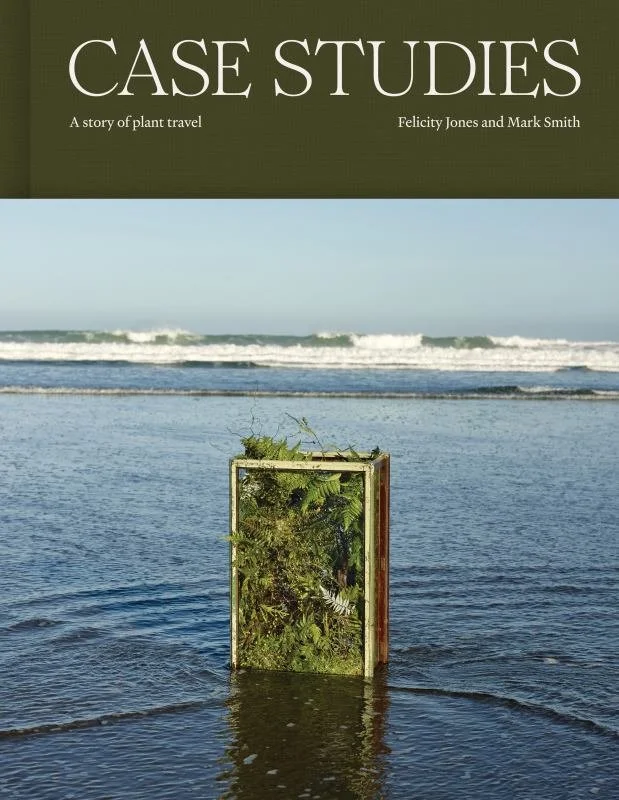
Case Studies: A story of plant travel by Felicity Jones and Mark Smith $85
In 1829, London physician Dr Nathaniel Bagshaw Ward sealed a plant inside a glass container — a simple experiment that helped change the way plants were transported across the world, transforming gardens, ecosystems and lives in the process. This book traces that story through photographs and essays, pairing striking contemporary images of cased plants — shot in New Zealand and in the United Kingdom — with reflections on the implications of plant transfer/movement. Across six essays by Gregory O’Brien, Dame Anne Salmond, Luke Keogh, Mark Carine, Markman Ellis and Huhana Smith, the book considers not only the scientific and colonial ambitions that drove botanical exchange, but also its consequences: ecological disruption, the spread of invasive species, and the marginalisation of Indigenous knowledge systems. Case Studies also gives space to other voices — those speaking to mātauranga Māori, to tino rangatiratanga over native species, and to the ongoing work of conservation and reclamation. It is not only a record of historical movement, but also a reminder of the values and choices that continue to shape the land beneath our feet. [A beautifully presented large-format hardback]
>>Look inside!
>>Growing conditions.

GET YOUR COPY
 

A Long Winter by Colm Tóibín $33
One snowy morning, after an argument with her husband, Miquel's mother departs from their village high up in the Pyrenees and disappears. With his younger brother stationed far away on military service and his father a social pariah detested by the locals, Miquel is caught between, on one hand, the slow disintegration of his family, and on the other, a bitter feud which prevents the townspeople from showing him any more than the slightest acts of kindness. With Miquel's mother still unaccounted for, the two men are forced to fend for themselves throughout a harsh winter, made harsher still by the emergence of family secrets that have festered in the long silence between father and son. Published as a standalone novella for the first time. [Hardback]
”A superbly powerful tale of betrayal and desertion.” —Spectator

GET YOUR COPY
 

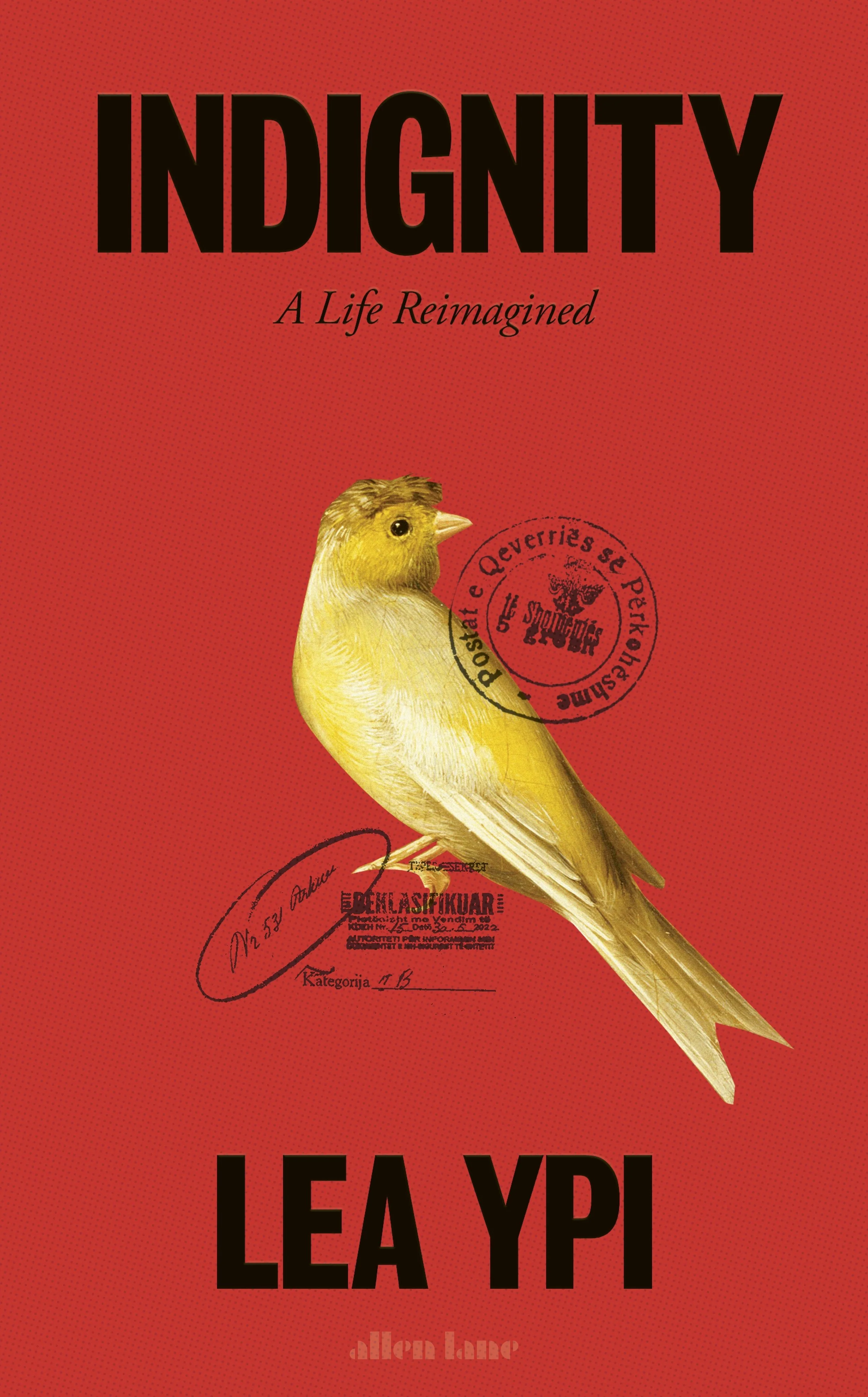
Indignity: A life reimagined by Lea Ypi $40
When Lea Ypi discovers a photo of her grandmother, Leman, honeymooning in the Alps in 1941 posted by a stranger on social media, she is faced with unsettling questions. Growing up, she was told records of her grandmother's youth were destroyed in the early days of communism in Albania. But there Leman was with her husband, Asllan Ypi — glamorous newlyweds while World War II raged. What follows is a thrilling reimagining of the past, as we are transported to the vanished world of Ottoman aristocracy, the making of modern Greece and Albania, a global financial crisis, the horrors of war and the dawn of communism in the Balkans. While investigating the truth about her family, Ypi grapples with uncertainty. Who is the real Leman Ypi? What made her move to Tirana as a young woman and meet a socialist who sympathized with the Popular Front while his father led a collaborationist government? And, above all, why was she smiling in the winter of 1941? By turns epic and intimate, profound and gripping, Indignity shows what it is like to make choices against the tide of history — and reveals the fragility of truth, collective and personal. Through secret police reports of communist spies, court depositions, and Ypi's memories of her grandmother, we move between present and past, archive and imagination. Ultimately, she asks, with what moral authority do we judge the acts of previous generations? And what do we really know about the people closest to us? [Paperback]
>>Love, war, and betrayal.

GET YOUR COPY
 

Mana by Tāme Iti $50
Mana. It's a big word. But what is it? Are you born with it, can you earn it, can it be taken away? For more than five decades, Tāme Iti has stood at the heart of Aotearoa's struggle for indigenous rights. From land marches to performance art, police raids to prison cells, his voice has challenged New Zealand to reckon with its colonial legacy. Once branded as a dangerous and extreme activist, now hailed as a national treasure, Tāme has lived the contradictions and realities of standing with mana motuhake in a modern world. After being silenced from speaking te reo Māori as a child, Tāme went on to champion its revitalisation. He discovered the power of protest and what it means to live with mana in a world that often tries to strip it away. This is his kōrero of the road he walked and the people who joined him. The comrades, the supporters, and the ones who tried to take him out. Mana is the story of a man who has never stopped challenging the status quo. [Hardback]
>>Art, activism, and the fight for Māori rights.
>>The power in knowing who you are.

GET YOUR COPY
 
BROWSE MORE NEW RELEASES
VOLUME BooksNew releases
MOTHERHOOD by Sheila Heti — reviewed by Stella

A book about motherhood by Sheila Heti. Or is it? Heti’s ‘novel’, much like her excellent How Should A Person Be? is much less novel and more a series of not-quite-true but ever-so-true deliberations, and an existential rant — but the best kind: indulgent, prescient, intimate (unnervingly so at times) and extremely funny in a strange sideways glimpse at herself and others like her. Although she would almost believe she is the only one obsessing over the question, To have a child or not?  It’s a book about motherhood, about being a parent, and what that relationship means or could provide a person, as much as it is a book about writing and the obsessive nature of creative practice and the need for this self-awareness to be a good creative — an 'art monster' (Jenny Offill, Dept. of Speculation). Yet Heti is torn between her desire to write and the pleasure, the satisfaction this brings her, and the confusion that swirls in her head about being a mother and whether this will bring her a different completion. As she obsesses about motherhood she questions everyone and observes her friends and family about this elusive — to her —  state of being. She wrongly or rightly presumes that she should have a child, that she wants a child, and on the other hand, she does not. Her dilemma is mired in expectations, both external and internal, and the 'ticking clock', of which women are constantly reminded. Are you past the age of being a worthwhile contributor? Even in 2020, we are judged on our reproductive choices (think about women’s rights over their own bodies in regard to abortion laws), and somehow procreating, even in times of crisis (environmental and economic), is still way up there on people’s to-do lists. Not that Heti is overly concerned about the politics of reproduction or motherhood: her focus is on the intensely personal — on her experience and where these thoughts, these deliberations, take her and the reader. She’s irrational and highly emotional, and this makes her book one of the best about motherhood and the questioning of its function, on an intellectual as well as emotional level. Her book is, in the end, is as much a look at what it means to be someone's child as it is to have a child. Her deliberations take her on a journey of understanding her own mother and her grandmother and their roles as parents and individuals — a revelation that we don’t clearly think about. We know how we are as a child of our parents, but when do we consider what that relationship means from the other view — who we are, what we mean, to the mother (or father)? And if you can’t address your existential question about whether to have a child or not, you can do what Shelia Heti does and consult the coin — heads for yes, tails for no — and ask yourself a series of questions (often ridiculous and very amusing)  about yourself, your intimates and your writing.

GET YOUR COPY
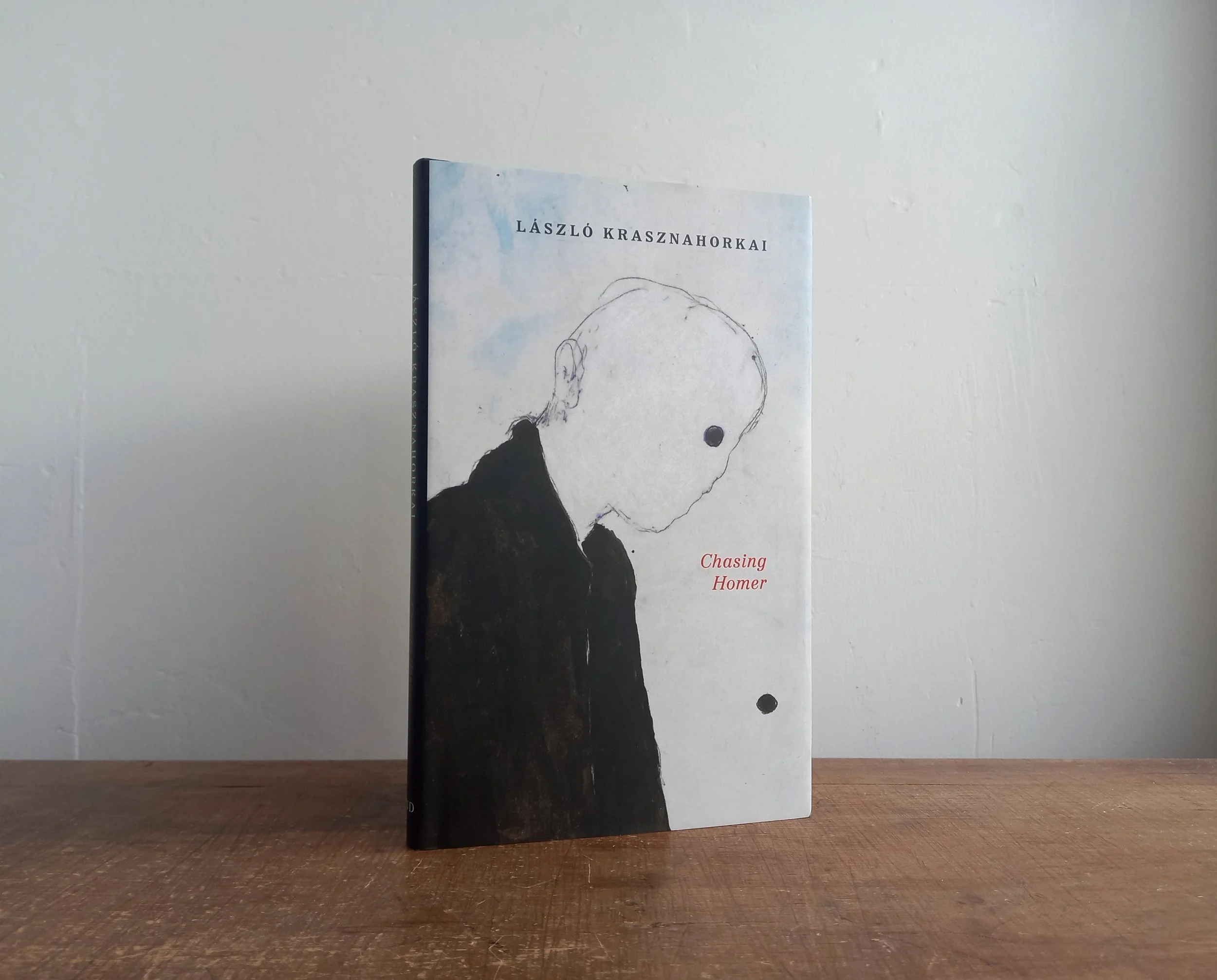
CHASING HOMER by László Krasznahorkai (translated by John Batki), with paintings by Max Neumann and music by Szilveszter Miklós — reviewed by Thomas

It seemed sometimes that they were even wanting the worst to happen, if only to be relieved of the terrible anticipation that the worst may happen. It seemed sometimes that the worst thing sucks everything else towards it, even our resistance to the worst thing, and the closer we get to the worst thing it seems the less we resist it, just when we would be better to resist it more, until we are drawn over the acquiescence horizon, so to call it, until we are drawn past the point at which the possibility of relief from the effort to resist is stronger than our exhausting effort to resist, the point at which we either try to resist more, which just increases the degree of relief offered by giving up, or we resist less, which draws us closer to giving up. We give up. Of course, we don’t want to be seen to be giving up, not even by ourselves, what we want is a way to be seen to be resisting when in fact we are giving up, what we want is some mechanism that will make it appear that, when the worst happens, it might not have been as bad as it could have been even though it is worse than we could have imagined. How could that they have become a we so easily? A threat presses unrelentingly on the narrator of Krasznahorkai’s text, the threat of the worst thing, the nullification of that narrator, the narrator knows there are assassins on the narrator’s trail, they from whom the narrator flees, they whom the narrator has never seen and may never see, no matter, this just makes the fleeing more urgent, the threat more imminent, the worst that could happen always just on the point of happening if never actually happening. “I know they’ll never relent,” the narrator writes, “it’s as if their orders aren’t to make quick work of me … but rather to keep pursuing me.” The narrator must keep fleeing so as to continue being what a narrator is, the narrator must flee nullification, the narrator must flee into the new. “I have no memories whatever … the past doesn’t exist for me, only what’s current exists … and I rush into this instant, an instant that has no continuation.” The narrator flees in the present tense, the narrator flees by narrating. The text we read is the result of the narrator’s resistance to their own nullification, or, rather, the text is the narrator’s resistance to their own nullification. Obviously. “Life is forever merely the incalculable consequence facing the oncoming process, because there’s nothing that lurks behind the process … for me nothing exists that goes beyond the situation that happens to be at hand,” states the narrator, and if fate, or, rather, the causal mechanisms that we mistakenly label as fate, is nothing but an ineluctable process of destruction, if nullification is a corollary of being, then we can only exist in our errors, we can only exist to the extent that we make a mistake. “The decisions I make must be the utterly wrong ones.” the narrator states, “that’s how I can confound my pursuers.” Great forces grapple through the text, through the narrator caught within themselves. We all share this pressure upon us that many would mistake for paranoia, no such luck, we all share this problem with time, this snagging in the moment, this agony of being forced on but this terror of no longer going on. “If I were to divine a plan of action of some kind, it would be all over for me,” the narrator states, though, really, is the threat coming from within or from without? But the narrator does divine a plan of action, the narrator is seduced by story, the narrator does start to abrade against their surroundings and against the people in those surroundings by the very fact of their interaction with those surroundings and with those people. The narrator passes the acquiescence horizon without being aware that they are passing the acquiescence horizon. All is lost. Giving up is no less fatal for looking like merely a change of plan. 

FIND OUT MORE / GET YOUR COPY
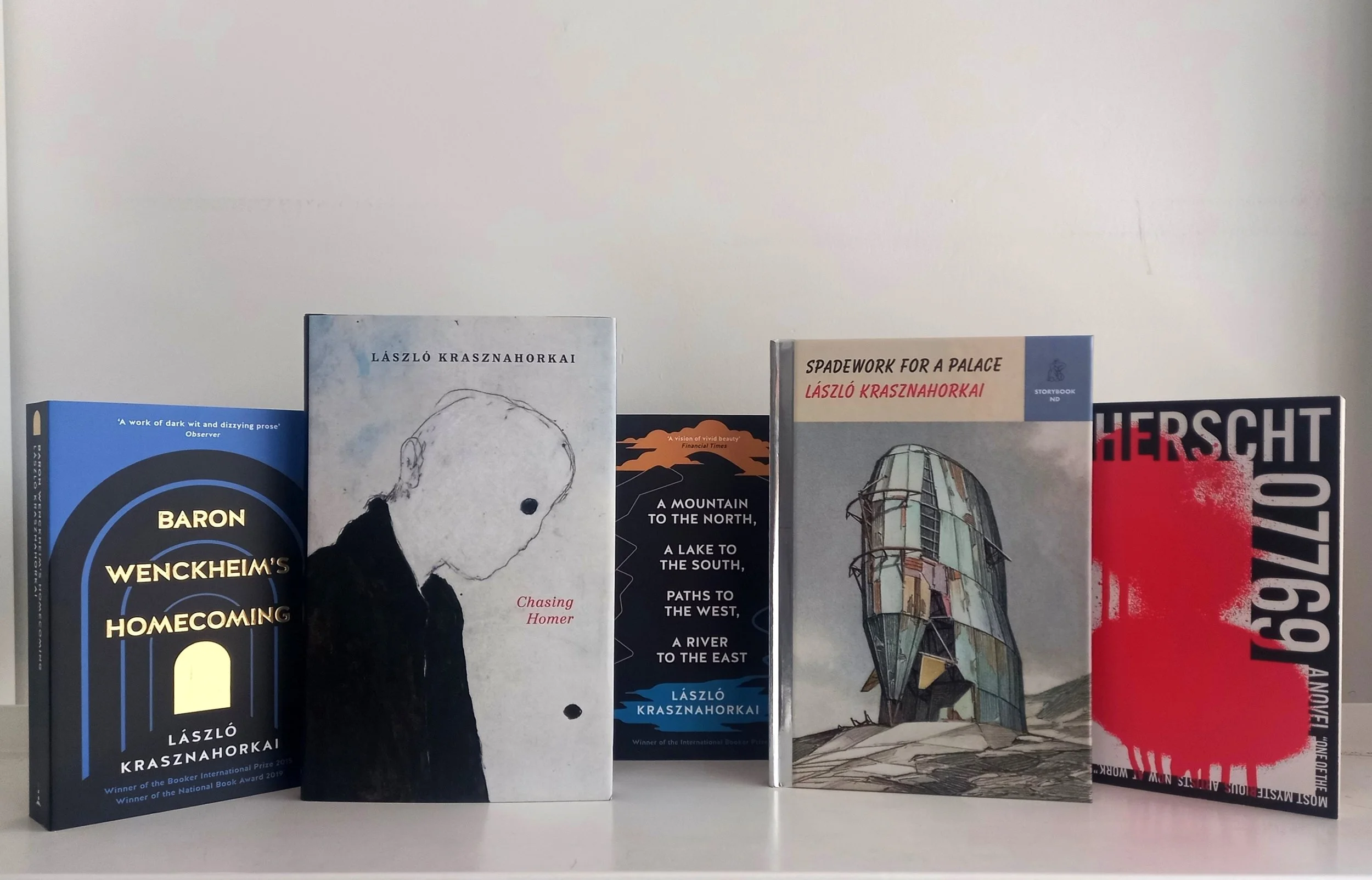
Author of the Week: LÁSZLÓ KRASZNAHORKAI — 2025 Nobel Prize laureate in literature

There could be no more suitable Nobel laureate for the end of the world than László Krasznahorkai, whose astounding, frequently book-length sentences trace human thought’s struggle against the forces that would ultimately erase it. Although poised always on some sort of cultural event-horizon, Krasznahorkai’s books verbally resist the pull towards annihilation posed by the infinite gravity of social, political, historical, environmental and purely existential impossibilities, and provide glimmers of human authenticity in an increasingly depersonalising world. Pulling a dark literary thread backwards through Bernhard to Kafka, Krasznahorkai’s books have a profoundly hypnotic effect, shot with moments of beauty, exhilaration and clarity.

BROWSE BOOKS BY LÁSZLÓ KRASZNAHORKAI
NEW RELEASES (9.10.25)

All your choices are good! Choose your next books from our selection of NEW RELEASES. Click through to our website (or just email us) to secure your copies, and we will dispatch your books by overnight courier or have them ready to collect from our door in Church Street, Whakatū.

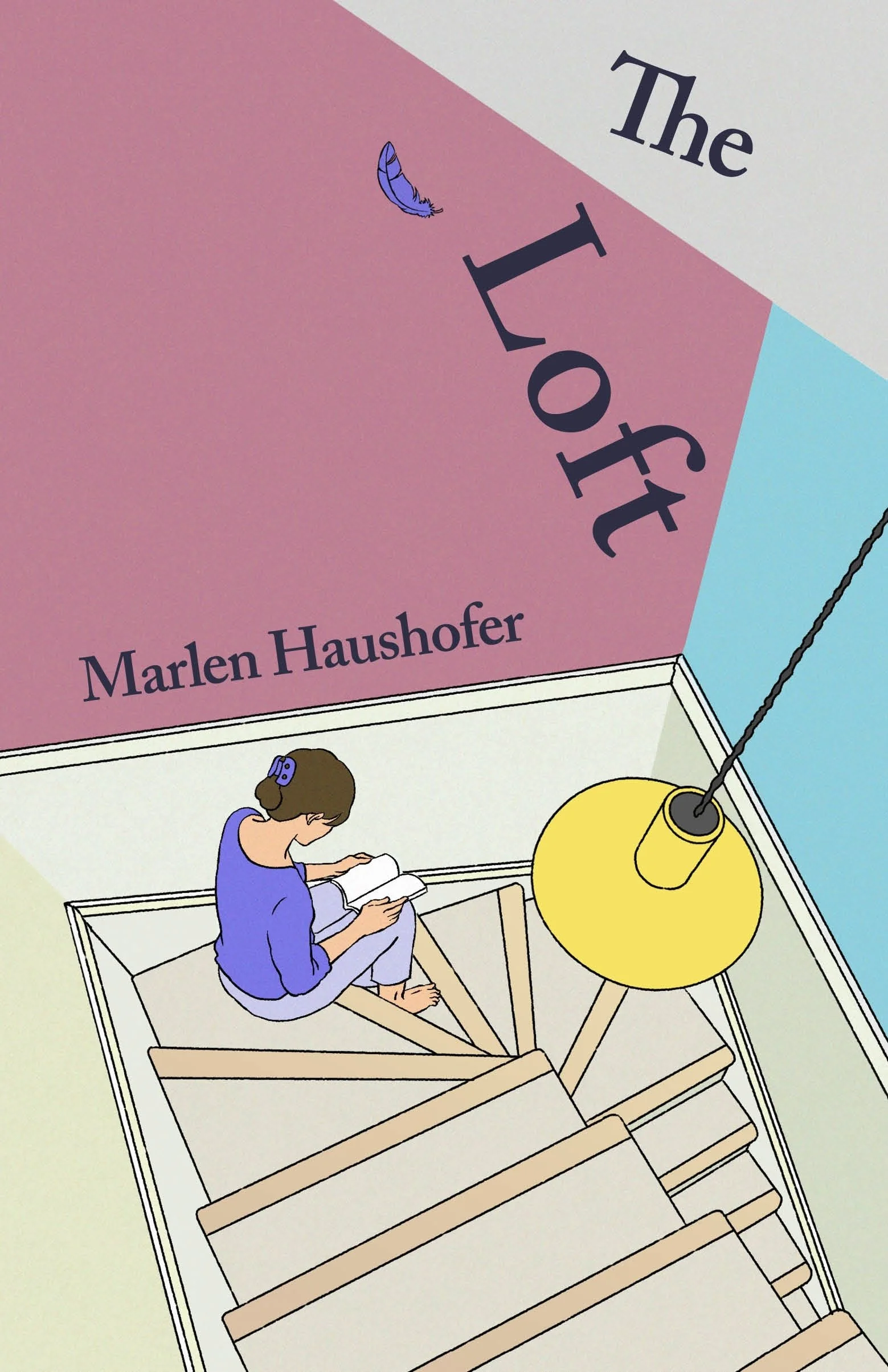
The Loft by Marlen Haushofer (translated from German by Amanda Prantera) $38
An Austrian housewife sits in her loft intent on her drawings of birds and insects. The loft is a retreat where she can work undisturbed. It is also a retreat from her dull and dissatisfied husband, a man who sighs unhappily even when she sneezes. Their grown-up children are living independent lives and the house is very quiet. Her dreams are filled with domestic drudgery. Then one day, a package arrives containing extracts from the narrator's diary, written twenty years before. Back then she had been sent away to a remote cottage in a bid to 'cure' her from unexplained sudden deafness. More mysterious packages containing old diary entries arrive. Who is sending them? And what did happened all those years ago in the forest? [Hardback]
”A thrilling novel. What gives this book its tremendous power? First the voice is charming, with a skittish beauty throughout. But there is also disarming honesty, and a lack of vanity, which appeals as only truth can.” —John Self, Guardian
”It is the skilful juxtaposition of internal loneliness and isolation with a mysterious, chilling past that brings such emotional power to this unusual book.” —Daily Mail
Her prose is a model of simplicity and concision; but the pictures which her sentences paint are enigmatic, overdetermined, elusive. We can claim her books for feminism, for eco-politics, for existentialism or psychoanalysis, or we can take them as thrillers or dreams.” —London Review of Books
>>Read an extract.
>>Human life everywhere.
>>Read Thomas’s review of The Wall.

GET YOUR COPY
 

All Her Lives: Nine stories by Ingrid Horrocks $35
All Her Lives follows women across generations as they resist, nurture and transform. These are lives shaped by love and politics, motherhood and memory, constraint and defiance. From girls raised in the garden of Plunket founder Truby King, to a queer university student at a mid-2000s Berlin rave, to a mother facing the cost of her son's climate rebellion, the women of All Her Lives are complex, resilient and deeply human. Shadowing their stories is the early feminist writer Mary Wollstonecraft, whose journey of grief and revolution will become a vessel for what endures — and for finding hope. Vast and intimate, All Her Lives explores the layered selfhood of women — all that they inherit, sacrifice, imagine and carry forward — and the power found in unravelling and reweaving those selves on their own terms. [Paperback]
”A wonderful collection that swims in and out of women's lives across time, exploring the struggle for freedom and love. I'll be thinking about it for a long time — a book of quiet force.” —Emily Perkins

GET YOUR COPY
 

Good and Evil and Other Stories by Samanta Schweblin (translated from Spanish by Megan McDowell) $35
The strange and explosive new collection from the incomparable imagination of Samanta Schweblin, a master of the short story. A gripping blend of the raw, the astonishing and the tragic, every story is as perfectly unexpected as a snare: tightly, exquisitely wound, ready to snap at a touch. Here, a young father is haunted by the consequences of a moment of distraction; tragedy is complicated by the inexplicable appearance of an injured horse; an attempted poisoning leads two writers to startling conclusions; a lonely woman’s charity is rewarded with home-invasion. And in the shocking opening story, a mother surfaces from the depths of the lake behind her house, where she saw something awful yet alluring. Guilt, grief and relationships severed permeate this mesmerizing collection — but so do unspeakable bonds of family, love and longing, each sinister and beautiful. Step by step these unnerving stories lure us into the shadows to confront the monsters of everyday life — ourselves. [Paperback with French flaps]
”Remarkably taut, clear, precise, and yet capable of capturing the extent of our human messiness, these stories are perfect for the times we dwell inside.” —Colum McCann
”No one writes like Samanta Schweblin. Her narratives are sui generis — wonderfully unpredictable and invitingly strange.” —Lorrie Moore
”Samanta Schweblin combines the urgent propulsion that characterizes all great storytelling with precise, if uncanny, descriptions of human feelings that often go unnamed, those ambiguous zones of human reality where awe, dread, and desire mingle.” —Siri Hustvedt
>>Paying attention to what others ignore.

GET YOUR COPY
 

He Puāwai: A natural history of New Zealand flowers by Philip Garnock-Jones $80
One hundred native flowers of Aotearoa revealed in extraordinary 3D photography. Aotearoa has at least 2,200 native species of flowering plants that have evolved in our unique conditions, and the vast majority of them grow nowhere else on earth. This has made New Zealand a natural laboratory for studies of flower biology. He Puāwai is a natural history of New Zealand flowers, focusing on 100 native species to represent the full range of flower phenomena of Aotearoa — from familiar iconic flowers of kōwhai, mānuka and pōhutukawa to oddities like the water-pollinated flowers of eelgrass, bat-pollinated blossoms of kiekie, and the world’s smallest flowers, Wolffia. Each flower’s text describes and explains its structure and functions, alongside over 500 remarkable photographs that enable the reader (with the viewer included in the book) to view the flowers miraculously in 3D. [Large-format hardback]
”Remember when you were small, and the minute details of everything — shapes, colours patterns — were so absorbing. I suspect Phil Garnock-Jones never lost that wonder at all, and here he shares it generously. It's impossible to pore through the pages of He Puawai without feeling amazement rekindled — and realising there are infinitely more ways than you imagined to greet, observe and learn from these tiny taonga, the flowers of Aotearoa.” —Johanna Knox, author of The Forager's Treasury
”This book, like no other, opens a microscopic window to appreciate native plants. The luscious detail, both in the crisp stereo imagery and in the carefully descriptive text, captures and holds the attention of anyone who has enjoyed the attraction provided by flowers. I predict this book will inspire another generation of botanists and nature lovers in Aotearoa. Not many books deserve their place as a textbook (which deepens our understanding of native plants) and equally as a (stunningly captivating) coffee table book.” —Tim Park, Manager, Otari Wilton's Bush
>>Look inside!

GET YOUR COPY
 

The Meeting Place: Māori and Pākehā encounters, 1642—1840 by Vincent O’Malley $50
Vincent O’Malley’s account of the first meeting between Ngāti Tūmatakōkiri and Abel Tasman’s crew sets the scene for how two peoples navigated fraught beginnings to find a ‘meeting place’ in pre-Treaty Aotearoa. O’Malley’s important book tells the story of encounters between Māori and Pākehā in a turbulent landscape still shaped by Māori authority and evolving relationships. Early misunderstandings and violence gradually gave way to mutual accommodation and adaptation. In this middle ground, people traded, intermarried, forged alliances and shaped each other’s ways of life — until this fragile balance was undone in the decades after 1840. Through people’s stories, O’Malley brings to life a time of extraordinary change. This new edition expands on the original with new research, including material on Te Waipounamu and an enriched visual narrative. [Paperback]
”Vincent O’Malley’s new edition of The Meeting Place is a timely and important work. His reflections on the whakataukī ‘I ngā rā o mua — the past in front of us’ resonate deeply with current realities, reminding us of the optimism and resilience embedded in our histories. This book powerfully illustrates how early Māori and Pākehā overcame conflict to create middle grounds of respect, sharing and mutual tolerance — a history we need to remember today.” —Melissa Matutina Williams, author of Panguru and the City: Kāinga Tahi, Kāinga Rua
>>Read the Introduction.

GET YOUR COPY
 

Chris Knox: Not Given Lightly, A biography by Craig Robertson $60
I’ve got things I can’t recall Like the colours of my bedroom wall Oh, I can’t decide if I Want to know these things or why They bother me and tantalise me so’ — from ‘I’ve Left Memories Behind’
In the mid-1990s, the Village Voice described Chris Knox as ‘indie rock’s premier oddball singer songwriter’ and, when Knox suffered a stroke a decade later, music icons such as Yo La Tengo, Bill Callahan, Neil Finn and Shayne Carter all showed up for concerts and a tribute album. Who is this epileptic, opinionated, shorts-and-jandals-wearing, endlessly creative musician and artist from New Zealand? This is his story — from a childhood in ‘flat, rectangular and boring’ Invercargill to years of creative experimentation in Dunedin to family life in Auckland; from The Enemy’s first gig at Dunedin’s Beneficiaries Hall to Toy Love’s tour of Australia and on to Tall Dwarfs’ escapades around the globe; from tape loops and crashing cutlery recorded on a TEAC 4-track to the biting satire of Jesus on a Stick comics and Listener opinion pieces; and from home-recorded LPs delivered by hand to the ubiquitous voice on ads for Vogels and Heineken. Chris Knox: Not Given Lightly tells the story of one extraordinarily creative man’s journey from the obscurity of punk rock to the heart of New Zealand culture. No-one has dome more to raise doing-things-badly to an effective artform. Fully illustrated. Includes discography. [Flexibound]
>>Trailer.
>>Pull Down the Shades.
>>Squeeze.
>>Nothing’s Going to Happen.
>>Not Given Lightly.

GET YOUR COPY
 

Understanding Hauora: A handbook of basic facts about te Tiriti o Waitangi and the Health System by Rooimata Smail $25
Understanding Hauora is the second book in the #1 bestselling ‘Understanding Te Tiriti’ series by human rights lawyer and educator Roimata Smail. This short, accessible guide explains what hauora really means — not just healthcare, but the wellbeing of body, mind, spirit, and whānau, grounded in the whenua — and how Te Tiriti o Waitangi guaranteed Māori authority over it. It covers the history, the harm caused when those promises were broken, and the hope we see when Māori lead solutions to improve health outcomes for everyone. Whether you’re a student, educator, health professional, policymaker, or simply want to understand the facts, Understanding Hauora gives you a confident grounding in Te Tiriti and health equity. [Booklet]
>>See also Understanding Te Tiriti.

GET YOUR COPY
 

Feeding Ghosts: A graphic memoir by Tessa Hulls $55
An astonishing, deeply moving graphic memoir about three generations of Chinese women, exploring love, grief, exile, and identity. Tessa Hulls's grandmother, Sun Yi, was a Shanghai journalist swept up by the turmoil of the 1949 Communist victory. After fleeing to Hong Kong, she wrote a bestselling memoir about her persecution and survival — then promptly had a mental breakdown from which she never recovered. Growing up with Sun Yi, Tessa watches both her mother and grandmother struggle beneath the weight of unexamined trauma and mental illness, and bolts to the most remote corners of the globe. But once she turns thirty, roaming begins to feel less like freedom and more like running away. Feeding Ghosts is Tessa's homecoming, a vivid, heartbreaking journey into history that exposes the fear and trauma that haunt generations, and the love that holds them together. [Paperback]
>>Look inside!
>>A compulsive genre-hopper.
>>A DJ in Antarctica.

GET YOUR COPY
 

No Friend to this House by Natalie Haynes $38
An extraordinary reimagining of the myth of Medea. This is what no one tells you, in the songs sung about Jason and the Argo. This part of his quest has been forgotten, by everyone but me . . . Jason and his Argonauts set sail to find the Golden Fleece. The journey is filled with danger, for him and everyone he meets. But if he ever reaches the distant land he seeks, he faces almost certain death. Medea — priestess, witch, and daughter of a brutal king — has the power to save the life of a stranger. Will she betray her family and her home, and what will she demand in return? Medea and Jason seize their one chance of a life together, as the gods intend. But their love is steeped in vengeance from the beginning, and no one — not even those closest to them — will be safe. [Paperback]
”Natalie Haynes is a once-in-a-generation storyteller, and No Friend to This House is her masterpiece. Haynes does not so much retell the myth of Medea as excavate it, layer by devastating layer, for truths both timeless and timely. This is a stunning novel that cuts to the bone.” —Dr. Amanda Foreman
>>The mystery of Medea.

GET YOUR COPY
 

Domination: The fall of the Roman Empire and the rise of Christianity by Alice Roberts $40
This is the story of the fall of an Empire — and the rise of another. Who spread Christianity, how, and why? In her quest to find the answer, Roberts takes us on a gripping investigative journey. From a secluded valley in south Wales to the shores of Brittany; from the heart of the Roman Empire in a time of political turmoil to the ancient city of Corinth in the footsteps of the apostle Paul; from Alexandria in the fourth century to Constantinople. As the Roman Empire crumbled in Western Europe, a shadow of power remained, almost perfectly mapping onto its disappearing territories. And then, it continued to spread. Unearthing the archaeological clues and challenging long-established histories, Roberts tells a remarkable story about the relationship between the Roman Empire and Christianity. Lifting the veil on secrets that have been hidden in plain sight, this story is nothing short of astonishing. Domination is a page-turning exploration of power and its survival. [Paperback]

GET YOUR COPY
 

Start With a Teapot: An unexpected guide to the art of drawing by Enric Lax $35
Drawing is not very different from riding a bicycle, whistling, or cooking a tortilla: learning any of these things just takes a little practice and a sense of humour. For example, to draw an elephant, you start with a teapot. Next add eyes and tusks, finish with a tail and four legs . . . ta-da, you've got your elephant! And how do you draw a horse? First, draw an elephant. Start with a Teapot is utmost nonsense and unarguable logic. How do you draw a snail, a stapler, a butterfly, a eukaryotic cell? Enric Lax inspires his readers to observe, transform, tell stories and make mistakes--that's how to draw. [Hardback]
>>Look inside!
>>Draw along!

GET YOUR COPY
 
BROWSE MORE NEW RELEASES
VOLUME BooksNew releases