
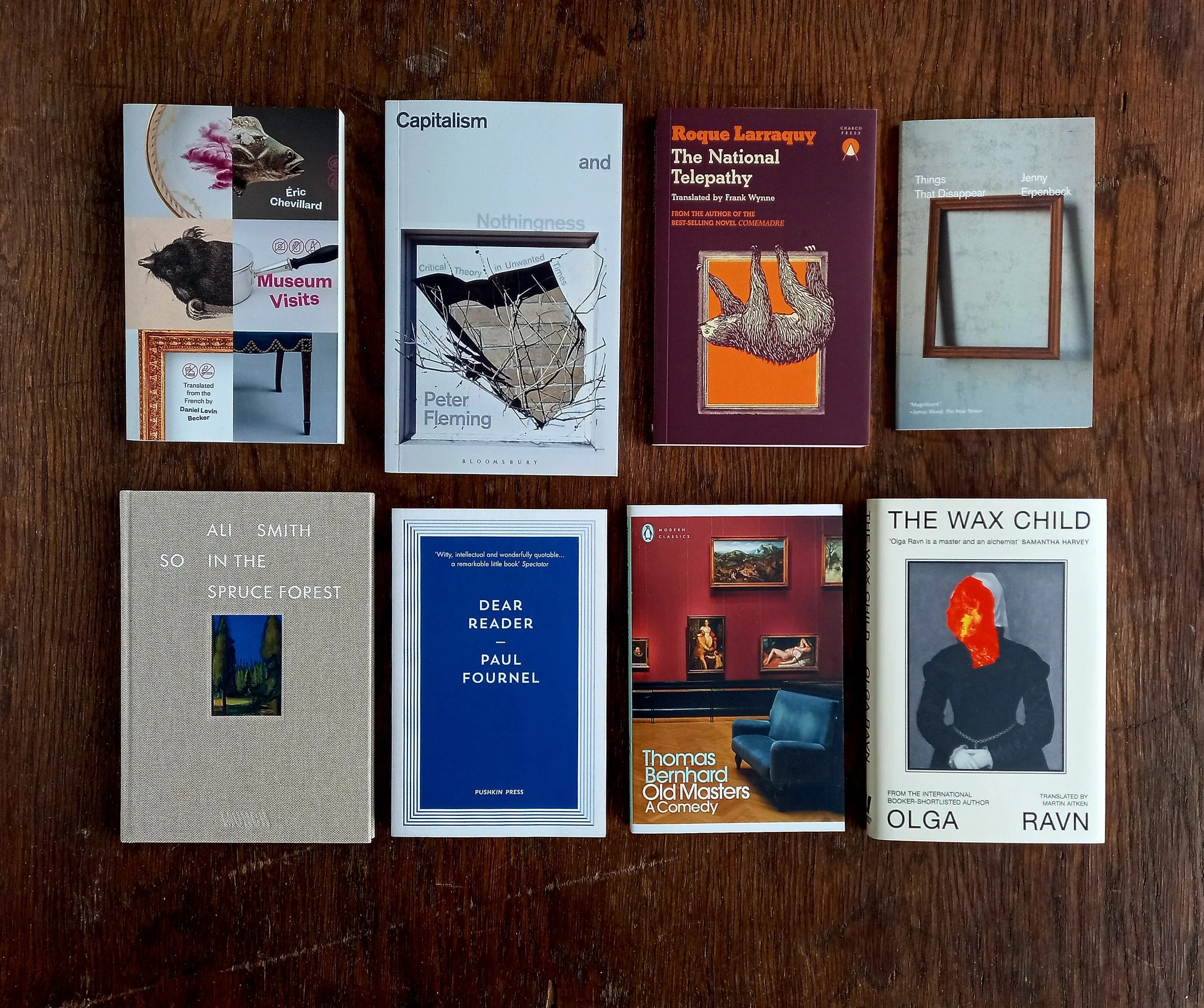
Get your reading in the frame with this selection of books from our shelves. Click through to find out more:

All your choices are good! Click through to our website (or just email us) to secure your copies. We will dispatch your books by overnight courier or have them ready to collect from our door in Church Street, Whakatū.
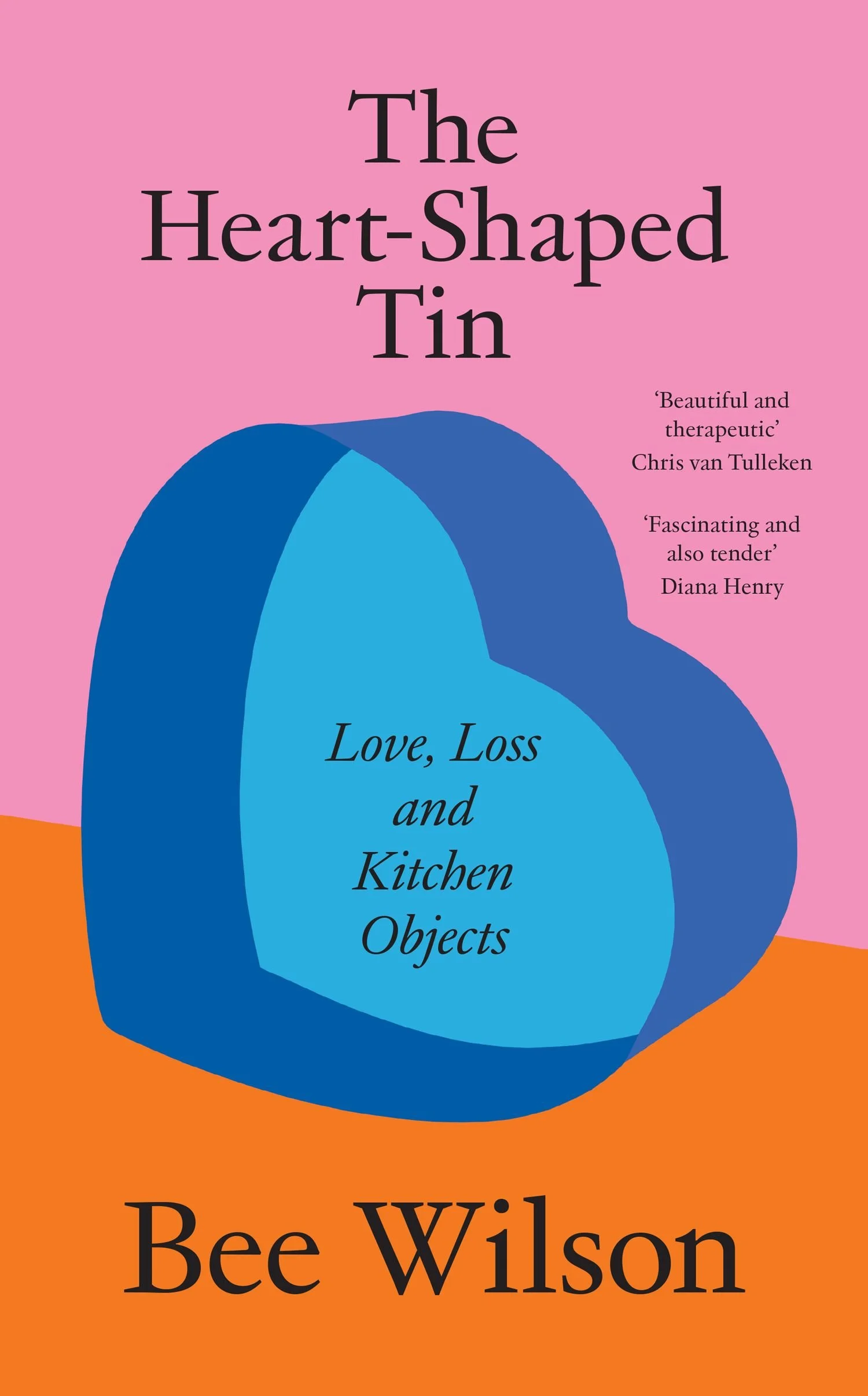
The Heart-Shaped Tin: Love, loss, and kitchen objects by Bee Wilson $50
This strikingly original account from award-winning food writer Bee Wilson charts how everyday objects take on deeply personal meanings in all our lives. One ordinary day, the tin in which Bee Wilson baked her wedding cake fell to the ground at her feet. This should have been unremarkable, except that her marriage had just ended. Unsettled by her own feelings about the heart-shaped tin, Wilson begins a search for others who have attached strong and even magical meanings to kitchen objects. She meets people who deal with grief or pain by projecting emotions onto certain objects, whether it is a beloved parent’s salt shaker, a cracked pasta bowl or an inherited china dinner service. Remembering her own mother, a dementia sufferer, she explores the ways that both of them have been haunted by deciding which kitchen utensils to hold on to and which to get rid of when you think you are losing your mind. Looking to different continents, cultures and civilisations to investigate the full scope of this phenomenon, Wilson blends her own experiences with a series of touching personal stories that reflect the irrational and fundamentally human urge to keep mementos. Why would a man trapped in a concentration camp decide to make a spoon for himself? Why do some people hoard? What do gifts mean? How do we decide what is junk and what is treasure? We see firsthand how objects can contain hidden symbols, keep the past alive and even become powerful symbols of identity and resistance; from a child’s first plate to a refugee’s rescued vegetable corers. Thoughtful, tender and beautifully written, The Heart-Shaped Tin is a moving examination of love, loss, broken cups and the legacy of things we all leave behind. [Hardback]
”This beautifully written book about the deep significance of certain objects in our kitchen is nothing less than an intense, compassionate expression of the human condition. Both intimate and expansive, The Heart-Shaped Tin is a book I know I'll give, urgently and importantly, to those I love.” —Nigella Lawson
”Bee Wilson has changed the landscape of the kitchen by breathing life into ordinary objects. Through this remarkable book you will find yourself discovering meaning in plates, sadness in spoons, love in a measuring cup. I want to give this book to every cook I know.” —Ruth Reichl
>>Passing through different hands.
>>Look inside the book.
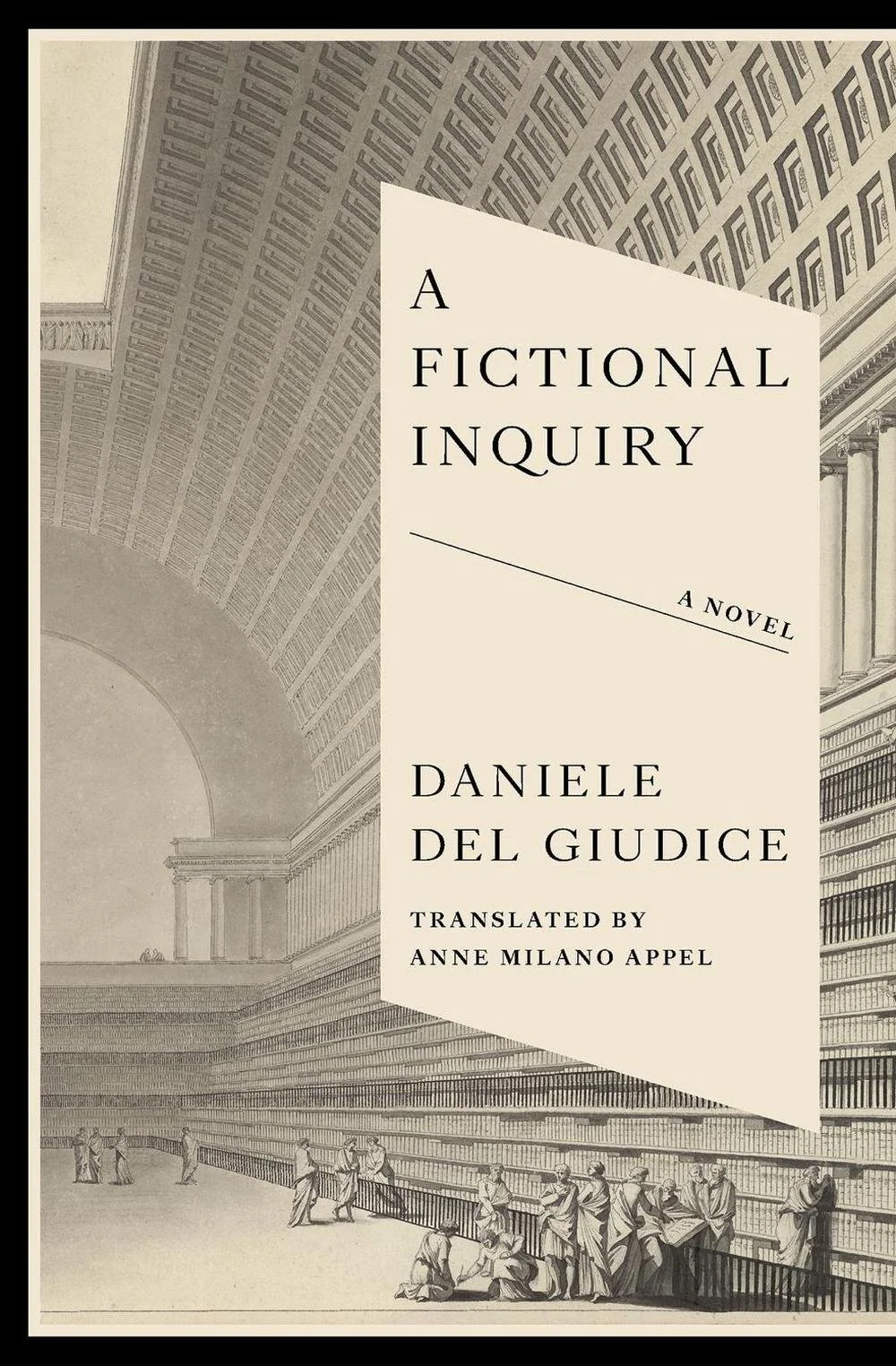
A Fictional Inquiry by Daniele del Giudice (translated from Italian by Anne Milano Appel) $45
This haunting novel was championed by acclaimed Italian author Italo Calvino who called it a "very simple book, straightforward to read, but at the same time possessing great depth and extraordinary quality." First published in 1983 and never before translated into English, A Fictional Inquiry tells of an unnamed narrator visiting Trieste and London to retrace the footsteps of a fabled literary figure. The narrator is intrigued by the elusive, long dead man of letters whose career proved decisive to the culture of his native Italy despite his apparently never having written a line. There are encounters with those who once loved him, walks along the streets he frequented, and visits to his favored cafés, bookstores, and a library in search of an answer. Why did he leave no written trace? In the end, as Italo Calvino wrote when this book originally appeared in Italian, who the legendary author manqué actually was is beside the point. What really matters are the questions and the disquiet running through these luminous pages, the dialectic between literature and life playing out just below the surface. A Fictional Inquiry — which includes notes from both Calvino and translator Anne Milano Appel — is a gem of unparalleled writing appearing in English for the first time. [Paperback]
"The vague state between writing and not writing, between the books written and the parallel world where they're not, this is what consumes the narrator of A Fictional Inquiry, a metaphysical detective story and a modern Italian classic. A strange and ambiguous novel and a brilliant meditation on the mysteries that inform literature." —Mark Haber
"Explores the nature of perception while critiquing both writers and the writing life. Anglophones at last have an opportunity to engage with this intriguing and intellectually stimulating novel for the first time." —On the Seawall
"Constant movement places A Fictional Inquiry in a line of texts narrated by a walker, from modernists like Robert Walser and Fernando Pessoa to more contemporary writers like Sebald." —Full Stop
>>An investigation into the nature of fiction and reality.
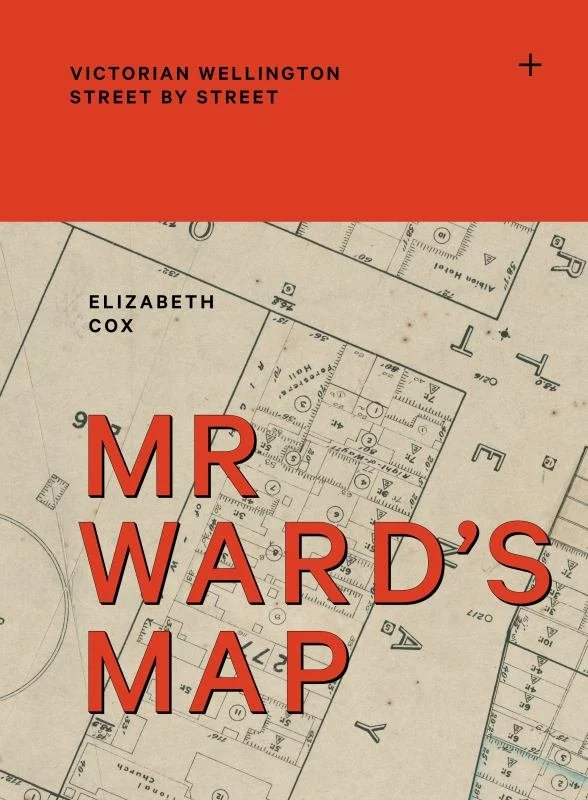
Mr Ward’s Map: Victorian Wellington, street by street by Elizabeth Cox $90
In 1891, a remarkable map of Wellington was made by surveyor Thomas Ward. It recorded the footprint of every building, from Thorndon in the north and across the teeming, inner-city slums of Te Aro to Berhampore in the south. Updated regularly over the next 10 years, it detailed hotels, theatres, oyster saloons, brothels, shops, stables, Parliament, the remnants of Maori kainga, the Town Belt, the prisons, the 'lunatic asylum', the hospital and much more, in detail so particular that it went right down to the level of the street lights. Luxuriously packaged, cloth-bound with a fold-out wrapper, Mr Ward's Map uses this giant map and historic images to tell marvellous stories about a vital capital city, its neighbourhoods and its people at the turn of the twentieth century. Very nicely presented in large format and full of valuable historical detail. [Hardback]
>>Look inside.
>>Victorian Google street-view.
>>88 A1 sheets.
>>Struggling.
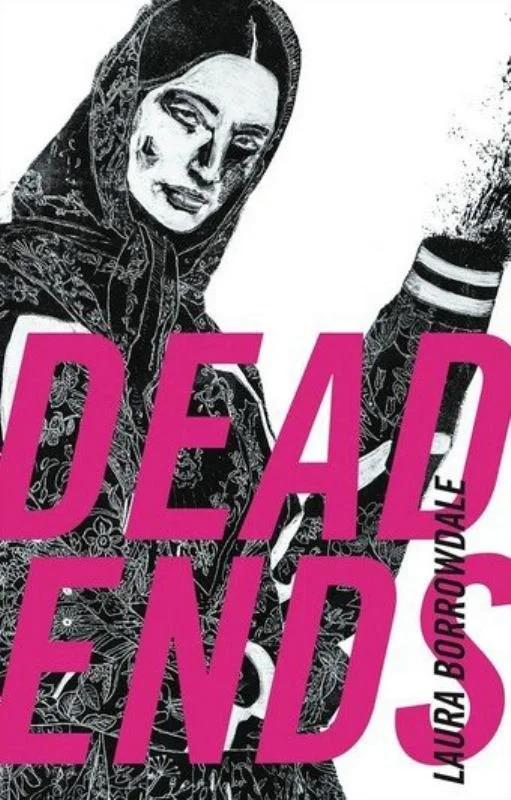
Dead Ends by Laura Borrowdale $30
In the dark, uncanny world of Dead Ends, our ghosts live alongside us, break-ups come with a grisly cost, and there really are monsters under the bed. Laura Borrowdale's short story collection is full of the horrors of domestic banality, parenting, relationships, and womanhood. With deft and exacting prose, Borrowdale's stories reflect our own lives back at us told slant, revealing where something sinister lives just beneath the surface. [Paperback]
”Weird, disturbing and dystopian, but also at times warm and comical, Dead Ends reaches back to a tradition of New Zealand gothic, and forwards to a nebulous future. There is discord between siblings, parents and children, and romantic partners, the threat of AI artbots, annoying ghosts, and the menace of authoritarianism. This collection is filled with what ifs — What if you had to physically lose a limb to be allowed a divorce? What if you were forced to give yourself full body tattoos? What if a potter puts too much of her soul into her work? What if a pregnant woman's thoughts literally shape her baby? What if the government turned Jonestown on the populace? Laura Borrowdale is a skilled and imaginative storyteller with a pitch-perfect approach to the short story form.” —Airini Beautrais

The Late Marx’s Revolutionary Roads: Colonialism, gender and Indigenous communism by Kevin B. Anderson $47
In his late writings, Marx traveled beyond the boundaries of capital and class in the Western European and North American contexts. In research notebooks, letters, and brief essays during the years 1869-82, he turns his attention to colonialism, agrarian Russia and India, Indigenous societies, and gender. These texts, some of them only now being published, evidence a change of perspective, away from Eurocentric worldviews or unilinear theories of development. Anderson’s book focuses on how the late Marx sees a wider revolution that included the European proletariat being touched off by revolts by oppressed ethno-racial groups, peasant communes, and Indigenous communist groups, in many of which women held great social power. Anderson carries out a systematic analysis of Marx’s Ethnological Notebooks and related texts on India, Ireland, Algeria, and Latin America. This book will appeal to those concerned with the critique of Eurocentrism, racial domination, and gender subordination, but equally to those focusing on capital and class. For as Anderson shows, the late Marx transcended these boundaries as he elaborated a truly global, multilinear theory of modern society and its revolutionary possibilities. In all these ways, the writings of the late Marx speak to us today. [Paperback]
”Imperialism persists in the 21st century. Marx's last endeavors to overcome his Eurocentrism give an invaluable lesson to today's struggles against ongoing settler colonialism.” —Kohei Saito
”After the Young Marx, a Hegelian philosopher and the mature Marx, a political economist, we can now see the late Marx grappling with colonialism, globalization, various forms of landed property, and gradually questioning his own earlier Eurocentrism. This Third Marx, while the least well-known, may be the closest to our modern sensibilities and interests.” —Branko Milanovic
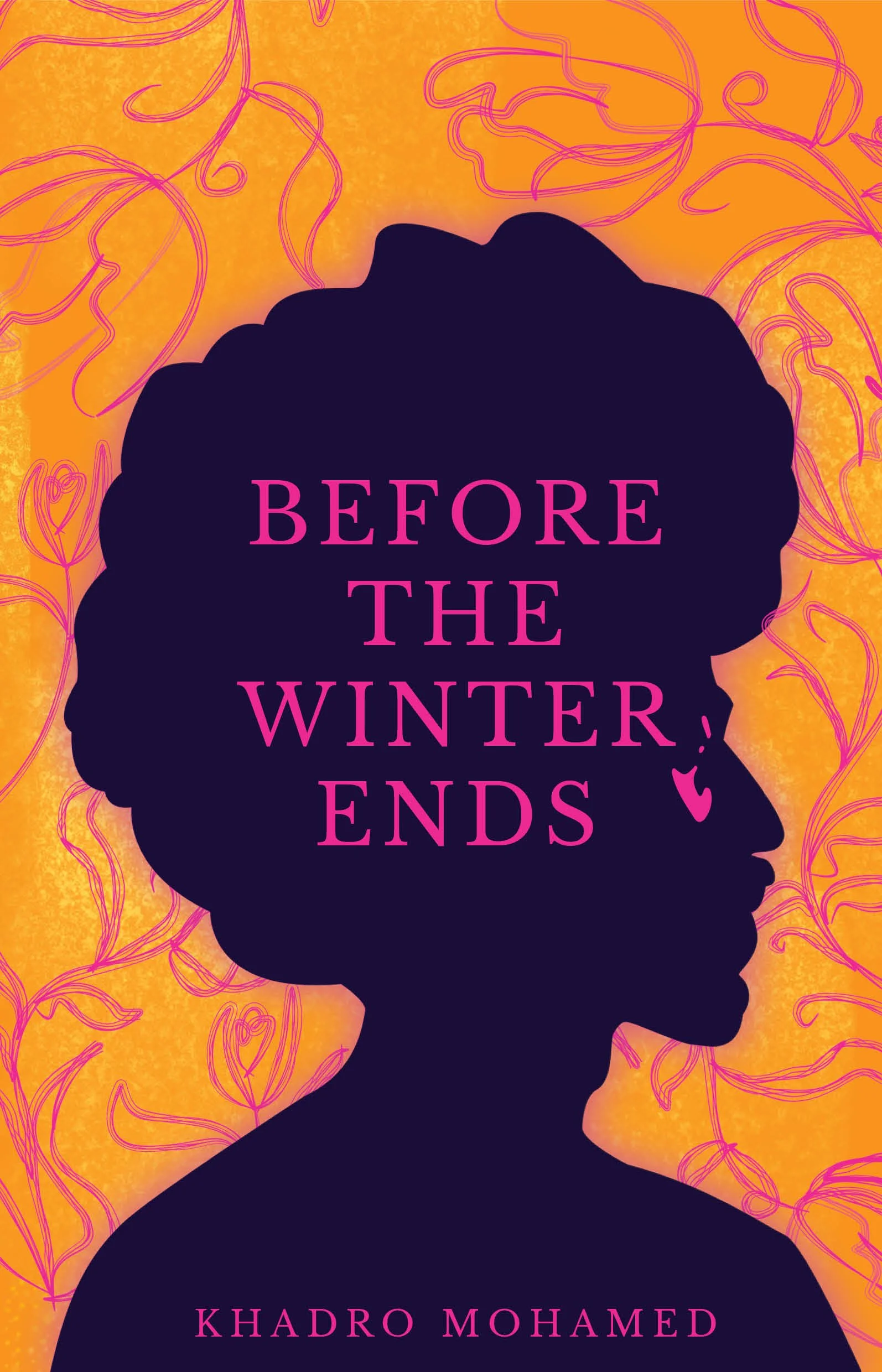
Before the Winter Ends by Khadro Mohammed $30
In the cold Wellington winter, Omar’s grades are slipping, his mum is unwell and his best friend is growing distant. Two decades earlier in Mogadishu, Asha and Yasser are falling in love and starting to build a life together while a burgeoning war threatens to take it away. Before the Winter Ends explores the relationship between mother and son across Aotearoa New Zealand, Somalia and Egypt as they search for understanding and try to bridge the distance between them. Khadro Mohamed’s debut novel is a stark portrayal of how the past illuminates the present and how grief shapes a family. [Paperback]
>>That prickly feeling.
>>An interview with the author.
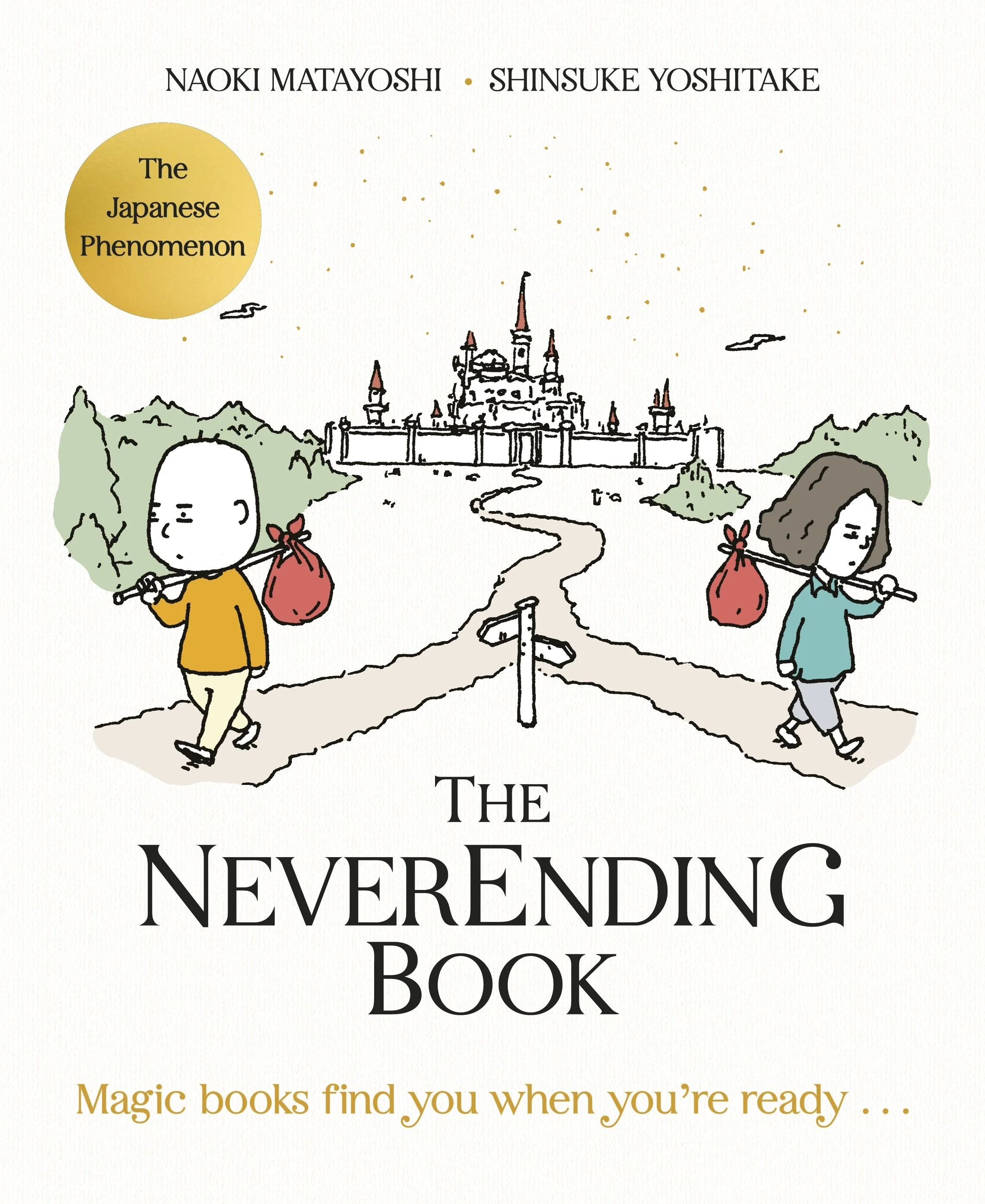
The Neverending Book by Naoki Matayoshi and Shinsuke Yoshitake $40
A book that makes the sound of turning pages fractionally too early, infuriating its readers; a diary shared by two children with painful secrets; a photo album left by a dying father for when his daughter gets married. An elderly book-loving king sends two subjects on a mission: to travel the world collecting stories about weird and wonderful books. Upon their return, they recount their stories for the king over the course of thirteen nights. From the comically irreverent to the heartrending to the heartwarming, The Neverending Book delves into all that a book can be, forming an enchanting compendium that reveals the ways in which we interact with books, and the importance they hold in our hearts — all told in words and pictures through the tale of two subjects gathering stories about books for their blind, book-loving king. [Hardback]
>>Look inside.
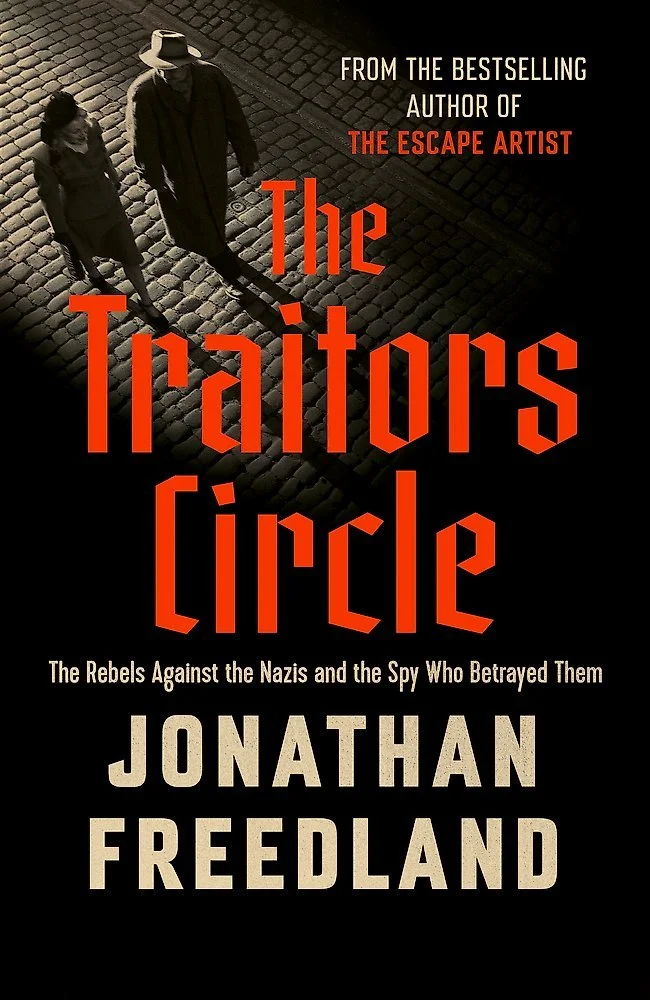
The Traitors Circle: The rebels against the Nazis and the spy who betrayed them by Jonathan Freedland $40
The Traitors Circle tells the true, but scarcely known, story of a group of secret rebels against Hitler. Drawn from Berlin high society, they include army officers, government officials, two countesses, an ambassador's widow and a former model — meeting in the shadows, whether hiding and rescuing Jews or plotting for a Germany freed from Nazi rule. One day in September 1943 they gather for a tea party — unaware that one among them is about to betray them all to the Gestapo. But who is the betrayer of a circle themselves branded 'traitors'? [Paperback]
”A story of unlikely rebels who had much to lose from resisting the Nazi regime, which so many of their peers supported. What made them trade personal safety for moral rectitude? Freedland's answer is as tense as a thriller yet perceptive, thoughtful and thoroughly researched. It made me think long after I'd turned the last page.” —Katja Hoyer
>>The uses of a sofa bed.
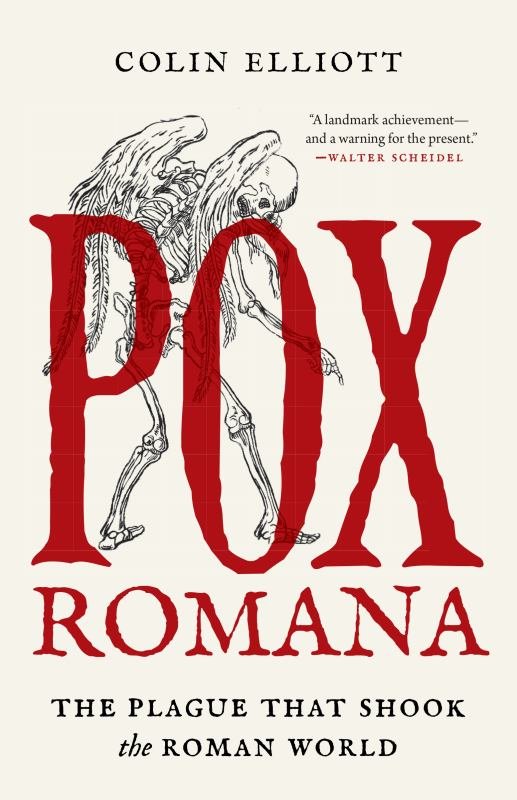
Pox Romana: The plague the shook the Roman world by Colin Elliott $40
In the middle of the second century AD, Rome was at its prosperous and powerful apex. The emperor Marcus Aurelius reigned over a vast territory that stretched from Britain to Egypt. The Roman-made peace, or Pax Romana, seemed to be permanent. Then, apparently out of nowhere, a sudden sickness struck the legions and laid waste to cities, including Rome itself. This fast-spreading disease, now known as the Antonine plague, may have been history's first pandemic. Soon after its arrival, the Empire began its downward trajectory toward decline and fall. In Pox Romana, historian Colin Elliott offers a comprehensive, wide-ranging account of this pivotal moment in Roman history. Did a single disease its origins and diagnosis still a mystery bring Rome to its knees? Carefully examining all the available evidence, Elliott shows that Rome's problems were more insidious. Years before the pandemic, the thin veneer of Roman peace and prosperity had begun to crack: the economy was sluggish, the military found itself bogged down in the Balkans and the Middle East, food insecurity led to riots and mass migration, and persecution of Christians intensified. The pandemic exposed the crumbling foundations of a doomed Empire. Arguing that the disease was both cause and effect of Rome's fall, Elliott describes the plague's 'preexisting conditions' (Rome's multiple economic, social, and environmental susceptibilities); recounts the history of the outbreak itself through the experiences of physician, victim, and political operator; and explores post-pandemic crises. The pandemic's most transformative power, Elliott suggests, may have been its lingering presence as a threat both real and perceived. Interesting. [Now in paperback]
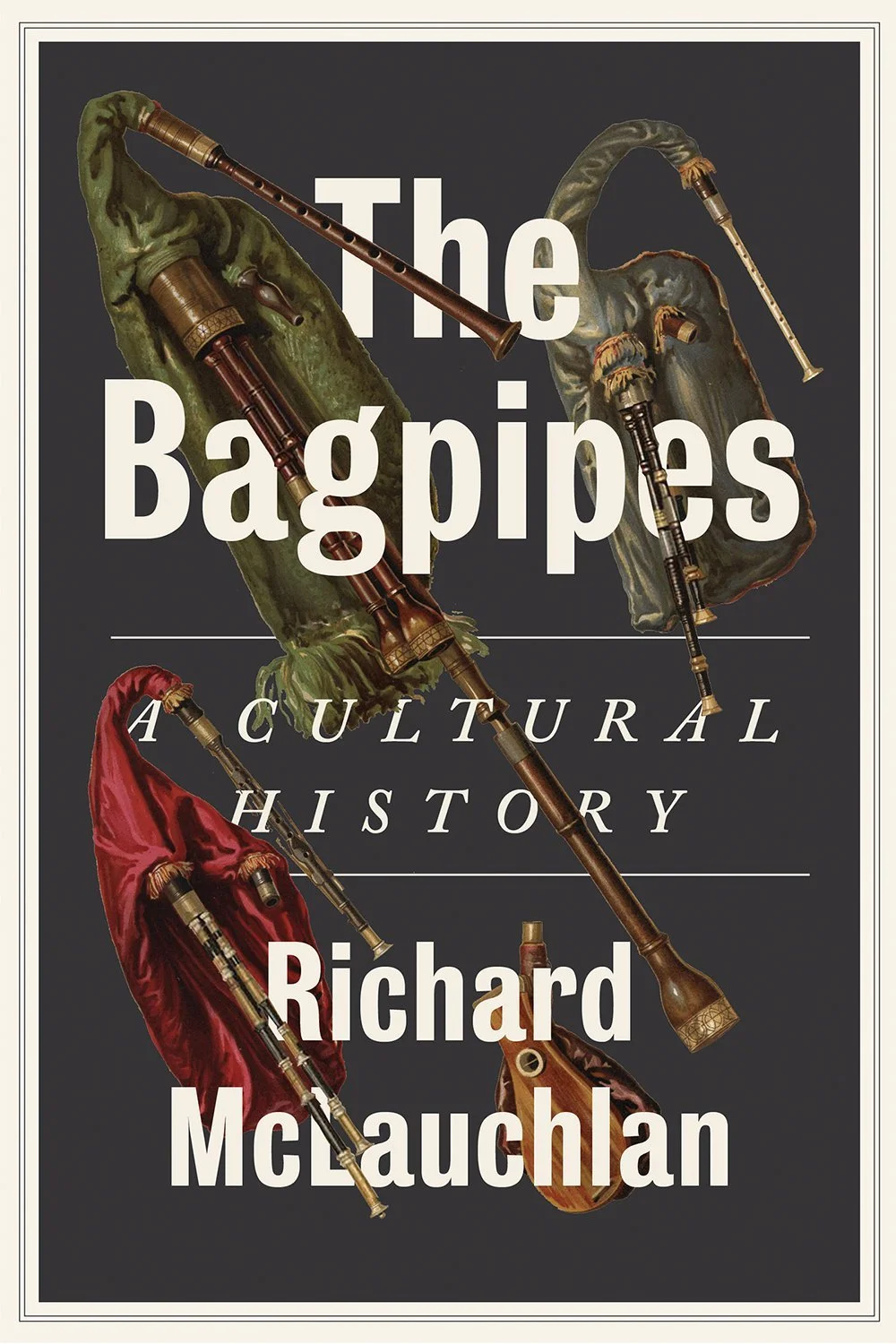
The Bagpipes: A cultural history by Robert McLauchlan $45
A diverse history of the pipes from inspiring terror on battlefields to enriching cultures worldwide. In the early second century CE, someone was described as playing a pipe “with a bag tucked under his armpit”. That man, the first named piper in history, was the Roman Emperor Nero. Since then, this improbable conflation of bag and sticks has become one of the most beloved and contested instruments of all time. When another piping emperor, Tsar Peter the Great, watched his pet bear take its last breath, he decided the creature would live on as a bagpipe. This rich and vivid history tells the story of an instrument boasting over 130 varieties, yet commonly associated with just one form and one country: Scotland, and its familiar Great Highland Bagpipe. In fact, the pipes are played across the globe, and their story is a highly diverse one, which illuminates society in remarkable, unexpected ways. Richard McLauchlan charts the rise of women pipers; investigates how class, privilege and capitalism have shaped the world of piping; and explores how the meaning of a 'national instrument' can shift with the currents of a people's identity. The vibrancy and inventiveness characterising today's pipers still speak to the potency of this fabled and once feared instrument, to which McLauchlan is our surefooted guide. [Hardback]
”Historically insightful and full of character. Captures the essence and beauty of piping's vibrant culture with historical, musical and characterful insight.” —Finlay MacDonald
”Richly entertaining and perceptive. A revelation in how an instrument can transform culture.” —Alastair Campbell
>>Pibroch at Braemar.

The Monster in the Lake by Leo Timmers $30
In this larger-than-life picture book, Eric the duck is nervous to swim in the lake for fear a monster might live there, but he bravely follows his friends and discovers something spectacular indeed lives beneath the surface. Four ducks are tired of their small pond and set out for an adventure in the big lake. Walking at the back, Eric isn't sure. He’s heard there’s a monster in the lake, but his friends don’t believe a word of that old story! Eric reluctantly tags along, only to make a startling discovery and find himself in a wonderful underwater adventure. This large-format picture book features a detailed fold-out underwater world of mechanical marvels and sea creatures. The story of a nervous duck who finds courage and the overconfidence of groups will resonate with anyone who’s nervously dipped a toe in unknown waters. [Hardback]
>>Look inside!

Read our latest newsletter
14 November 2025
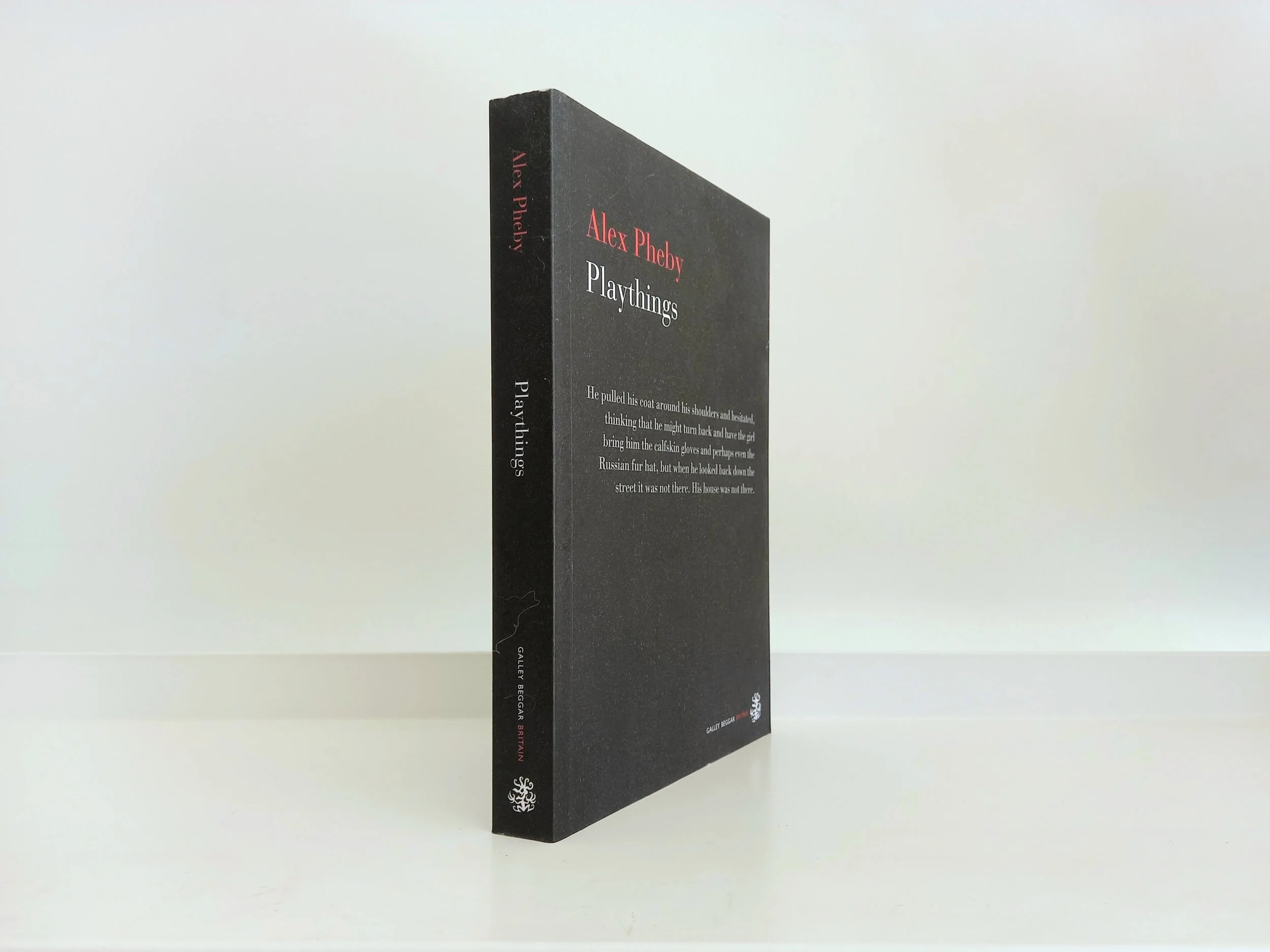
Freud’s consideration of the case of the judge Paul Schreber, and his book Memoirs of My Nervous Illness (1903), was instrumental in the formulation of the modern construct of paranoid schizophrenia, and Schreber’s experience, treatment and interpretation have been rigorously explored and debated by Deleuze, Guatarri, Canetti, Lacan, Calasso and others. Playthings, a novel by Alex Pheby, depicts, sometimes horrifically, sometimes with humour or beauty, sometimes ironically, Schreber’s descent into and experience of madness: his inability to achieve the culturally determined overarching perspective that enables us to function without being overwhelmed by minor details, observations and experiences (of course, none of us do this especially well; our ability to ‘function’ determines which side of our society’s line of ‘madness’ we exist on); his inability to integrate his experiences into ‘useful’ concepts of time and causality; his inability to see others as persons or to interpret their intentions and actions in ways that fit with shared concepts of the patterns of intentions and actions, and his projection of suppressed psychological material onto such others (this dehumanisation of those seen as ‘other’ is a manifestation of the mechanisms by which socially inter-confirmed mass paranoia presented itself as fascism in Germany a few decades later). “It was nothing to him, because they were all nothing. Fleeting-improvised-wretched-plaything-human-beings. Puppets, soul-less automata, clicking and whirring and chirruping to each other on a flat street of false houses and dust blown by the perishing cold wind.” As Pheby zooms in and away from Schreber’s experience, playing always with the issues of perspective that lies at the core of his illness, leaving us uncertain which side of the line between madness and sanity we are experiencing or what constitutes ‘reality’, we as readers become aware of ourselves as the author’s plaything. The key mechanisms of schizophrenia are the key mechanisms of literature; it is only our ability to close the book that keeps us sane.

This psychologically charged novel is a slow burn. Haushofer hypnotises us with the banality of suburbia — housework is a not only a constant occupation for our narrator, but also described in detail — and then awakens us to the trauma, both personal and societal, underpinning a week in the life of a middle-aged woman in 1960s Austria. On Sunday, she argues with Hubert, her husband, about the tree outside their bedroom window, an argument on repeat. He insists it is an acacia — she says an aspen, but maybe an elm. Their middle-age married life is one of habit and company, but also they appear estranged. Into this predictable existence, a disturbance from the past intrudes. A diary: its pages arriving in the mail over the week unsettle the woman. It’s her diary, an account of living away from civilisation, away from her husband, and small child, about twenty years ago. Who is sending them to her we never know, but she has her suspicions. Banished to the woods by her mother-in-law and by her husband to recover from a psychosomatic deafness as a young woman, her words on the page send her into a flurry of tasks — anything to avoid looking straight on. It is only in exhaustion that she has the courage to read, in private, in her loft, and then to take these pages to the cellar to burn. Both facing her past and expunging it. We are left in the dark, feeling our way, our ear attuned to a narrative not altogether reliable. A woman who, in spite of her fondness for Hubert, is trapped in a marriage and the expectations of being wife, mother, daughter. Here there is loneliness, repression and frustration. Her work as an illustrator has been stymied. Hubert admires her drawings and allows her time in the loft, but lacks understanding, relegating her art to a hobby. Like her two years in the woods, the loft symbolises both freedom ( à la ‘a room of one’s own) as well as threat. Here perfection does not come, she is restless and paces the floor. Is it the ‘mad woman in the attic’ or a woman recognising a truth? It’s the 1960s and the war still looms large. An amnesia has crept in, pushing against truth with attempts to relegate the war to acceptable stories, to move on and away from a collective guilt. The desire to forget, to repress the trauma at both a personal and societal level, drives the banality forward. The diary-entry arrivals in the letterbox disturb this illusion. Both threat and release, they insist on being recognised. For a book about trauma and seeking truth, The Loft is surprising wry. Haushofer’s final book is tautly written (well translated), strangely compelling, and a novel that comes into fuller focus when you step a little aside, as if the narrator has trained you to see the world as she does.
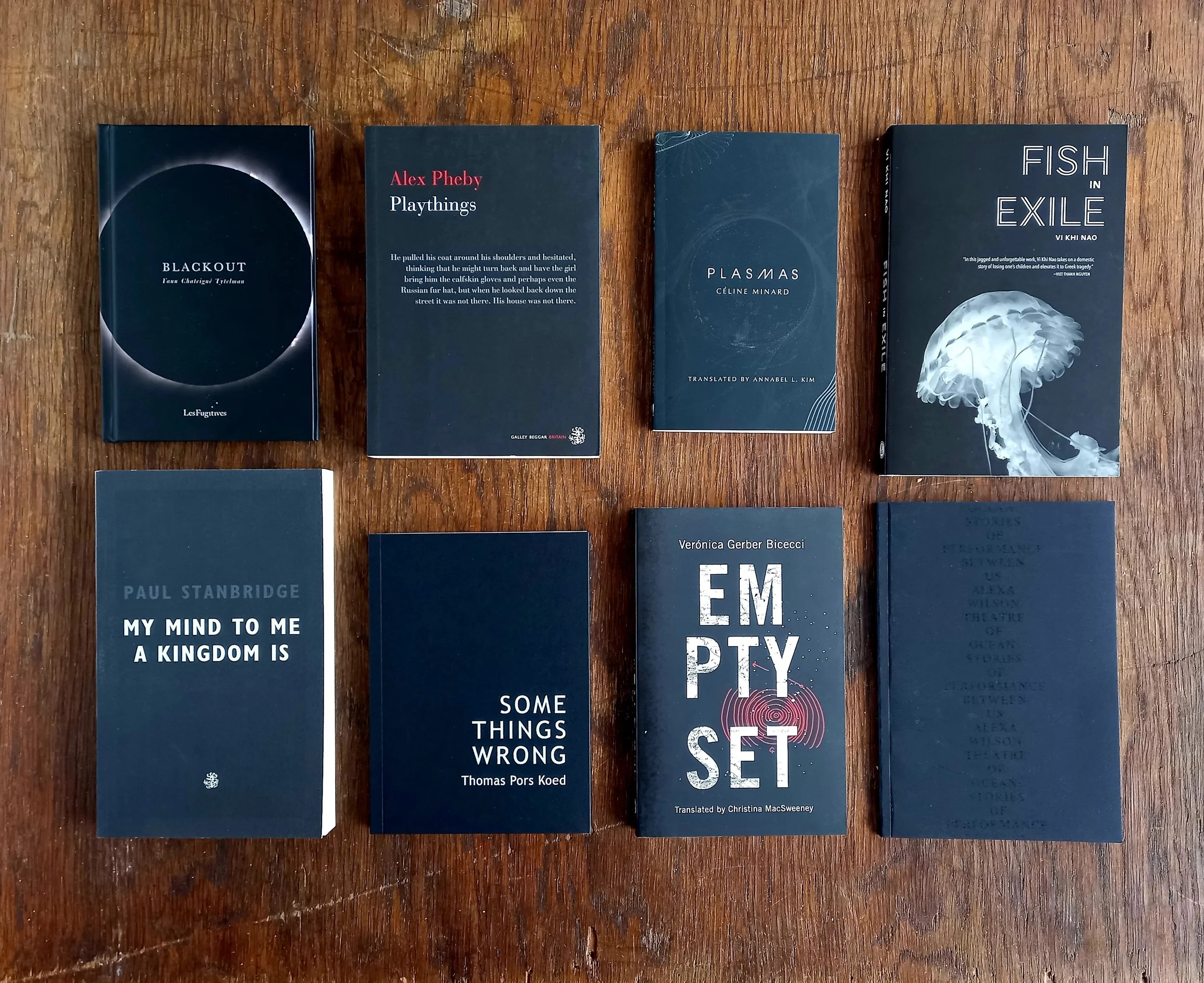
Do books with black covers have anything else in common?
A selection of books from our shelves. Click through to find out more:
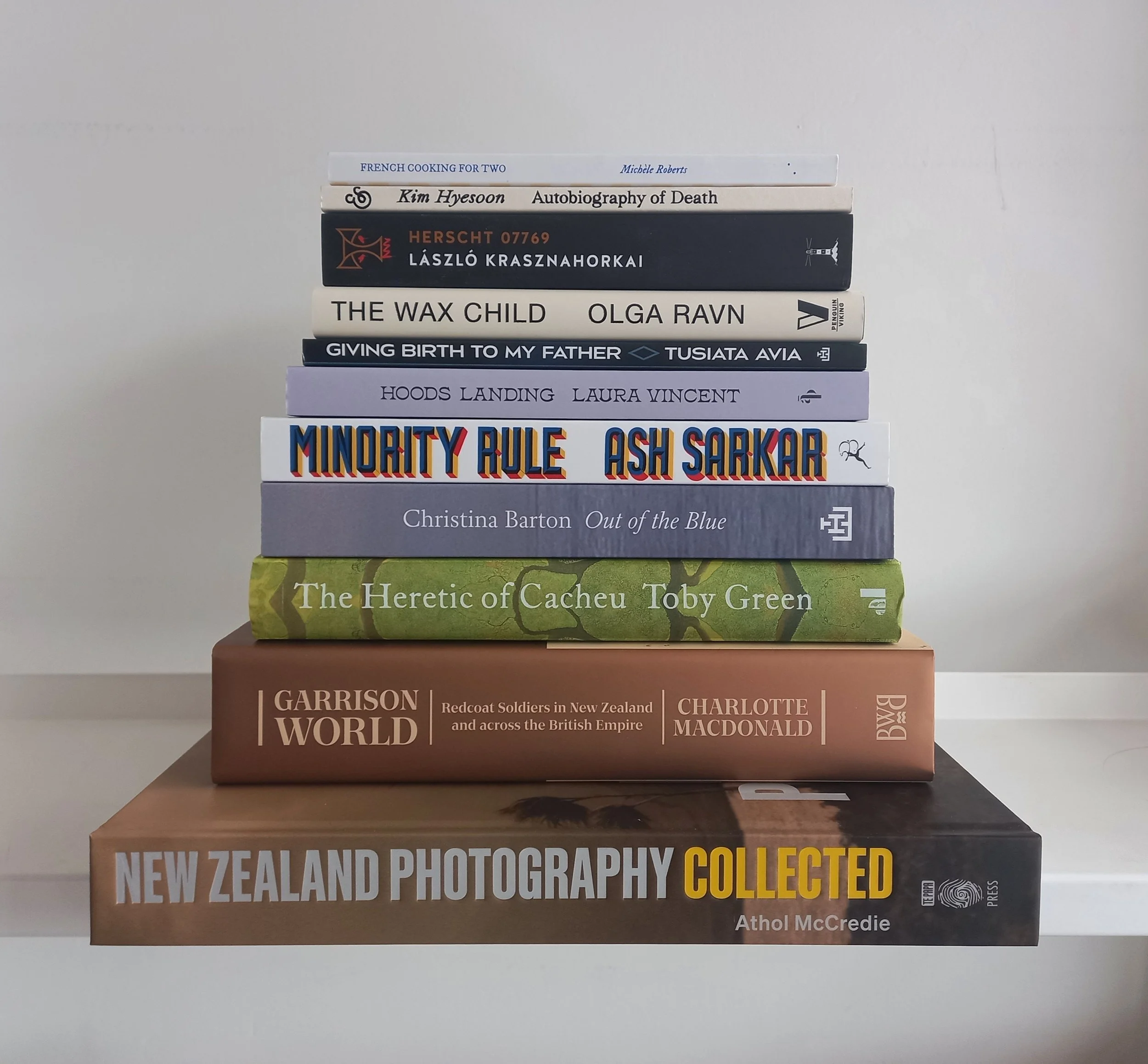
All your choices are good! Click through to our website (or just email us) to secure your copies, and we will dispatch your books by overnight courier or have them ready to collect from our door in Church Street, Whakatū.
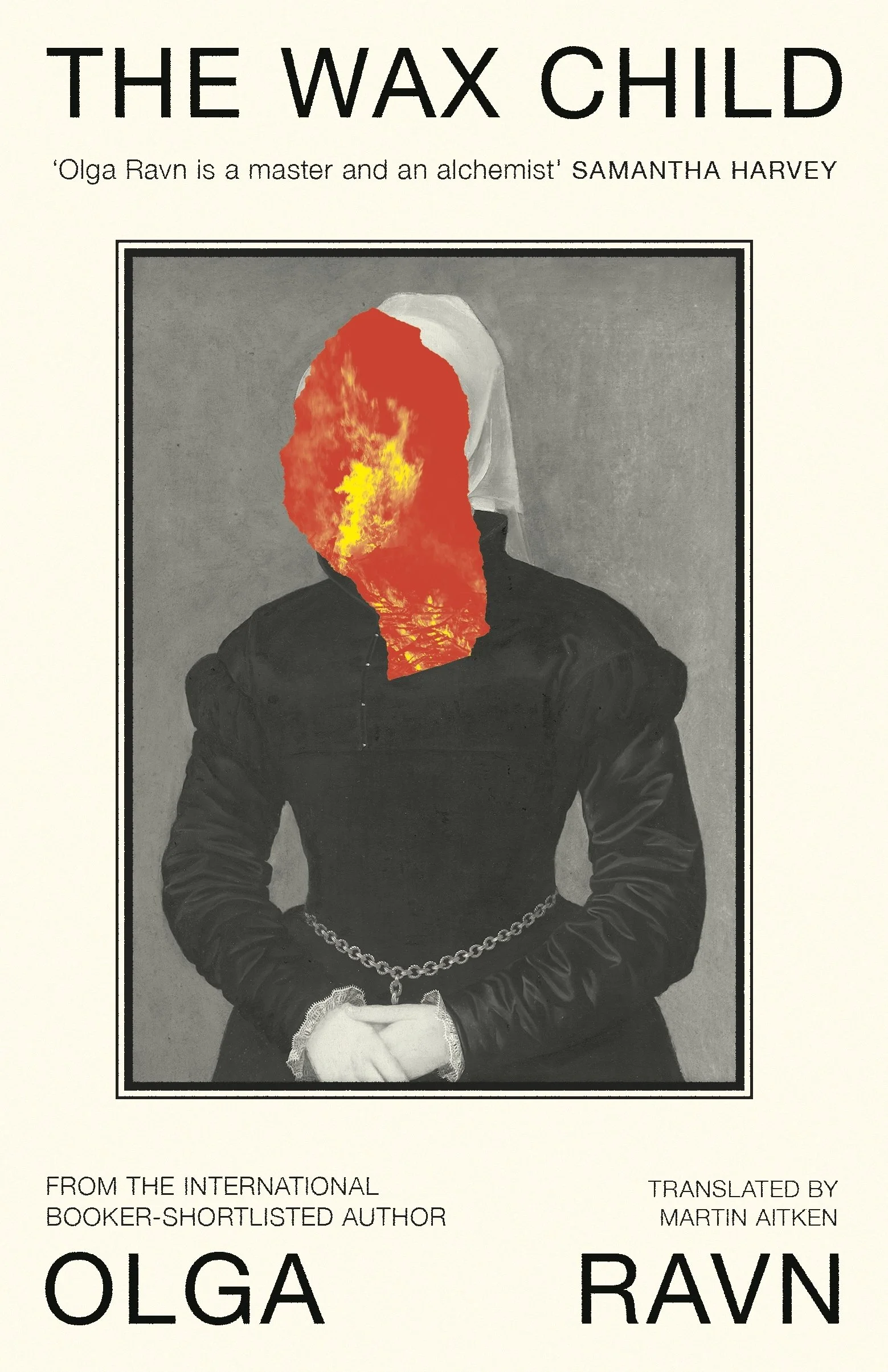
The Wax Child by Olga Ravn (translated from Danish by Martin Aitken) $40
It was a black night in the year 1620 when Christenze Krukow made the wax child, when she melted down beeswax and set it in the image of a small human. For days, she carried it tucked beneath her arm, shaping it with the warmth of her flesh, giving it life. She fashioned for it eyes and ears that cannot open, and yet — it watches and listens. It looks on as Christenze is haunted by rumour, it hears what the people whisper. It sees how, in the candlelight, she gazes with love at her friends, and hears the things they say in the shadows. It knows pine forest, misty fjord and the crackle of the burning pyre. It observes the violence in men's eyes and the cruelty of their laws. In time, it begins to understand that once a suspicion of witchcraft has taken hold, it can prove impossible to shake. Based on an infamous seventeenth century Danish witch trial, The Wax Child is a mesmerising, frightening vision of a time when witches and magic were as real to the human mind as soil and seawater. [Hardback]
”Olga Ravn is a master and an alchemist. There's nobody else doing quite what she does.” —Samantha Harvey
”I gulped The Wax Child down and dreamed wild dreams about it. Just brilliant.” —Max Porter
”Addictive and unsettling.” —Claire-Louise Bennett
”An instant classic that feels passed down from centuries ago and yet utterly unique, fresh, and modern. Another stunning, surreal journey from an author who seems to never disappoint.” —Jeff VanderMeer
”The Wax Child has emerged from an imagination that is wild, visionary, and absolutely original. It is beautiful, eerie, sublime, and, like a fingerprint or a snowflake, only one of its kind. Olga Ravn is a roof-raisingly brilliant writer.” —Neel Mukherjee
>>Fragmenting the novel.
>>Witch trials and wax narrators.
>>Everyone asks.
>>Where is the first person?
>>Books by Olga Ravn.
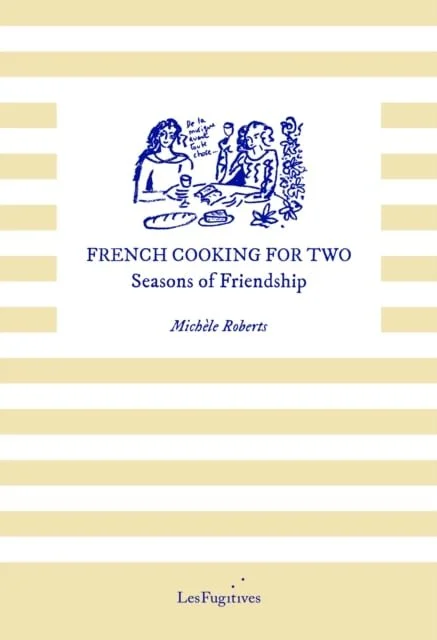
French Cooking for Two: Seasons of Friendship by Michèle Roberts $48
Friendship has its own distinctive seasons, constantly changing and evolving, just as the years revolve. Cooking for a friend, you can show your affection in a direct, practical way. Composing a menu to suit or intrigue a particular beloved person, you are demonstrating how well you understand and appreciate them. This book is divided into three overlapping seasons, following the 1929 classic La bonne cuisine by Madame Saint-Ange. In each section you will find dishes and suggestions appropriate to the season as well as ideas for particular seasonal moments, such as sardine sandwiches à la Colette, designed to be packed into bicycle baskets for picnics. These recipes are designed to be straightforward to follow so you can concentrate on your guest rather than dashing between stove and table. As with Roberts’s first cookbook, French Cooking for One, the book bursts with personal observations and anecdotes and is in itself a good friend to spend time with. [Paperback with French flaps]
Reviews of French Cooking for One:
”An enduring delight for readers and cooks alike.” —Nigella Lawson
”Mussel salad with ravigote sauce. Rabbit with mustard. Steak with bordelaise sauce. So many micro feasts, and every one of them nourishment for body and soul. Most of the recipes, short and uncomplicated, aim to deliver the perfect effort-to-taste ratio; if she has an Elizabeth David-like briskness on the page, she's also a sensualist, a part-time sybarite. But even if you're not in the mood for cooking, simply to read them is to encourage rumination. She is such a noticing writer, and in her hands you find yourself doing the same, a dowdy cauliflower suddenly beautiful, a slab of marbled meat a world unto itself.” —Rachel Cooke, Observer
”This slender volume insists that food for one should be simple yet delicious. Drawing on memories of her French grandmother's cookery, Roberts' recipes are elegant and — mostly — quick to prepare: celeriac croquettes, trout with almonds, or sausages with apples and cider. A delightful little book.” —Constance Craig Smith
>>French Cooking for One.
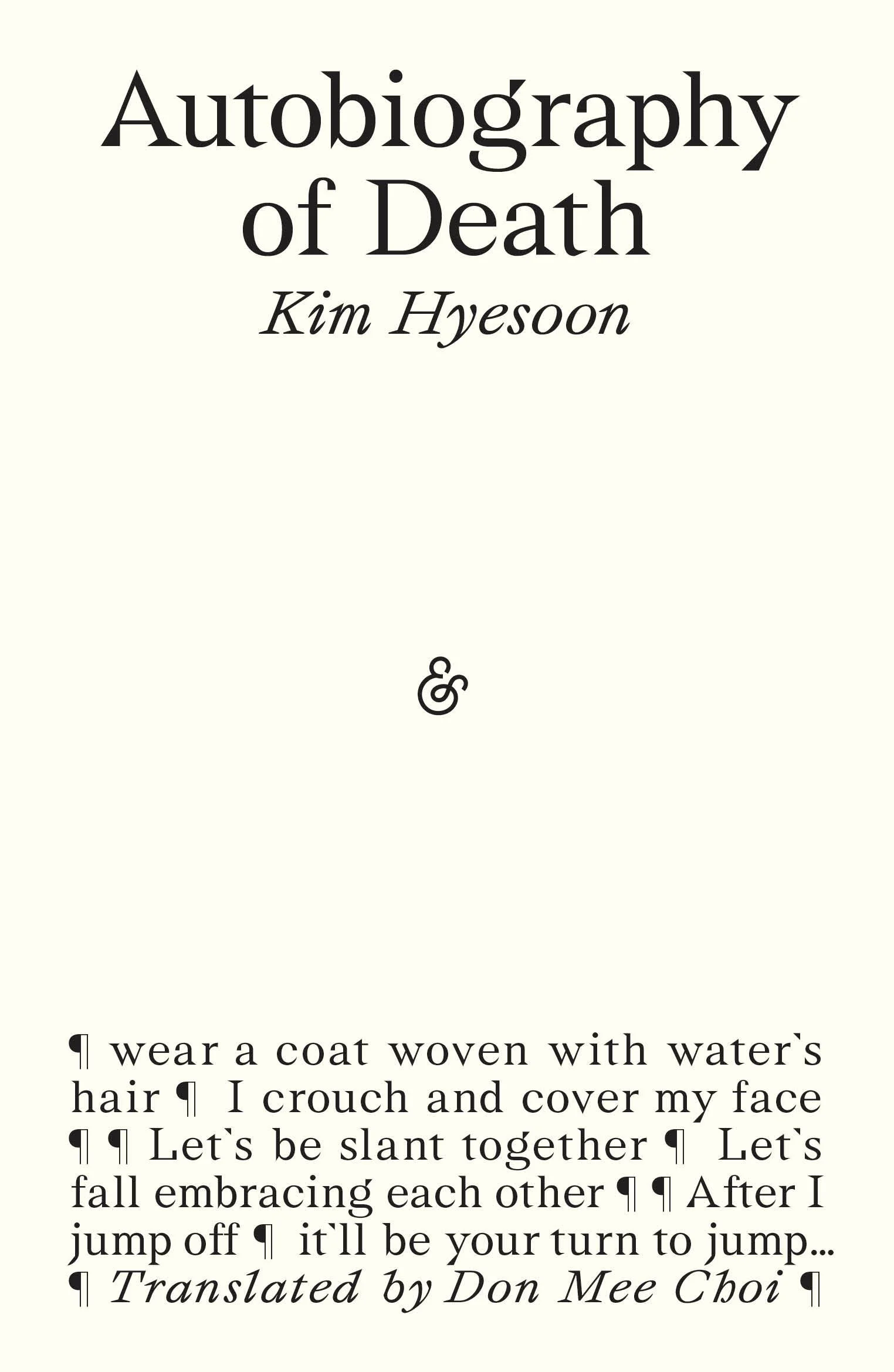
Autobiography of Death by Kim Hyesoon (translated from Korean by Don Mee Choi) $45
”I thought to myself that I needed to sing death, perform a rite for death, write death, then bid farewell to it. The way to send death away was to sing with my own death all the death in the sky and on the ground.”
The title section of Kim Hyesoon's visceral Autobiography of Death consists of forty-nine poems, each poem representing a single day during which the spirit roams after death before it enters the cycle of reincarnation. The poems not only give voice to those who met unjust deaths during Korea's violent contemporary history, but also unveil what Kim calls “the structure of death, that we remain living in”. Autobiography of Death at once re-enacts trauma and narrates death — how we die and how we survive within this cyclical structure. In this sea of mirrors, the plural 'you' speaks as a body of multitudes that has been beaten, bombed, and buried many times over by history. The volume concludes on the other side of the mirror with 'Face of Rhythm', a poem about individual pain, illness, and meditation. [Paperback with French flaps]
”In the grievous wake of the Sewol Ferry incident of 2014, the Korean poet Kim Hyesoon composed a cycle of forty-nine poems — one for each day the dead must await reincarnation — to produce a harrowing work of shock, outrage, and veneration for the children lost to this disaster. Through Don Mee Choi's extraordinary translations, we hear the clamorous registers of Hyesoon's art — a transnational collision of shamanism, Modernism, and feminism — yield 'a low note no one has ever sung before.' That otherworldly tone may sound like life itself, the poet sings, ‘for even death can't enter this deep inside me’.” —Griffin Prize Judges
>>Knives and carcasses.
>>A will left in the scribbles.
>>The female grotesque.
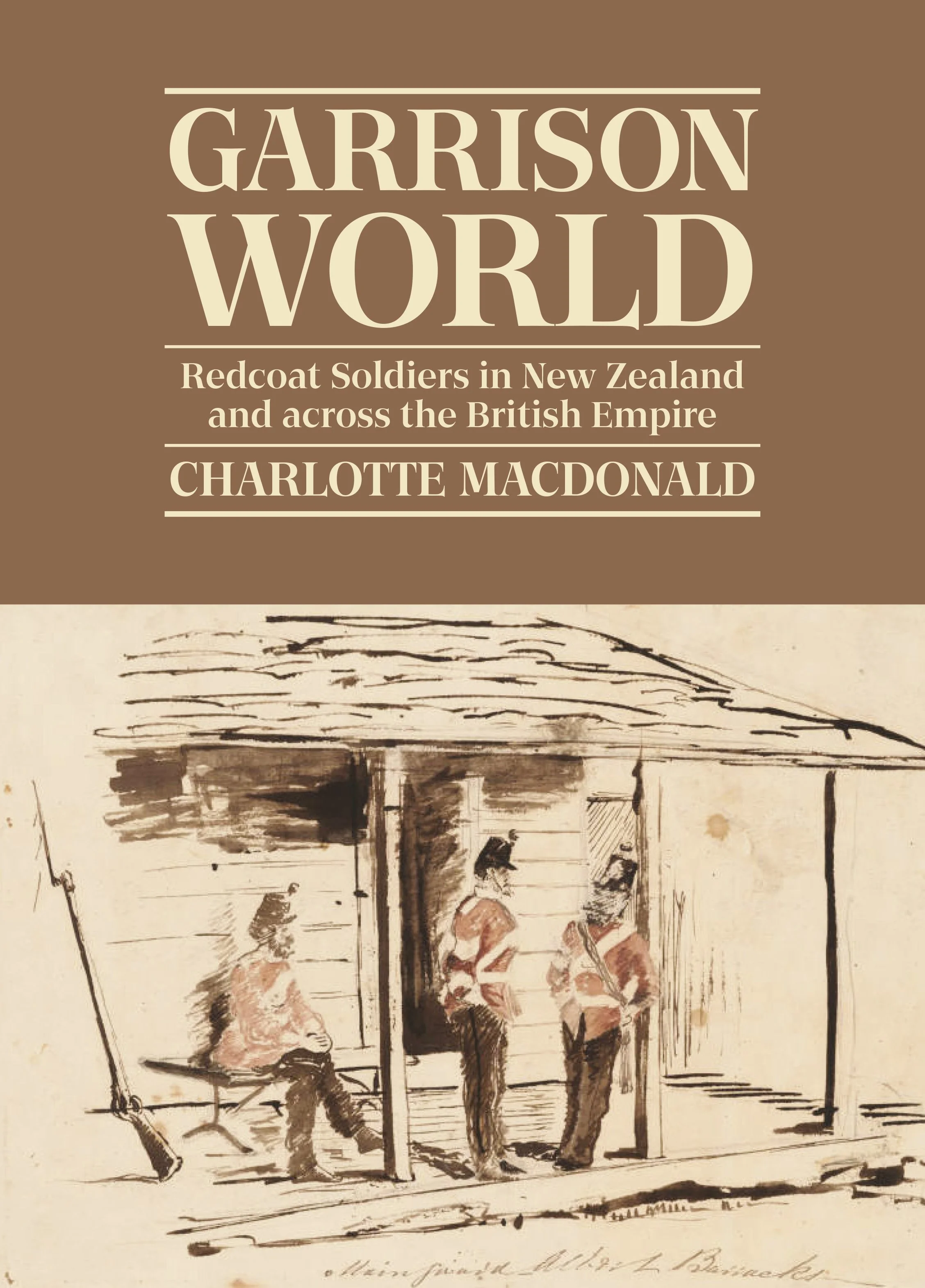
Garrison World: Redcoat soldiers in New Zealand and across the British Empire by Charlotte Macdonald $70
The pivotal year of 1870 brought down the curtain on the redcoat garrison world at both the metropolitan and colonial ends of the empire. In fewer than forty years, less than a lifetime, Aotearoa had gone from being a Māori world in which rangatira dominated, to a colony in which the settler state was in control of the economy, politics and people’s social destiny. Garrison World explores the lives of soldiers, sailors and their families stationed in Aotearoa New Zealand and across the British empire in the nineteenth century. Spanning the decades from 1840 to 1870, this major new history from Charlotte Macdonald places the New Zealand Wars within the wider framework of imperial power. It shows how conflict and resistance throughout the empire, from rebellion in India to the Morant Bay uprising in Jamaica, were connected to the colonial project in New Zealand. At the centre of this history are the thousands who served in the British military — from rank-and-file soldiers and bluejackets drawn from working-class Britain and Ireland, to officers from elite backgrounds who purchased their commissions. Their presence in New Zealand was vital to the imposition of imperial control, both during times of war and in the intervening years when the garrison underpinned a fragile settler economy and society. Through rich archival detail and personal accounts, Garrison World traces the structures, experiences and legacies of military occupation. Acknowledging the impact on Māori communities and whenua, the book offers a critical and unflinching account of how imperial authority was imposed — and often violently asserted. This is a compelling and significant contribution to understanding the reordering of power that shaped Aotearoa in the nineteenth century. Nicely presented and fully illustrated. [Hardback]
”Garrison World brings together the histories of soldiers, wars and physical violence with the appropriation of land and attacks on Indigenous culture so vital to settlement and colonisation. A story of the exercise of power, vividly told in part through the lives of the ‘redcoats’, those foot soldiers who provided the binding threads of imperial power.” —Catherine Hall, Emerita Professor of History, Chair of the Centre for the Study of the Legacies of British Slavery, University College London
”Charlotte Macdonald deploys formidable scholarship, lucid writing and pertinent images to create a spell-binding exploration of the intersecting lives of soldiers and civilians during the New Zealand wars. The result is a magnificently well-informed, readable and enthralling book.” —Atholl Anderson, Emeritus Professor, Australian National University; Adjunct Professor, Ngāi Tahu Research Centre, Te Whare Wānanga o Waitaha— University of Canterbury
”A large number of imperial soldiers and sailors were stationed in New Zealand in the mid-nineteenth century, but beyond their involvement in fighting, their wider impact has remained little understood — until now. Garrison World brings this history to light through impeccable scholarship and dazzling insight. An essential work for anyone interested in understanding our past.” —Vincent O’Malley, historian and author of The Great War for New Zealand: Waikato 1800–2000
”Richly illustrated and elegantly written, Garrison World is a pleasure to read. It offers a social history of the British army that looks beyond battles, focusing on the everyday lives and worldviews of soldiers and sailors. By tracing their role in New Zealand, India and Jamaica, the book reveals the deep interconnectedness of conquest, settlement and imperial power.” —Sekhar Bandyopadhyay, Emeritus Professor of History, Te Herenga Waka— Victoria University of Wellington
”A compelling account of the soldiers and sailors who were the cutting edge of British colonialism. This richly peopled history immerses the reader in the lives of these military men and illuminates how they reshaped New Zealand, with enduring consequences. It offers a critical new vantage point on our colonial past.” —Tony Ballantyne, Professor of History, Ōtākou Whakaihu Waka—University of Otago
>>Look inside.

Giving Birth to My Father by Tusiata Avia $30
”My father has been chipping himself down since he arrived here, he is half man and half vessel, readying for the journey to Hawaiki.” Giving Birth to My Father is about learning to live with a loss that seems simply too heavy to bear. First, Tusiata Avia tells the imagined story — the one of how things should go — followed by the story of what really happens. As her father travels through his last days and into the arms of his tupu'aga, transformed, the family gathers around him with their love and raw need, and their suffering turns to storm clouds. For Avia, his death is a beginning. Parent and child have switched places as the river carries them downstream, and she sees her father with new eyes. But this is also a time of not knowing to whom she belongs and where she will be welcome now. This is an extraordinarily rich poetic work about grief and renewal that will rearrange its readers. Giving Birth to My Father takes in a world of family and memory, including a sequence of poems about a much-loved brother as he faces a life-threatening injury. It is a book about ways of holding one another even after we are gone. [Paperback]

Minority Rule: Adventures in the Culture War by Ash Sarkar $39
We live under minority rule. But who is the ruling minority? Most of us are getting screwed over. Our world is defined by inequality, insecurity, lack of community and information overload. As the world burns, mega-corporations are reporting record profits. How are they getting away with it? 'Minority rule' is the term Ash Sarkar uses to describe the irrational fear that minorities are trying to overturn and oppress majority populations. In her eye-opening debut, she reveals how minority elites rule majorities by creating the culture wars that have taken over our politics, stoking fear and panic in our media landscape. Because despite what they'll have you believe, antiracist campaigners aren't actually silencing the 'forgotten' working class, immigrants aren't eating your pets, trans-activists aren't corrupting your children, and cancel culture isn't crushing free speech. In Minority Rule, Sarkar exposes how a strategic misdirection of blame over who is really screwing everything up is keeping the majority divided, while the real ruling minority of hedge fund managers, press barons, landlords and corporations remain on top. And it's facilitating one of the biggest power grabs in history. Most crucially, she shows us how what we really have in common is being concealed by a deafening culture of distraction — and that the first step towards a better future is understanding what is happening now, and how we got here. [Paperback]
”One of the boldest and most exciting thinkers of her generation.” —Naomi Klein
”Delivers its message with punch and panache. A joy to read.” —Guardian
”An exegesis of the playbook of the right. Sarkar is one of the most refreshing, salient voices on the left. For many progressives, the last decade has felt like something akin to a slow descent into madness, or falling victim to a collective, large-scale gaslighting campaign. With spectacular clarity and genuine wit, Sarkar puts her arm around their shoulders, offers a little tough love, and invites them to step out of the mist. If leftists feel they have been stumbling around in the darkness, Minority Rule flicks on the light.” —Standard
>>The future of politics.

Out of the Blue: Essays on artists from Aotearoa New Zealand, 1985—2021 by Christina Barton $50
In a collection spanning her career, highly regarded art historian and curator Christina Barton reminds readers of the art writer’s essential quandary: how to put the visual, material, sensory and temporal into words. “The project of art writing is at once argumentative and invested,” she writes, “self-doubting and ambitious, flawed yet with its own beauty (at its best).” Published in partnership with Te Pātaka Toi Adam Art Gallery, Out of the Blue gathers 37 essays devoted to artists from Aotearoa New Zealand. These are artists whom Barton — entering the art-writing fray in the 1980s, a time of widespread intellectual upheaval — has thought about, worked with and written for, from her first piece on artist and filmmaker Claudia Pond Eyley, published in 1985, to a foreword written in 2021 about sculptor Paul Cullen. They form a small but telling subset of her work, and provide readings that not only anatomise the nature of each artist’s work but also demonstrate the ideas that have been in play as art has unfolded here in Aotearoa. Artists discussed include Jim Allen, Edith Amituanai, Billy Apple, Bruce Barber, Shane Cotton, Bill Culbert, Pip Culbert, Julian Dashper, Bill Hammond, Louise Henderson, Frances Hodgkins, Zac Langdon-Pole, Maddie Leach, Vivian Lynn, Julia Morison, Kate Newby, Pauline Rhodes, Marie Shannon, Shannon Te Ao and Ans Westra. [Paperback]
”Out of the Blue offers readers generous insight into the evolution of one of Aotearoa New Zealand’s most respected art writers. What comes through for me – with unequivocal consistency – across the arc of time we travel in these essays, is Barton’s sheer love of art. This book stands as a testament to her enduring commitment to thinking and writing about art, and the complex nature of its entanglement with the world.” —Kirsty Baker
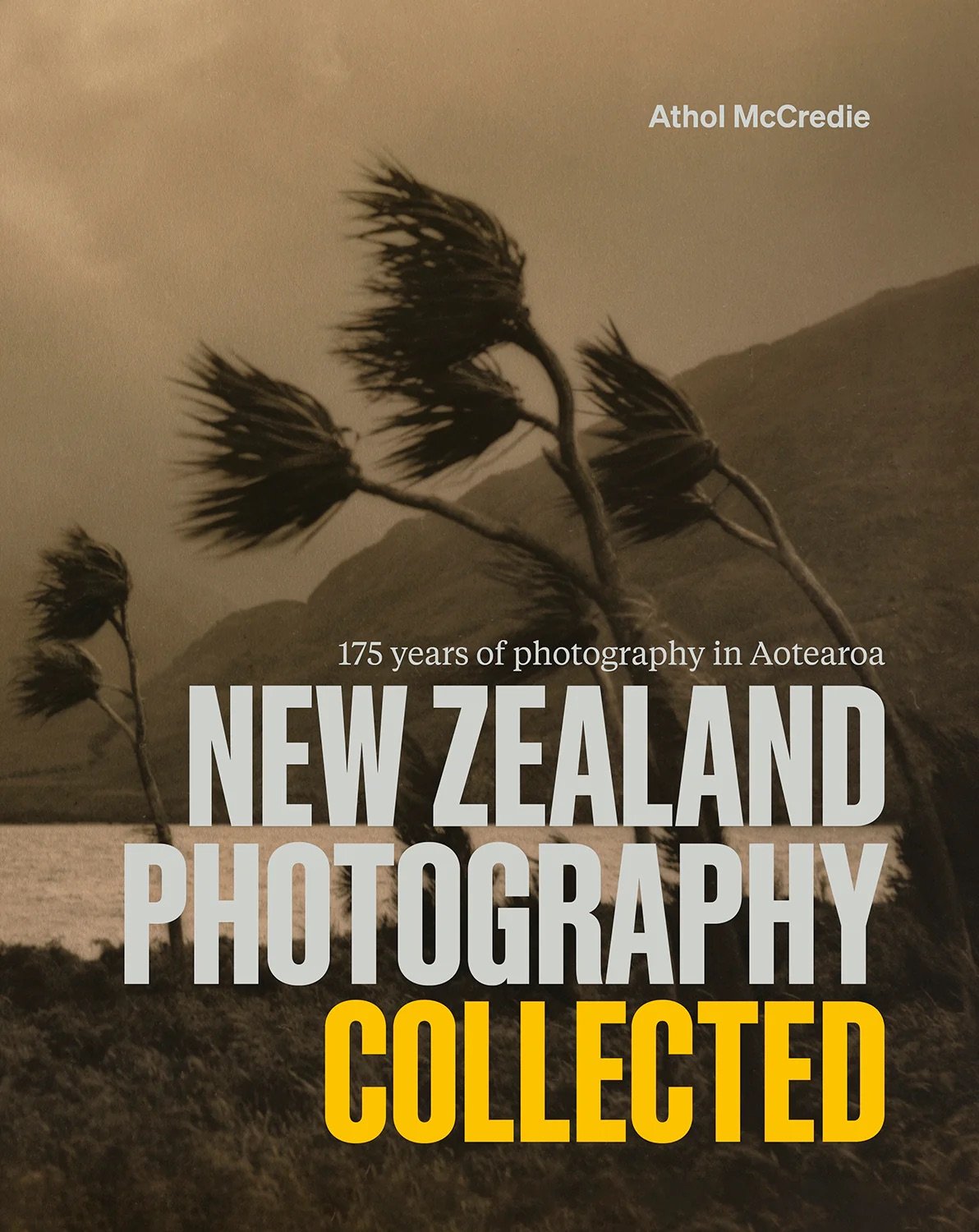
New Zealand Photography Collected: 175 years of photography in Aotearoa by Athol McCredie $90
xpertly curated, and showcasing images taken between 1850 and 2025, this book is an essential reference that honours artistic legacies and explores our identity as a nation. Together these photographs tell stories about life in this country from almost the earliest days of European colonisation and about how the practice of photography has evolved here. When it was first published in 2015, New Zealand Photography Collected was a landmark book, captivating audiences. In this fully revised and enriched edition, of the more than 400 images, almost half are new, reflecting the dynamic and increasingly diverse nature of the collection, allowing for previously unseen treasures, and enabling familiar works to be recontextualised with fresh insights. [Large-format hardback]
>>Look inside!
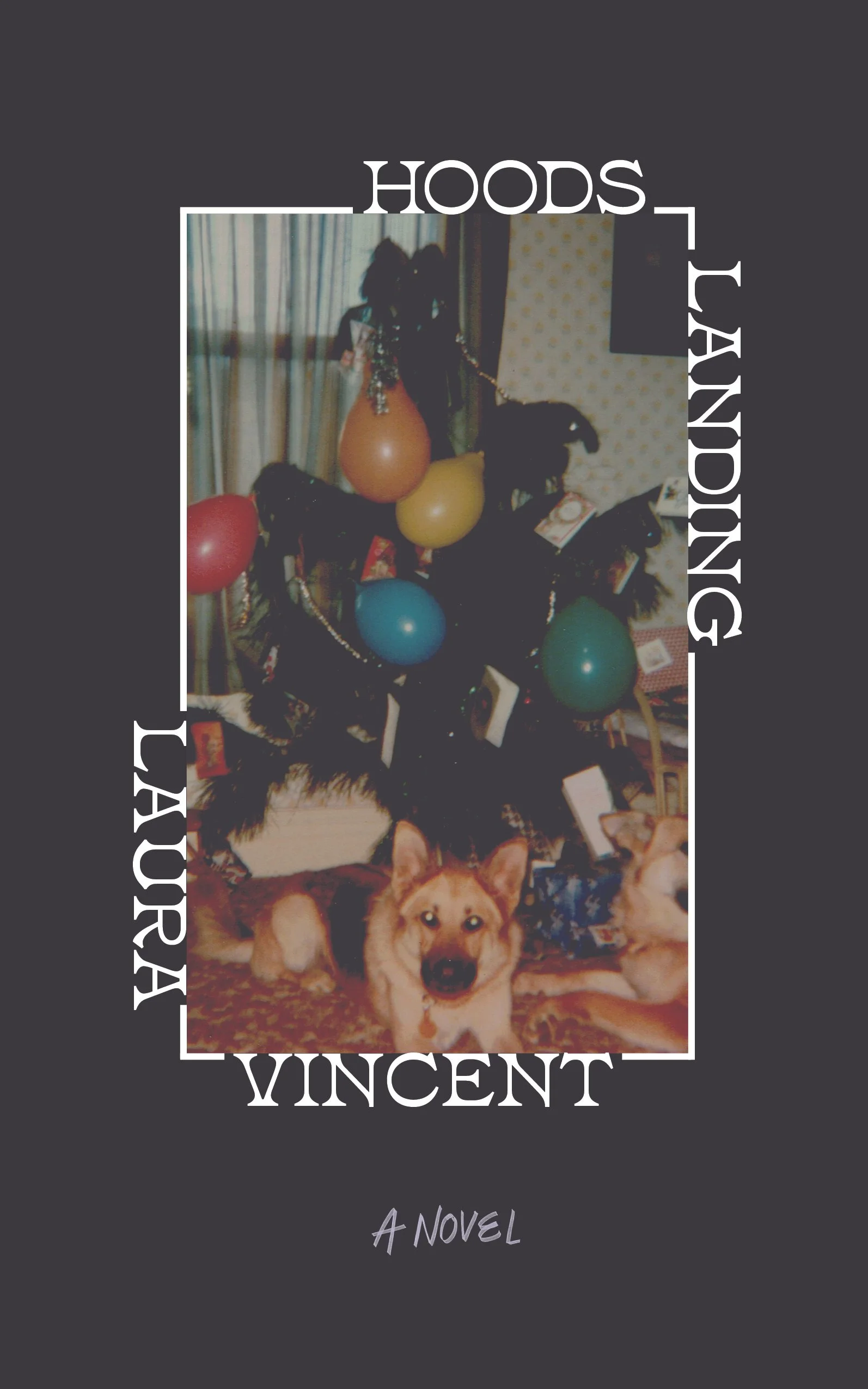
Hoods Landing by Laura Vincent $35
Rita considered the dead. Shut her eyes. Rolled their names around her brain. Stacked each person in order like folded laundry, warm and crisp from the sun. She wondered how her name would sound amongst them. In the rural reaches of Auckland, the women of the eclectic Gordon family gather for Christmas. They may push each other’s buttons, but know precisely when to offer tea (or a tipple). Rita, the 50-year-old baby of the family, is planning to tell them she has cancer. Drifting between past and present, she considers the lives of women in their community and reckons with what it all means for her future and her family. Featuring elderly lesbians, twins who aren’t twins, and several dogs named Roger, Hoods Landing is about shoddy pasts, ambiguous futures and the imperfect bonds that tie family together. [Paperback]
“This is a deeply affecting book. Vincent seamlessly and skilfully weaves the aesthetics of film, musical, opera, food and the occult to create a work about love and death like no other I can remember. This compelling work breaks new ground in the literary landscape of Aotearoa.” —Pip Adam
>>The best place to read, &c.
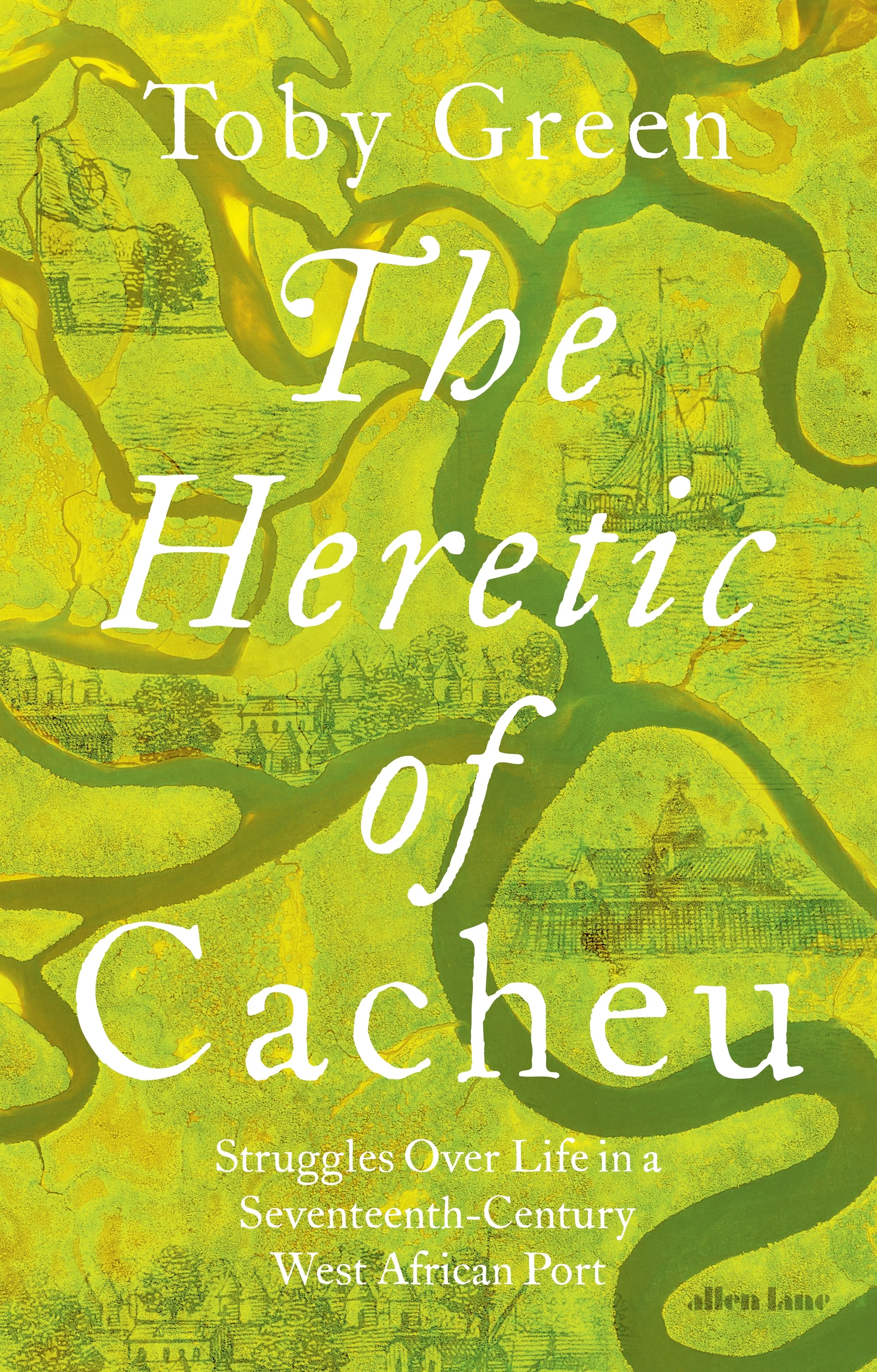
The Heretic of Cacheu: Struggles over life in a seventeenth-century West African port by Toby Green $65
In 1665 Crispina Peres, the most powerful trader in the West African slave trafficking port of Cacheu, was arrested by the Inquisition. Her enemies had conspired to denounce her for taking treatments prescribed by Senegambian healers — the djabaks. But who was Peres? And why was the Portuguese Inquisition so concerned with policing the faith of a West African woman in today's Guinea-Bissau? In The Heretic of Cacheu Toby Green takes us to the heart of this conundrum, but also into the atmosphere of a very distant time and place. We learn how people in seventeenth-century Cacheu built their houses, what they wore, how they worshipped — and also the work they did, how they had fun, and how they healed themselves from illness. Through this story, the haunting realities of the growing slave trade and the rise of European empires emerge in shocking detail. By the 1650s, the relationship between Europe, West Africa, and the Americas was already an old one, with slaving entrepots, colonies, and military bases interweaving over many generations. But Cacheu also challenged the dynamic. It was globally connected to places ranging from China and India to Brazil and Colombia, and women like Crispina Peres ran the town and challenged the patriarchy of empire. For the first time, through the surviving documents recording Peres's case, we can see what this world was really like. The Heretic of Cacheu is an extraordinary act of historical recovery. It is the story of a seventeenth-century West African woman, but also of the shifting, sophisticated world in which she lived — its beliefs, values and people. [Hardback]
”A stunning global history of West Africa, The Heretic of Cacheu weaves together the tragic histories of the Inquisition and the Atlantic slave trade. Drawing on archival research in three continents and presenting transformative new arguments in a profoundly moving narrative, with this new tour de force, Green confirms himself as the most innovative historian, writer, and thinker of his generation.” —Ana Lucia Araujo

Herscht 07769 by László Krasznahorkai (translated from Hungarian by Ottilie Mulzet) $40
The Nobel laureate’s breathtaking new novel about neo-Nazis, particle physics, and Johann Sebastian Bach. The gentle giant Florian Herscht has a problem: having faithfully attended Herr Köhler's adult education classes in physics, he is convinced that disaster is imminent. And so, he embarks upon a one-sided correspondence with Chancellor Angela Merkel, to convince her of the danger of the complete destruction of all physical matter. Otherwise, he works for the Boss (the head of a local neo-Nazi gang), who has taken him under his wing and gotten him work as a graffiti cleaner and also a one-room apartment in the small eastern German town of Kana. The Boss is enraged by a graffiti artist who, with wolf emblems, is defacing all the various monuments to Johann Sebastian Bach in Thuringia. A Bach fanatic and director of an amateur orchestra, he is determined to catch the culprit with the help of his gang, and Florian has no choice but to join the chase. The situation becomes even more frightening, and havoc ensues, when real wolves are sighted in the area. Written in one cascading sentence with the power of atomic particles colliding, Krasznahorkai's novel is a tour de force, a morality play, a blistering satire, a devastating encapsulation of our helplessness when confronted with the moral and environmental dilemmas we face. [Paperback]
"Krasznahorkai's work offers, to a degree rare in contemporary life, one of the central pleasures of fiction: an encounter with the otherness of other people. He's a universalist cut loose from the shibboleths of humanism." —Garth Risk Hallberg, The New York Times
"The best new novel I have read this year is written in a single sentence that sprawls over 400 pages. Herscht 07769 by the Hungarian genius Laszlo Krasznahorkai is an urgent depiction of our global social and political crises, rendering our impotent slide into authoritarianism with compassionate clarity. It is also a book whose timeliness derives precisely from the way its unusual style disrupts the ordinary literary mechanics of time. A masterful study in what it means to keep trudging through a world that is always ending but will not end." —Jacob Brogan, The Washington Post
>>Find out more about the Nobel Laureate in Literature.

Szalay uses his signature spare prose to unsparing effect in this novel that aligns surface and depth, style and plot to portray a protagonist unable to achieve agency in a world that expects him to dominate. “You have no way of knowing whether these experiences that you’re having are universal or entirely specific.”
“David Szalay’s novel follows István from his teenage years on a Hungarian housing estate to borstal, and from soldiering in Iraq to his career as personal security for London’s super-rich. In many ways István is stereotypically masculine — physical, impulsive, barely on speaking terms with his own feelings (and for much of the novel barely speaking: he must rank among the more reticent characters in literature). But somehow, using only the sparest of prose, this hypnotically tense and compelling book becomes an astonishingly moving portrait of a man’s life.” —Booker Prize judges’ citation
”I don’t think I’ve read a novel that uses the white space on the page so well. It’s as if the author, David Szalay, is inviting the reader to fill the space, to observe — almost to create — the character with him. The writing is spare and that is its great strength. Every word matters; the spaces between the words matter. The book is about living, and the strangeness of living and, as we read, as we turn the pages, we’re glad we’re alive and reading — experiencing — this extraordinary, singular novel.” — Roddy Doyle, Booker judges spokesperson
Find out more:

Read our 456th newsletter.
7 November 2025

For some reason it had become a habit for him to write his reviews of books in the style of the books themselves, or as near a style as he could manage, a habit or an affectation, he wasn’t sure which, but this habit or affectation, if it was indeed a habit or an affectation, did have a serious intent, and was therefore not really a habit although it still could be an affectation, in that he somehow seemed to believe that a review written in the style of the subject of the review might reveal to him, and possibility to the readers of the review if there chanced to be any readers of the review, if such things could be left to chance, really such things were always left to chance, what was he saying, he seemed to believe that a review written in the style of the subject of the review might reveal something otherwise unnoticed or essential or incidental about the book in question, perhaps he was attempting to remove himself from a position of agency or of responsibility for the review by enticing, if that is the word, the book to write a review of itself. Form generates content, he shouted, frightening the cat, I want to write like a machine, I want to tinker with form until it purrs like a literary motor, then I will be able to put anything at all into the hopper, switch it on, and out comes literature. The cat was quick to resettle, she was used to this kind of excitement. If I were to write a review of Signe Gjessing’s Tractatus Philosophico-Poeticus in the form of Signe Gjessing’s Tractatus Philosophico-Poeticus I would also be writing it in the form of Ludwig Wittgenstein’s Tractatus Logico-Philosophicus, he thought, I would be writing it in the form of Ludwig Wittgenstein’s Tractatus Logico-Philosophicus because Signe Gjessing has written her book in the form of Ludwig Wittgenstein’s Tractatus Logico-Philosophicus, in order, he thought, to see what kind of poetry could be generated by such a form, in order to use form as a machine for the generation of text, in order, he thought, to test the limits of language, to see what it is and is not good for, just like Wittgenstein, or just like Wittgenstein thought he was doing at the time he wrote that book. If Wittgenstein made no distinction between form and content, the same must be true of poetry, he thought. If for Wittgenstein the limits of knowledge are the limits of language, what are we to say of poetry, always straining as it does, or as it should, he thought or thought that perhaps he thought, into the unsayable? If Wittgenstein sought the limit of what can be said, through progressing out linguistically from the obvious towards that limit, pushing at it and establishing it, he thought, he entails that beyond that limit there exists not nothing but rather that about which nothing can be said. What cannot be said is signified by the complete exhaustion of that which can be said. Gjessing also is obsessed with the limit with which Wittgenstein was at the time he wrote his book obsessed, but she stands at that limit as if from the habitat beyond, both Wittgenstein and Gjessing are concerned to discover the nature of the limit inherent in language, if there is such a limit and such a limit is inherent, but Gjessing wants, he thought, to destroy that limit or even to show that the destruction of the limit inherent in language is itself inherent in language. He had written in his bad handwriting in his notebook that Gjessing had written in the introduction to her book that “The poem is a modification of the universal — as though the sayable were an incapacity of the unsayable,” and, he thought, Gjessing is running Wittgenstien’s machine in reverse to see what poetry comes out. If the world is comprised not of things but of states of affairs which are the grammatical relations between things, there is no reason to think that that which is not the case is not governed by or, he thought, even generated by this universal grammar. Texts are comprised not of words but of grammar, he shouted, but the cat was long gone. Well, he thought, if I was going to write my review of Signe Gjessing’s Tractatus Philosophico-Poeticus in the form of Signe Gjessing’s Tractatus Philosophico-Poeticus, I should have started earlier, I should have started, as does Gjessing, as does Wittgenstein to whose text Gjessing’s text is a response and a rejoinder, with a number of numbered statements on the first level to which another number of statements numbered to the first decimal respond or are implied and to which another number of statements numbered to the second decimal respond or are implied and so on until perhaps the fourth decimal or what we could call the fifth level, I’m not exactly sure if this is clear, a shining rack of cogs used in Wittgenstein’s case to generate philosophy, if he believed at that time there even was such a thing, and in Gjessing’s case to generate poetry, or whatever we might choose to call it, if I had written my review like this, he thought, what would I have written? Perhaps if I can devise such a grammatical machine to write reviews, a machine I can just turn upon any text, I can perhaps be relieved of certain of my duties, except perhaps to now and again apply a little oil, and perhaps get sometimes earlier to bed.
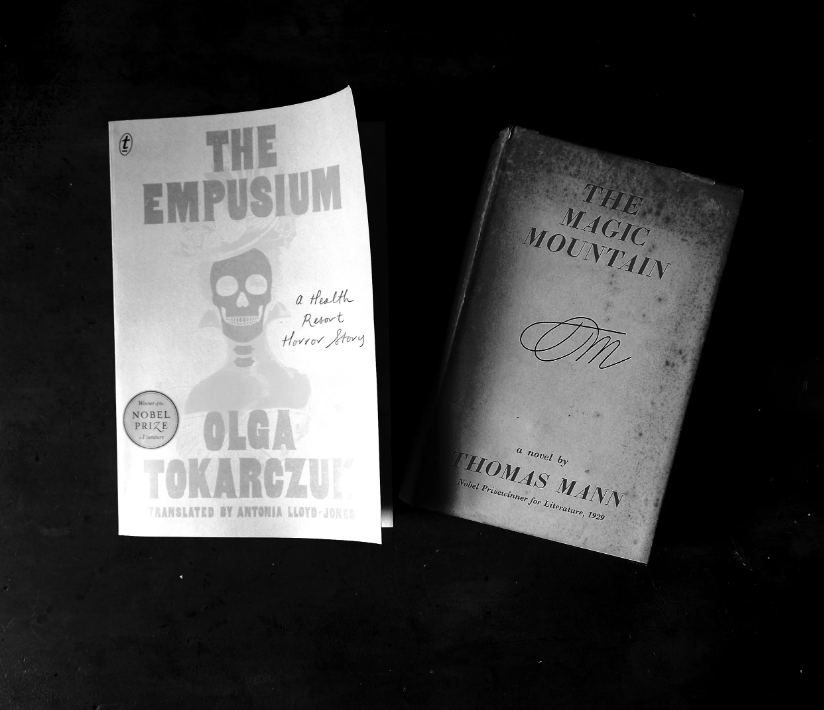
From the opening pages, its gothic lettering contents page, an image of a carriage arriving in a small mountain village surrounded by forests, the looming buildings of the sanatorium, you feel as if you have entered the opening scenes of Nosferatu. Olga Tokarczuk’s novel The Empusium, subtitled A Health Resort Horror Story, builds intrigue from the outset. It’s 1913, a year before great turmoil, and curing tuberculosis is all the rage. Our young Polish hero, Mieczyslaw Wojnicz, has been sent to the Silesian village of Gorbersdorf for the fresh air, the cold baths and the expert advice of Dr.Semperweiss. The sanatorium is popular and full. Wojnicz takes a room at the more economical Guesthouse for Gentlemen run by the unseemly Optiz with help of a rugged lad, Raimund. Here his fellow guests, after a day of health procedures and walks in the village, sit down to dinner together. It’s an evening of conversation, often arguments, about existence, human behaviour, psychology, and politics; as well as the purpose of women or more accurately their flawed views on the inferiority of women. This topic of conversation, much to the surprise and annoyance of Wojnicz, who they take pleasure in warning and teasing, is a frequent and recurring theme, helped along by a local specialty, a mushroom-infused liquor — the hallucinatory effects fueling the conversation, as well as driving the gentlemen towards introspection. Wojnicz’s fellow housemates include a serial returnee who seems driven by ennui, a humanist bent on lecturing our dear young hero, a young student of art (dying), and the aptly nicknamed The Lion, his bombastic nature making him easy to dislike. Thrown into this dysfunctional playground, the timid Wojnicz is unnerved, and this is not helped by a suicide by hanging on his first day in the house. A house with strange creakings, with cooing in the attic and the whoosh of that new thing, electricity. Not to mention the horror chair with straps in the room upstairs, the graves in the cemetery with an abundance of November death dates, and the uncanny behaviour of the charcoal burners in the forests. Secrets abound, and Wojnicz has several of his own he’s keeping close to his chest. Tokarczuk builds this multi-layered tale from snippets of Greek mythology, the new ideas of the period (think Freud) and as a response to Thomas Mann’s The Magic Mountain (published 100 years ago). Like Drive Your Plow Over the Bones of the Dead there is a mystery here, a fizzing at the edges, black humour, and a deadly serious exploration of ideas. While Drive Your Plow is pushing the idea of eco-activist in response to harmful tradition, The Empusium is examining the misogyny of the 20th century canon and by extension the influence of these writers, philosophers and psychologists on the contemporary intellectual landscape. To counter the conversations of the ‘gentlemen’, there is a wonderful sense of being watched, that things are not what they seem, and justice will be done. In Greek mythology, the Empusai were shapeshifting creatures. Appearing as beautiful women they preyed on young men, and as beasts devoured them. Beware of those that have one leg of copper, and the other, a donkey’s. As Wojnicz finds the Guesthouse increasingly repressive, the rigours of treatment intrusive, the hallucinogenic effects of liquor to be avoided, and the tragic decline of the young man Thilo unbearable, he also finds in himself a strength as to date untapped. Whether from curiosity, delusion, avoidance of his own fraught familiar relationships, or an unconscious desire to live, our hero explores the depths of the house and the village in an attempt to discover what drives the men of this village to act so horrifically. Add into this rich psychological horror, rich, fetid descriptions of the forest, its minutiae, the fungi and foliage, an atmospheric mindscape grows. Reading The Empusium is like looking through a telescopic lens, one that fogs over, but a twitch of the controls, and a whisk of a cloth, brings it all into sharp relief. If you haven’t read Tokarczuk, it’s time to start.

During a time of restricted movement, the narrator of Mr Outside visits his reclusive father Thomas who is packing up to move into a care home. As father and son grapple with the task, long-buried conflicts resurface. Thomas, a poet and former radical priest, slips between affection and fear, while the narrator struggles to find the words he’s been holding back. Yet amidst confusion and grief, moments of humour and connection emerge, as both men discover new ways to listen. Told through a striking combination of text and image, Klaces’ distilled novel explores the stories we tell about our lives, intimacy in crisis, and the fragile line between reality and delusion. Based on the life of his own father, Mr Outside is poignant, profound, and unexpectedly funny; a tender meditation on endings, the limits of understanding, and the act of letting go.

All your choices are good! Click through to our website (or just email us) to secure your copies, and we will dispatch your books by overnight courier or have them ready to collect from our door in Church Street, Whakatū.
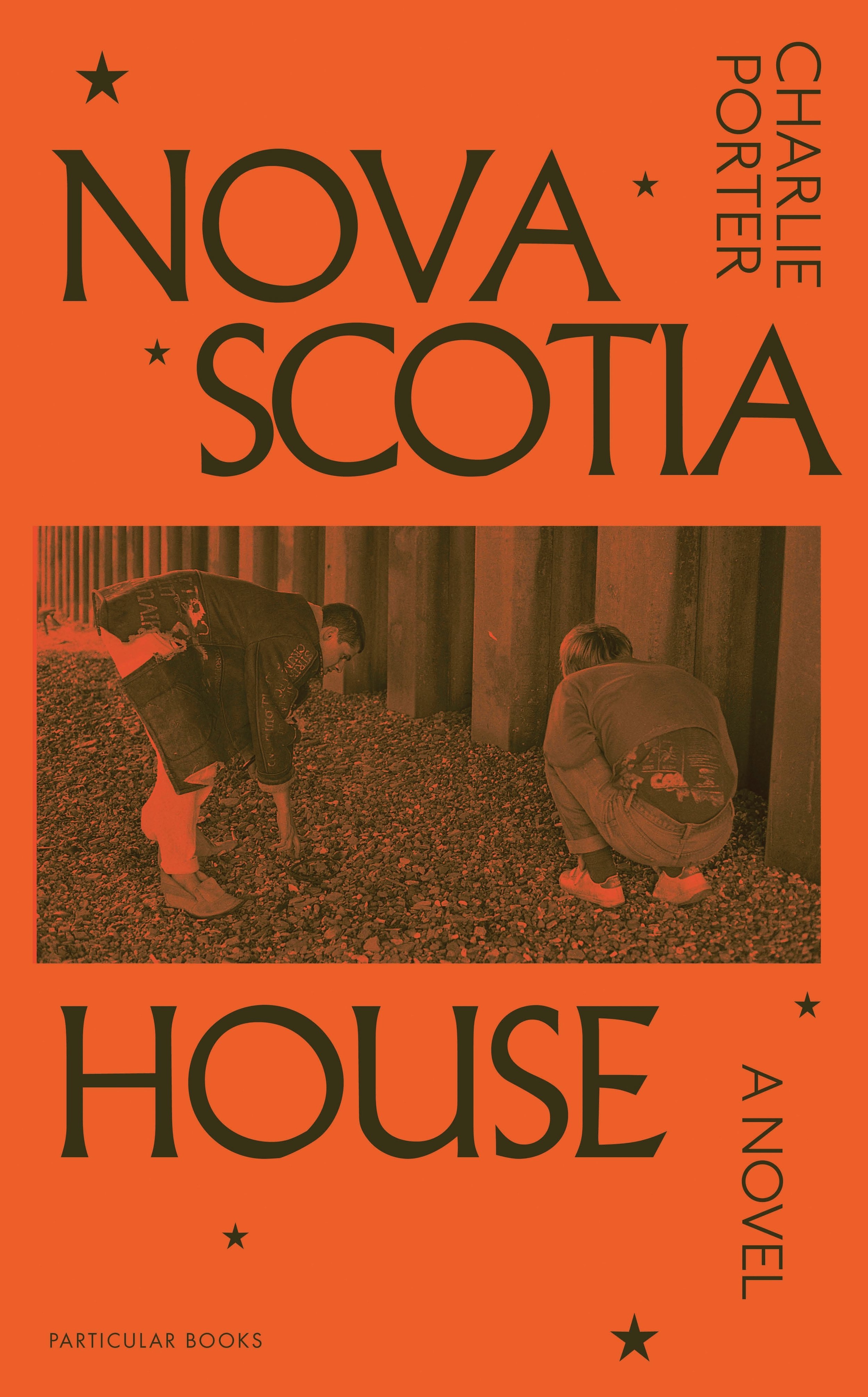
Nova Scotia House by Charlie Porter $45
He said he would understand if it was too much for me, that I could leave him, that I was young, I should be living, I said to him, I am living. Johnny Grant faces stark life decisions. Seeking answers, he looks back to his relationship with Jerry Field. When they met, nearly thirty years ago, Johnny was 19, Jerry was 45. They fell in love and made a life on their own terms in Jerry's flat: 1, Nova Scotia House. Johnny is still there today — but Jerry is gone, and so is the world they knew. As Johnny's mind travels between then and now, he begins to remember stories of Jerry's youth- of experiments in living; of radical philosophies; of the many possibilities of love, sex and friendship before the AIDS crisis devastated the queer community. Slowly, he realizes what he must do next — and attempts to restore ways of being that could be lost forever. Nova Scotia House takes us to the heart of a relationship, a community and an era. It is both a love story and a lament; bearing witness to the enduring pain of the AIDS pandemic and honouring the joys and creativity of queer life. [Hardback]
”Nova Scotia House is one of the best things I've read in many many years; it is an extraordinary work of the imagination, and there is so much heart and longing in it that it filled my soul. It is a completely imagined work — a kind of gay dystopian story that isn't, a search for family that ends up being a multiple love story about creation. And I want to point out something as powerful as the narrative: the sheer writing force of it. Sentences that reordered my reading DNA from the first, colloquial sentences that are highly literary, a kind of queering of Beckett, a new way of seeing and writing that is not anyone else's but Porter's own. I am really knocked out by this book. It is a profound work.” —Hilton Als
”Beautifully provocative, Nova Scotia House is the most compelling exploration of life, death, love and resistance that I've read for a very long time.” —Eimear McBride
”This book occupies the spaces, the lives in between, the connections we make, the memories still happening in our heads, our bodies' responsibility to the state we put them in, growing, lusting, dying, reviving, sold on, the ruins of our lives, the communities of our past, another kind of economy, of sex and loss and weeds and words, this work of genius, Nova Scotia House.” —Philip Hoare
”I truly think Charlie Porter is doing something new: forging a radically direct language for describing a whole new way of inhabiting the world. Nova Scotia House is about loss and grief, sex and love, but it's also a super-powerful account of change and growth, about metabolising trauma and refusing to relinquish dreams.” —Olivia Laing
>>Catharsis.
>>Loss.
>>Bring No Clothes.

Moderation by Elaine Castillo $38
Girlie, a thirty-something Filipinx-American, works a day job at a social-media moderation centre, flagging and removing the very worst that makes it on to the internet. She's good at it, too — dispassionate, unflinching, maybe because she learned by necessity to cauterise all her emotions when she was still a kid — so it's no surprise to anyone when the social-media company for which she works offers her a big pay rise and an office to start moderating its new venture: virtual-reality theme parks, stunning simulations of civilisations long-since dead. Girlie takes the job, and it almost seems too good to be true. Almost. Sure, she signed up for having to deal with the ambient racism and misogyny of pretty much any virtual space, but as she begins to explore the intricate worlds that she moderates, she notices two deeply troubling things: that there might be something much darker built into the very code of the company, and that William, technically her new boss, a man whose barriers are as mighty as her own, might just awaken in her something long-forgotten. [Paperback]
”Moderation is a novel that refuses to do things by halves. It is a piercing, laser-precise exploration of big tech. Breathtakingly funny, and a highly charged, passionate and tender love story. A wonderful book. —Kaliane Bradley
”Tender and cutting, engrossing and immediate — Elaine Castillo's Moderation is a moving meditation on connection, growth, and how, in a world that's constantly on the verge of ending, one way we move forward is cultivating our own. Castillo's prose is luminous and lucid, balancing humor and emotion with wicked aplomb. Castillo expertly stretches the possibilities of language; Moderation is infinite.” —Bryan Washington
”With its unyielding density of sharply observed detail, high-resolution psychological drama, and driving narrative momentum, Moderation reminded me that the novel is still the best form of virtual reality we have.” —Jenny Odell
>>Labour and trauma.

A Short History of Photography by Walter Benjamin (translated from German by Ben Fergusson) $20
Perhaps more than any other text, A Short History of Photography by the German-Jewish thinker Walter Benjamin has shaped the way in which we understand early photography and the photographic act. One of the first theoretical studies of visual culture, this essay laid the foundation for modern cultural criticism. Instead of regarding the artwork as a unique object, Benjamin emphasized the political and artistic potential of a new technology based on endless reproduction. A Short History of Photography was originally published in the German literary journal Die Literarische Welt in 1931 as three short essays reviewing several books dedicated to early photography. In this text, Benjamin introduced concepts that remain central to critical theory of the medium: the aura, optical unconscious, reproducibility, among other topics. It constitutes a remarkably prescient description of the limits and potentials of photography which remains thought-provoking today. [Paperback]
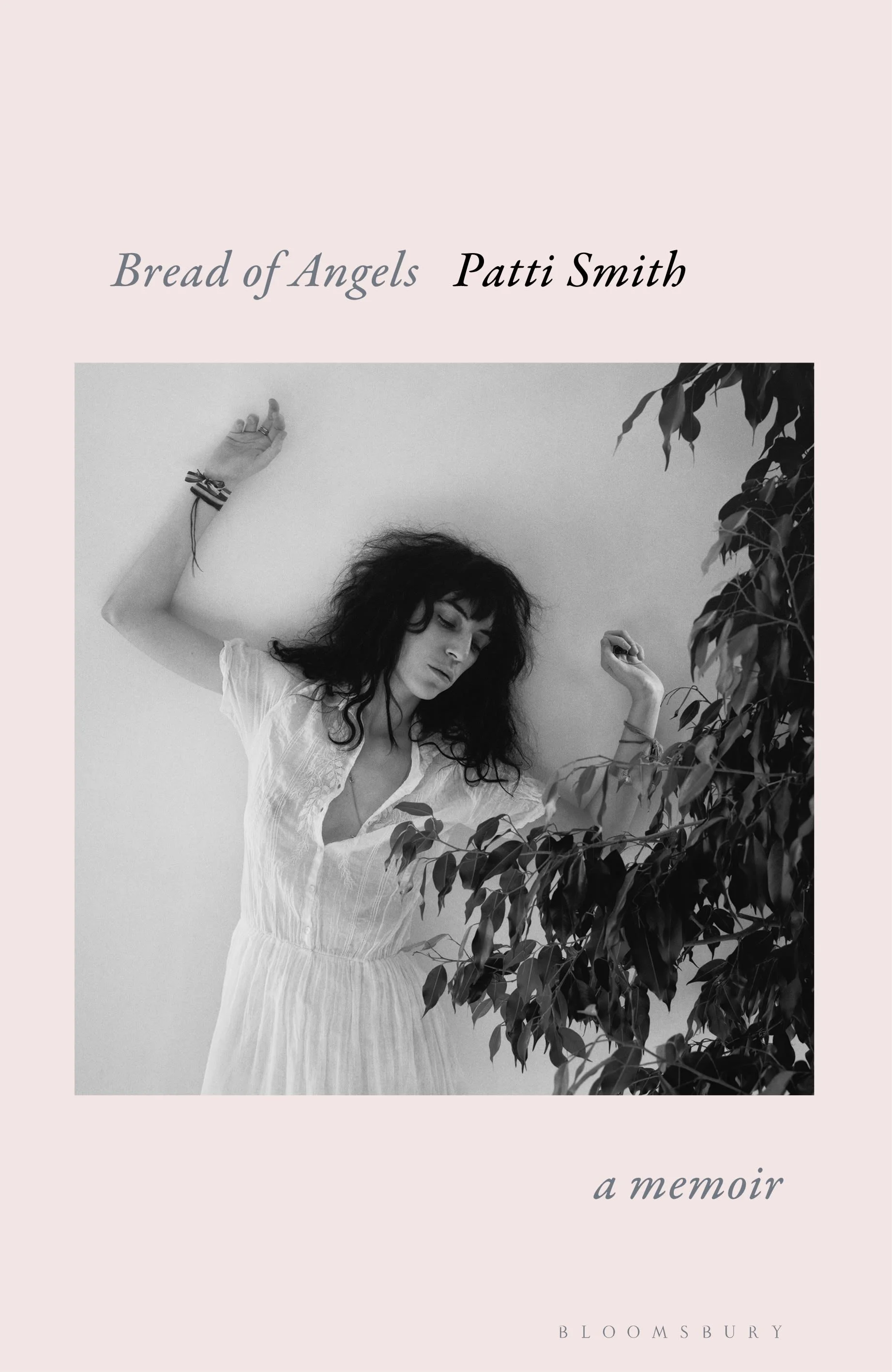
Bread of Angels by Patti Smith $39
”God whispers through a crease in the wallpaper,” writes Patti Smith in this indelible account of her life as an artist. A post-Second World War childhood unfolds in a condemned housing complex described in Dickensian detail: consumptive children, vanishing neighbours, an infested rat house, and a beguiling book of Irish fairytales. We enter the child's world of the imagination where Smith, the captain of her loyal and beloved sibling army, vanquishes bullies, communes with the king of tortoises and searches for sacred silver pennies. The most intimate of Smith's memoirs, Bread of Angels takes us through her teenage years where the first glimmers of art and romance take hold. Arthur Rimbaud and Bob Dylan emerge as creative heroes and role models as Patti starts to write poetry, then lyrics, merging both into the iconic songs and recordings such as ‘Horses’ and ‘Easter’, 'Dancing Barefoot' and 'Because the Night'. She leaves it all behind to marry her one true love, Fred Sonic Smith, with whom she creates a life of devotion and adventure on a canal in St. Clair Shores, Michigan with ancient willows and fulsome pear trees. She builds a room of her own, furnished with a pillow of Moroccan silk, a Persian cup, inkwell and fountain pen. The couple spend nights in their landlocked Chris-Craft studying nautical maps and charting new adventures as they start their family. As Smith suffers profound losses, grief and gratitude are braided through years of caring for her children, rebuilding her life and, finally, writing again — the one constant in a life driven by artistic freedom and the power of the imagination to transform the mundane into the beautiful, the commonplace into the magical, and pain into hope. In the final pages, we meet Patti on the road again, the vagabond who travels to commune with herself, who lives to write and writes to live. [Paperback]
>>Art rats in New York City.
>>’Dancing Barefoot.’

How to Live an Artful Life: 366 inspirations from artists on how to bring creativity to your everyday by Katy Hessel $45
Find daily inspiration for every day of the year in a collection of quotes and ideas from artists, brought together by the founder of The Great Women Artists. The year ahead is a gift that has been given to you. What might you do with it? Dive into the year with the wisdom of artists and writers. Gathered from interviews, personal conversations, books and talks, How to Live an Artful Life moves through the months of the year offering you thoughts, reflections and encouragements from artists and writers such as Marina Abramovic, Anne Carson, Siri Hustvedt, Nan Goldin, Lubaina Himid, Louise Bourgeois and many more. With a thought for every day of the year, whether looking for beginnings in January, freedom in summer, or transformation as the nights draw in, this is a book of words to cherish. The year is full of the promise of work that has yet to be written, paintings that are yet to be painted, people who have yet to meet, talk, or fall in love. With this book in hand, pay attention, and see the world anew. Go out and find it, taste it, seize it, and live it — artfully. [Hardback]

Hayek’s Bastards: The Neoliberal Roots of the Populist Right by Quinn Slobodian $65
A exploration of how today's rightwing authoritarianism emerged not in opposition to neoliberalism, but from within it. After the end of the Cold War, neoliberalism, with its belief in the virtues of markets and competition, seemed to have triumphed. Communism had been defeated — and Friedrich Hayek, the spiritual father of neoliberal economics, had just about lived to see it. But in the decades that followed, Hayek's disciples knew that they had a problem. The rise of social movements, from civil rights and feminism to environmentalism, were now proving roadblocks in the road to freedom, nurturing a culture of government dependency, public spending, political correctness and special pleading. Neoliberals needed an antidote. In this book, Slobodian reveals how, from the 1990s onwards, neoliberal thinkers turned to nature, in an attempt to roll back social changes and to return to a hierarchy of gender, race and cultural difference. He explores how these thinkers drew on the language of science, from cognitive psychology to genetics, in order to embed the idea of 'competition' ever deeper into social life, and to advocate cultural homogeneity as essential for markets to truly work. Reading and misreading the writings of their sages, Friedrich Hayek and Ludwig von Mises, they forged the alliances with racial psychologists, neoconfederates, ethnonationalists that would become known as the alt-right. Hayek's Bastards shows that many contemporary iterations of the Far Right, from Javier Milei to Donald Trump, emerged not in opposition to neoliberalism, but within it. As repellent as their politics may be, these supposed disruptors are not defectors from the neoliberal order, but its latest cheerleaders. This book is currently entirely relevant to these shores too, unfortunately. [Hardback]
>>Crack-Up Capitalism.

We Pretty Pieces of Flesh by Colwill Brown $38
A searing novel written entirely in South Yorkshire dialect about three working-class girls whose friendship is torn apart by a devastating secret Ask anyone non-Northern, they'll only know Donny as punch line of a joke or place they changed trains once ont way to London. But Doncaster's also the home of Rach, Shaz and Kel, bezzies since childhood and Donny lasses through and through. They share everything, from blagging their way into nightclubs to taking pregnancy tests at Family Planning when they're late. Never mind that Rach is skeptical of Shaz's bolder plots; or that Shaz, who comes from a rougher end of town, feels left behind when the others begin charting a course to uni; or that Kel sometimes feels split in two trying to keep the peace - their friendship is as indestructible as they are. But as they grow up and away from one another, a long-festering secret threatens to rip the trio apart. Written in a South Yorkshire dialect that brings a place and its people magnificently to life, We Pretty Pieces of Flesh takes you by the hand and drags you through Doncaster's schoolyards, alleyways and nightclubs, laying bare the intimate treacheries of adolescence and the ways we betray ourselves when we don't trust our friends. [Hardback]
”A lacerating, exhilarating debut novel... It manages to be both boisterous and bleak, life-enhancing and life-denying, familiar and yet wholly original. It feels essential. You will read nothing else like it this year.” —Catherine Taylor, Guardian
”Blistering, brilliant, savage and smart. This is a superb debut and Colwill Brown is the real thing.” —Eimear McBride
”Brilliant and original on every level. She is a writer like nobody else.” —Elizabeth McCracken
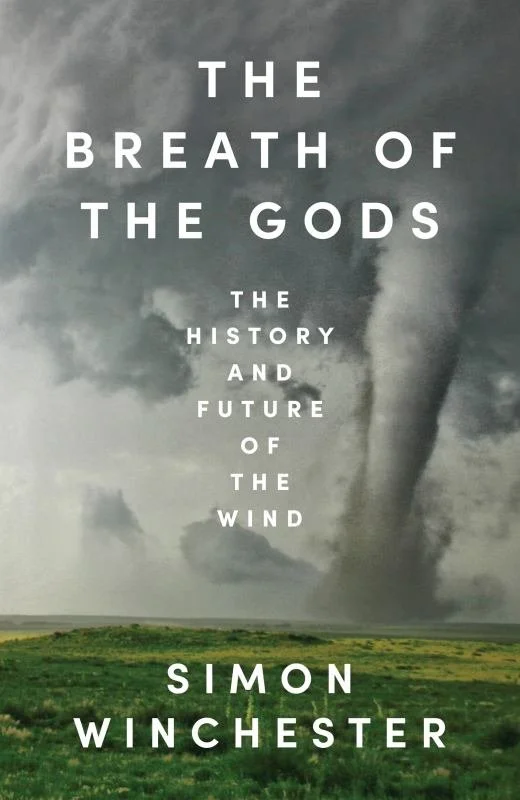
The Breath of the Gods: The history and future of the wind by Simon Winchester $43
What is going on with our atmosphere? The headlines are filled with news of devastating hurricanes, murderous tornadoes, and cataclysmic fires. Gale force advisories are issued on a regular basis by weather services around the world. Atmospheric scientists are warning that winds — the force at the centre of all these dangerous natural events — are expected to steadily increase in the years ahead, strengthening in power, speed, and frequency. While this prediction worried the insurance industry, governmental leaders, scientists, and conscientious citizens, one particular segment of society received it with unbridled enthusiasm. To the energy industry, rising wind strength and speeds as an unalloyed boon for humankind — a vital source of clean and ‘safe’ power. Between these two poles — wind as a malevolent force, and wind as saviour of our planet — lies a world of fascination, history, literature, science, poetry, and engineering which Simon Winchester explores with the curiosity and Vigor that are the hallmarks of his bestselling works. In The Breath of the Gods, he explains how wind plays a part in our everyday lives, from airplane or car travel to the ‘natural disasters’ that are becoming more frequent and regular. The Breath of the Gods is an urgently-needed portrait across time of that unseen force — unseen but not unfelt — that respects no national borders and no vessel or structure in its path. [Paperback]

I Am Dyslexic: An interactive and informative guide by Chanelle Moriah $37
An essential guide to understanding dyslexia - for dyslexic people and their families, friends and workmates. Dyslexia is a common condition that affects approximately one in ten people — both adults and children — but information on how to manage it is not as accessible as you might think. Chanelle Moriah has already published bestselling books on autism and ADHD, helping countless people to feel less alone in their experiences. At the age of 25, Chanelle was diagnosed with dyslexia and decided to take another deep dive. Chanelle shines the spotlight on dyslexia in their unique style, creating a simple resource that explains what dyslexia is and how it can impact the different areas of someone's life. I Am Dyslexic is a tool for both diagnosed and undiagnosed dyslexic people to explain or make sense of their experiences. It also offers non-dyslexic people the chance to learn more from someone who is dyslexic. With clear sections explaining the many aspects of dyslexia, accompanied by Chanelle's beautiful illustrations, and with space for readers to write down their thoughts, this book is designed to be personalised to the individual's experience. [Hardback]
>>This Is ADHD (read Stella’s review).
>>I Am Autistic.
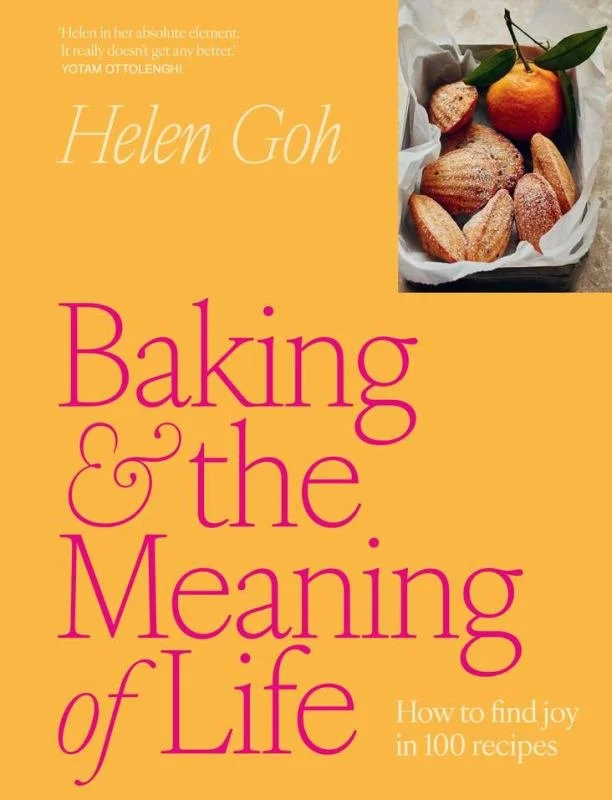
Baking and the Meaning of Life: How to find joy in 100 recipes by Helen Goh $60
No one knows the 'why' or 'how' of baking better than Helen Goh, recipe developer with Yotam Ottolenghi for more than a decade, co-author of bestselling books Sweet and Comfort, and practising psychologist. In this, her first solo cookbook, Goh draws on her upbringing in Malaysia and Australia, her acclaimed work with Ottolenghi and her psychology training to share her distinctive approach to baking with 100 delicious sweet and savoury bakes. With recipes like Chocolate Tahini Cake with Sesame Brittle, Plum and Pistachio Bars, Pandan and Coconut Chiffon Cake, and many other shareable treats that offer both tried-and-true and creative flavours, this book is a celebration of community, connection and pleasure through baking. Helen's Champagne and Blackcurrant Celebration Cake will become your new go-to for a special occasion, while a batch of Perfect Vanilla Cupcakes for a picnic or charity bake sale is a small but powerful building block of community and solidarity. All of her desserts are impressively sweet ways to celebrate milestones and connect with family and friends. And after your sweet tooth has been satisfied, there are more than 15 savoury baking dishes, from a Puttanesca Galette with Lemon Ricotta to a Potato, Garlic and Rosemary Focaccia. With inventive flavour combinations that showcase Helen's creativity, a wealth of thoroughly road-tested bakes and her reflections on living and baking well, Baking and the Meaning of Life is a one-of-a-kind companion bakers will return to again and again to spread joy, one cookie, cake, or cheese puff at a time. [Hardback]
>>Look inside!

The ABCs of Socialism edited by Bhaskar Sunkara, illustrated by Phil Wrigglesworth $15
Almost suddenly, socialism has re-entered our political discourse, but it is probably not best left up to the mudslingers and disparagers to shape our understanding of it (though their very opposition to it gives it rather an appeal!). This book steps into this moment to offer a clear, accessible, informative, and irreverent guide to socialism for the uninitiated. Written by young writers from the magazine Jacobin, alongside several scholars, The ABCs of Socialism answers basic questions, including ones that many want to know but might be afraid to ask ("Doesn't socialism always end up in dictatorship?", “Don’t the rich deserve to keep their money?", “Is socialism a Western concept?”, “Socialism sounds good in theory but doesn’t human nature make it impossible to realise?”). Disarming and pitched to a general readership without sacrificing intellectual depth. [Paperback]
>>Look inside.

A selection of books from our shelves. Click through to find out more:

Read our latest newsletter.
31 October 2025

If you can resist this book, you are an expert in avoiding something thrilling. Giselle Clarkson’s excellent book about all things birds is sure to engage young minds and old. Filled to the brim with intriguing information, it’s perfectly pitched with its bite-size chunks of text, excellent diagrams and illustrations, and humorous asides. Clarkson encourages us to be avian investigators: equipped with our toolkit of omnibird knowledge and our best tool — observation. Being a bird puzzle-solver has never been more lively. From poop to feathers, to all the parts of the wing, to the different styles of wings, and tails, and heads, and beaks, you’ll be spotting birds high above you, deciphering and coming up with —It’s a gull! A blackbird or possibly a thrush! A starling! There are 18 investigator notes featuring a range of birds, including ducks, gulls, corvids, chickens, flightless birds, birds of prey, and the humble sparrow. There are beautiful eggs (spot the odd one out!), a plumology lesson, an array of different nests from the carefully woven thrush work to the scattershot style of the sparrow, and an explainer on bird names — you’ll know your gymnorhina tibicen from your griseotyrannus aurantioatrocristatus in no time! And so much more. Clarkson’s wonderful illustrations draw you in (there’s great bird attitude here), and the text is lively — so many facts, but also humour and speculation. While there are answers to bird questions you didn’t know you had, there are also questions to ask. What does it feel like to fly? What are they saying? What bird would you be? There’s a charge to use your imagination and your detective skills (observational senses). It's a book about birds and it’s a book about noticing the natural world around us — its awesomeness. Omnibird is a gem — a book that informs, inspires and delights.


He began to think that a sixty-year audit of some sort was unavoidable even if it was also undesirable, even though he was generally fairly successful at avoiding whatever he deemed undesirable (most things, in fact). He had lately been finding himself increasingly reluctant to do even those things that he certainly wanted to do. He had made avoidance his life’s work, he realised: he had started by avoiding things that were both undesirable and unnecessary, and then moved through avoiding things that were either undesirable but necessary or desirable but unnecessary, and he was currently exercising his avoidance on things that were certainly both desirable and necessary. Why was he doing this? Where would it end? Also, he thought, since when has avoidance become my life’s work? I must have had, or thought I had, some other purpose at some point, or if not purpose then intention or at least inclination, he thought, but my avoidance has been all too effective with regard to something that was not even a necessity, or at least became less of a necessity as I got better at it. He was, he estimated, being soft on himself, at least twenty years behind where his writing would be if his writing was more important to him. Evidently it was less important now than it had been, he realised, otherwise surely he would spend more time actually doing it, or if not actually doing it then actually trying to do it. Avoidance was more his line. True, he had avoided writing any number of bad books, more bad books than many accomplished writers had avoided writing, but he wasn’t sure if this was an accomplishment in itself. Being a writer meant that it was always writing that he was not doing, as opposed to all of the other many things that he was also not doing. There were, of course, many fortunate people who did even less writing than he did but it was not for them specifically writing that they were not doing, which must be a relief to them, he thought. So, if he stopped avoiding writing, if he replaced some of the other many things that he did in his life presumably to avoid writing with actual writing, could he make up the twenty years of work that he had just estimated he had lost? If he did this year for year, he estimated, he would be where he could have been now when he got to be the age of Joy Williams, the author of the book that he was reading when he began what has turned out after all to be a sort of involuntary audit. This is encouraging, he thought, but then, he thought, Joy Williams has been on some sort of plateau for well more than twenty years, or if not exactly a plateau then some other upland with a shallower incline than the one that certainly lay ahead of him and for which he doubted that he had now either the stamina or the strength to ascend. If I write metaphors, I cross them out straight away, he thought, but how can I cross out a thought? Few of the ninety-nine stories in Joy Williams’s Concerning the Future of Souls are more than a page long; many are a single paragraph or even a single sentence. As with the book’s 2016 predecessor, Ninety-Nine Stories of God, the stories in this new book, which is subtitled 99 Stories of Azrael, are written with a spareness and flatness that he admires, in the language of a newspaper report or an encyclopedia entry, trimmed utterly of superfluities, and read like jokes that end up making us cry instead of laugh, or like laments that make us laugh instead of cry. Williams comes at her subjects at unexpected angles, he thought, revealing an inherent strangeness in what we might have thought to be the most ordinary details, and, conversely, making the most bizarre details seem entirely familiar and mundane. Really, he thought, life is like this, in both ways, though we blind ourselves to this as best we can. Joy Williams has the literary gift of being able to shake these scales from our eyes. He had sworn off metaphors decades ago, even metaphors in thought, but sometimes they just sneak out. More than several of the stories in the book concern Azrael, the so-called Angel of Death, who is not Death nor the cause of death, but is more a reluctant functionary, updating the register of the living, writing and erasing the names of the living and helping the souls to move on. But where to? The proximity of an extinction event, so to call it, either or both personal and collective, for the author, for the reader, for everyone and everything, adds a sort of urgency to these stories that makes us hyperaware of each detail as we are in any developing tragedy or disaster. The most tragic is the most ludicrous too, he thought, and vice versa. A good piece of literature has the same effect upon our awareness as a disaster. The 99 stories in this book have the texture of Biblical parables or Aesopian fables, he thought, but they are not parables or fables due to the indeterminacy of their meanings, or they are parables or fables that eschew the lessons and morals usually expected of parables or fables and return the reader instead to the actual. What more could we want from a story? What more could we really want full stop? The title of each story follows the story and often sits at odds with the reader’s experience of the story, forcing a further realignment of sensibilities, he thought. More, again, of what we want. Of what I want. How can such an immense knowledge, experience and learning be packed by Williams into something so simple and immediate, the weight of existence into something so astoundingly light? How can we have time, especially nowadays, for anything that falls short of this? The urgency is upon us all, he thought, or at least he felt it upon himself, and he was uncertain how to respond. Should he perfect his avoidance, or should he clutch, too late, perhaps almost too late, at whatever it was he was attempting to avoid?
HE CANNOT TELL AN AUDIT FROM A REVIEW

“A Kosovan torture survivor requests translation assistance at his therapy sessions. The novel’s narrator, a nameless translator, reluctantly agrees. But Alfred’s account of his experiences conjures hidden memories that seep into her psyche, forcing her to question her marriage and her place in the world. This is a story of a woman saddled between her Albanian past and her New York present. It explores the way that language is kept in our bodies, how it can reveal truths we aren’t ready to hear. Misinterpretation subtly blurs the distinction between help and harm. We found it propulsive, unsettling, and strangely human.” —Booker Prize judges’ citation
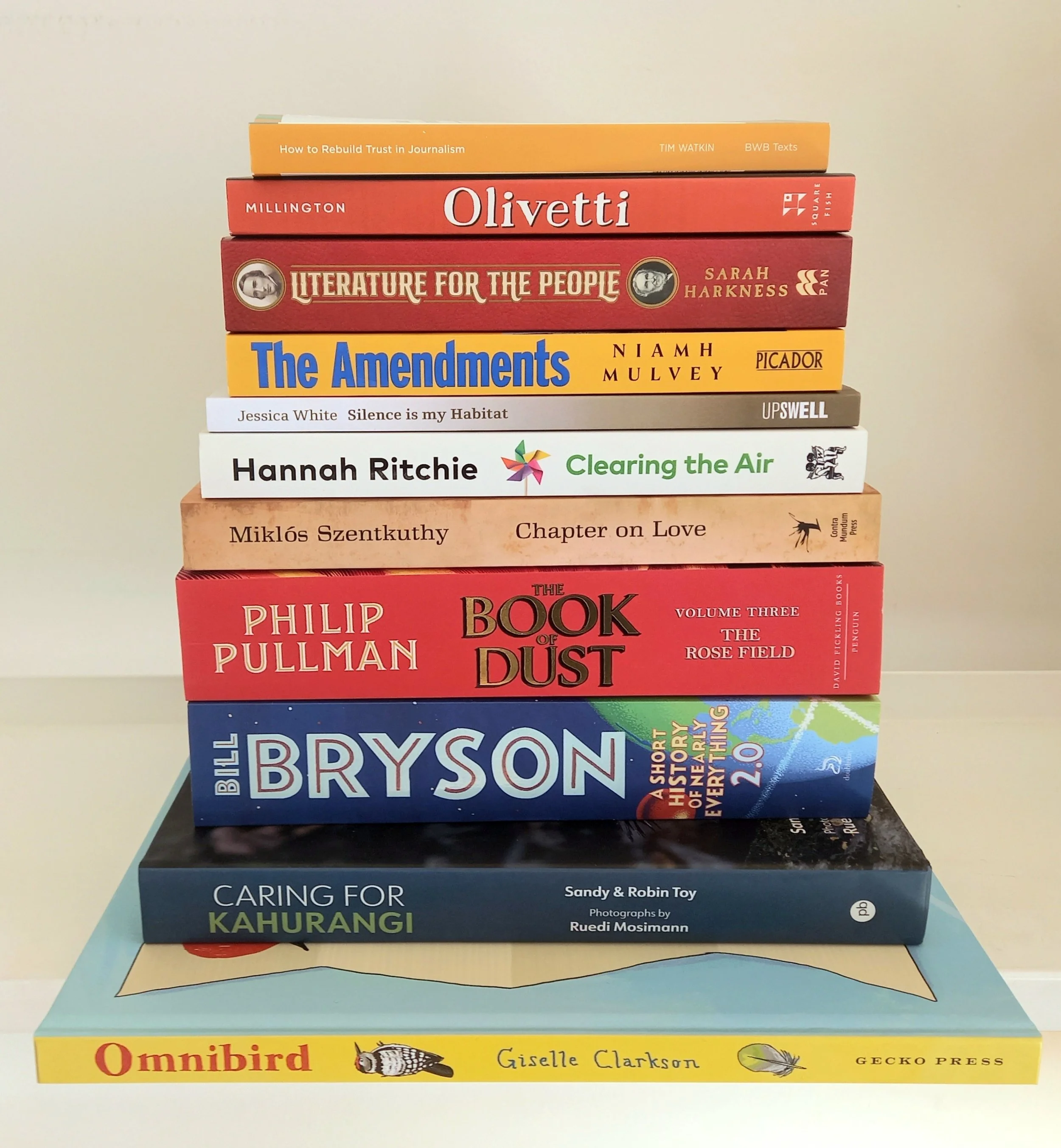
All your choices are good! Click through to our website (or just email us) to secure your copies, and we will dispatch your books by overnight courier or have them ready to collect from our door in Church Street, Whakatū.
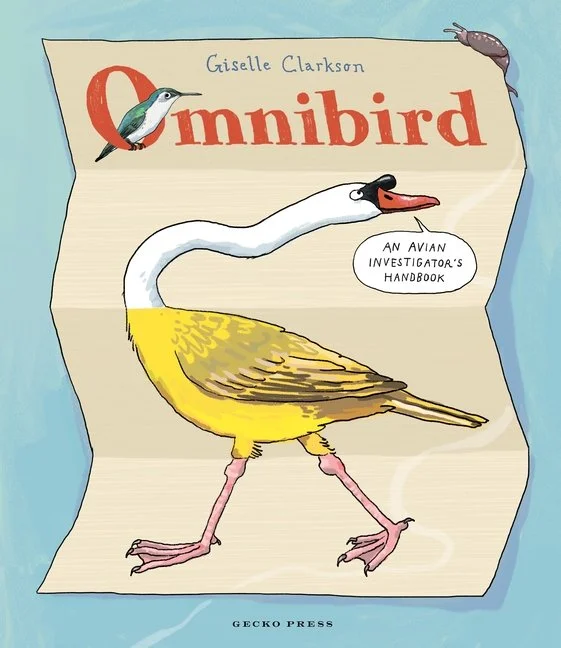
Omnibird: An avian investigator’s handbook by Giselle Clarkson $45
This highly illustrated, playful field-guide to common international birds brings the art of observology to the science of ornithology, showing the many ways these familiar creatures are remarkable if you take time to look. Have you seen a bird today? Probably, unless you’re reading this in bed in the morning. Did you truly look at the bird? To open your ornithological eyes and ears, meet the Omnibird. An Omnibird contains the essential birdiness of every bird—it was born from an egg, has feathers, two legs, a beak and gizzard, perhaps some premium features like spurs or a curuncle. Once you recognise the Omnibird, you’ll see the remarkable in any bird. You’ll be expert at finding extraordinary things around you, just by looking. Omnibird describes 12 common birds from habitats around the world—eagles, owls and seabirds, starlings, ducks and swans. You will explore the incredible internal structure of bird bones, learn what a gizzard stone is for, meet the tiny creatures that live on birds, and find the fascinating in eggs, bird poop, feathers, and flight patterns. Now you’re an Omnibird expert, you’ll look at every bird in new ways every day. [Large-format hardback]
>>Look inside!
>>A big, funny book all about ornithology.
>>The Observologist.
How to Rebuild Trust in Journalism by Tim Watkin $20
”There is little more important to the success of the human species than the trust that allows information networks to form and thrive, communities to share and trade, and people to see the world as it really is.” Award-winning journalist Tim Watkin confronts the breakdown in trust between journalism and the public. Drawing on the latest international and local research, he explores the social, economic and political shifts that have eroded public confidence in journalism. From financial pressures and ideological divides, to a perceived lack of transparency and the rise of misinformation, How to Rebuild Trust in Journalism examines how journalism’s role has been questioned — and what can be done to restore its standing. [Paperback]
>>Other BWB Texts.

Chapter on Love by Miklós Szentkuthy (translated from Hungarian by Erika Mihálycsa) $55
Written between Szentkuthy's first major work, Prae (1934), and the first book of the St. Orpheus Breviary (1939), Chapter on Love (publ. 1936) exemplifies well Szentkuthy's writing of excess. An attempt at polyphonic writing, it brings together the perspectives of an unlikely set of characters including the mayor of a doomed Italian city, given to debilitating ‘impressionism’ — a penchant for observing and analysing —apart the minutest shades of reality — a nihilistic pope, a hanged brigand, a courtesan and her decadent pubertal adorer. They pass through the pages of this quixotic and compelling book under the threat of imminent catastrophe, filling chapter after chapter with passionate, self-generating theorising and (mock-)philosophising on the margins of Empedocles, life and death, stockings, endingness and changeability, ethics and aesthetics, vitality and law, chaos and social order grounded in horror vacui, the forever elusive other person — all enmeshed with well-nigh self-parodic, idiosyncratic feats of ratiocination and theorising driven ad absurdum, which proliferate on the analogy of (free) association. The common denominator of their analytical furore and the yarns they spin is love, which touches not only on the human being, but the whole of nature, from the realm of plants to that of minerals. Szentkuthy's book may don the costume of a historical novel, but it stands under the sign of the pseudo: its deliberately vague setting, somewhere in Italy toward the end of the Renaissance, is in fact but a mask which allows for anachronism (of realia, ideas, data, and even terminology) to ooze through, as the characters and their observations are our contemporaries in every respect. Baroque and exuberant, of a sweeping melancholia and at times savage humor, a (mock-)treatise written with an abundance of striking, distant associations that evoke Surrealist practices, this strange novel tantalisingly shows a path not taken by experimental modernism, of the contrapuntal use of point-of-view converted into a contrapuntal use of analytic, essayistic observations of reality. [Paperback]
>>Pressing.
>>Working towards an impossible novel.

The Rose Field (‘The Book of Dust’, Volume 3) by Philip Pullman $38
The long-awaited and highly anticipated conclusion to Philip Pullman’s bestselling ‘The Book of Dust’ sequence. “Lyra: what will you do when you find this place in the desert, the opening to the world of the roses?” ’‘Defend it,” Lyra said. ‘“ie defending it.” When readers left Lyra in The Secret Commonwealth she was alone, in the ruins of a deserted city. Pantalaimon had run from her — part of himself — in search of her imagination, which he believed she had lost. Lyra travelled across the world from her Oxford home in search of her dæmon. And Malcolm, loyal Malcolm, too journeyed far from home, towards the Silk Roads in search of Lyra. In The Rose Field, their quests converge in the most dangerous, breathtaking and world-changing ways. They must take help from spies and thieves, gryphons and witches, old friends and new, learning all the while the depth and surprising truths of the alethiometer. All around them, the world is aflame — made terrifying by fear, power and greed. As they move East, towards the red building that will reunite them and give them answers — on Dust, on the special roses, on imagination — so too does the Magisterium, at war against all that Lyra holds dear. Marking thirty years since the world was first introduced to Pullman’s remarkable heroine Lyra Belacqua in Northern Lights, The Rose Field is the culmination of the cultural phenomenon of The Book of Dust and His Dark Materials. [Paperback]
’Powerful, profound and utterly unforgettable: a stunning trilogy conclusion.’ —The Telegraph
”Pullman's uncanny ability to conjure place is once again in full evidence . . . And when we reach it, the novel's final showdown is a fantastically nail-biting ride.” —The Guardian
”But for all its intricate interweavings of alchemy and folk tales, ballads and poetry, the book has the pacing of a thriller.” —The Times
>>The world is falling apart.
>>Read an extract!
>>Also by Philip Pullman.

Silence Is My Habitat: Ecobiographical essays by Jessica White $37
Jessica White has been deaf since she was four years old. Where an autobiography or biography narrates the story of a person's life, an ecobiography dwells on a person's interaction with their ecosystem, and how this shapes their sense of self. The essays that follow detail how deafness encouraged and shaped her relationship with the natural world. "Deafness made me observant and quiet. Because I could not hear enough to join in on conversations, my attention often wandered or was absorbed by sensations other than sound — morning sun on my forearms, the thick, sweet scent of flowering oleanders, the triangular shadow of a flock of galahs flying overhead. On the long bus trips between school and home, I watched the sorghum burnishing as it ripened, and kangaroos bounding through wheat stubble in the late afternoons, into trees that cast long shadows. I felt the bus shake as it rattled over cattle grids or veered into the corrugations on the gravel roads." These essays consider how deafness shapes the interfaces between the writer and particular environments, given how she can only hear particular sounds, as she navigates the world through the tactile and olfactory. In these poetic essays, she describes her responses to bodies of water, the university, the archive, the bush, and the quietened realm of the pandemic. She writes of burnt trees amidst the devastating loss of her mother. She finds a flock of deaf women writers who help her fly. White reveals that deafness, although it brings fatigue and isolation, is also a portal to a rich, contemplative, and creative life. [Paperback]

Olivetti by Allie Millington $20
Being a typewriter is not as easy as it looks. Surrounded by books (notorious attention hogs) and recently replaced by a computer, Olivetti has been forgotten by the Brindle family—the family he’s lived with for years. The Brindles are busy humans, apart from 12-year-old Ernest, who would rather be left alone with his collection of Oxford English Dictionaries. The least they could do was remember Olivetti once in a while, since he remembers every word they’ve typed on him. It’s a thankless job, keeping memories alive. Olivetti gets a rare glimpse of action from Ernest’s mother, Beatrice—his used-to-be most frequent visitor—only for her to drop him off at Heartland Pawn Shop and leave him helplessly behind. When Olivetti learns Beatrice has mysteriously gone missing afterward, he believes he can help find her. He breaks the only rule of the "typewriterly code" and types back to Ernest, divulging Beatrice’s memories stored inside him. Their search takes them across San Francisco—chasing clues, maybe committing a few misdemeanors. As Olivetti spills out the past, Ernest is forced to face what he and his family have been running from, The Everything That Happened. Only by working together will they find Beatrice, belonging, and the parts of themselves they’ve lost. [Paperback]
"Millington's writing does us a great favor. Her Olivetti is neither an automaton nor a pushover — there is a painful and problematic crisis in the house he has called home and his voice drives the action with compassion. Ernest speaks with a confusion and simmering panic recognisable to anyone who was once 12, loved their mother deeply and feared for her life. The Brindles will go on confronting "Everything," with hope, gusto and all the unity they can muster. They will set the family table for seven, with a place for Olivetti; put paper in his carriage, and wait." —Tom Hanks in the New York Times Book Review

Literature for the People: How the pioneering Macmillan brothers built a publishing powerhouse by Sarah Harkness $35
From an impoverished childhood in the Scottish highlands to Victorian London, this is the story of two brothers – Daniel and Alexander Macmillan — who built a publishing empire — and brought Alice in Wonderland to the world. Their remarkable achievements are revealed in this entertaining, superbly researched biography. Daniel and Alexander arrived in London in the 1830s at a crucial moment of social change. These two idealistic brothers, working-class sons of a Scottish crofter, went on to set up a publishing house that spread radical ideas on equality, science and education across the world. They also brought authors like Lewis Carroll, Thomas Hardy and Charles Kingsley, and poets like Matthew Arnold and Christina Rossetti, to a mass audience. No longer would books be just for the upper classes. Daniel was driven by the knowledge that he was living on borrowed time, his body ravaged by tuberculosis. Alexander took on responsibility for the company as well as Daniel’s family and turned a small business into an international powerhouse. He cultivated the literary greats of the time, weathered controversy and tragedy, and fostered a dynasty that would include future prime minister Harold Macmillan. Includes fascinating insights about the great, the good and the sometimes wayward writers of the Victorian era, with feuds, friendships and passionate debate. [Paperback]
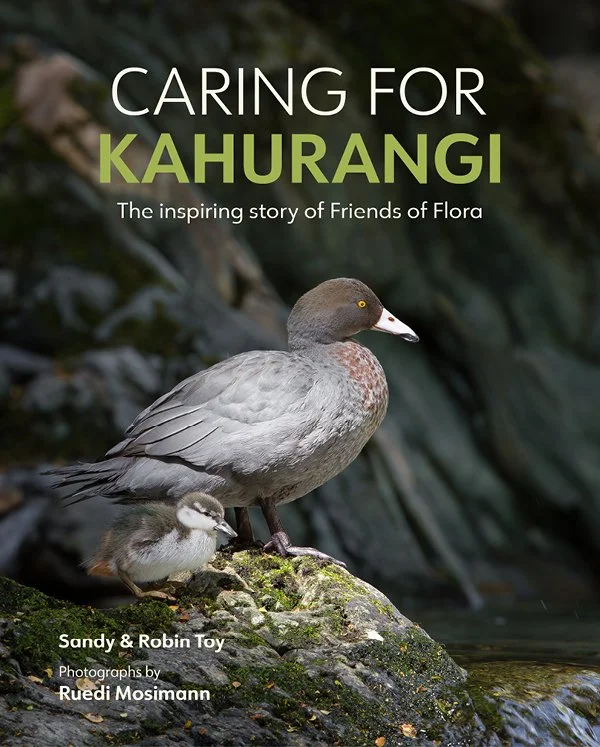
Caring for Kahurangi: The inspiring story of Friends of Flora by Sandy and Robin Toy, with photographs by Ruedi Mosimann $60
Caring for Kahurangi is the story of one of the most successful community-led conservation projects in New Zealand. For the last 25 years, the volunteer group Friends of Flora has been trapping predators, translocating birds, surveying and monitoring, determined to restore the biodiversity of the rugged country of Flora, situated on the eastern edge of Kahurangi National Park. This book describes the journey of Friends of Flora, weaving tales of volunteer adventures, rigorous science and magical encounters into an inspiring story and what can be achieved with great commitment, drive and friendship. [Hardback]
>>Look inside.
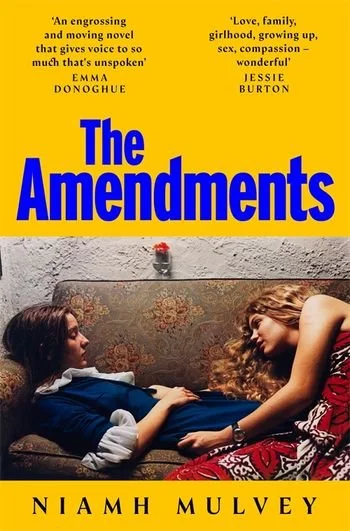
The Amendments by Naimh Mulvey $30
Nell and her partner Adrienne are about to have a baby. For Adrienne, parenthood is the start of a new life. For Nell, it's the reason the two of them are sitting in a therapist's office. Because she can't go into this without facing the painful truth: that she has been a mother before. For Dolores, Nell's mother, the news also brings a reckoning: with the way her daughter's life unfolded fifteen years ago, with its inextricable ties to her own past, and with the tragedy that neither of them have spoken about since. Set in Ireland against the backdrop of a series of abortion referendums. [Paperback]
”Niamh Mulvey's wonderfully compelling characters and deft, clear prose offer great pleasure. Her sense of political and cultural change is sharp, and the beauty she finds in days of struggle is haunting.” —Joseph O'Connor
”A smart, subtle, engrossing and moving novel that gives voice to so much that's unspoken about Ireland and about youth.” —Emma Donoghue

Clearing the Air: A helpful guide to solving climate change — In 50 questions and answers by Hannah Ritchie $40
With so many conflicting headlines out there, it's tough to sort fact from fiction when it comes to climate change and the solutions we need for a cleaner future. The first piece of good news is that data scientist Hannah Ritchie is here with answers, and the steps we need to take now. Using simple, clear data, she tackles questions such as, 'Is it too late?', 'Won't we run out of minerals?' and 'Are we too polarised?'. The second piece of good news — the truth is way more hopeful than you might think. We're at a critical moment for our planet, and getting the facts straight is step one. But even more crucial is feeling hopeful about what we can do next. The third piece of good news? We already have many of the solutions we need to create a more sustainable planet for future generations. [Paperback]
”An essential myth-busting primer on climate actions for everyone navigating the blizzard of confusing opinions and misinformation around the defining issue of our time.” —Gaia Vince
”If there were a Nobel Prize for clear thinking, Hannah Ritchie would have my vote. She doesn't just cut through the noise — she vaporises it. With a scientist's rigor and a storyteller's grace, she shows us what the data actually says about the biggest challenges of our time. Her work is essential reading for anyone who still believes facts can change minds and optimism can change the world.” —Rutger Bregman
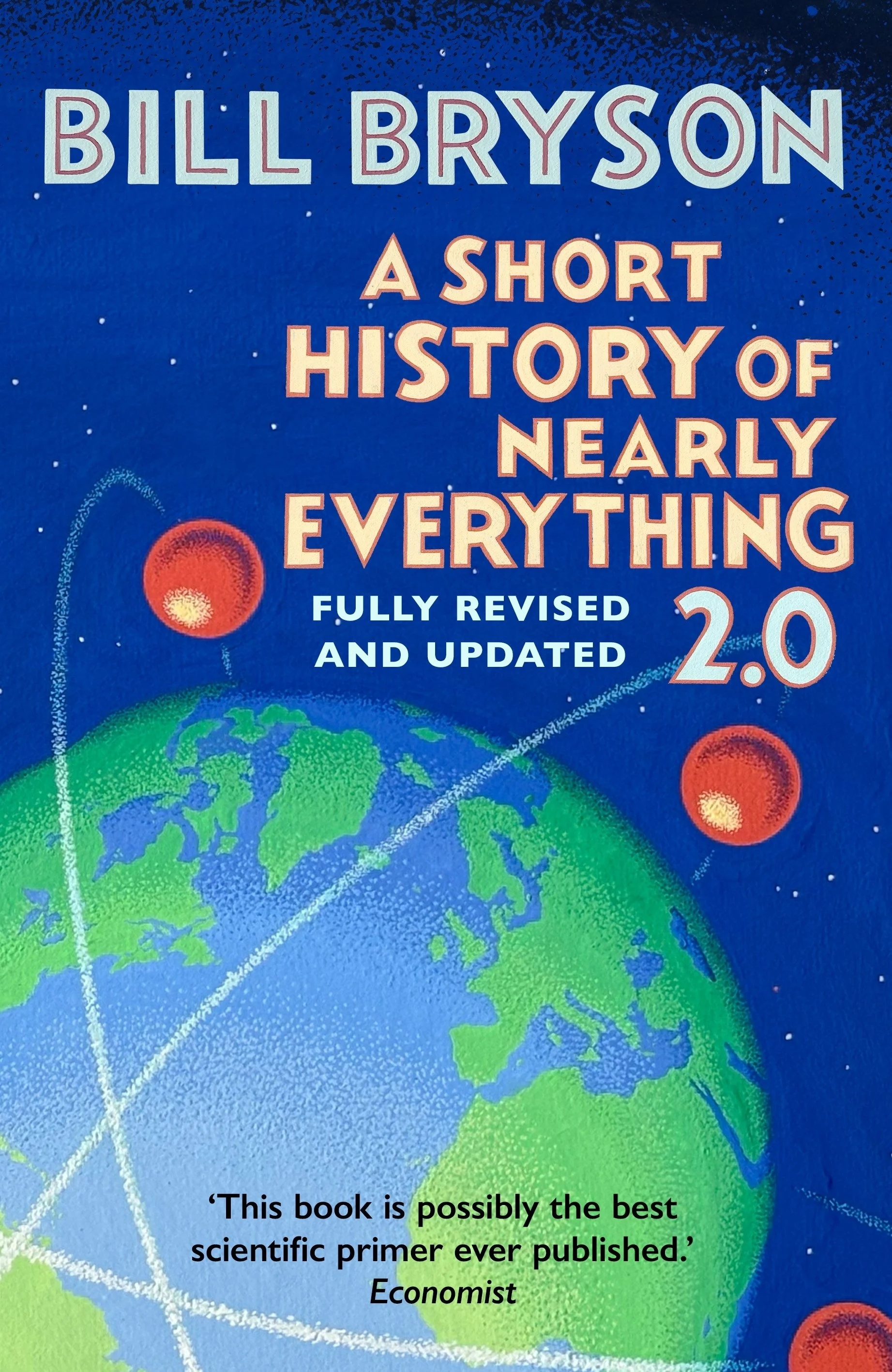
A Short History of Almost Everything 2.0 by Bill Bryson $40
The 21st century's bestselling popular science book has now been fully revised and updated in Bill Bryson's inimitable style to reflect the many advances in science since this book was first published in 2003. This journey through time and space will inform a new generation of readers as well as those who read this book on first publication with a new perspective based on what we know now. A Short History of Nearly Everything 2.0 is the result of Bill Bryson's quest to understand everything that has happened from the Big Bang to the rise of civilisation — how we got from being nothing at all to what we are today. Now fully updated to include all the latest advances in science, it is more ground-breaking than ever before(!). Bryson makes complex subjects fascinating and accessible to everyone with an interest in the world around them. [Paperback]
”Possibly the best scientific primer ever published.” —Economist
”Truly impressive. It's hard to imagine a better rough guide to science.” —Guardian

All your choices are good! Click through to our website (or just email us) to secure your copies, and we will dispatch your books by overnight courier or have them ready to collect from our door in Church Street, Whakatū.
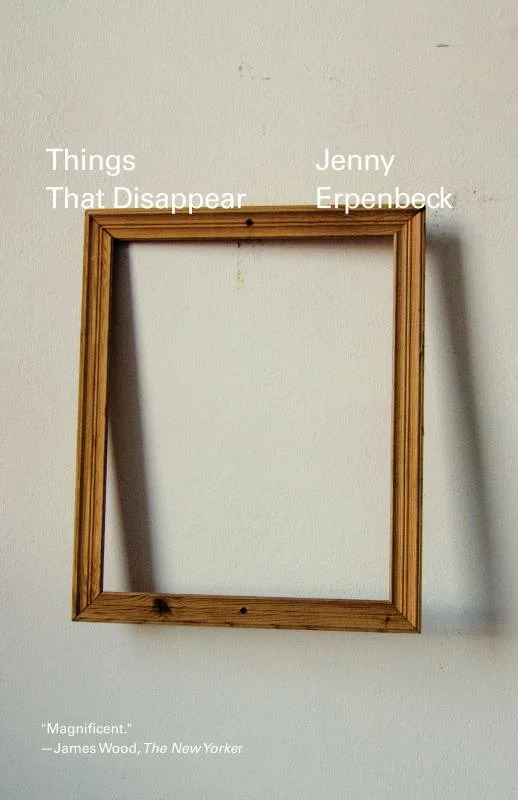
Things That Disappear by Jenny Erpenbeck (translated from German by Kurt Beals) $36
A collection of interlinked miniature prose pieces that grapple with the phenomenon of disappearance on scales both large and small. The things that disappear in these pages range from everyday objects such as socks and cheese to close friends and the social norms of common courtesy, to sites and objects resonant with East German history, such as the Palace of the Republic or the lines of sight now blocked by new construction in Berlin. Erpenbeck asks: "Is there some kind of perpetrator who makes things that I know cherish and disappear?" These things disappear, and yet do they really? Do they remain in our memories more fully than if they continued to exist? [Paperback]
"The most profound, intelligent, humane, and important writer of our times." —Neel Mukherjee
"Wonderful, elegant, and exhilarating-ferocious as well as virtuosic." —Deborah Eisenberg, The New York Review of Books
"Her restrained, unvarnished prose is overwhelming." —Nicole Krauss
"Meditative, moving, and profoundly beautiful." —Edmund de Waal
"In these tender, poignant pieces, Jenny Erpenbeck is attuned to the silence left in the wake of an absence or disappearance. She captures the ineffable quality of memory with a quiet, haunting intensity, where a sentence or a paragraph can turn on a word and devastate." —Mary Costello
>>Junk.
>>They disappeared when the wall came down.

Sea, Poison by Caren Beilin $43
Cumin Baleen is a forty-one-year-old writer living in Philadelphia — this city of hospitals — who works at the upscale grocery Sea & Poison and is navigating the onset of an autoimmune condition. To start a medication that may help, an eye exam is required and this leads to a nightmarish laser eye surgery. The laser shoots into her brain, making her language spare and her sentences clause-less, a vexing constraint that stalls her book on gynecological malpractice: she wants others, in the realm of our for-profit medical industry that "renders the Hippocratic Oath its opposite," to see poison. Meanwhile, Cumin is kicked out of her boyfriend Mari's studio after he falls for Janine, their landlord, and starts renting a closet in Maron's bedroom — polyamorous Maron who is hooking up with Alix, whom Cumin lusts after. Disheveled from medicines and medical scams, Cumin declares, "I don't know what to say, I'm saying I have a cracked appearance. It's not a pity party, it's a character sketch. Insofar as you'll need to be looking at me, that your mind should fill me up with its own swaying cognitive and toxic reeds if we are to do this, your imagination should touch me with its ridiculous poison." Caren Beilin's hypnotic and fractured story is at once an homage to Shusaku Endo's terrifying novel of human vivisection The Sea and Poison and the spirit of OuLipo, the pioneering French writing group that sought new literary potential through constraints. [Paperback]
“An absurdist masterpiece. Nothing, just nothing, is as wild, outrageous, and free as Sea, Poison.” —Amina Cain
"Caren Beilin is one of the most bizarre and fearless writers of her generation." —Catherine Lacey
"I was instantly won over by Beilin's writing — so funny and serious and playful. Her books have the natural authority of those artworks that are strictly, rigorously themselves." —Sheila Heti, The Paris Review
"It's not often I read a work and want to know, simply, how. How did the writer write this?" —Patrick Cottrell, LA Review of Books
>>An enormous amount of ground.
>>Revenge of the Scapegoat.
>>Now and next.

Swallows by Natsuo Kirino (translated from Japanese by Lisa Hofmann-Kuroda) $38
Twenty-nine-year-old Riki is sick of her dead-end job, of struggling to get by ever since she moved to Tokyo from the country. So when someone offers her the chance to become a surrogate in return for a life-changing amount of money, it's hard to turn down. But how much of herself will she be forced to give away? Retired ballet star Motoi and his wife, Yuko, have spent years trying to conceive. As Yuko begins to make peace with her childlessness, Motoi grows increasingly desperate for a child to whom he can pass on his elite genes. Their last resort is surrogacy; a business transaction, plain and simple. But as they try to exert ever more control over Riki, their contract with her starts to slip through their fingers… Vibrating with the injustices of class and gender, tradition and power, Swallows is an acerbic, witty vision of contemporary Japan, and of a young woman's fight to preserve her dignity — at any cost. [Paperback]
”Natsuo Kirino's novels bring us into direct contact with human life. Her fearless pen forces us to confront the ugliness, intensity and depth of our own desires, to the point that we cannot look away. But just as those desires reach a fever-pitch, she restores our faith in humanity, in a way that only Kirino can. The relentless beauty of her stories leaves me breathless every time.” —Meiko Kawakami
”A timely and engrossing drama about desire, precarity, and the uses of a woman's body. Kirino's psychologically compelling and sharp-witted storytelling draws us into her characters' lives, leaving us to answer: do our bodies have a price and who gets to decide?” —Ruth Ozeki
”A masterful feat of storytelling as well as a biting critique of gender, patrimony and class. . . A writer in effortless command of her craft, Kirino brilliantly upends our expectations at every twist and turn. Just when you thought things could not get any more complicated, she deftly ups the ante. The resulting tension builds to a startling ending that both disturbs and delights.” —Julie Otsuka

The Story of the Stone: Tales, entreaties and incantations by James Kelman $35
James Kelman has made use of the short form all of his writing life, calling on the different traditions where such stories are central within the culture, beginning and ending in freedom, the freedom to create.This collection of nearly a hundred pieces of very short fiction spans five decades and reveals James Kelman's mastery of the form. As ever, Kelman insists on his characters telling their stories in their own voices, whether in working-class Glaswegian dialect or the dull menace of bureaucratic babble. Everyday tragedy and bleak humour colour these marvels of narrative efficiency, yet at their core they are tender and full of human truth. Kelman’s uncompromising literary approach and radical politics caused some controversy when he was awarded the 1994 Booker Prize for How Late It Was, How Late. [Paperback]
"The real reason Kelman, despite his stature and reputation, remains something of a literary outsider is not, I suspect, so much that great, radical Modernist writers aren't supposed to come from working-class Glasgow, as that great, radical Modernist writers are supposed to be dead. Dead, and wrapped up in a Penguin Classic: that's when it's safe to regret that their work was underappreciated or misunderstood (or how little they were paid) in their lifetimes. You can write what you like about Beckett or Kafka and know they're not going to come round and tell you you're talking nonsense, or confound your expectations with a new work. Kelman is still alive, still writing great books, climbing." —James Meek, London Review of Books
>>Your stories are your own.
Super-Frog Saves Tokyo by Haruki Murakami (translated from Japanese by Jay Rubin), illustrated by Suzanne Dean $38
Katagiri found a giant frog waiting for him in his apartment. It was powerfully built, standing over six feet tall on its hind legs. A skinny little man no more than five foot three, Katagiri was overwhelmed by the frog's imposing bulk. “Call me \’Frog,’\" said the frog in a clear, strong voice. Katagiri stood rooted in the doorway, unable to speak. 'Don't be afraid. I'm not here to hurt you. Just come and close the door. Please.' Briefcase in his right hand, grocery bag with fresh vegetables and canned salmon cradled in his left arm, Katagiri didn't dare move. “Please, Mr. Katagiri, hurry and close the door, and take off your shoes.” Fully illustrated and beautifully designed, this special edition of Murakami's celebrated short story sees the bewildered Katagiri find meaning in his humdrum life through joining forces with Frog in an effort to save Tokyo from an existential threat. [Hardback]
>>Look inside!

Honeyeater by Kathleen Jennings $38
Sub-tropical Bellworth is founded on floodplains and root-bound secrets. And Charlie, remarkable only for vanished friends and a successful sister, plans to leave for good, as soon as he deals with his dead aunt's house. Then Grace arrives, with roses pressing up through her skin, and drags Charlie into the ghost-choked mysteries of Bellworth, uncovering the impossible consequences of loss and desire — and a choice Charlie made when he was a boy. But peeling back the rumours and lies that cocoon the suburb disturbs more than complacent neighbours and lost souls. And Charlie and Grace are forced to a decision that threatens not only their lives, but all they believed those lives could be. [Paperback]
”Gorgeously written. I was so busy admiring the writing that I didn't notice how deep the water had gotten or what was growing underneath.” —T. Kingfisher
”Eerie and mesmeric, silted with a deep sense of foreboding, Honeyeater reads like a memory-old myth, like something dangerous and true.” —Cassandra Khaw
>>From under the houses.
Anima: A wild pastoral by Kapka Kassabova $28
Over the course of one summer, Kapka Kassabova lives with perhaps the last true pastoralists in Europe. She joins the epic seasonal movement of vast herds of sheep, along with shepherds and dogs, to find pasture in the Pirin mountains in Bulgaria. As she becomes attuned to the sacrifices inherent in this isolated existence, Kassabova finds herself drawn deeper into the tangled relationships at the heart of this small community. Anima is a spellbinding portrayal of the human-animal interdependence in pastoral life, and a plea for a different way of living — one where we might all begin to heal our broken relationship with the natural world. [Paperback]
”A book that mesmerises with its sense of adventure and epic sweep, this is creative nonfiction at its best.” —Guardian
”A haunting, beautiful book from what feels a darkly enchanted land. Kassabova is an extraordinary writer who slips into the skin of a place. Fiercely intelligent, scalpel-sharp, at once romantic and toughly pragmatic: Anima will live with me for a long time.” —Cal Flyn

In Defence of Leisure: Experiments in living with Marion Milner by Akshi Singh $40
The celebrated psychoanalyst Marion Milner lived for the entirety of the twentieth century. By the age of ninety-eight she had written nine books revealing how free time and creativity are vital for a fulfilled life. Akshi Singh was born ninety years after Milner, in Rajasthan, over four thousand miles away from where Milner lived and worked. At first glance, the worlds of these two women seem entirely separate. Yet when Singh found herself standing at a crossroads in her life and grieving personal loss, she realised the questions and preoccupations Milner was exploring were her own. In Defence of Leisure presents Marion Milner as a writer for our times. In asking the simple question — how do I want to spend my free time? Milner developed a method for discovering her true likes and dislikes. As Singh follows Milner's approach — from keeping a diary to painting, building a home to travelling to the sea — she discovers the importance of rest, creativity and play in all of our lives, and how it can open the door to achieving what we truly desire. [Paperback]
”This poetic, graceful and original book not only demonstrates the richness and relevance of Marion Milner's work today but also offers many insights into the choices we make - or fail to - in love, leisure and work. Singh helps us to understand how we inhabit our lives, and how we can start thinking about inhabiting them differently. An illuminating and thought-provoking book that will appeal to a very wide audience.” —Darian Leader
”In Defence of Leisure lilts beautifully between whispering diaries and the chant of a manifesto. Akshi Singh has crafted an exquisite, open-hearted celebration of desire, friendship and lives imaginatively lived. Yet she never shies from questions of risk, of where to put our anger, or of what we concede in exchange for love. Untangling security - so often pernicious and compromising - from care, Singh insists on a wide horizon, full of freedom, for everyone.” —Marianne Brooker
>>Wrapped in foil.
>>The joys of reading in bed.
>>X.
>>Books by Marion Milner.

A Woman’s Eye, Her Art: Reframing the narrative through art and life by Drusilla Modjeska $65
When a woman makes art, what does she see? When she picks up her brush and looks in the mirror? When she takes off her clothes and paints herself naked? Or when she raises her camera and turns it towards another woman, a model naked there in front of her? And how is she seen when she turns to face the men, the artists, her colleagues, her friends, her lovers? A Woman's Eye, Her Art looks back to the lives and art of European modernist women who recast the ways in which women's bodies could be seen — from the self-portraits of Paula Modersohn-Becker, to the Surrealist Claude Cahun who exposed the masquerades of femininity, to the radical nudes of photo-artists Lee Miller and Dora Maar. Alongside them in Paris during the first decades of the twentieth century were many artist-women, their friends and colleagues, including Clara Westhoff-Rilke and Gabriele Münter, Leonora Carrington and Meret Oppenheim. In this book, Drusilla Modjeska examines why these women still matter and connects their past to our present. This book is about the spirit it took for these artist-women to step out on that path, and the courage it took to stay there. It is the story of what they saw, and how they were seen as they crashed against the hypocrisies that are embedded deep in the structures of society. And it is about hard-fought freedoms as in their different ways they changed the landscape of the art world and reframed the narrative. [Hardback]
>>Look inside.
>>Not seeing the shadow.

The Nuclear Age: An epic race for arms, power, and survival by Serhii Plokhy $45
On 16 July 1945, the Nuclear Age began with the explosion of the first atomic bomb and the words quoted by J. Robert Oppenheimer — “Now I am become Death, the Destroyer of Worlds”. While the threat of mutually assured destruction may have kept a lid on a simmering and tense geopolitical landscape, events like the Chernobyl disaster and near-misses like the Cuban Missile Crisis showed that total destruction was only ever one malfunction, mistake, or miscommunication away. Now, as governments re-arm their nuclear arsenals, treaties designed to limit the acquisition and use of nuclear weapons fall away, and nuclear weapons come increasingly within reach of non-state actors, we are on the brink of a renaissance of the nuclear industry. In The Nuclear Age, Plokhy paints an intricate picture of a world governed by fear. From the first artificial splitting of the atom in 1917 and the race to create the first atomic bomb in World War II, through the fraught arms race of the Cold War, to the imperialism, neo-colonial motivation and wars being waged today, the threat posed by nuclear weapons is as pertinent as ever. As he examines the motivations of key players, Plokhy confronts the crucial question of our age — what can we learn from the first nuclear arms race that can help us to stop the new one? [Paperback]
”Few historians write with Serhii Plokhy's authority, clarity or global vision. The Nuclear Age is not only the definitive account of how nuclear power and peril have shaped the modern world, but a profound warning about the risks we still face. This is essential reading, and a marvellous book.” —Peter Frankopan
”Panoramic in scope and fastidious in detail. Plokhy's perfectly timed, compelling and essential book reminds us that the spectre of nuclear extinction is not a cold war nightmare but a permanent condition of modern life.” —Financial Times
>>Other books by Serhii Plokhy.

Feathers of Aotearoa: An illustrated journal by Niels Meyer-Westfeld $60
Meyer-Westfeld explores the feathers of Aotearoa’s native birds, from the long wing feathers of an albatross that enable it to soar endlessly over the oceans, to the tiny, insulating feathers of a penguin. Feathers are one of nature’s most remarkable evolutionary developments, an ingenious solution to the countless environmental challenges that birds face. This exquisitely illustrated book, that combines artwork with compelling insights, will reveal a largely unknown aspect of the avian world, and will appeal to anyone with an interest in our unique bird life. [Large-format hardback]
>>Look inside!