
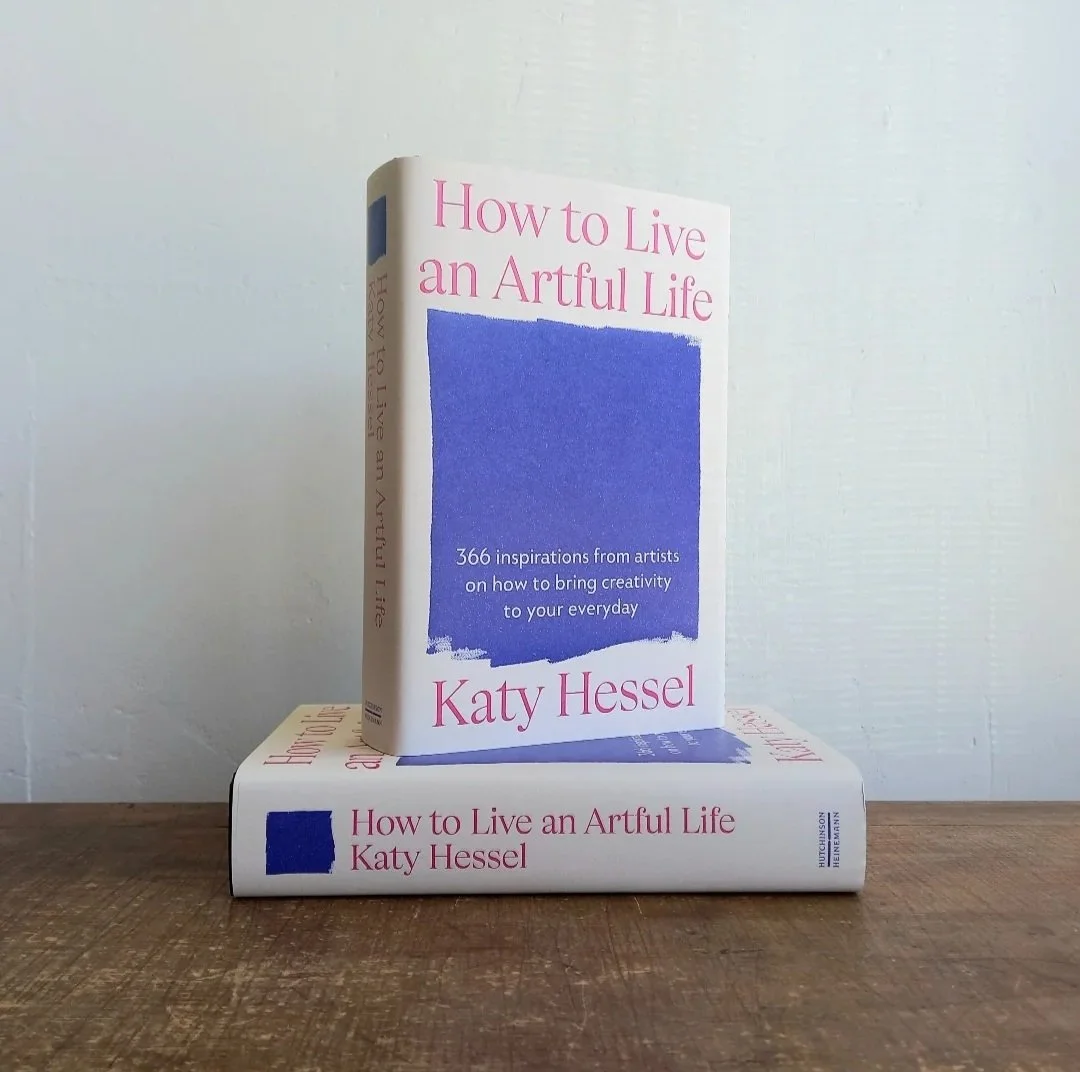
I’m usually suspicious of self-help books, inspiration-filled pages, and daily quotes, but when Katy Hessel’s book How to Live an Artful Life arrived, I was taken with it immediately. This may have been due my prior knowledge of her podcast, ‘The Great Women Artists’, or her art history book, The Story of Art Without Men, or because dipping in, I was intrigued by the breadth of the ideas, the quotes on creativity from both artists and writers, and the amount of information packed into each daily entry, and yes, inspiration. If you’re like me, and your art practice, although being an integral part of your psyche, is in practical terms an outlier crowded out by juggling two jobs, helping to keep the wheels turning at home, looking out for and spending time with your family, and the myriad of tasks that demand attention, then this is just the thing to enable a short window of focus. And this works for artists, writers, anyone that wishes to tune in to art (‘the artful life’) or learn to be more observant; to take the time. I’ll be using this book over the year ahead —366 entries, (but you can dip in and out wherever and whenever you like), so I’ve just read today’s entry. January 16: ‘Keep Looking’. It has a quote from writer Ruth Ozeki about spending time studying something intently — seeing more as you spend more time with an image or an object. This entry has a exercise to do. Some of the entries do — not all — but they are not compulsory, and by no means necessary, as the reading and your thinking will take you places. I’ve started a journal (I’ve always kept a visual diary (since being an art student), and occasionally blogged or had a journal on the go, but these have been erratic rather than systematic efforts) to go alongside the daily entries, jotting down my reactions to the passages and noteing ideas to come back to. (I’ve got 15 full pages already, so plenty of thoughts to record and ideas sparking!). The quotes from artists and writers are drawn from Hessel’s interviews or research, and it’s great to meet some new artists, as well as ones you know. So far, I’ve encountered Ali Smith, Ana Mendieta, Zoe Leonard, Louise Bourgeois, Tacita Dean, Deborah Levy, Kiki Smith, Anni Albers, plus 8 more. One a day. Their thoughts on creativity, Hessel’s commentary and things to think about or do, as well as information about the day’s artist or writer all packed into one succinct page or even half page. For the time-poor this is wonderful, as even on a busy day you can ensure at least keeping abreast of your reading, building a daily habit of engaging with and building your artful life. What I have found the most rewarding so far is remembering an artwork I hadn’t thought about in a long time, and the experience of interfacing with that work; looking at an object which I was very familiar with and finding something new in it; discovering some new artists and being reminded about ones that had slipped out of my consciousness; being more observant and remembering to push pause on the ongoing static of everyday menial tasks and open a window for a fresh portion of art. How to Live an Artful Life is both reassuring and challenging. Reassuring in the sense that your artful life hasn’t disappeared, it’s just a little overwhelmed by other demands and distractions; and challenging because you do find yourself stopping, questioning and focusing your mind on different ways to think about your relationship with art. Highly recommended.
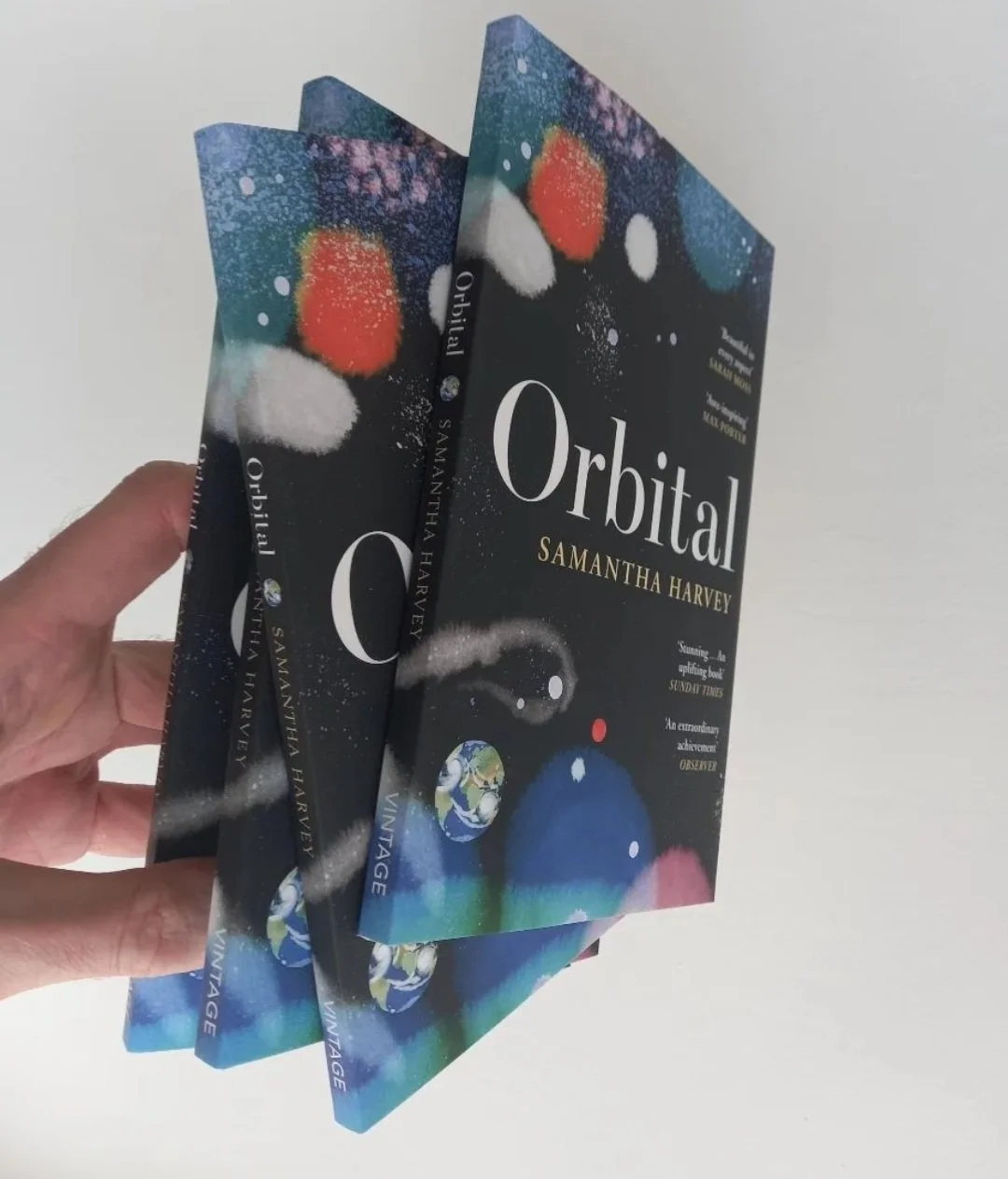
My life is a sort of an orbit, he thought. My life is a repetitive circular thing, or something very closely approximating a circle, not that an orbit needs to be circular, necessarily, but I think mine is. How many times will I pass this same point in the geography of my life, so to call it, how many times will I pass by, caught in the momentum of my orbit, unable to touch what I observe of my life below, changing slowly, or fast, as it does by the influence of various forces that I also cannot touch. But what am I if I am remote from what I have just called my life, he thought, what am I, the orbiting observer, if I am not my life, if I am orbiting above my life as the astronauts or cosmonauts in the space station in Samantha Harvey’s novel Orbital orbit above the planet Earth, orbiting and observing, enthralled by the attractive wonderful damaged planet below, remote from it but falling always towards it though never getting closer, in an equilibrium of gravity and momentum. An orbit, after all, he thought, is always firstly an act of attention. “Is it necessarily the case that the further you get from something the more perspective you have on it?” Harvey asks in the novel, as the astronauts stand in awe at the systems and patterns below them. “If you could get far enough away from Earth you’d be able finally to understand it.” Are understanding and participation mutually exclusive, he wondered, then, in my life, on this planet, necessarily, or is participation in itself a form of understanding, albeit enabled by an inescapable narrowing of perspective? As I circle in my orbit, far above my life, falling towards the object of my attention but carried away anyway by momentum, there in the equilibrium of my distance, I see there are no borders, no edges, no entities other than a oneness, if that could even be thought of as an entity, no entities other than those that exist in our minds, arbitrary borders, arbitrary edges, arbitrary entities, not seen from above but only by the participants in the struggle that they enable, the struggle that they condemn us to maintain. The moonshot is the opposite of an orbit. We divide ourselves with edges to get things done, to act one thing upon another, to intend and do, to participate or at least be aware of what we think of as our participation to the limited extent that we are somehow aware. This is how we get things done. This also is how harm is done. Up here in my orbit I observe how tiny all that is, I understand to the extent that I am remote, I am in a plotless place, I am in a place where everything is in an indefinite tense, where everything is a submission to a larger system, somewhere that I am hardly me. “As long as you stay in orbit you will be OK,” says the astronaut. “You will not feel crestfallen, not once.” I do not want to return, he thought. I do not want to leave my space of suspension, though “our hearts, so inflated with ecstasy at the spectacle of space, are at the same time withered by it.”
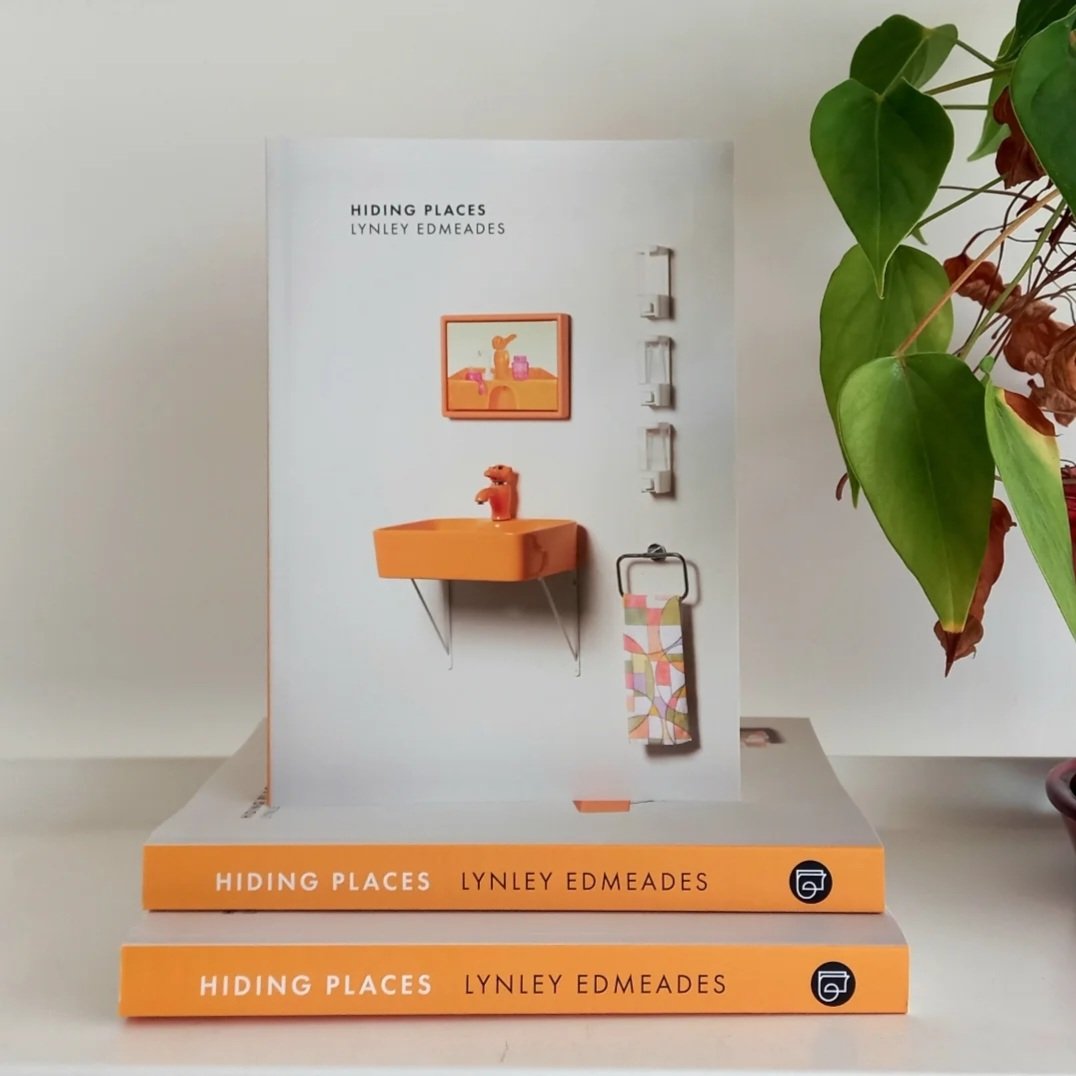
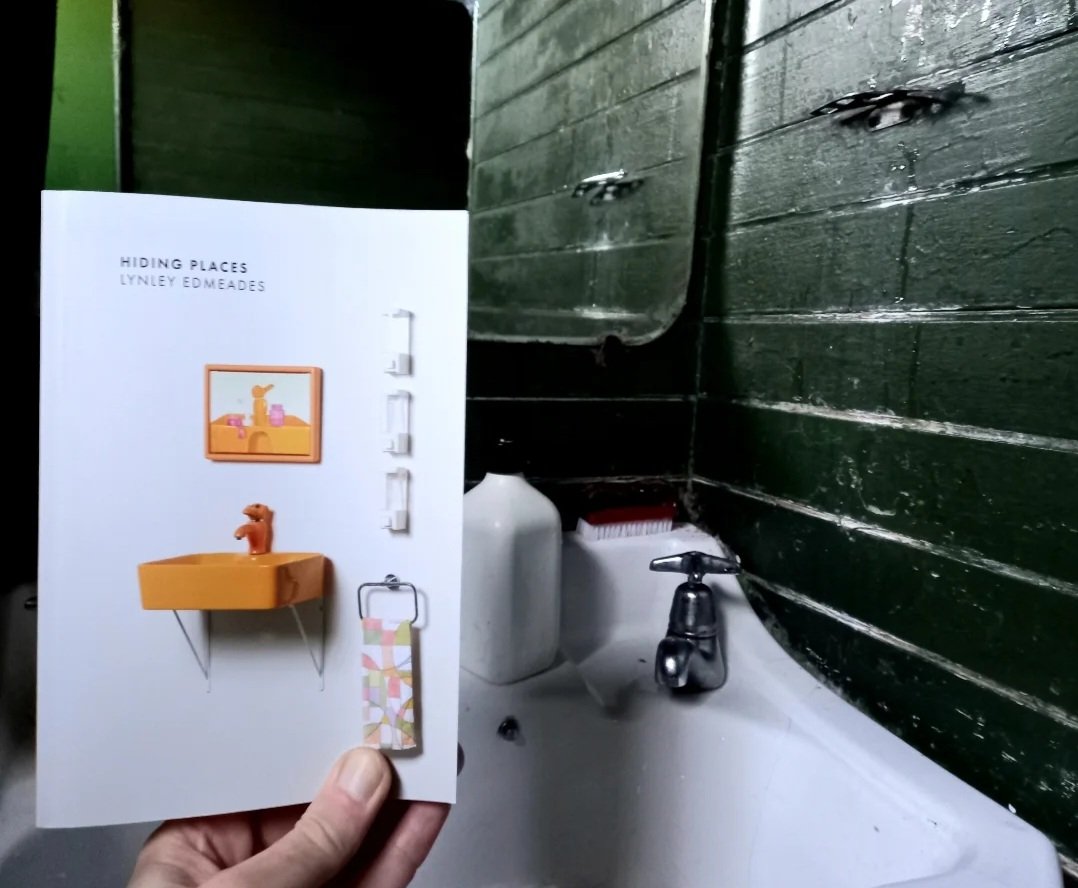
Lynley Edmeades’s Hiding Places is a book about the writing of a book (this book) in a life impacted by the arrival of a new life (a child) while caught also in a culture where both the writing of books and the raising of children are freighted with sets of judgements and expectations that make it hard to know, when you are doing either of these things best, if you are doing either of these things right (if there even is a right way of doing either of them). The fragmentary form of the book and the cumulative immediacy of the fragments, often slippery, often either pained or playful and frequently both, produce a work that is more confessionary than evasive while treasuring the possibilities of evasion, investigating shared experience while highlighting the irremediable particularity of the actual experiences it treats.
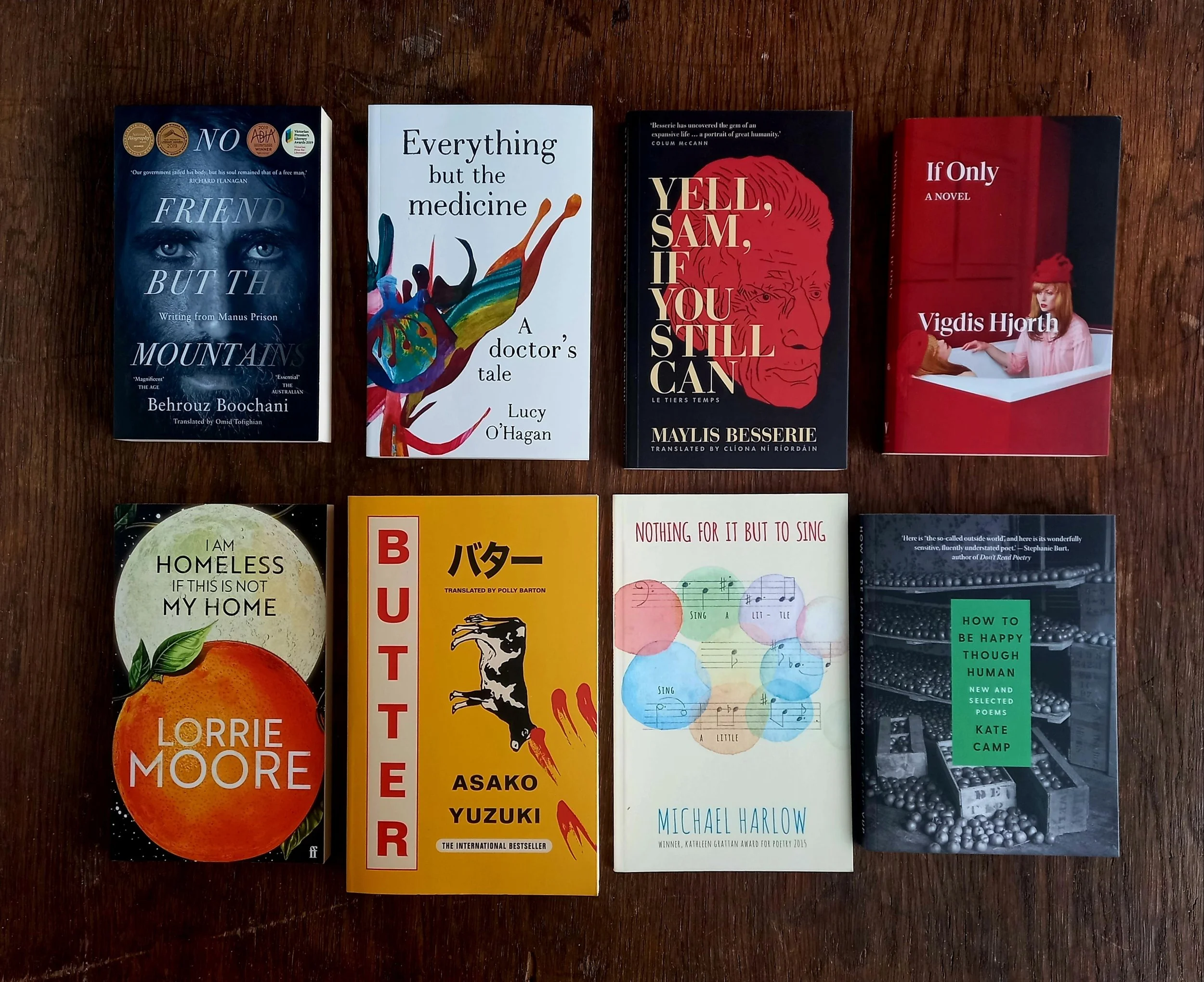
A selection of books from our shelves. Click through to find out more:
Read our first newsletter of the year!
Start your new year with a new book.
9 January 2026
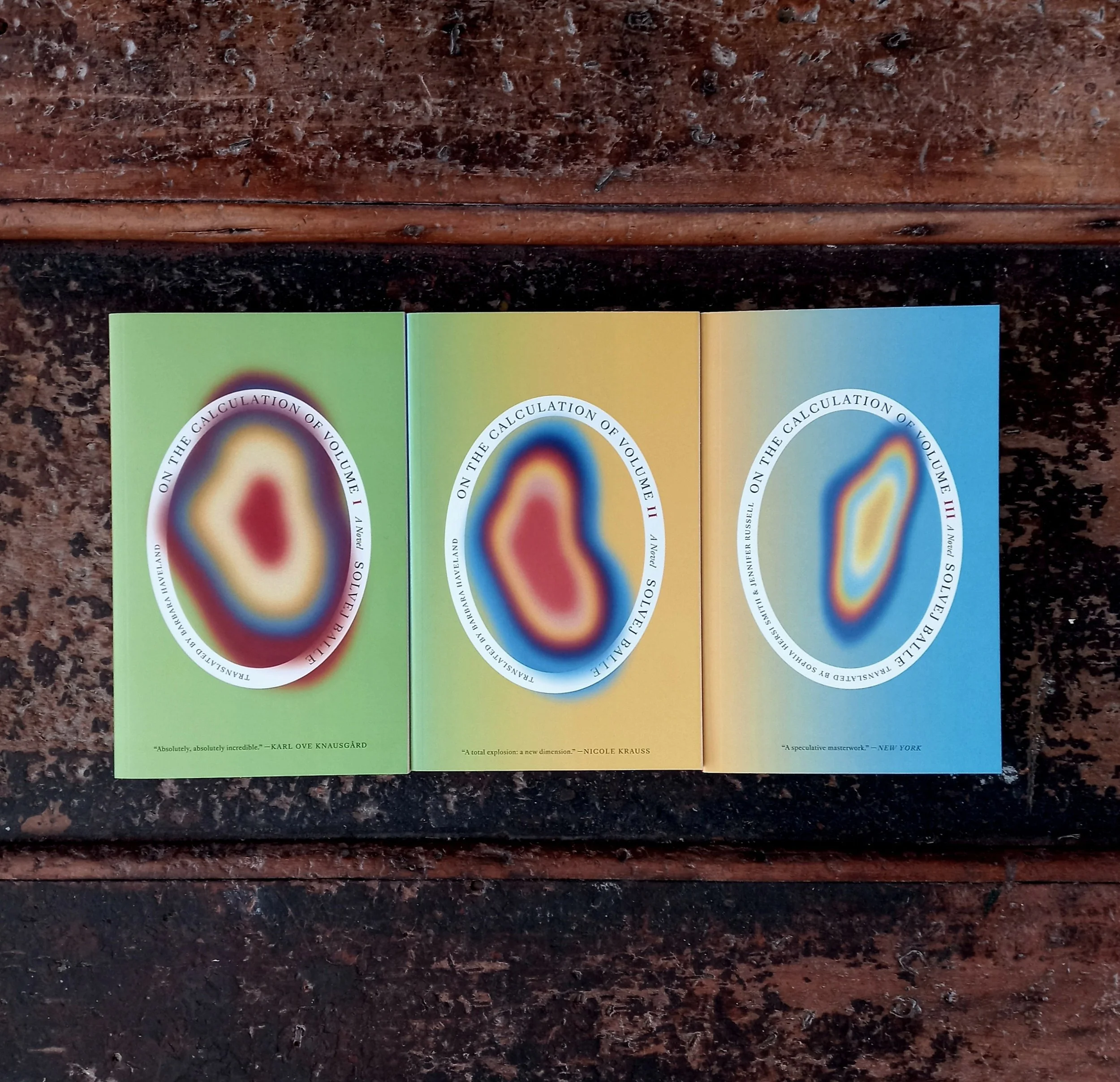
How can I write my review, or live my life, or do anything without repeating myself, I wonder. Here I go again! My life seems to consist of smaller and larger circles of repetition, my days are filled mostly of content indistinguishable from that which filled and will fill other days, barring some disaster or some miracle that is, though I have only my experience of this moment, shaded with what I call memory, inflected with what I think of as anticipation, to give me any idea of this repetition. I do experience repetition, I experience time, as if it actually exists, but how can I bear this? Any generalisation about the state of the world is a subjective state, but I suppose this endless repetition gets things done, I am a cog in the world-machine or else an untoothed wheel spinning needlessly and without traction, it is hard to tell, but I get things done. Repetition is the mode of action, but it causes me more suffering than it should. I think that perhaps I do not like getting things done. I think that I could so easily slip out of this shuddering machine, any thing could provide a way out, observing anything without the illusion of context would release me from its meaning and allow me to see it clearly, without language, without intention, without usefulness, but for what? Would this be the ultimate dislocation from my world or the ultimate dissolution in it? We repeat ourselves to keep the middle way, to preserve the idea that we have of ourselves, or the idea that others have of us. Tara Selter, in Solvej Balle’s seven-part novel On the Calculation of Volume, finds herself trapped in an endlessly repeating 18th of November, or she repeats her presence in what everyone else experiences as a single day. In this second volume, Tara decides to travel through Europe, guided by a meteorological chart, pursuing the experience of a passing year by moving to places where the conditions on the 18th of November resemble those she would associate with a changed season. She travels north to ‘winter’ and south to ‘summer’ and records the fiction of a passing year in a green notebook in a sustained attempt to live against the facts. When the notebook is stolen and does not reappear, Tara concludes, “I have had no seasons. Seasons are not scenes and locations. You cannot construct a year out of fragments of November.” She considers a Roman sestertius that she has with her and “At that moment I felt a void come into being. I felt a loss, a slide, a shift. It was as if a space was opening up, very slowly, not a big space, or at least it didn’t feel big, but I couldn’t close it again.” There is a ‘looseness’ to the world, she realises, and she is simultaneously immersed and separate from it. “I am walking around the streets, superfluous and out of circulation. It is not a disaster. It is not nothing, but it is not much either. Even the sound of my own feet is superfluous. I am walking through a space that ought to be empty. The place I occupy ought to be vacant, but for some inexplicable reason Tara Selter has taken it. I am in the way, I am a foreign body, an error. I am a strange creature who ought not to be among people with a direction.” It is solipsistic to consider myself an intruder on my own absence, as Tara does, but I suppose we are all intruders on our own absence (or absences (it is hard to know whether not existing is entirely a personal thing or something I would share with everything else that did not exist)). Everyone in this 18th of November experiences the day each time the same (there is no reiteration for them, after all), except when Tara intrudes upon their world and they are affected or respond to her. The anomalies she brings to them change their day but have no effect, for there is no day after, or if there is, Tara cannot reach it. What would be the cumulative effect of all these anomalies, the effects of Tara, if these became compound and consequential? She is right to consider herself a monster, after all. What Tara consumes is not renewed, so although it may seem that she is free from the consequences of her actions, the world, however out of joint, offers her no such liberation. Her dilemmas are those in which we all find ourselves all the time, though our lives are constructed in denial of them. We can follow no thought through to its end. We live against the facts in order to stay within the limits of the space where we can get things done. “My time is not a circle and it is not a line, it is not a wheel and it is not a river. It is a space, a room, a vessel, a container,” writes Tara. Each volume of this remarkable book provides a space for our thoughts, and equipment to stimulate its exercise.
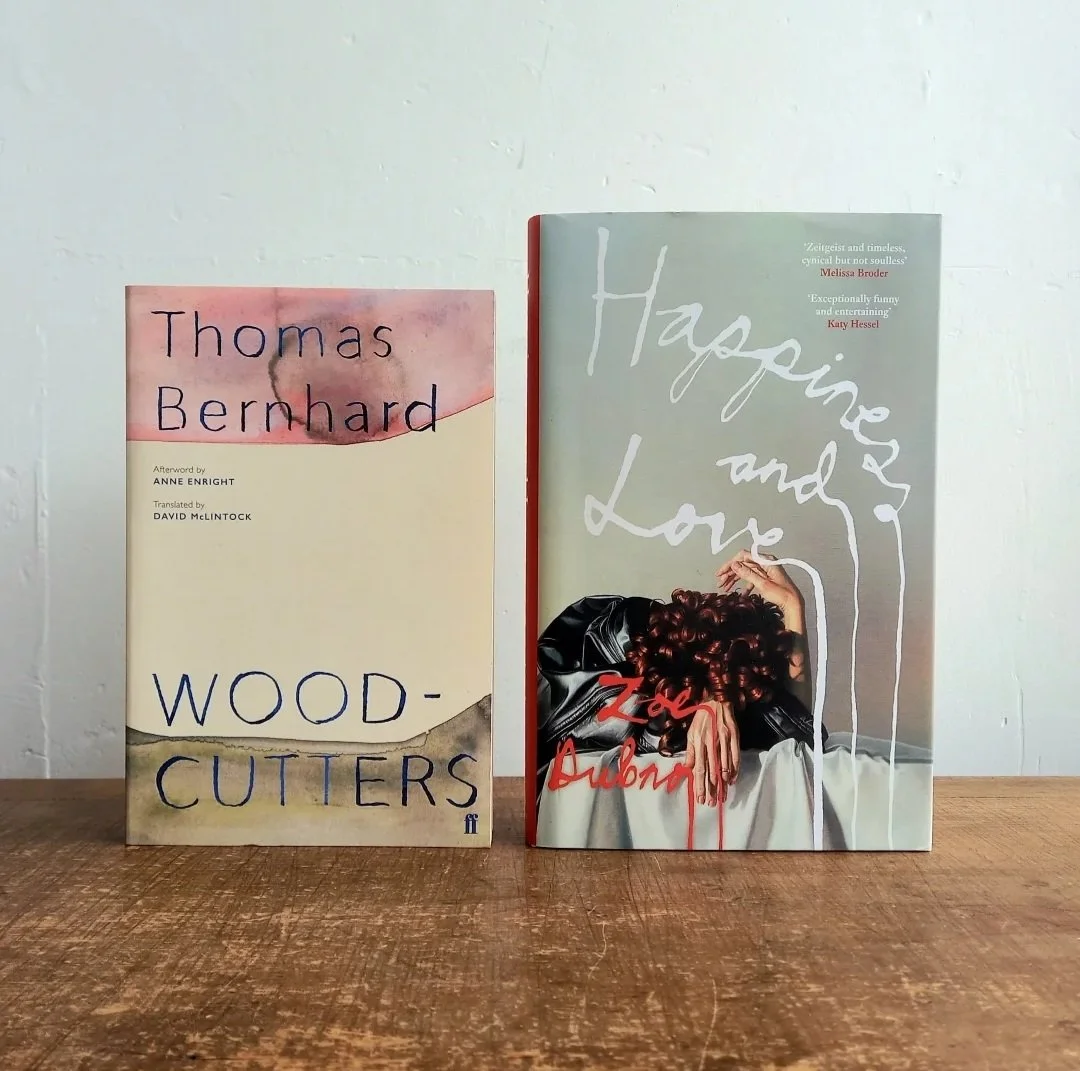
Ever found yourself at a dinner party you would rather avoid? Zoe Dubno tackles art and the creative scene, New York-style, in this sharp, slightly nasty, often wickedly funny novel. Our narrator, after escaping the claustrophobia of an art-scene couple who love to collect young artists and writers, finds herself smack back in the centre of their world again after the overdose death of Rebecca, a highly strung actress and friend. Inside the head of our narrator, we view the scene from her position seated on the white sofa in the high-end designer city loft. Here, across the room from her is the couple: Eugene pouring himself another wine and pawing a young naive hopeful artist, and Nicole, now aging, but still projecting all that money, position, and confidence can bring, regal in her control of the room and the people in it. Here too, is The Writer, Alexander, for whom our narrator has a particularly nasty case of bile. The narrator, a writer of medium success and not a lot of confidence (hardly surprising considering the company she has kept) keeps us engaged with her wry asides, observant eye (especially in retrospect — she has escaped, although now is feeling a little trapped and somewhat contrite), and laugh-out-loud snarkiness. Yet you also, like her, are a little repulsed by the company. This tension is cleverly pulled at by Dubno — letting us see, making us laugh and curl our lip simultaneously. We observe, we have our narrator’s internal dialogue of disgust and also self-loathing to digest, as well as her shocking unguestlike behaviour — several times she can hardly contain herself, breaking into barking and inappropriate laughter. As you read on, her behaviour towards this circle of writers, artists, wannabes, and the maniapulative couple at its centre is fully warranted. Here they wait for the guest of honour, a famous actress, here they say shallow things about the recently deceased Rebecca, they pontificate on their art — hint at their successes and talk up their brilliance, they fish for compliments and make snide putdowns to put others in their place, while working the room to their best advantage. Art is mentioned as if it is a by-product, merely a name-dropping convenience of what they truely want: attention. And when the dinner is finally served, the actress in her place at the head of the table, with Eugene slobbering over her as he is increasingly wine-fuelled and drug-sniffed, and Nicole sagely nodding and smiling to everything she says until… a conversation that cuts to the heart of the pretension plays out. The actress launches into a heated debate with the arrogant and soon-to-be-cut-down Alexander. Revenge for the narrator is sweet, the actress acting as a vehicle for our narrator’s distaste of the company. Zubno openly takes Thomas Bernhard’s The Woodcutters and brings it to America in the current century, using the same form — one paragraph (not that I noticed until the end) and one evening — and despite the shallow characters creates something clever, ruthless, and reflective. (I’ll be reading the original to compare.)
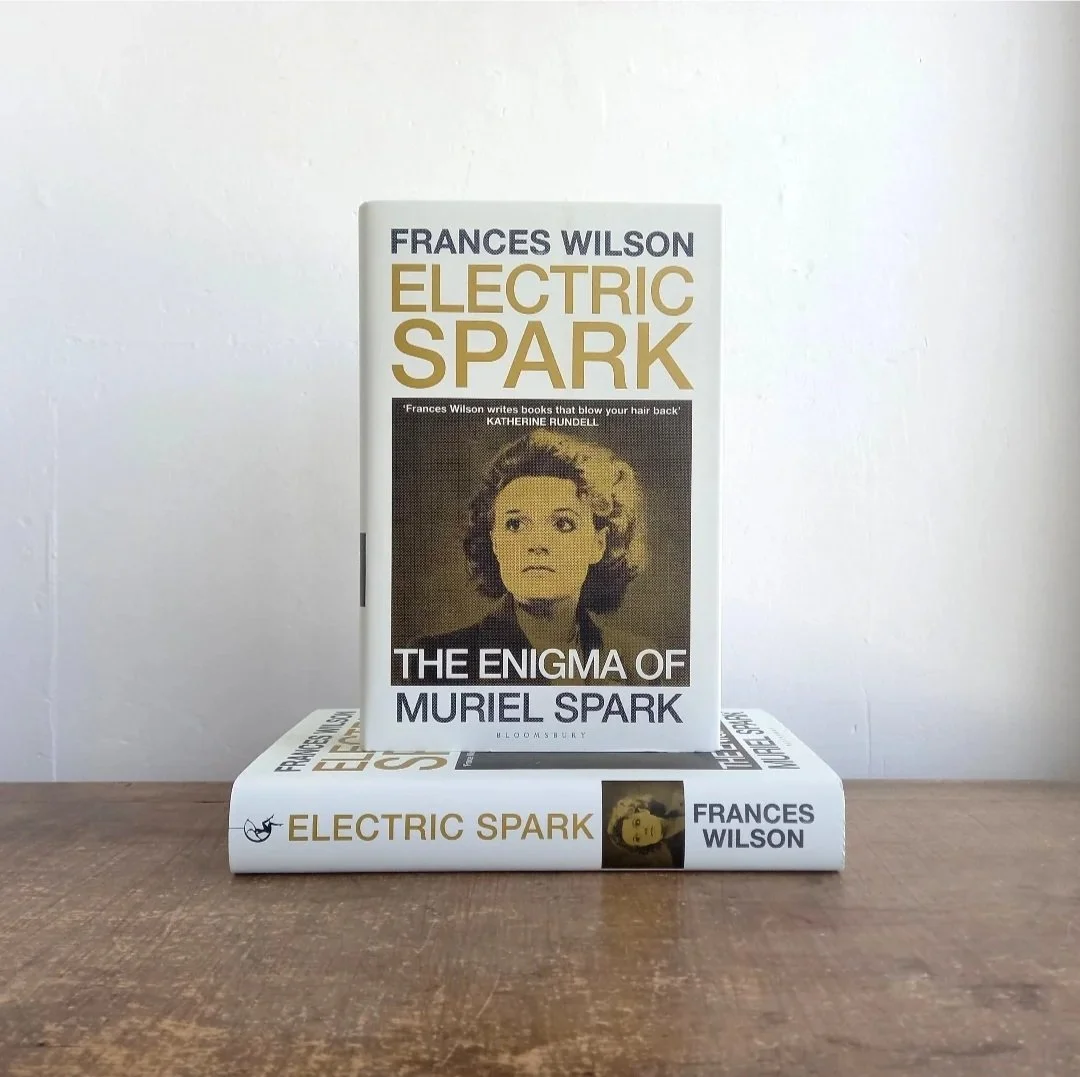
“A revolutionary book. When Spark published her first novel, The Comforters, in 1957, it was recognised as unique — something that quite simply had never been done before. Wilson's achievement in Electric Spark is equally remarkable: an entirely original method of life writing which leaves conventional biographical techniques gasping in the dust. Electric Spark heaves with ghosts and furies, burglaries and blackmail. It is disquieting and absolutely mesmerising. I was possessed by this book in the same way that I suspect its author was possessed by Spark. It still hasn't put me down.” —Lisa Hilton, Spectator
”Wilson is not any old biographer. Her books are intense, eclectic and wildly diversionary, her intelligence rising from their pages like steam — and in Spark, the cleverest and the weirdest of them all, she may have found her ultimate subject.” —Rachel Cooke, Observer
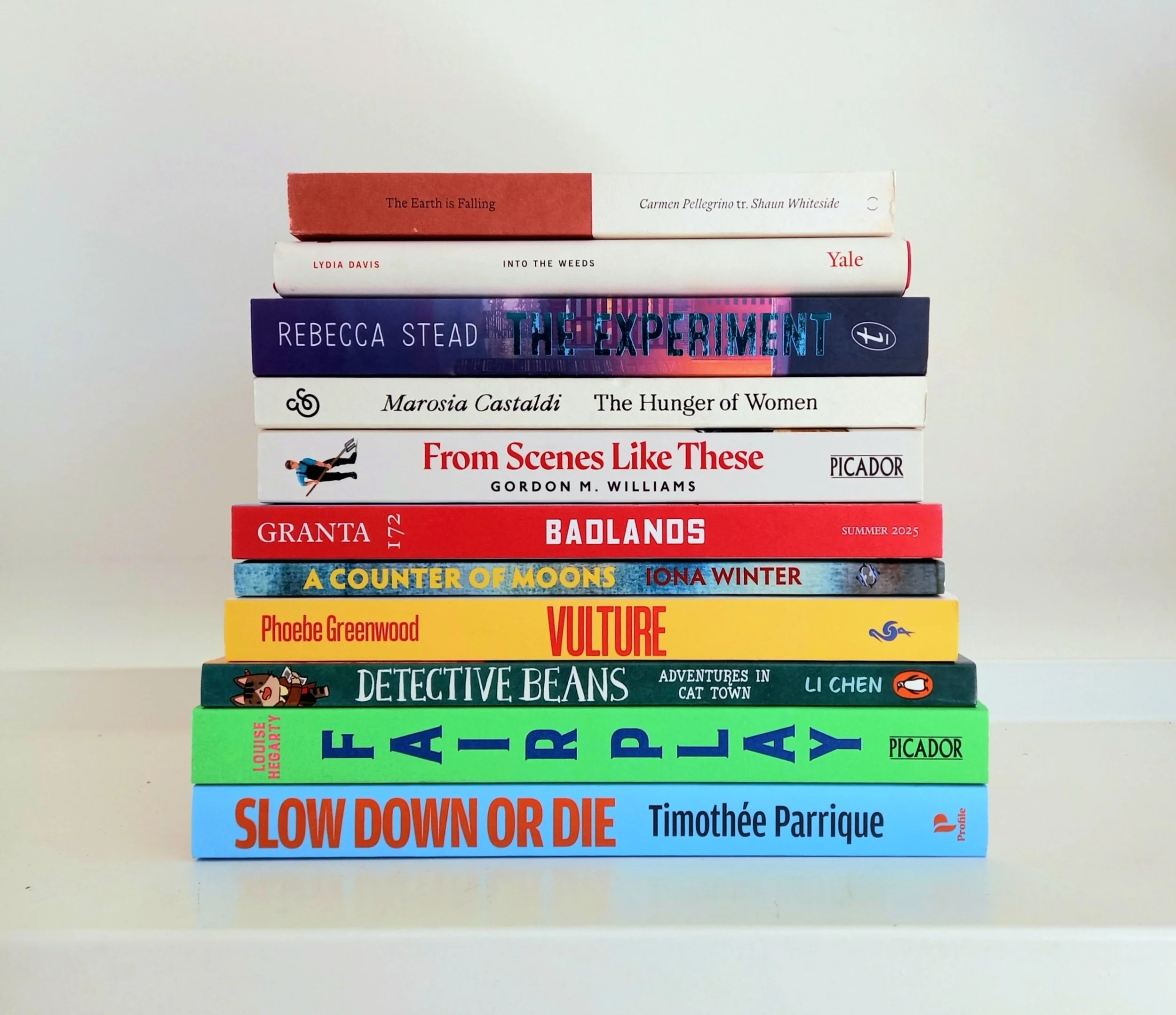
Withstand summer with a new book! Click through to our website (or just email us) to secure your copies. We will dispatch your books by overnight courier or have them ready to collect from our door in Church Street, Whakatū.
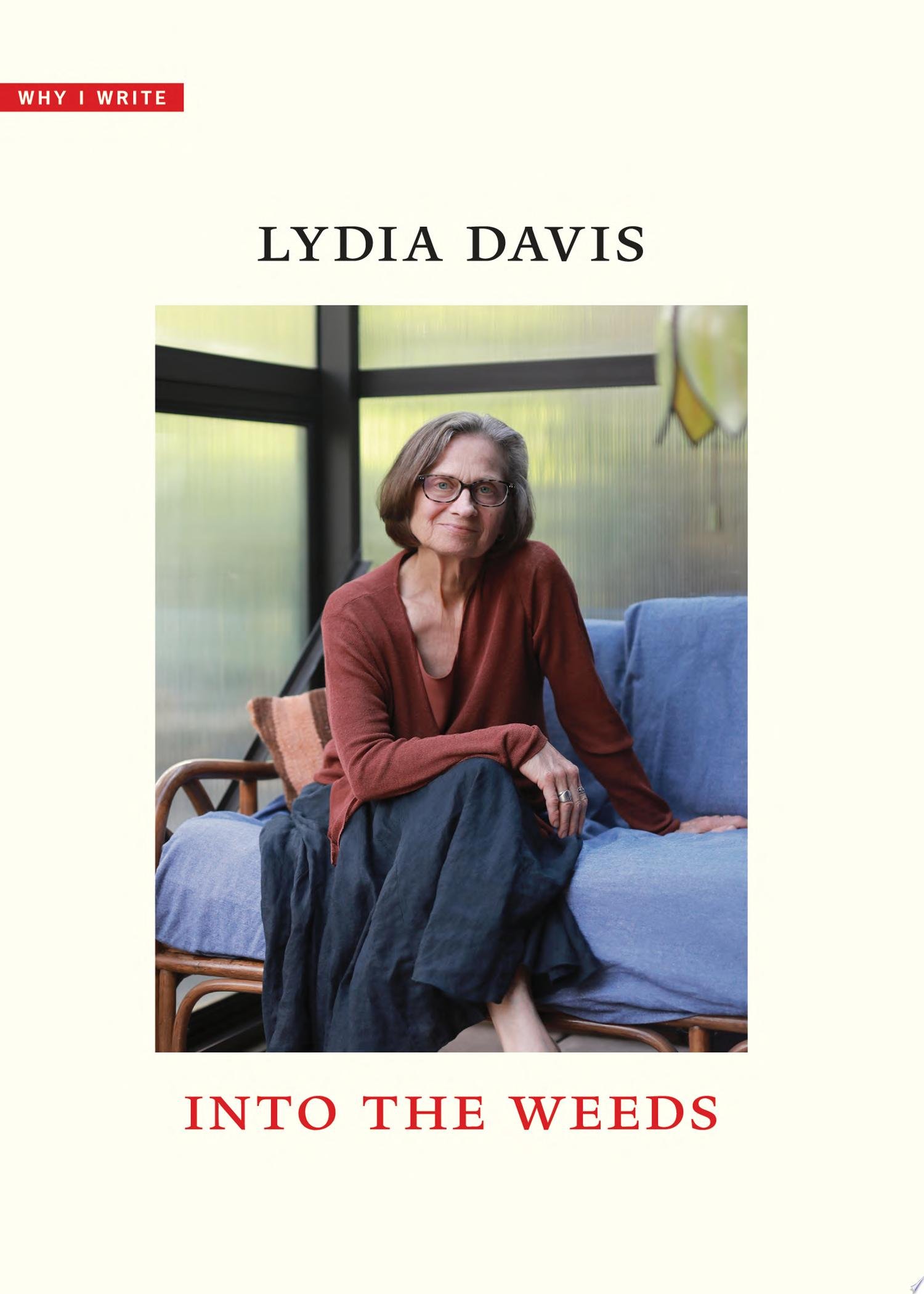
Into the Weeds by Lydia Davis $31
When asked why she writes, Lydia Davis confesses that the question makes her uncomfortable. Maybe she would rather not know. Instead, Davis considers how she writes her stories, how other writers write, and what insights the how might provide into the why. In this free-ranging exploration, Davis discovers that one reason she writes is for pleasure: the pleasure of encountering something that demands to be treated in language, of handling and manipulating the language into the form it ought to take, and, finally, of seeing a story exist where it didn't exist before. As she observes the processes of some of the authors who interest her the most, she finds that there seem to be as many reasons to write as there are writers: to relive an experience, to share an experience, to articulate something one has not quite comprehended. Reflecting on an eclectic mix of thinkers, including James Baldwin, Kate Briggs, Walter Raleigh, Christina Sharpe, Knut Hamsun, Grace Paley, Josep Pla, John Ashbery, and John Clare, Davis undertakes a clear-eyed, patient inquiry into the manifold reasons we choose to put pen to paper and begin something new. [Hardback]
"Reporting from the slipstream of her reading life, Davis offers less a new way to think than perhaps an old one, pushing back against mechanisation and the collapse of context by reframing reading in the most particular and human terms." —David L. Ulin, The Atlantic
>>On the art of observation.
>>Also by Lydia Davis.
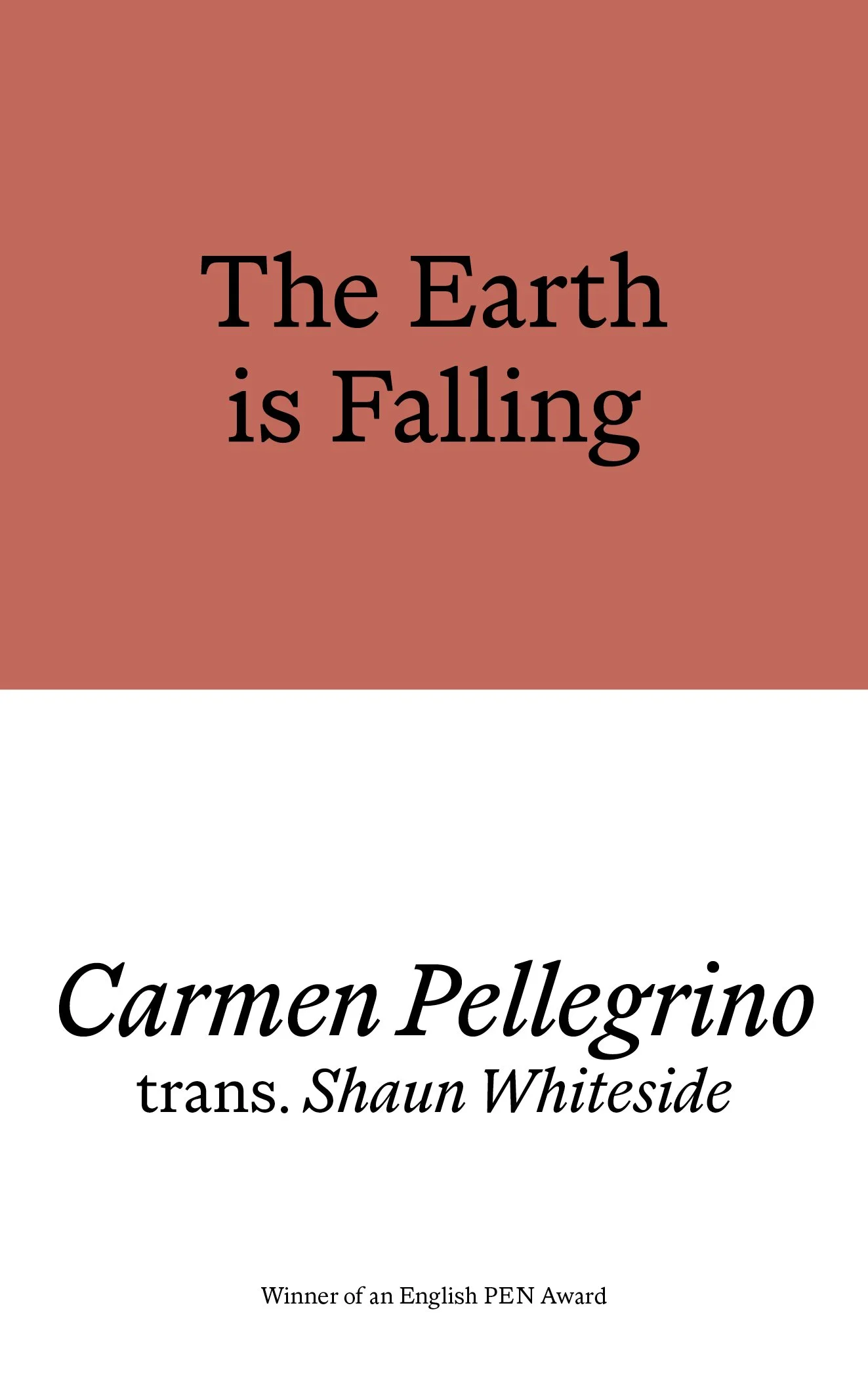
The Earth Is Falling by Carmen Pellegrino (translated from Italian by Shaun Whiteside) $38
A haunting novel based around the existence of an abandoned village outside Naples. The deserted houses that still stand there are peopled with ghosts who live in a perpetual present from which time has effectively been abolished. The village appears to be semi-alive; the landslide which ominously awaits and which will eventually lead to the abandonment of the place has yet to arrive — yet its rumbles are heard. Pellegrino peoples Alento with eccentrics, luminaries, an eternally optimistic town crier. In the closing pages, the narrator Estella summons the remaining ghosts for a final dinner. The overall effect is unsettling, haunting and uncanny, the trapped souls doomed to repeat their circumscribed daily life for ever, cut off from the world but dimly aware of its continued presence outside. The pervading mood of nostalgia and melancholy works in stark contrast with the inevitability of the impending catastrophe of the landslide that threatens to obliterate their world forever. [Paperback]
”What people: so vibrant and vital, if ghosts can be described as such. What a place: precarious yet utterly certain in Carmen Pellegrino’s vivid, poetic rendering. And what a book: melancholy, elegant, original and in its own particular way, totally seductive.” —Wendy Erskine
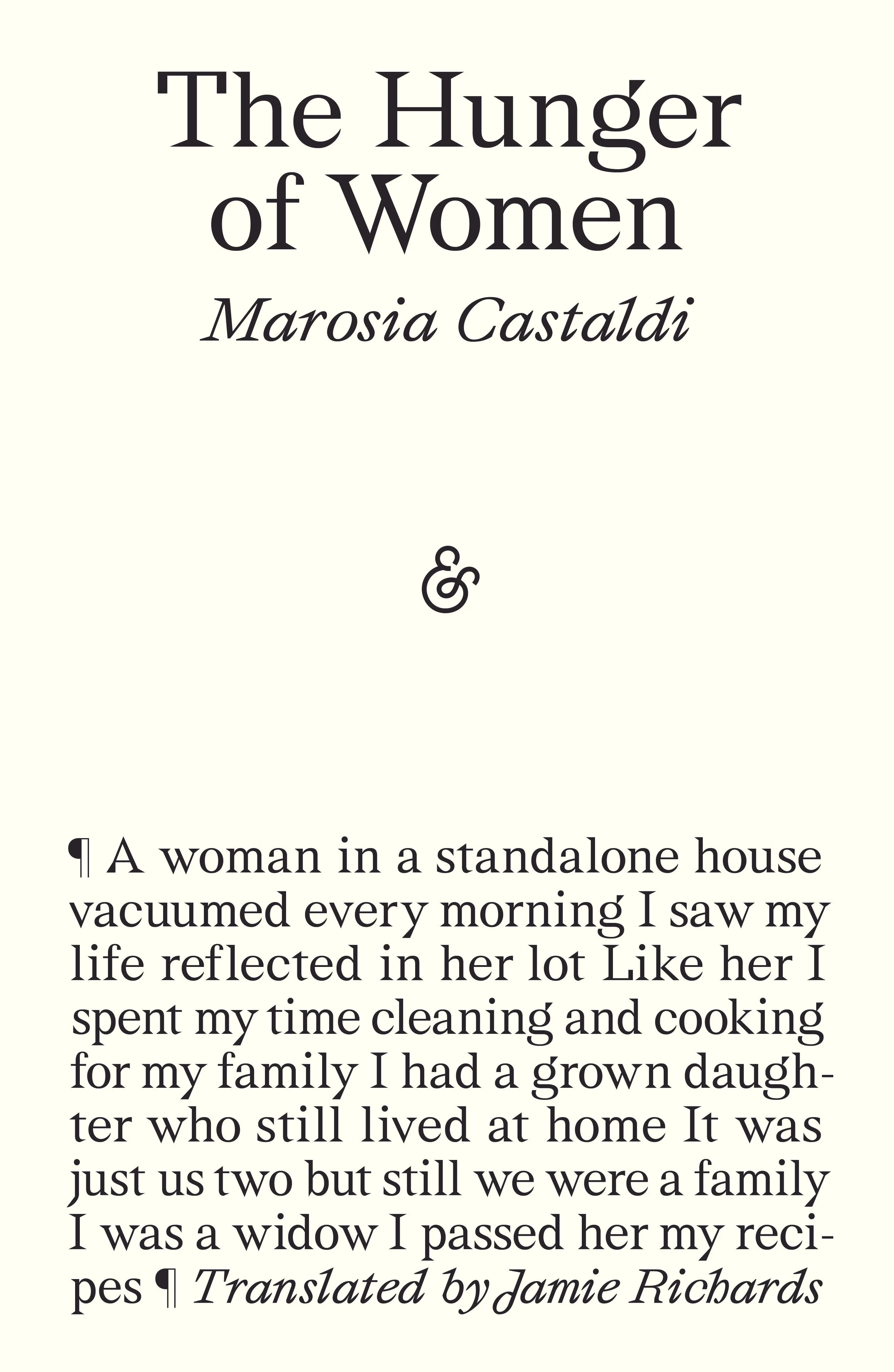
The Hunger of Women by Marosia Castaldi (translated from Italian by Jamie Richards) $38
Rosa, midway through life, is alone. Her husband passed away long ago, and her cosmopolitan daughter is already out the door, keen to marry and move to the city. At loose ends, Rosa decides to transplant herself to the flat, foggy Lombardy provinces from her native Naples and there finds a way to renew herself--by opening a restaurant, and in the process coming to a new appreciation of the myriad relationships possible between women, from friendship to caregiving to collaboration to emotional and physical love. Made up of Rosa's observations, reflections, and recipes, the novel tracks her mental journey back to reconnect with her own embattled mother's age-old wisdom, forward to her daughter's inconceivable future, and laterally to the world of Rosa's new community of lovers and customers. A tribute not only to the tradition of women's writing on hearth and home but to the legacy of such boundary-breaking feminist writers as Gertrude Stein, Virginia Woolf, and Helene Cixous. And there’s wonderful food on every page! [Paperback with French flaps]
”A hypnotic theatre of cruelty and tenderness in which the protagonist and narrator Rosa and her friends make vacuum cleaners buzz, exhibit the most lavish forms of desire, desire each other, and desperately, and above all make food, the food which is really the nourishment of the book itself, an obsession formalized here in something like a hundred recipes spread over just under two hundred pages.” —Francesco Durante, Corriere del Mezzogiorno
”The Neapolitan-Milanese Castaldi does not use punctuation, lets thought flow unchained, because life flows like water, and the search for one's identity, always painful, always exhausting, manifests even in our food, the passions in our mouths and hearts.” —Rolling Stone
>>Narrative is only partly recognisable as thoughts.
>>Eating time.
>>Syntax and effect.
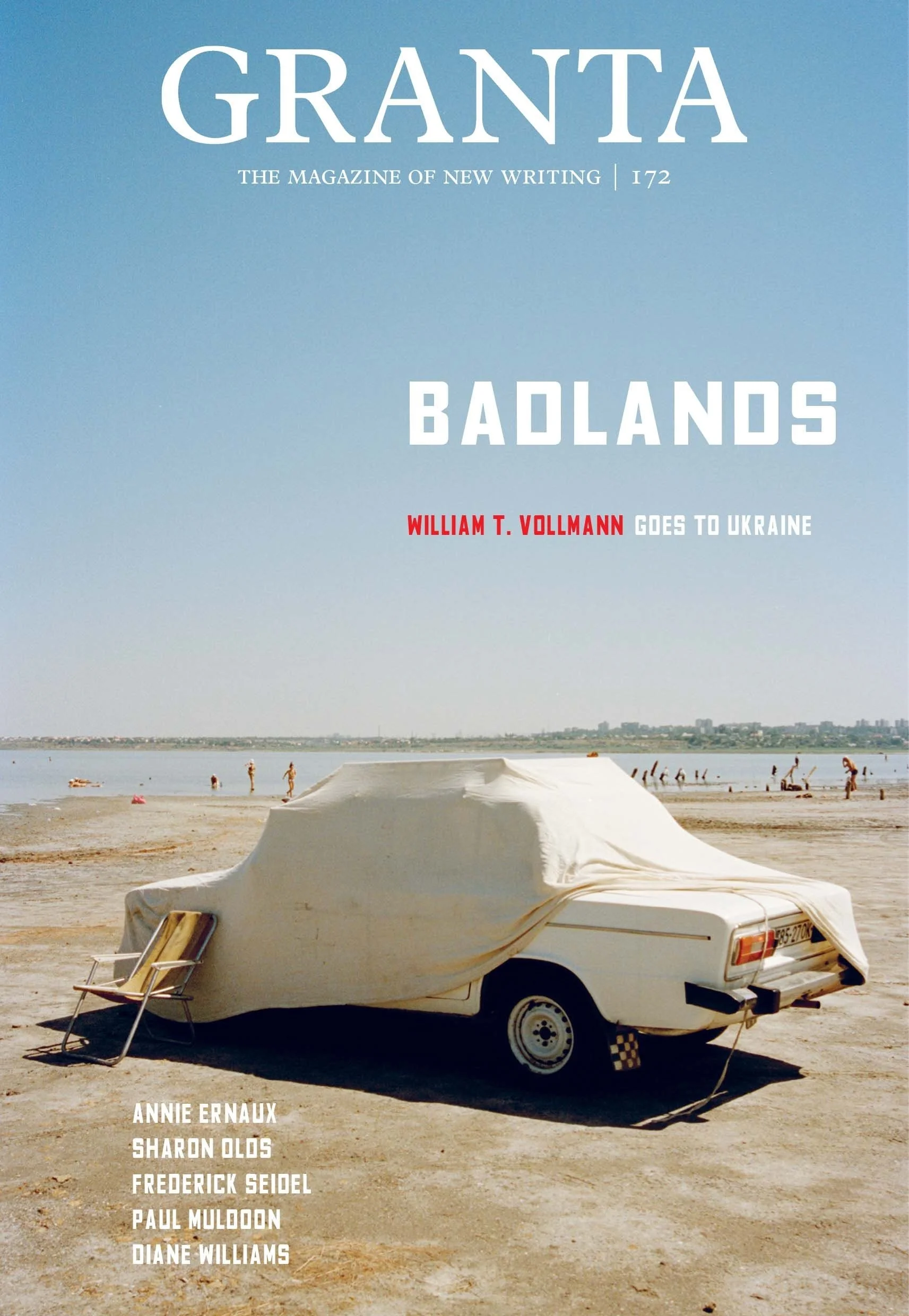
Granta 172: Badlands $37
This issue traverses inhospitable landscapes, from troubled childhoods to drone-infested Ukraine. Featuring reportage from William T. Vollman and memoir from Annie Ernaux. Fiction by Brittany Newell, Leopold O’Shea, Natasha Stagg, Stephanie Wambugu and Diane Williams. Poetry by Nasim Luczaj, Paul Muldoon, Sharon Olds and Frederick Seidel. Plus, photography by Sana Badri, Joel Meyerowitz (introduced by George Prochnik) and Cian Oba-Smith (introduced by Julián Herbert). [Paperback]
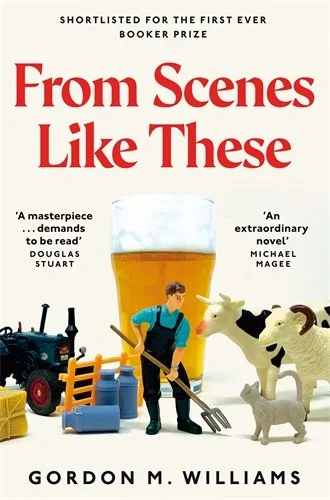
From Scenes Like These by Gordon M. Williams $28
It's the west of Scotland in the 1950s. New houses are going up. Factories are opening. But Dunky Logan, a 15-year-old brought up in a tenement flat in working-class Kilcaddie, is ditching school to be a labourer on a local farm. Dead set on becoming a hard case, he wants to work shoulder to shoulder with so-called real men. Irish Catholic Mary O'Donnell arrives at the farmhouse as the new maid. She is pregnant — no boyfriend in sight. But she's smart, and she has a plan to get herself up in the world. As Dunky is swallowed up by a vicious cycle of violence, betrayal, and booze, Mary becomes entangled in a savage family feud. Short-listed for the 1969 (first!) Booker Prize. [Paperback]
”An elegy to ordinary lives. A forgotten classic entirely deserving of a place in the canon of great social realism novels of the twentieth century. A raw, unsparing tale of coming of age, of masculinity in crisis, of farm workers holding on as post-war Britain encroaches upon them. A masterpiece of time and place that looks you square in the eye and demands to be read.” —Douglas Stuart
”A devastating study of 1950s Scottish adolescence by one of the most consummate stylists of the whole post-war era. From Scenes Like These is a genuine lost classic just waiting to be rediscovered by a new generation of readers.” —DJ Taylor
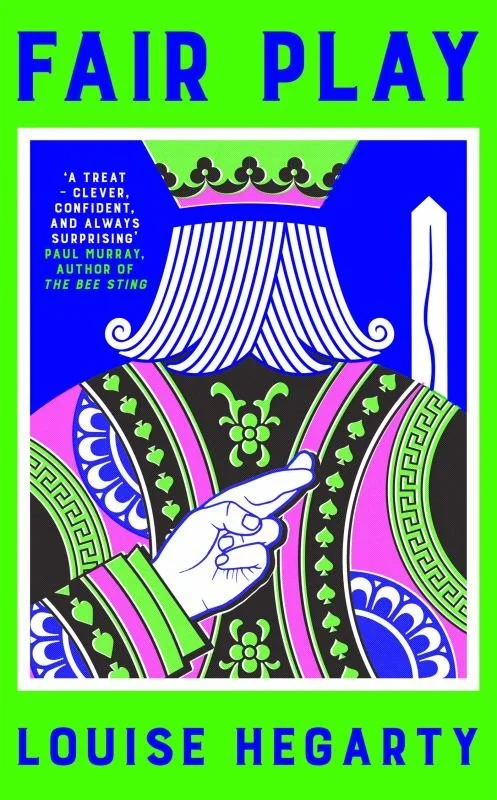
Fair Play by Louise Hegarty $38
Abigail and her brother Benjamin have always been close. To celebrate his birthday, Abigail hires a grand old house and gathers their friends together for a murder mystery party. As the night goes on, they drink too much and play games. Relationships are forged, consolidated or frayed. Someone kisses someone they shouldn't, someone else's heart is broken. In the morning, everyone wakes up — except Benjamin. Suddenly everything is not quite what it seems. An eminent detective arrives determined to find Benjamin's killer. The house now has a butler, a gardener and a housekeeper. This is a locked-room mystery, and everyone is a suspect. As Abigail attempts to fathom her brother's unexpected death in a world that has been turned upside down, she begins to wonder whether perhaps the true mystery might have been his life. [Paperback]
”Louise Hegarty's genre-splicing debut is a treat — clever, confident, and always surprising, a mystery story that ingeniously escapes the locked room of the genre to take on the biggest questions of life and death.” —Paul Murray
”Dazzling, formally subversive, brimming with compassion, Fair Play explodes the conventions of a mystery in order to confront us with the genuinely mysterious. An emotional ambush of a novel, this book will delight readers — then it will haunt them.” —Colin Walsh
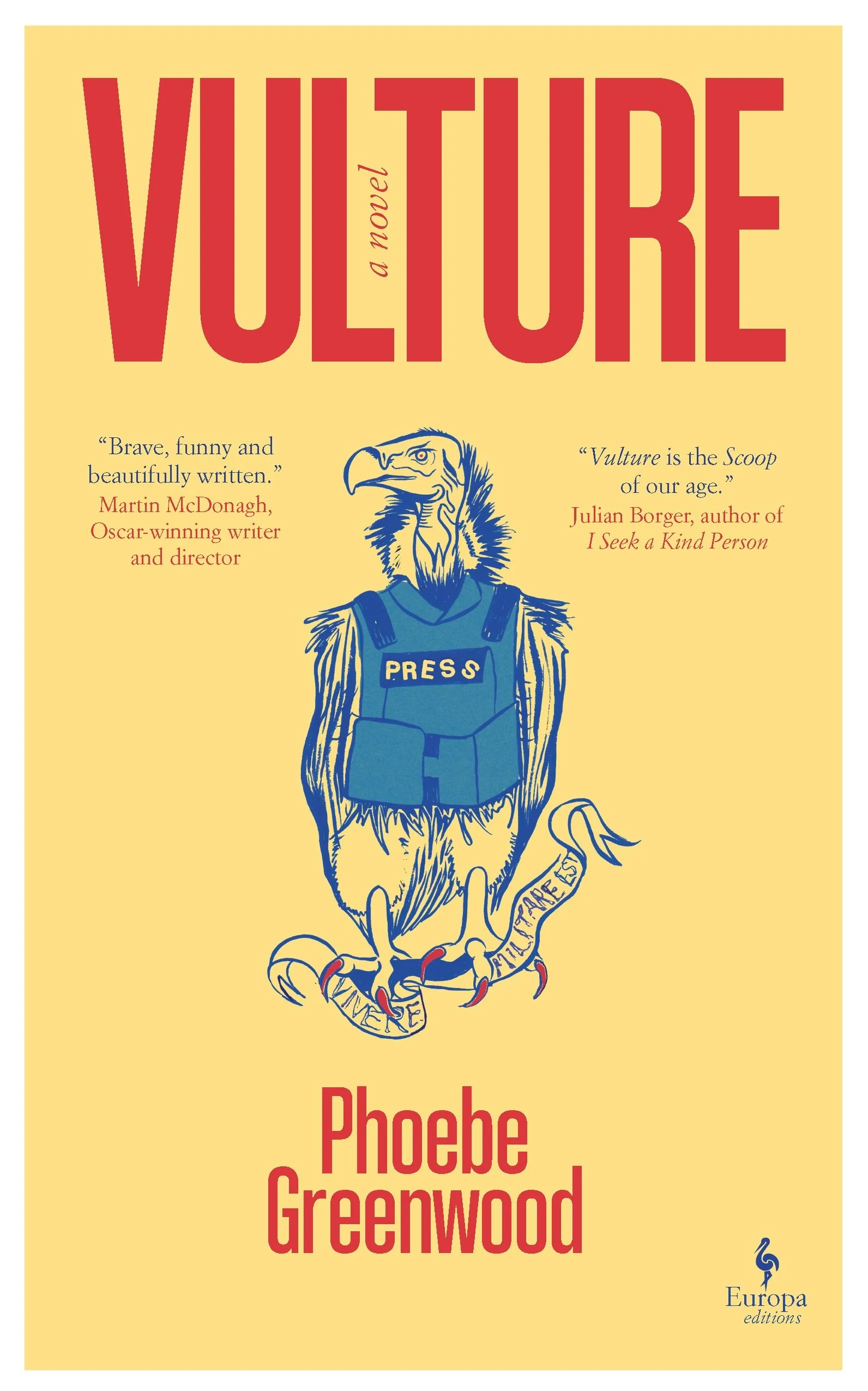
Vulture by Phoebe Greenwood $38
Catch-22 on speed and set in the Middle East, Vulture is a fast-paced satire of the war news industry and its moral blind spots, and a tragi-comic coming-of-age novel. An ambitious young journalist, Sara is sent to cover a war from the Beach Hotel in Gaza. The four-star hotel is a global media hub, promising safety and generator-powered internet, with hotel staff catering tirelessly to the needs of the world's media, even as their own homes and families are under threat. Sara is determined to launch her career as a star correspondent. So, when her fixer Nasser refuses to set up the dangerous story she thinks will win her a front page, she turns instead to Fadi, the youngest member of a powerful militant family. Driven by the demons of her entitled yet damaging childhood, Sara will stop at nothing to prove herself in this war, even if it means bringing disaster upon those around her. Greenwood's debut novel brings readers deep into the Israeli-Palestinian conflict, and with audacity and humour depicts the media's complicity in this ongoing tragedy. [Paperback]
"Brave, funny and beautifully written." * Martin McDonagh, writer and director *
"In a debut redolent of Graham Greene, Phoebe Greenwood brings to life — in all their cynicism and all their humanity — the bullying, bragging, brilliant characters we rely on to bring us the news." —Benjamin Moser
>>Why did it take the world so long to be outraged?
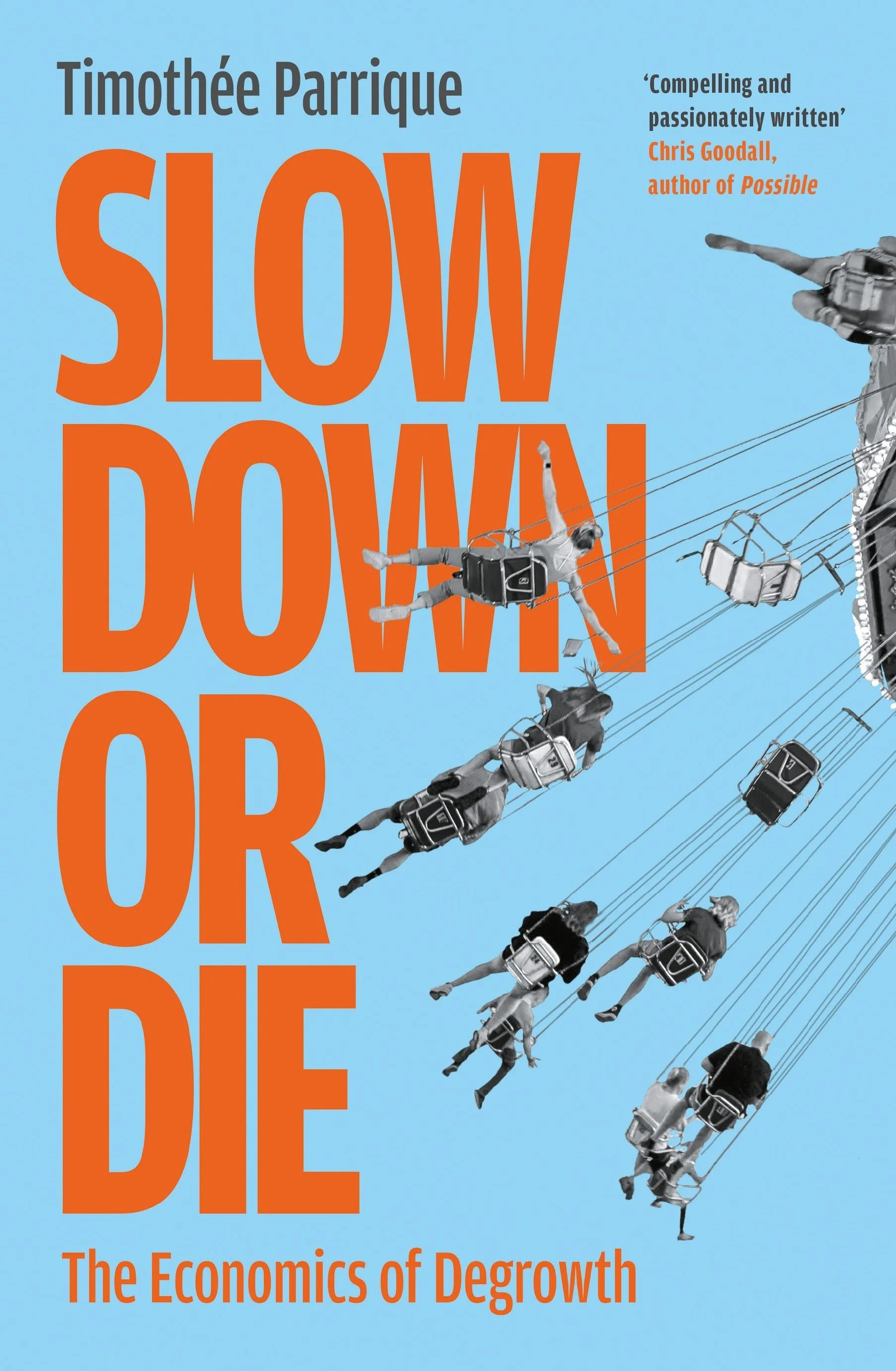
Slow Down or Die: The economics of degrowth by Timothée Parrique $40
One of the most ingrained beliefs of our age is that perpetual economic growth is the solution to most, if not all, of society's problems. Parrique challenges this myth, demonstrating how producing more won't solve climate change, poverty, or inequality. In fact, our obsession with growth is accelerating social and ecological collapse. Parrique proposes a different vision — a ‘post-growth’ economy, where we look beyond the vagaries of GDP and measure our economies through how well we provide for each other. Instead of infinitely accumulating wealth, our goal must be a just, equitable, and sustainable society. [Paperback]
”A clear vision for a profoundly different economy.” —Irish Times
>>How to blow up an economy.
>>Slow is the new cool.
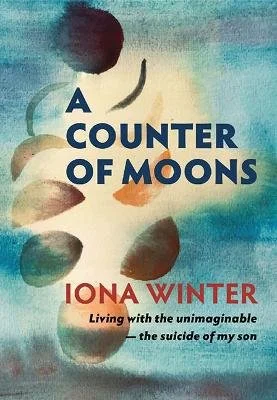
A Counter of Moons: Living with the unimaginable by Iona Winter $30
In 2020, Iona Winter’s son Reuben died by suicide. Looking for solace and understanding from others’ stories, she found there were few available. A Counter of Moons candidly shares Iona’s experiences, and her reflections challenge widespread ideas about how to deal with grief. At times raw and confronting, at others introspective and tender, this book ultimately speaks about the coexistence of love and pain. It aims to start conversations about suicide bereavement in Aotearoa, to give words to an often wordless experience. [Paperback]
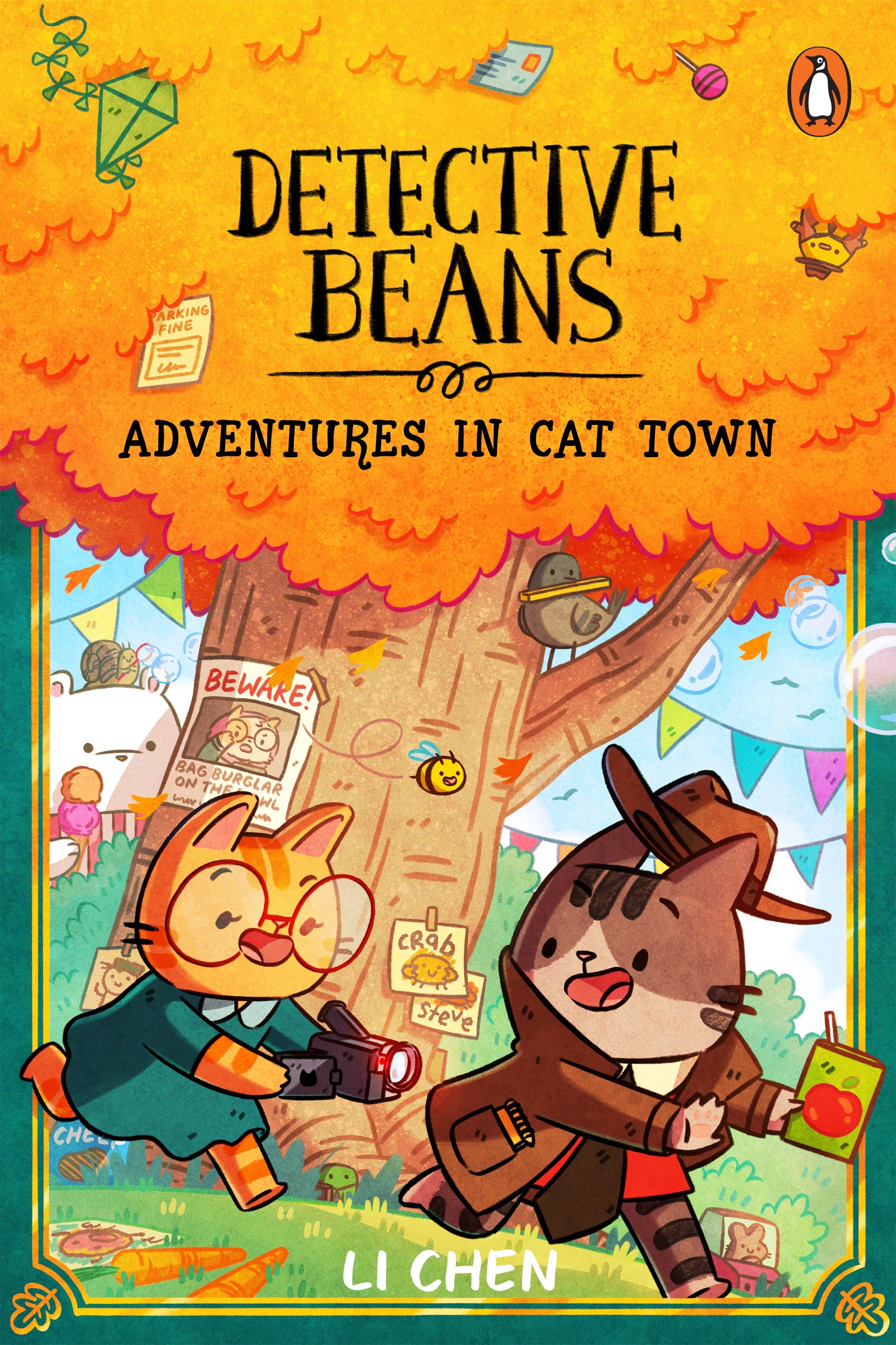
Detective Beans: Adventures in Cat Town by Li Chen $22
Detective Beans is back to solve all the mysteries that you need solved, and even the ones you don't need solved. He's that good. In between playing Scrabble, having sleepovers and trips to the beach, there's always time for crime solving. Whether it's who ate Mum's donuts, who has lost their handbag in the park, which pigeon stole King Chip, or even a burgled diamond ring, Beans is ready for anything. He's so ready that he's even starting a detective school — if he can find any students… A very enjoyable Aotearoa graphic novel for children. [Paperback]
>>Look inside!
>>The Case of the Missing Hat.
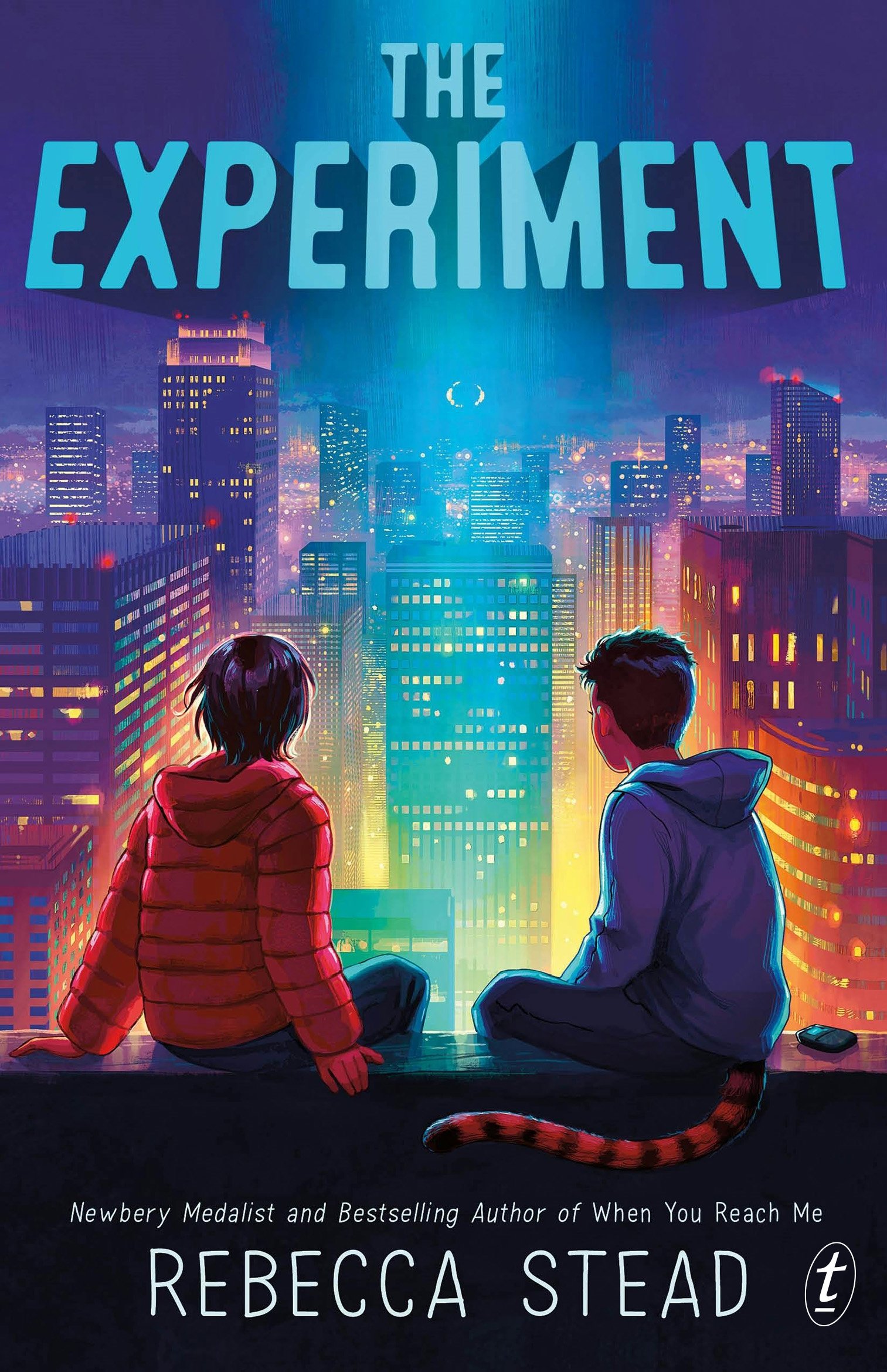
The Experiment by Rebecca Stead $22
Nathan never understood what was 'fun' about secrets, probably because he's always had to keep a very big one, even from his best friend, Victor. Although he appears to be a typical intermediate-school kid, Nathan learned at an early age that his family is from another planet, and he's part of an experiment to work out how to behave like a human and blend in. But the experiment suddenly seems to be going wrong. Some of the other experimenters, including Nathan's first crush, Izzy, are disappearing without a word. After his family is called back to the mothership, Nathan begins to question everything he's been taught to believe about who he is and why he's on Earth. Can he, Victor and Izzy uncover the truth? The Experiment is a fast-paced adventure — with aliens — that asks universal questions about how we figure out who we want to be, whether it's ever too late to change, and the importance of friendship. [Paperback]
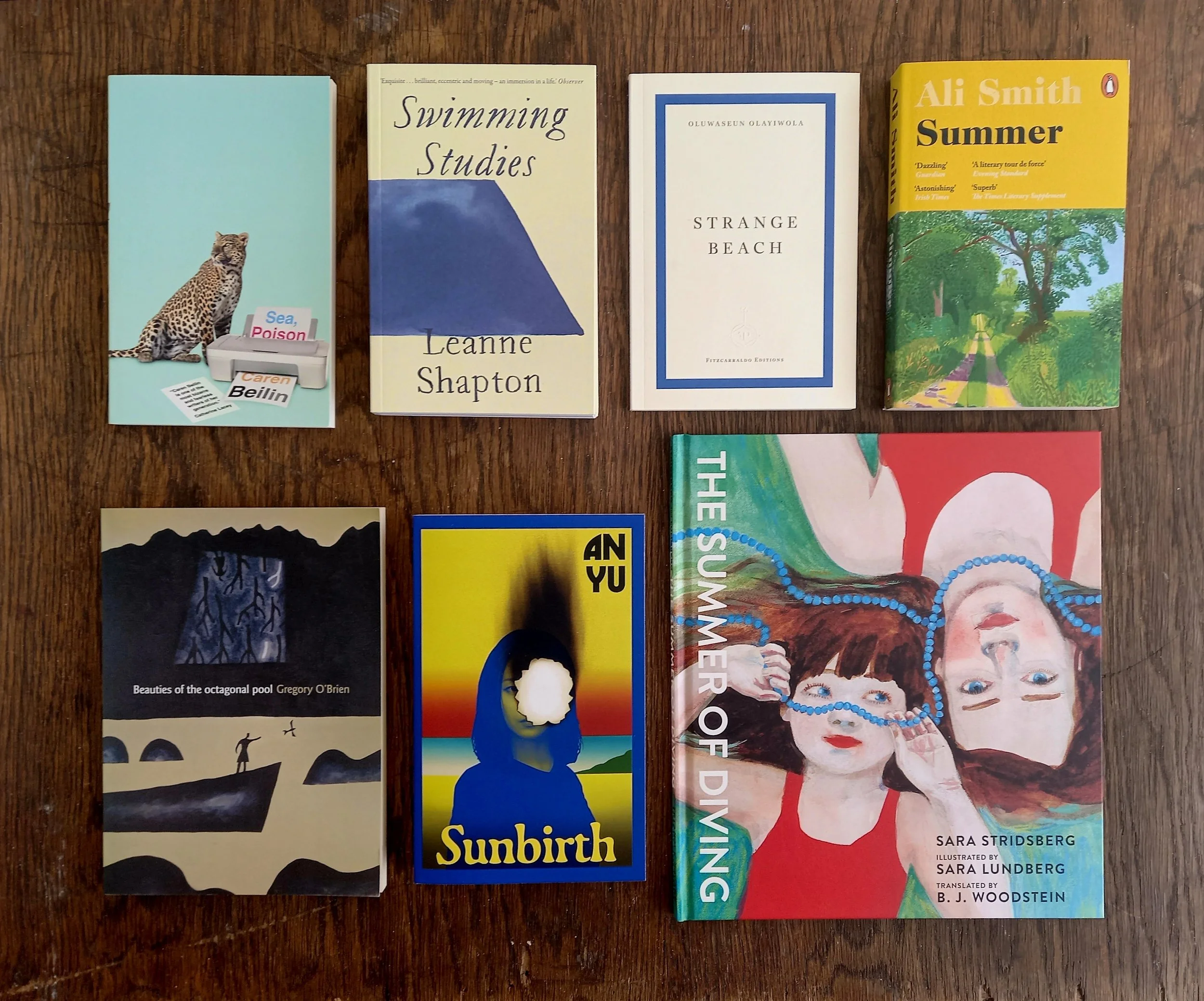
A selection of books from our shelves. Click through to find out more:
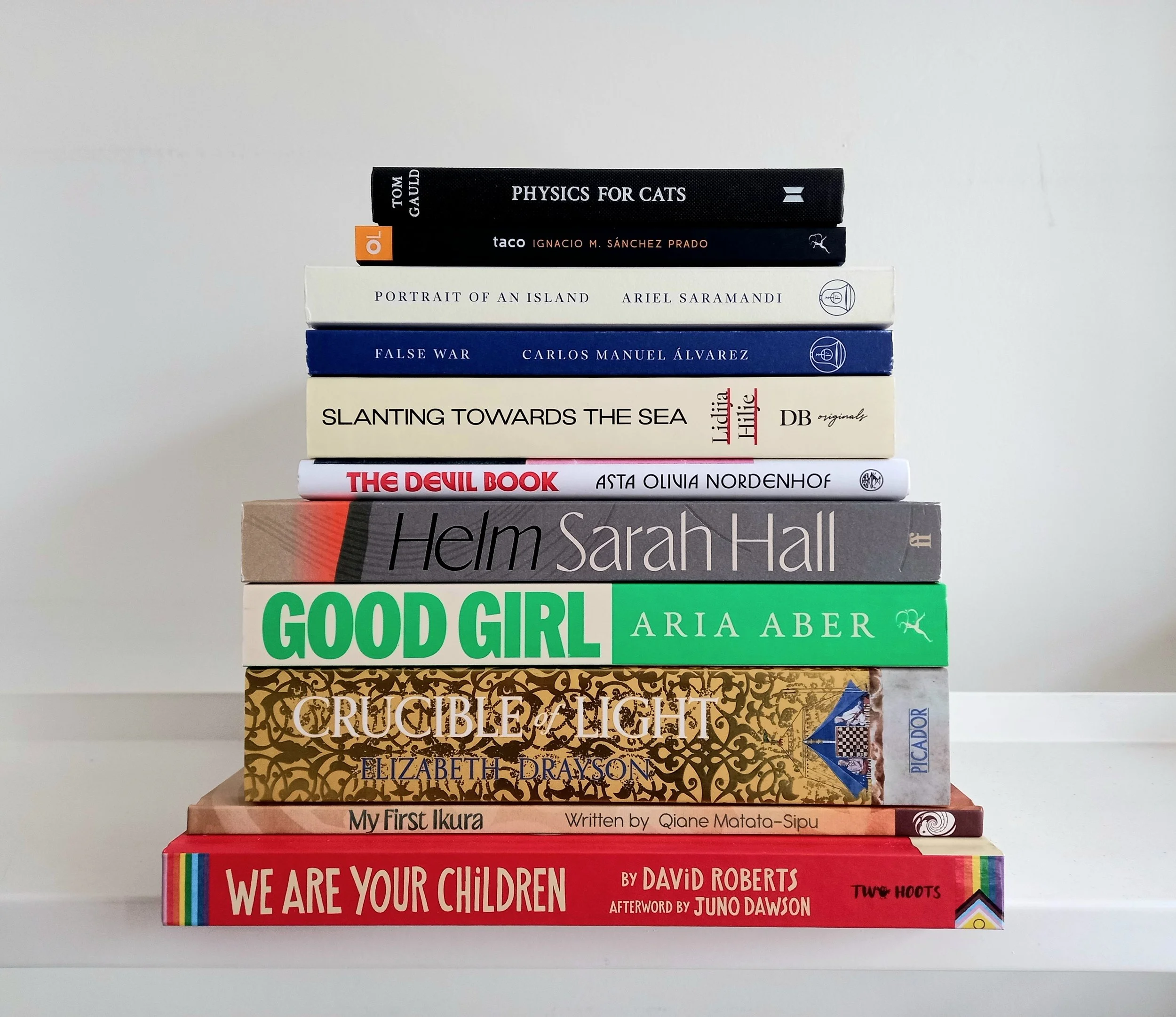
New books for a new year! Click through to our website (or just email us) to secure your copies. We will dispatch your books by overnight courier or have them ready to collect from our door in Church Street, Whakatū.
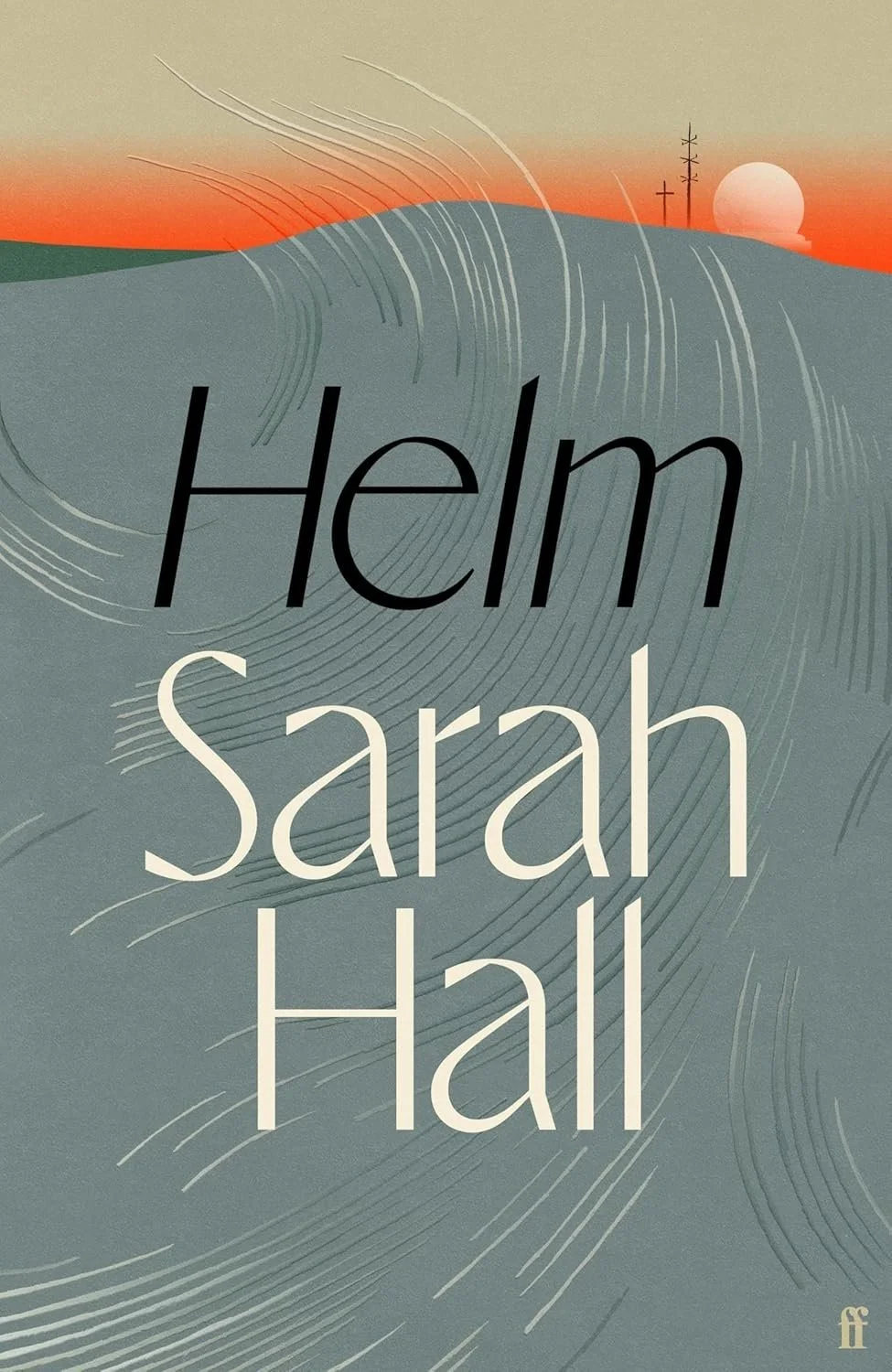
Helm by Sarah Hall $38
Helm is a ferocious, mischievous wind — a subject of folklore and wonder, who has blasted the sublime landscape of the Eden Valley since the very dawn of time. This is Helm's life story, formed from the chronicles of those the wind enchanted: the Neolithic tribe who tried to placate it, the Dark Age wizard priest who wanted to banish it, the Victorian steam engineer who attempted to capture it - and the farmer's daughter who fell in love. But now Dr Selima Sutar, surrounded by measuring instruments, alone in her observation hut, fears the end is nigh. Rich, wild and vital, Helm is the elemental tale of a unique life force — and of a relationship: between nature and people, neither of whom can weather life without the other. [Paperback]
”Hall makes language shimmer and burn.” —Damon Galgut
”No one writes like Sarah Hall.” —Sarah Perry
”I can think of no other British writer whose talent so consistently thrills, surprises and staggers.” —Benjamin Myers
”A wondrous, elemental novel from a writer of show-stopping genius.” —Guardian
”Hall's writing is alchemical, magnificent, divine, bodily. Here are new ways to understand what it feels like to be human. Here are books to cherish. I lay myself at the altar of everything Hall writes.” —Daisy Johnson
>>The wind was like a childhood friend.
>>Slow motion.
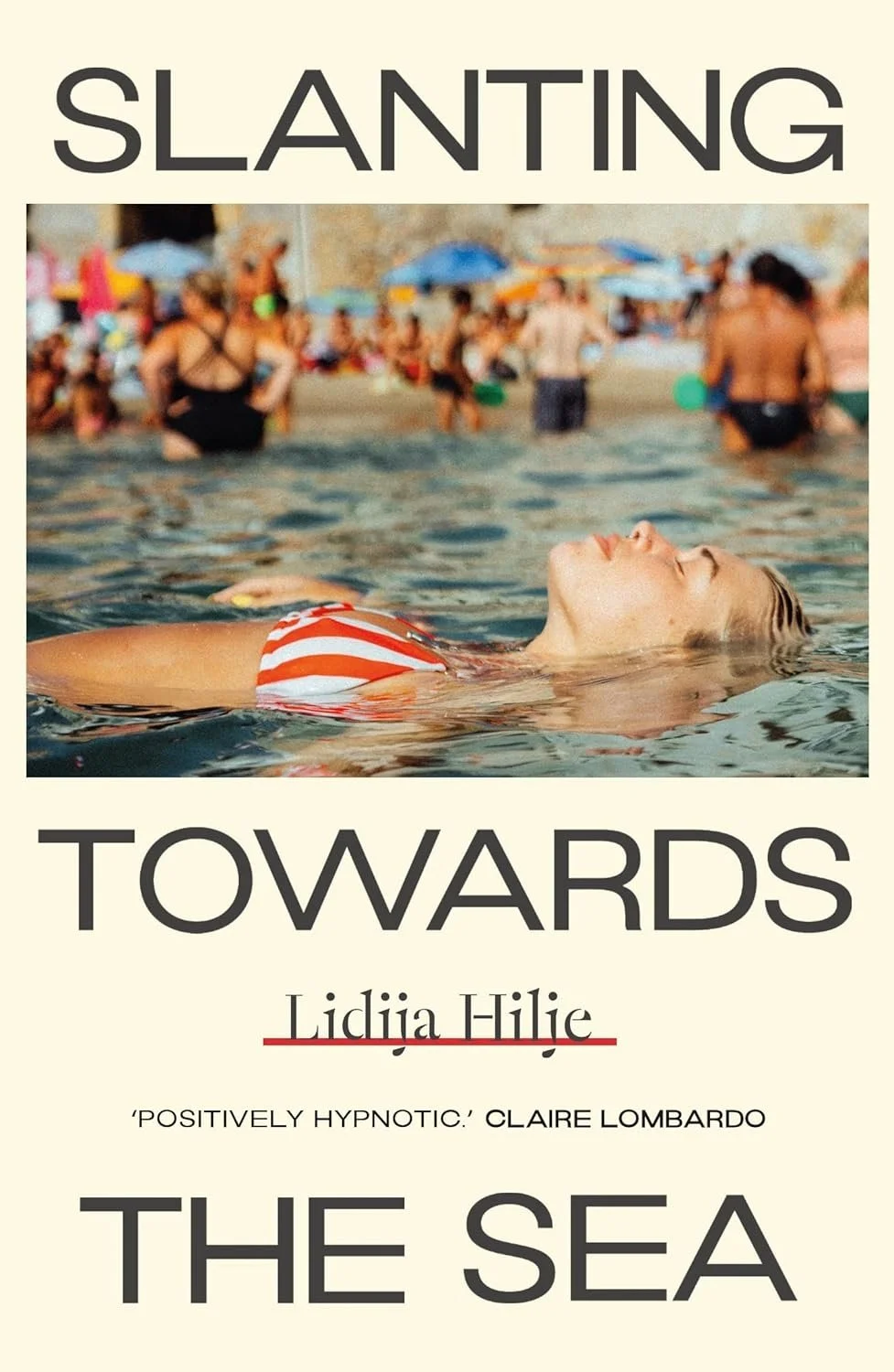
Slanting Towards the Sea by Lidija Hilje $28
Spanning across twenty years and one life-altering summer in Croatia, Slanting Towards the Sea is at once an unforgettable love story and a powerful exploration of what it means to come of age in a country younger than oneself. Ivona divorced the love of her life, Vlaho, a decade ago. They met as students at the turn of the millennium, when newly democratic Croatia was alive with hope and promise. But the challenges of living in a burgeoning country extinguished Ivona's dreams one after another — and a devastating secret forced her to set him free. Now Vlaho is remarried and a proud father of two, while Ivona's life has taken a downward turn. In her thirties, she has returned to her childhood home to care for her ailing father. Bewildered by life's disappointments, she finds solace in reconnecting with Vlaho and is welcomed into his family by his spirited new wife, Marina. But when a new man enters Ivona's life, the carefully cultivated dynamic between the three is disrupted, forcing a reckoning for all involved.
Set against the mesmerizing Croatian coastline, Slanting Towards the Sea is a cinematic, emotionally searing debut about the fragile nature of potential and the transcendence of love. [Paperback with French flaps]
”With illuminating prose and gripping storytelling, Lidija Hilje ascertains her place as an exciting new voice in world's literature. Slanting Towards the Sea is a love letter to Croatia and to anyone who dares to dream.” —Nguyen Phan Que Mai
”Oh, what a beautiful book this is — deeply felt, humane, gorgeously written. Hilje's prose is positively hypnotic — I sunk in and didn't want to come up for air.” —Claire Lombardo
>>Trying and failing to write a universal story.
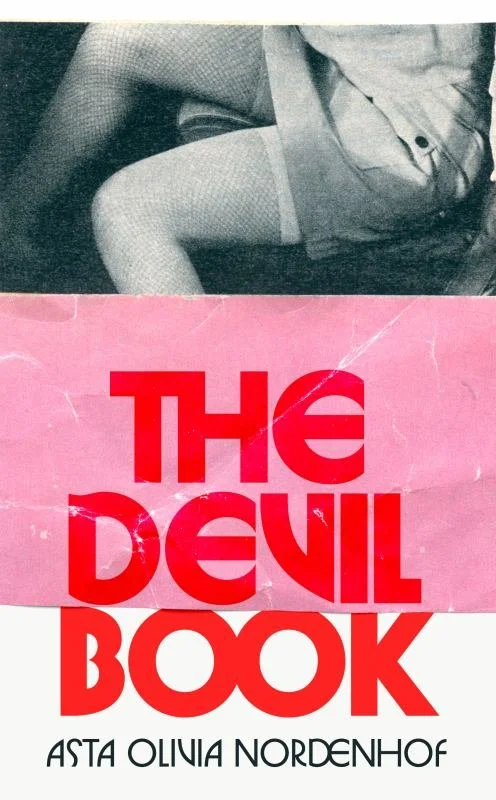
The Devil Book by Asta Olivia Nordenhof (translated from Danish by Caroline Waight) $38
A classic girl-meets-boy-meets-devil story. A woman meets a man on a train in Copenhagen and agrees to visit him in London. While she sits out a two-week Covid quarantine in his apartment, she begins to tell her story. Years ago and desperate for money, she sold herself to a stranger called T. He offered her a suitcase full of money and lavish gifts in exchange for total control of her body. In the bed between them lay a large kitchen knife and the promise of an iconic death. But at the last moment, she aborted the treacherous game and fled. Now in London, she reflects on the forces — financial and social — that led her to the brink of destruction, and wonders what it would take to believe in love again. Frank, intimate and dazzling entertaining, The Devil Book takes us from Copenhagen to London to the inside of a mental institution, as well as a fancy apartment block, this unmissable stand-alone novel is the follow up to the critically-acclaimed Money to Burn. [Hardback]
”Covering much of the same ground as her last novel — the interrelation between money, sex, violence and gender, capital's power to console or benumb — The Devil Book shares the same bristling, didactic prose, but with a welcome barbed humour. a lacerating literary harnessing of rage at a decrepit system, held together by Nordenhof's defiantly unique voice.” —Financial Times
>>Writing as a political act.
>>Money to Burn.
Portrait of an Island on Fire by Ariel Saramandi $45
A deeply moving and revelatory reading experience, the essays collected in Portrait of an Island on Fire form a searing account of Mauritius at a crucial moment in its history. Unceasing in its critiques of racist, patriarchal abuses of power, in its unpicking of the ills at the core of contemporary Mauritian society and their roots, the collection is a milestone in thinking about the lasting social and political effects of colonialism and how they play out at the level of government policy, the handling of environmental issues, in schools, in hospitals, in families, in language. For all its well-placed anger, Ariel Saramandi’s sparklingly intelligent and intimate debut is full of love and momentum – a push for a better future for Mauritius and, by extension, for the world. [Paperback with French flaps]
”Ariel Saramandi's interweaving essay collection presents a courageous, stringent and mesmerizing portrait of the island, her home, and the social and political effects of colonialism. She's a great writer.” —Wendy Erskine, The Observer
”Portrait of an Island on Fire is a fascinating look at Mauritius, a personal account of a homeland told with rage, rigour and love. Saramandi brilliantly, subtly teases out the threads of Mauritian history, politics and culture, honouring both the particularities of this unique place and showing the troubled connections — rapacious capitalism, racism, creeping authoritarianism, right-wing paranoia — that seem to stretch across the whole of our fragile planet. This is a beautifully written book of deep knowledge, righteous anger and fierce hope.'“ —Lydia Kiesling, author of Mobility
”Ariel Saramandi is a courageous and mesmerising new voice, a chronicler of contemporary Mauritius whose writing refracts the influences of her Mauritian compatriots, Ananda Devi, Nathacha Appanah and Shenaz Patel in French, Lindsey Collen in English, in a voice which is wholly her own. Portrait of an Island on Fire unpicks the knots of Mauritius's entangled histories — of plantation slavery, of indentured labour, of colonisation, of communalism and patriarchy — laying out the threads which make up her own history of ancestral oppression and structure her lived experience of privilege and pain; which form the fabric of contemporary capitalist Mauritius, and its particular intersections of race, class, gender, and language - its politics - and its particular forms of the white supremacy, anti-Blackness and toxic masculinity acted out on the bodies of those without power the world over. Saramandi is laser-focused in her rage, joyful in both her refusal to look away, and in her insistence on what sustains her: writing, motherhood, her marriage, friendships, community - and the beauty of her island.” —Natasha Soobramanien, co-author of Diego Garcia
False War by Carlos Manuel Álvarez (translated by Natasha Wimmer) $37
What is the difference between an immigrant, someone living in exile, and a refugee? The characters in False War are ambivalent castaways living lives of deep estrangement from their home country, stranded in an existential no-man’s land. Some of them want to leave and can’t, others left and never quite finished getting anywhere. In this choral novel, employing a dazzling range of narrative styles from noir to autofiction, Carlos Manuel Álvarez brings together a series of interconnected stories of the perennially displaced. From Havana to Mexico City to Miami, from New York to Paris to Berlin, whether toiling in a barber shop, lost in the Louvre, competing in a chess hall in Cuba, plotting a theft, or on a trip for émigré dissidents, these characters learn that while they may appear to be on the move, in reality they are paralysed, living in permanent stasis. With a fractured narrative that brilliantly reflects the disintegration that comes with uprooting, full of tenderness, disenchantment and melancholy, False War is an extraordinary novel that confirms Carlos Manuel Álvarez as one of the indispensable voices of his generation. [Paperback with French flaps]
”Carlos Manuel Álvarez’s second novel is a hugely rewarding, polyphonic narrative of migration from Cuba. Through its characters’ rich and eccentric interior worlds, it gives articulation to people whose lives are often reduced to stereotypes and offers a new vision of migration. False War is a rich and capacious novel that has much to say about our contemporary moment.” — Arin Keeble, Guardian
”Álvarez has not fashioned a linear story, but braided these threads together into a polyphonic motet of voices that are alternately sardonic, weary and, above all, angry. It is a tribute to Wimmer’s peerless translation that she effortlessly captures their range, cadence, humour and rage. False War is a poignant study of exile and exclusion, one that avoids the easy tropes of nostalgia and sentimentality: for Álvarez, exile is not an escape but a condition – permanent, internal and profoundly personal.” —Frank Wynne, Irish Times
”I was blown away by this novel. Nothing in the story is reducible. Its formal ambition is met by its execution, and the effect is staggering. Álvarez is an immense writer, a generational talent, and this, for me, is a generation-defining work.” — Michael Magee
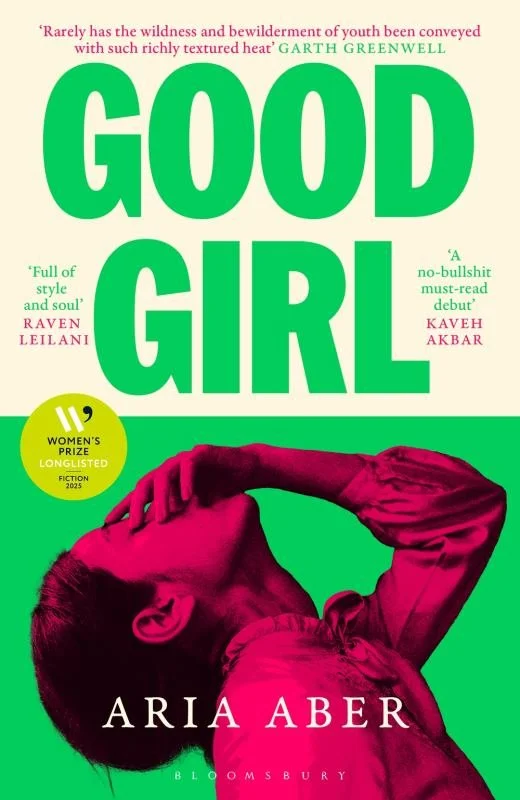
Good Girl by Aria Aber $37
In Berlin's underground, where techno rattles buildings still scarred with the violence of the last century, nineteen-year-old Nila finds her tribe. In their company she can escape the parallel city that made her, the public housing block packed with refugees and immigrants, where the bathrooms are infested with silverfish and the walls outside are graffitied with swastikas. Escaping into the clubs, Nila tries to outrun the shadow of her dead mother, once a feminist revolutionary; her catatonic, defeated father; and the cab-driver uncles who seem to idle on every corner. To anyone who asks, her family is Greek, not Afghani. And then Nila meets American writer Marlowe Woods, whose literary celebrity, though fading, opens her eyes to a world of patrons and festivals, one that imbues her dreams of life as an artist with new possibility. But as she finds herself drawn further into his orbit and ugly, barely submerged tensions begin to roil and claw beneath the city's cosmopolitan veneer, everything she hopes for, hates, and believes about herself will be challenged. [Paperback]
”Aber touches the heart of a young woman struggling to find herself in the heat of clashing cultures ... You'll be immediately arrested by the haunting beauty of her work and the way desire pushes against the seams of despair.” —Washington Post
”At heart, the novel is about the allure of freedom and the estrangement from others that is the cost of both exile and artistic creation. Aber writes with the masterful precision of an archivist. Exile, migration, displacement: These will splinter even the most solid self. But out of the shards, it is possible to make art, as Nila finally realizes — and as Aber has done in this touching novel.” —The Atlantic
”Captures the ache of Muslim girlhood and the vertigo of never feeling quite at home. Aber ingests the millennial playbook and spits out something that happens to be more interesting.” —Vulture
>>Identity and exile.
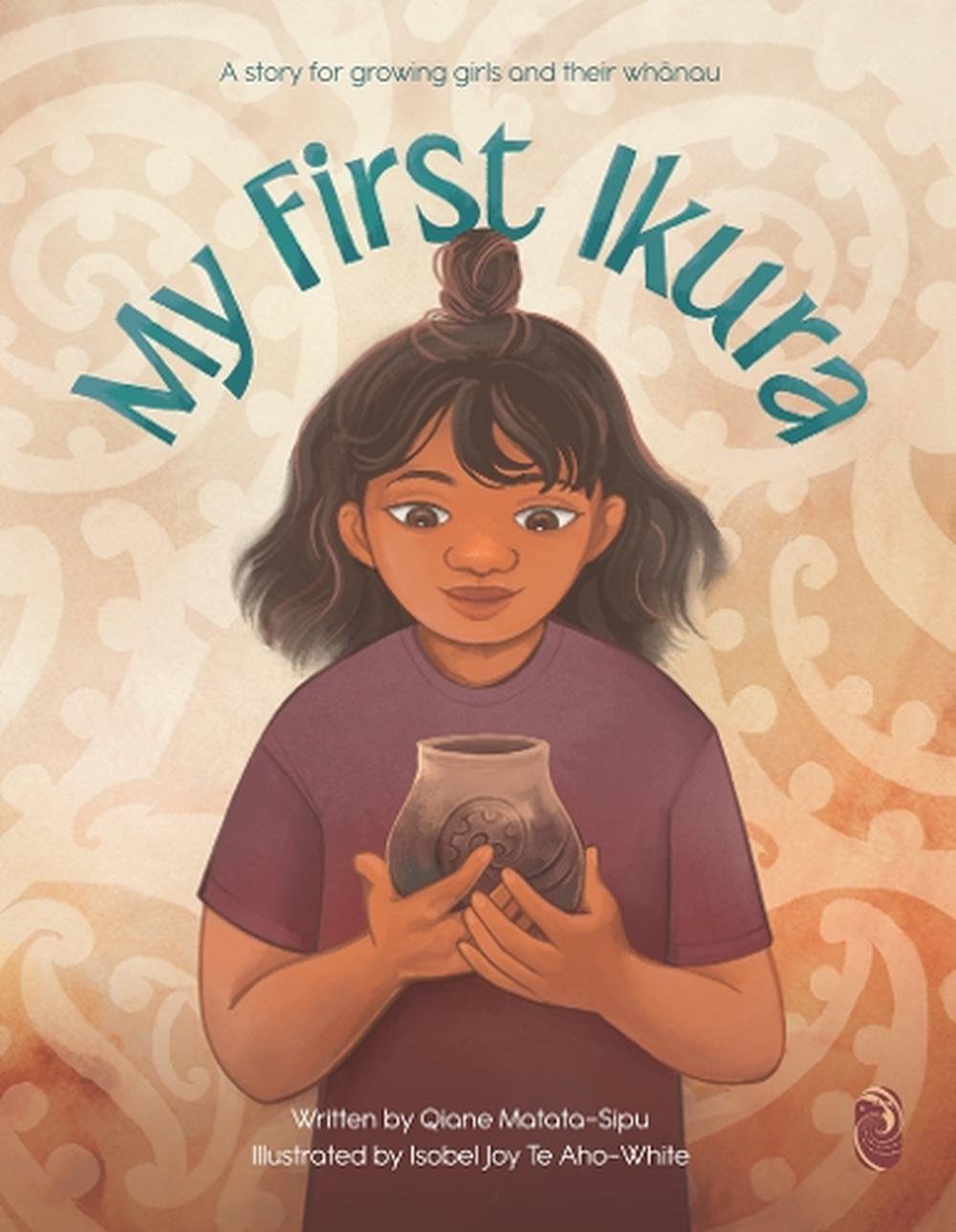
My First Ikura: A story for growing girls and their whānau by Qiane Matata-Sipu and Isobel Joy Te Aho-White $30
Rooted in te ao Māori, My First Ikura is a beautifully illustrated children’s book that follows a young girl’s first period, guided by the support of her whānau. More than a story of physical change, it celebrates womanhood as a sacred rite of passage. Addresses first menstruation through a Māori cultural framework. Emphasises ceremony, family support and ancestral wisdom — also includes a specially written karakia for families to learn together. Nicely illustrated and produced. [Hardback]
>>Look inside.
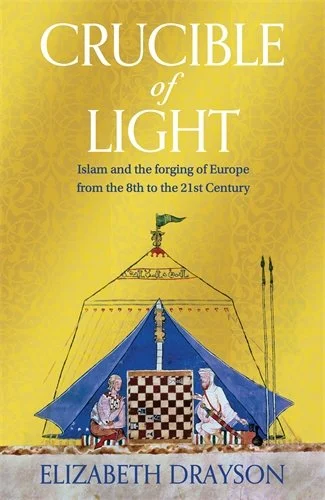
Crucible of Light: Islam and the forging of Europe from the 8th to the 21st century by Elizabeth Drayson $45
Drayson pulls together the epic interwoven history of the Muslim and Christian worlds over an 800-year span, taking in the conquest and re-conquest of Spain, the meteoric rise of Arabo-Norman Sicily, the Ottoman renaissance of the 16th to 18th centuries, the ebb and flow of Balkan history and the fate of contested islands like Cyprus and Malta, with their very different outcomes. Focusing on major turning points, individual stories and key places, from Mecca to Cordoba, from Damascus to Venice, and from Vienna to Istanbul, Drayson tracks unifying themes — classical learning preserved in Islamic libraries, the enduring influence of Moorish architecture and design, the food, the goods traded and the continuing discourse between individuals and cultures that has permeated Europe's history and shaped its borders. Drayson also explores the growing dialogue between Muslims and Christians across Europe today, a dialogue prefigured in the history of medieval and early modern Europe, in which harmony and enlightenment rise above perennial conflicts. These ideas challenge the way contemporary European identity is defined and point to the vital impact of Islamic civilisation upon the continent. Surprisingly few people are aware of how much Europe owes to its Islamic heritage except via pockets of tourism, and this book aims to correct that while exploring the endless complexities that this vexed relationship throws up. At a time when Islam is so narrowly identified with terrorism and migration in Europe it is a necessary corrective. [Paperback]
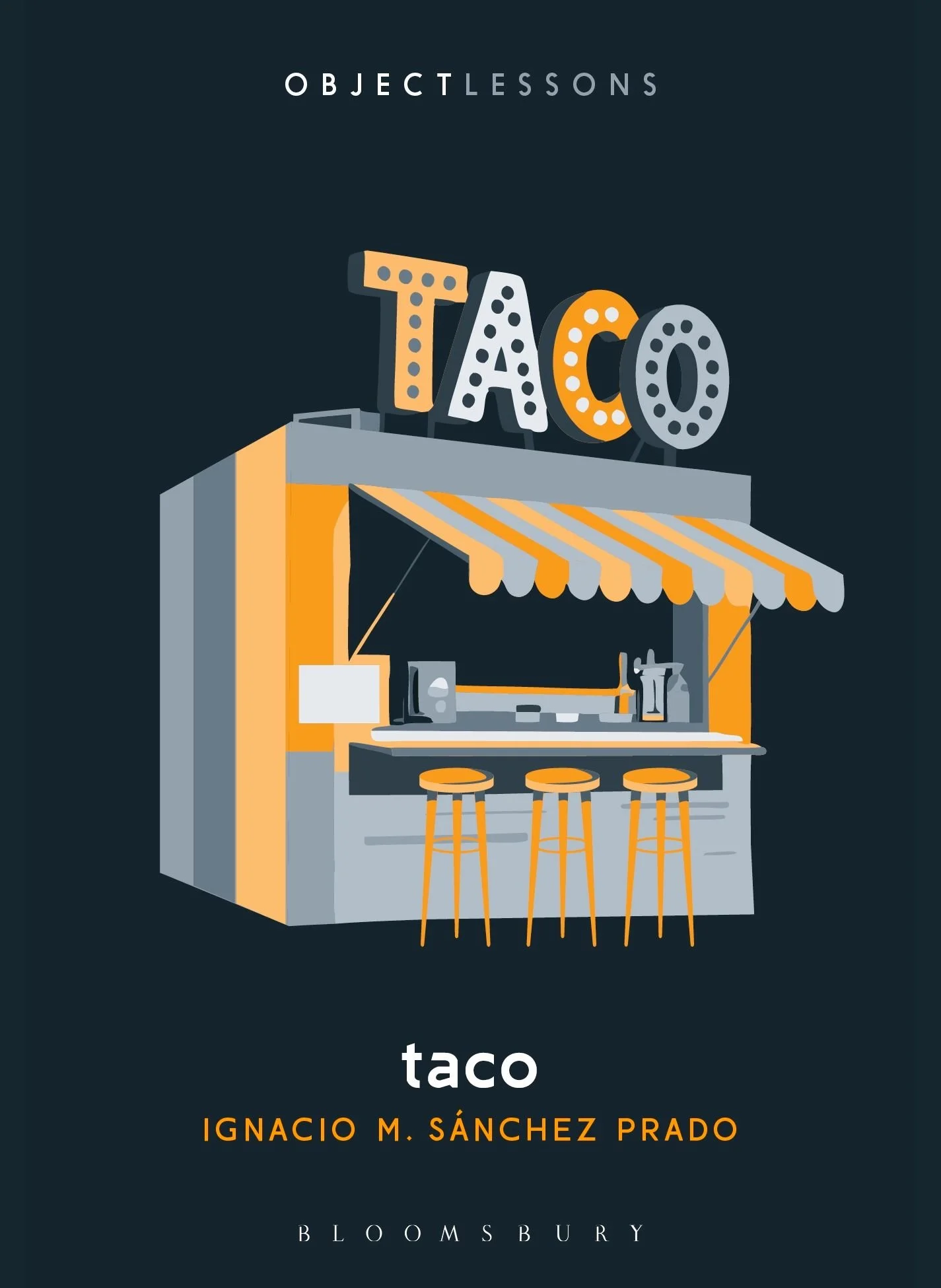
Taco (‘Object Lessons’ series) by Ignacio M. Sánchez Prado $23
Taco is a deep dive into the most iconic Mexican food from the perspective of a Mexico City native. In a narrative that moves from Mexico to the United States and back, Sánchez Prado discusses the definition of the taco, the question of the tortilla and the taco shell, and the existence of the taco as a modern social touchstone that has been shaped by history and geography. Challenging the idea of centrality and authenticity, Sánchez Prado shows instead that the taco is a contemporary, transcultural food that has always been subject to transformation. [Paperback with French flaps]
>>Other books in the ‘Object Lessons’ series.

Physics for Cats: Science cartoons by Tom Gauld $38
What happens to a cat who goes through a wormhole? Find out why every scientist worth their sodium chloride has a Tom Gauld cartoon taped to their electron microscope. This new batch of hilarious gags will be as important to every self-respecting scientist as a lab coat and goggles and oversize rubber gloves. Find out what the hadron's news alert about CERN says! Everyone asks, "What is dark matter?" and "Where is dark matter?" but do they ever take the time to ask, "How is dark matter?" Based all on previous data, we can predict with a 99.99% certainty that you will either laugh, guffaw, chortle or snort (we don't have a large enough sample set to be able to say which particular type of mirth you will experience). [Hardback]
>>Look inside!
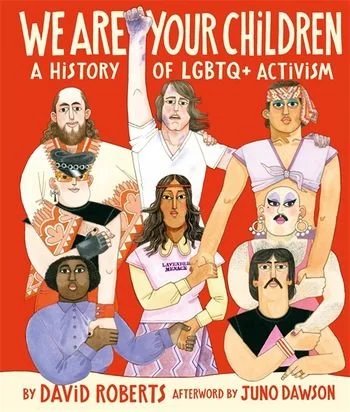
We Are Your Children: A history of LGBTQ+ activism by David Roberts $65
A gorgeously illustrated, accessible celebration of queer activism, by the creator of the award-winning Suffragette, David Roberts. With an afterword by Juno Dawson. Touching on major moments in the story of the fight for LGBTQ+ rights including the Stonewall Uprising, the first Gay Pride Rally and the dazzling history of drag and the ballroom scene, We Are Your Children is a wide-ranging and inclusive account of a multifaceted movement, with detailed and characterful colour artwork. This book showcases figures from queer history like Harvey Milk, Julian Hows, Carla Toney, Crystal LaBeija, We Wha, Vincent Jones, Marsha P. Johnson, Alan Turing, Sylvia Rivera and many more. From the secret slang adopted by gay Londoners in the 60s, to the decades of sit-ins and marches, there are countless fascinating stories to be told: stories of resistance, friendship, love, fear, division, unity and astonishing perseverance in the face of discrimination and oppression. Encyclopedic in scope, this will expand anyone’s knowledge and understanding. [Hardback]
>>Look inside!
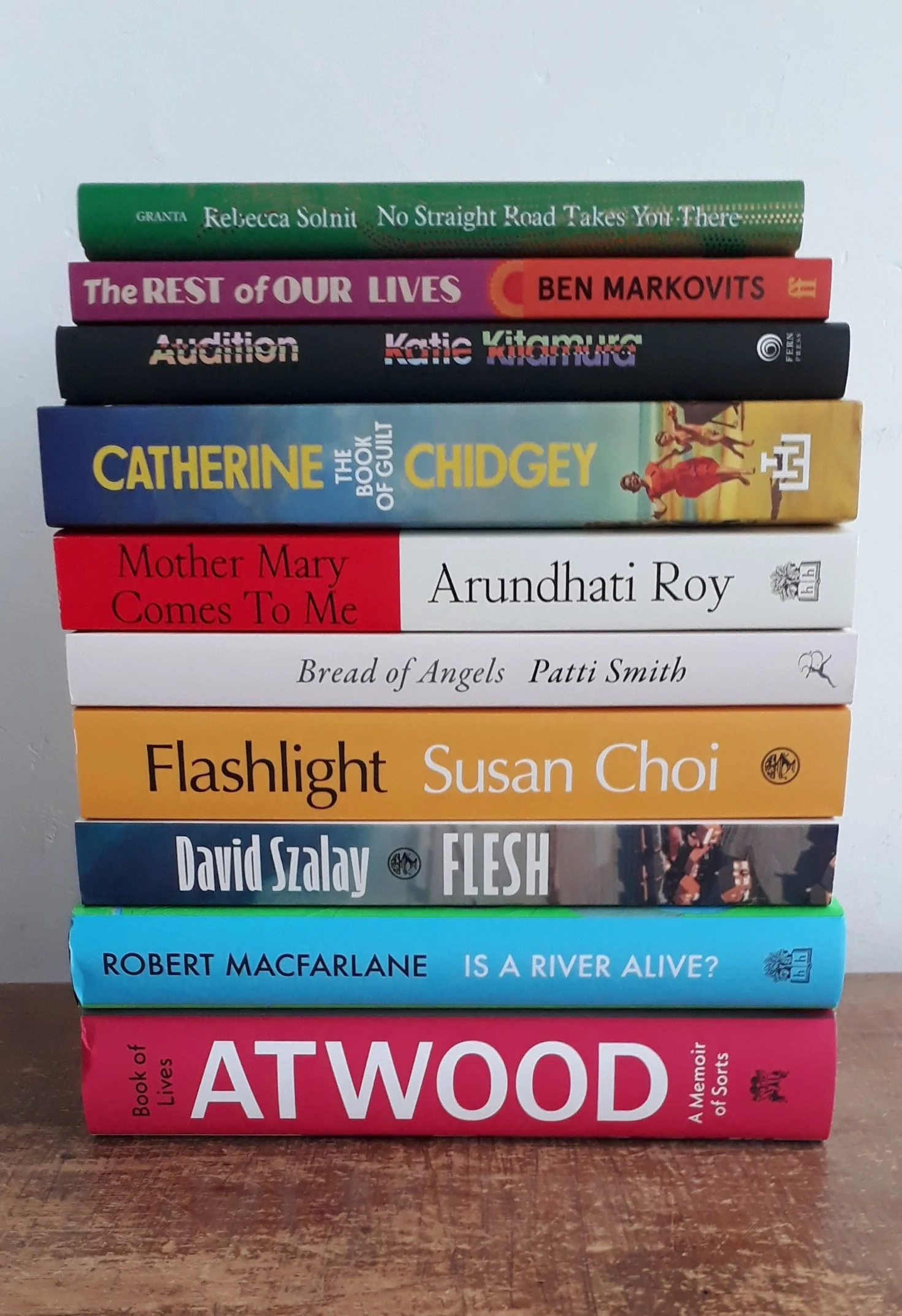
Twenty at Twenty!
Top up your summer reading pile with a selection of twenty outstanding books at a sweet price.
Head to the website now and make your selection.
Enter the discount code READ when adding the books to your cart for a 20% discount.
Limited time!
The Readers’ Carousel offer is extended until 6 January 2026, and is limited to the copies currently in stock.
Read our latest newsletter.
19 December 2025
It is not too late to get your books before Christmas — either as gifts or for your own summer reading.
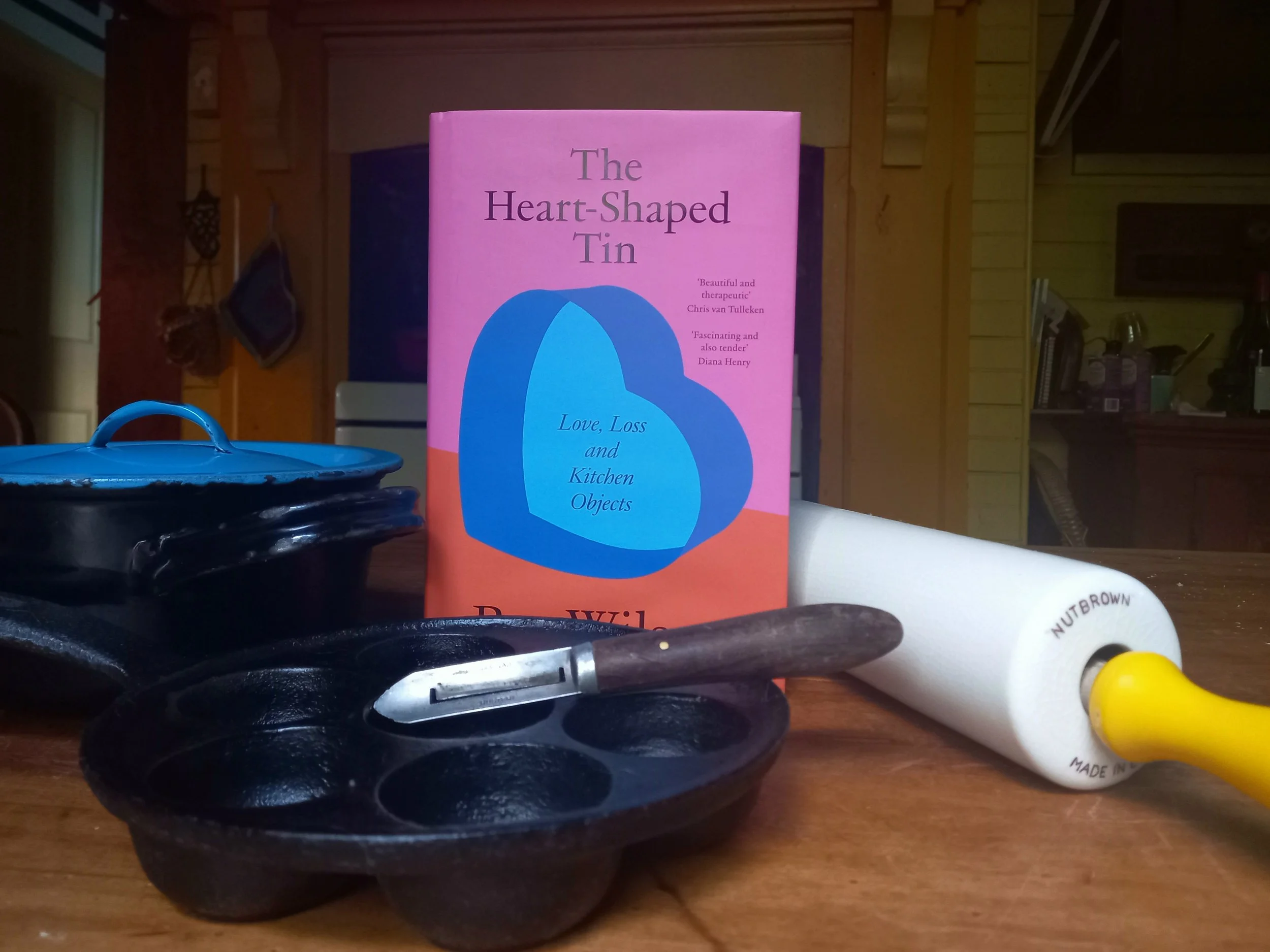
Perhaps the objects that carry the most meaning in our lives, the ones that are most imbued with the connections we have with the significant people in our pasts, the ones that both store and release the memories that are fundamental to our idea of ourselves, are not so much the precious heirlooms or heritage pieces but rather the ordinary objects that we use every day, just as, perhaps, their previous owners used them every day before us. The kitchen probably holds the greatest concentration of such useful-and-meaningful objects, come to us in many different ways, each with its own story. Bee Wilson’s thoughtful and beautifully written book tells the stories attached to 35 kitchen objects of many origins, and gives insight into the texture of the lives of the people who used them, and their importance to the people who use them now.
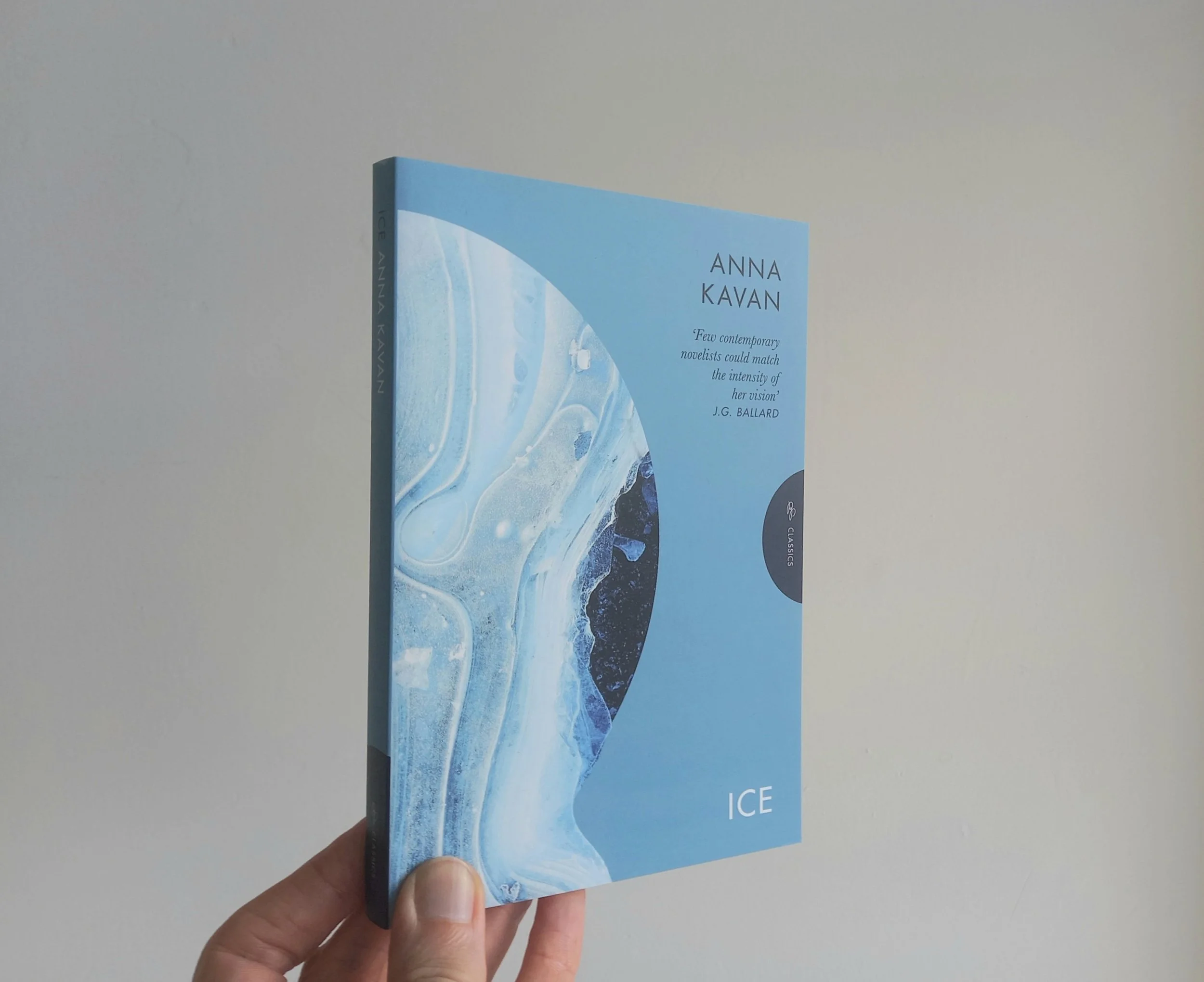
The progressive limitation of the habitable world by advancing cliffs of ice constitutes the only real development in Anna Kavan’s final, uncomfortable, remarkable novel, Ice. In what passes for, or stands in for, a plot, and with what pass for, or stand in for, characters, an unnamed man pursues an unnamed woman in endless iterations. He finds her everywhere he looks but the closer he gets to her the harder she is to see. The ‘girl’ (as he refers to her) is never more than a projection, inaccessible to the fantasist, objectification without object, idealised victim for his fantasies of violent possession. “She always appeared as a helpless victim, her fragile body broken and bruised. There dreams were not confined to sleep only, and a deplorable side effect was the way I had come to enjoy them.” The ‘girl’ is mostly ‘kept’ by either her husband or a by man known as ‘the Warden’, themselves plausibly projections of the narrator, their cruelty towards her the outward expression of the narrator’s desires until such time as he can assume these cruelties for himself. Until such time, the narrator cannot manage to be anything but an observer. He is ineffectual, pursuing the ‘girl’ but incapable of closing the gap between them, eschewing opportunity at the last moment. The actions taken by others are projections of his desires, desires that obliterate the ‘girl’, although she is perhaps less obliterated by projection and objectification than she is a dimensionless creation of that projection and objectification. “It was clear that the Warden regarded her as his property. I considered that she belonged to me. Between the two of us she was reduced to nothing: her only function might have been to link us together. I felt an indescribably affinity with him, a sort of blood-contact, generating confusion, so I began to wonder if there were two of us.” The pursuit and abuse of the ‘girl’ is narrated in countless iterations and variations, some of which would be inaccessible to the narrator unless they are his fantasies or the husband and the Warden are his projections. Many of the narrative branches terminate, perhaps at the girl’s death, leaving the narrative to return and pick up at an earlier point, the slipped stitches undermining the reader’s trust of the text. Just as there are no characters as such who could fulfil the reader’s expectations of characters by manifesting either depth or change, there is no plot development, the narrative endlessly overwriting itself, reinforcing, obscuring and reinforcing itself in a palimpsest written ultimately on the body of the girl, the receiver of wounds. The entire work constitutes an exposition of a deplorable psychological pattern that pervades swathes of literature and society. The narrator avows his role, he feels cheated when others harm the girl: “I was the only person entitled to inflict wounds.” The girl, so to call her, represents “a passive attitude, suggestive both resistance and resignation.” The narrator both exemplifies and abhors his role as oppressor, he envies the peaceful song-filled life of the gentle indris lemurs, about whom he is writing a study, but he knows that their life is beyond his reach: “I knew that my place was here, in our world, under sentence of death, and that I would have to stay here and see it through to the end. I was committed to violence and must keep to my pattern.” The girl’s tears “did not seem like real tears. She herself did not seem quite real. She was pale and almost transparent, the victim I used for my own enjoyment in dreams.” The girl is not real, she is constituted by violence, she loathes the world of the lemurs, anathematic to the complex of which she and her many-faced oppressor are the exemplar. The characters have no history or purpose other than to enact the disease they represent. The narration, in the first person, is a vehicle for an impersonal subjectivity. The repeated eruption of the unconscious into the narrative destroys causality and character and makes development impossible, leaving the narrative curiously disengaged, reminding me somewhat of Kafka’s The Castle. The characters are at once both subject and object, incapable of gaining traction when traction is most intended, animated by suppressed mechanisms that underlie much of literature and art. As the book progresses the walls of ice close around the narrator and the girl, drawing them closer together, “a sheet of sterile whiteness spreading over the face of the dying world, burying the violent and their victims together, obliterating the last trace of man and his works.” Very occasionally in the book, the reality of the ice is destabilised, such as when the narrator glimpses the town he is in, not in ruins and being crushed by ice but bathed in sunshine. The ice is not so much the ice of Ballardian cli-fi, though it is this too, but moves with the force of metaphor (encroaching ice is a motif often experienced by ‘‘Arctic explorers’ such as Kavan who have long-term heroin addictions (forty years in her case (Kavan identified with the fatally doomed, passive girl in this novel))). As the ice comes nearer, the girl becomes yet “thinner and paler, more transparent, ghostlike. It was interesting to watch.” When all else has been obliterated by the ice, the narrator and the girl are finally forced into actual contact in a beach house surrounded with wilted palm trees covered in rime. Kavan then provides three endings on top of each other: does the narrator pursue the girl into the ice, where they perish; does he attack her and leave her for dead; or does he reform (“I wondered why I had waited so long to be kind to her”) and flee with her towards the last unfrozen, equatorial zone? This last ‘happy’ option is so implausible as to finally erase the narrator, who retains only the reassuring weight of the gun in his pocket.
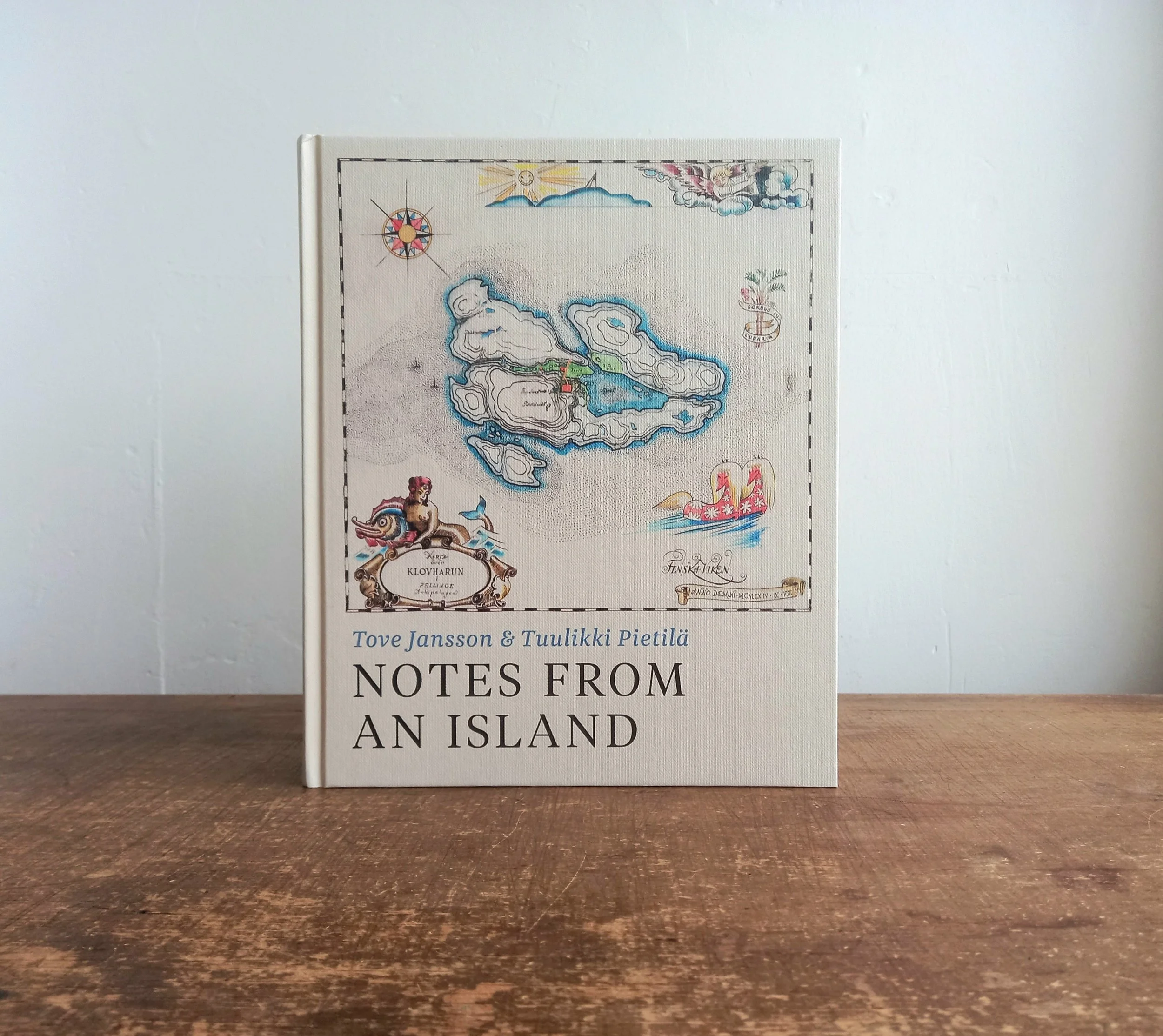
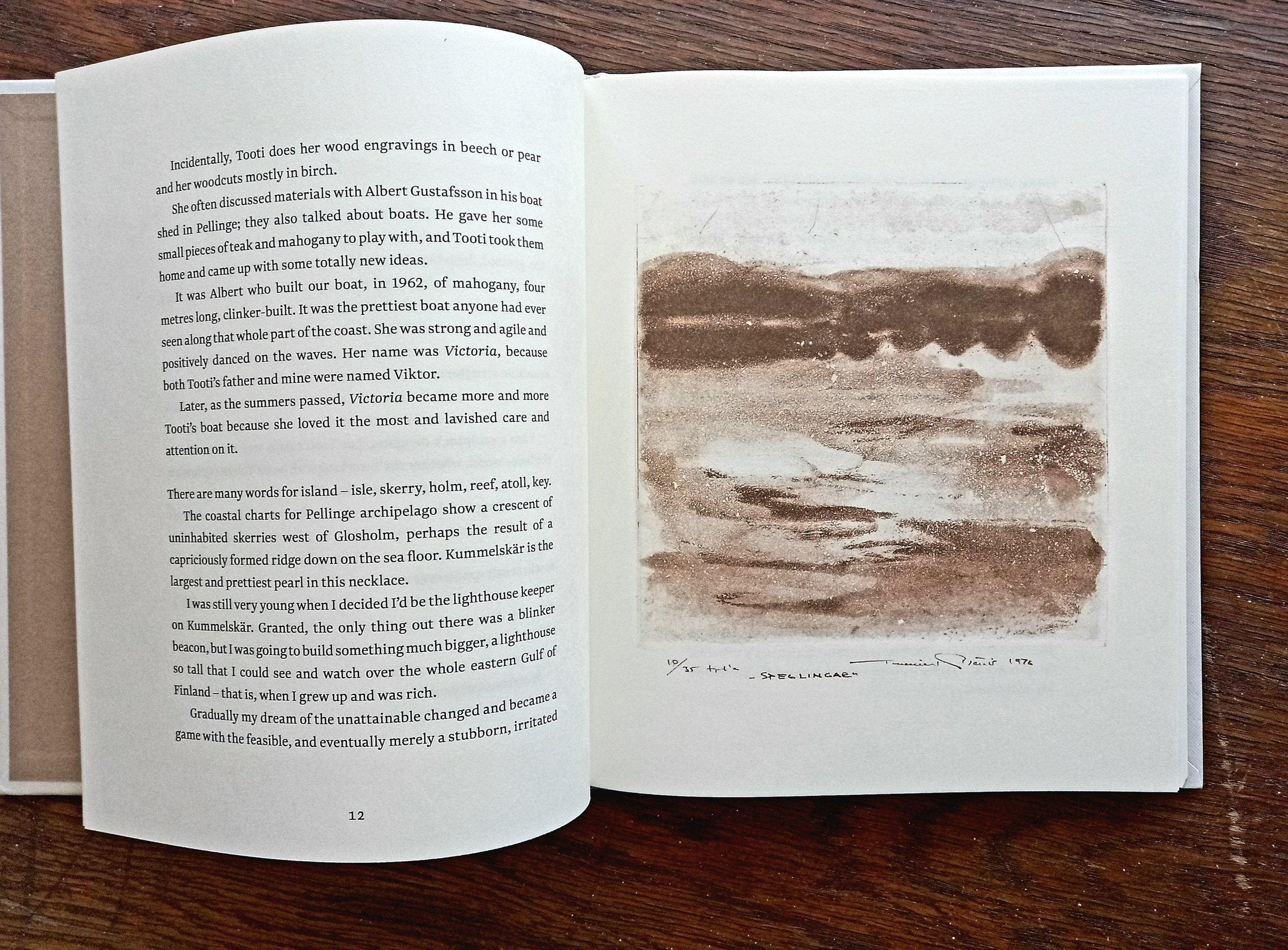
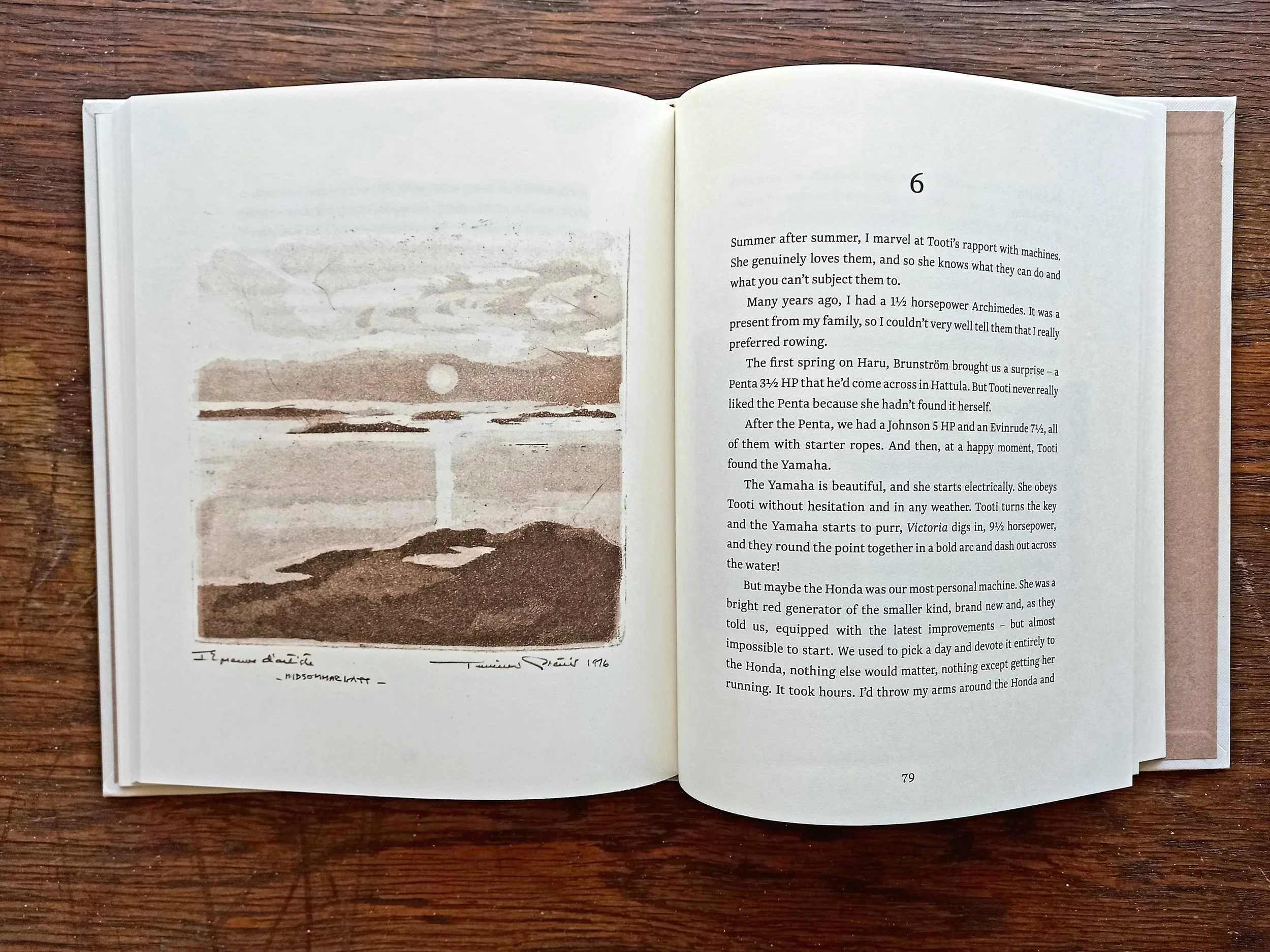
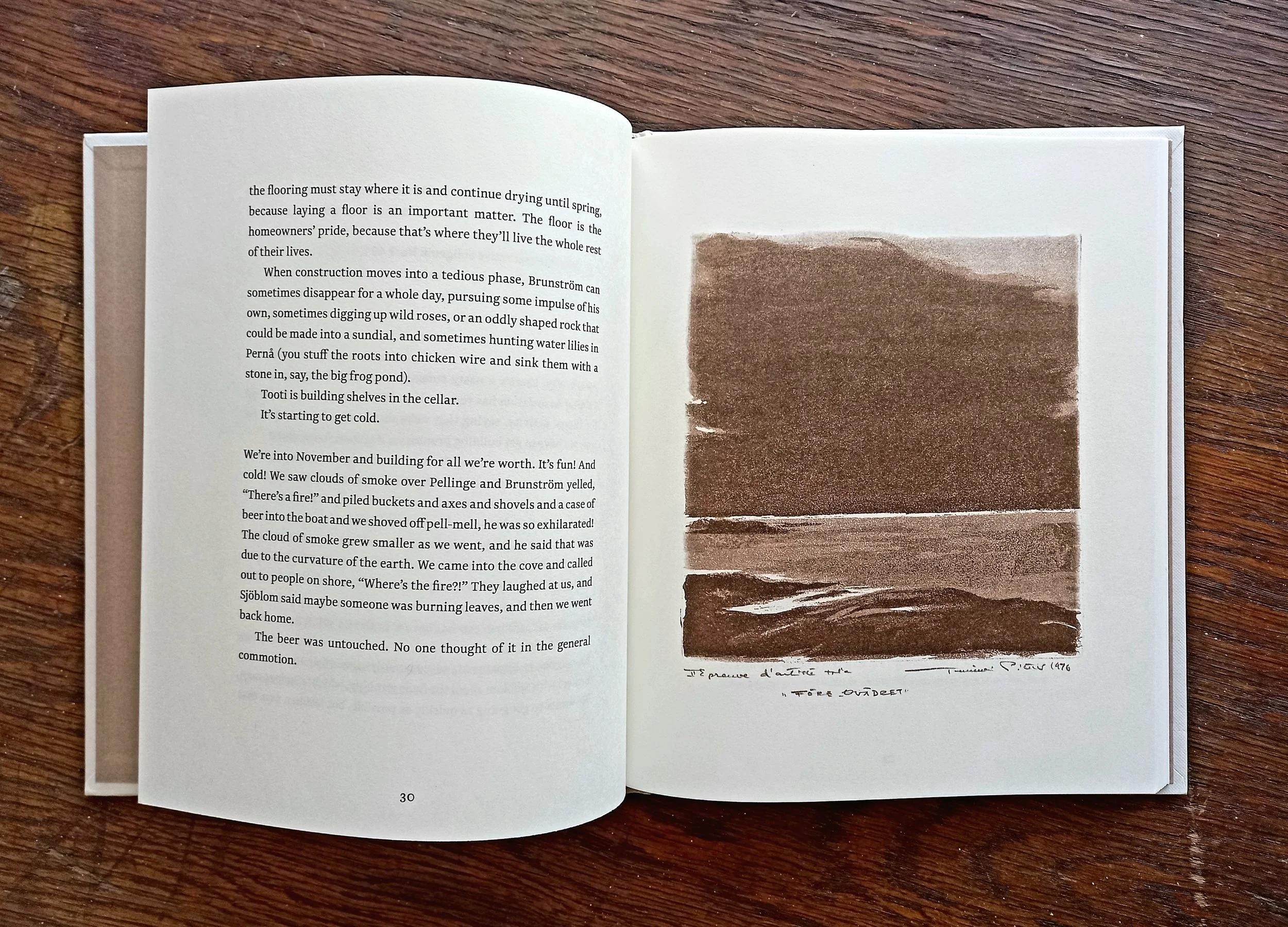
Every summer Tove Jansson and Tuulikki Pietilä escaped to Klovharun, their island. In Notes From an Island, Jansson gathers memories, notes, snippets of writing about the place and their antics on this barren remote skerry, and Pietilä’s atmospheric illustrations contrast with the seaman Brunström’s no-nonsense diary entries. This is a lovely book, from its attractive cover which features a delightfully drawn map by Jansson’s mother, to the paper stock and layout. It’s enticing in all its tactile qualities as well as its content. Jansson had been heading to the Finnish archipelago most of her life with her family. They would year-on-year visit a small island with charming beaches and a small wood, but each year the number of guests increased as they invited more friends and family to share in this summer pleasure. In her late 40s, Tove craved an island of her own. Somewhere she and Tuulikki could be alone to focus on their creative work, away from interruption and the pressures of life back on the mainland. Klovharun was rocky and inhospitable — just right for being away from it all, and for the two women an invigorating environment with the sea in all directions. Arriving on Klovharun they pitched a tent and, shortly after, met Brunström — a taciturn seaman — who would help them build the cabin. The initial step — finding a suitable flat space. A flat space that needed to be carved out by dynamiting a massive boulder. A dynamic action for a dynamic landscape. Yet Tove and Tuulikki liked their yellow tent so much that they continued to sleep in it and reserved the cabin for work and for guests. How do you claim an island in the Finnish Gulf? You place a notice on the door of a shop at the nearest local settlement stating your intention to lease the land and hope that most people will place a tick in the Yes column rather than the No. And hence a quarter-century relationship with the island began. In Jansson’s writing you get a sense of refuge, but not idle respite. Living on the island between April and October required stamina and industry — fishing, maintenance of the cabin and boat, keeping the various machines ticking over, collecting driftwood from the sea as well as the surrounding islands and rolling rocks. These were productive times — the women would work on their respective art and writing projects, and sometimes collaborate on a project. Pietilä recorded their experiences in this natural wilderness on Super8 film which was later made into a documentary. This book provides a thoughtful exploration of their island life and their relationship with nature. Tove Jansson’s writing is both philosophical and straightforward (it is never lyrical or florid). giving the land, the sea and the weather their primacy. Pietilä's 24 illustrations — some etchings, others watercolour washes — are muted in their ochre monochromes, but hold the power of the sky and water in them as though at any moment these elements might cast away the moment and shrug off these human interventions.
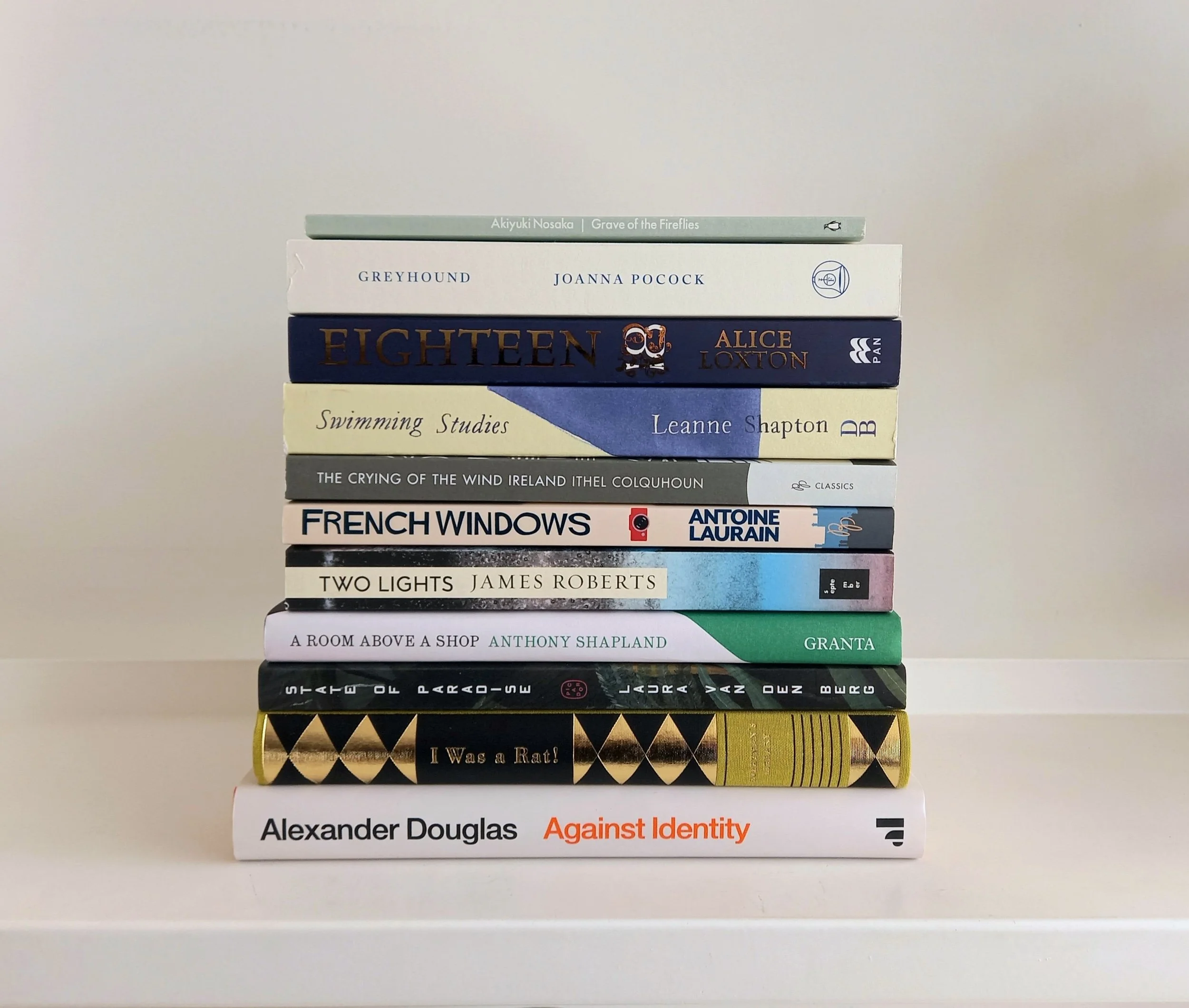
It is not too late to get your books before Christmas — either as gifts or for your own summer reading. We advise the following cut-offs:
Urban delivery: high confidence: Monday 22nd, 3PM / possible: Tuesday 23th, 3PM
Rural delivery: high confidence: Friday 19th, 3PM / possible: Monday 22nd, 3PM
Collection from our door: you can collect books on weekdays 10—5 until Tuesday 23th, and then a brief window on Wednesday 24th: 9—11
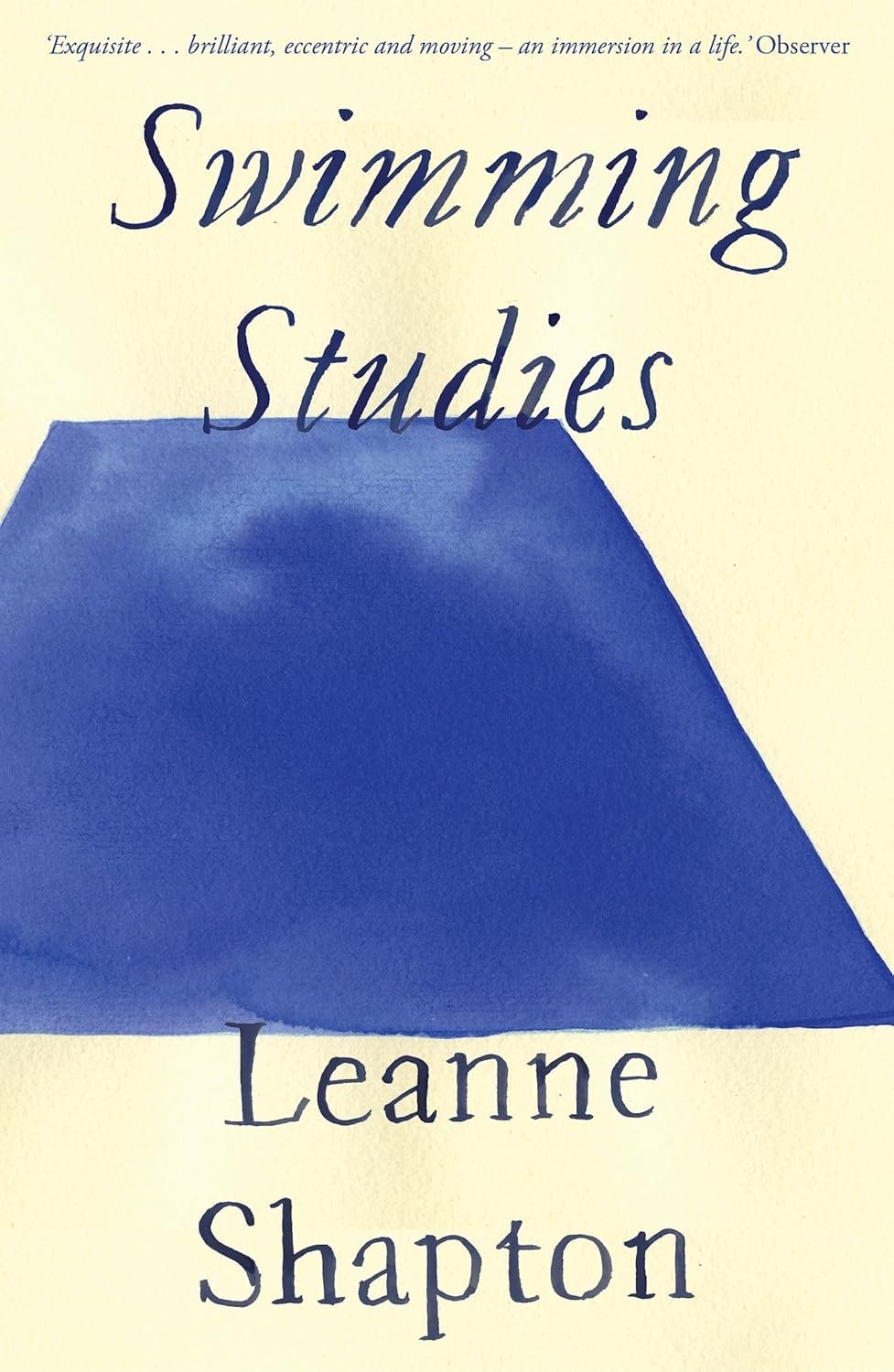
Swimming Studies by Leanne Shapton $33
Intimate with chlorinated space; weightless yet limited; closed off to taste, sound, and most sight; acutely aware of the clock: this is a swimmer's state. When ten-year-old Leanne Shapton joins an Ontario township swim team with her brother, she finds an affinity for its rhythms — and spends years training, making it to the Olympic trials twice. Swimming Studies reflects on her time immersed in a world of rigour and determination, routine and competition, pairing together contemplative essays and paintings. Vivid details of an aquatic life appear: adolescence in suburban Canada, dawn risings for morning practice, bus rides with teammates, a growing collection of swimsuits, dips in lakes and oceans. When she trades athletic pursuits for artistic ones, the metrics of moving through water endure though her relationship to it becomes more relaxed. In these elegant and potent meditations, Shapton renders swimming as a mode of experiencing time, movement, and perspective, capable of shaping our lives in every environment. A delightful book, filled with Shapton’s own artworks and photographs of her swimsuit collection. [New paperback edition]
”Expresses what it's like to be haunted by the person one used to be, and the search for how that person exists in the present. Leanne Shapton writes with such curiosity, ruefulness, intelligence, and grace.” —Sheila Heti
>>Look inside!
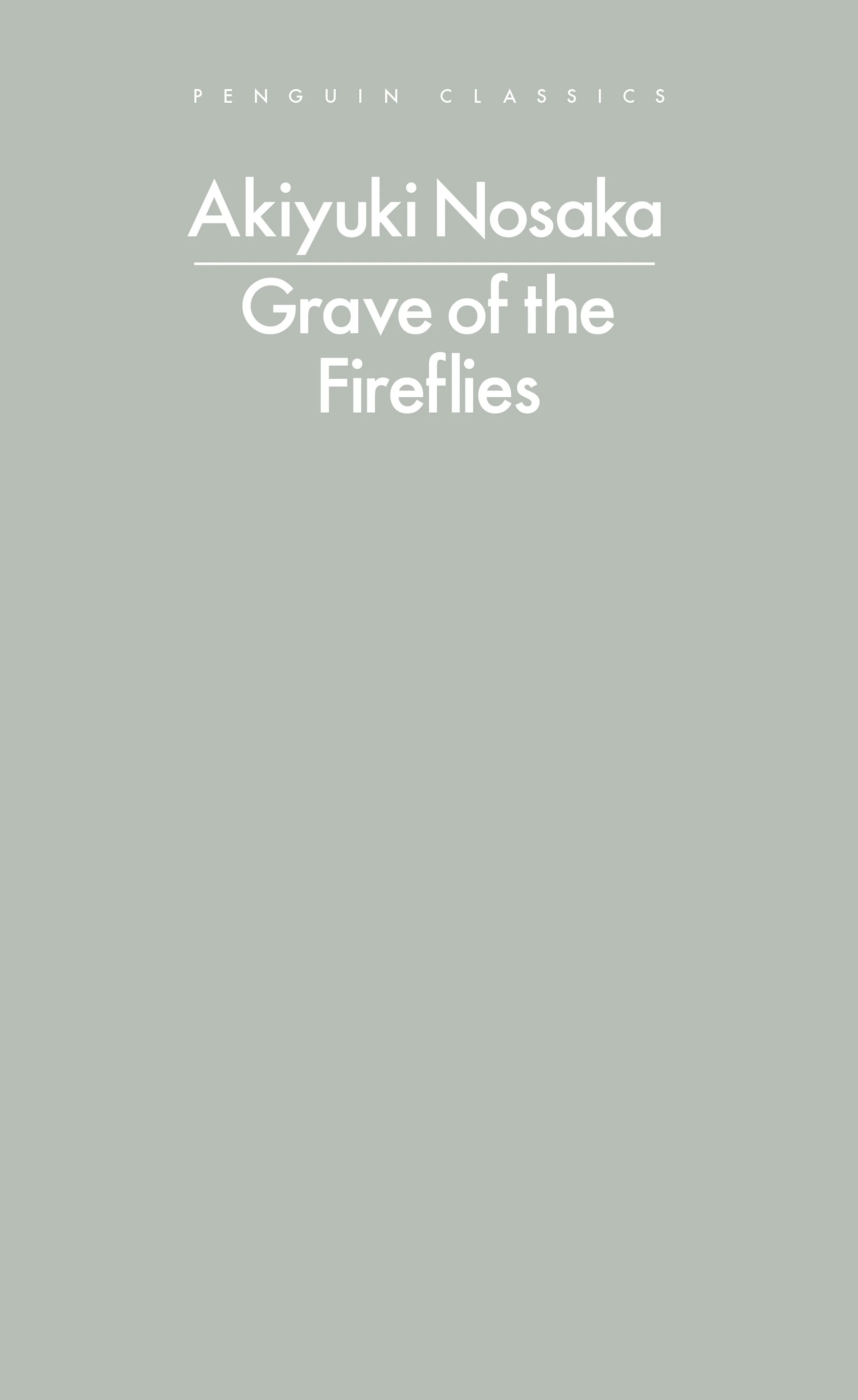
Grave of the Fireflies by Akiyuki Nosaka (translated from Japanese by Ginny Tapley Takemori) $28
In the dying days of the War, children Seita and Setsuko must fend for themselves. Firebombs have obliterated their home in Kobe, leaving them searching for shelter, and scrambling to survive in the depths of the countryside. But, as their suffering becomes a constant companion, so do the lights of the fireflies — shining from the bomber planes, and the insects glowing by the lake at night. This unforgettable semi-autobiographical tale was written by Akiyuki Nosaka as an apology to his young sister, who died of malnutrition in the period after the firebombing, and won him the Naoki Prize, cementing his place in the Japanese cultural canon. Published here for the first time as a standalone story, Grave of the Fireflies illuminates the untold sorrows of ordinary people who lived in the shadow of war. [Paperback with French flaps]
>>The story was made into a memorable anime film.
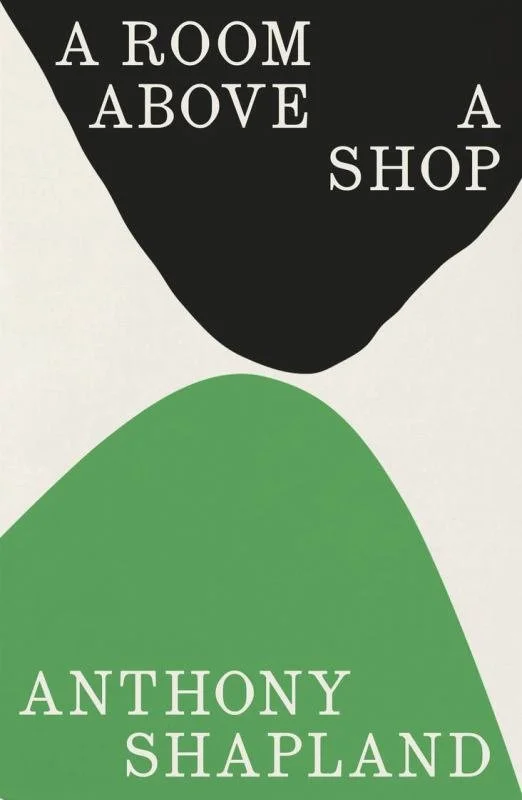
A Room above a Shop by Anthony Shapland $33
From a new voice in Welsh literature, an atmospheric and poignant story of a relationship between two small-town Valleys men during the late 1980s. When two quiet men form a tentative connection neither knows where it might lead. M has inherited his family's ironmongery business and B is younger by eleven years and can see no future in the place where he has grown up, but when M offers him a job and lodgings, he accepts. As the two men work side by side in the shop, they also begin a life together in their one shared room above — the kind of life they never imagined possible and that risks everything if their public performance were to slip. Unfolding in South Wales against the backdrop of Section 28, the age of consent debate and the HIV and AIDS crisis, this is a tender and resonant love story, and a powerful debut. [Hardback]
”It was a joy to read, such a tender story, the finespun prose and meticulous description.” — Sara Baume
”An atmospheric portrayal of gay, working-class life in a South Wales Valley, to read A Room Above a Shop is to feel held within the hands of a master craftsman in control of his form. I dare anyone to read this and not feel the ache of M and B's story, their solitude and their desire.” —Joshua Jones"
“There's a moving uncertainty, a vulnerability on the page that allows the reader to hear, and to listen. There's a quiet, brave strength in that.” —Cynan Jones
>>Landing in a scene, writing yourself out.
Greyhound by Joanna Pocock $37
Combining memoir, reportage, environmental writing and literary criticism, Greyhound is a moving and immersive book that captures an America in the throes of late capitalism. In 2006, in the wake of several miscarriages, Joanna Pocock travelled by Greyhound bus across the US from Detroit to Los Angeles. Seventeen years later, now in her 50s, she undertakes the same journey, revisiting the same cities, edgelands, highways and motels in the footsteps of the few women writers — Simone de Beauvoir, Ethel Mannin and Irma Kurtz — who chronicled their own road trips across the US. In Greyhound, Pocock explores the overlap of place and memory, the individual with the communal, and the privatisation of public space, as she navigates two very different landscapes — an earlier, less atomised America, and a current one mired in inequality, as it teeters on the brink of environmental catastrophe. Her focus is on the built-upon environment: the rivers of tarmac, the illuminated gas stations, the sprawling suburbs and the sites of extraction created specifically to fuel contemporary life. [Paperback with French flaps]
”In Greyhound, Pocock takes us on an epic road trip through American landscapes, through urban dreams and nightmares. Along the way, she asks: how can our material comfort coexist with the impoverishment of nature? How much degradation do we have to witness before we change our way of living? With an exquisite and beautifully reflective prose, Pocock explores a heart of darkness, and expresses a deep desire and need to connect with the earth. It is a wonderful and vivid text from one of our most important ecofeminist writers.” —Xiaolu Guo
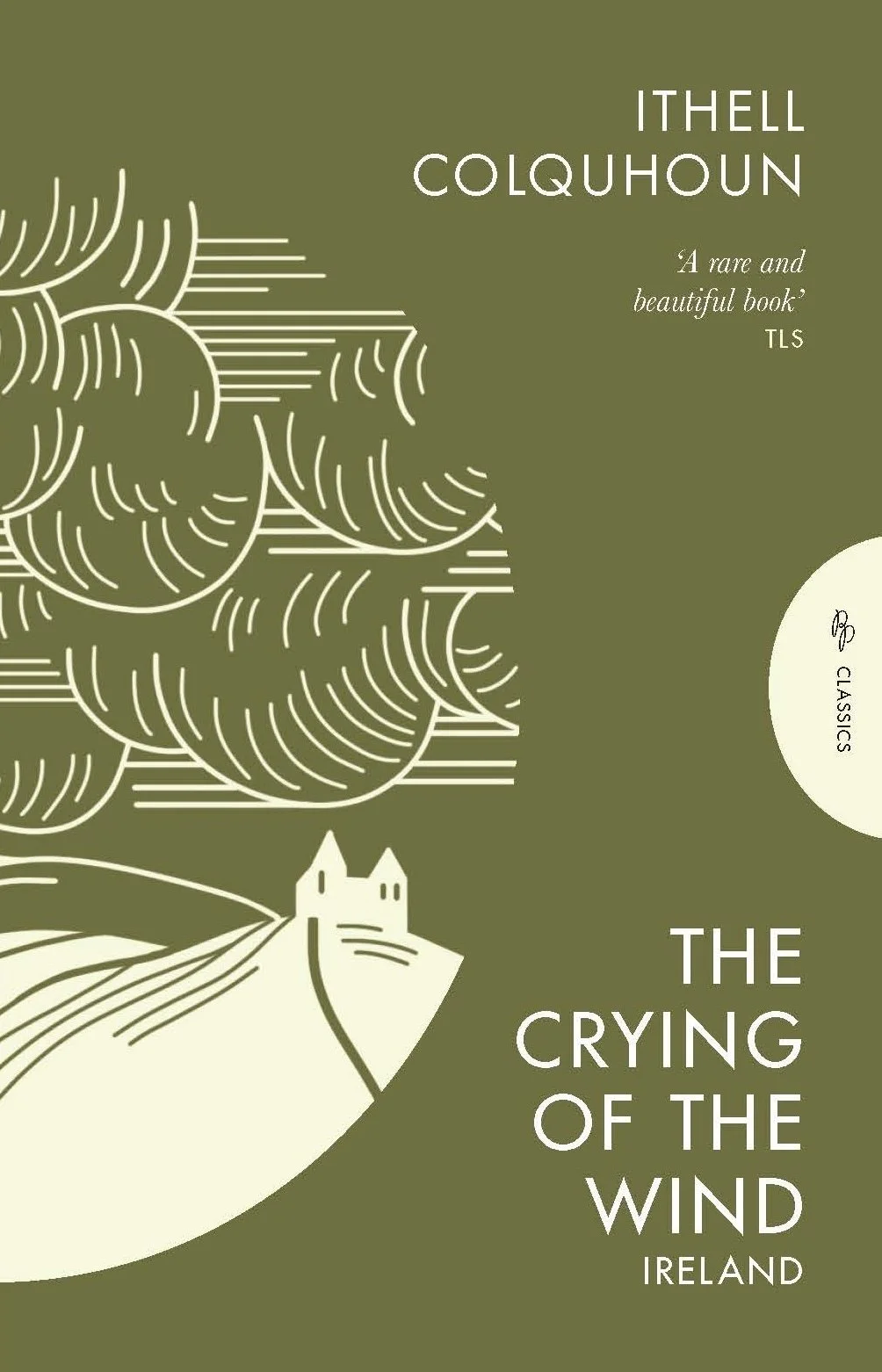
The Crying of the Wind: Ireland by Ithell Colquhoun $30
Into the world of 1950s Ireland — a lushly green, windswept landscape studded with holy wells and the decaying country houses of a vanished ruling class — arrives Ithell Colquhoun. An occultist and a surrealist painter, Colquhoun's travels around the island are guided by her artist's eye and her feeling for the world beyond our own, as well as her spikily humorous view of the people she meets. We encounter faeries and pagan rituals, ruined churches and Celtic splendour, rowdy bohemians and Anglo-Irish landowners fallen on hard times, as the author carouses through Dublin and tramps the hills of Connemara in this classic travelogue. Through her unique perceptions we discover a land that is fiercely alive and compelling. It is a place where the wind cries, the stones tell old tales and the mountains watch over the roads and those who travel on them. By intuiting the eerie magic of Ireland, Colquhoun offers up a land of myth and legend, stripped of its modern signs, at the same time offering herself to the reader in this portrait of the artist as a young woman. Richly visual and full of sly wit, this is an account of Ireland as only Colquhoun could see it, a land where myth and magic meet wind and rain, and the song of the secret kingdom is heard on city streets. [Paperback]
>>Also available: The Living Stones: Cornwall.
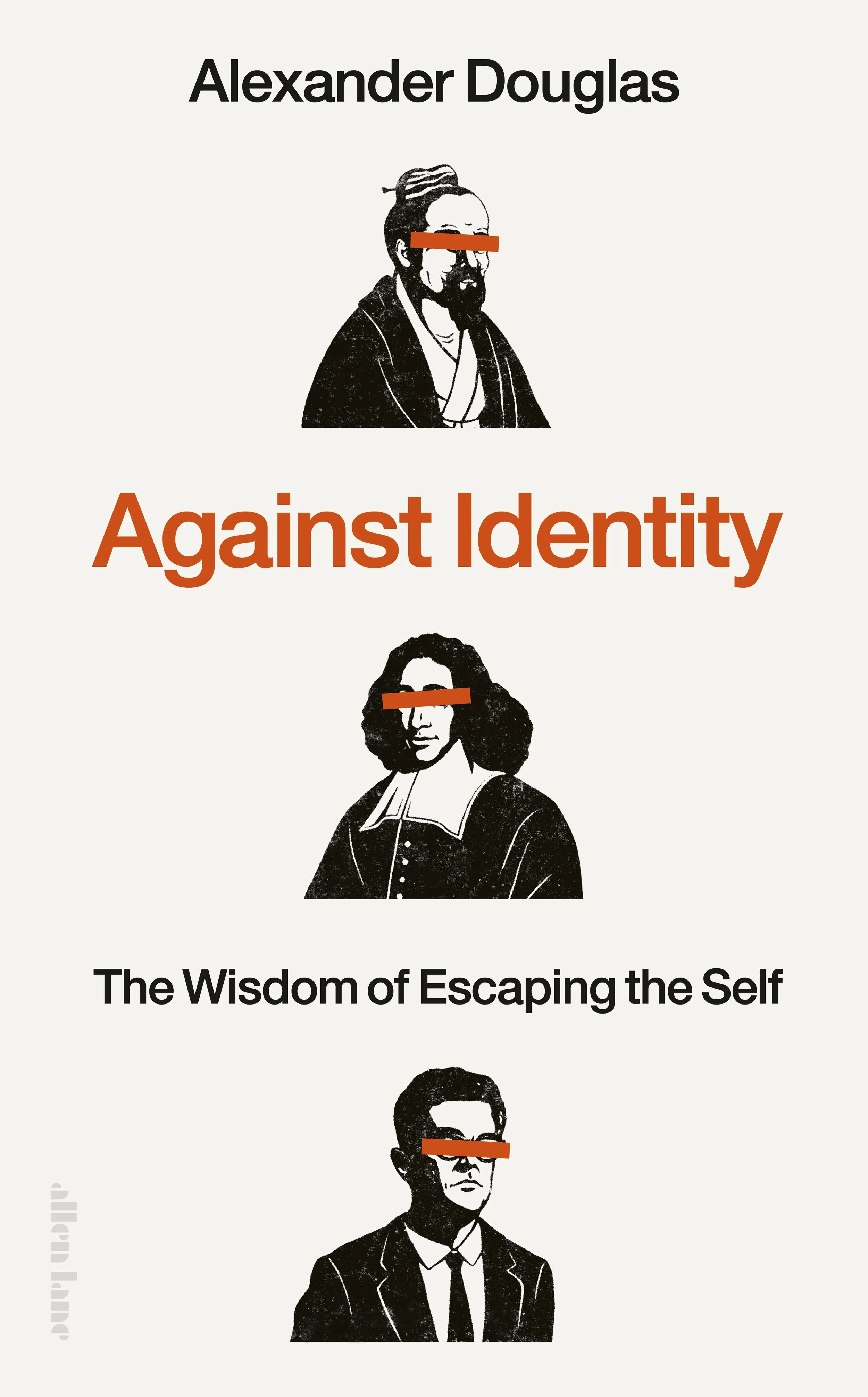
Against Identity: The wisdom of escaping the Self by Alexander Douglas $50
Modern life encourages us to pursue the perfect identity. Whether we aspire to become the best lawyer or charity worker, life partner or celebrity influencer, we emulate exemplars that exist in the world — hoping it will bring us happiness. But this often leads to a complex game of envy and pride. We achieve these identities but want others to imitate us. We disagree with those whose identities contradict ours — leading to polarisation and even violence. And yet when they thump against us, we are ashamed to ring hollow. In Against Identity, philosopher Alexander Douglas seeks an alternative wisdom. Searching the work of three thinkers — ancient Chinese philosopher Zhuangzi, Dutch Enlightenment thinker Benedict de Spinoza, and 20th Century French theorist René Girard — he explores how identity can be a spiritual violence that leads us away from truth. Through their worlds and radically different cultures, we discover how, at moments of historical rupture, our hunger for being grows: and yet, it is exactly these times when we should make peace with our indeterminacy and discover the freedom of escaping our selves. [Hardback]
”A profound meditation upon the way we perceive ourselves and the pits we frequently fall into, either as individuals or as groups, from the schoolyard to the nation state. Against Identity is revelatory, written with singular clarity and granite purpose, using little-known philosophies to think better and live with less turmoil, self-torture and aggression. In times of pessimism and chaos, it is a welcome voice of optimism and possibility.” —Richard Whatmore
”A philosophically rigorous yet impassioned critique of identity as both metaphysical error and social pathology. What the book offers is not an ethic of self-expression but a practice of disidentification: a way of letting go that is neither defeatist nor escapist, but attentive to the costs of identity and the possibilities that open up when we cease to grasp. Against Identity is generous, incisive, and quietly radical.” —Christine Tan
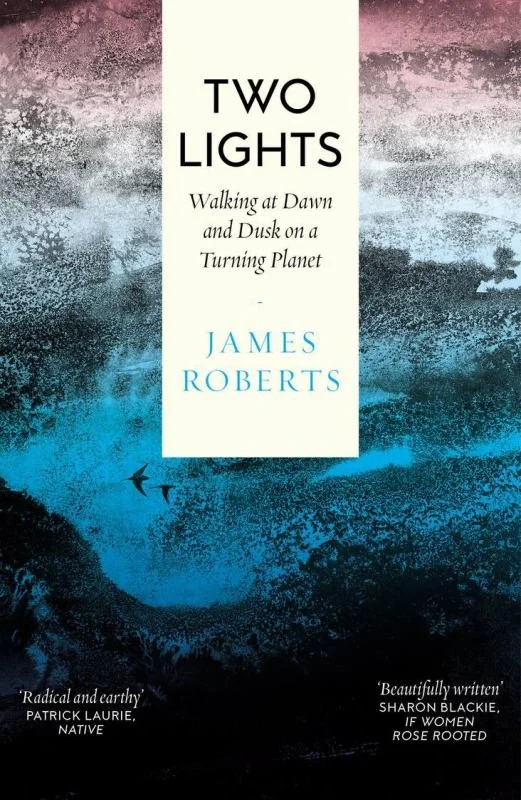
Two Lights: Walking at dawn and dusk on a turning planet by James Roberts $28
With acuity and insight, James Roberts paints a portrait of a life and its landscapes, creating connections with wild creatures and places, from swans in the Cambrian Mountains to wolves in the Pacific Northwest. By walking at dawn and dusk, in the two lights of awakening and deepening — through the stripped, windswept hills of Wales, and the jungles and savannahs of Africa — he navigates from a soul-stripping sense of loss towards hope in the future. In the presence of wild creatures he finds a way back to life. [Paperback]
”A beautifully written, wonderfully tender — and ultimately hopeful — journey through all that we stand to lose on this ever-more-challenged Earth.” —Sharon Blackie
”Deeply personal yet always outward looking, James Roberts delights in the world he discovers about him. Yet he also trembles, because he understands like winter light, that world is diminished... and diminishing. Two Lights reveals why all of us should be writers.” —Robert Minhinnick
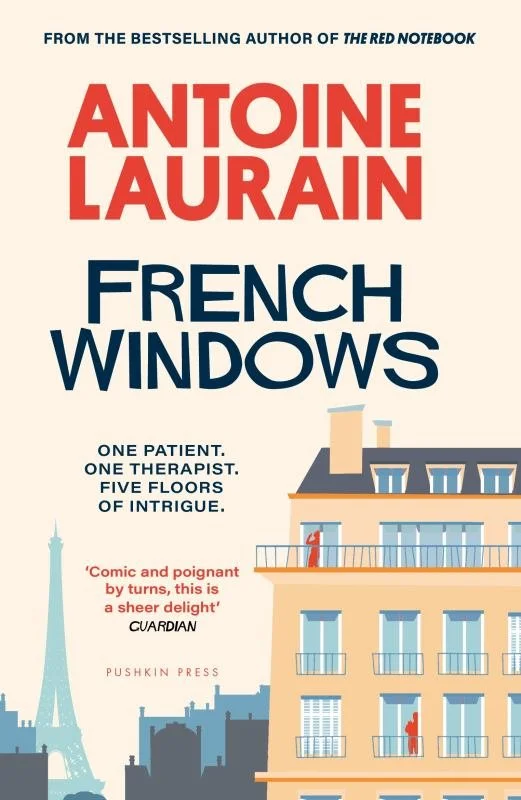
French Windows by Antoine Lauraine (translated from French by Louise Rogers Lalaurie) $28
Nathalia Guitry is an enigma that psychotherapist Doctor Faber can't solve. A photographer who can't take photographs since witnessing a murder, she is self-assured, self-aware, and seemingly impervious to his usually effective techniques. He hasn't been able to stop thinking about her since she walked into his consulting room and shattered his predictable professional routine. Desperate to break through Nathalia's uncrackable façade, he proposes something unusual: she'll write him a story about each resident of the building opposite, moving up floor by floor. But as the therapy progresses, he finds his own mask beginning to slip as he becomes consumed by her tales. How does she know so much about these strangers' lives? And what's waiting on the final floor? [Paperback]
”Admirably concise; intriguing, comic and poignant by turns, this is a sheer delight.” — The Guardian
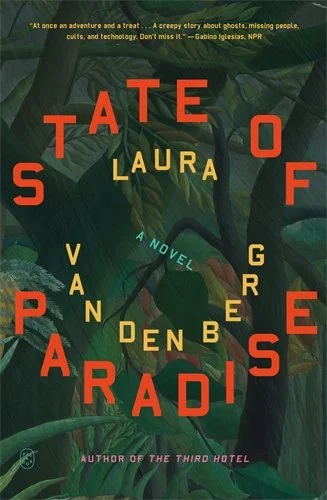
State of Paradise by Laura van den Berg $38
It’s another summer in a small Florida town. After an illness that vanishes as mysteriously as it arrived, everything appears to be getting back to normal: soul-crushing heat, torrential downpours, sinkholes swallowing the earth, ominous cats, a world-bending virtual reality device being handed out by a company called ELECTRA, and an increasing number of posters dotting the streets with the faces of missing citizens. Living in her mother’s home, a ghostwriter for a famous thriller author tracks the eerie changes. On top of everything else, she’s contending with family secrets, spotty memories of her troubled youth, a burgeoning cult in the living room, and the alarming expansion of her own belly button. Then, during a violent rainstorm, her sister goes missing. She returns a few days later, sprawled on their mother’s lawn and speaking of another dimension. Now the ghostwriter must investigate not only what happened to her sister and the other missing people but also the uncanny connections between ELECTRA, the famous author she works for, and reality itself. A sticky, rain-soaked reckoning with the elusive nature of selfhood and storytelling, Laura van den Berg’s State of Paradise is an intricate and page-turning whirlwind. With inimitable control and thrilling style, van den Berg reaches deep into the void and returns with a story far stranger than either reality or fiction. [Paperback]
"The novel form may be a 'pretty outdated technology’, as the narrator laments. But once a writer like van den Berg gets its creaky gears turning, it can still do what it's always done best: reflect our selves back at us and into the world, in all their wildness and weirdness." —Ruth Franklin, The New York Times
"With exquisite prose, smart lines on every page, a building sense of growing strangeness tinged with dread, and surprises all the way to the end, State of Paradise might be van den Berg's best novel so far — and that's saying a lot. A narrative that constantly feels like its dancing on the border between fiction and nonfiction despite all the weirdness it contains, this book is at once an adventure and a treat, a deep study of Florida's psychogeography and a creepy story about ghosts, missing people, cults, and technology. Don't miss it." —Gabino Iglesias
>>Haunted by the old self.
>>Merging autofiction with speculative fiction.
>>This is not the novel its author set out to write.
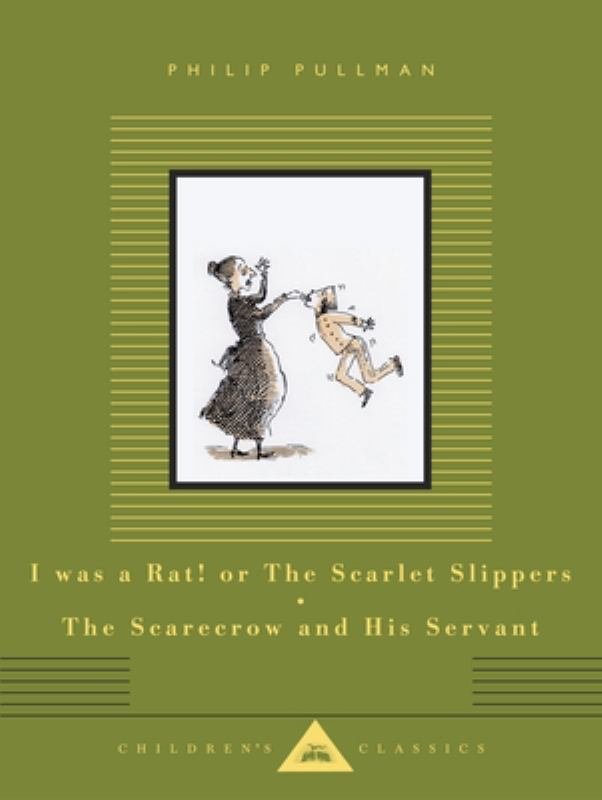
I Was a Rat! Or, The Scarlet Slippers [and] The Scarecrow and His Servant by Philip Pullman, illustrated by Peter Bailey $37
”I was a rat!” So insists a scruffy boy named Roger. Maybe it's true, but what is he now? A terrifying monster running wild in the sewers? The Daily Scourge is sure of it. A victim of 'Rodent Delusion'? The hospital nurse says yes. A lucrative fairground attraction? He is to Mr. Tapscrew. Or is Roger just an ordinary little boy? Only three people believe this version of the story, and it may take a royal intervention — and a bit of magic — to convince everyone else. A playful parody of the press, I Was a Rat! is a magical weaving of humour, fairy tale, and adventure.
When, in A Scarecrow and His Servant, a bolt of lightning brings Scarecrow to life, he proves to be a courteous but pea-brained fellow with grand ideas. He meets a boy, Jack, who becomes his faithful servant and the two embark upon a terrifying series of adventures — including battles, brigands, broken hearts, and treasure islands. But little does the Scarecrow know that he is being followed by a family who desperately wishes he'd never sprung to life.
Two much-loved illustrated tales in a beautiful cloth-bound gift edition. [Hardback]
>>Look inside.
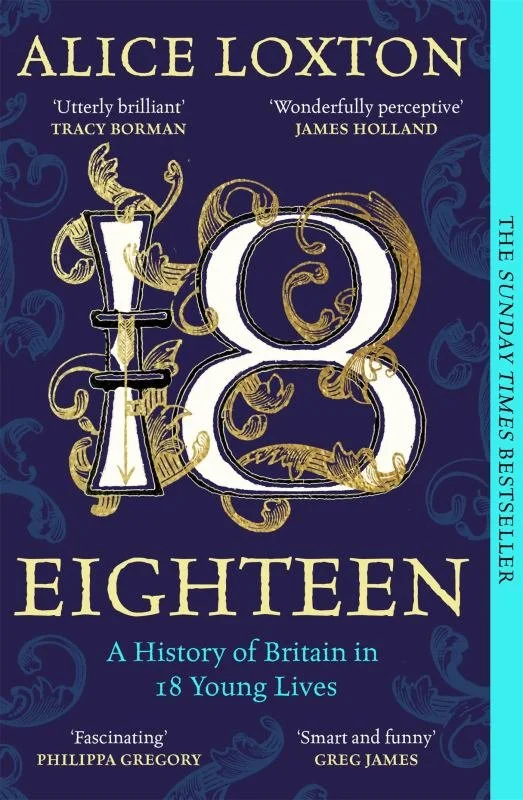
Eighteen: A History of Britain in 18 Young Lives by Alice Loxton $28
At eighteen, your life is full of what-ifs and why-nots. You have everything to look forward to — unless you've got the plague… What happens if the First World War breaks out while you're at university? How does a young woman, born without arms or legs, make a living in Georgian London? What turns a rugby-obsessed teenager from a Welsh mining town into Richard Burton? In this unconventional and witty history, Loxton delves into Britain's past, exploring the country through eighteen notable figures at that most formative age — eighteen. From a young Elizabeth Tudor facing deadly intrigue at court, to Empress Matilda already changing the fate of nations, Eighteen invites readers to join an eclectic cast of young Britons across the nation and throughout its history. [Paperback]
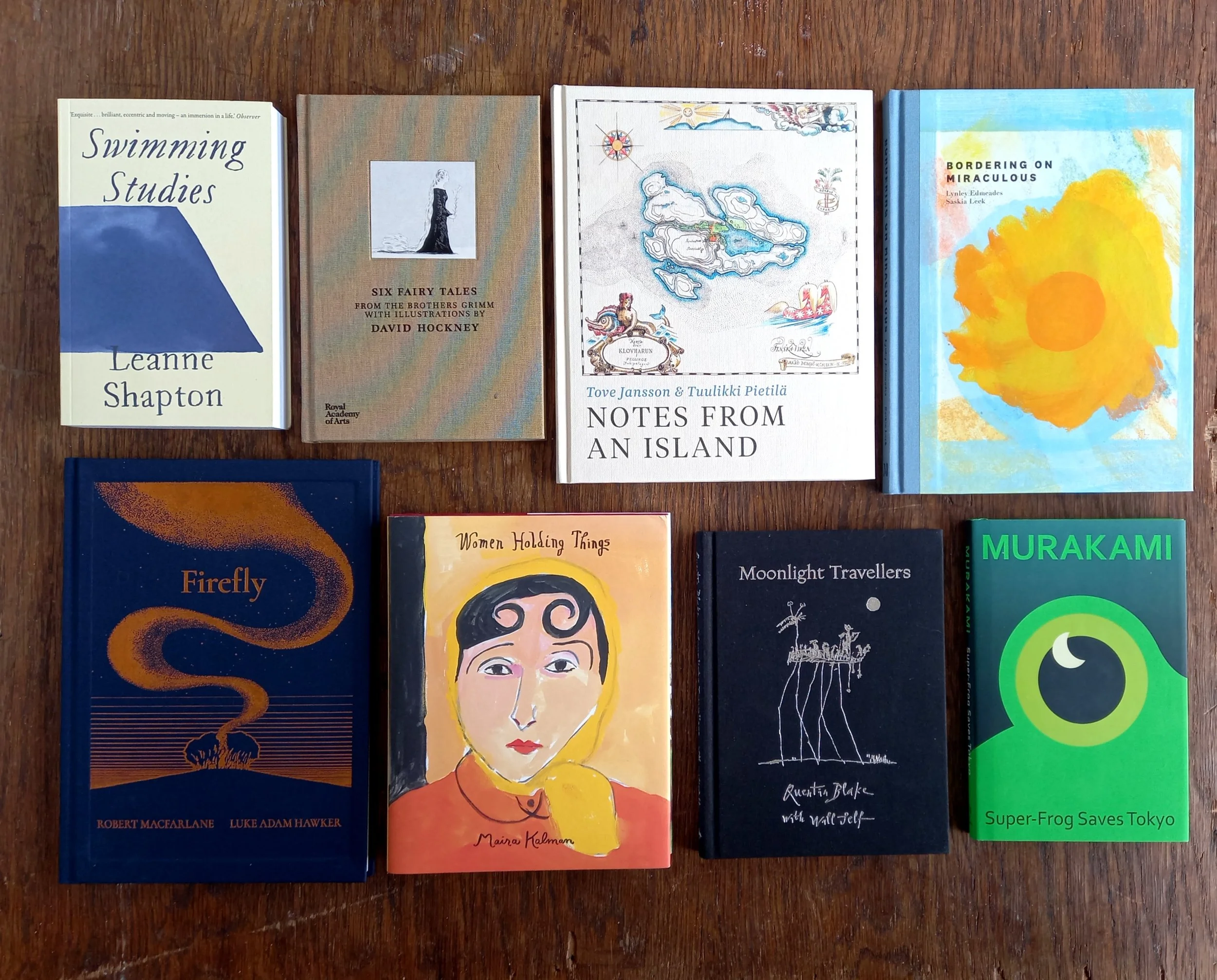
A selection from our shelves of books that match image and text. Click through to find out more:
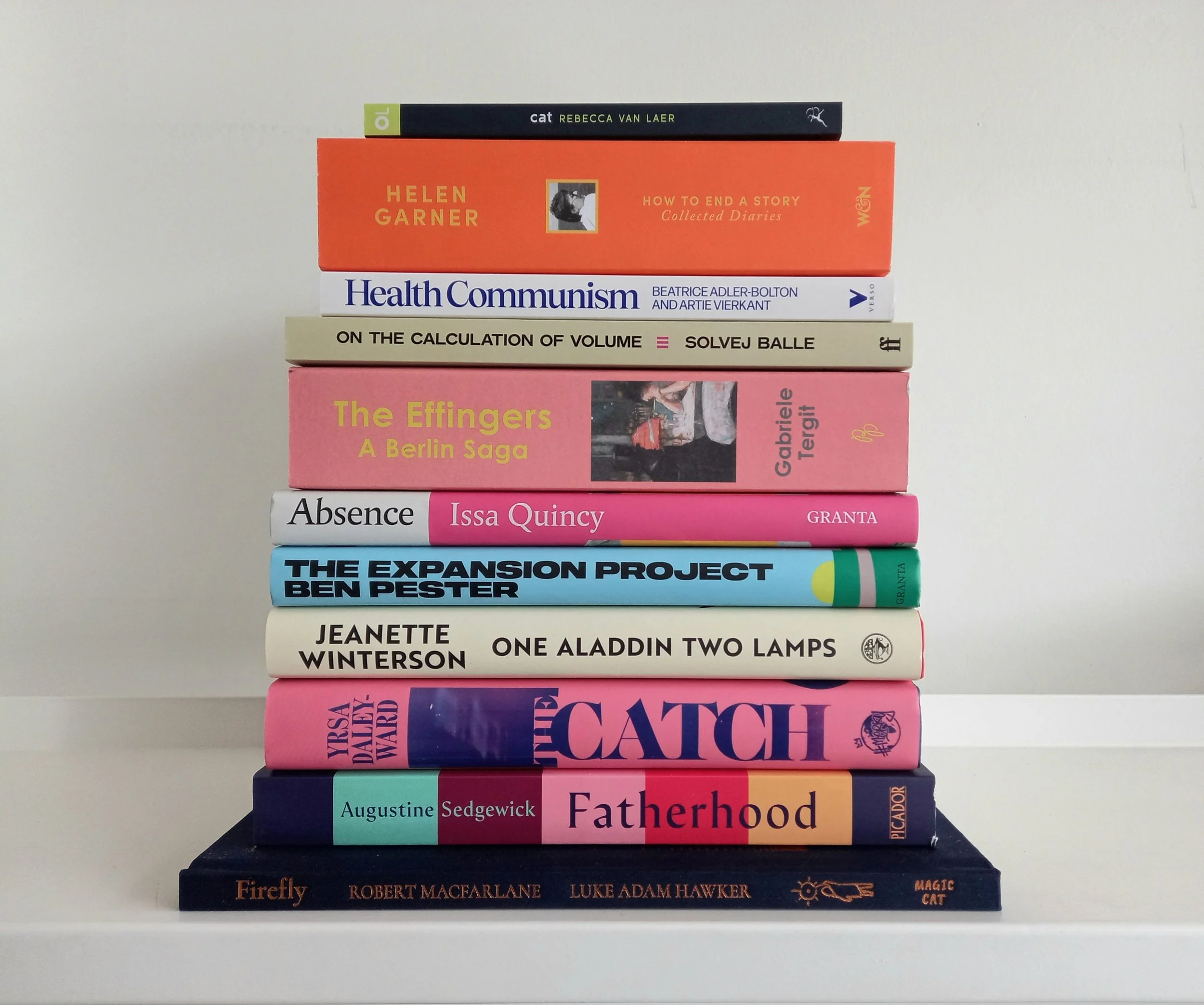
All your choices are good! Click through to our website (or just email us) to secure your copies. We will dispatch your books by overnight courier or have them ready to collect from our door in Church Street, Whakatū.
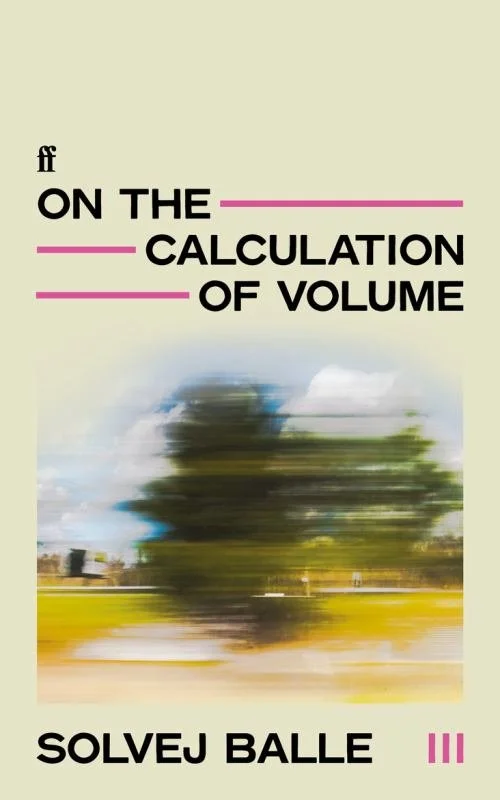
On the Calculation of Volume: III by Solvej Balle (translated from Danish by Jennifer Russell and Sophia Hersi Smith) $30
The third volume of Solvej Balle’s astounding seven-volume novel concerning a person trapped in an endlessly repeating 18th of November has arrived. We and many customers have found reading these books a unique and entrancing experience, opening up new possibilities of reading and of thinking.
Do not read the following description: it has spoilers:
”I have met someone who remembers. Yesterday. That is to say, I met him yesterday. But he remembers yesterday, too. He remembers that we met yesterday.” Tara Selter has lived the eighteenth of November 1,143 times when she notices a break in the pattern: a man has changed his shirt. The man is Henry Dale, and he remembers all the days that have come before. He knows that time has fallen out of joint. Now they are two of a kind — trapped in the eighteenth of November, but no longer alone. Together they learn to share their present; their voices grow hoarse recounting their small battles against it and their bewilderment at the disintegrating world. Henry sees things differently from Tara: he does not think that time will put itself back together and he does not think that the future will come around. But he makes her realise that she is no longer the same person she was before this fault in time. And he makes her believe that there may be others to find within it. [Paperback with French flaps]
”A total explosion; Solvej Balle has blown through to a new dimension of literary exploration.” —Nicole Krauss
"Solvej Balle is a prodigious writer who, miraculously, finds the subtlest, most fascinating differences in repetition. You have never read anything like On the Calculation of Volume. This unforgettable novel is a profound meditation on the lonely, untranslatable ways in which each one of us inhabits time-and the tenuous yet indelible traces we leave in the world. Day after day." —Hernan Diaz
>>It has taken thirty tears to write a novel about one day.
>>Stranded in time.
>>How to make a time-loop endlessly interesting.
>>Get the third volume in the New Directions edition (more stock due soon).
>>Get all the volumes so far (choose either the Faber or the New Directions editions).
>>Read Stella’s review of the first volume.
>>Read Thomas’s review of the first volume.
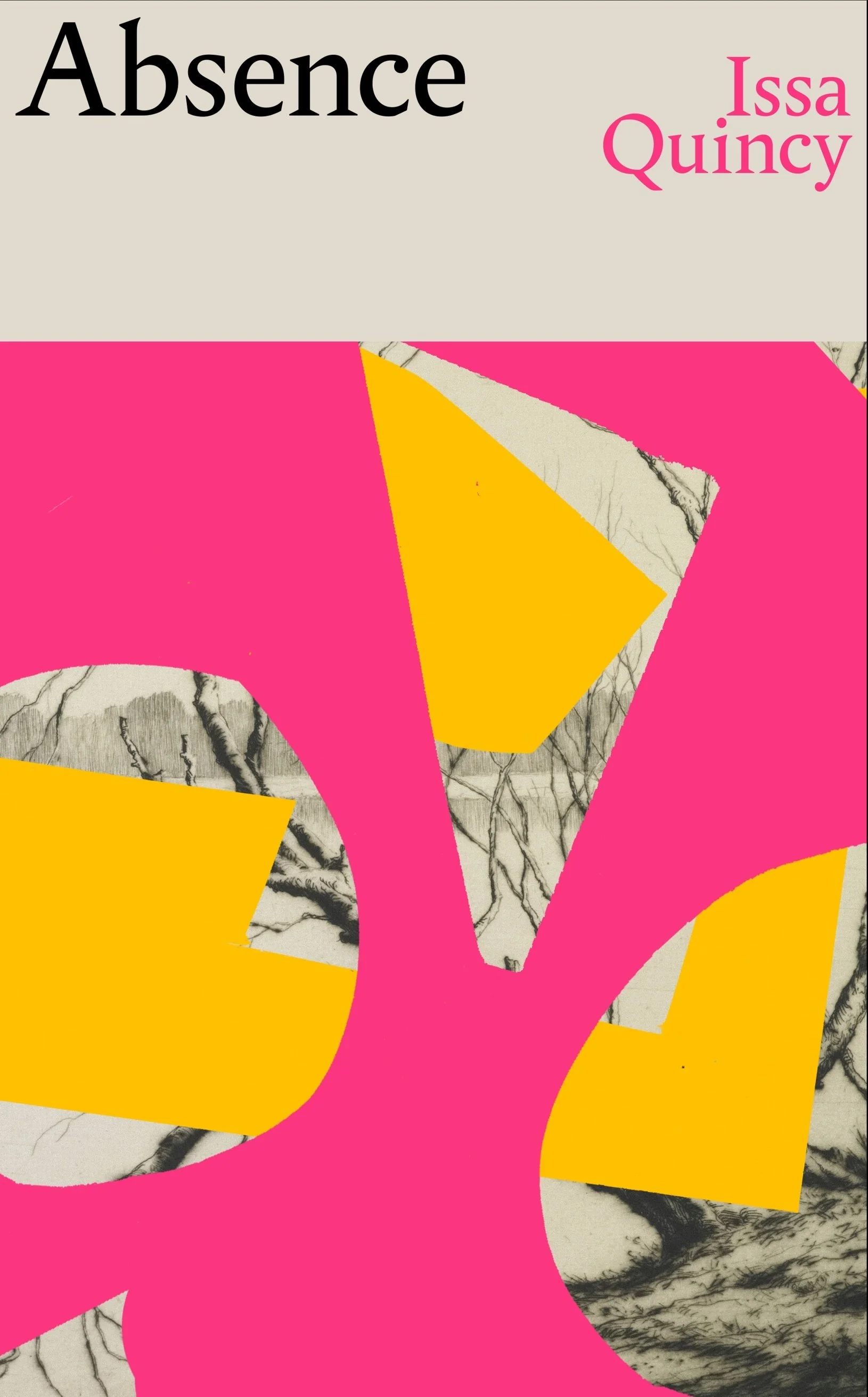
Absence by Issa Quincy $38
A stunning, atmospheric debut novel about memory, death and the many ghosts that inhabit the present moment. A child is beguiled by a poem read to him by his mother. The poem follows this elusive narrator like a whisper throughout his life, echoing across the years in the stories and lives of others as they are recounted to him: an enigmatic and beloved schoolteacher who leaves behind a dark secret after his death; a woman who lays the table for a son she knows will never return home; a young man shunned by his family, who finds solace and freedom in the letters from an estranged aunt; a black-and-white photograph that tells of another family, afflicted with generations of tragedy. With fierce imagination, Issa Quincy has constructed a transcendent portrait of humanity, deftly illuminating a symphony of memories, murmurs and phantoms that add up to an ordinary human life. [Hardback]
"Quincy's prose is deftly lyrical and imaginative. He observes the fragility of memory, and what remains after our encounters, however fleeting, with people, say a schoolteacher or an estranged aunt; you might think of him as a counterpart to the novelists Rachel Cusk and Teju Cole." —Jason Okundaye, The Guardian
"Absence challenges readers in the best way: it demands their attention, but offers in return a moving, artful examination of what it means to exist in a space vacated and left behind by others. Its contemplative, poetic style invites readers to ponder the beauty and pain in everyday absences and objects. Through a poem, letters, a photograph, and especially stories told and retold, the characters in Absence are able to recall and relive bits of the past long lost to time. Not in a way that sinks into sentimentality, but one which points to the future and leaves space for things that are not-yet." —Brock Kingsley, Chicago Review of Books
"In combining rare, enthrallingly poetic prose with a decidedly detective-noir influence, Absence hints that perhaps the meaning of presence itself is an archive's greatest mystery." —Kyla D. Walker, Electric Literature
"A thoughtful, imaginative work of fiction. Absence might be described as a chimeric blend of Sebald's Austerlitz and Bolano's 2666. The book combines the retrospective gaze of the former with the disparate superstructure of the latter. Quincy's debut is an inspired one: there is no denying the sheer inventiveness and detail of his architecture." —D.W. White, Necessary Fiction
>>An embodied archive.
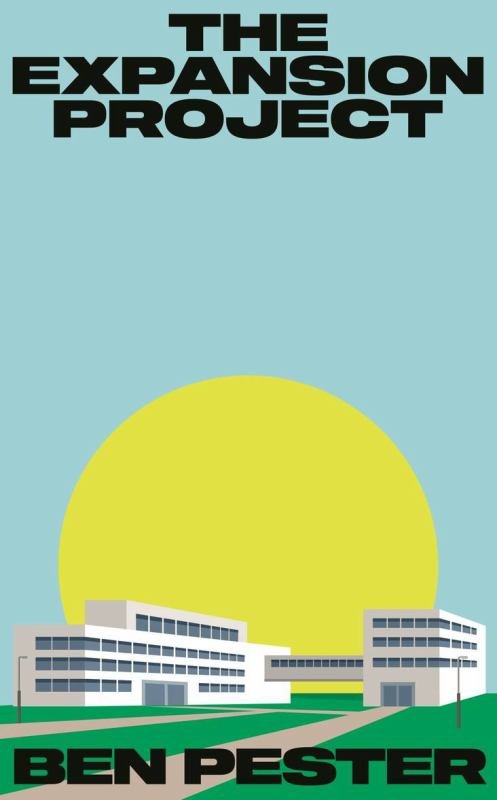
The Expansion Project by Ben Pester $38
Plans for the expansion of the Capmeadow Business Park are in full swing — its mission is to become the greatest business park in the region. Tom Crowley, a mid-level employee, loses his daughter at 'bring your daughter to work day'. He raises the alarm, and his colleagues rush to help him find her. Eventually, after no sign of her is found, it transpires she was never there. And yet, as time goes on, Tom still cannot reconcile that she is really at home. Refusing to accept that she is safe, Tom continues to search for her in the maze of corridors and impossible multi-dimensional spaces that make up his place of work. Because Capmeadow is expanding in unexpected ways, a Liaison Officer becomes the central focus for complaints about how the expansion is impacting the lives of the employees — unexpected buildings, years-long business days, cursed farmers' markets, and corridors of the mind are draining the life from Tom and everyone he works with. Years pass, and Tom remains at the company, convinced he is in the presence of his now adult daughter. But has he judged it correctly? And can anything go back to the way it was?? A dizzying, haunted satire of the late-capitalist workplace. [Hardback]
>>On the business bus.
>>Surreal scrutiny.
The Effingers: A Berlin saga by Gabriele Tergit (translated from German by Sophie Duvernoy) $60
A monumental epic of German-Jewish life in Berlin over four generations, translated into English for the first time. Germany, 1878: young brothers Paul and Karl Effinger leave the German provinces to seek their fortune in Berlin. Ambitious and talented, they soon establish themselves as entrepreneurs and marry the daughters of high-society families. A flourishing horizon opens before them, but the Great War and the youthful rebellion of the 1920s lay waste to bourgeois certainties, and, as the generations pass, a rising antisemitism begins to shadow their bright world. With dazzling historical sweep, Gabriele Tergit tells of the family's changing fortunes within the vibrantly evoked, ever-changing metropolis of Berlin. Full of parties, drama and the most delicious gossip, The Effingers is a vibrant, monumental portrait of Germany's Jewish life, in all its richness and complexity. [Paperback with French flaps]
>>”A wonderfully vivid social portrait of pre-Nazi Berlin.”
The Catch by Yrsa Daley-Ward $45
Twin sisters Clara and Dempsey have always struggled to relate, their familial bond severed after their mother vanished into the Thames. In adulthood, they are content to be all but estranged, until Clara sees a woman who looks exactly like their mother on the streets of London. The catch- this version of Serene, aged not a day, has enjoyed a childless life. Clara, a celebrity author in desperate need of validation, believes Serene is their mother, while Dempsey, isolated and content to remain so, believes she is a con woman. As they clash over this stranger, the sisters hurtle toward an altercation that threatens their very existence, forcing them to finally confront their pasts--together. In her riveting first foray into fiction, Yrsa Daley-Ward conjures a kaleidoscopic multiverse of daughterhood and mother-want, exploring the sacrifices that Black women must make for self-actualization. The result is a marvel of a debut novel that boldly asks, "How can it ever, ever be a crime to choose yourself?" Short-listed for the 2025 Goldsmiths Prize. [Hardback]
”A lyrical, meta, intriguing novel that unfolds and keeps you guessing. Daley-Ward is one of those impressive writers who blends a gripping plot with truly unique prose.” —Roxy Dunn"
”A fantastic, shimmering work. Ysra Daley-Ward's rich exploration of Black womanhood and familial complexities is a must read.” —Irenosen Okojie
”Totally original, entirely compelling and astonishingly well crafted, The Catch solidifies Yrsa Daley-Ward as one of Britain's best and boldest voices.” — Yomi Adegoke
”The Catch is a wonderfully dark, twisty collision of complicated sister-love, grief, and memory. With prose that is lyrical and electric, Yrsa Daley-Ward takes her characters through a journey where absence and longing remake reality in haunting and beautiful ways.” —Essie Chambers
”An inventive novel about family from a risk-taking writer. Daley-Ward explores the tension between the twins beautifully. The novel ends with a genuine shock, but it's earned-it's a surprising conclusion to a beautifully written and structured book. Elegant and unpredictable in the best possible way.” —Kirkus
>>On balancing the public and the private.
>>All correct.
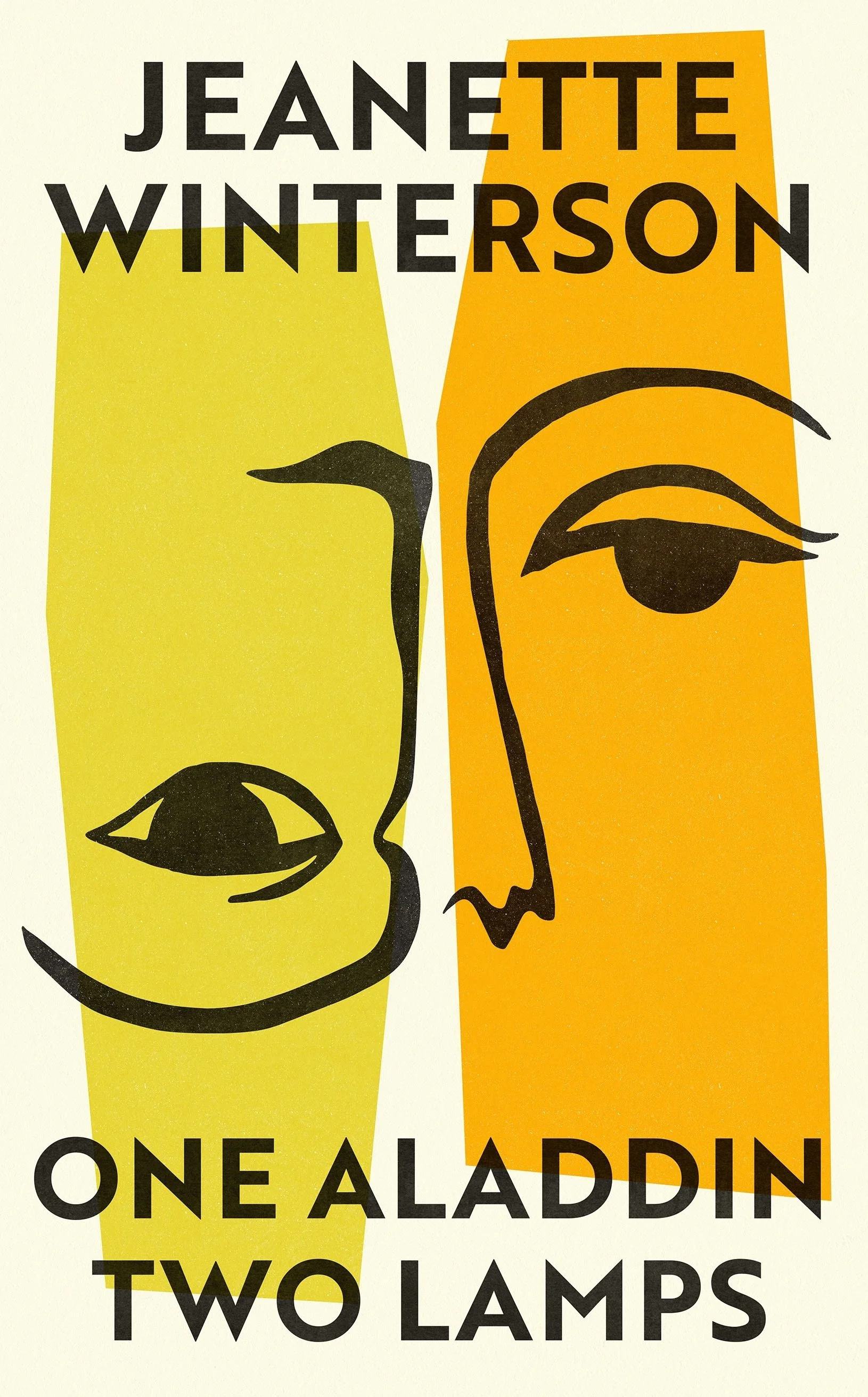
One Aladdin, Two Lamps by Jeanette Winterson $45
With her execution looming, a woman is fighting for her life. Every night she tells a story. Every morning, she lives one more day. One Aladdin, Two Lamps cracks open the legendary story of Shahrazad in One Thousand and One Nights to reveal new questions and answers we are still thinking about today. Who should we trust? Is love the most important thing in the world? Does it matter whether you are honest? What makes us happy? In her guise as Aladdin — the orphan who changes his world — Jeanette Winterson asks us to reread what we think we know and look again at how fiction works in our lives, giving us the courage to change our own narratives and alter endings we wish to subvert. As a young working-class woman, with no obvious future beyond factory work or marriage, Winterson realised through the power of books that she could read herself as fiction as well as a fact. Weaving together fiction, magic and memoir, this remarkable book is a tribute to the age-old tradition of storytelling and a radical step into the future — an invitation to look more closely at our own stories, and to imagine the world anew. [Hardback]
”Enchanting, unexpected and razor-sharp. Jeanette Winterson and Shahrazad are the perfect co-pilots to take us into new worlds on the wings of old stories.” —Kamila Shamsie
>>Winter sun.
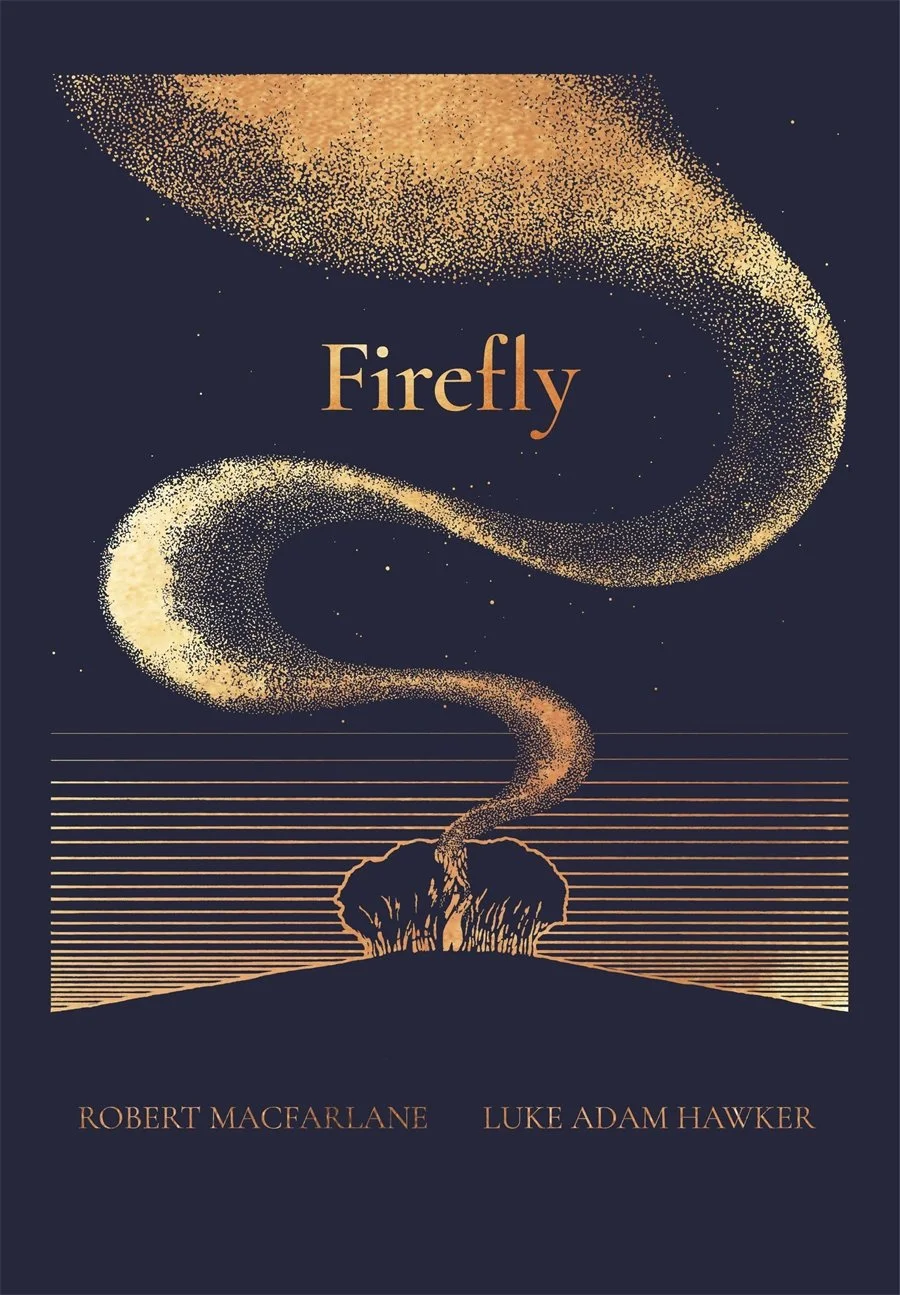
Firefly by Robert Macfarlane and Luke Adam Hawker $35
Written in lyrical verse, this story follows one sun-seeking child who discovers a meadow illuminated by fireflies: "fallen constellations" that dance like stars among the summer grasses, setting fears to flight. Enchanting to read aloud and exquisite to hold in the hand, each scene is illustrated with spellbinding etchings by Luke Adam Hawker, showing the power of hope in a world steeped in darkness. [Hardback]
>>Look inside!
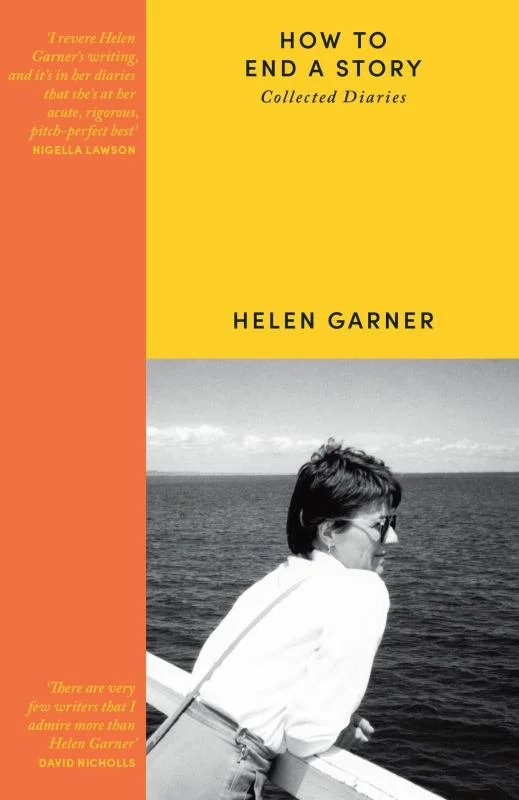
How to End a Story: Collected diaries by Helen Garner $60
Helen Garner has kept a diary for most of her adult life. Her many books display her rare sensitivity to the experiences of others, her indomitability, and her grasp of detail and context. But, of all her books, it is her diaries that she likes best. Collected for the first time into one volume, these inimitable diaries show Garner like never before: as a fledging author in bohemian Melbourne, publishing her lightning-rod debut novel while raising a young daughter in the 1970s; in the throes of an all-consuming love affair in the 1980s; and clinging to a disintegrating marriage in the 1990s. How to End a Story reveals the inner life of a woman in love, a mother, a friend and a formidable writer at work. Told with devastating honesty, steel-sharp wit and an ecstatic attention to the details of everyday life, it offers all the satisfactions of a novel alongside the enthralling intimacy of something written entirely in private. [Paperback with French flaps]
”The greatest, richest journals by a writer since Virginia Woolf's.” —Rachel Cooke, Observer
”Marvellous, all eight hundred pages of it.” —Colm Toibin
”With sharp eyes and ears, Garner is a recording angel at life's secular apocalypses.” —James Wook, The New Yorker
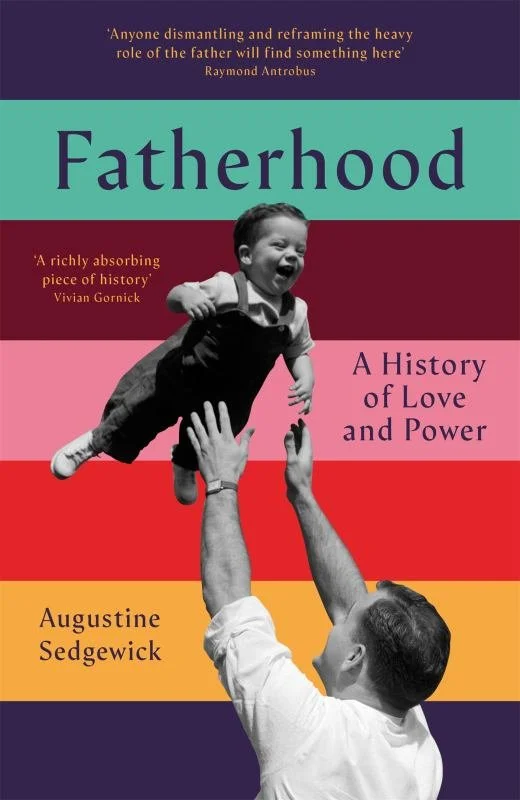
Fatherhood: A history of love and power by Augustine Sedgewick $40
An ambitious history of masculinity and family, from the Bronze Age to the modern day, Fatherhood dares to offer a more caring and affirmative vision of the roles men currently play in society. What is fatherhood, and where did it come from? How has the role of men in families and society changed across thousands of years? What does the history of fatherhood reveal about what it means to be a dad today? Chronicling the intimate stories and struggles of some of history’s most famous fathers, historian Augustine Sedgewick explores the origins and transformation of one of the most potent ideas in human history: fatherhood. From the anxious philosophers of ancient Athens and Henry VIII’s obsessive quest for an heir, to Charles Darwin’s theories of human origins, Bob Dylan’s take down of ‘The Man’, and beyond, Sedgewick shows how successive generations of men have shaped our understanding of what it means to be and have a father, and in turn our ideas of who we are, where we come from and what we are capable of. [Paperback]
”An invigorating, impressively researched and honest read. Anyone doing the work of dismantling and reframing the heavy role of the father will find something here.” —Raymond Antrobus
”A richly absorbing piece of history embedded in a wealth of wonderful storytelling. A pleasure to read.” —Vivian Gornick

Health Communism by Beatrice Adler-Bolton and Artie Vierkant $27
In this fiery, theoretical tour-de-force, Beatrice Adler-Bolton and Artie Vierkant offer an overview of life and death under capitalism and argue for a new global left politics aimed at severing the ties between capital and one of its primary tools: health. Written by co-hosts of the hit ‘The Death Panel’ podcast and longtime disability justice and healthcare activists Adler-Bolton and Vierkant, Health Communism first examines how capital has instrumentalised health, disability, madness, and illness to create a class seen as ‘surplus’, regarded as a fiscal and social burden. Demarcating the healthy from the surplus, the worker from the ‘unfit’ to work, the authors argue, serves not only to undermine solidarity but to mark whole populations for extraction by the industries that have emerged to manage and contain this ‘surplus’ population. Health Communism then looks to the grave threat capital poses to global public health, and at the rare movements around the world that have successfully challenged the extractive economy of health. Ultimately, Adler-Bolton and Vierkant argue, we will not succeed in defeating capitalism until we sever health from capital. To do this will require a radical new politics of solidarity that centers the surplus, built on an understanding that we must not base the value of human life on one's willingness or ability to be productive within the current political economy. Capital, it turns out, only fears health. [Paperback]
”This book changed the way I think about health, power, state capacity, extraction, social welfare, and resistance. It is an immensely useful tool for wrestling with the most urgent questions facing our movements in these terrifying times. Readable and filled with concise histories and clear examples to illustrate nuanced analysis, it will no doubt become required reading among those struggling against the death cult that is racial capitalism.” —Dean Spade, author of Mutual Aid
”Beatrice Adler-Bolton and Artie Vierkant bring us a galvanizing proposition: Unlike the rest of us, capital is not alive; it merely animates itself through our host bodies. This book shares the impressive truth that we are all surplus in the political economy of health, whether we are presently 'healthy' or 'sick.' Adler-Bolton and Vierkant teach that our shared condition of vulnerability is ever ready to transform into our collective strength.” —Jules Gill-Peterson, author of Histories of the Transgender Child
>>Stay alive another week.
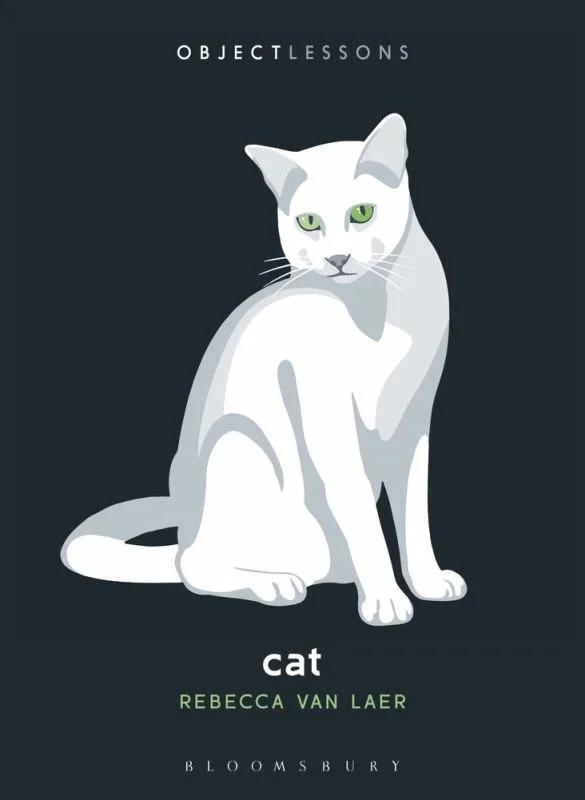
Cat by Rebecca van Laer $23
Rebecca van Laer and her partner purchase a home and move in with their senior cats, Toby and Gus. Their loved ones see this as a step toward an inevitable future first comes the house, then a dog, then a child. But what if they are just cat people? Moving between memoir, philosophy, and pop culture, Cat is a playful and tender meditation on cats and their people. Van Laer considers cats' role in her personal narrative, where they are mascots of laziness and lawlessness, and in cultural narratives, where they appear as feminine, anarchic, and maladapted, especially in comparison to dogs. From the stereotype of the 'crazy cat lady' to the joy of cat memes to the grief of pet loss, van Laer demonstrates that the cat-person relationship is free of the discipline and dependence required by parenting (and dog-parenting), creating a less hierarchical intimacy that offers a different model for love. [Paperback]
“Rebecca van Laer’s feline marvel is at once cozy and mind-expanding. If you’ve never felt a connection with cats before, you will after reading this brilliant book.” —Henry Hoke, author of Open Throat
"In tender, incisive prose, van Laer examines the ways that she has negotiated her relationship to herself, the world around her, and the ever-mysterious wildness she invites in, and reveals the deep and abiding love that is the foundation of what it takes to be in true communion with other life. If you have ever loved anyone, human or animal, let Cat curl up and rest in your heart." —Talia Lakshmi Kolluri, author of What We Fed To The Manticore
“Van Laer’s keen eye captures the ineffable charm of our feline friends and investigates humankind’s relationship to cats with great insight and tenderness. A stirring and deeply profound look at what it means to love and lose, and a must-read for cat people and the cat-curious alike.” —Gina Chung, author of Sea Change and Green Frog
>>Cats are our shadows.
>>Other books in the ‘Object Lessons’ series, revealing the hidden lives of ordinary things.
Read our latest newsletter
Use our Gift Selector
Find out our ‘Books of the Year’
12 December 2025