
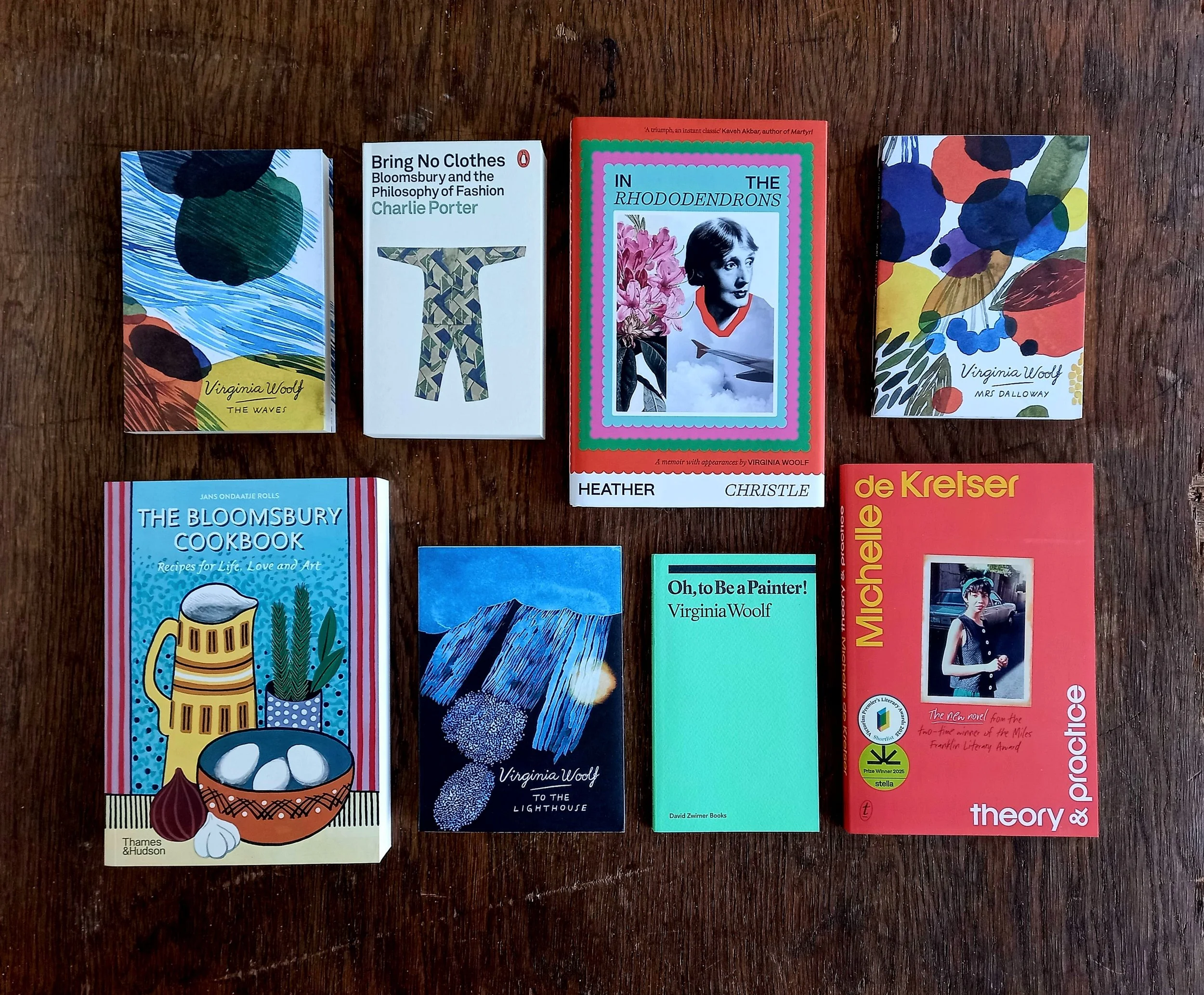
A selection of Woolfiana from our shelves. Click through to find out more:
Read our latest newsletter
20 February 2026
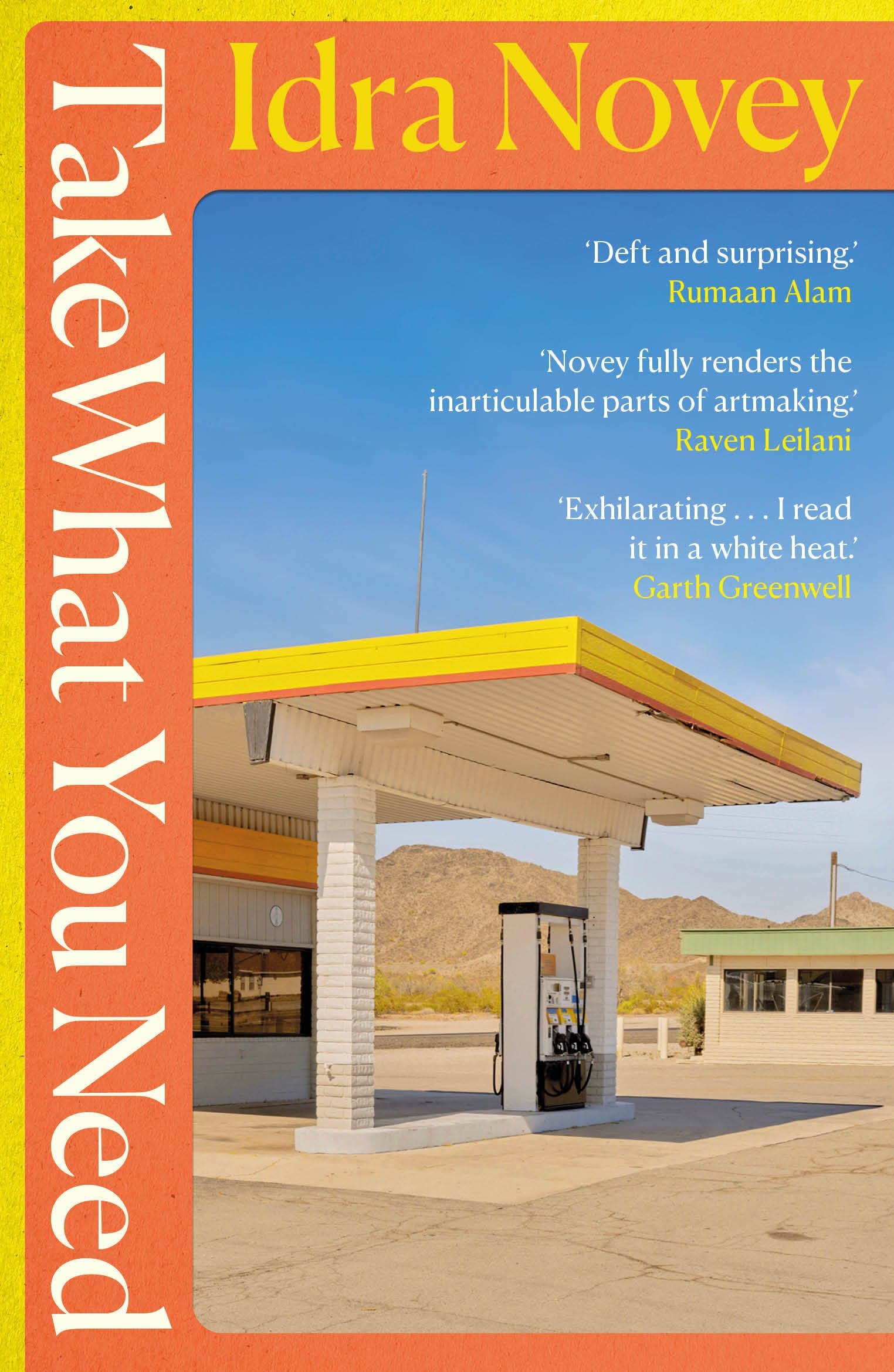
I’ve had this one on my ‘to read’ pile for a while. Attracted by the generic-service-station cover image, and the fact that this is published by Daunt Books, who pick up on some interesting titles not widely available outside their country of origin; a quick read of the blurb convinced me I needed to read this one. Set in the Allegheny Mountains of Appalachia, it’s the story of Jean, her life in a rundown rust belt town (which isn’t going to see better days), her use of industrial materials to make sculptural structures, her almost solitary lifestyle, and her grief at being estranged from her step-daughter, Leah. It’s also Leah’s story — her coming to terms with her feelings for Jean, as well as her anger, through their shared, if broken, history, and Jean’s ‘manglements’. The Manglements are Jean’s massive towers welded from scrap metal plate, decorated with quirky junkyard and market table finds, all holding meaning and often humour, filling the downstairs of her rundown house, pressuring the floor and breathing into that space. Weave into this Jean’s awkward and unexpected relationship with Elliot, deliberately kept ambiguous by the author, but who becomes the vehicle for reconciling Leah with Jean, post-death; and whose character represents the despair and poverty of an abandoned community, Take What You Need explores the impact people have on each other, how an environment, emotionally and physically, shapes a person, and the driven passion for art that can illuminate a life. Here are Louise Bourgeois and Agnes Martin, two fellow reclusive and determined travellers, whispering in Jean’s ear. Here is the singular passion, as well as her cantankerous nature, that allows Jean to create, to follow her own path in spite of doubt, injury and risk, and an embattled, increasingly bitter and xenophobic community. And for Leah, a reckoning — a recognition of love, the importance of our childhoods and how they shape us in spite of ourselves, and a responsibility to step outside her own perspective to see everything that is good in a life’s work.
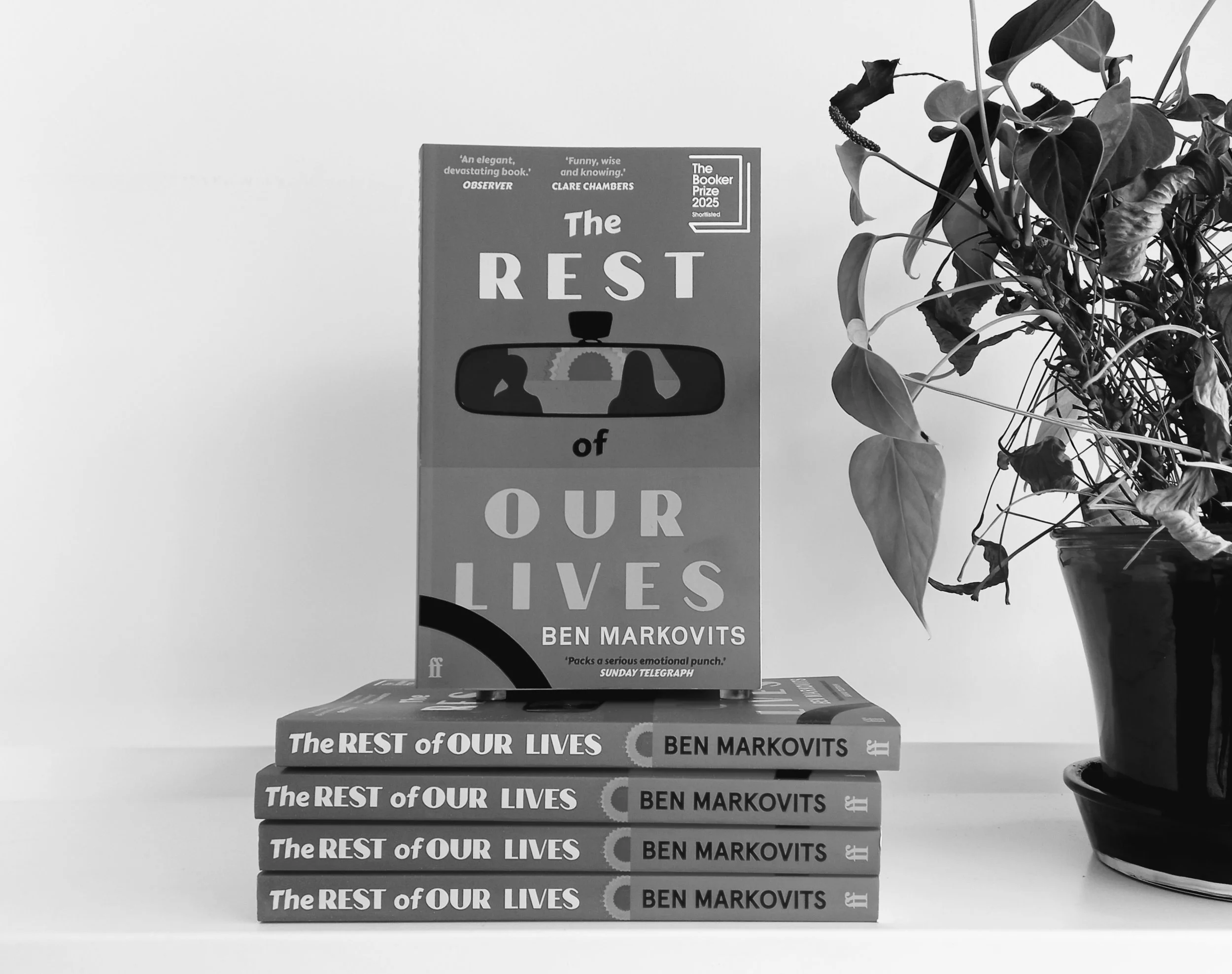
“When Tom Layward’s wife cheated on him, he stayed for the children but promised to leave when his youngest turned eighteen. Twelve years later, Tom drops his daughter off at university, but instead of driving back to New York he heads west. What follows is a remarkably satisfying road trip full of strangers, friends, and self-discovery. This novel is matter of fact, effortlessly warm, and it uses the smallest parts of human behaviour to uphold bigger themes, like mortality, sickness, and love. The Rest of Our Lives is a novel of sincerity and precision. We found it difficult to put it down.” — Judges’ citation on short-listing the book for the 2025 Booker Prize
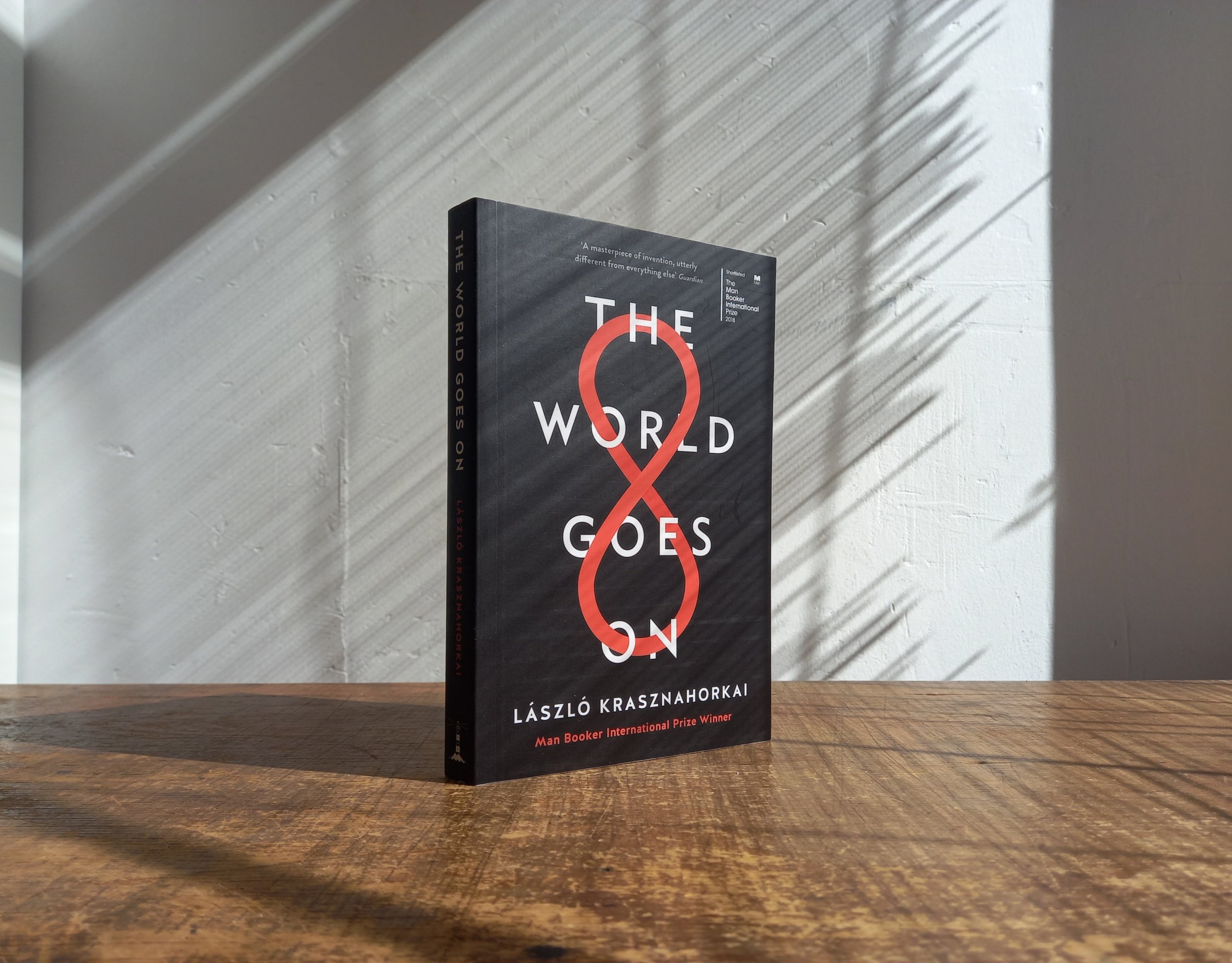
The mistake, or at least one of the mistakes, being made by each of the narrators of the stories that comprise Laszlo Krasznahorkai’s The World Goes On is thinking that the occurrences that constitute what they think of as their lives have anything to do with them, and, although they are themselves insufficient reason for these or any other occurrences, the narrators nevertheless find it impossible to extricate themselves, to absent themselves from the proceedings in which they find themselves caught up. The sentences that constitute their lives, for us at least, and what else have they got, are both a grasping for and, by the fact of this grasping, a separation from the circumstances of which they are aware, or that constitute their awareness, so to call it. The characters achieve neither fulfilment nor dissolution, wavering in their inclinations between the two impossibilities, they strive for the meaning of their situation, so to call it, the meaning each time withheld, or in any case ungrasped, the difference between withholding and nongrasping being irrelevant to the reader, as if meaning was something that could either be grasped or withheld, as if anything could signify anything other than itself. Krasznahorkai’s narrators are paralysed by their own ambivalences, they naturally incline, as we all do, both towards the partial, which can be sensed, which cannot be understood, and also towards the general, towards the totality, towards understanding but away from sense, towards the point at which those things that can be grasped are cancelled out by other things that are not grasped, the quest for understanding leading towards the point at which that which could be understood is extinguished, knowledge only becomes possible at the point at which there is no longer anything to know, the whole being not so much the sum of the parts as their nullification. There is no wisdom to be gained from this world. If you are leaving, there is nothing that you need to take, even if you could take anything, even if you could leave, but there is no such possible departure: “History has not ended, and nothing has ended; we can no longer delude ourselves by thinking that anything has ended with us. We merely continue something, maintaining it somehow; something continues, something survives.” The world goes on. “Nothing ever happens without antecedents, actually everything is just an antecedent, as if everything were just always preparing for something else that came before, as if it were preparing for something, but at the same time, an in an appalling manner, as if preparing without any final cumulative goal, so that everything is just a continually dying spark, everything is always striving towards a future that can never occur, what no longer exists strives towards what does not yet exist … nothing can be said beyond the fact that in addition to antecedents there are also consequences [a better translation might be ‘subsequences’], but not occurring in time.” Krasznahorkai, whose native medium is language, must express the paradoxical relationship between meaning and its impossibility through the failure of language to achieve the ends of language. Attempts to represent in language the incomprehensible events in which his narrators are immersed, and they exist only in language after all, result in the incomprehensibility of these events transferring to language itself. Agency becomes indeterminate, narrative position unstable, identity at once both overdefined and underdefined. Understanding is not gained, because it is impossible, but the usefulness of language for even its most straightforward functions is destabilised and suspicion is thrown upon it as an agent of estrangement and obfuscation that leaves us incapable of distinguishing reality from theatre. The virtuosity at which Krasznahorkai aims is almost unattainable. The closer language can be brought to resemble thought the more the shortcomings, or rather limitations, of both language and thought will be revealed. The thirty-page single sentence of ‘A Drop of Water’ is not so much linear, or even circular, as spherical, a thread of words looped endlessly over the surface of a droplet, always encountering itself and then moving on towards the next such encounter, never breaching the surface, and the fifty-three page sentence of ‘That Gargarin’, to my mind the best story in this collection, gradually reveals the insanity of its narrator, or leads him, and us, into this insanity. In his narratives and the tendencies of thought that they embody, Krasznahorkai frequently reaches into the general and towards the universal, presumably in order to demonstrate the futility of such an approach. Only the failure of the perfect, and therefore impossible, attempt can prove the impossibility of the task, but, in the struggle for better failures, is there a point at which the impossibility of the task begins to outweigh the shortcomings of the attempt, a point at which we begin to sense that our failures are existential rather than individual, a point at which we are released from personal into communal hopelessness?
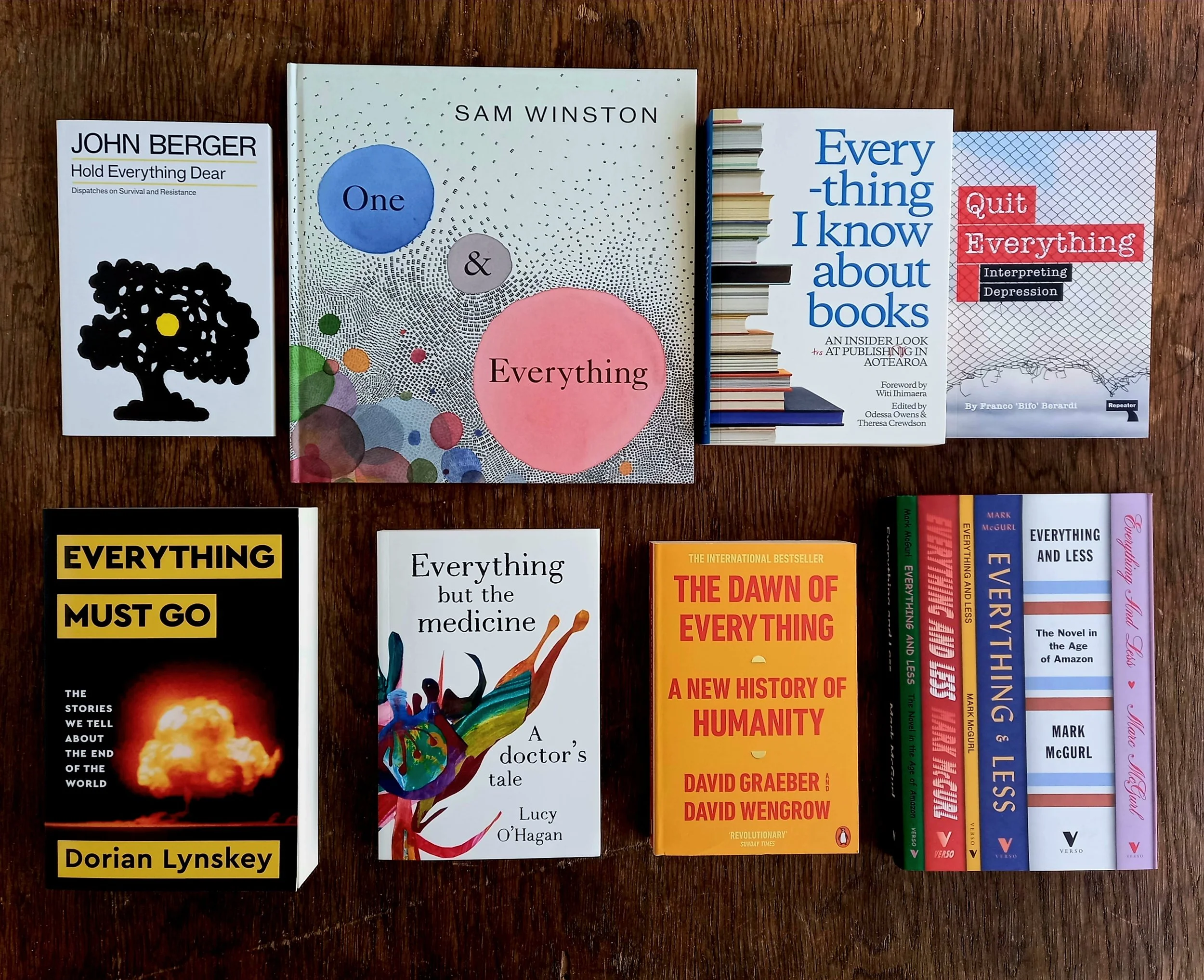
A selection from our shelves of books about everything. Click through to find out more:
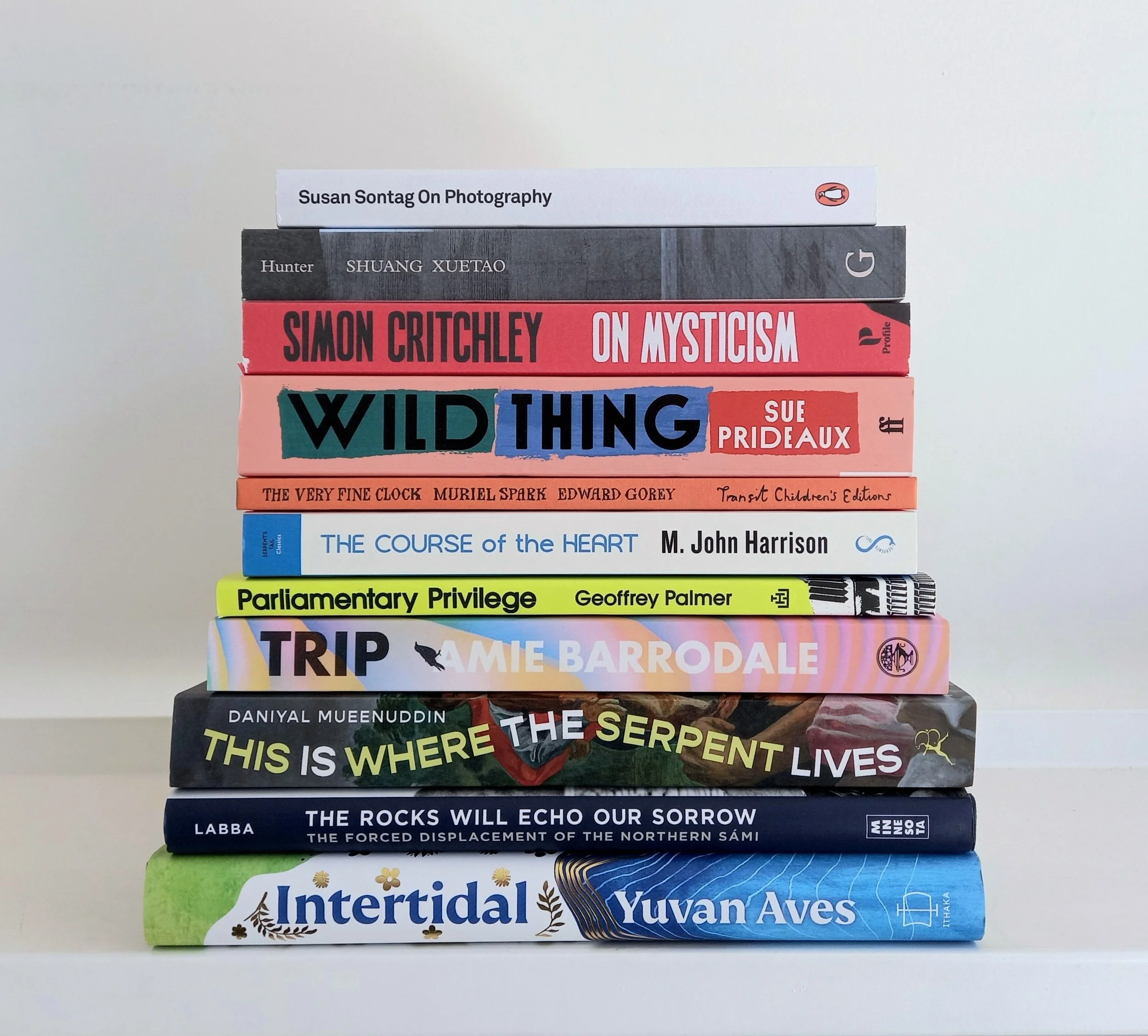
All your choices are good! Click through to our website (or just email us) to secure your copies. We will dispatch your books by overnight courier or have them ready to collect from our door in Church Street, Whakatū.
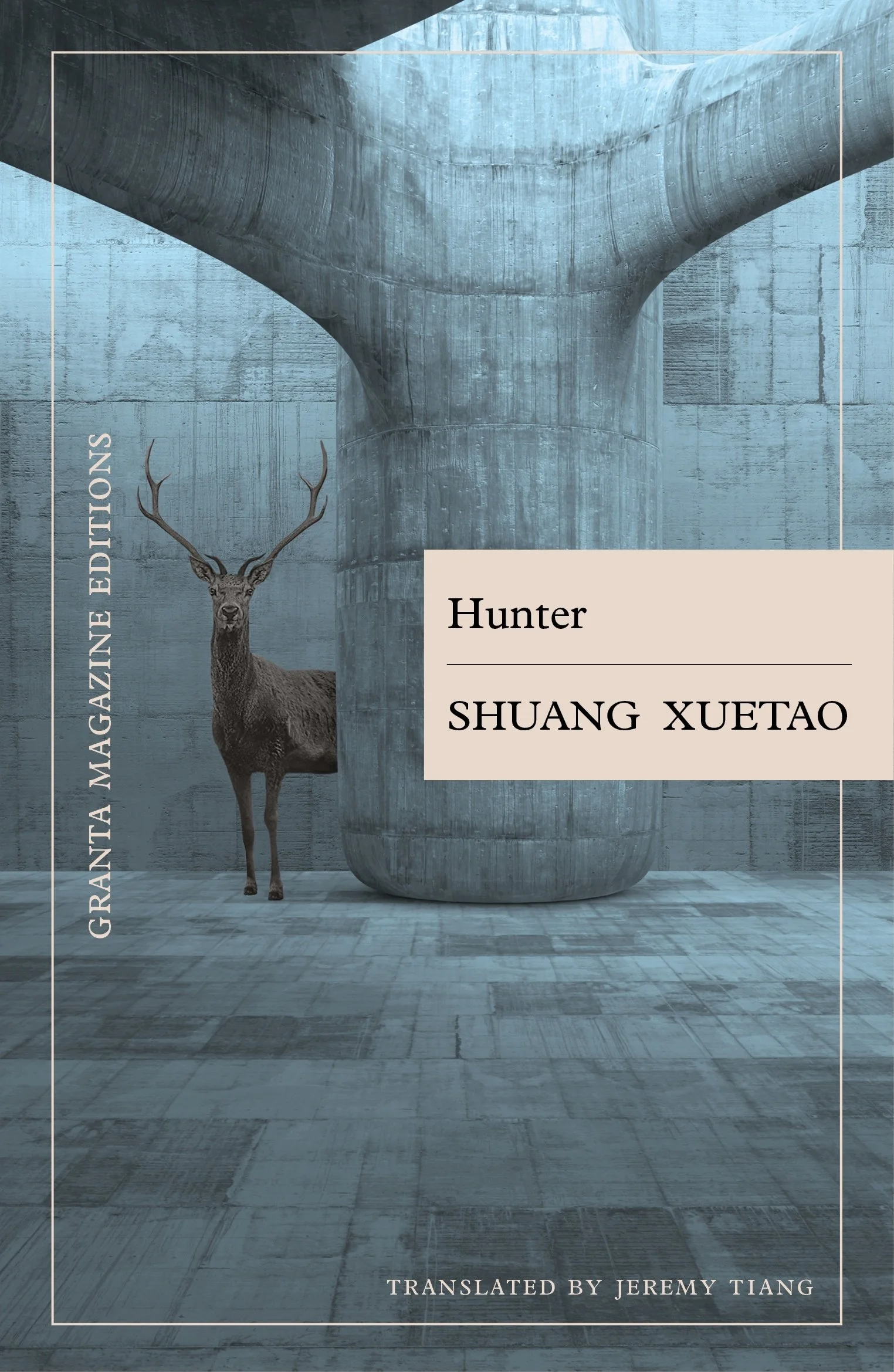
Hunter by Shuang Xuetao (translated from Chinese by Jeremy Tiang) $30
These gritty, surreal stories by one of the most highly-celebrated young Chinese writers reveal new and striking visions of life in China today. A provincial ambulance drives through the night in search of a hospital, a fifth-rate actor goes method as a hitman on a sweltering rooftop, a legendary knife fighter is found working on the factory floor of a northern village. Hunter's stories of deceptive, brutal realism play with myth and history, offering sketches of ordinary life that take a magic realist turn. Filled with dark humour and written with a tinge of noir, these stories grapple with the realities of life in contemporary China. [Paperback with French flaps]
”Hunter is one of the best collections of short stories I have read in years. Shuang Xuetao's stories are enthralling, haunting, vicious and viciously funny. This is work that continually takes the reader to unexpected places, while never putting a foot wrong.” —Colin Barrett
”Hunter by Shuang Xuetao is at once personal and historical. Like an unfolding screen, the depiction of the society and its people in northern China is powerfully real, charged with black humour. Jeremy Tiang's translation has brilliantly rendered the author's sharp wit and unique literary voice.” —Xiaolu Guo
”Brutally funny, intricate, and alive . Shuang's work is at ease with the fantastical, which is perhaps the disguise of the unsayable.” —Madeleine Thien
>>Read an extract.
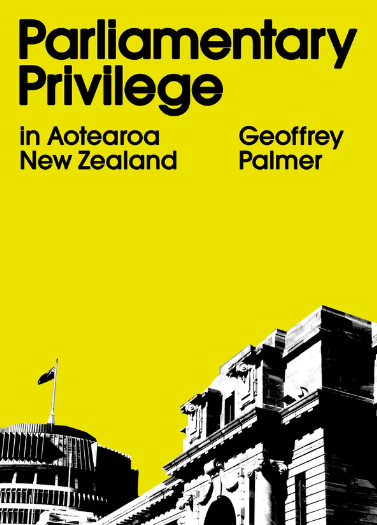
Parliamentary Privilege in Aotearoa New Zealand by Geoffrey Palmer $30
Published ahead of the 2026 NZ General Election, this book by Sir Geoffrey Palmer invites public scrutiny of how Parliament wields its powers. Parliamentary privilege is ‘the oil of the democratic machine’. It can be defined as the special legal powers that allow Parliament to regulate its affairs – and is a curious mix of history, parliamentary practice, law and politics. ‘However, it is also viscous and volatile,’ writes Palmer, ‘and should not be left to sit too long without change.’ This incisive book examines how parliamentary privilege operates in New Zealand, and where change is needed. Palmer traces its evolution and shows how reform has lagged behind that of comparable democracies such as Canada. With his characteristic clarity and frankness, Palmer calls for greater transparency, fairness and consistency in how Parliament exercises its powers. Such changes are essential if we are to protect individual rights and democratic integrity.
”This is a work of both scholarship and advocacy. I commend this book not just to those who are already fascinated by Parliament, but to all those who care about living in a well-functioning democracy. That should be all of us.” —David Caygill
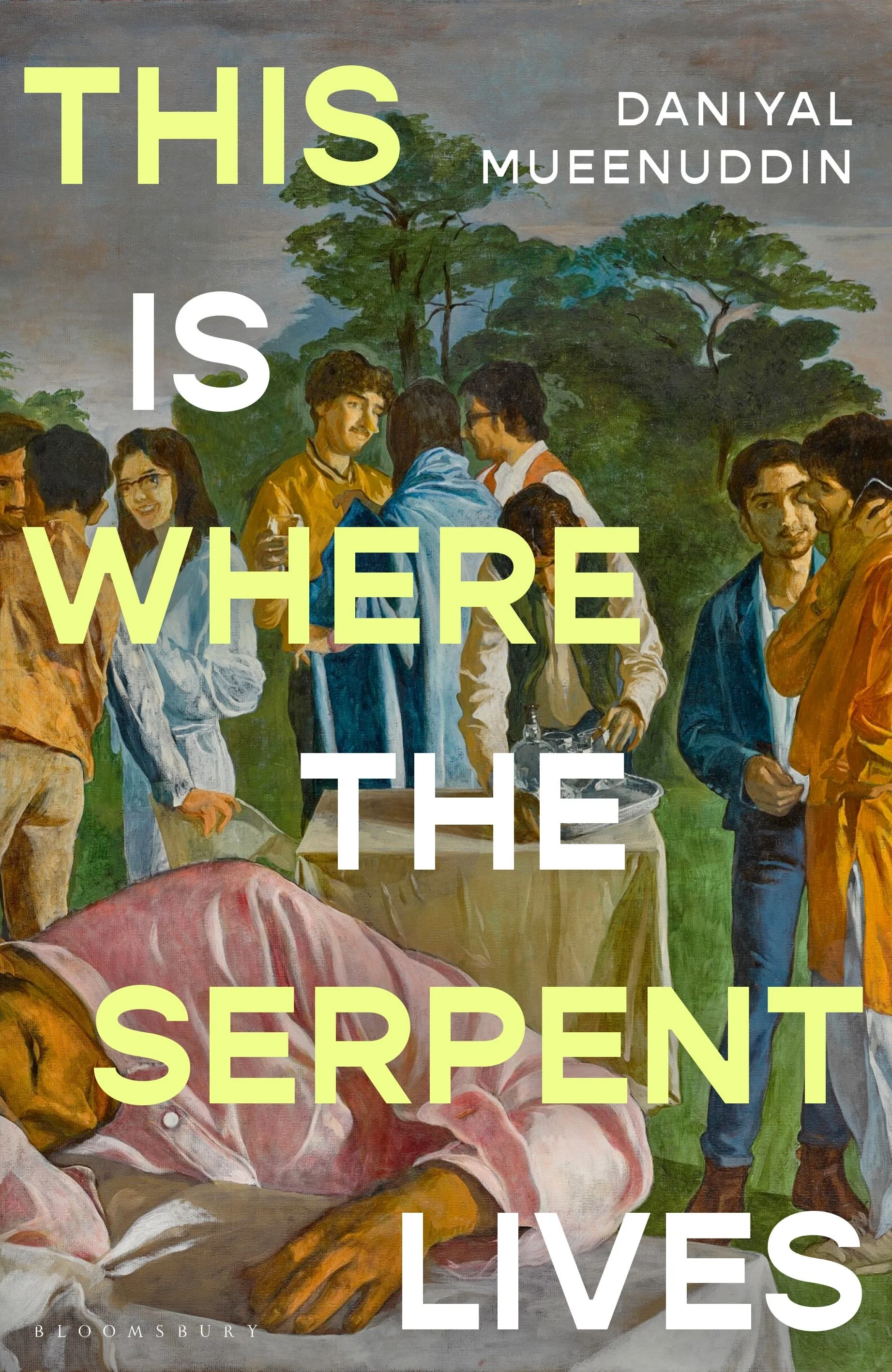
This Is Where The Serpent Lives by Daniyal Mueenuddin $35
Moving from Pakistan's sophisticated cities to its most rural farmlands, This Is Where the Serpent Lives captures the extraordinary proximity of extreme wealth to extreme poverty in a land where fate is determined by class and social station. Daniyal Mueenuddin's This Is Where the Serpent Lives paints a powerful portrait of contemporary feudal Pakistan and a farm on which the destinies of a dozen unforgettable characters are linked through violence and love, resilience, and tragedy. Yazid rises from abject poverty to the role of trusted servant to an affluent gangster; Saqib, an errand boy, is eventually trusted to lead his boss's new farming venture, where he becomes determined to rise above his rank by any means necessary. Saqib's boss, the wealthy landowner Hisham, reminisces about meeting his wife while she was dating his brother while Gazala, a young teacher, falls for Saqib and his bold promises for their future before learning about his plans to skim money from the farm's profits. In matters of both business and the heart, Mueenuddin's characters struggle to choose between the paths that are moral and the paths that will allow them to survive the systems of caste, capital, and social power that so tightly grip their country. [Paperback]
“Set to be a standout novel of 2026 — Brutal, funny and brilliantly told. Mueenuddin's writing is always fluent and often very funny. He brings the smells and tastes of Pakistan to vibrant life; the birds and trees feel as present as the weight of history and the impossible tangles within tangles of corruption and responsibility ... The portrayals are immediate, the storytelling instantly involving.” —Patrick Gale, Guardian
”Expect to see this novel all over prize lists in 2026. Mueenuddin is a literary magician.” —The Times
”Mueenuddin recalls Chekhov, but another writer comes to mind as well: Giuseppe Tomasi di Lampedusa, whose 1958 The Leopard offers a layered totalising portrait of a society that is both changing and failing to change. This Is Where the Serpent Lives has that kind of ambition and captures its world in the same exhilarating and unsparing way.” —Wall Street Journal
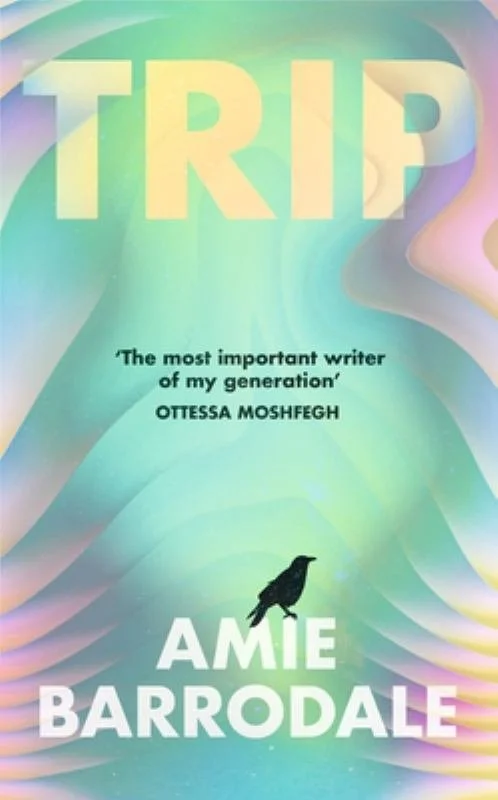
Trip by Amie Barrodale $38
"Three days after I died, my son ran away." Sandra dies unexpectedly at a conference in Nepal. Across the world, her teenage son, Trip, has run away from a centre for troubled youth in the North American desert. But Sandra soon discovers that a mother's work is never done, not even when you're dead. It turns out limbo is a great place from which to keep an eye on your errant son. When Trip is picked up on the side of the road by a strange man, Sandra is the only one who knows where he is. As Trip ventures further south towards the coast and directly into the eye of a hurricane, Sandra's struggle to save him from the other realm begins. From Florida's Gulf Stream to the raging seas, through Munich-bound aeroplanes and from one body to another, Trip takes us on an absurd, profound and irresistibly entertaining odyssey — a story of childhood and motherhood, life and death, and everything in between. [Paperback]
”Raw and funny, yet graceful and astonishingly precise, Trip is a book with the power to resonate in the most intimate ways for any reader. I read it in awe, as if Barrodale had written it just for me. Amie Barrodale is the most important writer of my generation.” —Ottessa Moshfegh
”Beautifully crafted, hard-boiled fun. Trip is a good time.” —Nell Zink
”Amie Barrodale's Trip is an extraordinary novel. It is as if Kurt Vonnegut and Hunter S. Thompson have joined together to write a tender story of a recently dead mom who wanders the bardo but is always drawn back to her imperiled son, an autistic teenager who is on a boat with a stranger, lost at sea…” —Akhil Sharma
>>Craft, critics, and the blurb economy.
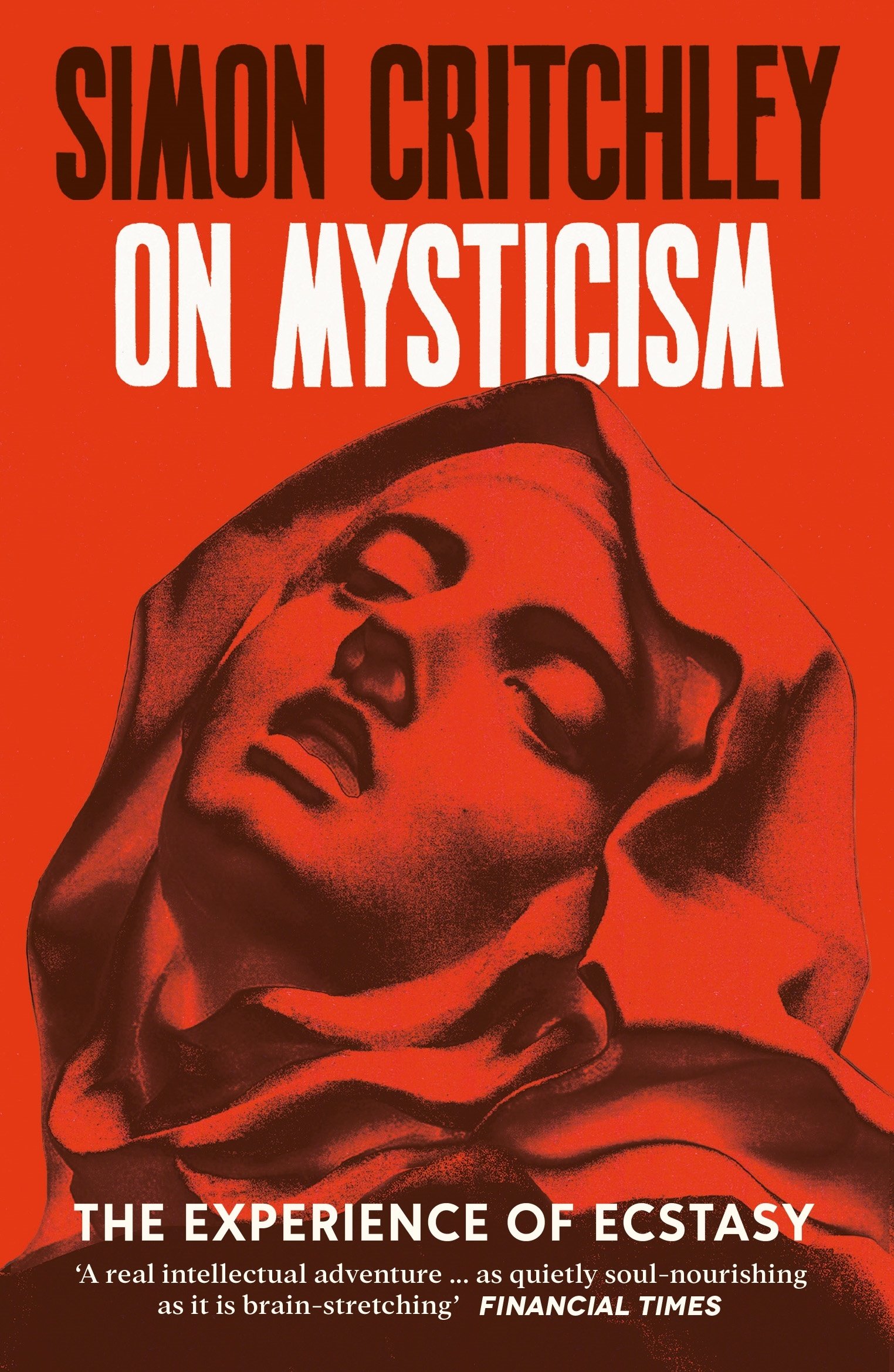
On Mysticism: The experience of ecstasy by Simon Critchley $30
Mysticism has been called 'experience at its most intense form', and here philosopher Simon Critchley asks: wouldn't you like to taste this intensity? Wouldn't you like to be lifted up and out of yourself? Mysticism is not a question of religious belief but of felt experience and practice. It is a way of freeing yourself of your standard habits, fancies and imagining so as to see what is there and stand with what is there ecstatically. It is the achievement of a fluid openness between thought and existence. This is a book about Julian of Norwich and medieval mystics that also ranges through the work of Anne Carson, Annie Dillard and T.S. Eliot. It looks at Nick Cave and German krautrock and considers how music relates to ecstasy. It opens the door to mysticism not as something unworldly and unimaginable, but as a way of life. [Paperback]
>>A few other books by Simon Critchley.
>>Critchley is the ‘Head Philosopher’ of the International Necronautical Society.
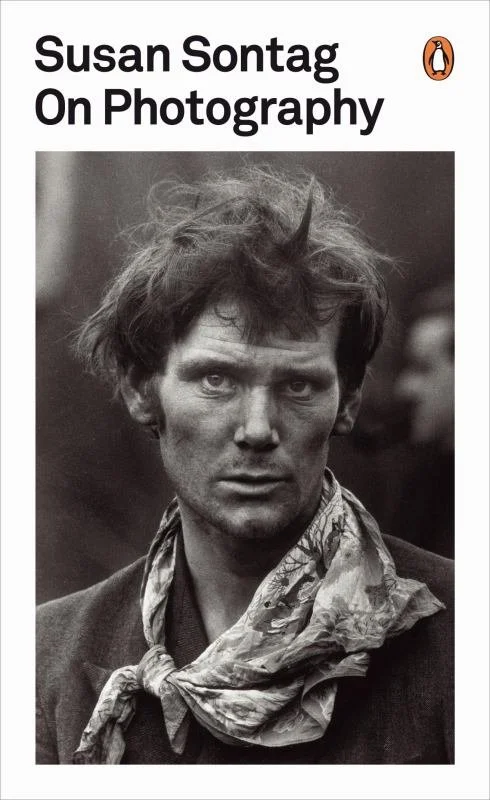
On Photography by Susan Sontag $30
Susan Sontag's groundbreaking critique of photography asks forceful questions about the moral and aesthetic issues surrounding this art form. Photographs are everywhere, and the 'insatiability of the photographing eye' has profoundly altered our relationship with the world. Photographs have the power to shock, idealize or seduce, they create a sense of nostalgia and act as a memorial, and they can be used as evidence against us or to identify us. In these six incisive essays, Sontag examines the ways in which we use these omnipresent images to manufacture a sense of reality and authority in our lives. [Paperback]
”Sontag offers enough food for thought to satisfy the most intellectual of appetites.” —The Times
”A brilliant analysis of the profound changes photographic images have made in our way of looking at the world, and at ourselves.” —Washington Post
”The most original and illuminating study of the subject.” —New Yorker
>>Read also Walter Benjamin.
>>Read also Roland Barthes.
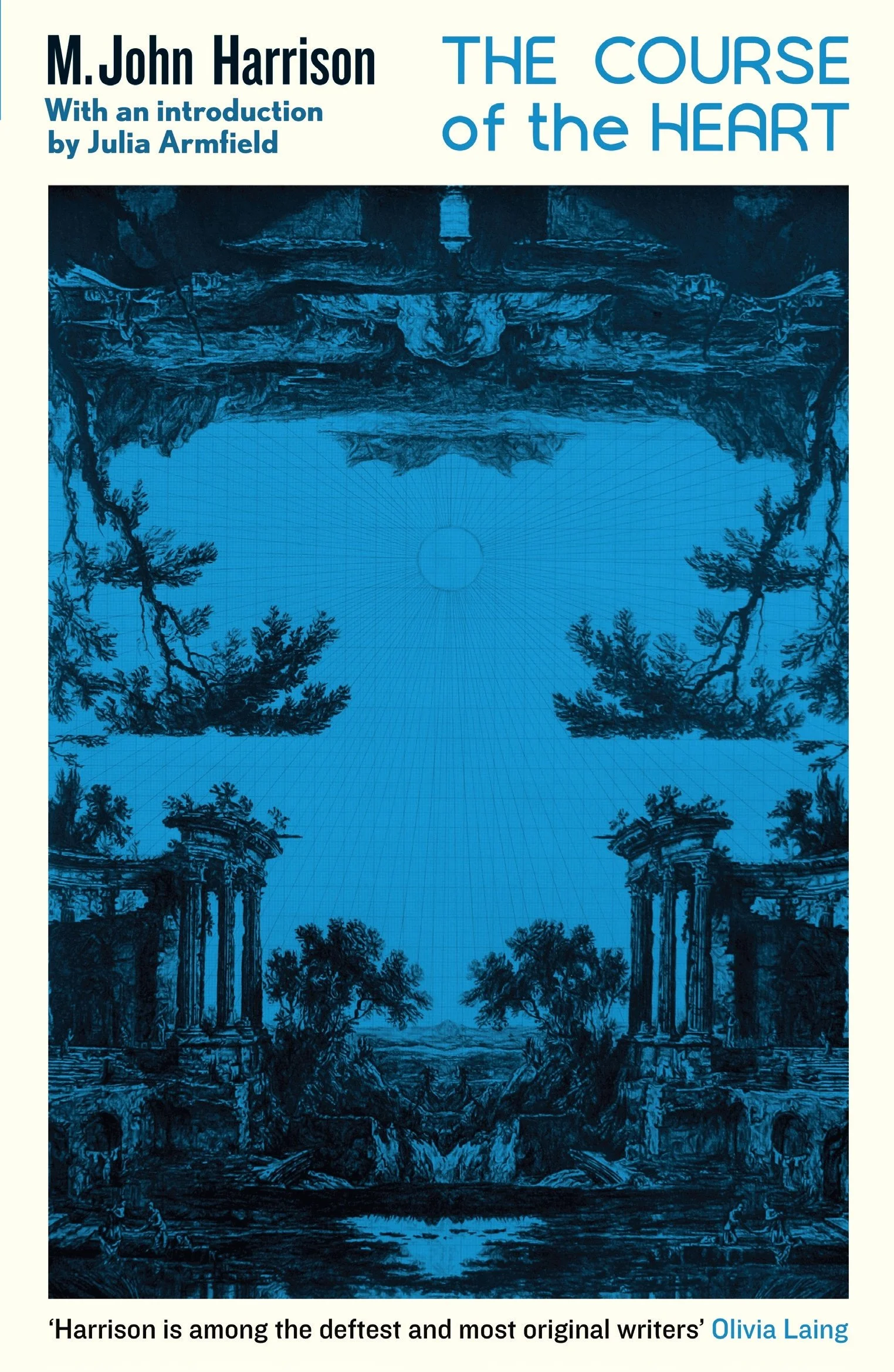
The Course of the Heart by M. John Harrison $28
On a hot May night, three Cambridge students carry out a ritualistic act that changes their lives. Decades later, none of the participants can remember what transpired; but their clouded memories bind them together. Unable to move on, Pam Stuyvesant has epilepsy and is plagued by sensual visions. Her husband Lucas believes that a dwarfish creature is stalking him, and invents histories to soothe Pam's fears. Self-styled Sorcerer Yaxley becomes obsessed with a terrifyingly transcendent reality. The narrator is seemingly the least effected participant in the ritual: he is haunted by the smell of roses, and his guilt as he attempts to help his friends escape the torment that has engulfed their lives. Strange, dreamlike and moving, The Course of the Heart is an examination of the edges of humanity where we lie, hide, hurt and heal. New edition, with an introduction by Julia Armfield. [Paperback]
”A gloriously intelligent, beautifully written and thoroughly maddening book.” —Independent
”A spare textual elegance and closure-denying restraint that impresses and fulfills.” —Iain Banks, Guardian
”One of the best writers currently at work in English.” —Robert Macfarlane
”Is M John Harrison the best writer at work today? He's certainly among the deftest and most original.” —Olivia Laing, Guardian
”A new generation will love discovering this book for themselves: it has the giddy thrill of youth, plenty of terror and metaphysical transcendence, but it's never silly; instead, M John Harrison unpicks the very notion of escapism.” —Observer
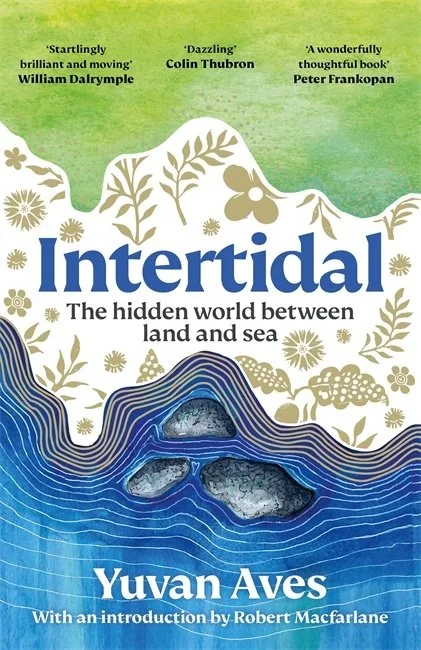
Intertidal: The hidden world between land and sea by Yuvan Aves $50
Over two years and three monsoons, Yuvan Aves pays scrupulous attention to the living world of his coastal city. The result is a diary of deep observation of coast and wetland, climate and self. Set in beaches and marshes, and the wild places of the mind, Intertidal comprises daily accounts of being in a multispecies milieu. In language that is jewel-like and precise, we hear frog calls through the night, spot butterflies miles into the ocean, find blue buttons washed ashore, see the churning of longshore currents and meditate on the composting abilities of worms. We also witness communities stand together to preserve the homes and livelihoods of the human and non-human inhabitants of the coast and the marsh. Intertidal asks us to reimagine values to live by in the here and now, heeding the living world and attending to the climate's calling, moving away from the old political, religious and cultural values that have proved to be ecologically disastrous. Yuvan Aves invites us to see beyond the binaries of sea and coast, mindscape and landscape, human and not human, self and other. Set in beaches, marshes, and the wild places of the mind, Intertidal revels in the healing power of nature and explores what it means to reclaim an ecology that has been colonised. [Hardback]
”Gentle and poetic, subtle, watchful and observant, writing very much in the tradition of Robert Macfarlane and haunted by the ghosts of Barry Lopez and J.A. Baker. This is a startlingly brilliant and moving debut.” —William Dalrymple
”Its intensity of vision' and stylistic flair reminds me of J.A. Baker's The Peregrine, and its democratic, inclusive account of ecology reminds me of Nan Shepherd's The Living Mountain. Intertidal is a wondrous work of walking, seeing and thinking.” —Robert Macfarlane

The Rocks Will Echo Our Sorrow — The Forced Displacement of the Northern Sámi by Elin Anna Labba (translated by Fiona Graham) $45
The deep and personal story — told through history, poetry, and images — of the forced displacement of the Sámi people from their homeland in northern Norway and Sweden and its reverberations today. More than a hundred years have passed since the Sámi were forcibly displaced from their homes in northern Norway and Sweden, a hundred years since Elin Anna Labba's ancestors and relations drove their reindeer over the strait to the mainland for the last time. The place where they lived has remained empty ever since. We carry our homes in our hearts, Labba shares, citing the Sámi poet Áillohas. How do you bear that weight if you were forced to leave? In a remarkable blend of historical reportage, memoir, and lyrical reimagining, Labba travels to the lost homeland of her ancestors to tell of the forced removal of the Sámi in the early twentieth century and to reclaim a place in history, and in today's world, for these Indigenous people of northern Scandinavia. When Norway became a country independent from Sweden in 1905, the two nations came to an agreement that called for the displacement of the Northern Sámi, who spent summers on the Norwegian coast and winters in Sweden. This "dislocation," as the authorities called it, gave rise to a new word in Sámi language, bággojohtin, forced displacement. The first of the sirdolaččat, or "the displaced," left their homes fully believing they would soon return. Through stories, photographs, letters, and joik lyrics, Labba gathers a chorus of Sámi expression that resonates across the years, evoking the nomadic life they were required to abandon and the immense hardship and challenges they endured: children left behind with relatives, reindeer lost when they returned to familiar territory, sorrow and estrangement that linger through generations. Starkly poetic and emotionally heart-wrenching, this dark history is told through the voices of the sirdolaččat, echoing the displacements of other Indigenous people around the world as it depicts the singular experience of the Northern Sámi. [Hardback]
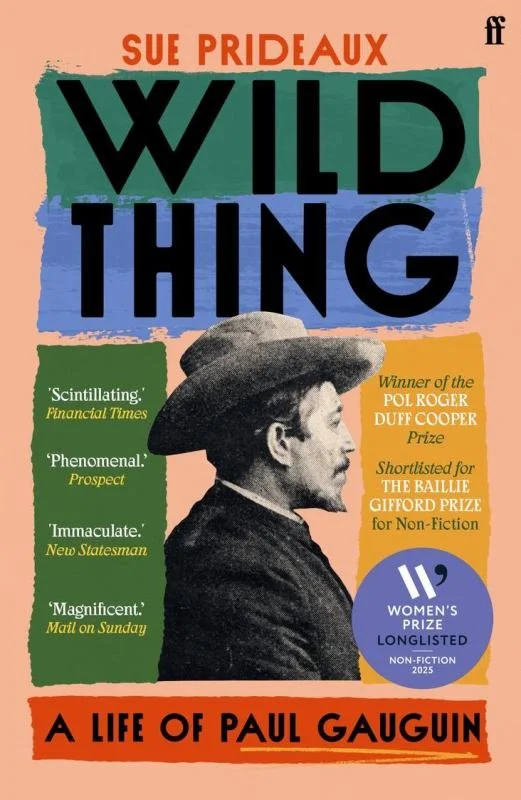
Wild Thing: A life of Paul Gaugin by Sue Prideaux $37
Paul Gauguin is chiefly known as the giant of post-Impressionist painting whose bold colours and compositions rocked the Western art world. It is less well known that he was a stockbroker in Paris and that after the 1882 financial crash he struggled to sustain his artistry, and worked as a tarpaulin salesman in Copenhagen, a canal digger in Panama City, and a journalist exposing the injustices of French colonial rule in Tahiti. In Wild Thing, the award-winning biographer Sue Prideaux re-examines the adventurous and complicated life of the artist. She illuminates the people, places and ideas that shaped his vision: his privileged upbringing in Peru and rebellious youth in France; the galvanising energy of the Paris art scene; meeting Mette, the woman who he would marry; formative encounters with Vincent van Gogh and August Strindberg; and the ceaseless draw of French Polynesia. Prideaux conjures Gauguin's visual exuberance, his creative epiphanies, his fierce words and his flaws with acuity and sensitivity. Drawing from a wealth of new material and access to the artist's family, this myth-busting work invites us to see Gauguin anew. Colour plates. [Now in paperback]
>>Casting new light.
>>A new world.
>>Also available in hardback!
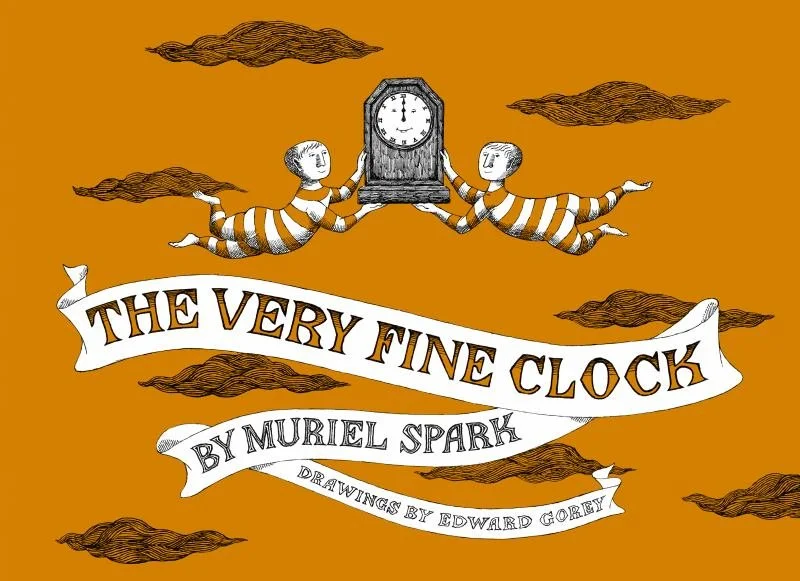
The Very Fine Clock by Muriel Spark, illustrated by Edward Gorey $35
Once there was a very fine clock named Ticky, who lived with Professor Horace John Morris and kept perfect time. Each night, at fourteen minutes past ten, his time was used to set the rest of the clocks in the house. When the professor's friends suggest that Ticky be made a professor, too, he explains what really happens during the quiet hours of the day when the professor is out, when all the rooms have been cleaned and dusted, and the clocks talk to one another and tell the stories of their lives. No artist is better suited to capture Ticky's quiet stateliness and grace than Edward Gorey, who brings this tale masterfully to life through his characteristic pen and ink drawings. Full of wit, wisdom, and affairs of the heart, The Very Fine Clock is a very fine picture book. [Hardback]
>>Look inside!
>>Electric Spark.
>>Born to Be Posthumous.
Read our latest newsletter
12 February 2026
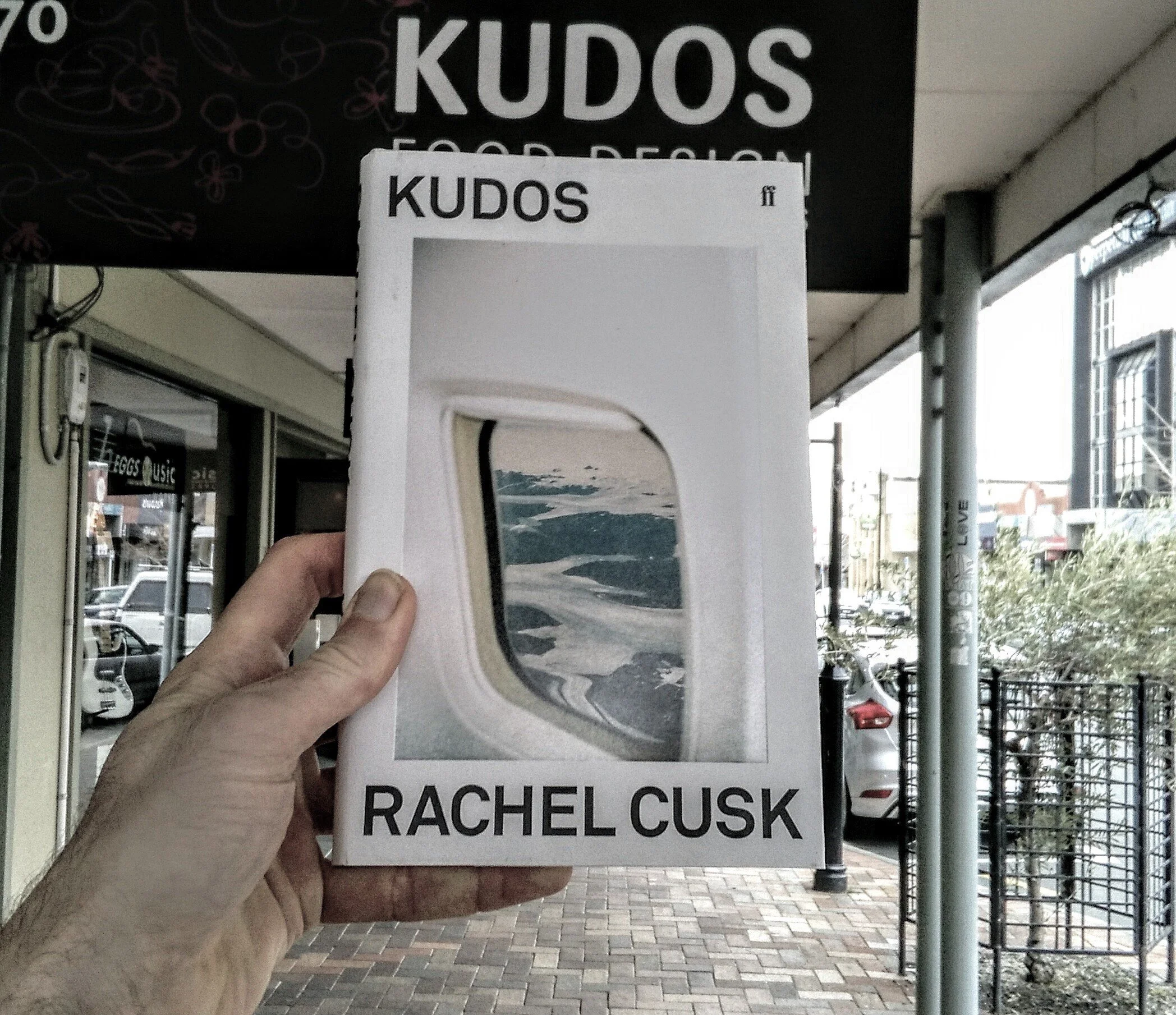
The man next to me on the plane was so tall he couldn’t fit in his seat. His elbows jutted out over the armrests and his knees were jammed against the seat in front, so that the person in it glanced around in irritation every time he moved. The man twisted, trying to get himself into a comfortable, or at least less uncomfortable, position in which he could hold his book at an acceptable distance from his eyes, a distance about which he was either uncommonly fussy or which was dictated by the possibly narrow focal range of his spectacles. “Sorry,” he said. He explained that he needed to write a review of the book by the end of the week, that he was a bookseller with a small bookshop in a provincial town, and that he and his partner, the joint owners of the bookshop, felt obliged to produce a review each every week for inclusion in their digital newsletter. Some weeks were short on reading time, he explained, what with the demands of the bookshop and of what he termed, somewhat vaguely, family life, so he needed to take every opportunity he could to finish reading his current book, in this case Kudos by Rachel Cusk, reading even in circumstances hardly conducive to reading well, such as in cramped seats aboard what he termed fictional aircraft, a context that not only tended to indelibly dominate whatever activity was performed in it, especially the memory of that activity, even more so than the actual performance in what he called the present tense, using a literary term hardly appropriate to what I would term living in real time, memory being, after all, surely, he remarked, the primary mode of a book review, but also left one vulnerable to conversation with whatever stranger one found oneself sitting next to, quite intimately, for an extended period of time, a period of time which neither party to the conversation has the capacity to shorten. I asked him whether he thought that perhaps the random, or at least seemingly random, encounters with members of what might be politely termed the public might not be in some way enriching, and he visibly recoiled at my choice of word, so I repeated it, to gauge its effect, and I immediately understood his reaction. Well, yes, he thought that such encounters might be a way of not so much generating narrative as of generating whatever might take the place of narrative in a work of fiction from which narrative, the possibility of narrative and even the principle of narrative has been expunged. This was very much, he said, what Rachel Cusk had achieved in Kudos, the taking-away from the novel of those principles, or as many of them as possible, that are generally considered to comprise a novel: plot, narrative, characters, development, interiority, but which are really just a set of conventions by which what we think of as novels expend or release their energy, so to call it, without that energy achieving the potentials of fiction, namely to transfer the experience of awareness between two minds, so to call them, in other words, what we think of as the essentials of a novel are the very things that may well reduce the potency of the novel, and, conversely, he thought, if a writer, such as Cusk, managed, as she has with Kudos, to excise from the novel as many as possible of these, what he termed novelistic antics, the novel could become potentised, “austere and astringent,” he called it, cleansing our faculties and getting them to work properly, not just for the reading of fiction but for the living of life, “whatever that might consist of”. When I suggested that perhaps not writing at all would be the apogee of fiction, he laughed briefly, or snorted, and replied that, yes, he was trying that experiment himself, with some success, even though the results suggested that fiction’s ultimate achievement in destroying itself closely resembled the complete absence of fiction. Cusk in the negativity of her fiction was austere, he said, but not as austere as him, who produced, if anything, less than nothing. “I would like the work to be a non-work,” he said, quoting Eva Hesse without attribution. Of course, he went on - and I realised, looking at my watch, partly in an attempt to estimate the proportion of our flight that remained, partly to implant in him some sort of subliminal message, that it would be hard to stop him talking now that I had succeeded in engaging him in conversation - of course it is the wall between the fictional and the actual, between the so-called subjective and the so-called objective aspects of experience, that it should be fiction’s prerogative to assail, to undermine, to cause to crumble, for it is this wall that is responsible for the maintenance of all manner of errors about identity and reality and, ultimately, responsibility, so to call them, errors that are either traps or crutches, he said, traps and crutches being largely indistinguishable from each other unless you know the nature of your affliction, which can only be ascertained by the removal, at least temporarily, of the crutch upon which one has been leaning. I seemed, I thought, to have triggered in him a kind of mania of exposition, which I was beginning to regret, though I had done little more than make what I thought of as small talk with a man whose enthusiasm for literature must surely be an embarrassment to himself. He did not appear to blame me for this, at least, rather, he had become by this stage oblivious to anything but his own train of thought. In many ways, he said, Kudos resembled the work of Thomas Bernhard, a writer for whom he evidently had a great deal of respect, especially in the layering or nesting of narrative within several levels of reportage. In fact, nothing actually happens in the novel until the very last, memorable paragraph, other than the minimum necessary for the interchange of the series of characters - a man who sat beside her on an aeroplane, various writers and interviewers she encounters at a literary festival, a guide, her editor and her translator, her sons who telephone her - whose conversations with her, or, rather narrations to her, the narrator narrates. For instance, at one stage Cusk, one step more invisible even than her invisible narrator, tells us of the narrator telling of a writer named Linda telling of the woman who sat beside Linda on the plane telling Linda of how she came to break her bones. In another passage, during a conversation with an interviewer, the narrator describes to the interviewer what the interviewer had described to the narrator during a previous conversation. The narrator reveals nothing of herself, he explained with a patience that seemed unpredicated on either my understanding of or my interest in what he was explaining, other than that which is revealed by her function as a conduit for the stories, and voices, of others. By reducing herself to so very little, to almost nothing, the narrator is able to enter and own the stories of others, he said, or, rather, Cusk is able to use the narrator as a device to enter and own stories, the layers of narrative, hearsay and reportage rendering the distinction between fiction and actuality entirely extraneous. Also, this authorial or narratorial intrusion frequently breaches the distinctions between the levels of narrative, he said, what he called the narrator’s first person reduced and sharpened to such a pinprick that it enters and appropriates details in quoted speech and reported speech, in second- and third-person narratives of secondary and tertiary narratives in the second person - I must say I couldn’t follow quite what he was telling me, but, I must also say, I wasn’t trying very hard - sometimes ultimately reporting information that the narrator could in fact have no access to through those conversations, information that could not be at less than a step or two's remove. Although I was by this stage hardly encouraging him, the bookseller was unstoppable. “All fiction is inherently a transgression of the sovereignty of persons, although this transgression is by no means limited to fiction but can also be observed in all attempts at the so-called understanding of, or, rather, representation of, actual others.” The trappings of fiction and the conventions of social interaction try their hardest to mask this unconscionable intrusion and appropriation, but this intrusion and appropriation is at the nub of things, fictional and otherwise, he said, and ultimately destabilise any notions we might have of identity, reality and, ultimately, responsibility. I suggested that he might have gone over this ground before, or so it seemed to me, but he continued. “Who owns whose narrative?” he demanded, not, I think, of me. He was quiet a moment, but not longer. “Listen to this,” he said, and proceeded to quote a passage he had marked in the book: “‘I said that while her story suggested that human lives could be governed by the laws of narrative, and all the notions of retribution and justice that narrative lays claim to, it was in fact merely her interpretation of events that created that illusion. … The narrative impulse might spring from the desire to avoid guilt, rather than from the need - as was generally assumed - to connect things together in a meaningful way; that it was a strategy calculated, in other words, to disburden ourselves from responsibility.’ What do you think?” he asked. I hadn’t quite caught it all, he had been reading too fast and we were sitting near the engines, so I hesitated before he went on, seemingly unaware that I had not replied. Cusk’s work was a work of great clarity, which, he said, as well as being very pleasurable to read, was a work of liberating negativity, a reformulation of the purpose and capacities of fiction, no less. The purpose of art is to turn upon and destroy itself, he said, or words to that effect, and at the same time and by this process to change the nature of our relationship with the actual. He turned to another marked passage, in which Cusk’s narrator, Faye, relates to an interviewer what had been said to her by her son during a telephone call, something about “‘passing through the mirror into the state of painful self-awareness where human fictions lose their credibility,’” a process he appeared to ascribe to the fiction, such as Kudos, that he valued most. I told him that I was sorry, but he had actually managed, by his overcomplicated enthusiasm for it, to put me off buying a book I would no doubt otherwise have enjoyed, having enjoyed Cusk’s two previous books, Outline and Transit, and he obliged me by keeping quiet for what remained of the flight.

When your cat looks at you like you’ve done her a disservice by not sharing your Friday night snacks, despite the fact they are not cat treats, you realise that the cat has tipped into personhood. No longer just a cat, but a person leveling a malevolent stare at you and eyeing up your glass of ginger beer. (Lucy doesn’t like ginger beer, but has been known to sneak a sip at a cup of tea.) (1)
In Anna Jackson’s wonderful prose poem her hens feature throughout: their hen-ness evident on the page, and their personhood developing as the relationship between bird and human develops. But this is not an ode to hens, rather there are questions about what we think about when we think about (2) hens or contemplate our relation with domestic pets or our wider connection with nature. Don’t be misled for this is not nature writing, but then again it could be. (3) This is not a domestic poem, but it also is: — Jackson’s home and the familial feature on the page throughout the five seasonal sections. There is an autobiographical thread: Jackson’s thinking, her thoughts, the central cadence.(4). Yet this is not inward gazing, not a personal diary, rather a nod to diarists and keepers of memories. (5). And yet saying this I recall the poems about social anxiety, about uncertainty, about knowing. So I find myself saying it is a diary of sorts after all. Time plays its role. The collection is arranged by its five parts — five seasons — we travel from one summer to another. The ebb and flow not only being about time, but about the way thoughts arise and dissipate; how words work on the page, how poetry comes into being. Jackson’s reading (6) of other poets, essays, novels, non-fiction, philosophy mingle with her thoughts: — knowledge like residue landing in interesting places. Some profound, others extremely funny.(7). Terrier, Worrier: A poem in five parts is a deeply enjoyable and intelligent collection of thought-work and poetic good measure. It is as much about the idea of thoughts, of thinking, as it is about the thoughts themselves. Brilliant!
Notes:
1. Anna Jackson wrote these poems with a cat sitting on her lap.
2. This makes me think about What We Think about When We Think about Football (philosopher Simon Critchley) and What I Talk About When I Talk About Running (Murakami), and then I wonder about this turn of phase, and did it originate with Raymond Carver’s What We Talk About When We Talk About Love?
3. I discovered something about sparrows I did not know (and which will forever change my perception of them — in a good way!)
4. There is music. The whales that sing. The repeating lines “I thought”, “I wondered”, “I dreamed”, “I read” (but mostly “I thought”) tap out a steady and compelling beat.
5. Do read the Notes. They are fascinating.
6. Jan Morris, Olivia Laing, Ludwig Wittgenstein, social media, Carlo Rovelli, Virginia Woolf, Oliver Sacks, and more…
7. Pedal car.
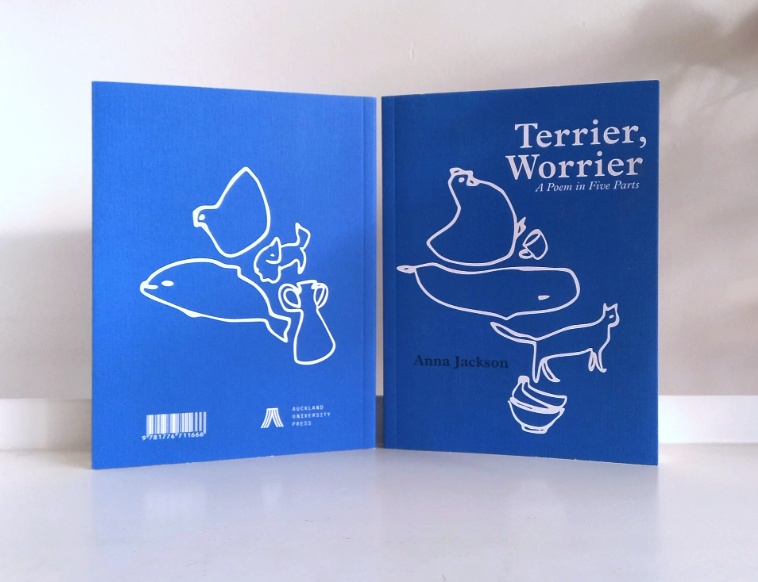
Thought takes place wherever it finds purchase, which, if you think about it, is pretty much everywhere. When we stand in the centre of our personal worlds we stand also in the centre of our thoughts, which stretch to the edges of our awareness and contain others who seem to us also to think. What are the thoughts like of these others? How do the thoughts of animals, for instance, differ from or suggest themselves to be similar to our own thoughts, and what could this difference or similarity tell us not only about what thought could be but also about what makes a person, and who or what else, apart from us, might be persons? Anna Jackson’s very enjoyable and thought-provoking book blends domestic circumstance, scientific factoids, hens, and philosophical conundra into a kind of thought generator, spilling thought, both Jackson’s and the reader’s own, in a way that makes it pleasurably impossible to tell which is which. Terrier, Worrier demonstrates the benefits of including the associative method of poetry alongside the Socratic method and the scientific method as useful modes of seeking knowledge of our world. {T}
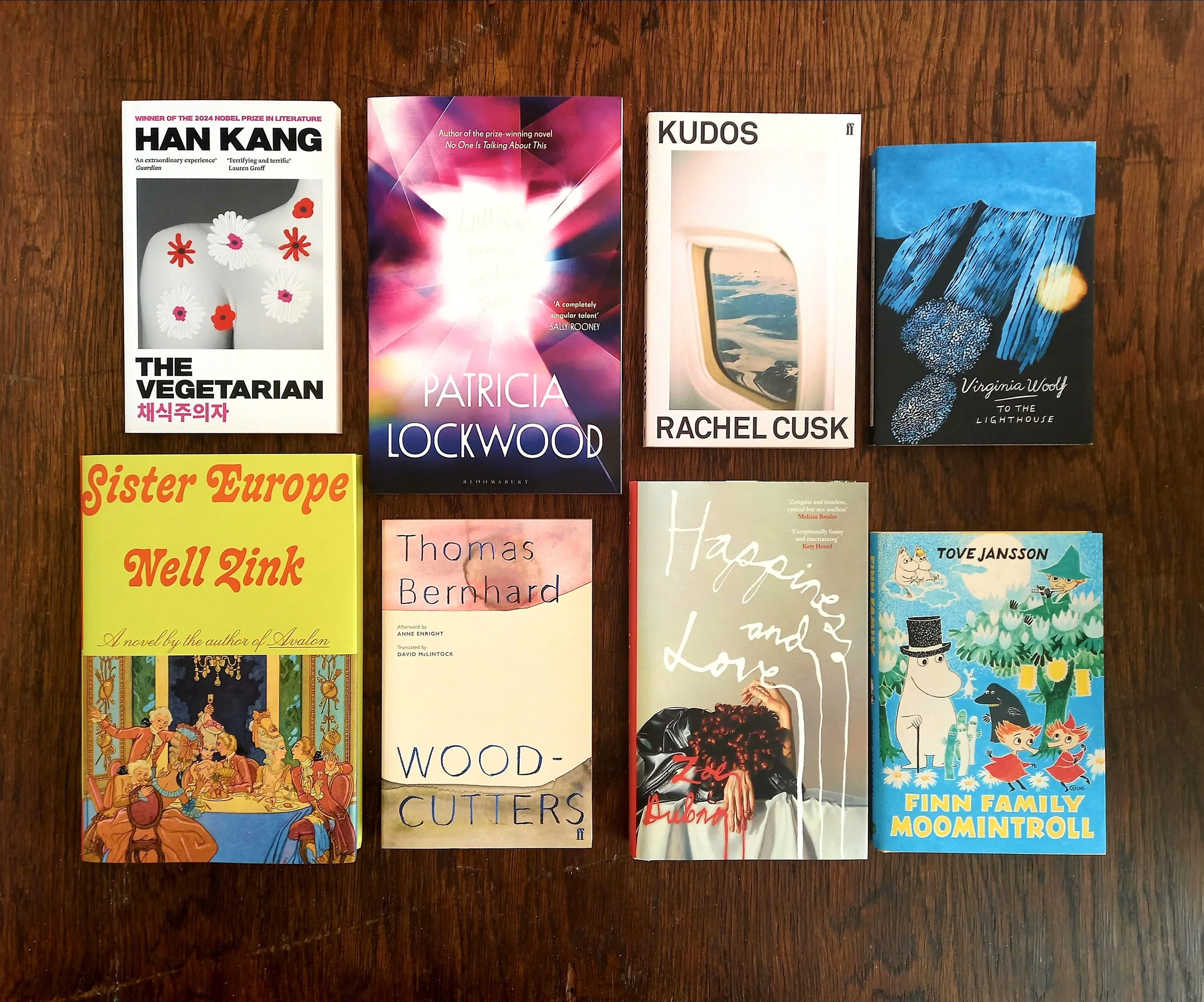
A selection of books from our shelves. Click through to find out more:
All your choices are good! Click through to our website (or just email us) to secure your copies. We will dispatch your books by overnight courier or have them ready to collect from our door in Church Street, Whakatū.
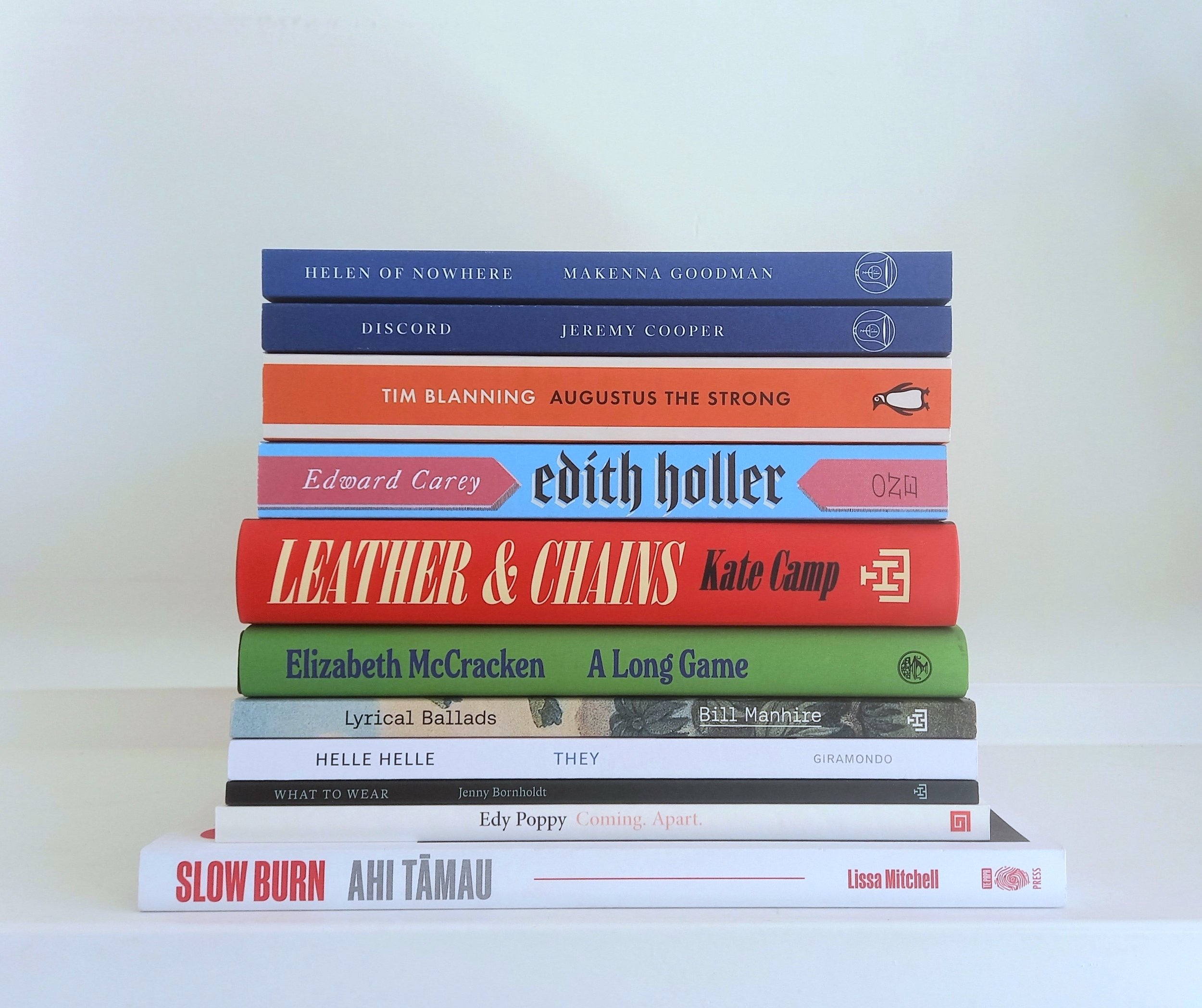
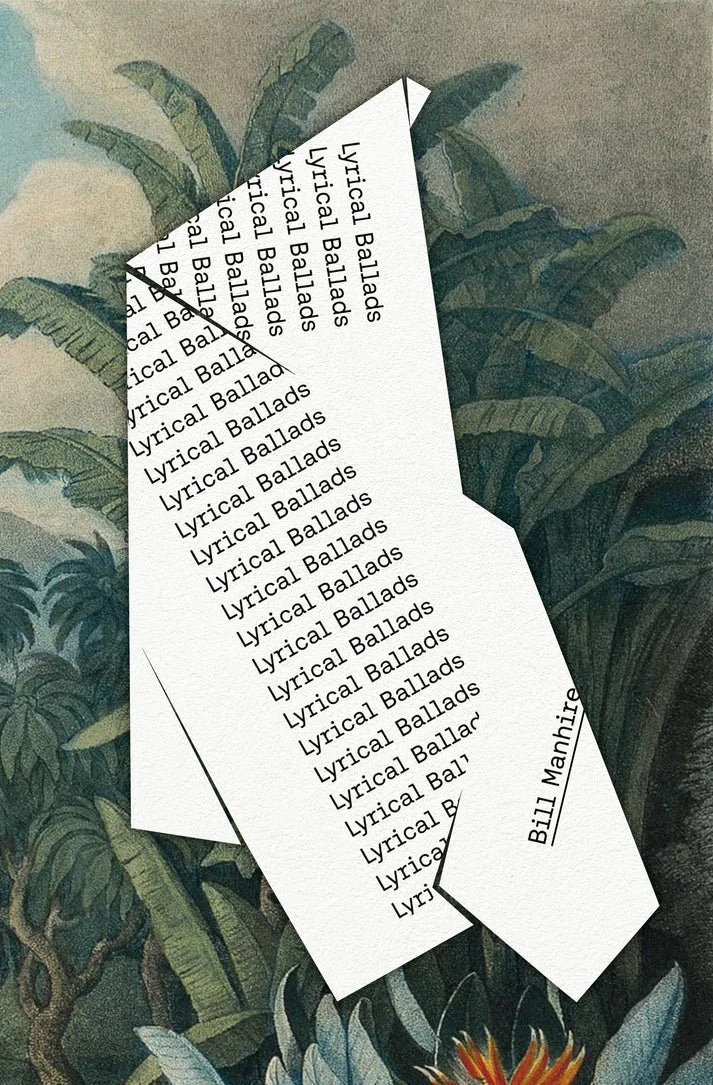
Lyrical Ballads by Bill Manhire $30
Bill Manhire has always subscribed to Paul Valéry’s definition of poetry as ‘a prolonged hesitation between sound and sense’. In that spirit, many of the poems in this long-awaited new collection blend story and song, and do so using everyday words and phrases that — suddenly, on the page — become new and delightfully weird. Lyrical Ballads is a many-peopled collection: the baffled inhabitants of Every Street and Intermediate Street are here, while Dracula, T.S. Eliot and Bobby Outram from Outram have walk-on parts. The collection is anchored by two long sequences that embrace awkwardness, mystery and absurdity: ‘The Tobacco Tin’, a kind of folk story riding along on its own lacunae, and ‘Tell You What’, a set of curmudgeonly opinions that evoke the prejudices of a fast-vanishing world. As they notice the small collisions between wonder and everyday reality, and the trajectories of those who don’t fit easily in this world, these poems close in on the darker certainties of our lives. [Paperback]
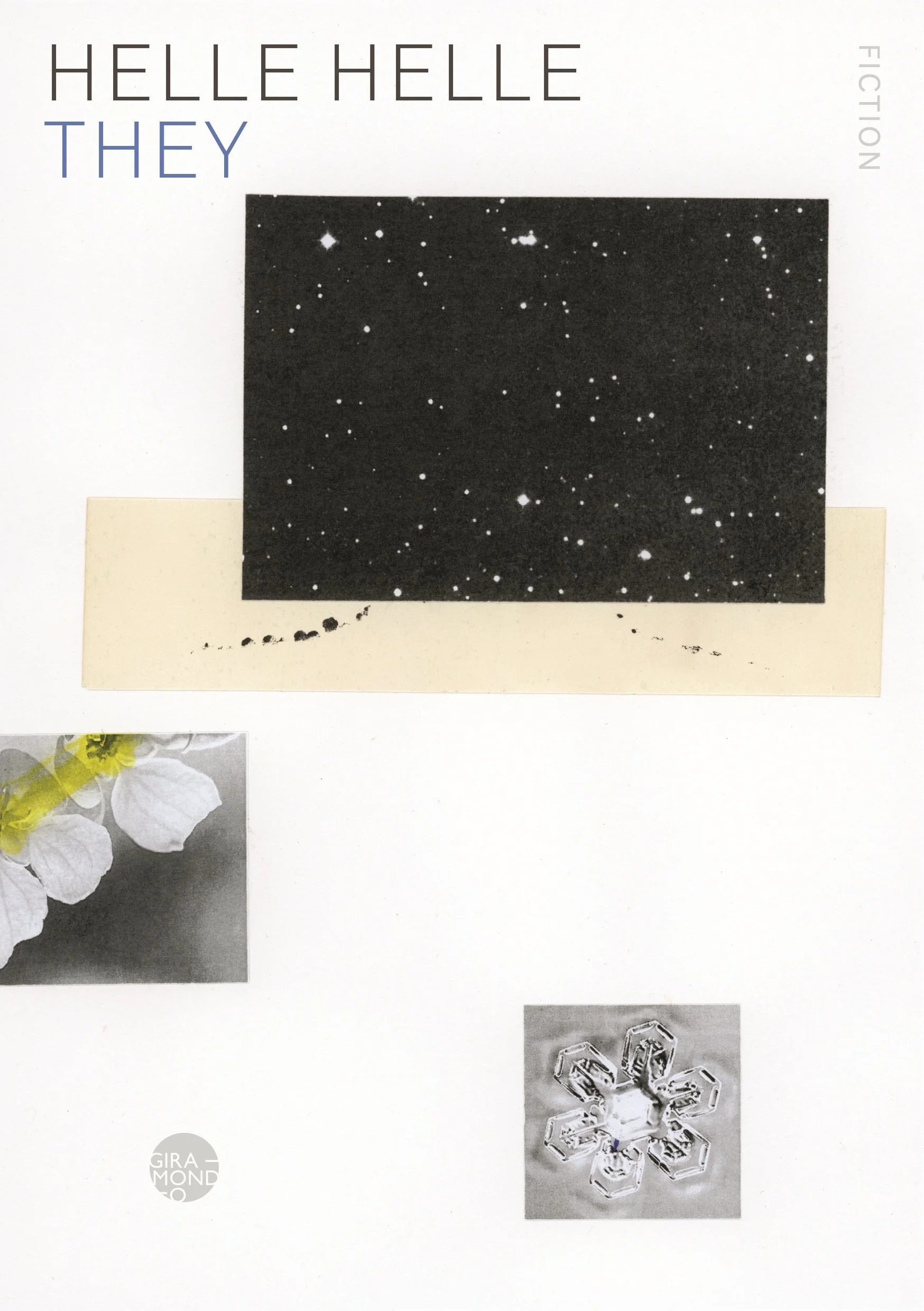
they by Helle Helle (translated from Danish by Martin Aitken) $35
A mother and her sixteen-year-old daughter live in an apartment above a hairdresser's shop in a small island town. Each day is marked by routine and quiet intimacy. They are so enmeshed, so alike in their manners and opinions, it can be hard to tell them apart. Then the mother begins to feel unwell. They carry on with their lives, talk about anything but the diagnosis. The mother goes in and out of hospital, and the daughter, just starting high school, makes new friends but remains essentially alone. Illness, and the possibility of loss, cast a growing shadow over her life. Writing in a multi-layered, perpetual present tense, Helle Helle finds a tender voice for the comedy and awkwardness of her characters' lives, rendered into riveting and affecting English by acclaimed translator Martin Aitken. they is an exquisite portrait of the fragile love between a mother and daughter, and a love letter to 1980s life on the island of Lolland, where the author grew up.
”One of my favorite Danish writers — she's the master.” —Olga Ravn
”Helle Helle's minimalism isn't boring; it crackles with mystery. It's the everyday, and yet it's insistently beautiful.” —Weekendavisen
”Helle Helle's they sharply renders the startling and singular specifics of a life: hairspray, glass trolls, radiators, crocheted curtains, shrimps, baguettes, liver pâté, harem pants, peacoats, denim skirts, the selling of milk, eggs and soap, fried eggs, pineapple, peaches and cheese, garlic, condensed milk, jam, terry-cloth, lemonade, female guitarists, cans of tomato soup, Band-Aids, rustic whole grain bread, cold spaghetti. All this within the binary star gravitational pull of a mother-daughter relationship peering into the void of the mother's sudden, almost certainly terminal, illness. It's a book about class, memory, and the texture of time itself. I'm now a Helle Helle completist.” —Rita Bullwinkel
>>Beautiful minimalism.
>>On reading.
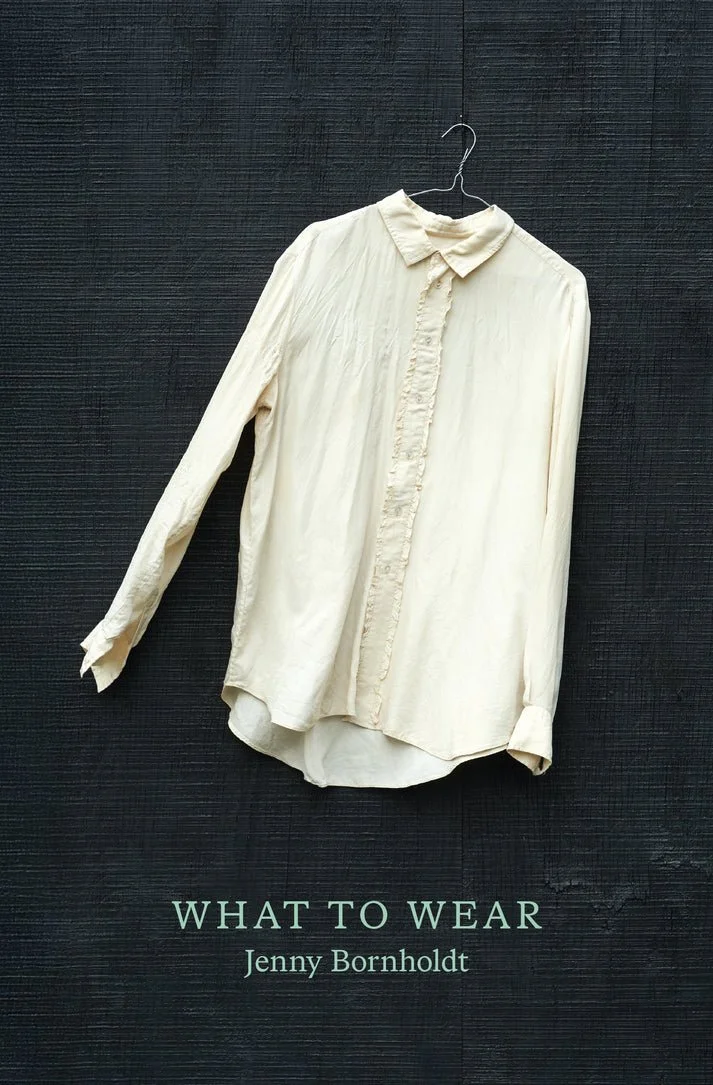
What to Wear by Jenny Bornholdt $25
The poems in What to Wear observe that life means doing ordinary and marvellous things, like going to Bunnings, falling asleep on the train, losing and finding poems, losing and dreaming of our mothers, loving, dying, and deciding what to wear. [Paperback]
”Mischievously joyful, like being in on the very best in-joke. Jenny Bornholdt reveals the strange magic of the everyday. Some of these poems move like a heat-seeking missile set to the heart.’” —Louise Wallace
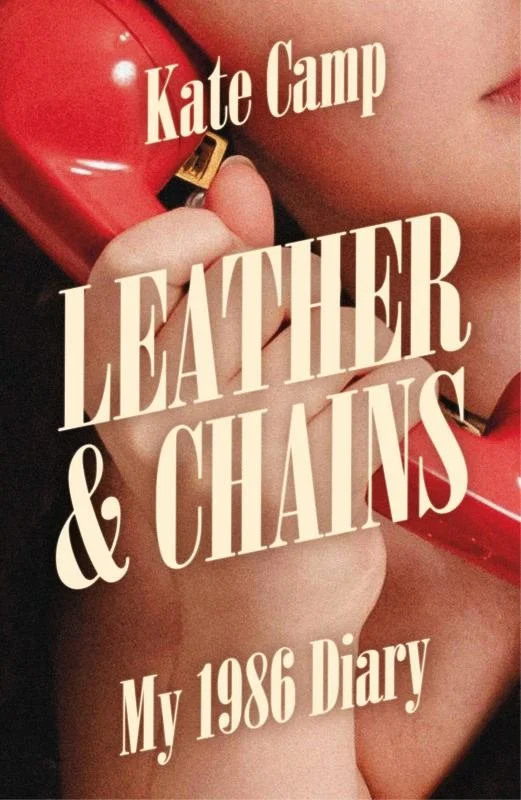
Leather & Chains: My 1986 diary by Kate Camp $40
Kate Camp turns her poet' s eye on her 1986 diary. Reading The Diary in its entirety for the first time, she revels in 80s touchstones like Revlon Custom Eyes and Ghostbusters on VHS. But amid the daily details, like smoking menthols in Suzy' s Coffee Lounge and wearing Jazzercise tights in a phone box, are moments of drama, even tragedy — being black-out drunk in a spa pool, or watching her father move out of the family home. At the centre of it all is Cameron, his black hair falling over his eyes, intoning in his fake Scottish accent, “Treat me rough, baby.” These entries — over 100 reproduced in full — are a time capsule of a very different era. The Kate Camp of today responds to the blithe accounts of sex, drugs and risk-taking with horror and admiration — and insight. How real are our memories? Can we ever know ourselves? And why is every entry signed off Leather & Chains? [Flexibound]
”Kate Camp reads the words of grownupchild Kate of 1986 — achingly funny, arch and louche, often shocking, always clever. And all of it threaded through with such pain and sadness and unsettling darkness, such yearning to be loved. I thought I knew The Diary so well, after all these years listening and watching from the wings. But reading The Diary myself, as she does in this remarkable project, is richer, funnier and, yes, sadder than experiencing it live in eight-minute snippets. I've often wondered about Kate Camp: how did she get to be so fearless, so peerless, so bold? The answer is in these pages.” —Tracy Farr
Helen of Nowhere by Makenna Goodman $35
In the middle of the countryside, a realtor is showing a disgraced professor around an idyllic house. She speaks not only about the home's many wonderful qualities but about its previous owner, the mystifying Helen, whose presence still seems to suffuse every fixture. Through hearing stories of Helen's chosen way of living, the man begins to see that his story is not actually over — rather, he is being offered a chance to buy his way into the simple life, close to the land, that's always been out of reach to him. But as evening fades into black, he will learn that the asking price may be much higher, and stranger, than anticipated. Philosophically and formally adventurous, at once intimate and cosmic in scope, Helen of Nowhere asks: What must we give up in exchange for true happiness? [Paperback with French flaps]
”Wildly original, unpredictable and funny. Is Helen of Nowhere a ghost story? A satire about back-to-the-land philosophies? A comedy about male obsolescence? Or, conversely, a skewering of identity politics? Perhaps it's just a fable about burn-out or the human hunger for love. It could be all of these.... This is fiction that will sharpen your attention to the world, make it more intense. It reminds us that we don't have to understand or like everything about a book to get something out of it. In fact, allowing ourselves to feel stimulated and perplexed feels like intellectual freedom and an awakening of human potential.” —Johanna Thomas-Corr, The Times
”Virtuosically written, with an insanity inside its sanity — or the other way around — that seems the proper use to make of reality in this moment.” —Rachel Cusk
”Helen of Nowhere is one of the most surprising novels I've ever read. Goodman has found a unique way of blending political urgency and psychological insight with an almost hallucinatory spiritual dimension that manages to strike the reader as perfectly justified, deeply funny and profoundly true.” —Vincenzo Latronico
”Goodman has wrought an epic in miniature, somehow as appealingly vast as a Greek tragedy or a Platonic dialogue, equal parts philosophy and art that's also delightfully wicked, like something from a fairytale or a fever dream.” —Sarah Manguso
>>Continually evolving truths.
>>A house holds a mirror.
>>Love, theory, and the ‘post-cis male moment’.
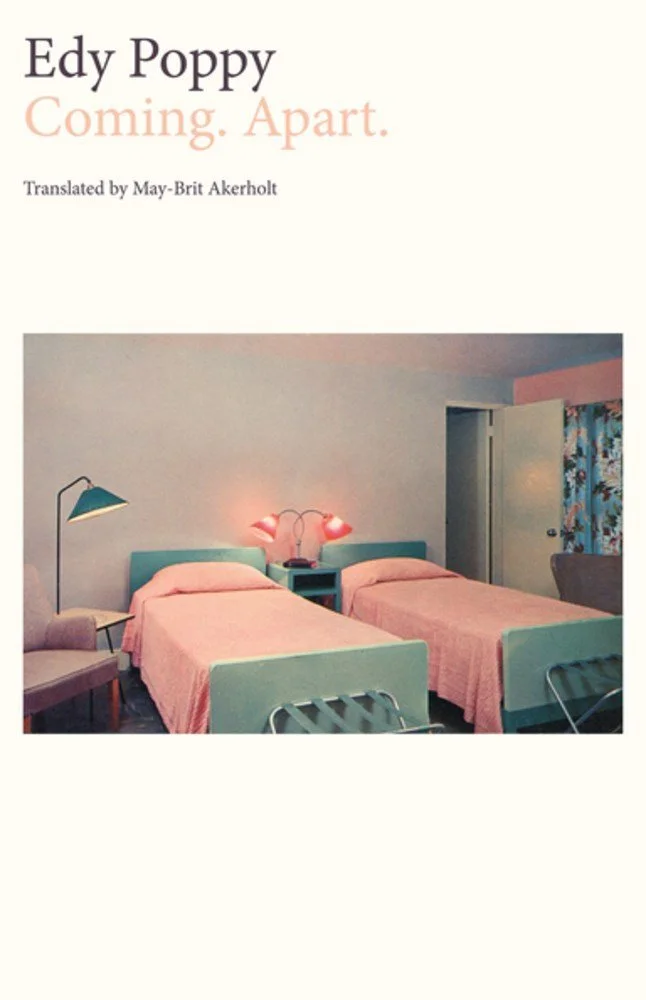
Coming. Apart. by Edy Poppy (translated from Norwegian by May-Brit Akerholt) $35
The sharp, sensual stories of Coming. Apart. chart the unraveling of relationships in all their complexity. From rural Norway to Berlin, Edy Poppy follows characters caught between intimacy and escape lovers who drift, clash, fracture. A couple's erotic games slip into something darker. A woman retreats to the countryside, shadowed by memory. Another navigates obsession, ambivalence, and solitude with uneasy clarity. Written in a voice that is both visceral and exacting, Edy Poppy's story collection moves along the fault lines of connection and desire. Blurring fiction and lived experience, Poppy offers a fierce meditation on what it means to stay or leave. [Paperback]
"Edy Poppy is a courageous writer who dares to transgress the limits most of us set for ourselves. But she does it so playfully and with such elegance that the reader can't resist coming along to explore forbidden realms. Anatomy. Monotony. has become a cult classic in many circles, and I see no reason why Coming. Apart. should not have the same impact." —Elle
"Fantastic!" —Chris Kraus
“In Coming. Apart. Edy Poppy unflinchingly strips bare the messiness of connection and lust, power imbalances, and the agonizing tension between freedom and constraint—boldly exposing humankind’s darkest desires and traumas, and exploring territory many wouldn’t dare to think, let alone put to paper. It is a mettlesome and provocative collection of short stories that refuses to be ignored.” —Tupelo Quarterly
>>Obsessive surveillance.
>>The next wound.
>>Gaze as a tool.
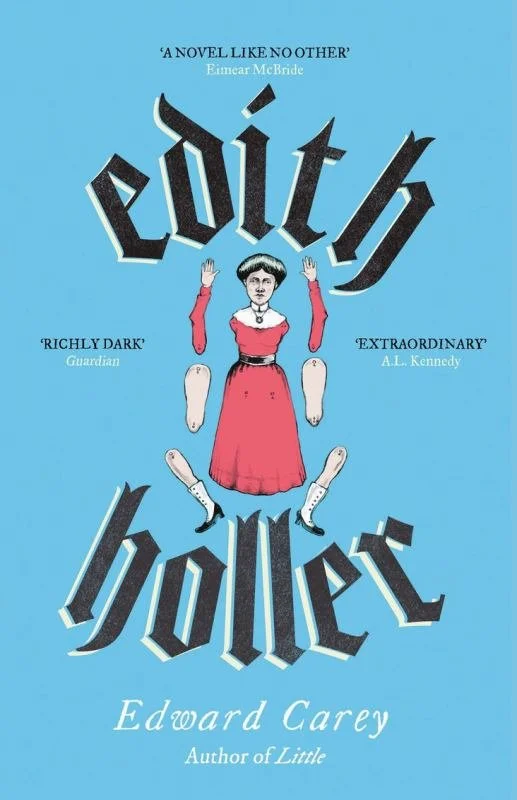
Edith Holler by Edward Carey $28
Norwich, 1901: Edith Holler spends her days among the eccentric denizens of the Holler Theatre, warned by her domineering father that the playhouse will literally tumble down if she should ever leave. Fascinated by tales of the city she knows only from afar, young Edith decides to write a play of her own about Mawther Meg, a monstrous figure said to have used the blood of countless children to make the local delicacy, Beetle Spread. But when her father suddenly announces his engagement to a peculiar woman named Margaret Unthank, Edith scrambles to protect her father, the theatre, and her play — the one thing that's truly hers — from the newcomer's sinister designs. Teeming with unforgettable characters and illuminated by Carey's trademark illustrations, Edith Holler is a surprisingly modern fable of one young woman's struggle to escape her family's control and craft her own creative destiny. [Paperback]
“An extraordinary achievement: funny, troubling, playful, magical and vastly energetic — sometimes all at once. Edith herself is a fierce, strange creature and entirely unforgettable. Hold on to your hat — and avoid the Beetle Spread.” —A.L. Kennedy
>>The Edith Holler card theatre. >>Yours to download.
>>Millions of words had fallen.
A Long Game: How to write fiction by Elizabeth McCracken $50
'Write every day', 'Show, don't tell', 'Write what you know', 'Kill Your Darlings' — These are some of the most popular nuggets of advice given to writers, generally accepted as true. They are all pieces of writing advice that Elizabeth McCracken expertly and persuasively shoots down in A Long Game. McCracken has been writing for most of her life. Here, she shares insights gleaned along the way, deconstructing received wisdom whilst playfully tackling the mysteries that are inherent to writing and creativity. A book about the life of an artist and a guide to fiction, A Long Game is a revelatory and indispensable resource and will lead all writers, at any stage of their career, back to the page. [Hardback]
”Elizabeth McCracken was my teacher, and it's a joy to know that now more people will have access to her brilliance through A Long Game. A guidebook for any fiction writer, and a problem-solving and cheering companion that makes writing a less lonely business.” —Yiyun Li
”Elizabeth McCracken is that rarest of combinations — a world class writer and a world class writing teacher. With A Long Game she has distilled the electric, inspiring genius, enthusiasm, and wit that she has brought to the classroom for more than three decades and put it into a book that's practically a masters program in itself.” —Paul Harding
”Elizabeth McCracken, one of the greatest, wisest, funniest, and most humane writers you will ever encounter, has written one the greatest, wisest, funniest, and most humane books about writing you will ever read. Have a pen ready. You'll want to underline sentences on every page that make you stop and think or inwardly cheer or nod in recognition. Most importantly, you'll want to run to your desk and write. A Long Game is an absolute gift.” —Cristina Henriquez
>>Rip up all the rules.
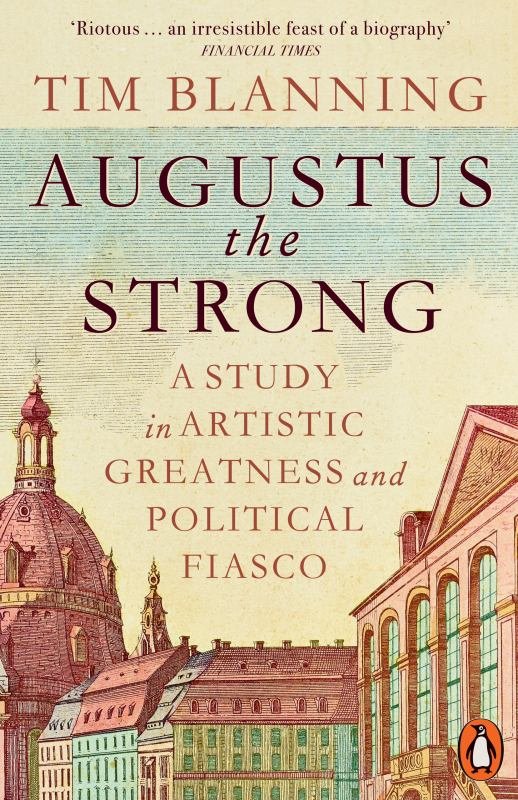
Augustus the Strong: A study in artistic greatness and political fiasco by Time Blanning $36
Augustus is one of the great what-ifs of the 18th century. He could have turned the accident of ruling two major realms into the basis for a powerful European state — a bulwark against the Russians and a block on Prussian expansion. Alas, there was no opportunity Augustus did not waste and no decision he did not get wrong. By the time of his death Poland was fatally damaged and would subsequently disappear as an independent state until the 20th century. Tim Blanning's entertaining and original book is a study in failed statecraft, showing how a ruler can shape history as much by incompetence as brilliance. Augustus's posthumous sobriquet 'The Strong' referred not to any political accomplishment, but to his legendary physical strength and sexual athleticism. Yet he was also one of the creative artists of the age, combining driving energy, exquisite taste and apparently boundless resources to master-mind the creation of peerless Dresden, the baroque jewel of jewels. Augustus the Strong brilliantly evokes this time of opulence and excess, decadence and folly. [Paperback]
”Tim Blanning's riotous biography of an often-forgotten 18th-century king provides historical perspective on the current state of Europe. It is so riotous it is impossible to read without thinking of picaresque characters such as Fielding's Tom Jones and Thackeray's Barry Lyndon. An irresistible feast of a biography of the now oft-forgotten Polish king whom he gloriously brings to life.” —Simon Sebag-Montefiore
”The wonderful story of one of the worst monarchs in European history, told with enormous wit and scholarship by a supremely talented historian. If you have the slightest interest in Germans, Poles, porcelain, jewels, the Enlightenment, military disasters or the pleasures of fox-tossing, then this is the book for you.” —Dominic Sandbrook
Discord by Jeremy Cooper $48
On a night in August, an audience at the Royal Albert Hall attends the first ever concert of ‘Distant Voices’. The Proms performance is the culmination of a year's work between the middle-aged composer Rebekah Rosen and the young star-saxophonist Evie Bennet. Alternating between both perspectives, Discord charts the course of their intense and at times fractious relationship, the resonances and dissonances both women find within one another, as well as the struggles and satisfactions that accompany an artistic life. At the heart of the novel is an inquiry into the generative force behind creative collaboration. In what ways does the inexpressible — that amorphous space of friction and unity between musicians — become indelible? And by what process do flawed individuals create works of transcendence? [Paperback with French flaps]
”It's very hard indeed to write fiction about music but Jeremy Cooper does so with triumphant aplomb. Discord is a tremendous, quietly enthralling achievement.” —William Boyd
”Jeremy Cooper's Discord is as nakedly truthful a novel as you could ever hope to read. Its characters are completely and utterly convincing and their interactions with one another are filled with all of the loveliness and foolishness and tenderness of real life.” —Aidan Cottrell-Boyce
”Quietly, irresistibly compelling. Jeremy Cooper's interior worlds fill you up, become the air around you, conduct the sounds of every day — while you are reading, and while the book waits for you to pick it up again. Discord is an enthralling human melody.” —Ben Pester
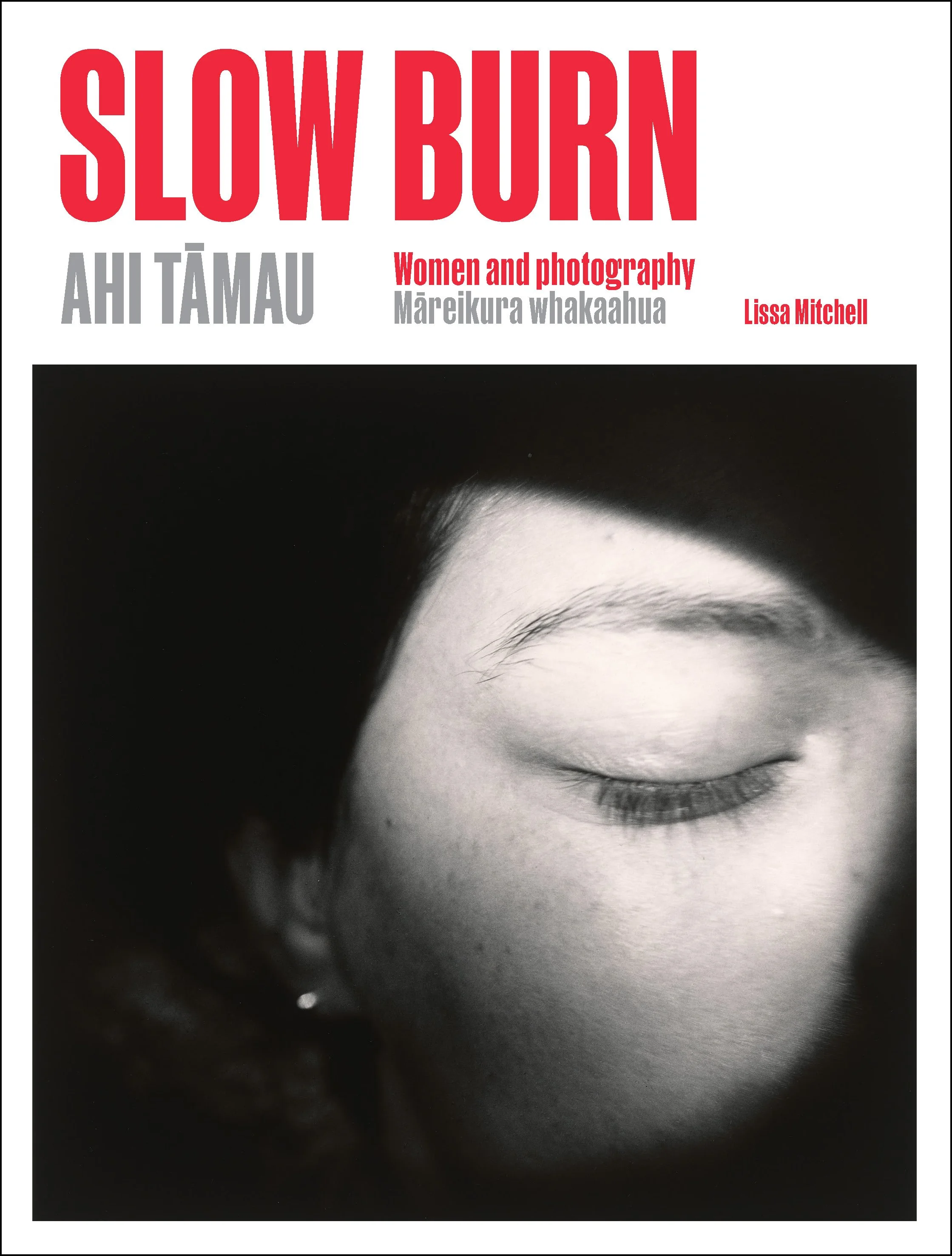
Slow Burn / Ahi Tāmau: Women and Photography / Mareikura Whakaahua by Lissa Mitchell $35
"Researching, collecting and writing about photography, I have often wondered where the women were." Lissa Mitchell. Slow Burn Ahi Tāmau showcases the diverse range of photography by women and non-binary artists from Aotearoa New Zealand, spanning the 1960s to today. Published to accompany a major survey exhibition from Te Papa's collections and to spark a conversation between past and present, this fully illustrated book explores themes of identity, whānau, place, and time through a feminist lens. Highlighting over 150 works by 50 artists, Slow Burn illustrates how ways of seeing can be passed down, reimagined, and slowly reignited. Featured artists include Anne Noble, Fiona Pardington, Natalie Robertson and Lisa Reihana. The curator's essay provides further historical context to the exhibition, and biographies of the photographers make this a valuable research resource. Slow Burn builds on ten years of deeply considered research, inclusive collection decisions, and the 2023 publication of Lissa's acclaimed book Through Shaded Glass: Women and photography in Aotearoa New Zealand 1860-1960. The exhibition and this book bring work by photographers from the last 65 years out of the storeroom and into conversation with each other — a celebration of photography's ever-evolving nature in Aotearoa. [Paperback]
>>Look inside.
>>Through Shaded Glass.
Read our latest newsletter
5 February 2026
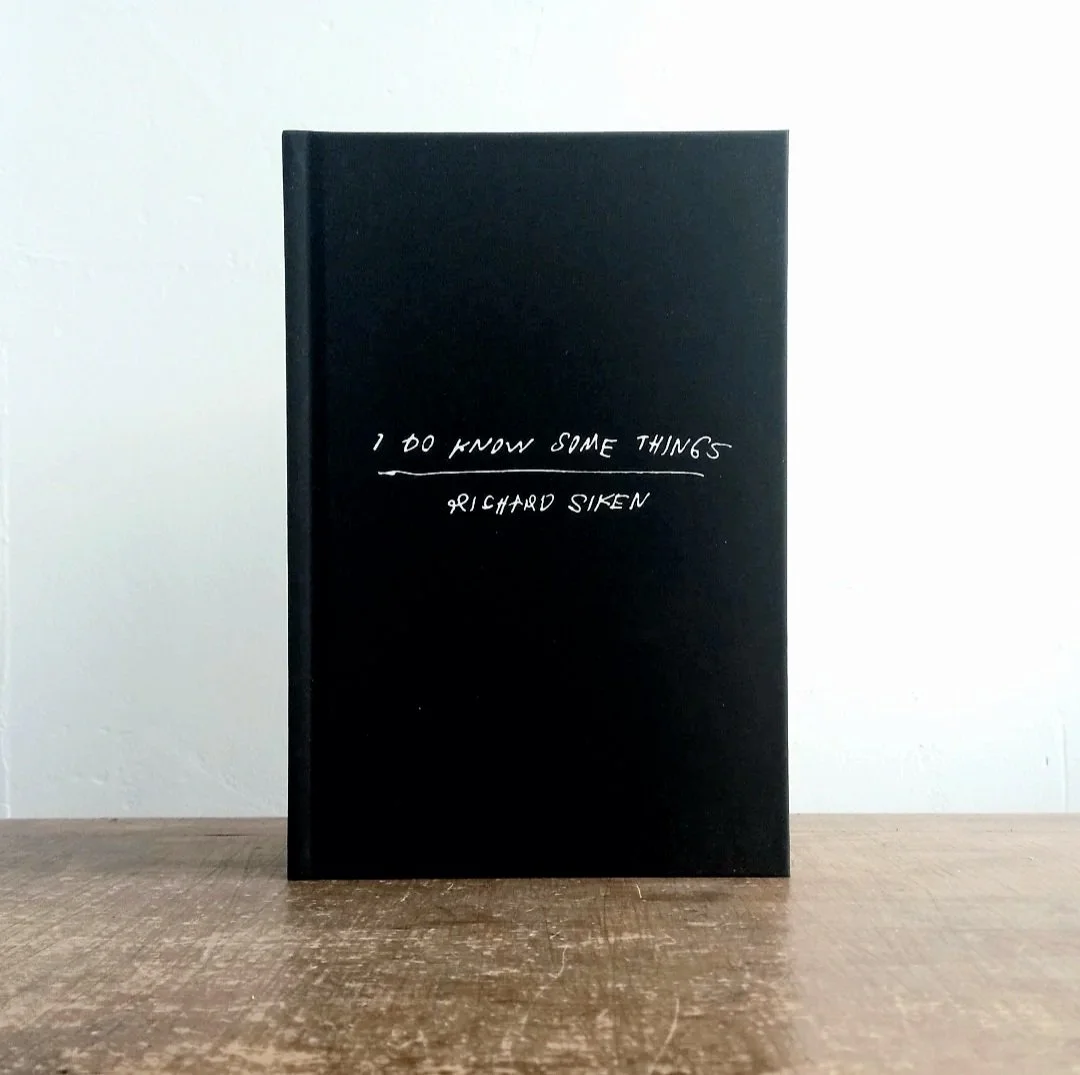
Following a stroke that was initially mistaken for a panic attack, the poet Richard Siken found himself having to completely rebuild his relationship with his body, with his world, and with language itself — the medium that previously had come most naturally to him. This wonderful, darkly hilarious book, both vitriolic and tender, began as a series of exploratory and explanatory survival notes to himself and built into a series of playful interrogations of memories, traumas and losses, a pinning of personal phantoms, a renegotiation of the contract between inner and outer worlds, and an unfurling of new and vulnerable possibilities in language and in life. Recommended.
"An astonishing feat of poetic prowess. Siken has created 'an encyclopedia of myself,' a kaleidoscope of memory, language and identity that reveals — at times revels — in the faultiness of our own narratives. Siken's voice — and language — is both rooted and aloft, even as he avers that these are not 'poems of song.' Beyond such marvels, this is a virtuosity of candor and technique, bound by a seemingly effortless linguistic choreography that leans into multiplicity and mutability, with continuous sparks and joys, from one of our finest contemporary poets." —Mandana Chaffa, Chicago Review of Books

Britta Teckentrup is a German illustrator and author with over 70 children’s books to her name. Published in over 20 countries, she illustrates her own as well as other authors’ picture books. Many of her books quickly become favourites, and they range from board books to sophisticated picture books. What they all have in common is a desire to instill a feeling of wonder and curiosity. My favourite of her books is My Little Book of Big Questions. This is packed with ideas, beautifully illustrated, and filled with questions, both familiar and surprising. At 190 pages this is a substantial small hardback. The questions suit any age — from youngsters to adults. The ideas within these pages can be set free to roam in the imagination or used as conversation starters or prompts for writing or other creative responses. The questions range from the whimsical and tentative to the philosophical and provocative. Some questions may have answers and every reader will respond in their own way; other questions lead to more questions, opening doors to stories and journeys; while others will illicit a response of ‘who knows?’ Some questions trigger emotions, while other may send you on a fact-finding mission.
Here’s a small selection:
Will I be able to fly someday?
Who will be my friend?
Why I am afraid of what I don’t know?
Am I special?
Why is nature so colourful?
Are dreams as true as reality?
The illustrations, eye-catching and attractive, are variously thoughtful, joyful and enigmatic. Teckentrup uses colour, texture, silhouettes, and line to capture mood and emotion. There is joy in the light sky of a cartwheeling child. There is the brilliant blue of a dive into a pool of water. Rich textures adorn a field where a quest to find something hidden is under way. The bright yellow light of the future in seen through a window frame as a child looks from the familiar to the promise of what is to come. There is simpliicity of line and colour for quiet thoughts, and bold colours and energetic forms for questions that spur us to action.
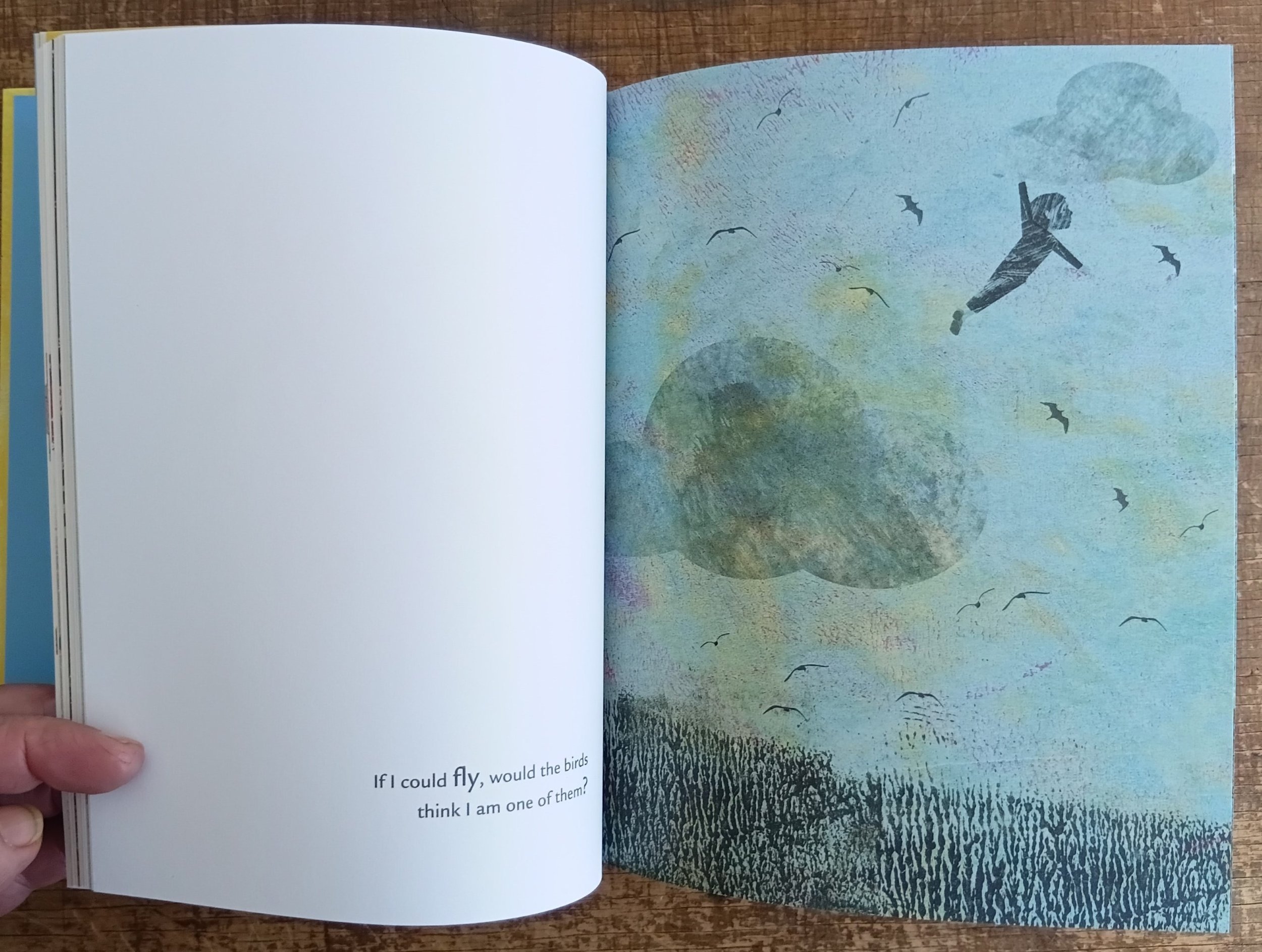
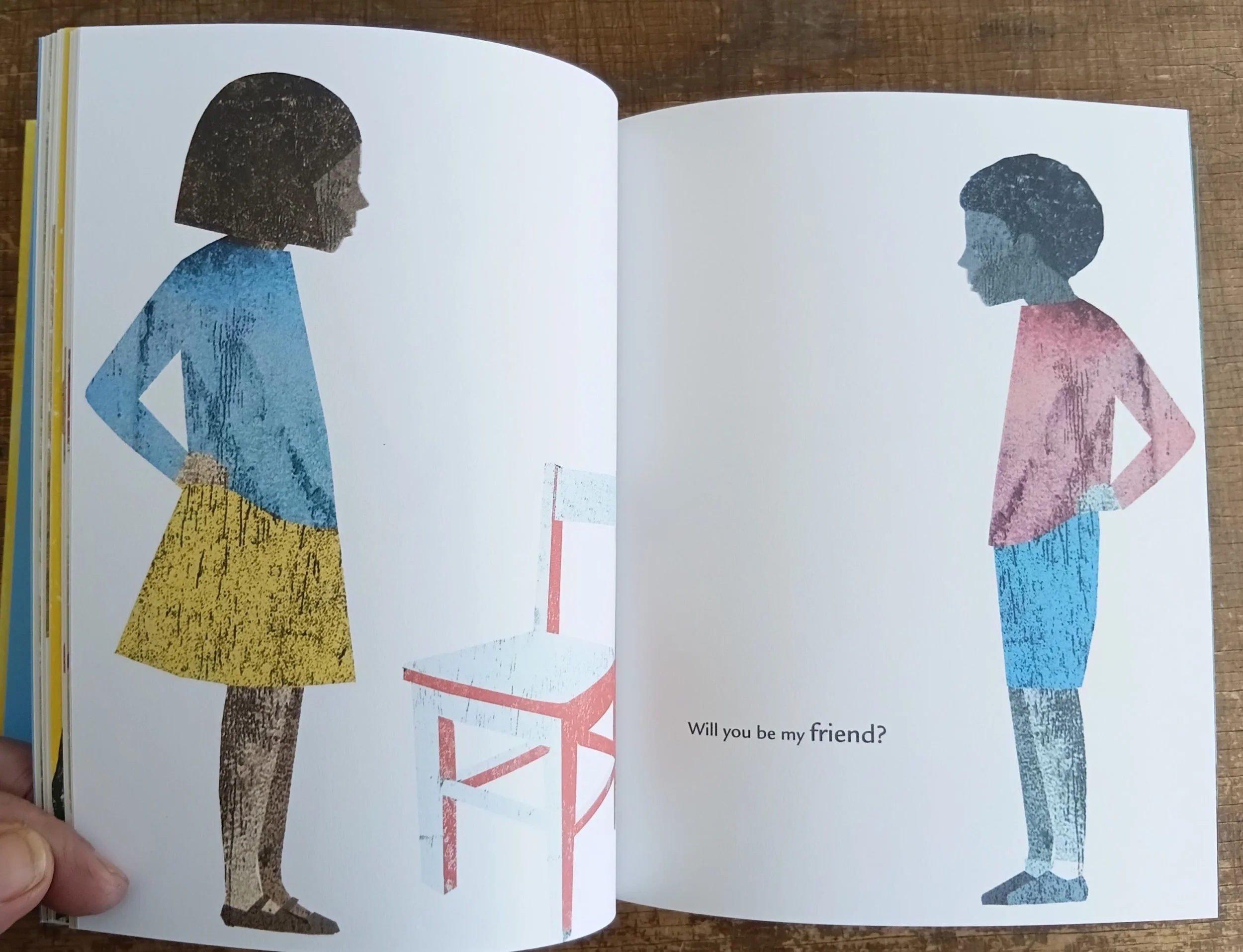
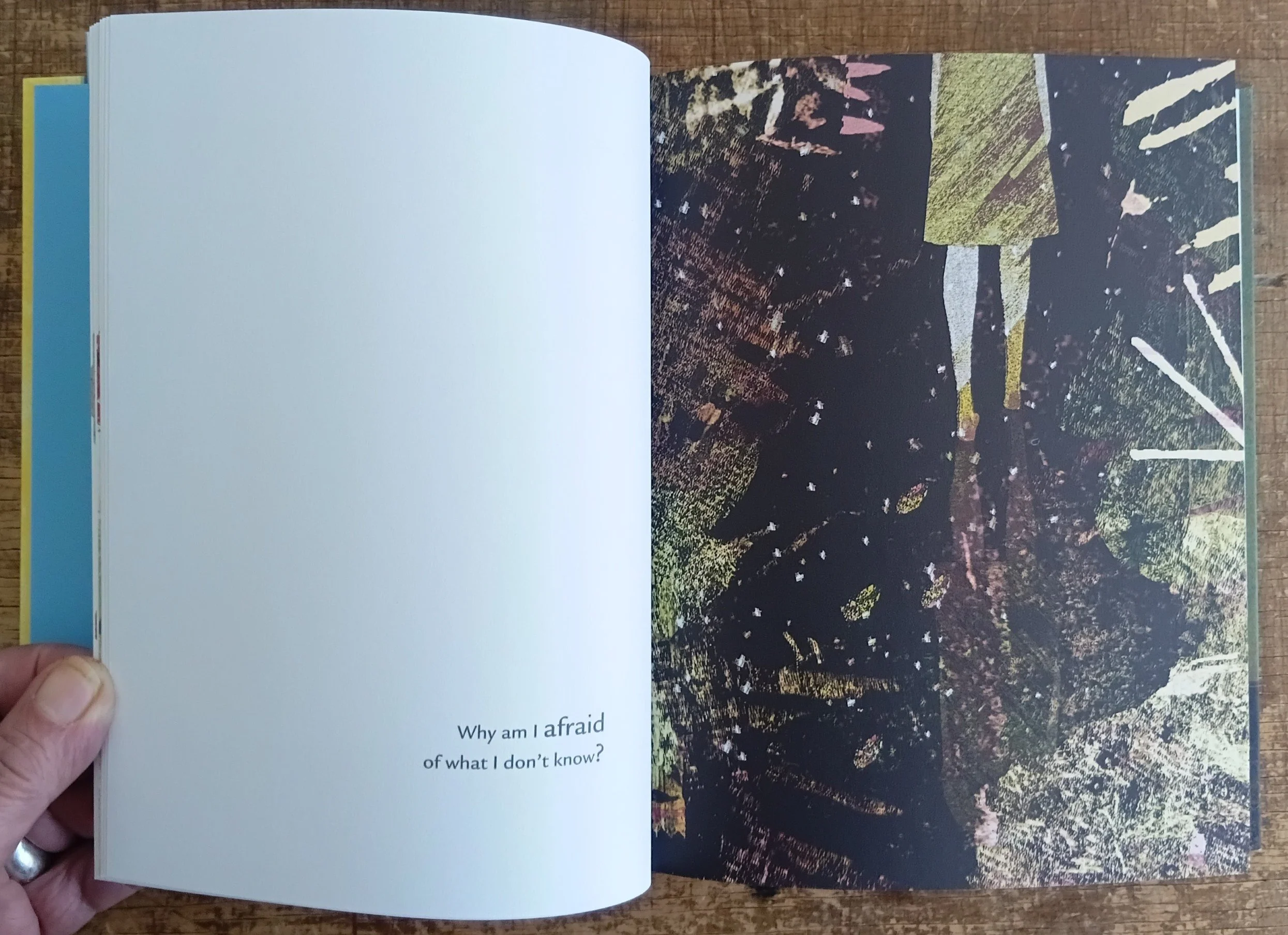
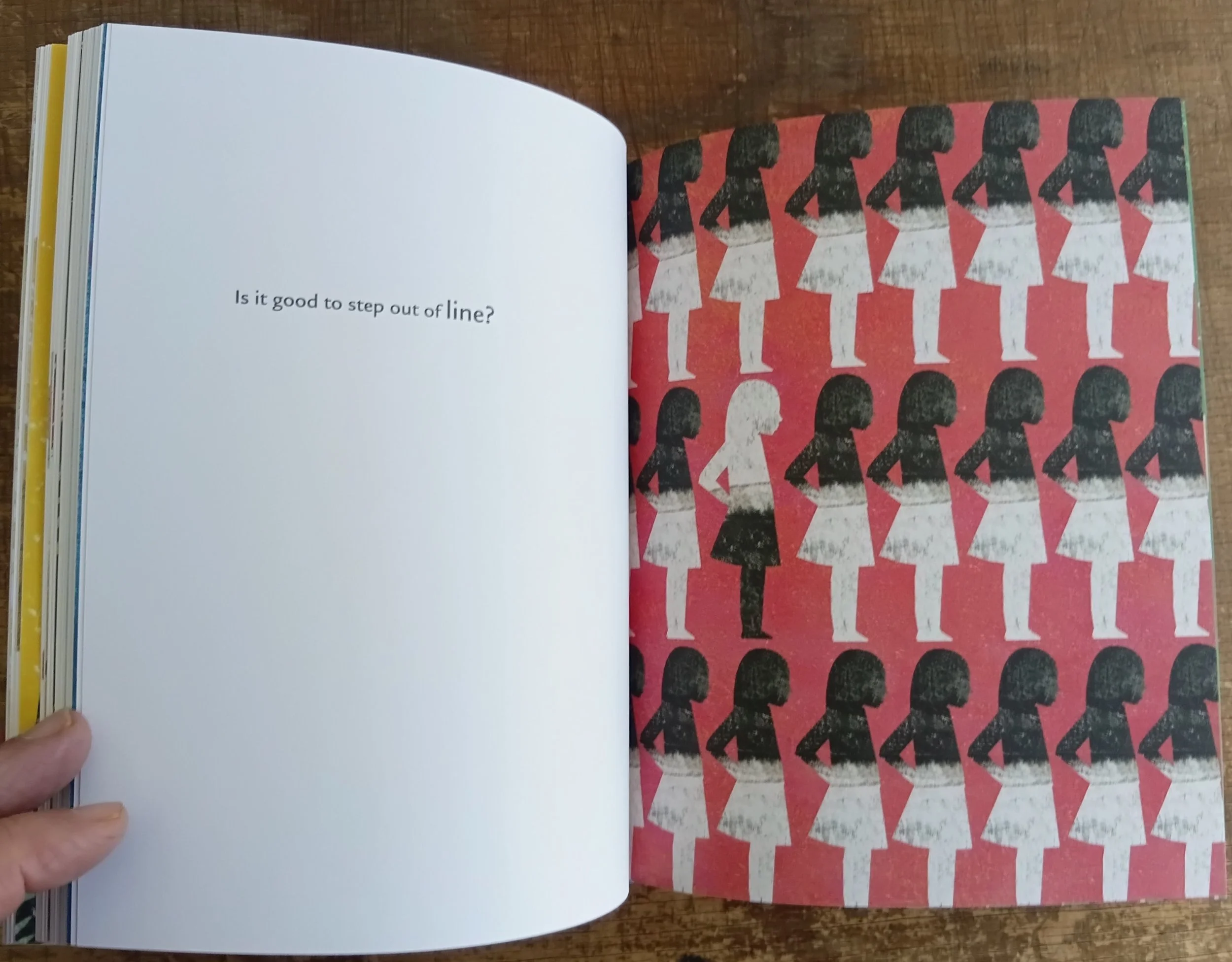
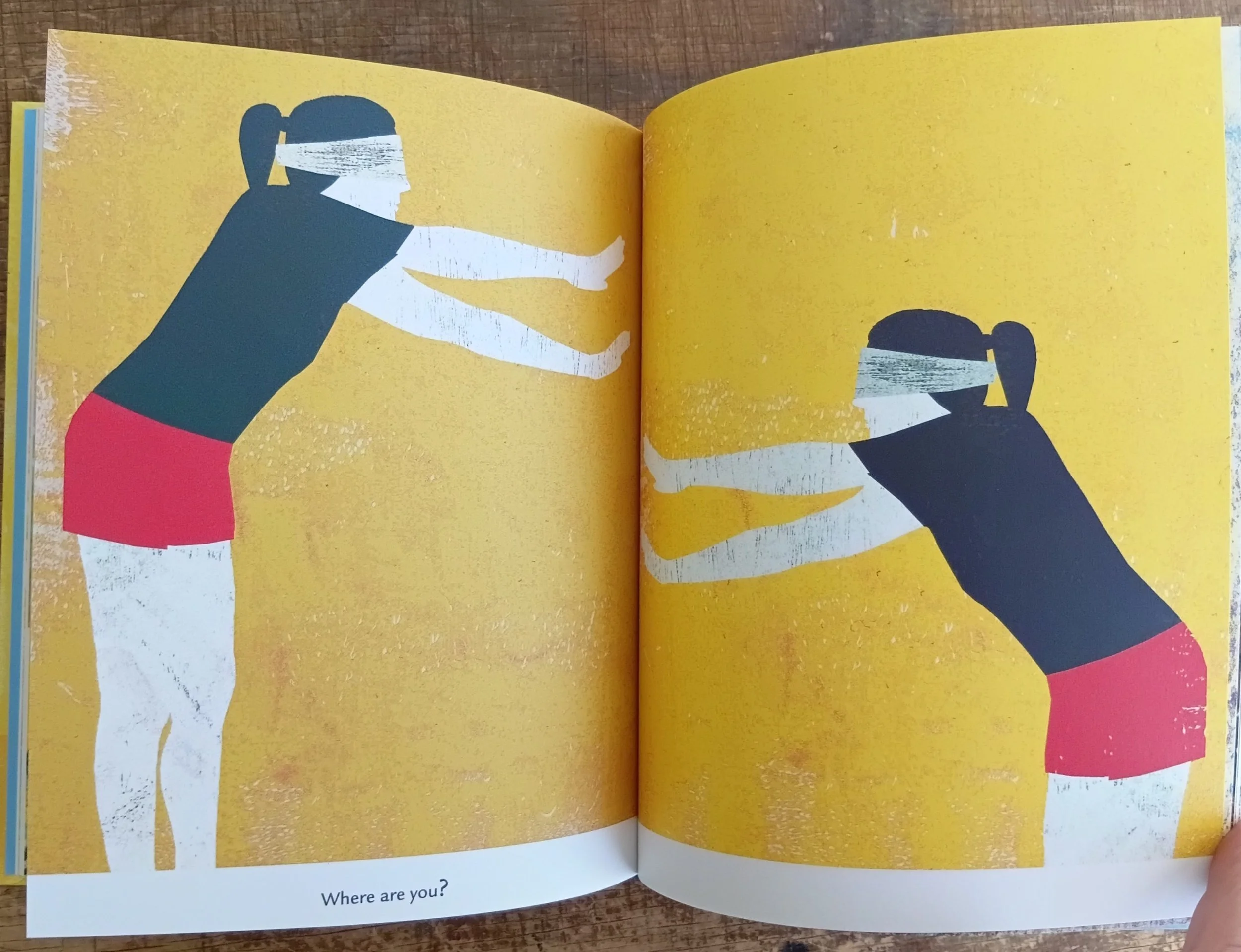
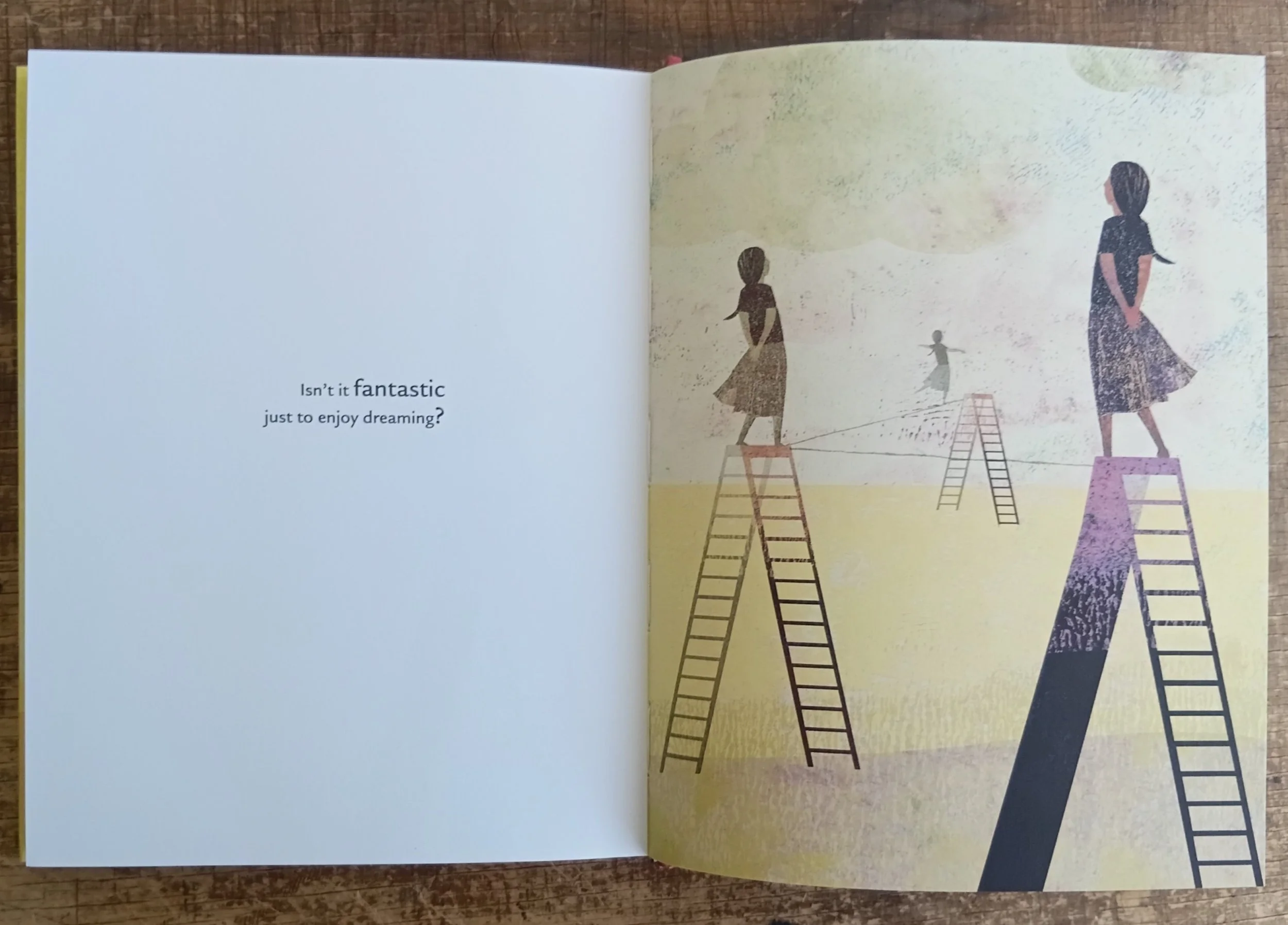
This is a delightful book, one that I never tire of opening. It is brimming with ideas, both big and small, about feelings, human interactions, the meaning and the mysteries of life, and how all these things spark our imagination and keep us curious.
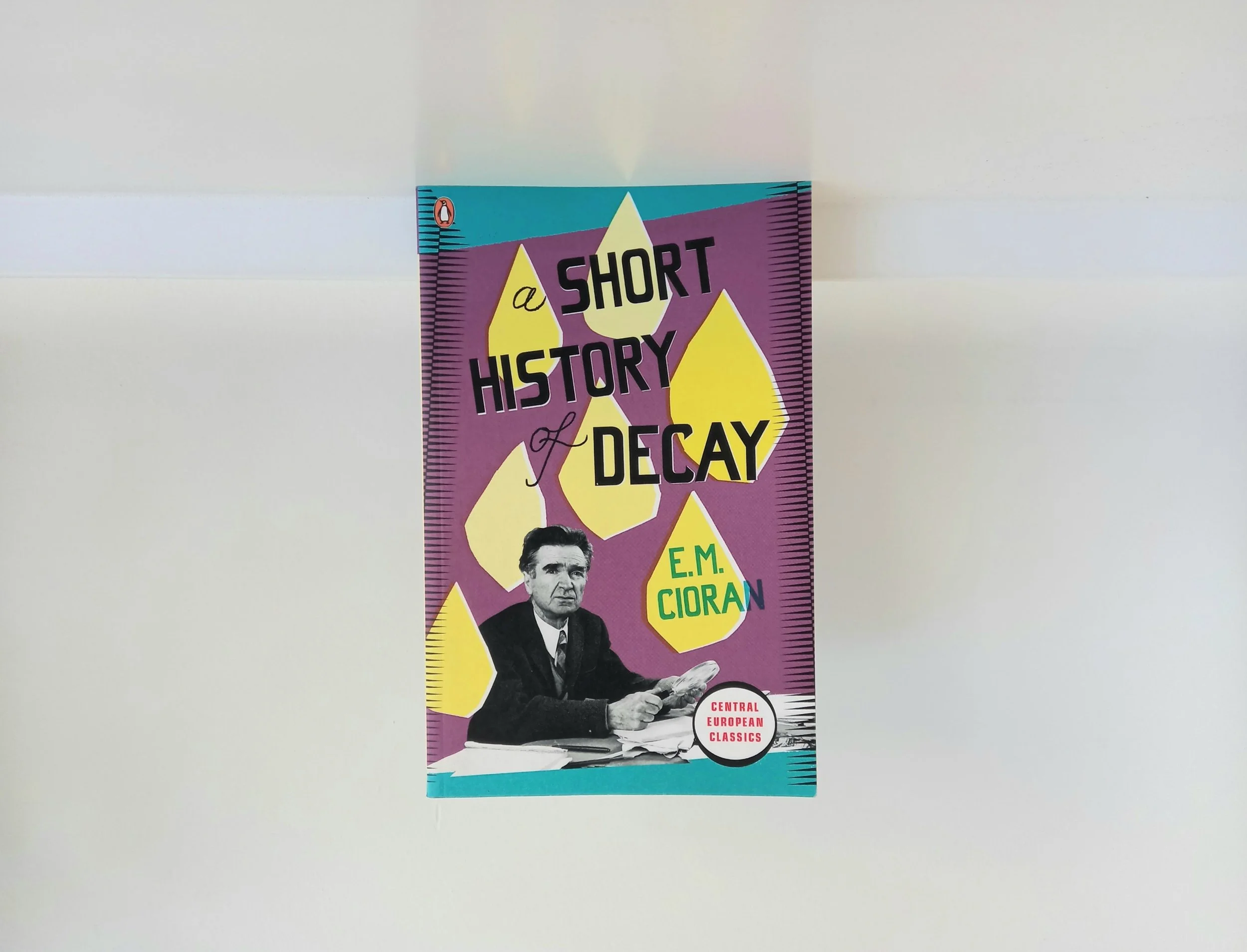
Emil Cioran is the philosopher of personal and collective frailty and failure, of emptiness, of hopelessness, of the eschewing of all answers (“Having resisted the temptation to conclude, I have overcome the mind.”). He rails against society, against both choice and necessity, against all values. I thought I would like him more than I do. Perhaps it is that he trumpets his nihilism, that he shouts out the immanence of our demise from the event horizon of whatever black hole we are heading towards, that his pessimism is, above all, dramatic (does this call its authenticity into question? (I don’t think so)), that makes me tire of him (he should perhaps be read (by me, at least) in small doses). Our differences are perhaps more of temperament than of territory; to me the underlying nullity of existence is more irredeemable than tragic, and I am to a degree suspicious of the heroic trappings and lyricism of his despair. That said, Cioran is an important, interesting (and frequently amusing) thinker, an heir to Nietzsche, and there is much to admire (and be amused by) in his books. His words dissolve civilisation as acetone dissolves paint (that’s got to be a good thing). The contents page of this book reads like the publishing list of an American academic publisher (“Genealogy of Fanaticism – In the Graveyard of Definitions – Civilisation and Frivolity – Supremacy of the Adjective – Apotheosis of the Vague – The Reactionary Angels – Militant Mourning – Farewell to Philosophy – Obsession of the Essential” &c, &c), and the book itself contains enough nihilistic aphorisms to fill a lifetime’s worth of anti-inspirational calendars (now, there’s a publishing project…), for example (although this is typically insensitive to anyone with literal leprosy): “One is ‘civilised’ insofar as one does not proclaim one’s leprosy.” Great stuff.
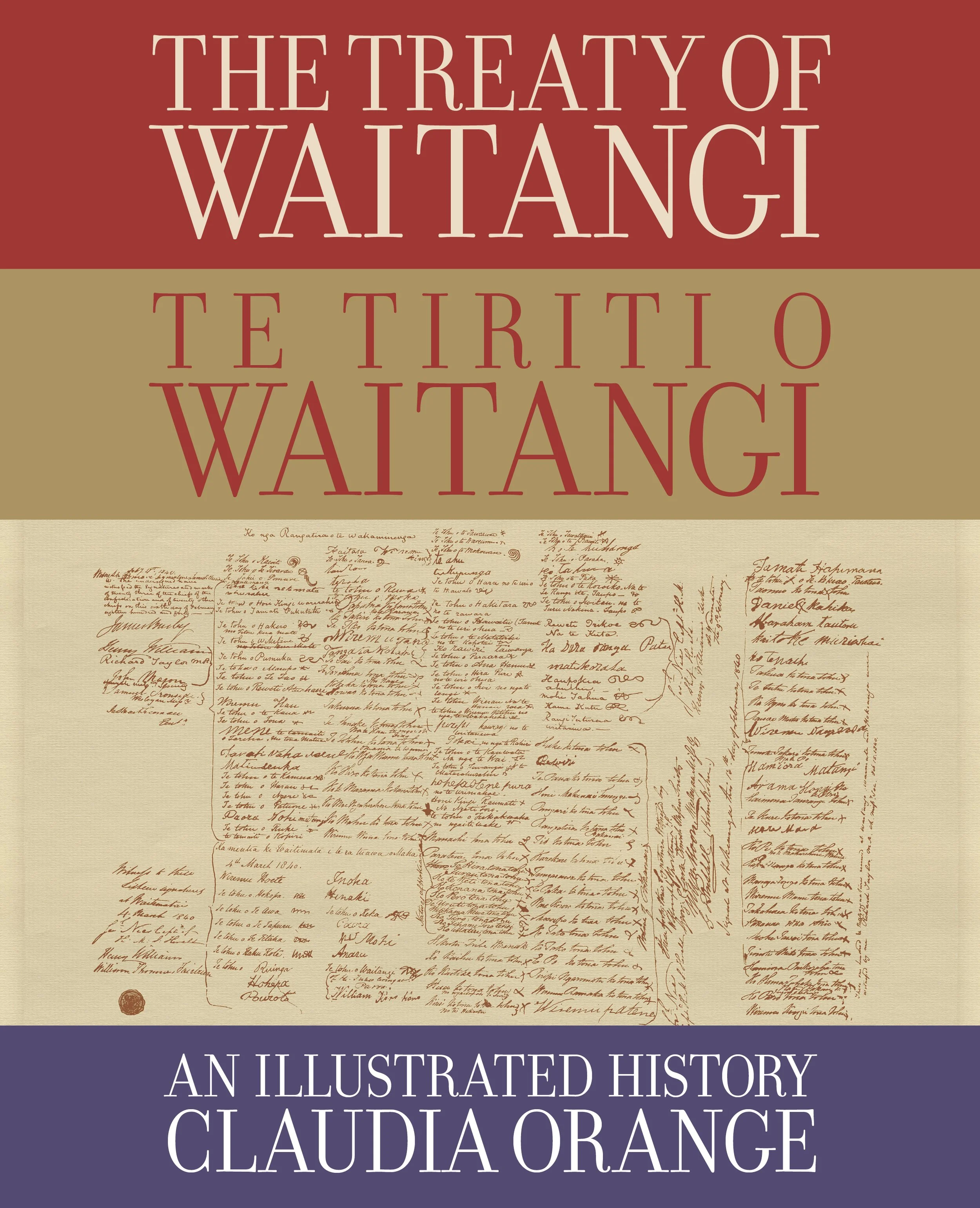
The Treaty of Waitangi | Te Tiriti o Waitangi: An iIlustrated history by Claudia Orange $50
Claudia Orange's writing on the Treaty of Waitangi has played a central role in national understanding of this foundational document. This third edition of her standard work is the most comprehensive account yet, presented in full colour and drawing on Dr Orange’s recent research into the nine sheets of the Treaty and their signatories.
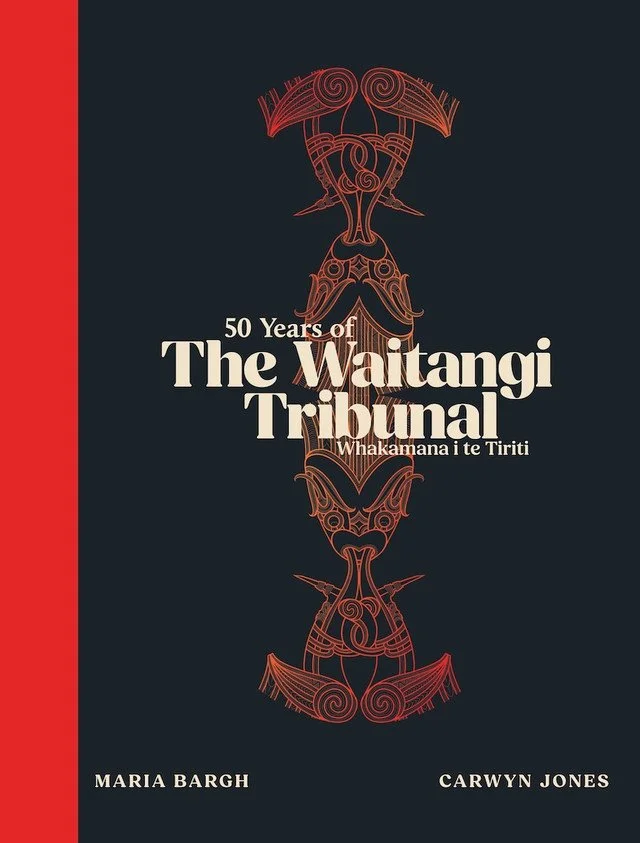
50 Years of The Waitangi Tribunal edited by Carwyn Jones and Maria Bargh $65
The collection highlights the breadth of issues considered by the Tribunal and also the impact the Tribunal has had on complex legal concepts, representation of communities, and understanding of te Tiriti o Waitangi.
Understanding Te Tiriti: A handbook of basic facts about te Tiriti o Waitangi by Roimata Smail $25
Distills essential information clearly and concisely.
Undersranding Hauroa: A Handbook of basic facts about te Tiriti o Waitangi and the Health System by Roimata Smail $25
A short, accessible guide explains what hauora really means — not just healthcare, but the wellbeing of body, mind, spirit, and whānau, grounded in the whenua — and how Te Tiriti o Waitangi guaranteed Māori authority over it.
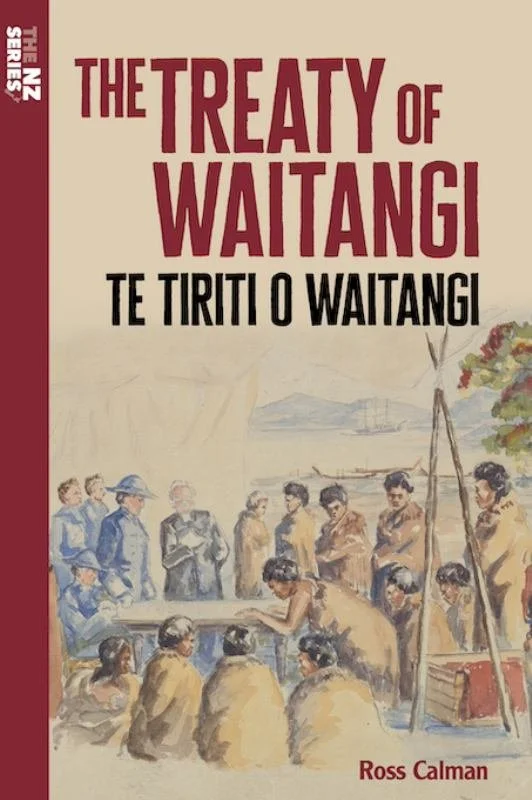
The Treaty of Waitangi — Te Tiriti o Waitangi by Ross Calman $30
A non-fiction resource for general readers and schools, introducing complex subjects in concise terms. Illustrated with explanatory graphics, fact boxes, and photos.
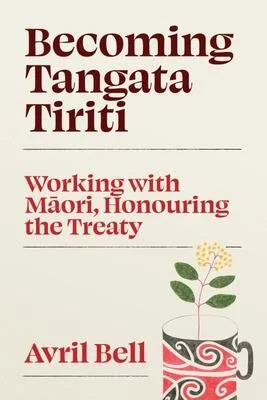
Becoming Tangata Tiriti: Working with Māori, Honouring the Treaty by Avril Bell $30
Becoming Tangata Tiriti brings together twelve non-Māori voices — dedicated professionals, activists and everyday individuals — who have engaged with te ao Māori and have attempted to bring te Tiriti to life in their work.

Te Tiriti o Waitangi / The Treaty of Waitangi by Toby Morris, Ross Calman, Mark Derby, and Piripi Walker $25
Full-colour graphic novel about Te Tiriti o Waitangi/The Treaty of Waitangi. This reorua (bilingual) graphic-novel-style flip book presents important information in a visually appealing and engaging way.
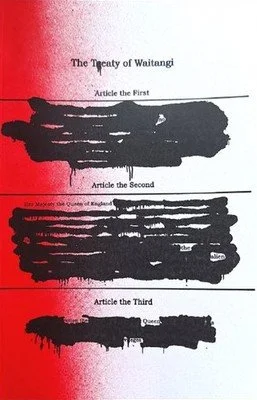
Te Waka Hourua Whītiki, Mātike, Whakatika! $30
Te Waka Hourua is a tangata whenua-led, direct action, climate and social justice rōpū.
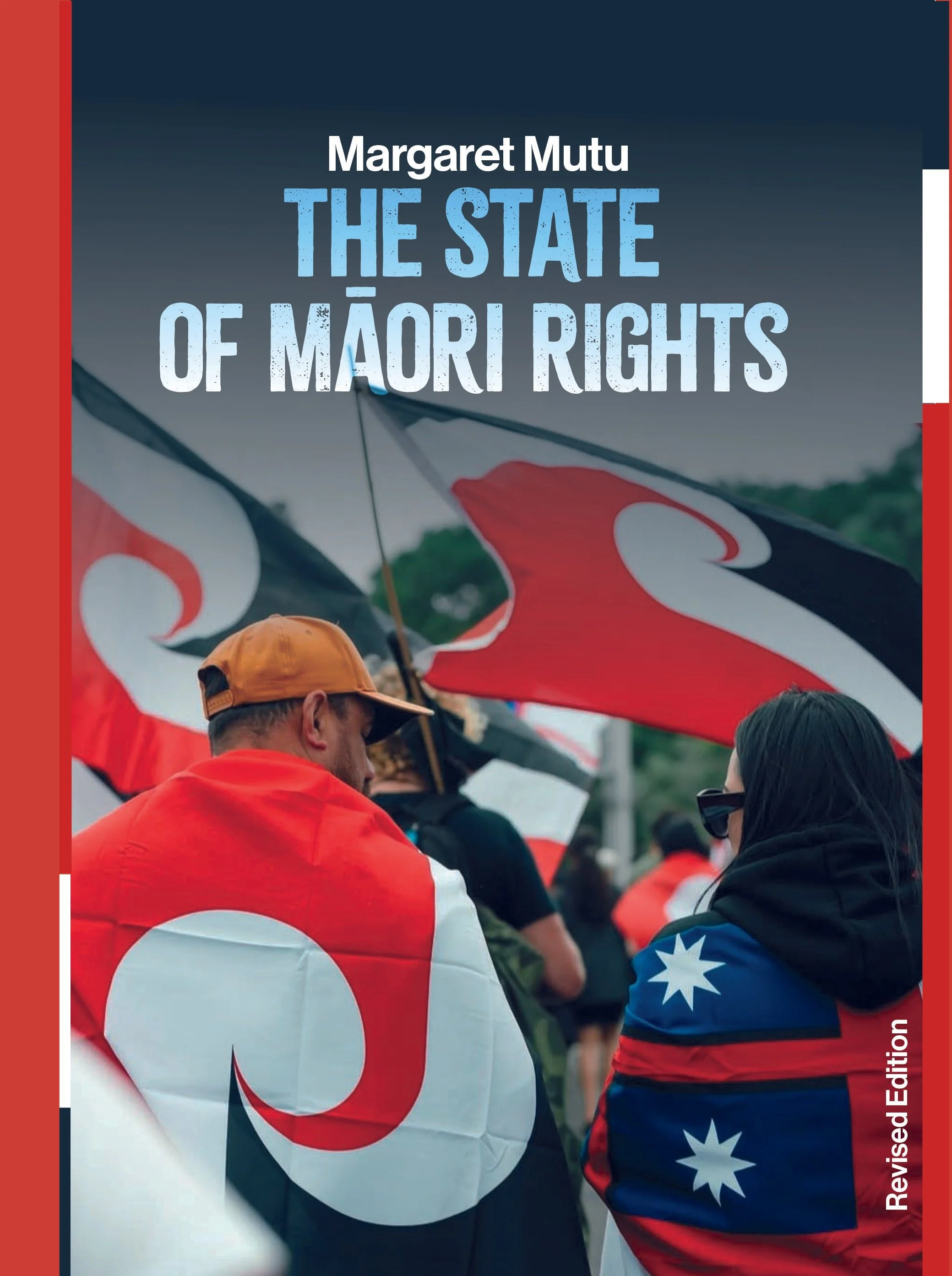
The State of Māori Rights by Margaret Mutu $55
Mutu documents the state of Māori rights over a thirty-year period and speaks to the determination of Māori as indigenous people.
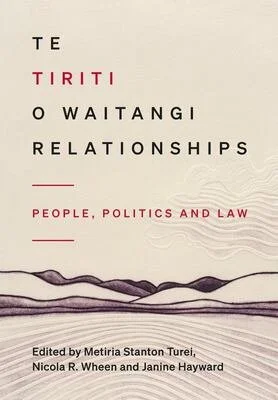
Te Tiriti o Waitangi Relationships: People, Politics and Law edited by Metiria Stanton Turei, Nicola R Wheen, and Janine Hayward $50
This group of essays takes a dynamic approach to understanding Tiriti relationships, acknowledging the ever-evolving interplay between the Crown and Māori through time.
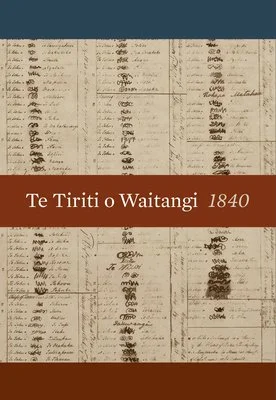
Te Tiriti o Waitangi, 1840 introduced by Claudia Orange $40
The nine sheets of the Treaty are shown, with a vivid account of their signing. Names, iwi and hapu are given for the Treaty signatories, along with information about their lives.
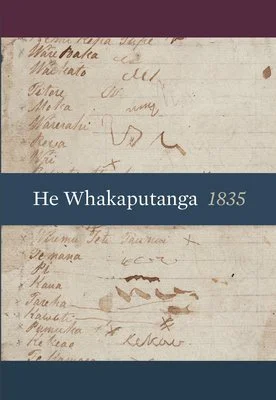
He Whakaputanga, 1835 introduced by Vincent O’Malley $40
He Whakaputanga o te Rangatiratanga o Nu Tireni/The Declaration of Independence of New Zealand was signed by fifty-two rangatira from 1835 to 1839. It was a powerful assertion of mana and rangatiratanga.
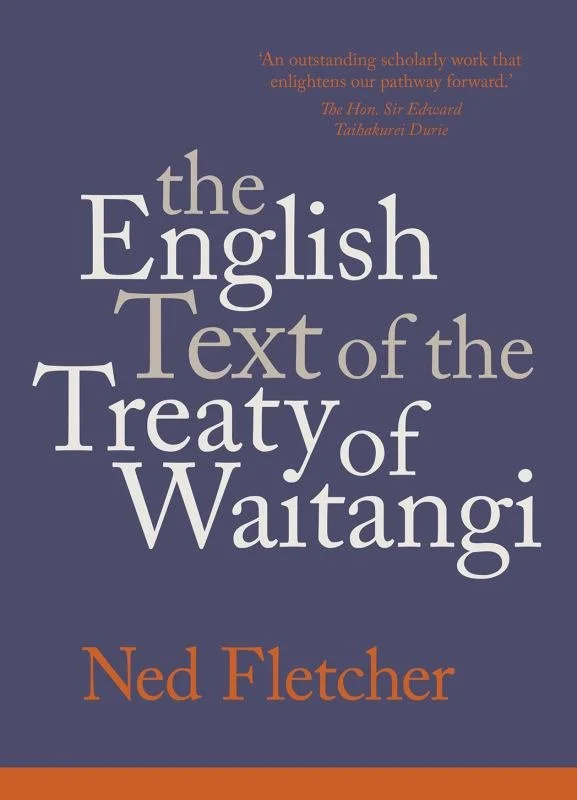
The English Text of the Treaty of Waitangi by Ned Fletcher $70
How was the English text of the Treaty of Waitangi understood by the British in 1840? That is the question addressed by historian and lawyer Ned Fletcher, in this authoritative work.
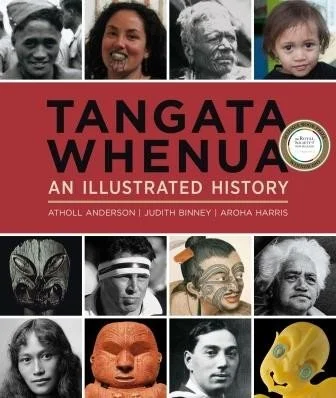
Tangata Whenua: An illustrated history by Atholl Anderson, Judith Binney, and Aroha Harris $100
This remarkable book charts the sweep of Māori history from ancient origins through to the twenty-first century. Through narrative and images, it offers a striking overview of the past, grounded in specific localities and histories. This should be on everyone’s bookcase.
>>Also available as a unillustrated paperback.
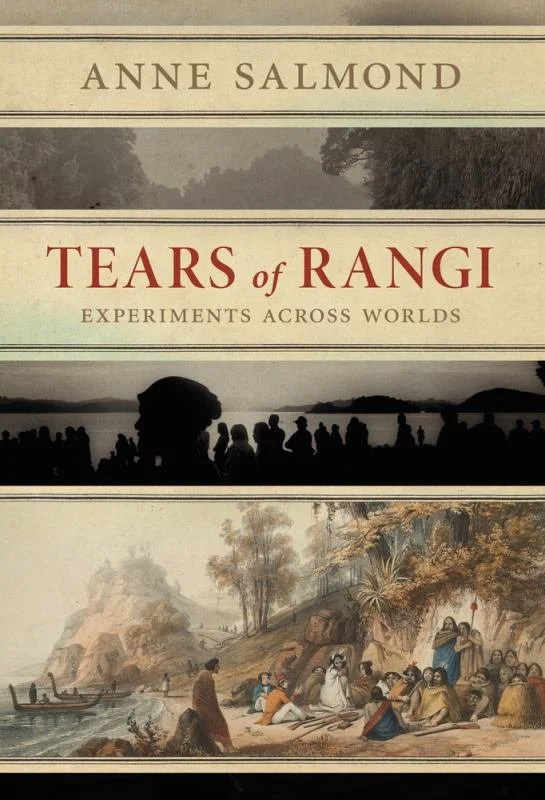
Tears of Rangi: Experiments Across Worlds by Anne Salmond $50
A study of New Zealand as a site of cosmo-diversity, a place where multiple worlds engage and collide. Beginning with a fine-grained inquiry into the early period of encounters between Māori and Europeans in New Zealand (1769-1840), Salmond then investigates such clashes and exchanges in key areas of contemporary life - waterways, land, the sea and people.
Introducing He Whakaputanga by Vincent O’Malley and Jared Davidson $20
He Whakaputanga o te Rangatiratanga o Nu Tireni/The Declaration of Independence of New Zealand was signed by fifty-two rangatira from 1835 to 1839.
Introducing Te Tiriti o Waitangi by Claudia Orange and Jared Davidson $20
In 1840, over 500 Māori leaders put their names to a significant new document: Te Tiriti o Waitangi or the Treaty of Waitangi. Through their signatures, moko or marks they were making an agreement with the British Crown.
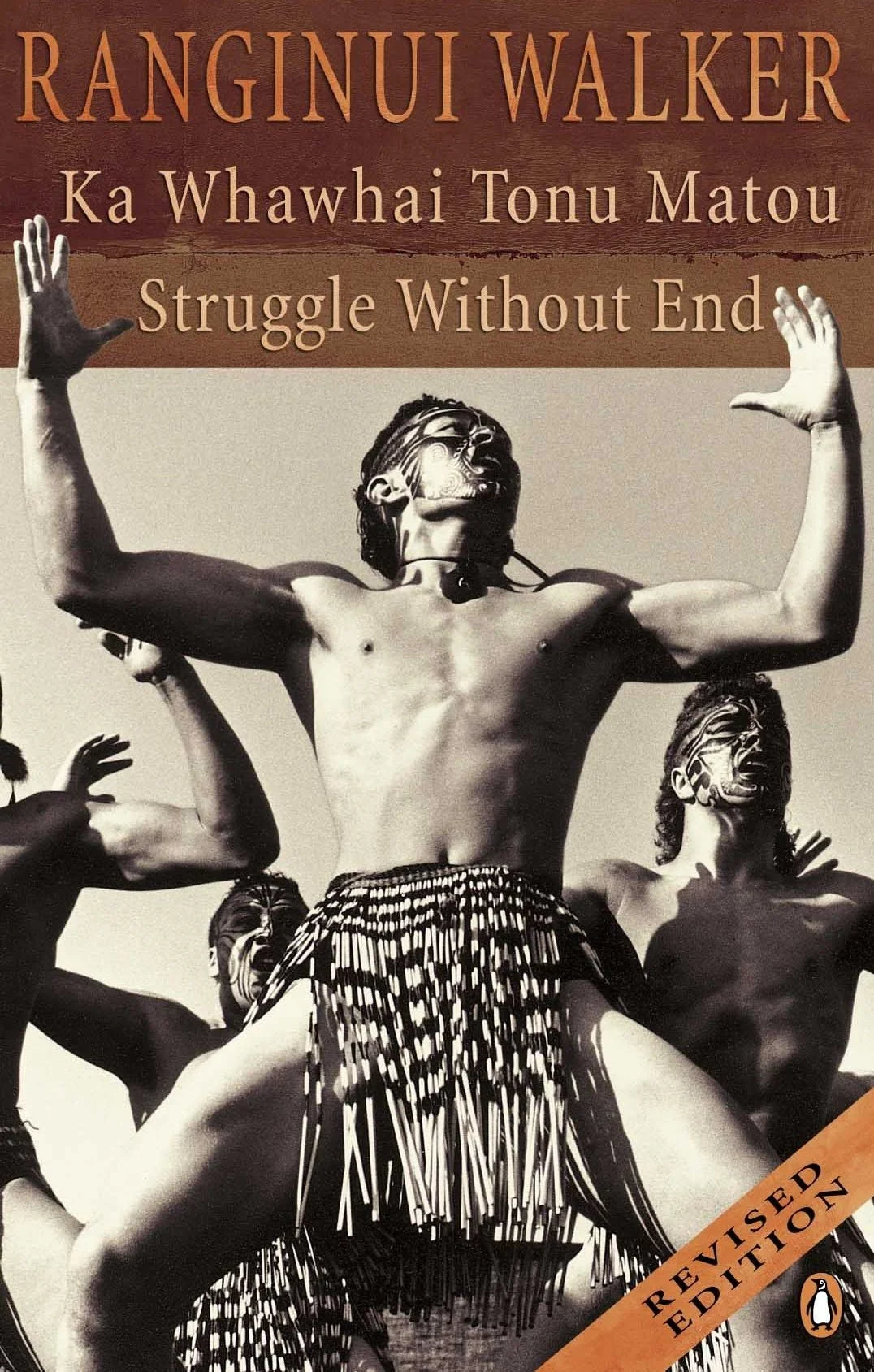
Ka Whawhai Tonu Mātou: Struggle without End by Ranganui Walker $45
Since the mid-nineteenth century, Māori have been involved in an endless struggle for justice, equality and self-determination. In this book Dr Walker provides a uniquely Māori view, not only of the events of the past two centuries but beyond to the very origins of Māori people.
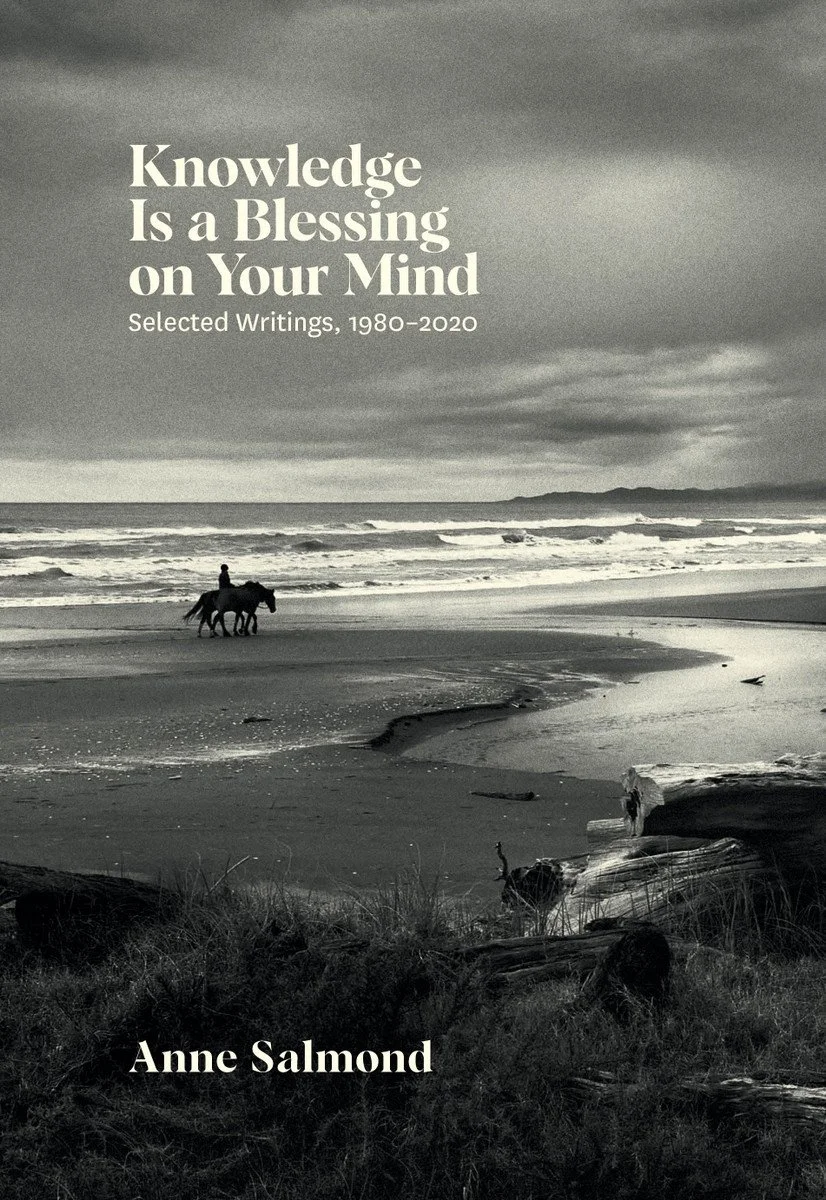
Knowledge Is a Blessing on Your Mind: Selected Writings, 1980–2020 by Anne Salmond $65
This book traces Anne Salmond's journey as an anthropologist, as a writer and activist, as a Pakeha New Zealander, bringing together her key writing on the Maori world, cultural contact, Te Tiriti and the wider Pacific.
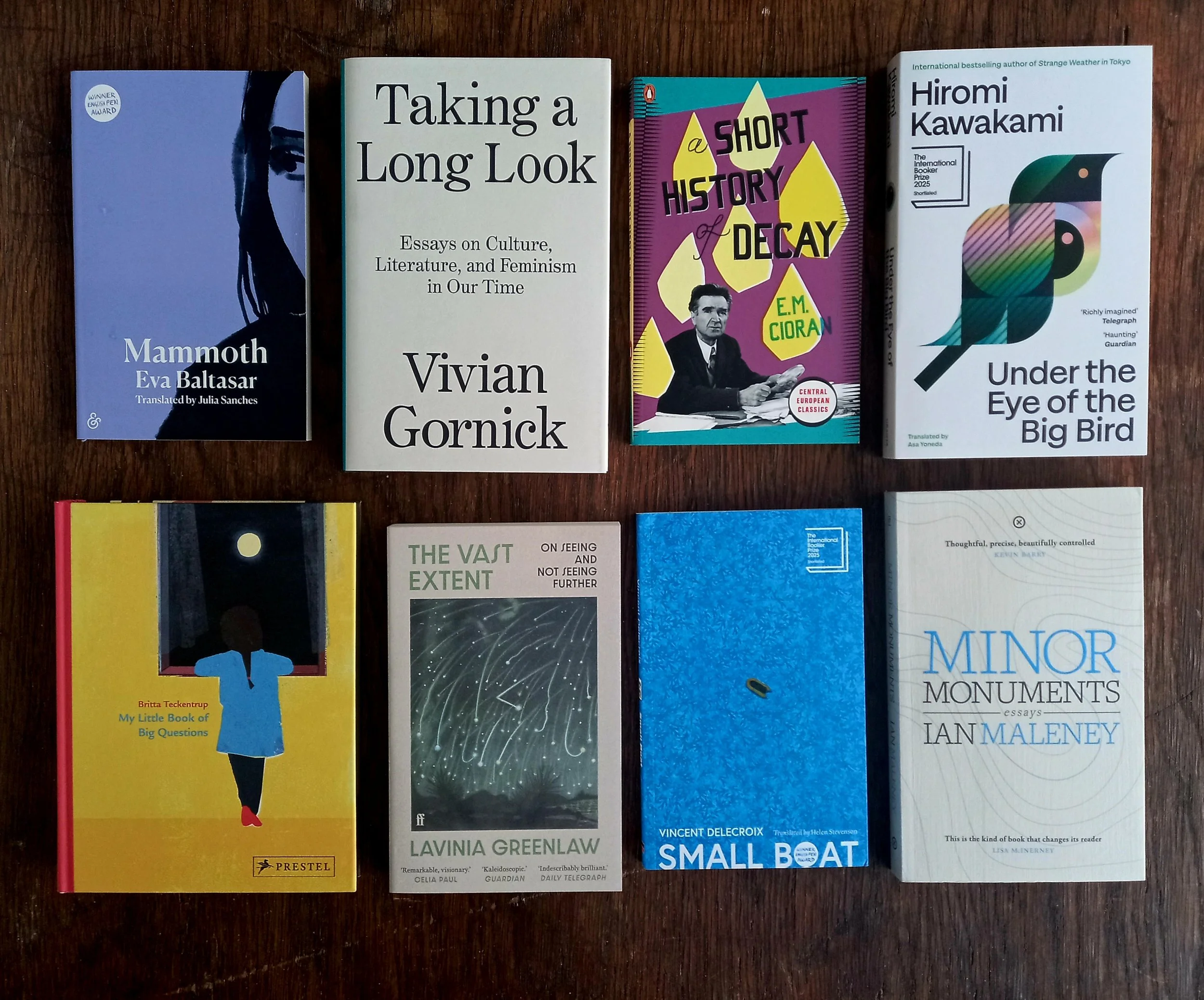
A selection of similarly sized books from our shelves. Click through to find out more:
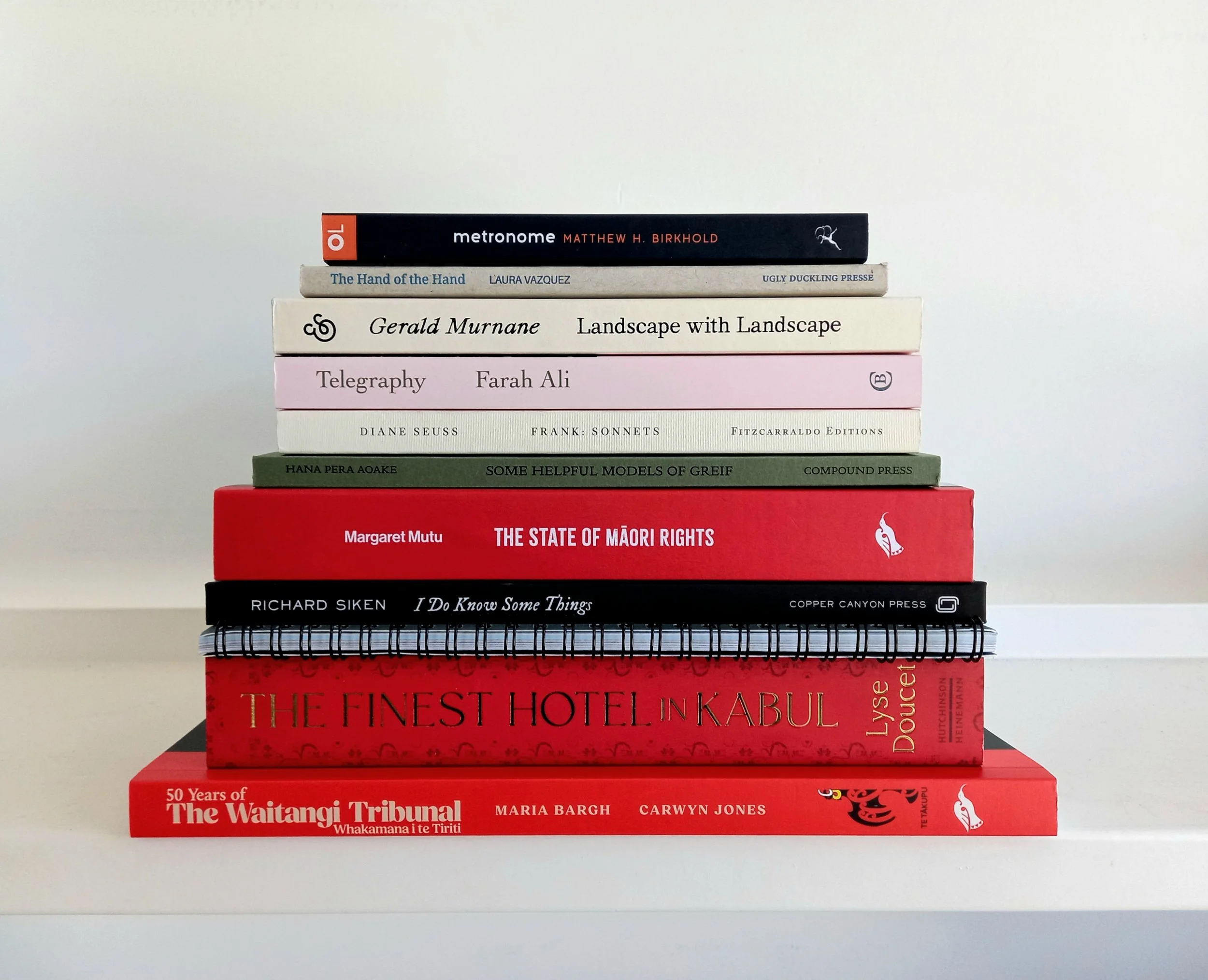
All your choices are good! Click through to our website (or just email us) to secure your copies. We will dispatch your books by overnight courier or have them ready to collect from our door in Church Street, Whakatū.
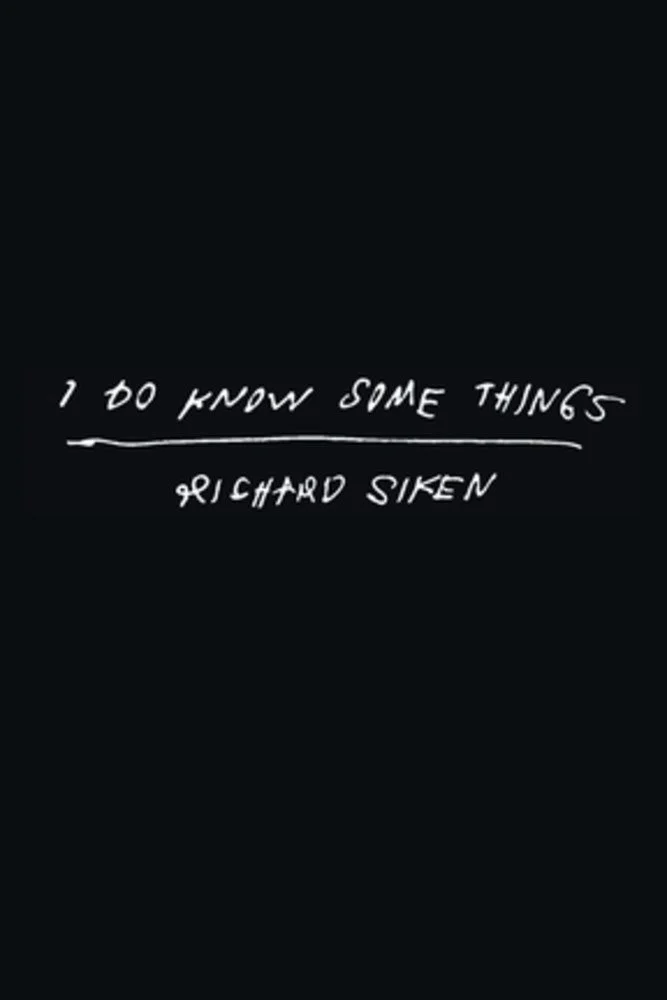
I Do Know Some Things by Richard Siken $50
Richard Siken's long-anticipated third collection, I Do Know Some Things, navigates the ruptured landmarks of family trauma: a mother abandons her son, a husband chooses death over his wife. While excavating these losses, personal history unfolds. We witness Siken experience the death of a boyfriend and a stroke that is neglectfully misdiagnosed as a panic attack. Here, we grapple with a body forgetting itself — "the mind that / didn't work, the leg that wouldn't move...". Meditations on language are woven throughout the collection. Nouns won't connect and Siken must speak around a meaning: "dark-struck, slumber-felt, sleep-clogged." To say "black tree" when one means "night." Siken asks us to consider what a body can and cannot relearn. "Part insight, part anecdote," he is meticulous and fearless in his explorations of the stories that build a self. Told in 77 prose poems, I Do Know Some Things teaches us about transformation. We learn to shoulder the dark, to find beauty in "The field [that] had been swept clean of habit." Recommended. [Hardback]
"An astonishing feat of poetic prowess. Siken has created 'an encyclopedia of myself,' a kaleidoscope of memory, language and identity that reveals — at times revels — in the faultiness of our own narratives. Siken's voice — and language — is both rooted and aloft, even as he avers that these are not 'poems of song.' Beyond such marvels, this is a virtuosity of candor and technique, bound by a seemingly effortless linguistic choreography that leans into multiplicity and mutability, with continuous sparks and joys, from one of our finest contemporary poets." —Mandana Chaffa, Chicago Review of Books
"The second-person strategies of Crush are abandoned in I Do Know Some Things for a more direct style, but Siken's signature intensity still throbs between sentences. Siken's prose is often deft and exciting. As he relearned everything, the prose poem helped him rediscover how to create poetic tension, how to be dynamic without the gravity-defying magic of enjambment. Syntactic variation. Quick, unexpected shifts in register. Artful repetition. These are all refined strategies in the collection. The prose is also a steadying element. It is another way of not losing oneself, of not falling through the cracks." —Richie Hoffman, Yale Review
>>Wiped clean.
>>The most fundamental poetic device.
>>Landmarks for meaning.
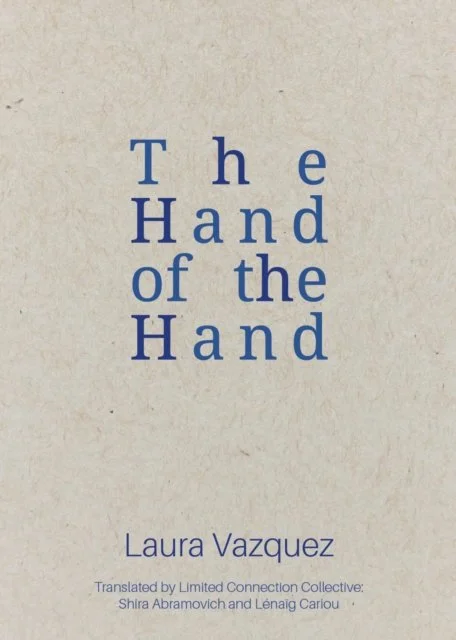
The Hand of the Hand by Laura Vazquez (translated from French by Shira Abramovich and Lénaïg Cariou) $48
The Hand of the Hand brings us poetry from a visceral alternate world in which earth, animal, and human intertwine — where stomachs have meadows, milk pours itself over trees, and flies wash the dead. Vazquez pulls deceptively simple, bare language into puzzling formations, creating an ambient unease. By turns lyrical and absurd, The Hand of the Hand explores the mystery and strangeness of what it means to be both speech and body, tongue and dirt. English/French bilingual edition. [Paperback]
”The tentacular porousness of Laura Vazquez’s début collection sweeps selfhood off its feet.” —Sarah Riggs
”This remarkable and subtle poetic series moves continually outward—one thing leads to another and another, gaining momentum until its evocations achieve a true fusion of body and world. Whether through forests, ants, stones, or words, it’s a fusion that allows the reader, too, to become one with the world as a unified gesture, and it’s the hand—as bridge, as touch, as grasp—that animates this gesture, this hand that seems ubiquitous, which, in fact, it is. “ —Cole Swensen
”In this knockout first collection in English, Laura Vazquez shows us the simplicity and the complexity of the real. But what is the real? It’s these poems, written right on the very skin of it, where the human and everything else feel it. These poems, like Lucretius’, explain the world to us at the granular, allowing us to see these strange perceptions and arrangements of body (‘I folded my tongue, the way I know how’) in all its pleasure and wonder.” —Eleni Sikelianos
>>Read some extracts.
>>The Endless Week.
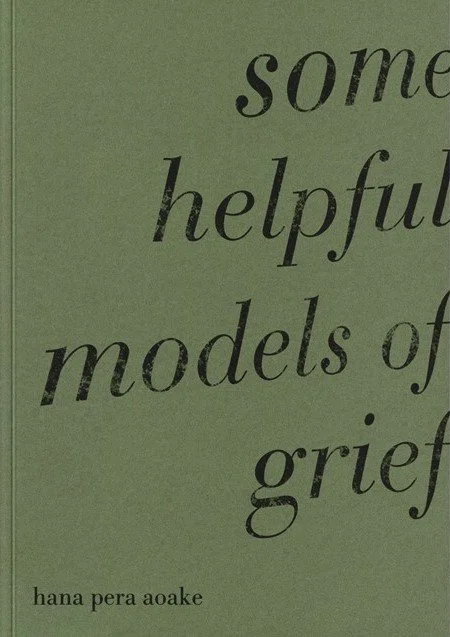
Some Helpful Models of Grief by Hana Pera Aoake $30
A composite chronicle of various loves — desired, lost, or never realised — and their corresponding joys and griefs against the backdrops of contemporary art and late capitalism. These poems radiate with Aoake's characteristic force, tenderness, intelligence, and humour, often all within the very same breath. The personal is the political is the personal. [Paperback]
”Everything Hana writes has a pulse. It could be moss, Britney or Plato but it sings a song that is nervous, in the body and out of the body. You’d be a fool not to take in all of Hana’s grins.” —Talia Marshall
”Hana’s writing is daring, elliptical, charismatic and above all, interesting. The kind of writer where it doesn’t matter what the subject is, you know you are always in good company.” —Hera Lindsay Bird
“He haerenga whakatautau, he haerenga atamai, he haerenga ngoto. Sometimes difficile, always différente, Some helpful models of grief is an unique, polymorphous panorama of pāmamae that will be sure to beguile any reader.” —Vaughan Rapatahana
”Hana has always had a way of using words to weave together complex stories and narratives. The words and pieces found throughout this collection are tender and beautiful.” —Khadro Mohamed
>>Read some extracts!
>>Look inside.
>>A bathful of kawakawa and hot water.
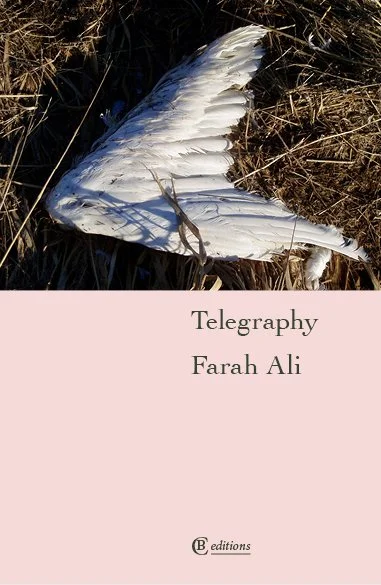
Telegraphy by Farah Ali $38
Growing up in Pakistan, Annie experiences the death of her mother, goes to college in Karachi, falls in love with a singer in a band, marries the wrong man, and all her life has visions and illnesses no doctor can explain. Signals are received by the body from across time and space. Passages interwoven with Annie’s narrative include Vesalius stealing the corpse of a hanged man, a visit to the house of the 17th-century Dutch anatomist Frederik Ruysch, correspondence between far-flung friends in the 19th-century Ottoman Empire, a family’s centuries-long dispersal following an earthquake in Kibyra in 23 CE, and a man stepping onto a landmine in contemporary Waziristan. [Paperback with French flaps]
‘“Farah Ali’s novel, Telegraphy, connects the past with the present, the mythical with the ‘real’. It connects our desires, our longing, the fear that haunts even waking hours, with what we end up becoming — pieces of a whole that was fractured from the beginning, the skin around the bones just a fragile casing for the unbearable weight of suffering. Well crafted, deeply pensive, this is a novel that speaks to each one of us, if we dare to speak to ourselves.” —Feryal Ali Gauhar
”Telegraphy is a deeply strange book. The ethereal quality of Farah Ali’s writing holds this curious, clever, almost devious book with such tenderness, I felt I was in the hands of a writer who had been working for decades to distil this fine work.” —Lara Pawson
”A true book of the body, its pains and resonances, and a bold, unique structure with a captivating voice.” —Han Smith
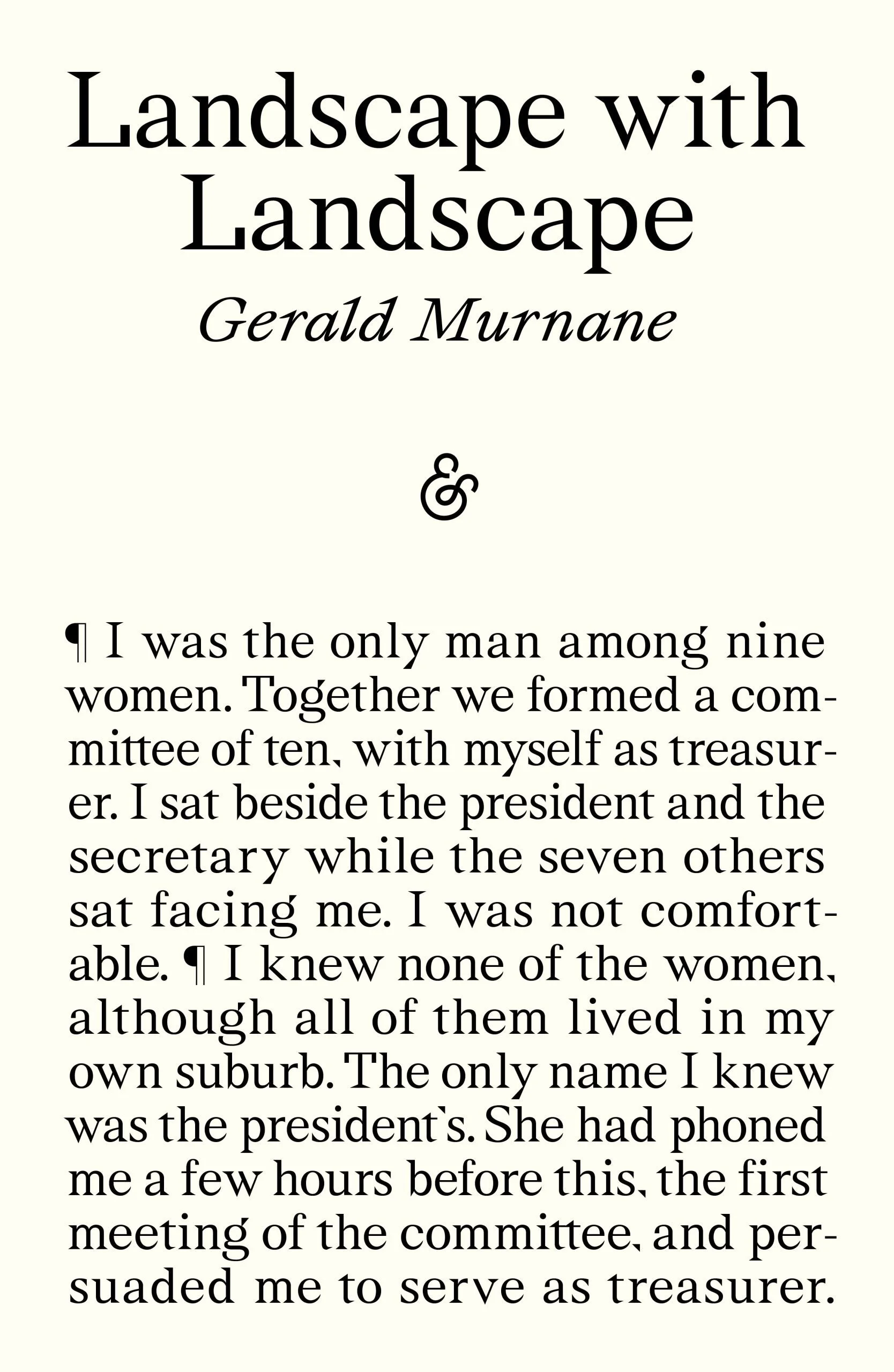
Landscape with Landscape by Gerald Murnane $48
Landscape with Landscape was Gerald Murnane's fourth book, after The Plains, and his first collection of short fiction. When it was first published, thirty years ago, it was cruelly reviewed. "I feel sorry for my fourth-eldest, which of all my book-children was the most brutally treated in its early years," Murnane writes in his foreword to this new edition. In hindsight it can be seen to contain some of his best writing, and to offer a wide-ranging exploration of the different landscapes which make up the imagination of this extraordinary Australian writer. Five of the six loosely connected stories also trace a journey through the suburbs of Melbourne in the 1960s, as the writer negotiates the conflicting demands of Catholicism and sex, self-consciousness and intimacy, alcohol and literature. The sixth story, 'The Battle of Acosta Nu', is remarkable for its depth of emotion, as it imagines a Paraguayan man imagining a country called Australia, while his son sickens and dies before his eyes. [Paperback with French flaps]
”Murnane is unlike anyone else, the sort of writer who demands to be read in a new way but, above all, demands to be read.” —Brian Evenson, Chicago Review of Books
”The emotional conviction is so intense, the sombre lyricism so moving, the intelligence behind the chiselled sentences so undeniable, that we suspend all disbelief.” —J. M. Coetzee
”This is some of his finest writing, and a major work by any measure.” —Michael LaPointe, Times Literary Supplement
>>Read Thomas’s reviews of some others of Murnane’s fictions.
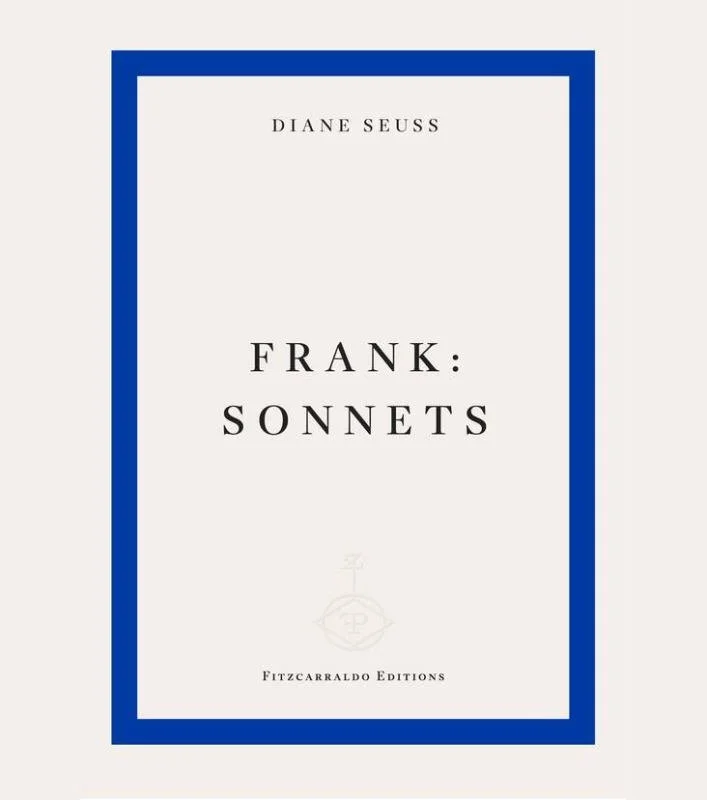
frank: sonnets by Diane Seuss $35
”The sonnet, like poverty, teaches you what you can do / without,” Diane Seuss writes in this brilliant, candid work, her most personal collection to date. These poems tell the story of a life at risk of spilling over the edge of the page, from Seuss's working-class childhood in rural Michigan to the dangerous allures of New York City and back again. With sheer virtuosity, Seuss moves nimbly across thought and time, poetry and punk, AIDS and addiction, Christ and motherhood, showing us what we can do, what we can do without, and what we offer to one another when we have nothing left to spare. Like a series of cells on a filmstrip, frank: sonnets captures the magnitude of a life lived honestly, a restless search for some kind of 'beauty or relief'. Seuss is at the height of her powers, devastatingly astute, austere, and — in a word — frank. [Paperback with French flaps]
”This book is a response to death, a way of living in knowledge of death's privations. What Seuss is hoping for is an extended enough death to allow for a witty recognition of the shape it is imposing on the life it ends. Beyond that, though, what she wants is enough life to make her death into a kind of 'last rhyme', a sound that radiates both into the past and into the future, where it might make contact with your body, or mine.” —Kamran Javadizadeh, London Review of Books
”Seuss layers the work with a litany of cultural and literary references. It is at that bright, fascinating collision between tradition and innovation that these poems reside.” —Soft Punk Magazine
”These poems are taut and careful glimpses into a life lived on the fringes but threaded with wildness; there is a constant sense that everything they contain might erupt at any moment. If autobiographical writing is an attempt to fix a life inside language, frank: sonnets and Modern Poetry are both convincing arguments for the absolute impossibility of ever really succeeding in doing so. Instead, they offer an alternative: debris, glimpses, constellations, ghosts. Suffering and all its attendant bewilderment is given the space it deserves, and pleasure, transcendence, and love are all given due space alongside it.” —Maija Makela, Stinging Fly
>>What is a coffin for?
>>Body parts will always wash up.
A Parliament of Fog by Layne Waerea $35
For more than a decade, fog has rematerialised throughout the work of lawyer-turned-artist Layne Waerea. Her public interventions and performances explore what she describes as “legal-social subjectivities”, centering the implications of Te Tiriti o Waitangi as Aotearoa New Zealand’s only living treaty with Māori. For Waerea, the act of chasing fog pursues a physical or ideological space where borders can be tested — “a fertile area where there are lots of question marks” — and where imagination, hope, participation, and failure can be explored. A Parliament of Fog celebrates ten years of Waerea’s ongoing project the chasing fog club (Est. 2014), and also marks the occasion of its second-ever “Annual General Meeting.” Developed over 2023-24 within a fraught political climate leading up to the New Zealand elections and the first term of a new right-wing coalition government, the publication approaches the club — and Waerea’s recent practice — as a springboard for taking the pulse of the moment. Reflecting on the recent activities of the club in dialogue with a group of collaborators, A Parliament of Fog considers how conditions of opacity, uncertainty, and transition might offer space for collective reimagining. Featuring contributions by the chasing fog club (Est 2014), Sophie Davis, Ioana Gordon-Smith, Deborah Rundle, and Layne Waerea. [Paperback (appropriately spiral-bound)]
>>Look inside.

50 Years of the Waitangi Tribunal: Whakamana i te Tiriti edited by Maria Bargh and Carwen Jones $50
The Waitangi Tribunal has been a unique and integral part of the Aotearoa New Zealand judicial and legislative process, upholding te Tiriti o Waitangi and providing expertise on historical claims, Maori language, land, resources and contemporary issues. This collection contains chapters on themes of land, water and the natural environment, the settlements process, the Kaupapa Inquiries, and issues of social policy, mana, and rangatiratanga, each written by an expert in the area. There are also interviews with two past chairpersons of the Tribunal. The collection highlights the breadth of issues considered by the Tribunal and also the impact the Tribunal has had on complex legal concepts, representation of communities, and understanding of te Tiriti o Waitangi. [Paperback]
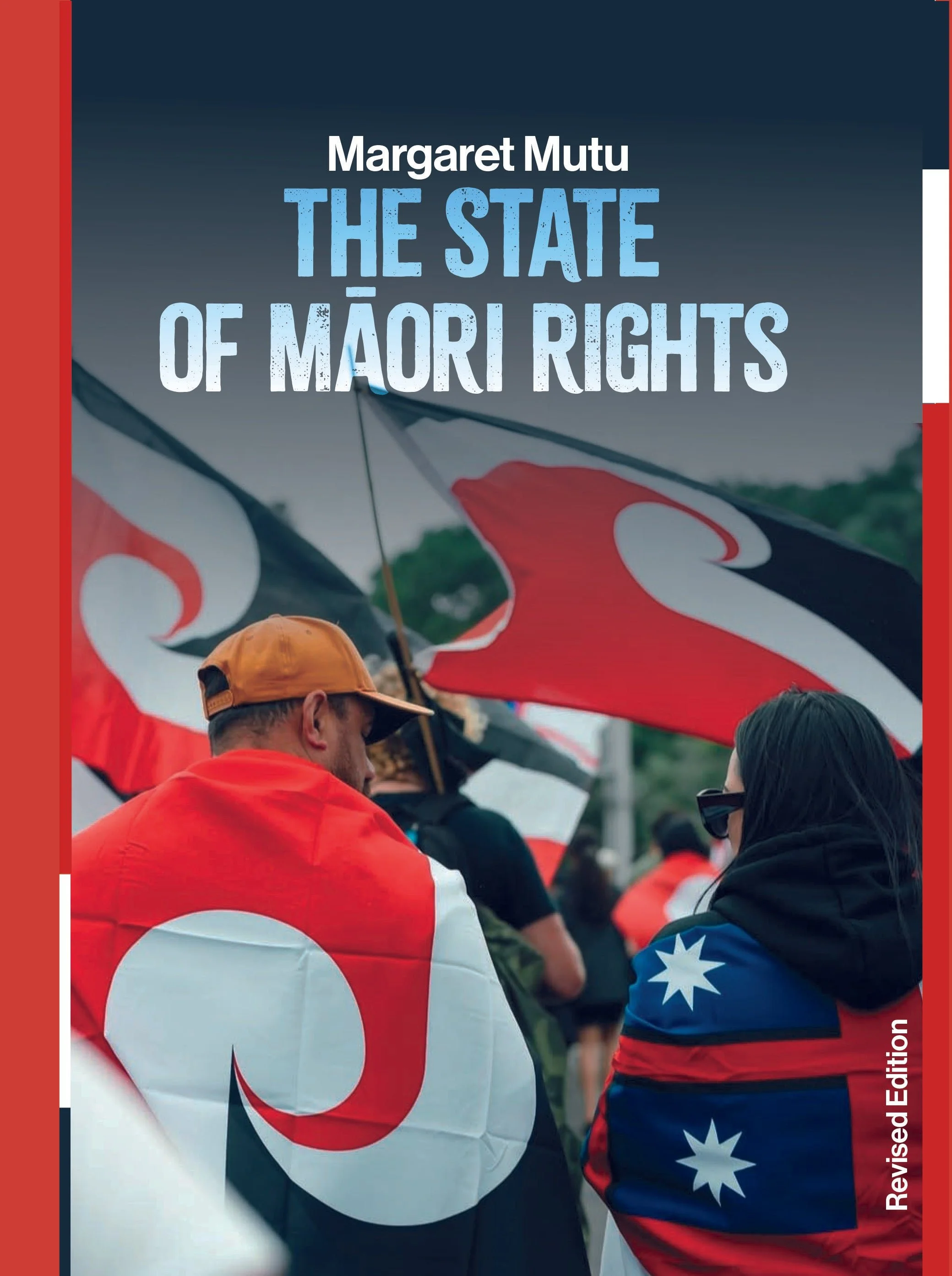
The State of Māori Rights by Margaret Mutu $55
The State of Māori Rights was first published in 2011 and brought together a Māori view of events and issues that occurred between 1994 and 2009 with a direct impact on Māori. This includes the 1994 fiscal envelope policy debate, the 50,000-strong protest march against the foreshore and seabed legislation, the Waitangi Tribunal and its Treaty claims process, and media attacks on Māori MPs. This new edition, revised and updated with new chapters, brings Margaret Mutu’s The State of Māori Rights through to 2024, a time when Māori rights under the Treaty of Waitangi are once again being violated. Mutu covers Māori responses to COVID-19 and to national disasters such as the White Island eruption and the Christchurch Mosque Attacks on the Muslim community. Māori initiatives and success stories run through these years too, which, in Mutu’s words, “encourage us not to lose sight of our ancestors’ vision”. [Paperback with French flaps]
Metronome by Matthew H. Birkhold $23
When the metronome was invented in 1815, it transformed the music world. Composers and musicians now had a tool that could help them maintain a precise and consistent tempo. And while giants of classical music like Beethoven early embraced the metronome and proponents came to see its essential role in music instruction, critics believed it created mindless players and inhibited the creation of great art. The metronome evokes strong feelings because of its uncompromising power. Through it, we are connected to the past, propelled into the future, and kept focused on the present. For that reason, this object has appeared in unlikely settings as athletes, scientists, psychologists, authors, and other professionals have found uses for it beyond music. Metronome uncovers the surprising and fraught history of a timeless object. [Paperback with French flaps]
”In this clever and thoughtful exploration, Matthew Birkhold reveals how a simple ticking device became both liberator and tyrant, reshaping not just how we make music but how we understand rhythm, precision, and ultimately, our own humanity.” —Christopher Cerrone
”Matthew Birkhold reveals the fascinating history of the metronome that not only covers music, but touches upon dance, art, education, philosophy, physics, psychology, and sports medicine. Devised by Johann Nepomuk Maelzel in 1815, Beethoven was an early supporter, but soon Maelzel's metronome (the original M.M.) inspired passionate debates amongst musicians, conductors, composers, pedagogues, and musicologists. Birkhold has successfully unveiled the deeper meanings of an innocuous device that spells out perfect time, as opposed to human time. An illuminating read.” —Fumi Tomita
>>How starfish move without a brain.
>>Other books in the excellent ‘Object Lessons’ series.
The Finest Hotel in Kabul: A people’s history of Afghanistan by Lyse Doucet $40
When the Inter-Continental Hotel opened in Kabul in 1969, it reflected the hopes of the country: a glistening white edifice that embodied Afghanistan's dreams of becoming an affluent, modern power. Five decades later, and the Inter-Continental is a dilapidated, shrapnel-damaged shell. It has endured civil wars, terrorist attacks, the US occupation, and the rise, fall and rise of the Taliban. But its decaying grandeur still hints at ordinary Afghans' hopes of stability and prosperity. Lyse Doucet, the BBC's Chief International Correspondent, has been staying at the Inter-Continental since 1988. She has spent decades meeting its staff and guests, and listening to their stories. And now, she uses their experiences to offer an evocative history of modern Afghanistan. It is the story of Hazrat, the octogenarian receptionist who for five decades has been witnessing diplomats and journalists, mujahideen and US soldiers, passing through the hotel's doors. It is the story of Abida, the first female chef to work in the Inter-Continental's famous kitchen after the fall of the Taliban in 2001. And it is the story of Sadeq, the 24-year-old front-desk worker who personifies the ambitions of a new generation of Afghans. The result is a remarkably vivid account of how ordinary Afghans have experienced half a century of disorder. [Paperback]