
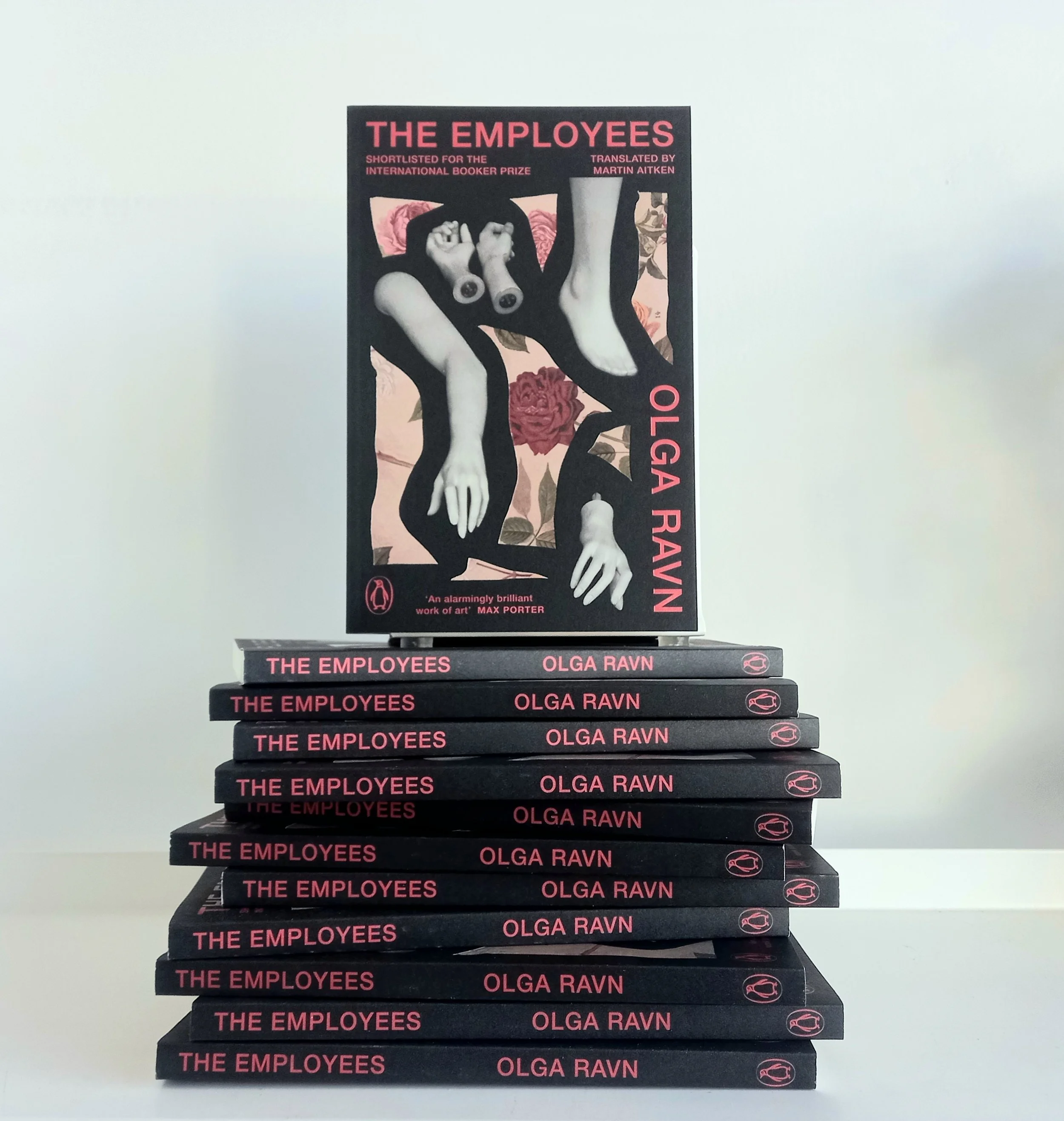
The Employees is a novel written in short statements; entries based on a series of interviews to gauge worker contentment and their response to the cargo on board. Yes, it’s the future: the 22nd century to be exact and the crew of The Six-Thousand Ship are docked on planet New Discovery collecting specimens. These specimens, Objects, are having a profound effect on the crew, both the human and humanoid workers and the bureaucrats have been sent to record their statements and to gauge how the Objects are impacting the workflow and productivity of the crew—a typical corporate-world strategy: get the workers to explain themselves so a solution, probably not favourable to said workers, can be implemented. What unfolds in the 179 Statements is surprising. The Objects of New Discovery are both feared and loved; there are antagonisms, as well as attraction, between the humans and the humanoids; some of the humans are living in a nostalgic past lost in images — holographs of their children to dwell on — and craving experiences of a long-lost Earth; and the humanoids are various, and their different upgrades have made some indistinguishable from the humans and increasingly independent, causing friction in their role, in particular, towards the Objects. Each interview and recorded statement reveals a little more to the reader, building a sense of this world. The ship has a mission and the crew set roles, yet somehow the Objects have upset this carefully tuned equilibrium. What these Objects are is never fully explained and I imagine for each reader they will present differently. Some are smooth, others colourful, yet others fine-haired, some produce eggs and are full of seeds. Are they large or small? They seem carry-able, and one of the workers describes sitting with one in his lap. The crew assume vastly different relationships with the Objects. It may be that the humanoids respond more positively, sensing some similarities in their ‘objectness’, while the humans find them more confusing, and some are repulsed by them. It is not always clear whether a statement is from a human or humanoid, adding to the obliqueness of the text. With Ravn’s choice of structure, you could imagine a staccato-like form, and while ‘business’ language and systems are apparent and the environment of the sterile ship evokes a science laboratory, the tone of the novel is more evocative than technical. She cleverly brings these recorded conversations into the realm of lyricism, with the workers' fee lings and longings exposed, along with their pleasure and anger of their purpose. From the laundry staff to the captain to the doctor, each expresses their perspective. While some refuse to speak, rebelling against the Committee, others are relieved to unburden themselves. The Employees is a fascinating look at what constitutes a human, and what might be an object — where does sentience begin? — and are we ever really autonomous?
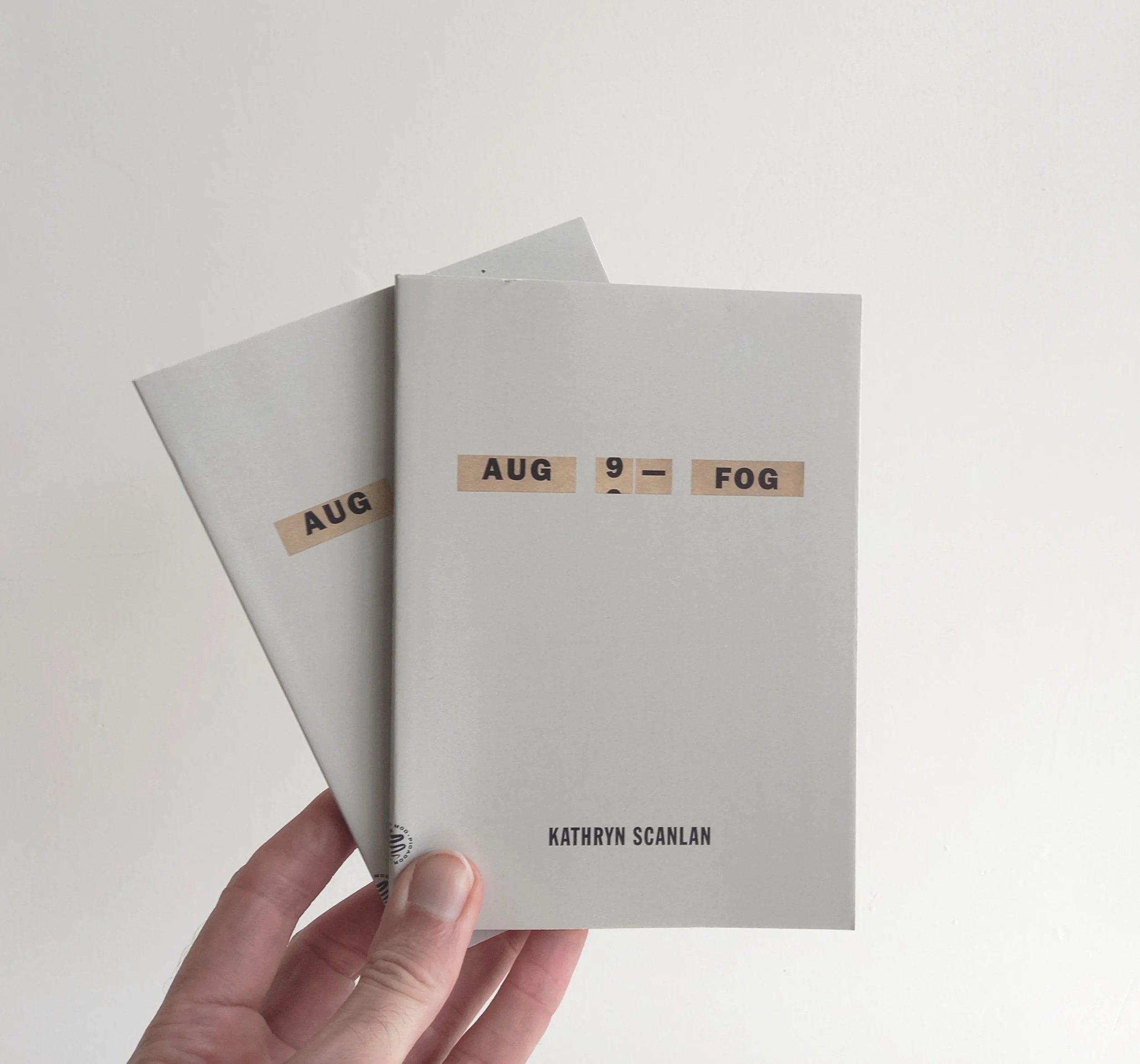
At what point does literature begin, he wondered, if there is such a thing as literature and if it does at some point begin. Is it not after all the case, he wondered, that we are assailed at all times and in all circumstances by an unbearable infinitude of details that we must somehow resist or ignore or numb ourselves to almost entirely if we are to bear them, we can only be aware of anything the smallest proportion of things and stay alive or stay sane or stay functioning, he thought, we must tell ourselves a very simple story indeed if we are to have any chance of functioning, we must shut out everything else, we must only notice what we look for, what our story lets us look for, he thought, the froth now frothing in his brain, or rather in his mind, our stories blot stuff out so that we can live, at least a little longer. We are so easily overwhelmed and in the end we are all overwhelmed, the details get us in the end, but until then we cling to our limitations, to the limitations that make the unbearable very slightly bearable, if we are lucky. All thought is deletion. The stories that we think with, he thought, are not possible without an ongoing act of swingeing exclusion, thought is an act of exclusion. What would we put in a diary? What would we put in an essay? What would we put in a novel? If we boil it all down how far can we boil it all down? We find ourselves alive, the details of our life assail us, eventually overwhelm us and destroy us. That’s our story. We die of one detail too many, but if it wasn’t that detail that finished us off it would be another, they are lining up, pressing in, abrading us. Can we resist what we understand, he wondered, to the extent that we even understand it? Is art just this form of resistance? At what point does literature begin, if there is such a thing as literature and if it does at some point begin? Is there something in our life that resists exclusion, something that when the boiling down is done is not boiled completely down? Can we move beyond simplification to a countersimplification, he wondered, and what could this even mean? If Kathryn Scanlan found a stranger’s diary at an auction and she read this diary so often that she felt she almost was its eighty-six-year-old author, if a diary’s keeper is an author, she too became the dairy’s keeper, certainly, at least in some sense, and then if she further edited this dead woman’s year, this dead woman’s words, though the woman was not yet dead, obviously, in the year that she kept the diary, when she was the diary’s keeper, not quite yet dead, whose work do we have in Aug 9—Fog, the boiled down boiled down again, this rendering, this literature, we could call it, rendered from life, here in a two-step rendering process? That is no place for a question mark, he thought. The story of the year is a story of death plucking at an old woman’s life, she loses her husband, her health, her spirits, so to call them, a strange term. The details of her life are the ways in which what she loves is torn away but also these details, often even the same details, are the ways in which this tearing away is resisted, he thought, these details are the ways in which what is loved may be clutched, in which what is loved is saved even while it is borne away. “Turning cooler in eve. We had smoked sausages, fried potatoes & onions. Dr. says it’s a general breaking up of his body. I am bringing in some flowers.” Every very ordinary life, and this is nothing but a very ordinary life, he thought, no life, after all, is anything but a very ordinary life, every very ordinary life is caught in the blast of details that will destroy it but or and these are the very details that enable a resistance to this blast, through literature perhaps, so to call it, resistance is poetry, he thought, an offence against time, a plot against unavoidable loss. We resist time and succeed only when we fail. “Every where glare of ice. We didn’t sleep too good. My pep has left me.”
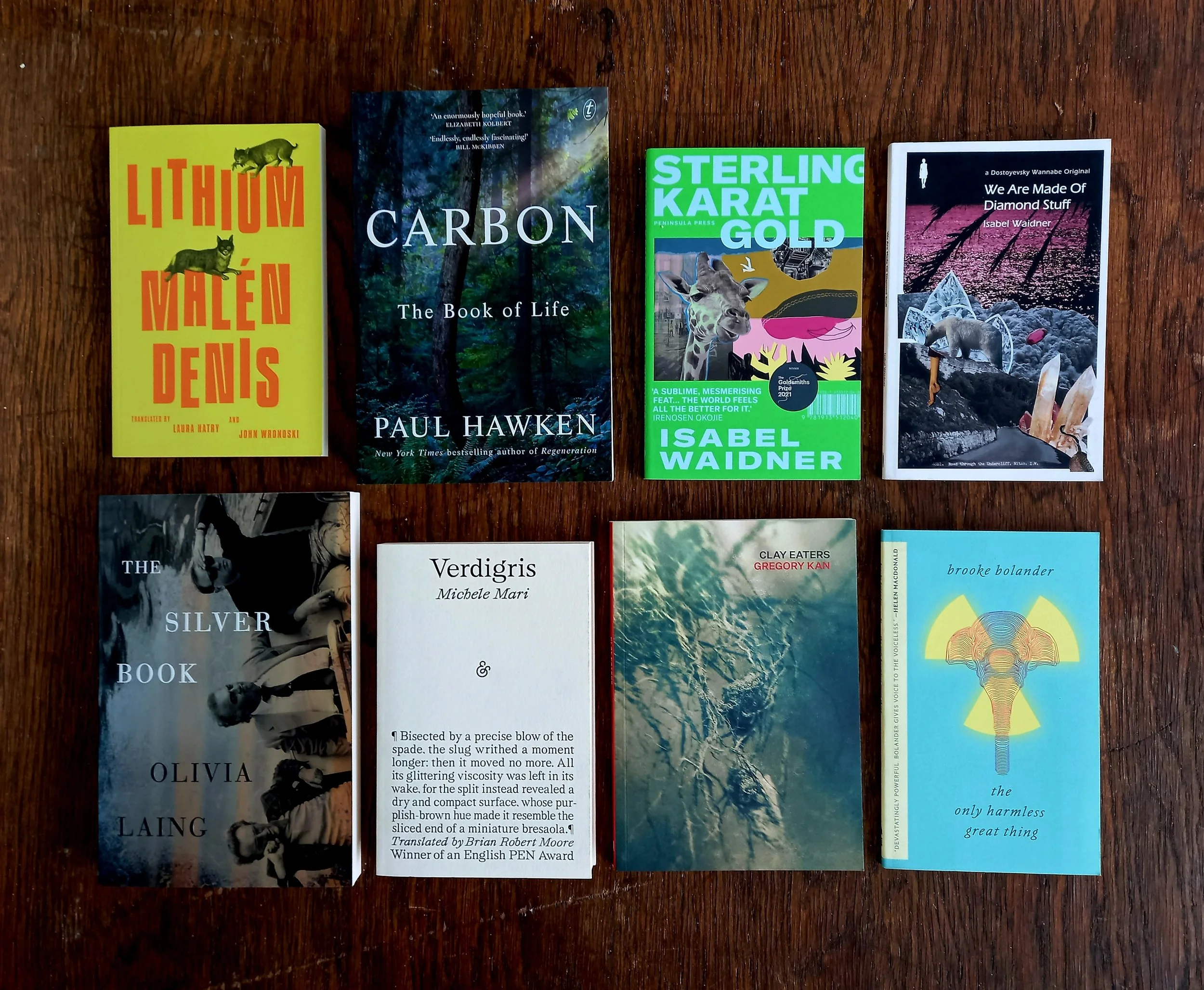
Dig these books from our shelves. Click through to find out more:
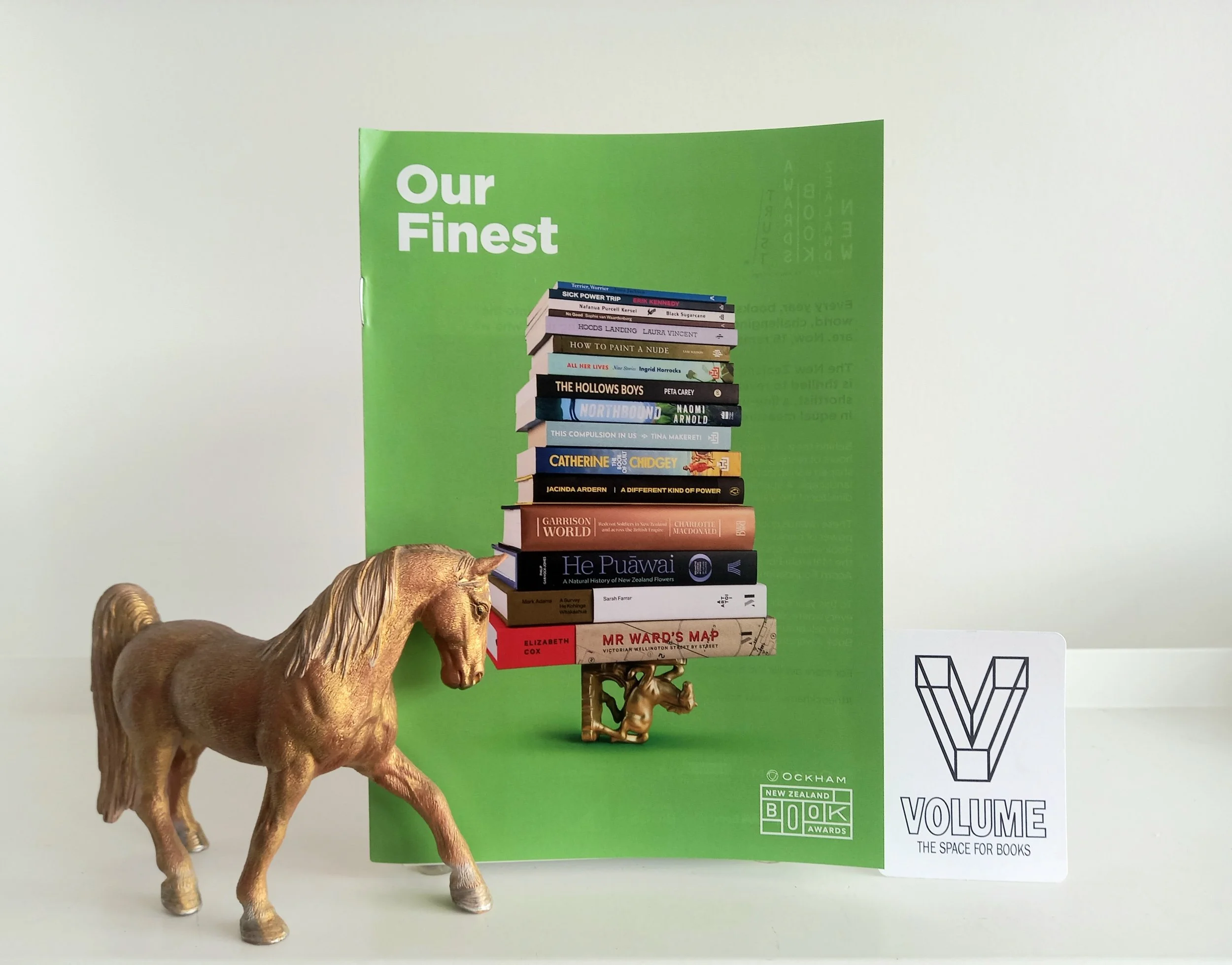
The 2026 short lists for the Ockham New Zealand Book Awards have just been announced. Read what the judges have to say about each of these books, and then click through to our website to secure your copies. We can send your books to you by overnight courier, or have them ready to collect from our door in Church Street, Whakatū.
THE JANN MEDLICOTT ACORN PRIZE FOR FICTION
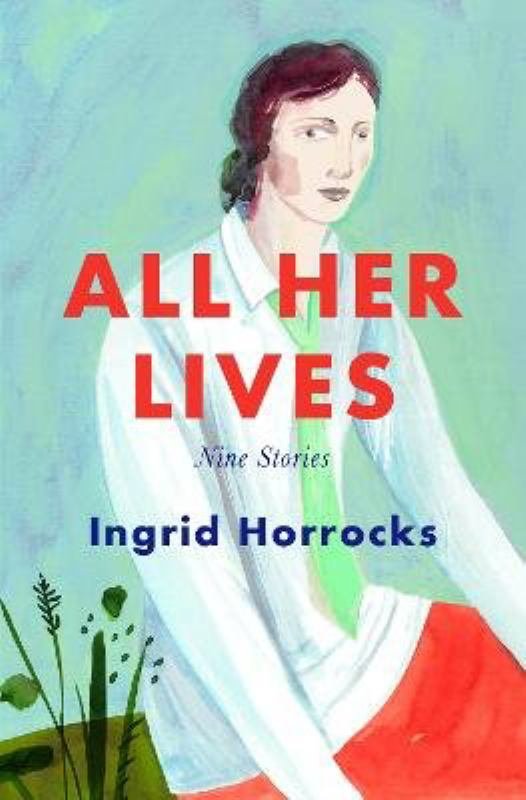
All Her Lives by Ingrid Horrocks (Te Herenga Waka University Press) $35
”Connections abound in this intelligent, skilfully observed story collection. Characters reappear, their past acts echoing through generations. From the life of Mary Wollstonecraft and the troubled legacy of Truby King to the complexities of queer life, the struggles of a single mother and the consequences of political and climate activism, in All Her Lives Ingrid Horrocks subtly depicts the challenges and transformations of women from 1795 to the present day.”
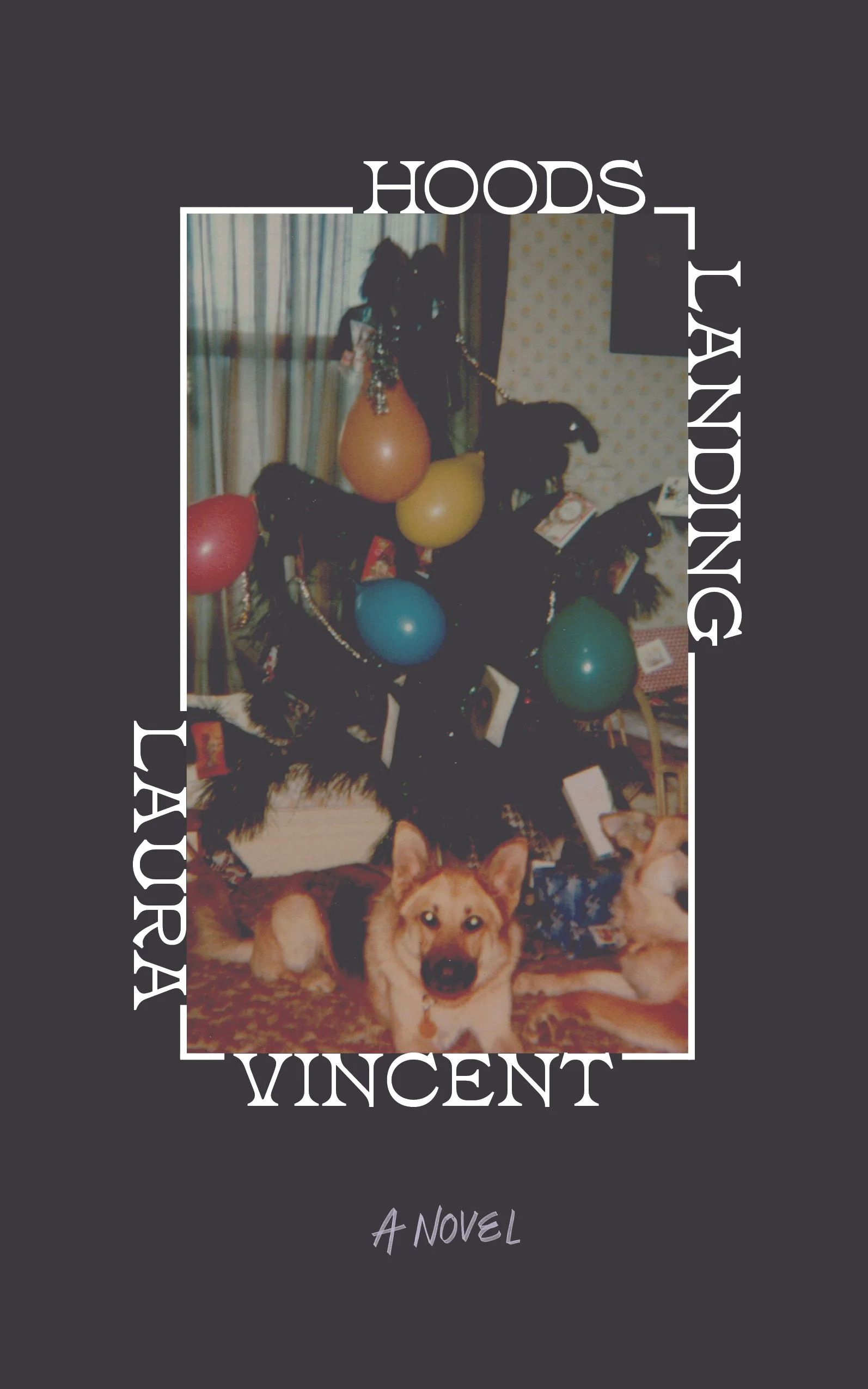
Hoods Landing by Laura Vincent (Ngāti Māhanga, Ngāpuhi) (Āporo Press) $35
”Four generations of the Gordon whānau gather to celebrate Bufty’s birthday in the shrinking settlement of Hoods Landing. Bufty’s youngest daughter, Rita, has yet to announce her cancer diagnosis, and more revelations are in store. Laura Vincent’s novel engulfs the reader in a memorable matriarchal whānau: the decades long tensions and in-jokes, the closely guarded recipes, the tarot readings and the singalongs. Instantly recognisable but utterly unique, epic yet contained, expertly woven and delightfully funny, Hoods Landing contains multitudes.”
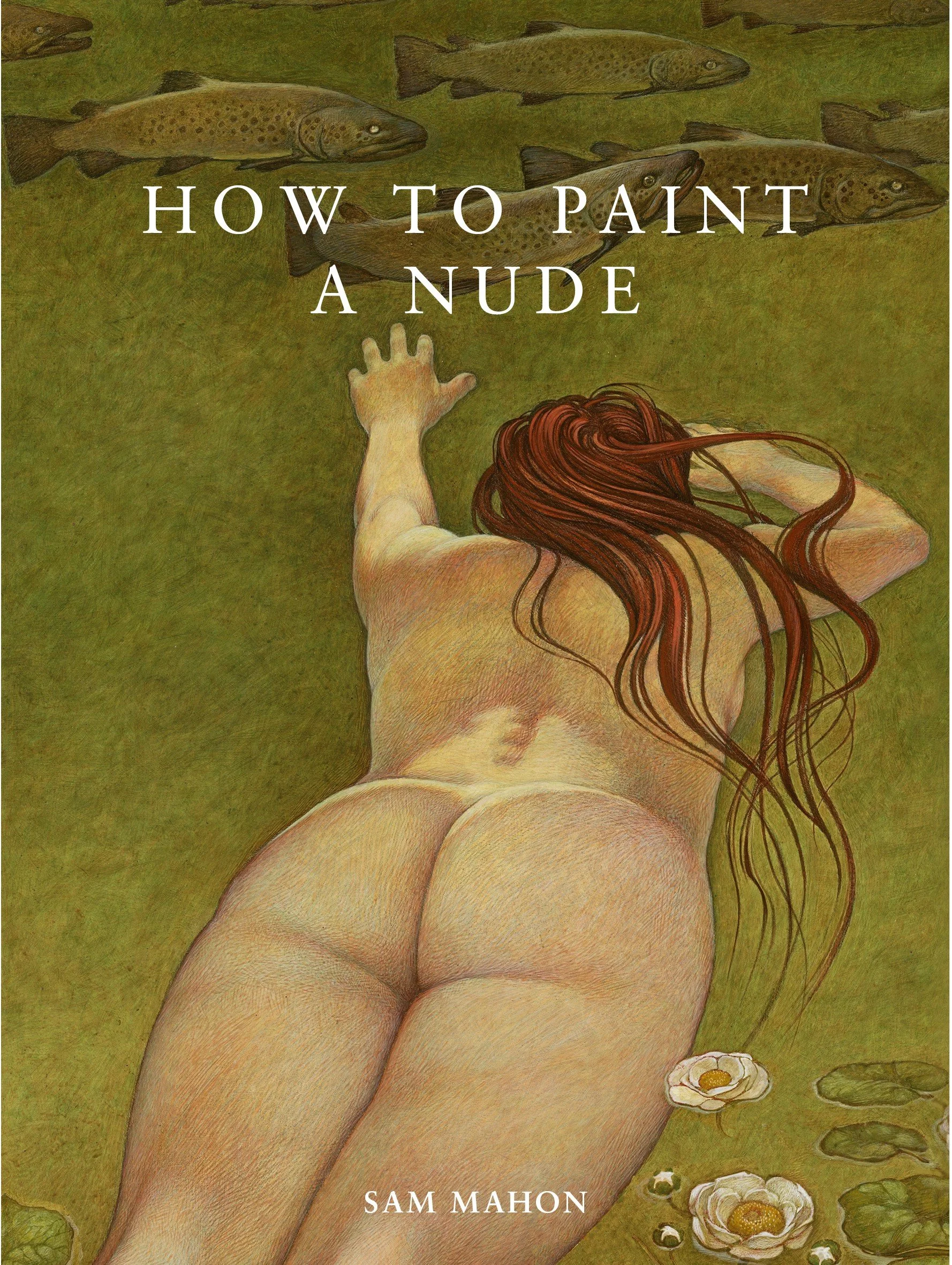
How to Paint a Nude by Sam Mahon (Ugly Hill Press) $40
”A Belarusian refugee and a local artist meet for coffee every Tuesday in pre-quake Ōtautahi to discuss art, romance, political oppression, the degradation of our natural environment and much more. This sly and wry reflection from artist and provocateur Sam Mahon abounds with meta-fictional games and killer one-liners. Mahon may have changed some names but he doesn’t pull punches: ‘Sometimes it is an author’s duty to protect the guilty.'“
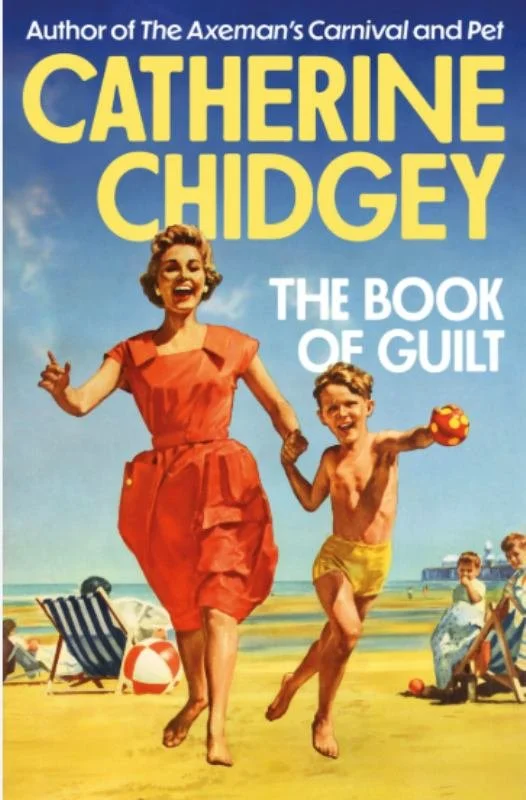
The Book of Guilt by Catherine Chidgey (Te Herenga Waka University Press) $38
”Can good come from evil or must the rot return? Thirteen-year-old triplets are the last remaining residents of a boys’ home, part of a wider scheme on which the UK government is turning its back. Elsewhere, Nancy is never allowed outside by her parents. The connection between these children, the nature of the scheme and the alternate timeline in which events take place are masterfully revealed in Catherine Chidgey’s menacing yet thrilling novel of big ideas.”
MARY AND PETER BIGGS AWARD FOR POETRY
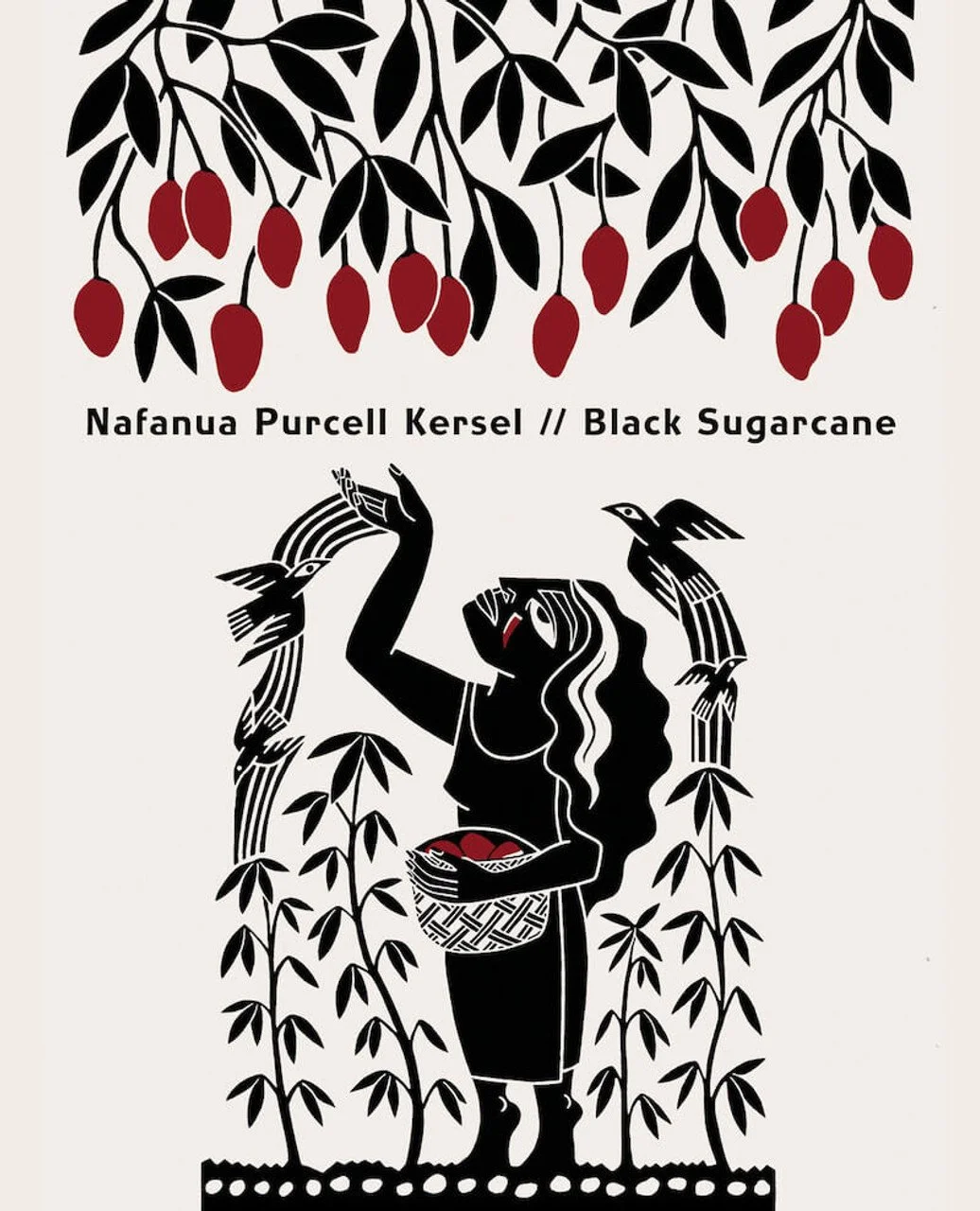
Black Sugarcane by Nafanua Purcell Kersel (Satupa‘itea, Faleālupo, Aleipata, Tuaefu) (Te Herenga Waka University Press) $30
”Traditionally black sugarcane was well known for its medicinal properties, and Nafanua Purcell Kersel’s debut collection serves as good medicine for the soul, its vivid imagery and seamless flow bringing the reader’s attention to the language and traditions of Fa‘a Sāmoa. A powerful new voice who sits confidently alongside well-known Pasifika female poets, she uses storytelling to reveal the people, customs, spirituality and village life of her Pacific homeland.”
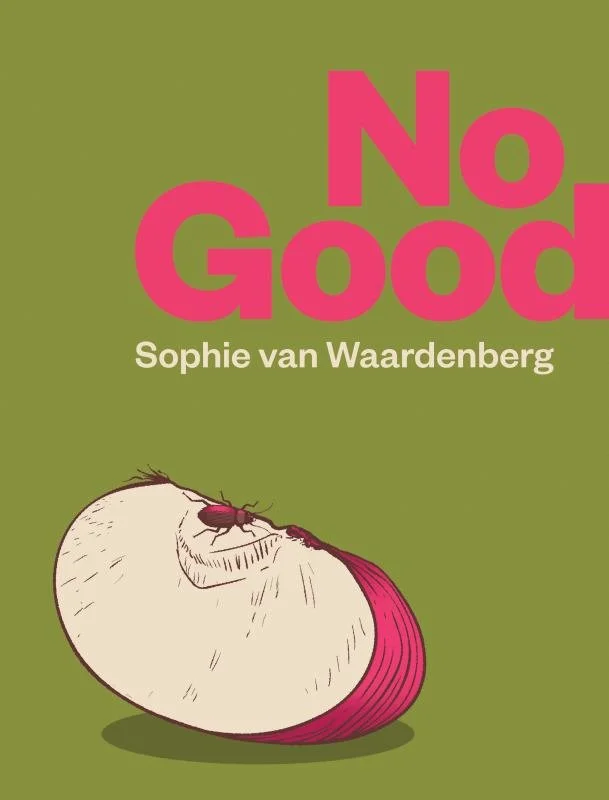
No Good by Sophie van Waardenberg (Auckland University Press) $25
”Rather than make an index of all slights and offences, in No Good Sophie Van Waardenberg takes all the bad stuff and crafts it into something wonderful and refined. Her poems possess the angelic tranquillity of a favourite child on their death bed, cut and pasted into the florid atmosphere of a Bosch painting where love and bereavement come and go. This is a debut poet who continues to blush at the beauty of her world.”
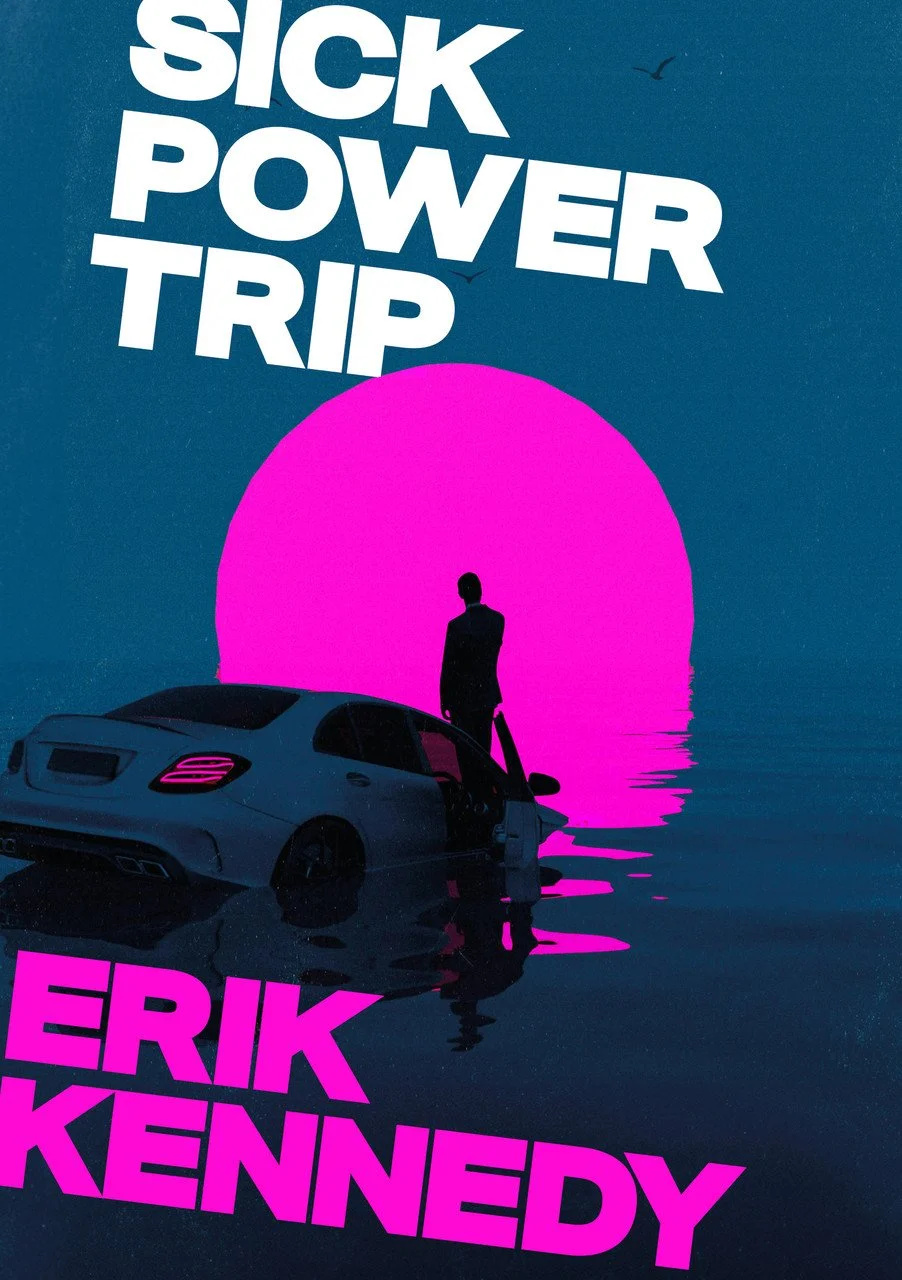
Sick Power Trip by Erik Kennedy (Te Herenga Waka University Press) $30
”Persuasive, subversive, cohesive, immersive ... these and many other rhyming words describe Erik Kennedy’s latest collection Sick Power Trip. In addition to his trademark wit, play and societal awareness, Kennedy’s range and muscularity announce him as a master craftsman; a poet who can bend and mould the shaping of modern life and, in that shaping, reveal something new, something hidden, something human.”
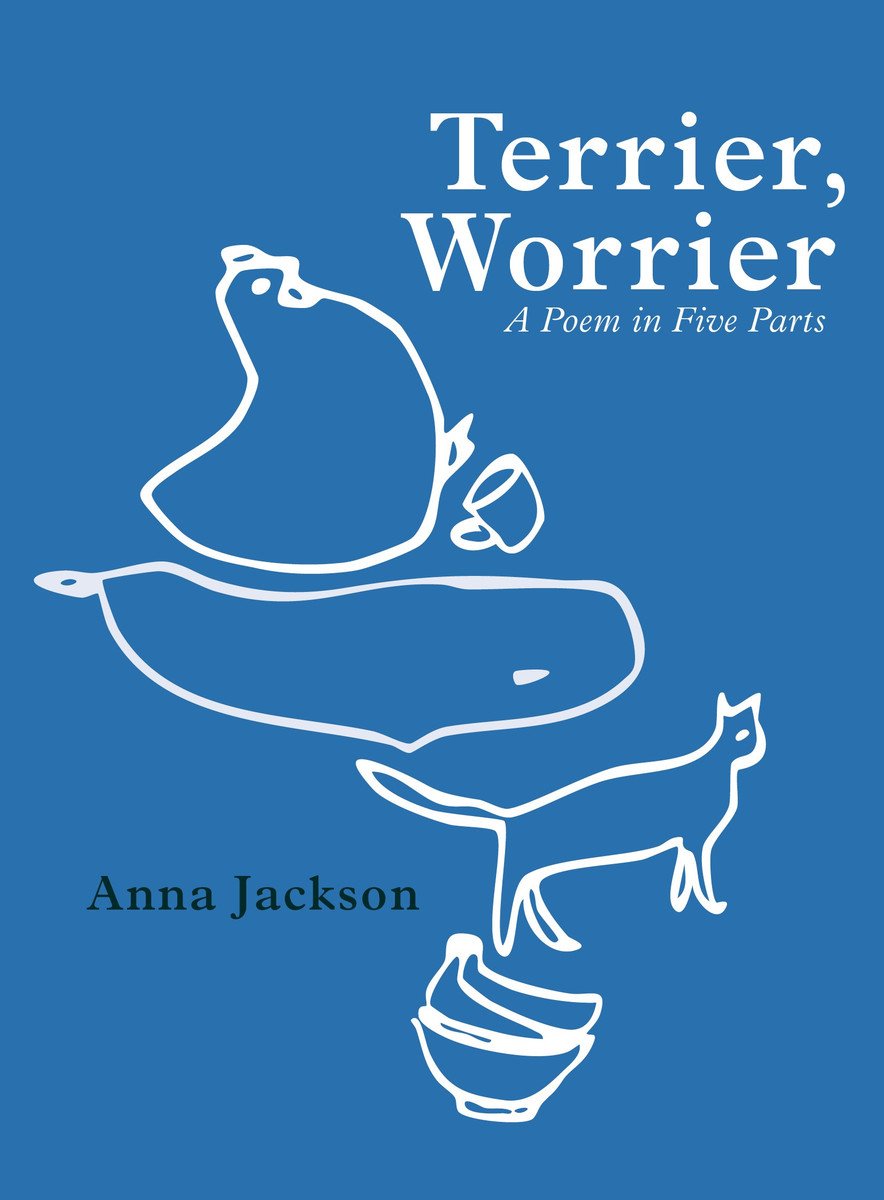
Terrier, Worrier: A poem in five parts by Anna Jackson (Auckland University Press) $25
”Weaving essays through five seasons, beginning and ending in summer, Terrier, Worrier is poetic prose flow at its most extraordinary. Partly autobiographical, the five prose-poems connect with readers through individual thought, expressed with words and feelings that compare to animal thoughts and emotions. Anna Jackson masterfully paints these into images that relate on a personal level, while entwining the quotes and references of various writers with her own take on the seasons.”
BOOKHUB AWARD FOR ILLUSTRATED NON-FICTION
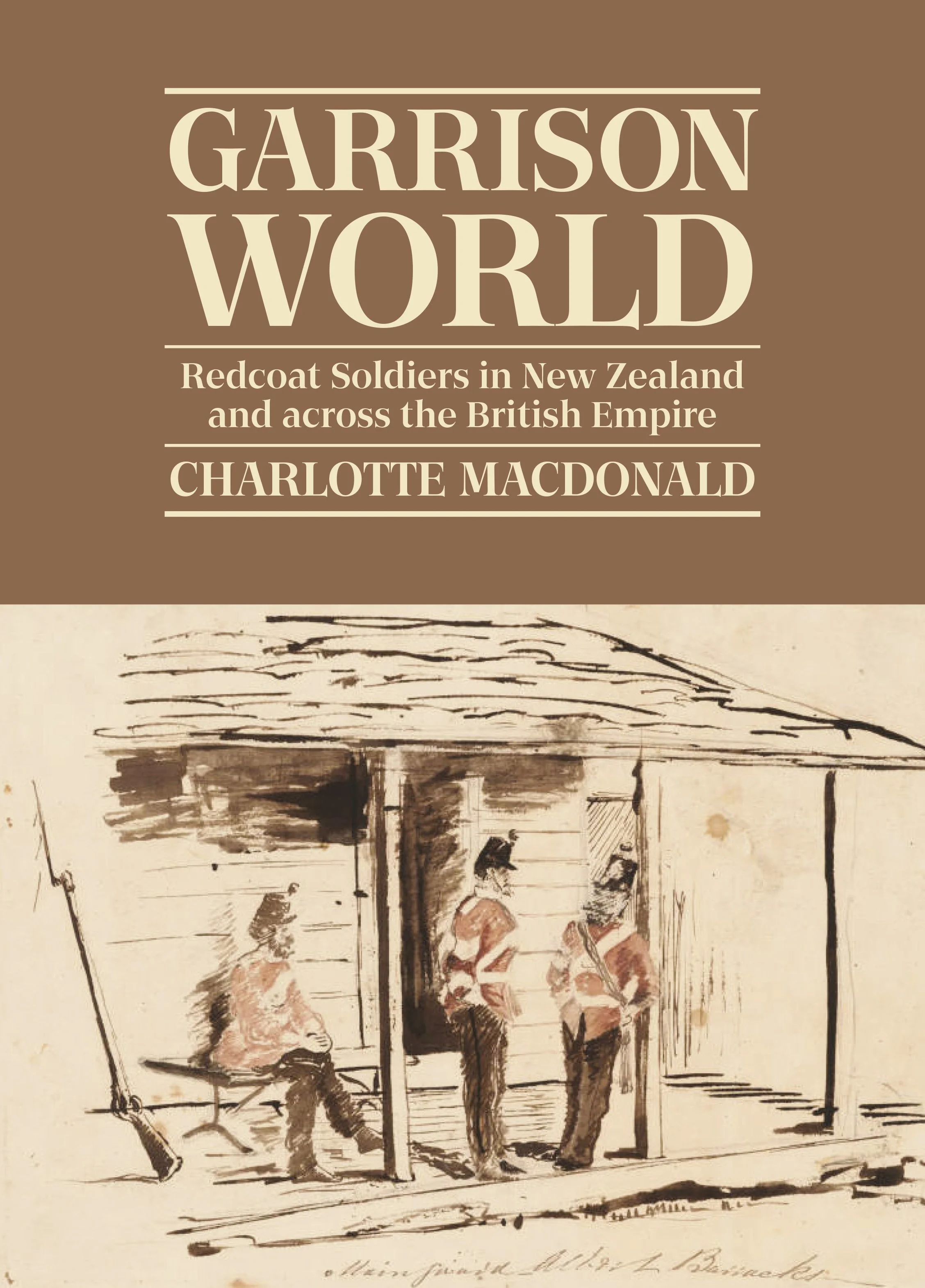
Garrison World: Redcoat Soldiers in New Zealand and Across the British Empire by Charlotte Macdonald (Bridget Williams Books) $70
”Extensively researched, impeccably written and richly illustrated, Charlotte MacDonald’s compelling narratives reconstruct the stories of people shipped to Aotearoa to carry out the imperial orders of the British Empire in the mid-nineteenth century and their impacts on Māori communities. Revealing political power shifts, Garrison World illuminates the lived experiences of ordinary people caught up in the global machinations of the colonial project — histories often hidden in plain sight in the land, monuments and street names.”
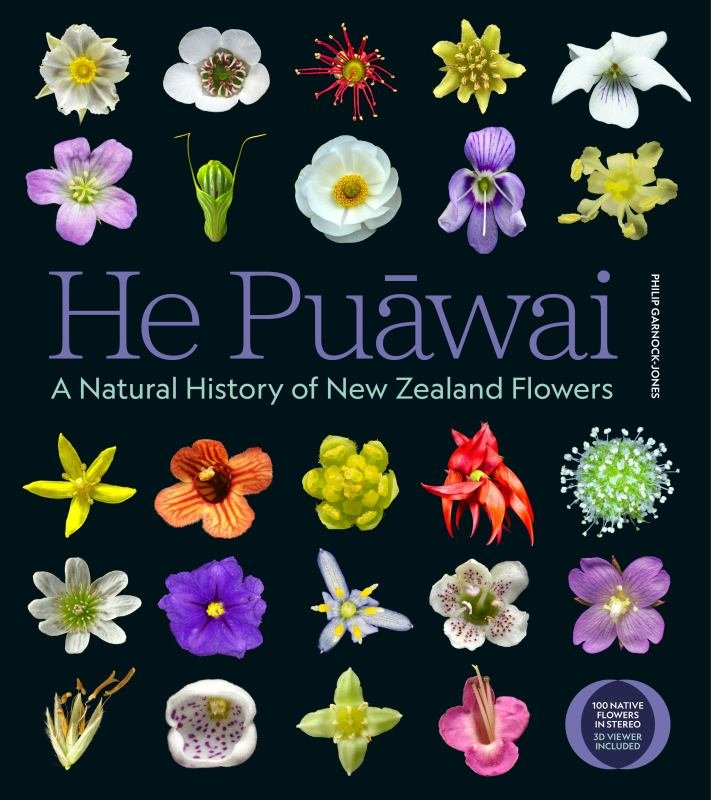
He Puāwai: A Natural History of New Zealand Flowers by Philip Garnock-Jones (Auckland University Press) $80
”As both author and photographer, Philip Garnock-Jones presents a new take on the sex life of Aotearoa’s native flora. Offering a sense of wonder through meticulously detailed stereoscopic photography (complete with 3D glasses) which documents the intricate parts of each flower, He Puāwai delivers from cover to cover. Notable for its encyclopaedic manner and seamless design, its exquisite photographs and informative text offer both universal and scientific appeal, rewarding amateur, dilettante and expert readers alike.”
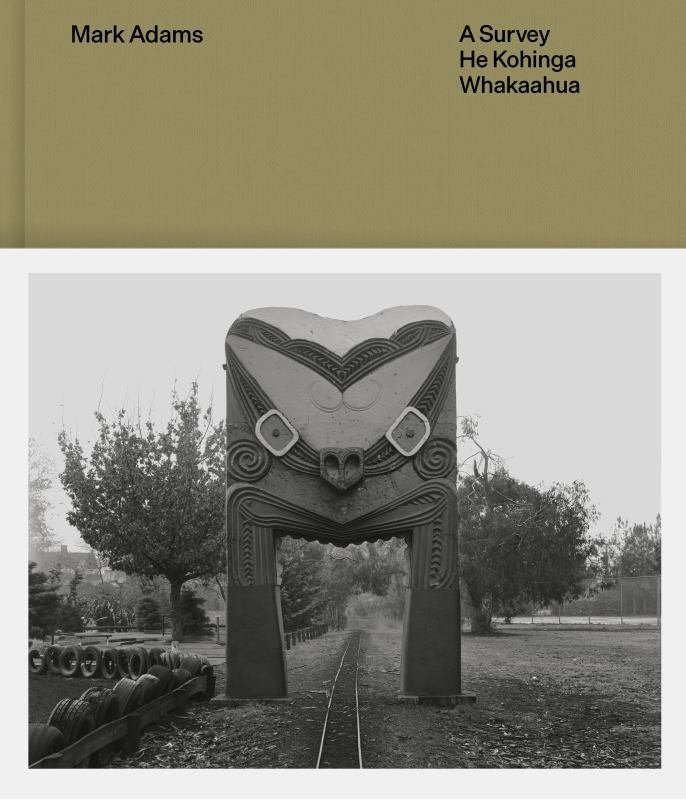
Mark Adams: A Survey – He Kohinga Whakaahua by Sarah Farrar (Massey University Press and Auckland Art Gallery Toi o Tāmaki) $80
”Long overdue, He Kohinga Whakaahua surveys five decades of work by the renowned photographer Mark Adams, who through his large format camera regards cross-cultural sites of colonial and Pacific histories. This book celebrates Adams’ extensive research processes and how, through intersecting narratives, his work consistently draws attention to locations, people and historic events. The photographs are met with texts by Sarah Farrar, Ngāhuia te Awekōtuku and Nicholas Thomas, who furnish valuable context to Adams’s practice.”
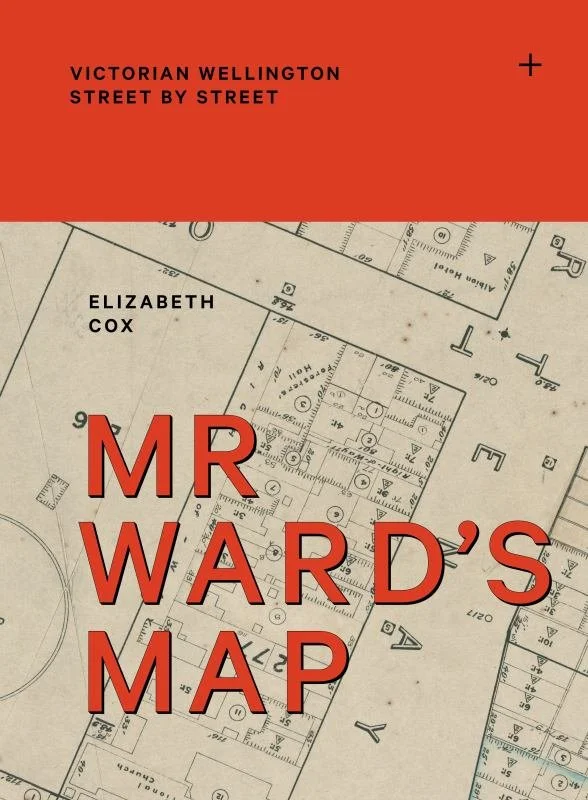
Mr Ward’s Map: Victorian Wellington, street by street by Elizabeth Cox (Massey University Press) $90
”Based on a map of Victorian Wellington, still in use today, this book traces the 1890s — a period of rapid growth and social change. Elizabeth Cox reveals stories located throughout the cityscape: in the gutters and sewers, boarding houses, tearooms and mansions on the hill. From the dust jacket and typography to the pairing of historic photographs with relevant map excerpts, this book has been artfully designed — bringing navigational clarity to the complexities of the map.”
GENERAL NON-FICTION AWARD
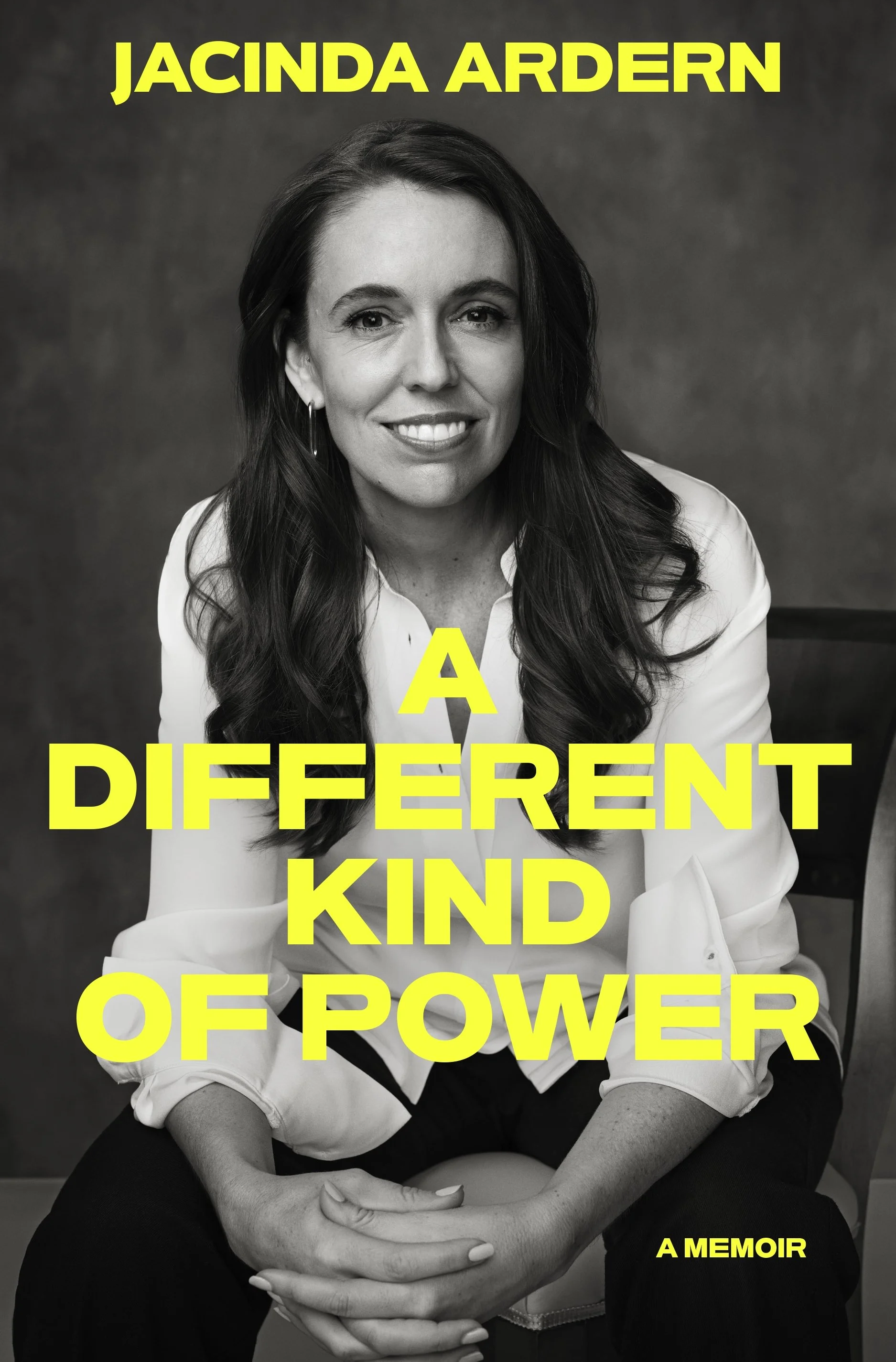
A Different Kind of Power by Jacinda Ardern (Penguin Random House) $60
”A well-crafted, candid, rewarding account of a turbulent period in national history from one of its significant actors. Jacinda Ardern interweaves the political context with a personal story of her life and upbringing, her struggle with imposter syndrome, and the unwanted mantle of political leadership, offering insight into a life of service. The writing is emotionally wise and balances the needs of local and international readers, while also appealing to those less interested in politics.”
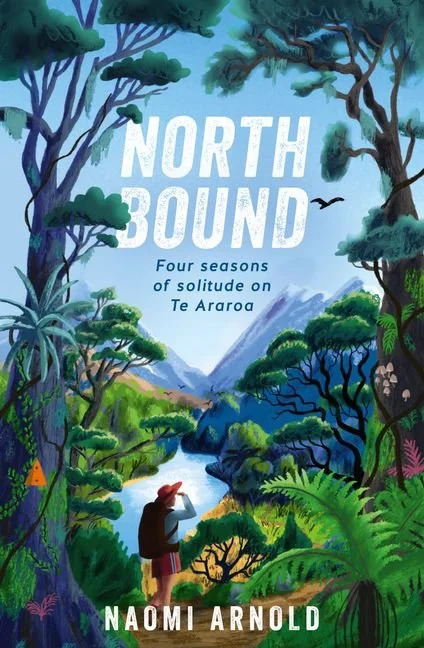
Northbound: Four seasons of solitude on Te Araroa by Naomi Arnold (Harper Collins Aotearoa New Zealand) $40
”The main character of Northbound is not the author, who walks Te Araroa trail, but rather the land of Aotearoa New Zealand itself. Naomi Arnold is a warm, funny, insightful guide, and the immediacy of her writing puts readers on the track right next to her. Her honest self-awareness conveys the significant personal costs of the undertaking, as well as its potential for transformation and the gift of learning more about the country in which we live.”
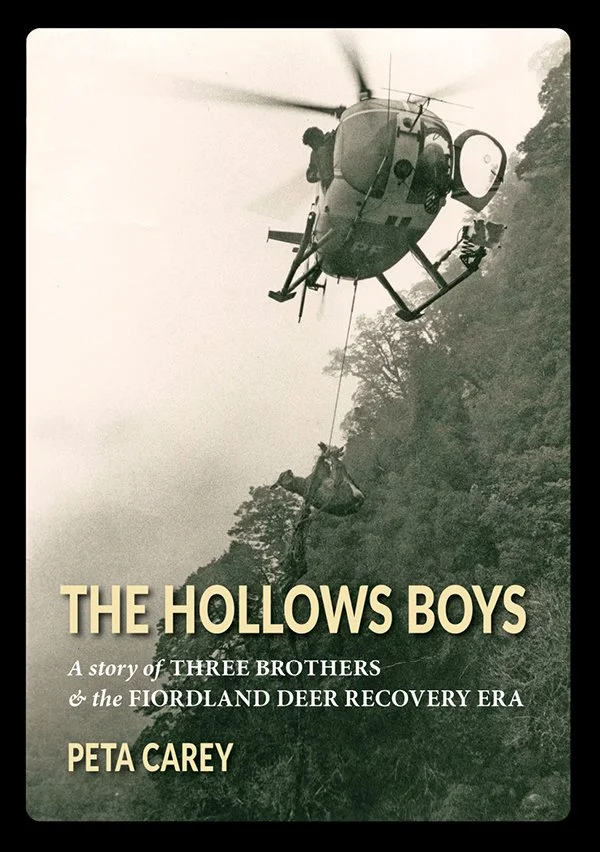
The Hollows Boys: A Story of Three Brothers and the Fiordland Deer Recovery Era by Peta Carey (Potton & Burton) $40
”The Hollows Boys brings to life the Fiordland helicopter deer recovery industry, a uniquely New Zealand slice of social history. Peta Carey focuses on the fascinating, exciting and sometimes tragic story of three brothers, through which she explores our mythology of landscape and male heroism. Her protagonists emerge as reckless yet surprisingly vulnerable. The writing is always rich and evocative, and the book is liberally illustrated with historic photos.”
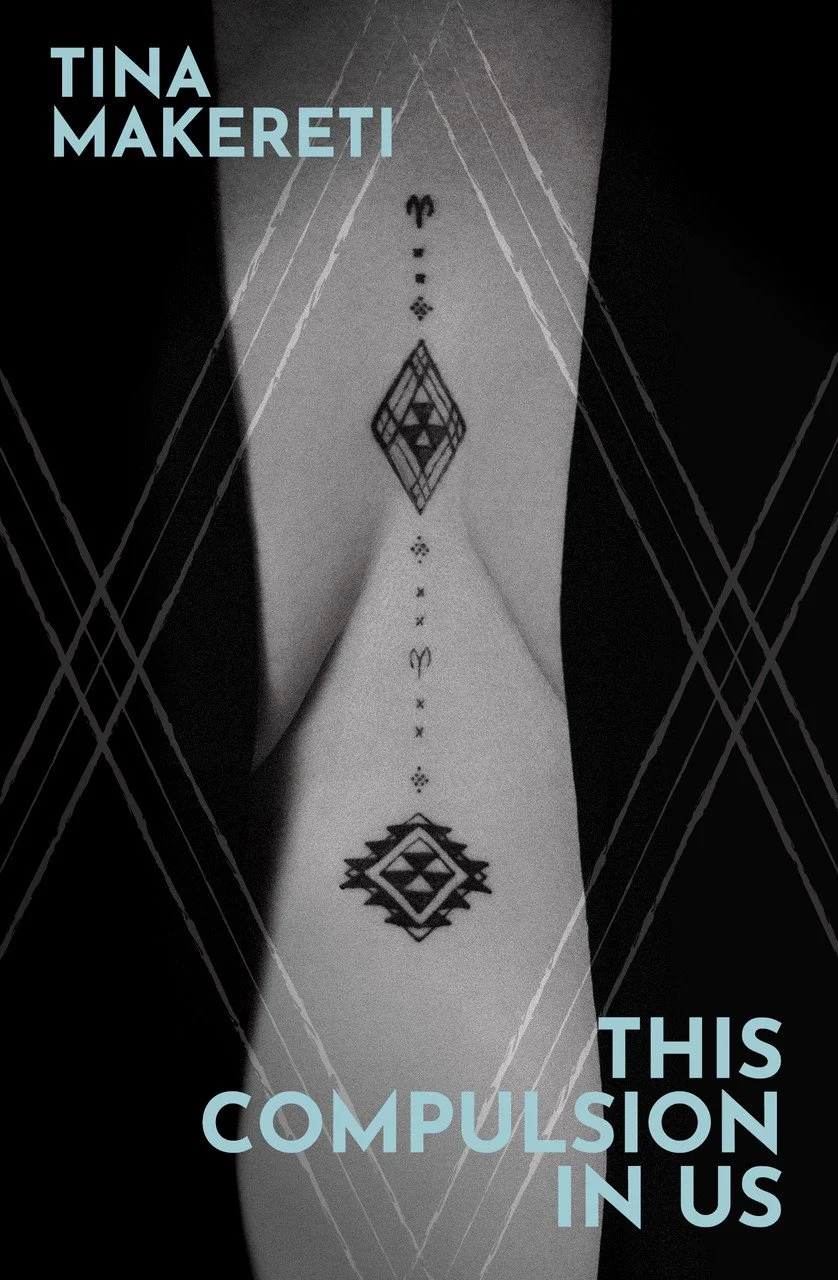
This Compulsion in Us by Tina Makereti (Te Ātiawa, Ngāti Tūwharetoa, Ngāti Rangatahi-Matakore, Pākehā) (Te Herenga Waka University Press) $40
”This beautifully written collection of interconnected essays records Tina Makereti’s journey of self-discovery as a writer, daughter and mother as she gradually becomes aware of her Māori identity. Always brave and generous, Makereti’s words will resonate with New Zealanders who are finding out they have whakapapa. It is a mature and reflective work, suggestive of long periods of thinking as the author finds a way to live within cultural duality, contradiction and paradox.”
Read out latest newsletter and find out (among other things) what we’ve been reading.
27 February 2026
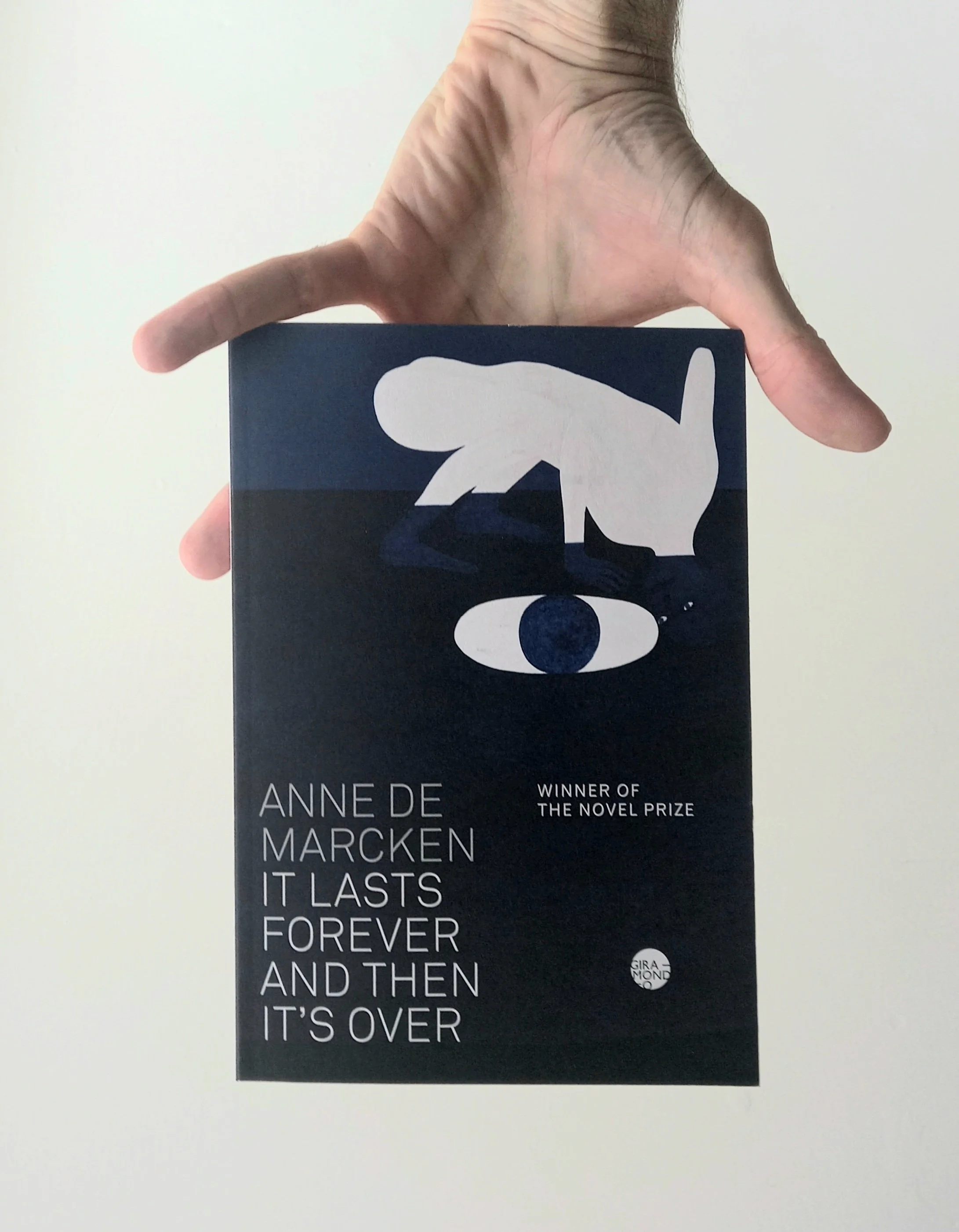
If undying love is possible it can ultimately be possible only for the undead. Anne de Marcken’s beautifully written poetic novel is addressed in fragments (appropriately) by its narrator, a zombie but not as we know one (although not exactly not not as we know one, either), to a departed lover (if her lover is not in fact a departed part of herself (which is always a difficult distinction to make)) as she overcomes the hunger-and-rage cycle common to zombies (“Fasting makes sense of hunger. If I am hungry and I eat and I remain hungry, hunger becomes rage. But to deny fulfilment makes sense of the hunger — I don’t eat, so I am hungry.”) and stumbles westward from the zombie hotel towards the dunes and towards the ocean, locations of the lovers’ past which still pull and hum and resonate with memory. “Everything I encounter has the quality of having been encountered before. An always already feeling. And at the same time, everything I encounter is strange to me. Have I been here with you? Did we come this way? What is familiar because I have seen it before and what is just part of a familiar story? What is remembered and what is received? What is strange because I have forgotten it, or because it is new, or because this time I am on foot, or because this time I am undead, or because this time I am without you?” What does happen to the past once it has passed? Every experience, every moment has of course a natural instinct to survive, to persist, to cling to us as memory, to give us an idea of ourselves in return for its survival. In youth and growth, our world enlarges itself and we are nourished by the new, but as memory accretes to us, as we reiterate our identities until they lose their fluidity, as we cease to grow, as we age, as we tire, as we despair, as we start to be defined by loss, apart from whatever else the loss of the experiences of the past, the very experiences that continue to inhabit us as memories, if not ourselves the loss of body parts as for the narrator of this book (her arm comes off on the first page; she hollows a place in her chest for a dead blackbird to lie where her heart used to be) though maybe, we all become zombies in effect. Our zombiehood is our relationship to time. Once something has happened, we continue, undead, always beyond the end. “It was the end. But we did not know it then. You do not know the end has happened until later. Or you do not admit it. Looking back, you can see it. And you realise that all the time after that was just an effect to keep you going as if it weren’t already over.” What keeps our narrator moving slowly west? “The black hole that is sucking me inside-out. … Not nothing. Not real or unreal. It is not simple emptiness. Not lack. Not want. It is not hunger. It is grief.” She moves perhaps towards her dissolution or perhaps towards completion, if we even have the capacity to tell one from the other.
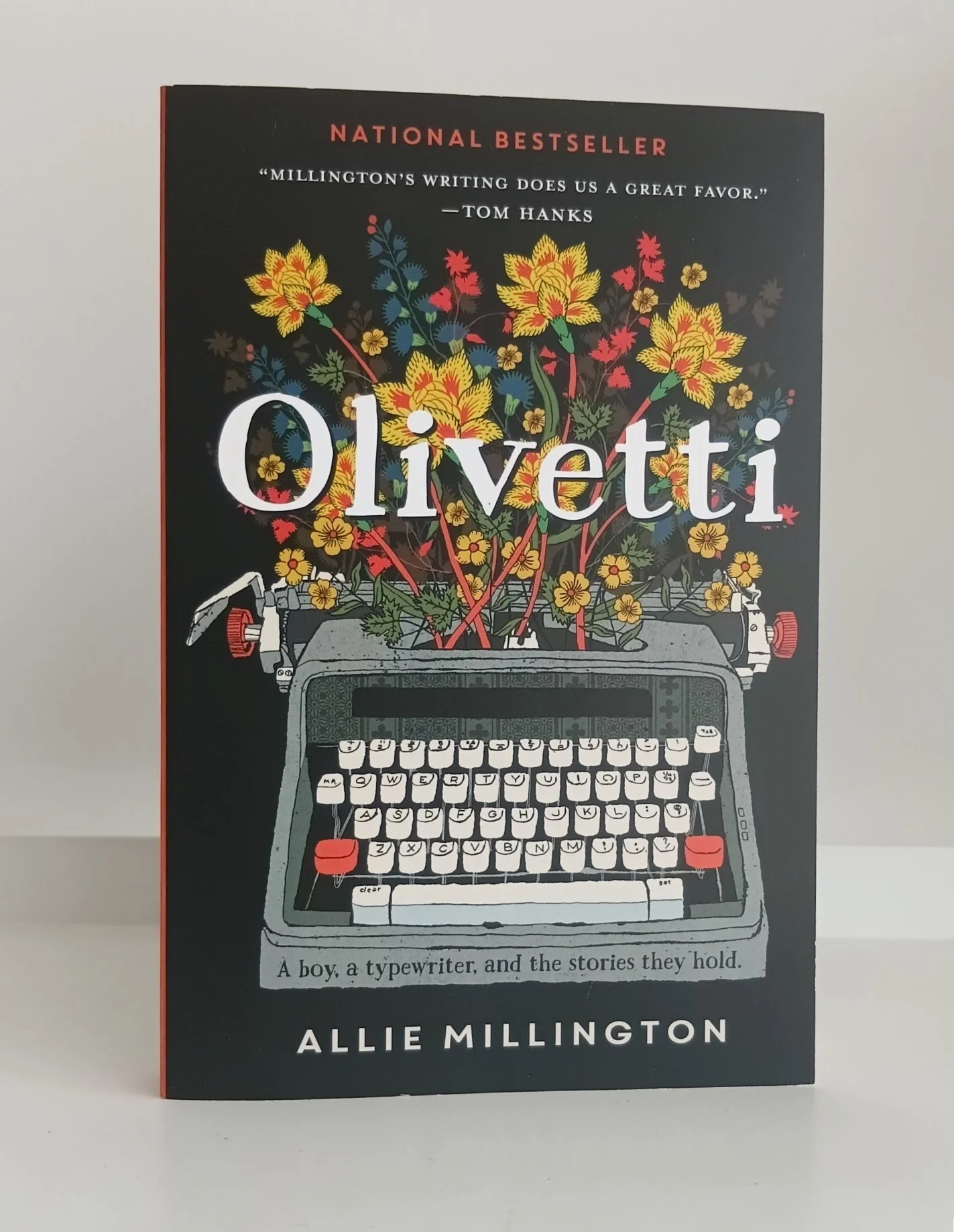
Ernest would rather have his head in a dictionary than have to talk to anyone, go to school, or visit the shrink. His family are equally obsessive: Dad with his work, Adalyn with theatre and study, Ezra with his push-ups and going to the gym, and Arlo keeping track of his frogs. And they are all experts in tuning out of ‘Everything That Happened’ — until their mother, Beatrice, disappears. One morning she leaves home early and doesn’t return. Ernest is determined to find her. He feels responsible for her disappearance. With two unlikely helpers on his side: a dumpster-diving girl called Quinn, and a typewriter, Olivetti, they might be able to crack the puzzle. At the centre of this charming and heart-felt story is Olivetti — a typewriter who decides to break all the rules to help Beatrice and the family they have grown up with. The concept of a typewriter holding and being able to retell all the stories ever typed into it is clever and the voice of Olivetti, their frustrations (about being replaced by the laptop) and observations of the human relationships within this dynamic family unit, is both sardonic and caring. While the entire family come together, in spite of past difficulties, it is Ernest that doesn’t give up and with the unexpected help of Quinn learns to communicate outside the world of the dictionary. Will they be able to solve the puzzle of where Beatrice is? And as they unpick the stories and people in Beatrice’s life thanks to Olivetti, how well did they know their mother? And why did she run away? Millington’s children’s novel, Olivetti, is a clever: a great concept for examining illness within families, and how those closest to this ordeal deal with it, as well as a love letter to the typewriter and the telling of stories.
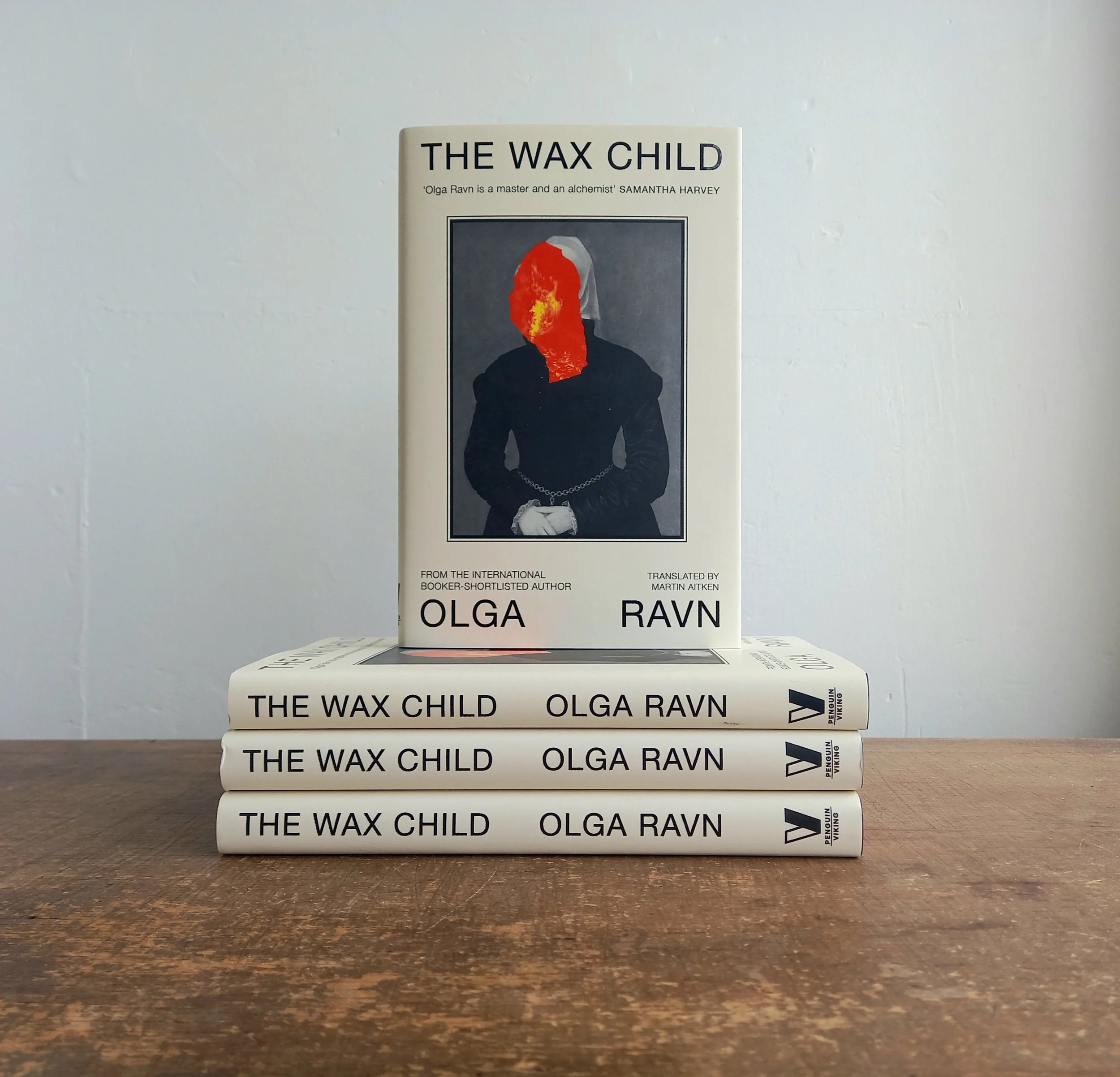
“Set during the witch trials of 17th-century Denmark, this unforgettable novel by Olga Ravn is compulsively readable yet anything but biddable — shadowy lives are revealed in shadowy prose, largely from the perspective of an object, a wax doll belonging to a group of women who exploit magic as a means of survival. Martin Aitken has leant his pitch-perfect ear to the period language and poetry of the Danish original. Every word in The Wax Child feels spontaneous, every scene alive, as if Ravn and Aitken had lived and breathed its mysterious atmospheres in order to deliver them to us. It is hardly an exaggeration to say that this haunting, gripping and singular historical novel cast a spell on us.” —judges’ citation on listing the book for the 2026 International Booker Prize
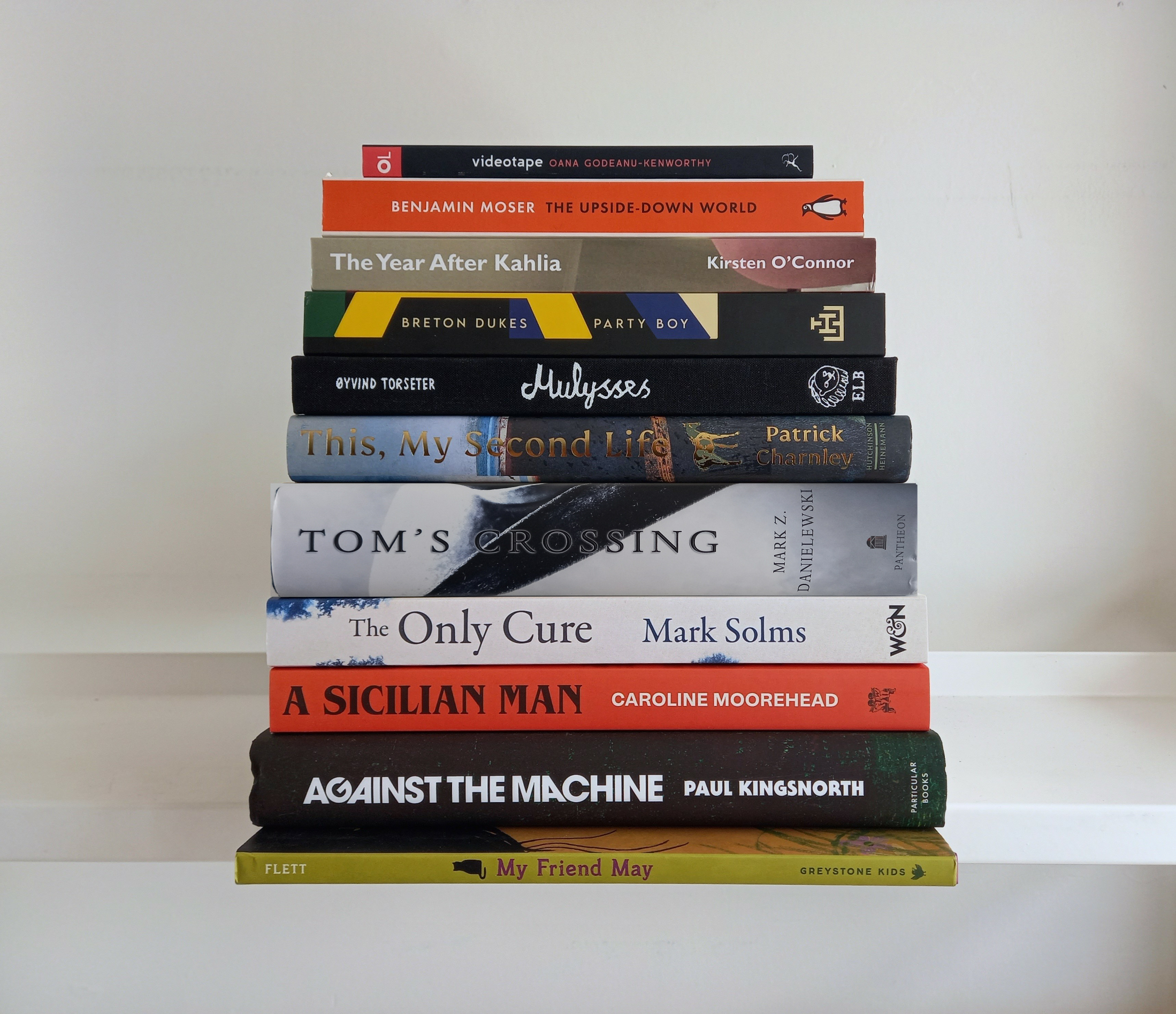
All your choices are good! Click through to our website (or just email us) to secure your copies. We will dispatch your books by overnight courier or have them ready to collect from our door in Church Street, Whakatū.
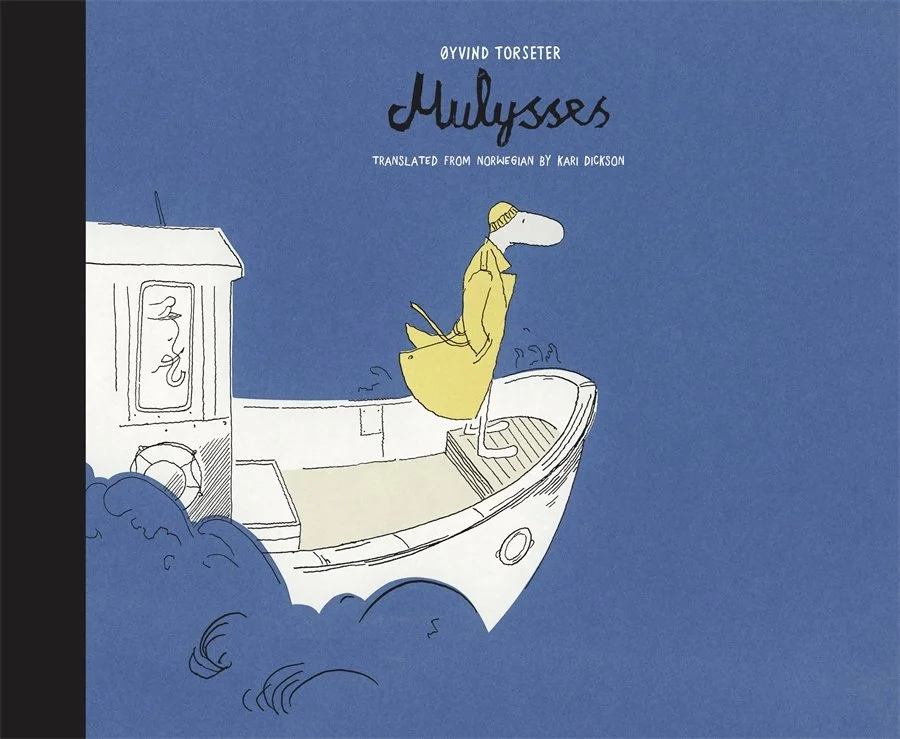
Mulysses by Øyvind Torseter (translated from Norwegian by Kari Dickson) $50
An astonishing, high-adventure graphic novel that playfully remixes The Odyssey, Moby Dick, and more, from the esteemed Norwegian cartoonist. Fresh out of a job, with his apartment slated for demolition and his possessions seized, Mulysses is in need of $5,000—and fast! As luck would have it, he crosses paths just in time with a wealthy collector, who offers him the fortune he seeks if he succeeds in bringing back the world’s biggest eye, fabled to grant its owner enormous power. Like Ulysses, Ishmael, and many others before him, Mulysses takes to the sea in search of both adventure and himself. [Hardback]
"Mulysses plays on the deadpan humor of Moby-Dick and the Cyclops section of the Odyssey... The hero-narrator, a cute mule-like chap who also appears in Torseter's The Heartless Troll and The Hole, reminds me of Tove Jansson's Moomintroll. All this is accomplished with minimalist, scratchy lines, rare patches of color, amusing characters and few words. I can picture an adult reading it with a child and both being happy. Mulysses is an engaging little mash-up that is, thankfully, no mess at all." —New York Times
>>Look inside!
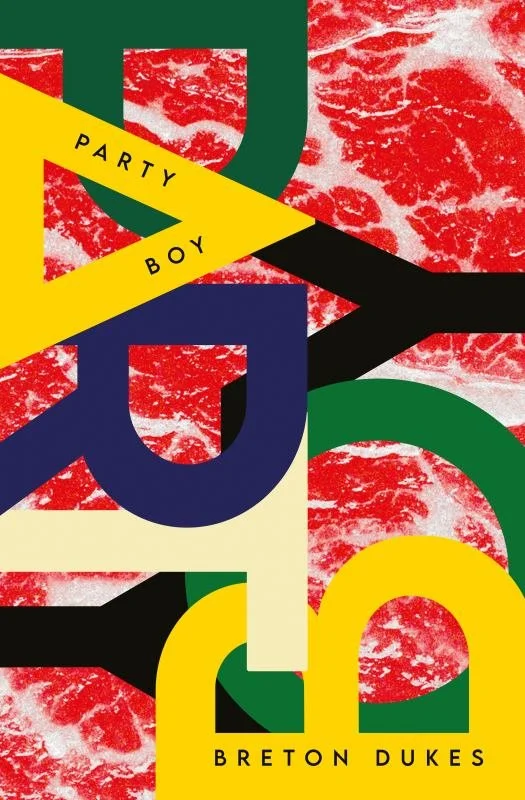
Party Boy by Breton Dukes $35
Marco is stressed. On one hand, he’s a cook in a progressive city bar, a married father of three, doing all he can to raise his boys right. On the other (slightly burnt) hand, his life is chaos. Every day seems full of cruel and unusual obstacles, from temperamental arancini to a car breakdown at the worst possible time. Painkillers and booze can only do so much to protect him from the fallout of his adolescence — the bullying, the fear, the things that were done to him and the things he did. Now his fiftieth birthday is approaching, and all the ghosts of his life are invited to the party. It feels like his last chance, though he isn’t sure for what. [Paperback]
”A novel I’ve been hoping for! Party Boy is a shock of a book about damaged males, about being a father, a husband, a son, an idiot, someone trying to make amends. Somehow it manages to be both pulse-rattling and poetic, and from its daring mix of comedy and terror, what arrives is finally a deeply affecting portrait of a man on the edge.’” —Damien Wilkins
>>Culpability.
>>Emotional toll.
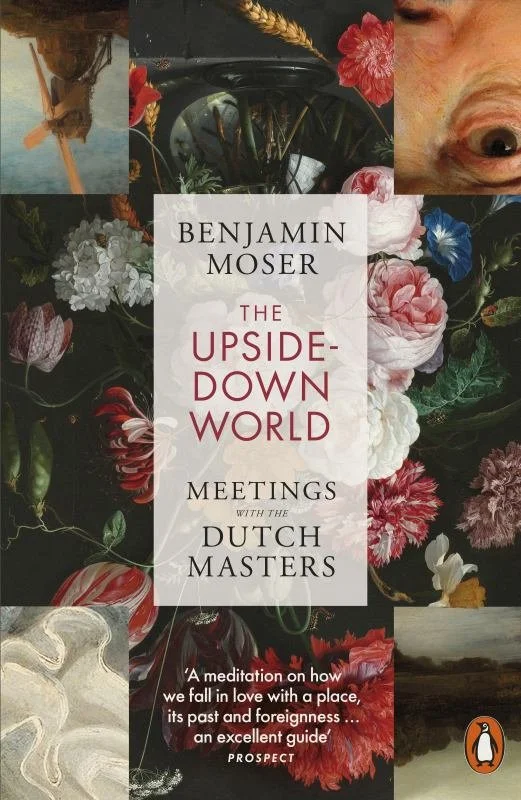
The Upside-Down World: Meetings with the Dutch masters by Benjamin Moser $40
Arriving as a young writer in an ancient Dutch town, Benjamin Moser found himself visiting — casually at first, and then more and more obsessively — the country's great museums. Beyond the sainted Rembrandt — who harbored a startling darkness — and the mysterious Vermeer, whose true subject, it turned out, was lurking in plain sight, Moser got to know a whole galaxy of geniuses: the doomed virtuoso Carel Fabritius, the anguished wunderkind Jan Lievens, the deaf prodigy Hendrik Avercamp. Year after year, as he tried to make a life for himself in the Netherlands, Moser found friends among these centuries-dead artists. And he found that they, too, were struggling with the same questions that he was. Why do we make art? What even is art, anyway — and what is an artist? What does it mean to succeed as an artist, and what does it mean to fail? The Upside-Down World is an invitation to ask these questions, and to turn them on their heads: to look, and then to look again. This is Holland and its great artists as we've never seen them before. And it's a highly personal coming-of-age-story, twenty years in the making: a revealing self-portrait. Illustrated in colour throughout. [Paperback]
”Moser considers individual lives, life in general and the fragility of all biographies. Unknowns make the knowns shine brighter. Moser relishes strange facts and is attuned to the charisma of his subjects.. This is a meditation on belonging, how we strive to adopt a nation through its art, how we fall in love with a place, its past and foreignness.” —Prospect
”Benjamin Moser's fascinating study of Dutch art and artists is more than the sum of its extraordinary parts. Part memoir, part critical and historical analysis, the book also offers a superb commentary — one of the best I've ever read — on what it means to be displaced in a never entirely whole world, and what it means to see between the cracks. I learned so much reading this fine book, and so will you.” —Hilton Als
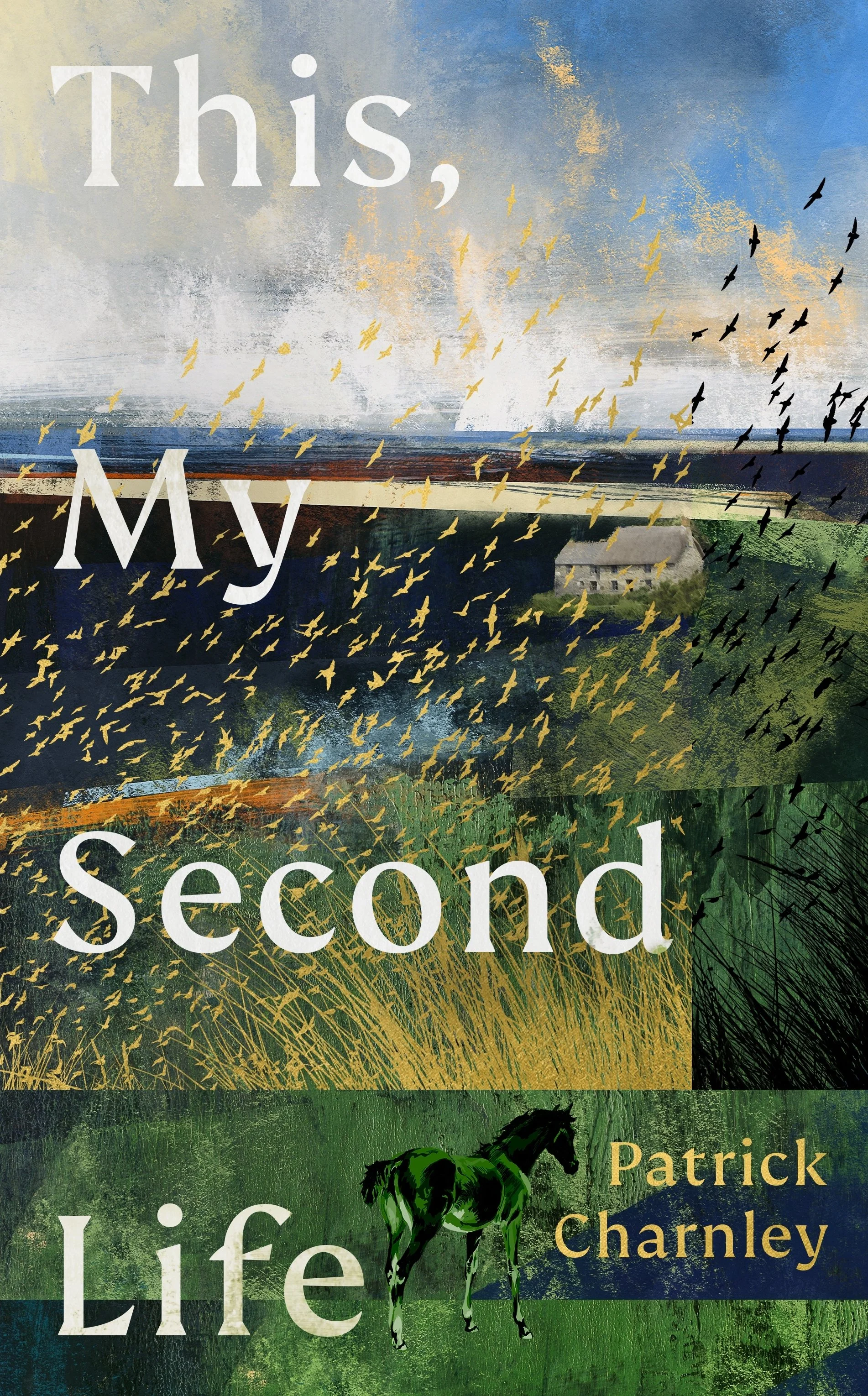
This, My Second Life by Patrick Charnley $38
After a near-death experience and life-changing injury, twenty-year-old Jago Trevarno goes to stay with his uncle on his small coastal farm a few miles from St Ives in Cornwall. Their existence is a simple one, their lives measured by the span of the days, the rhythms of the seasons and the animals they care for. But lurking in the shadows is local villain, Bill Sligo, who has designs on Jacob's farm and in particular on a field near the cliffs housing a derelict mineshaft. Wanting to repay his uncle's kindness, Jago determines to find out what Bill Sligo is up to. Jago is still vulnerable though, and in pursuing Sligo he delves into a murky world that he is ill-equipped to deal with. How far will Bill Sligo go to get what he wants? Jago doesn't know it yet, but once again he is in grave danger. Beautifully written, spare and elegiac, filled with shafts of light and darkness as well as the beauty and harshness of the Cornish landscape, Jago's journey is one of hope, renewal and resilience as he comes to terms with this, his second life. [Hardback]
”An astonishing account of recovery. The prose is spare and beautiful, the narrative simple but sound — it is as finely wrought as poetry. Jago's distinctive voice emerges, a true and clear and entirely convincing creation, always reaching towards the light and life.” —The Guardian
”A beautifully written, authentic and deeply affecting portrait of adversity, care and hope that will appeal to fans of Benjamin Myers' The Offing and Claire Keegan's Small Things Like These.” —Daily Mail
”An unexpectedly life affirming story woven into the fabric of a thriller.” —Esther Freud
>>The author’s second life.
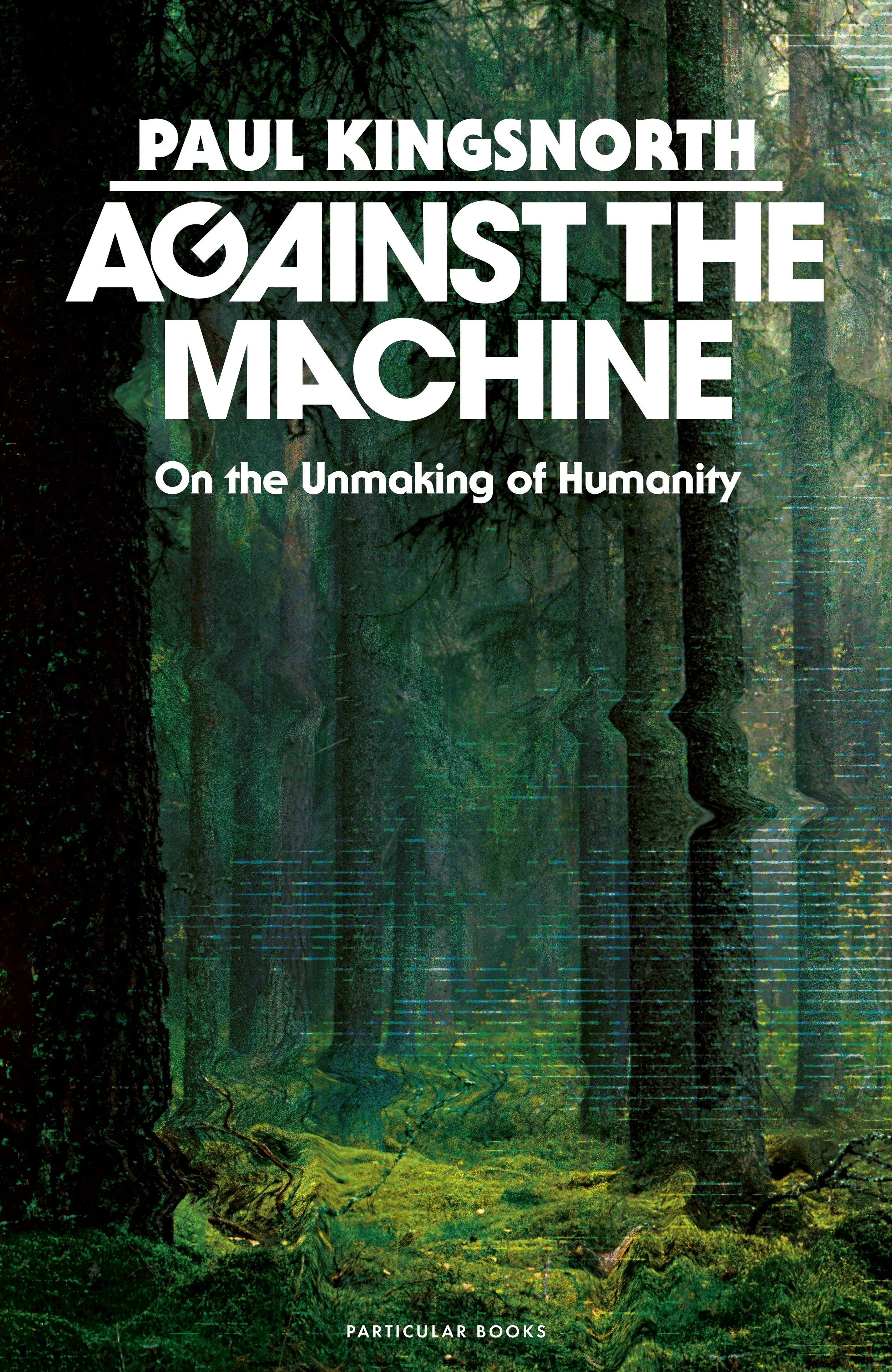
Against the Machine: On the unmaking of humanity by Paul Kingsnorth $65
novelist, poet, and essayist Paul Kingsnorth presents an original — and terrifying — account of the technological-cultural matrix enveloping all of us. With insight into the spiritual and economic roots of techno-capitalism, Kingsnorth reveals how the Machine, in the name of progress, has choked Western civilisation, is destroying the Earth itself, and is reshaping us in its image. From the First Industrial Revolution to the rise of artificial intelligence, he shows how the hollowing out of humanity has been a long game. It takes effort to remain truly human in the age of the Machine. Here Kingsnorth reminds us what humanity requires — a healthy suspicion of entrenched power; connection to land, nature and heritage; and a deep attention to matters of the spirit. Prophetic and poetic, Against the Machine is a manual for dissidents in the technological age. [Hardback]
”Invigorating. No one can read this refreshingly subversive book and emerge with their world-view intact.” —New Statesman
”A trenchant and terrifying account of what modern people have sacrificed in exchange for technology's promise of power and autonomy.” —The New York Times
”The most powerful and important book I have read in years. This book should be required reading not only for politicians, technocrats, teachers and all who help shape our world, but for every still-living soul in this terrifying age of the Machine.” —Iain McGilchrist, author of The Master and His Emissary
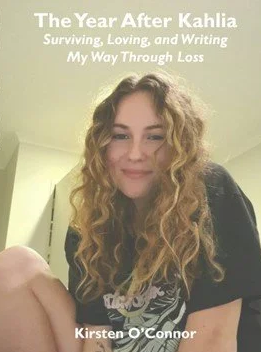
The Year After Kahlia: Surviving, loving, and writing my way through loss by Kirsten O’Connor $35
When Kahlia O’Connor died by suicide at twenty-four, her world stopped. What followed wasn’t healing; it was survival, raw and unfiltered. The Year After Kahlia is a memoir of love that refuses to fade, and a mother learning how to keep breathing in a world her daughter no longer inhabits. It speaks honestly about grief, suicide, motherhood, and what it takes to re-enter life after it’s fallen apart. Told with startling clarity and fierce love, it’s both a companion and a call for truth — to speak openly about what hurts and to remember what still matters. [Paperback]
“This book is a much-needed companion for when the unthinkable happens. With raw honesty and immense compassion, Kirsten shares the devastating loss of her daughter and the disorienting year of grief that followed. The Year After Kahlia offers solace and permission to those who grieve: there is no right way, no linear path, no fixing required. ” —Chameli Gad
>>How was the world continuing?
>>Further resources.
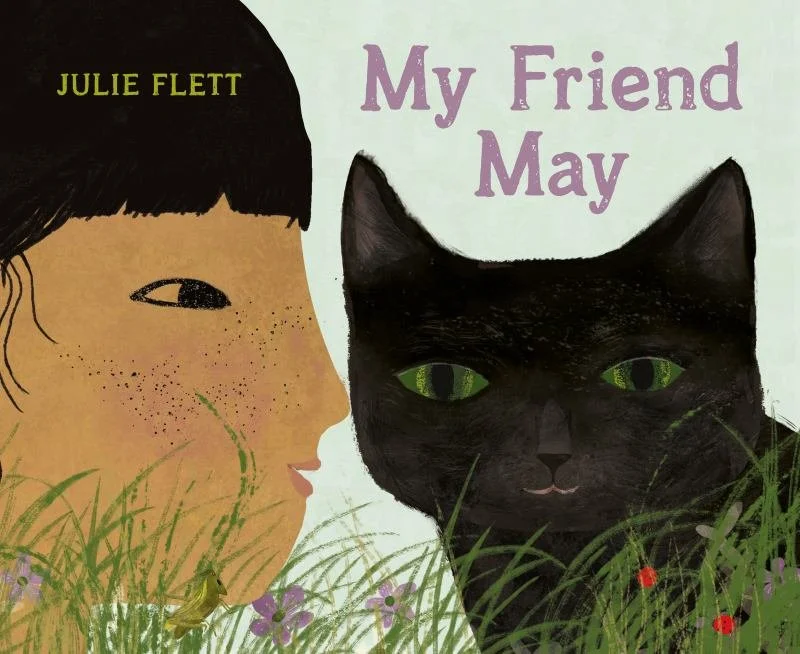
My Friend May by Julie Flett $35
I'd like to tell you a rather true story about a big black cat. Her name was May. Margaux and her cat May became friends when Margaux was just six years old. They grew up together, sharing countless memories along the way. But one day, May is late coming home. Where is May? Is she under the porch? Maybe on the roof? Margaux's nitsis (the Cree word for auntie) helps search for May in the tall grass. But soon nitsis needs to leave: she's moving away to the big city, and has to pack her things into boxes. Margaux helps nitsis, but she can't take her mind off May. Will she ever return? nitsis is worried, too. But little do they know, May has a surprise in store for both of them! This beautifully illustrated and heartwarming story with a surprise happy ending invites readers to share their own cat stories. [Hardback]
>>Look inside!
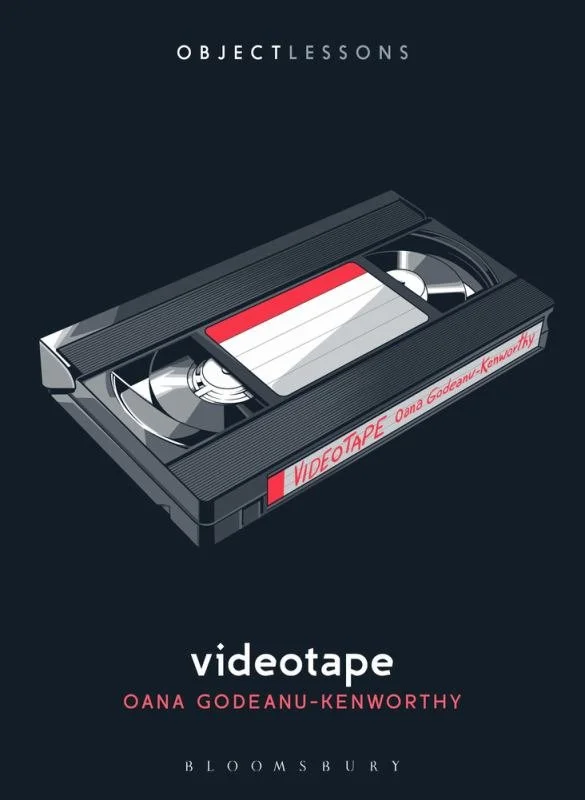
Videotape by Oana Godeanu-Kenworthy $23
Over the span of a single decade, VHS technology changed the relationship between privacy and entertainment, pried open the closed societies behind the Iron Curtain, and then sank back into oblivion. Its meteoric rise and fall encapsulated the dynamics of the '80s and foreshadowed the seismic cultural shifts to come after the Cold War. In the West, its advent deepened the trends of the age — individualism, consumerism, the fragmentation of society, and the consolidation of corporate power in the entertainment industry and its victory over the regulatory powers of the state. In the East, it encouraged new forms of socialization and economic exchanges, while announcing the gradual crumbling of government control over the imagination of the people. By the mid-1990s, the VHS format was displaced by the DVD. The DVD would eventually give way to streaming. Yet the cultural legacy of the videotape continues to inform our relationship to technology, privacy, and to entertainment. [Paperback with French flaps]
>>Other titles in the excellent ‘Object Lessons’ series.
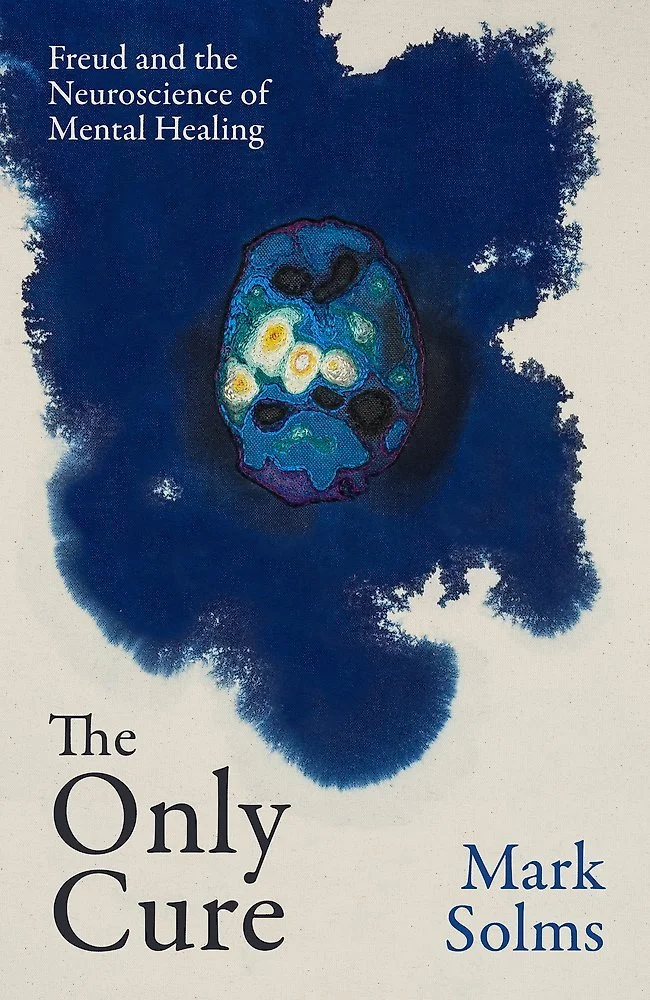
The Only Cure: Freud and the neuroscience of mental healing by Mark Solms $40
Once dismissed as unscientific, psychoanalytic therapy is proving to be among our most effective medical treatments of any kind — outperforming psychiatric drugs and rivalling vaccines in its power to prevent and heal. Why does it work so well? Perhaps because one of the most controversial figures in psychology was right all along. Neuroscience now confirms much of what Sigmund Freud conjectured over a century ago: our deepest struggles stem, not from chemical imbalances, but from buried memories and unconscious conflicts that no pill can touch. Using case studies and cutting-edge brain science, neuroscientist Mark Solms makes the case that psychoanalysis should resume its position as our master theory of the mind. Yet modern research also reveals where Freud got important things wrong. Could correcting these errors make therapy even more effective?As psychiatric diagnoses soar and standard treatments continue to fail many patients, The Only Cure offers a real science of healing, rooted in the radical idea that our suffering arises from truths we haven't yet faced. [Paperback]
”This is an extraordinary book on so many different levels. It's a dramatic history of psychoanalysis, a reassessment of Freud, a fascinating and moving autobiography, and a compelling argument for rethinking the place of feelings and subjectivity within the framework of science. And hence it's also about caring, and nurture — and love. How minds change is the question at the centre of this book. It's changing mine.” —Brian Eno
”Solms made a really compelling case that the origin of consciousness is with feelings, not thoughts. Feelings are the language in which the body talks to the brain. I'm convinced.” —Michael Pollan
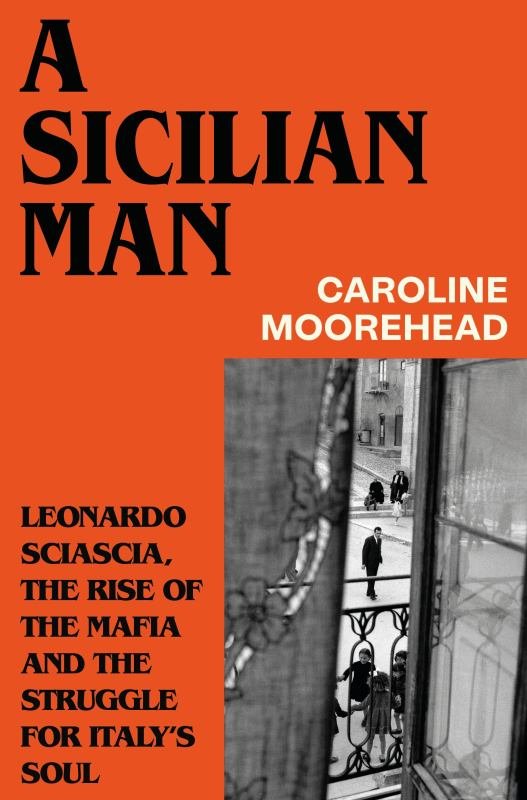
A Sicilian Man: Leonardo Sciascia, the rise of the Mafia, and the struggle for Italy’s soul by Caroline Moorehead $40
Corruption, sleaze and violence were woven into the fabric of twentieth-century Sicilian life, as the Mafia rose to dominance; this is the story of one man who stood in opposition. In 1986, the largest Mafia trial in Italy's history took place in Sicily. The maxi-processo saw 471 men and 4 women take the stand, accused of kidnapping, extortion, drug trafficking and many thousands of murders. Sitting in the galley was Leonardo Sciascia, then aged sixty-five. One of the greatest European writers of the twentieth century, he had published the first Mafia novel, The Day of the Owl, in 1961, and was widely seen by Italians as a true moral figure in a country where corruption had seeped into every corner of public and private life. Sciascia was born in 1921 and came of age as the Mafia grew to prominence across Sicily. Widespread poverty and hardship following the First World War meant that many Sicilians no longer recognised Rome's leadership, which had left a void for local gangsters to fill. Witnessing the scale of corruption and violence, Sciascia predicted it would soon spread north, and he was right- by the 1980s, the Mafia had infiltrated every level of Italian politics and grown into an international, highly successful business. [Paperback]
”Sciascia is the noblest of Italian novelists, and in this magnificent and deeply affecting biography, Caroline Moorehead has given a full account of him, his people, his island, his tragic times.” —Philip Hensher
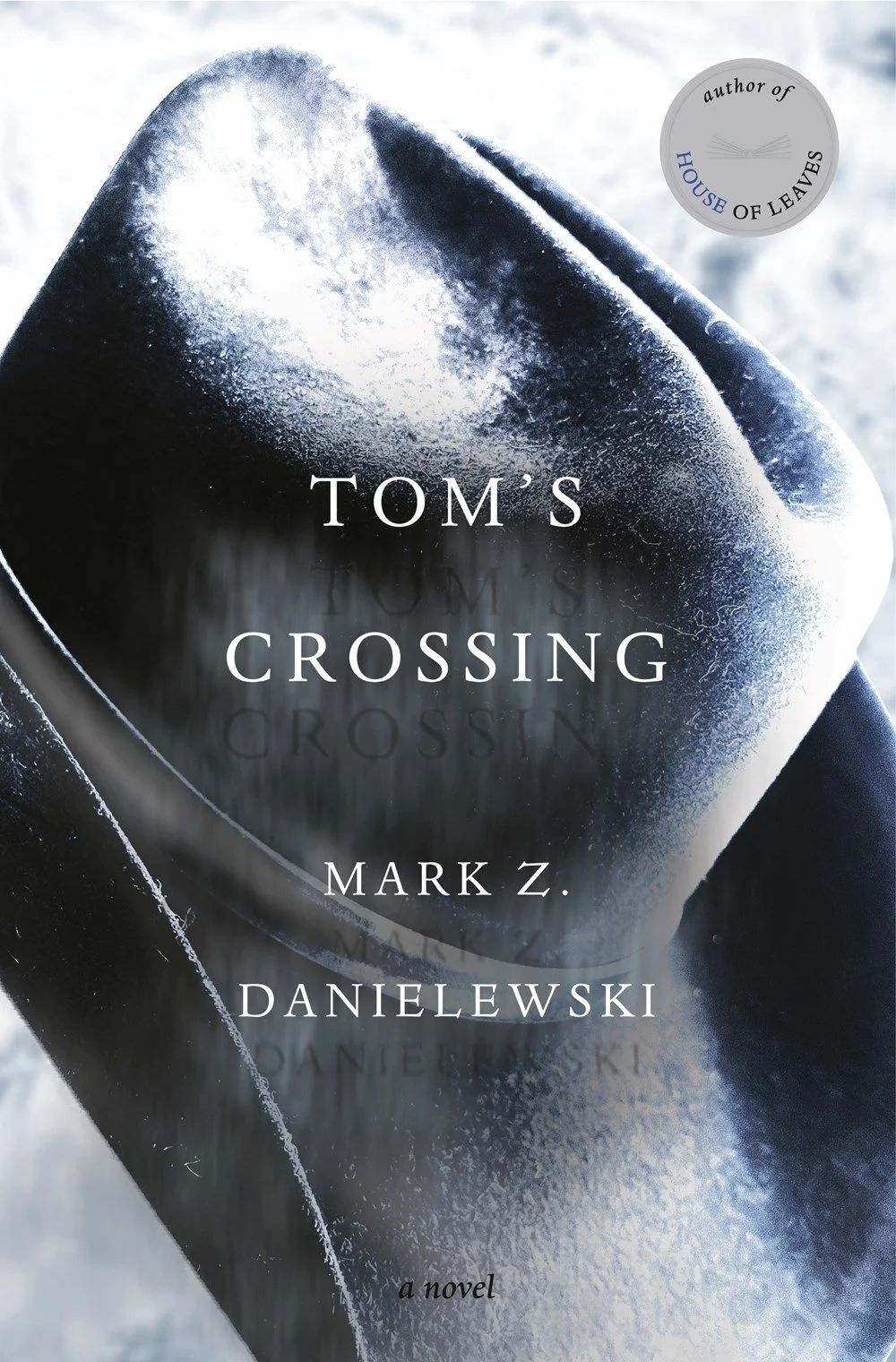
Tom’s Crossing by Mark Z. Danielewski $95
From the author of House of Leaves comes this much-anticipated 1200-page novel about two friends determined to rescue a pair of horses set for slaughter. While folks still like to focus on the crimes that shocked the small city of Orvop, Utah, back in the fall of 1982, not to mention the trials that followed, far more remember the adventure that took place beyond municipal lines. For sure no one expected the dead to rise, but they did. No one expected the mountain to fall either, but it did. No one expected an act of courage so great, and likewise so appalling, that it still staggers the heart and mind of anyone who knows anything about the Katanogos massif, to say nothing of Pillars Meadow. As one Orvop high school teacher described that extraordinary feat just days before she died, Fer sure no one expected Kalin March to look Old Porch in the eye and tell him: You get what you deserve when you ride with cowards. [Hardback]
"This is an amazing work of fiction. I absolutely loved it. At the heart you'll find a blood-drenched story of pursuit and two brave and resourceful children. But there's so much more. I immersed myself. Have never read anything like it." —Stephen King
"An authentic western epic. A maximalist canvas of intricate, intimate detail. Tom's Crossing fills the contemporary western vacuum left behind by Cormac McCarthy, but it's informed by every era of the Great American Novel, from Melville and Faulkner to Pynchon and, looking further afield, Roberto Bolano's 2666. An unexpectedly earnest trove of story within story within story within." —Neil McRobert, Vulture
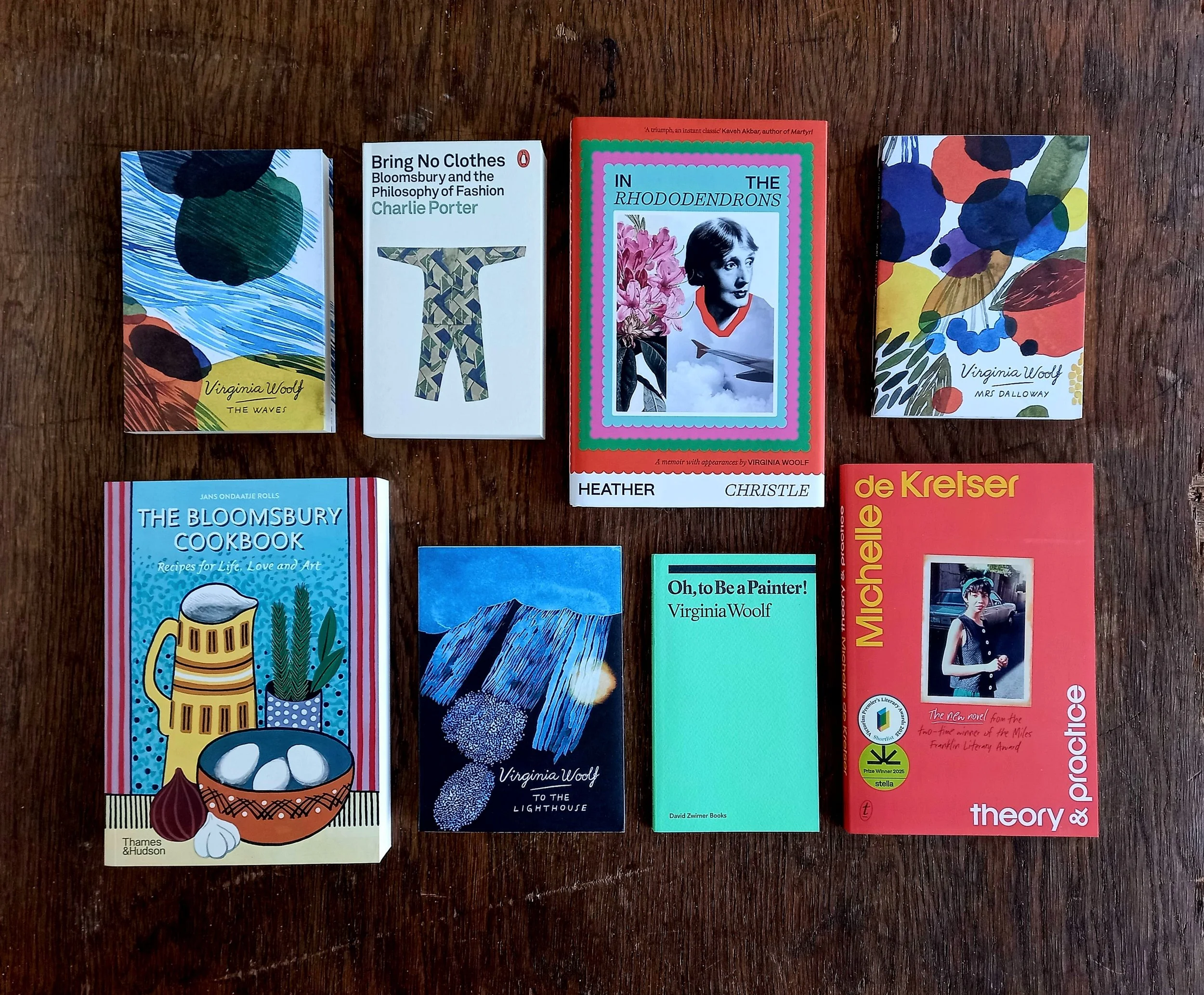
A selection of Woolfiana from our shelves. Click through to find out more:
Read our latest newsletter
20 February 2026
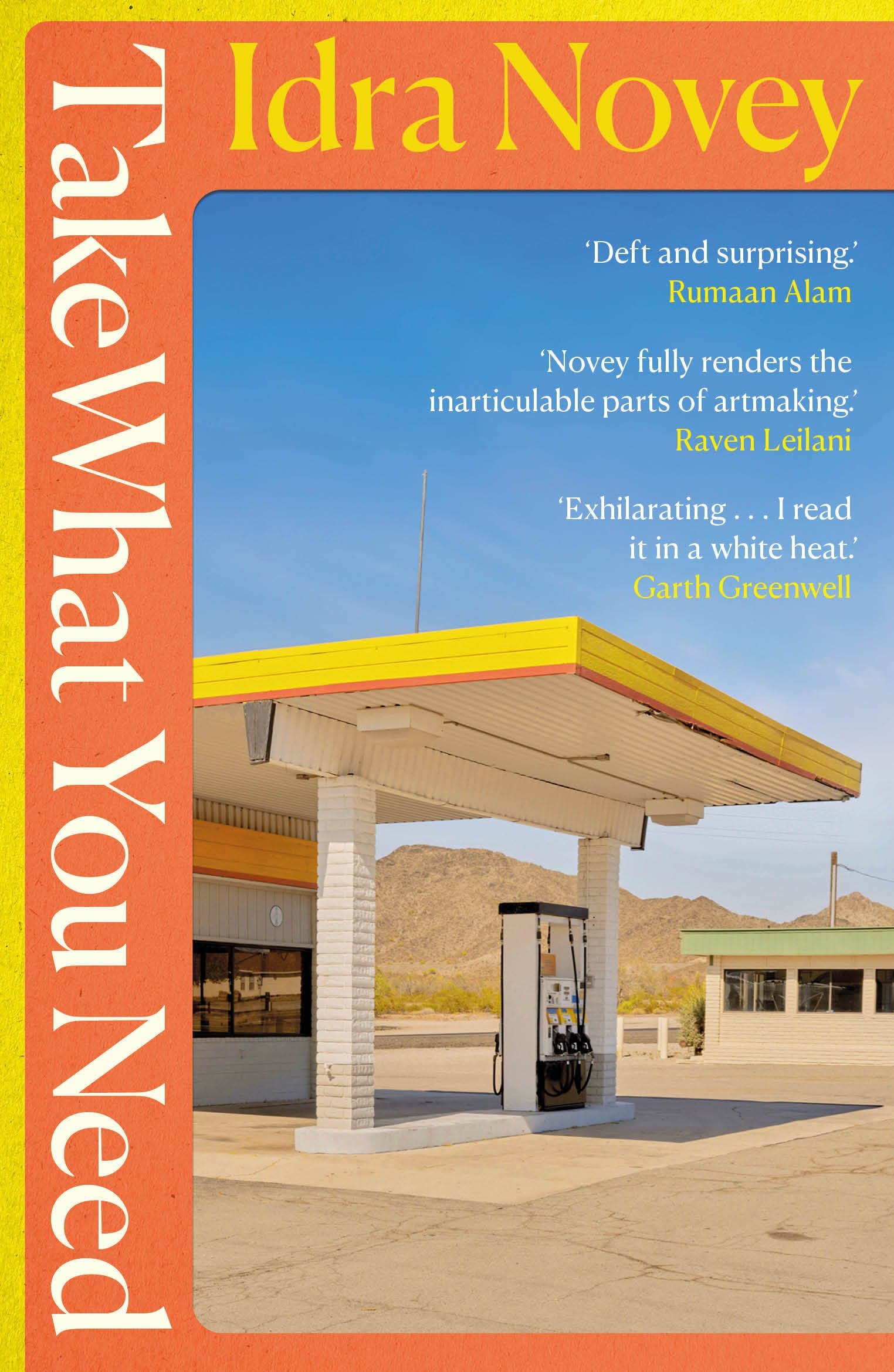
I’ve had this one on my ‘to read’ pile for a while. Attracted by the generic-service-station cover image, and the fact that this is published by Daunt Books, who pick up on some interesting titles not widely available outside their country of origin; a quick read of the blurb convinced me I needed to read this one. Set in the Allegheny Mountains of Appalachia, it’s the story of Jean, her life in a rundown rust belt town (which isn’t going to see better days), her use of industrial materials to make sculptural structures, her almost solitary lifestyle, and her grief at being estranged from her step-daughter, Leah. It’s also Leah’s story — her coming to terms with her feelings for Jean, as well as her anger, through their shared, if broken, history, and Jean’s ‘manglements’. The Manglements are Jean’s massive towers welded from scrap metal plate, decorated with quirky junkyard and market table finds, all holding meaning and often humour, filling the downstairs of her rundown house, pressuring the floor and breathing into that space. Weave into this Jean’s awkward and unexpected relationship with Elliot, deliberately kept ambiguous by the author, but who becomes the vehicle for reconciling Leah with Jean, post-death; and whose character represents the despair and poverty of an abandoned community, Take What You Need explores the impact people have on each other, how an environment, emotionally and physically, shapes a person, and the driven passion for art that can illuminate a life. Here are Louise Bourgeois and Agnes Martin, two fellow reclusive and determined travellers, whispering in Jean’s ear. Here is the singular passion, as well as her cantankerous nature, that allows Jean to create, to follow her own path in spite of doubt, injury and risk, and an embattled, increasingly bitter and xenophobic community. And for Leah, a reckoning — a recognition of love, the importance of our childhoods and how they shape us in spite of ourselves, and a responsibility to step outside her own perspective to see everything that is good in a life’s work.
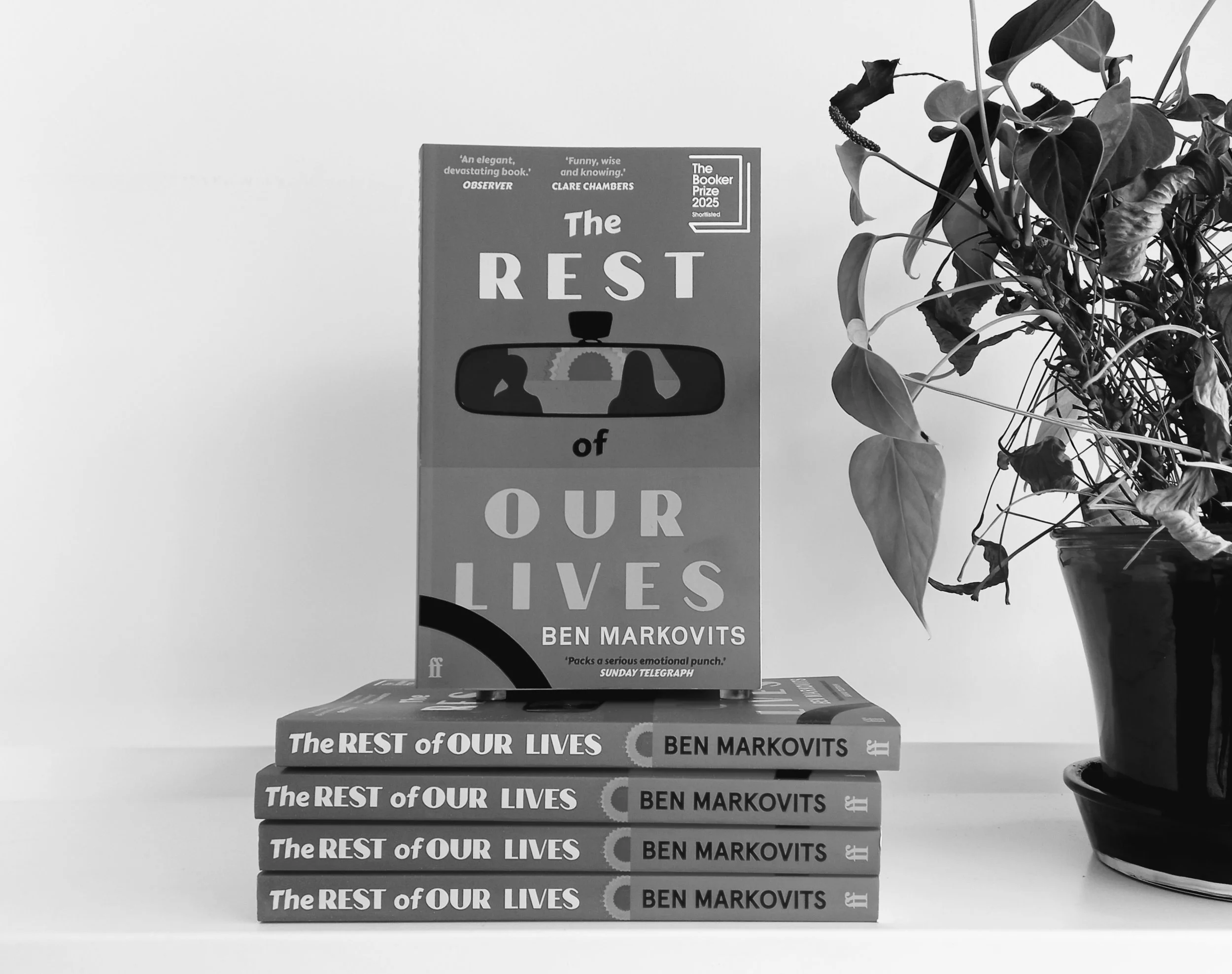
“When Tom Layward’s wife cheated on him, he stayed for the children but promised to leave when his youngest turned eighteen. Twelve years later, Tom drops his daughter off at university, but instead of driving back to New York he heads west. What follows is a remarkably satisfying road trip full of strangers, friends, and self-discovery. This novel is matter of fact, effortlessly warm, and it uses the smallest parts of human behaviour to uphold bigger themes, like mortality, sickness, and love. The Rest of Our Lives is a novel of sincerity and precision. We found it difficult to put it down.” — Judges’ citation on short-listing the book for the 2025 Booker Prize
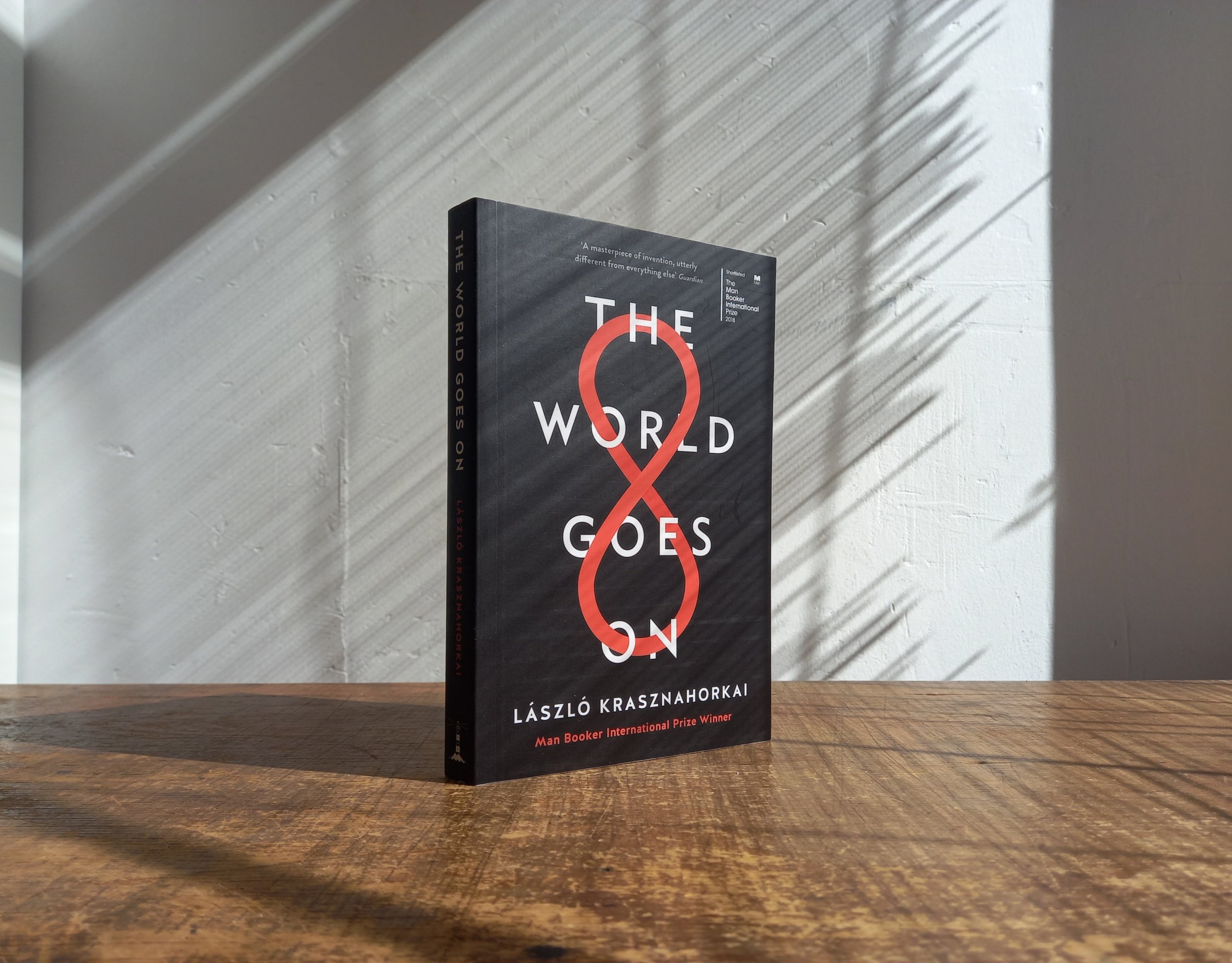
The mistake, or at least one of the mistakes, being made by each of the narrators of the stories that comprise Laszlo Krasznahorkai’s The World Goes On is thinking that the occurrences that constitute what they think of as their lives have anything to do with them, and, although they are themselves insufficient reason for these or any other occurrences, the narrators nevertheless find it impossible to extricate themselves, to absent themselves from the proceedings in which they find themselves caught up. The sentences that constitute their lives, for us at least, and what else have they got, are both a grasping for and, by the fact of this grasping, a separation from the circumstances of which they are aware, or that constitute their awareness, so to call it. The characters achieve neither fulfilment nor dissolution, wavering in their inclinations between the two impossibilities, they strive for the meaning of their situation, so to call it, the meaning each time withheld, or in any case ungrasped, the difference between withholding and nongrasping being irrelevant to the reader, as if meaning was something that could either be grasped or withheld, as if anything could signify anything other than itself. Krasznahorkai’s narrators are paralysed by their own ambivalences, they naturally incline, as we all do, both towards the partial, which can be sensed, which cannot be understood, and also towards the general, towards the totality, towards understanding but away from sense, towards the point at which those things that can be grasped are cancelled out by other things that are not grasped, the quest for understanding leading towards the point at which that which could be understood is extinguished, knowledge only becomes possible at the point at which there is no longer anything to know, the whole being not so much the sum of the parts as their nullification. There is no wisdom to be gained from this world. If you are leaving, there is nothing that you need to take, even if you could take anything, even if you could leave, but there is no such possible departure: “History has not ended, and nothing has ended; we can no longer delude ourselves by thinking that anything has ended with us. We merely continue something, maintaining it somehow; something continues, something survives.” The world goes on. “Nothing ever happens without antecedents, actually everything is just an antecedent, as if everything were just always preparing for something else that came before, as if it were preparing for something, but at the same time, an in an appalling manner, as if preparing without any final cumulative goal, so that everything is just a continually dying spark, everything is always striving towards a future that can never occur, what no longer exists strives towards what does not yet exist … nothing can be said beyond the fact that in addition to antecedents there are also consequences [a better translation might be ‘subsequences’], but not occurring in time.” Krasznahorkai, whose native medium is language, must express the paradoxical relationship between meaning and its impossibility through the failure of language to achieve the ends of language. Attempts to represent in language the incomprehensible events in which his narrators are immersed, and they exist only in language after all, result in the incomprehensibility of these events transferring to language itself. Agency becomes indeterminate, narrative position unstable, identity at once both overdefined and underdefined. Understanding is not gained, because it is impossible, but the usefulness of language for even its most straightforward functions is destabilised and suspicion is thrown upon it as an agent of estrangement and obfuscation that leaves us incapable of distinguishing reality from theatre. The virtuosity at which Krasznahorkai aims is almost unattainable. The closer language can be brought to resemble thought the more the shortcomings, or rather limitations, of both language and thought will be revealed. The thirty-page single sentence of ‘A Drop of Water’ is not so much linear, or even circular, as spherical, a thread of words looped endlessly over the surface of a droplet, always encountering itself and then moving on towards the next such encounter, never breaching the surface, and the fifty-three page sentence of ‘That Gargarin’, to my mind the best story in this collection, gradually reveals the insanity of its narrator, or leads him, and us, into this insanity. In his narratives and the tendencies of thought that they embody, Krasznahorkai frequently reaches into the general and towards the universal, presumably in order to demonstrate the futility of such an approach. Only the failure of the perfect, and therefore impossible, attempt can prove the impossibility of the task, but, in the struggle for better failures, is there a point at which the impossibility of the task begins to outweigh the shortcomings of the attempt, a point at which we begin to sense that our failures are existential rather than individual, a point at which we are released from personal into communal hopelessness?
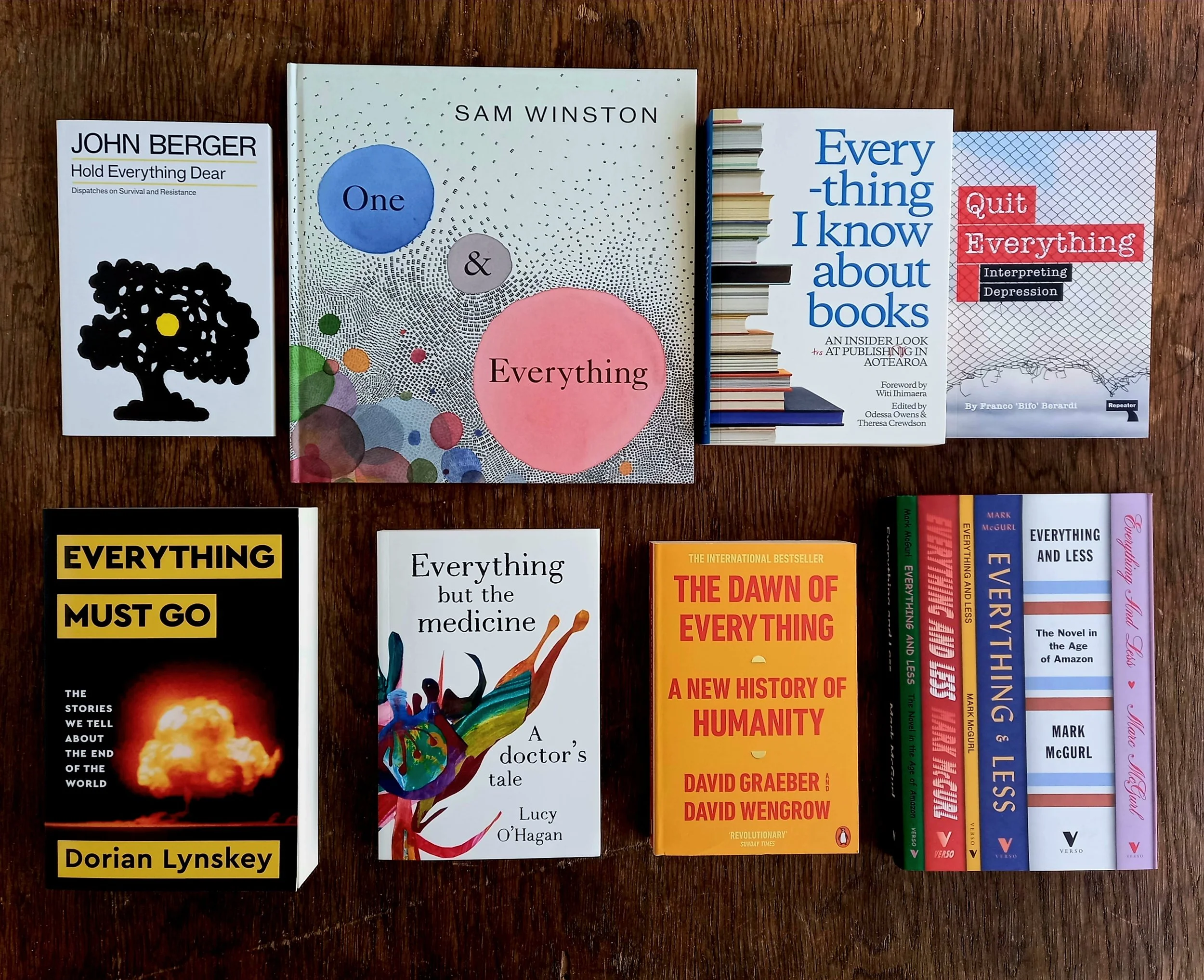
A selection from our shelves of books about everything. Click through to find out more:
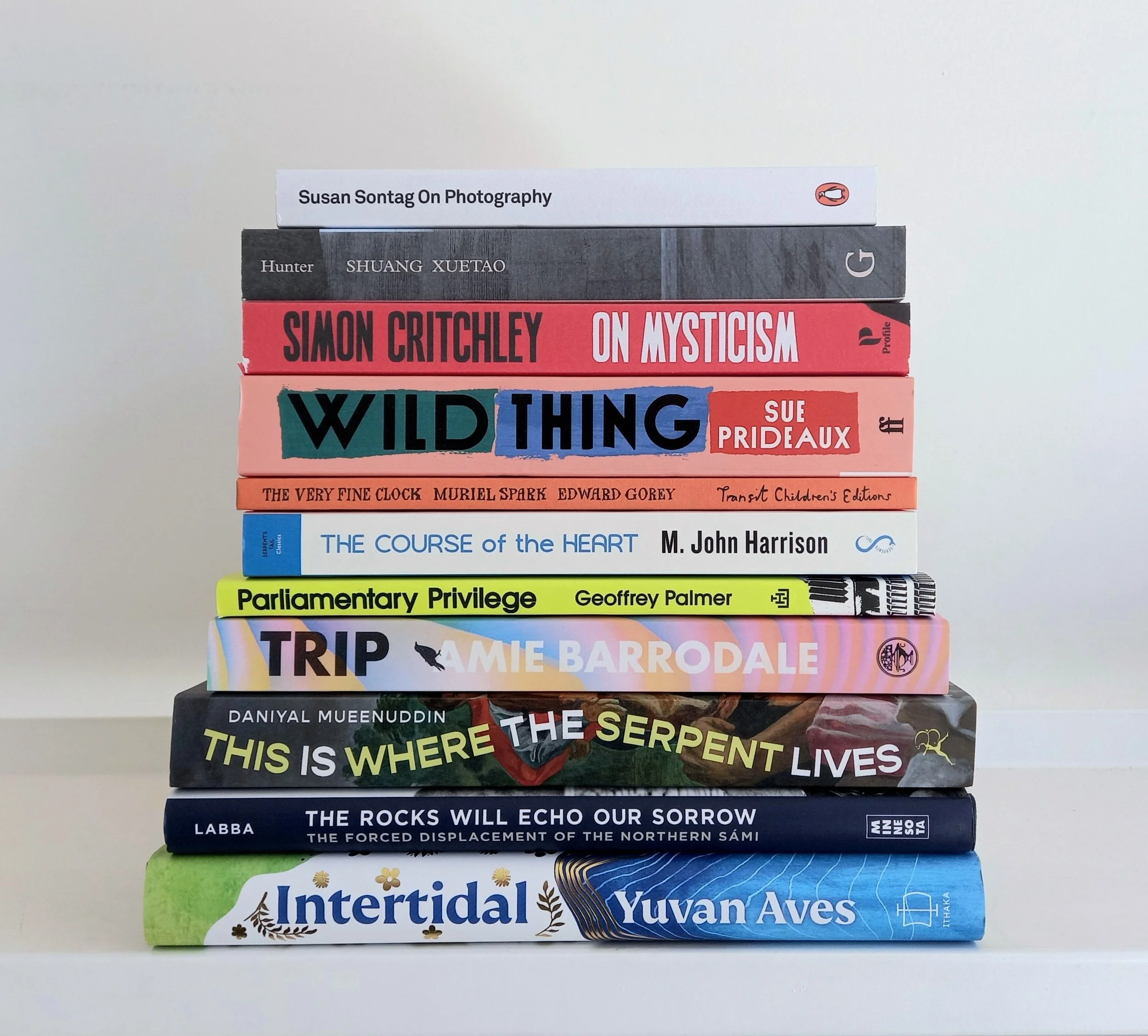
All your choices are good! Click through to our website (or just email us) to secure your copies. We will dispatch your books by overnight courier or have them ready to collect from our door in Church Street, Whakatū.
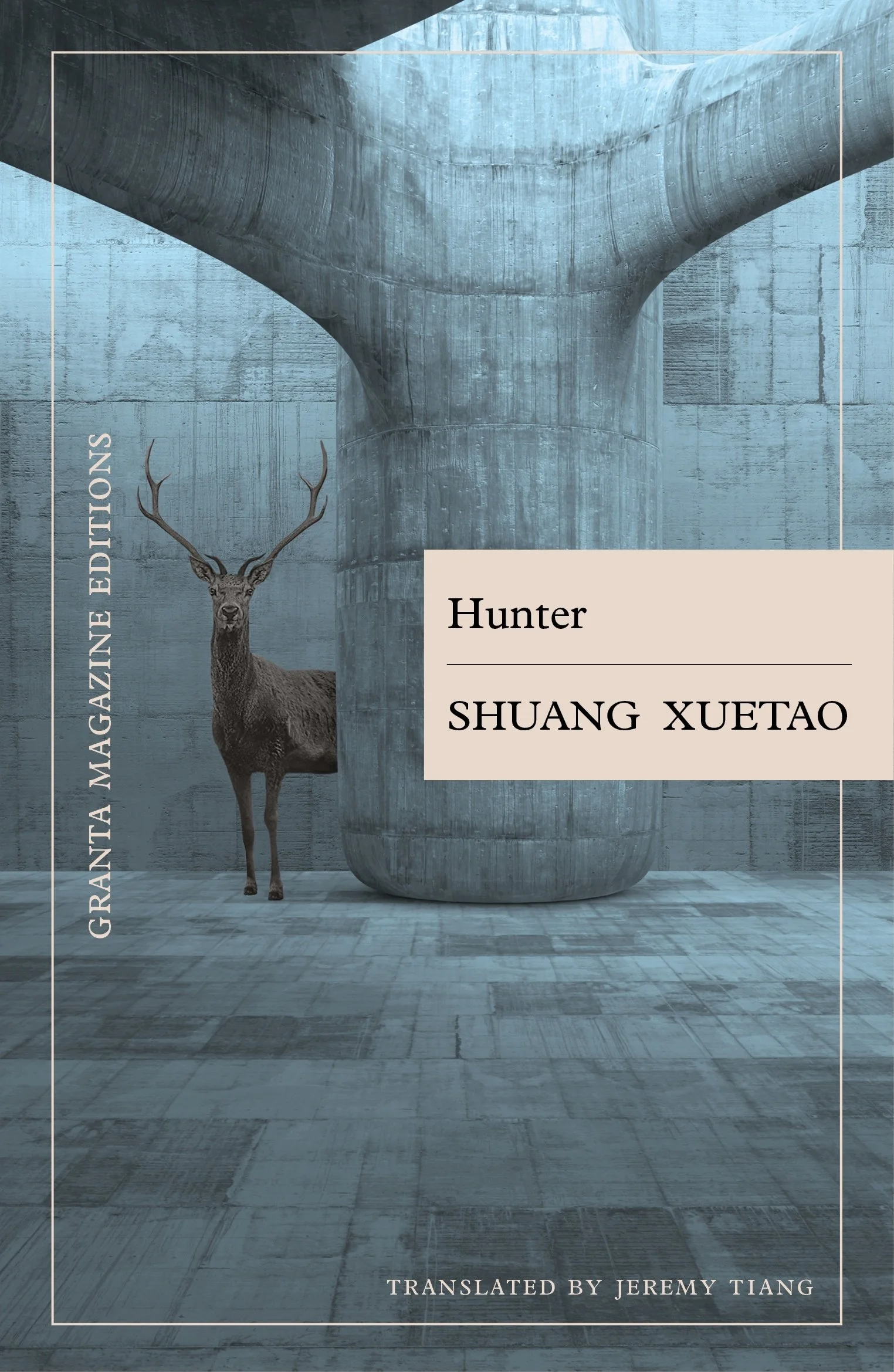
Hunter by Shuang Xuetao (translated from Chinese by Jeremy Tiang) $30
These gritty, surreal stories by one of the most highly-celebrated young Chinese writers reveal new and striking visions of life in China today. A provincial ambulance drives through the night in search of a hospital, a fifth-rate actor goes method as a hitman on a sweltering rooftop, a legendary knife fighter is found working on the factory floor of a northern village. Hunter's stories of deceptive, brutal realism play with myth and history, offering sketches of ordinary life that take a magic realist turn. Filled with dark humour and written with a tinge of noir, these stories grapple with the realities of life in contemporary China. [Paperback with French flaps]
”Hunter is one of the best collections of short stories I have read in years. Shuang Xuetao's stories are enthralling, haunting, vicious and viciously funny. This is work that continually takes the reader to unexpected places, while never putting a foot wrong.” —Colin Barrett
”Hunter by Shuang Xuetao is at once personal and historical. Like an unfolding screen, the depiction of the society and its people in northern China is powerfully real, charged with black humour. Jeremy Tiang's translation has brilliantly rendered the author's sharp wit and unique literary voice.” —Xiaolu Guo
”Brutally funny, intricate, and alive . Shuang's work is at ease with the fantastical, which is perhaps the disguise of the unsayable.” —Madeleine Thien
>>Read an extract.
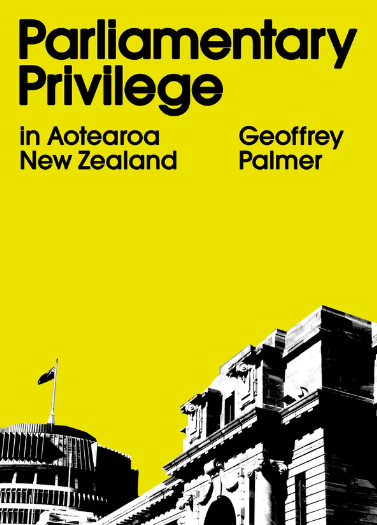
Parliamentary Privilege in Aotearoa New Zealand by Geoffrey Palmer $30
Published ahead of the 2026 NZ General Election, this book by Sir Geoffrey Palmer invites public scrutiny of how Parliament wields its powers. Parliamentary privilege is ‘the oil of the democratic machine’. It can be defined as the special legal powers that allow Parliament to regulate its affairs – and is a curious mix of history, parliamentary practice, law and politics. ‘However, it is also viscous and volatile,’ writes Palmer, ‘and should not be left to sit too long without change.’ This incisive book examines how parliamentary privilege operates in New Zealand, and where change is needed. Palmer traces its evolution and shows how reform has lagged behind that of comparable democracies such as Canada. With his characteristic clarity and frankness, Palmer calls for greater transparency, fairness and consistency in how Parliament exercises its powers. Such changes are essential if we are to protect individual rights and democratic integrity.
”This is a work of both scholarship and advocacy. I commend this book not just to those who are already fascinated by Parliament, but to all those who care about living in a well-functioning democracy. That should be all of us.” —David Caygill
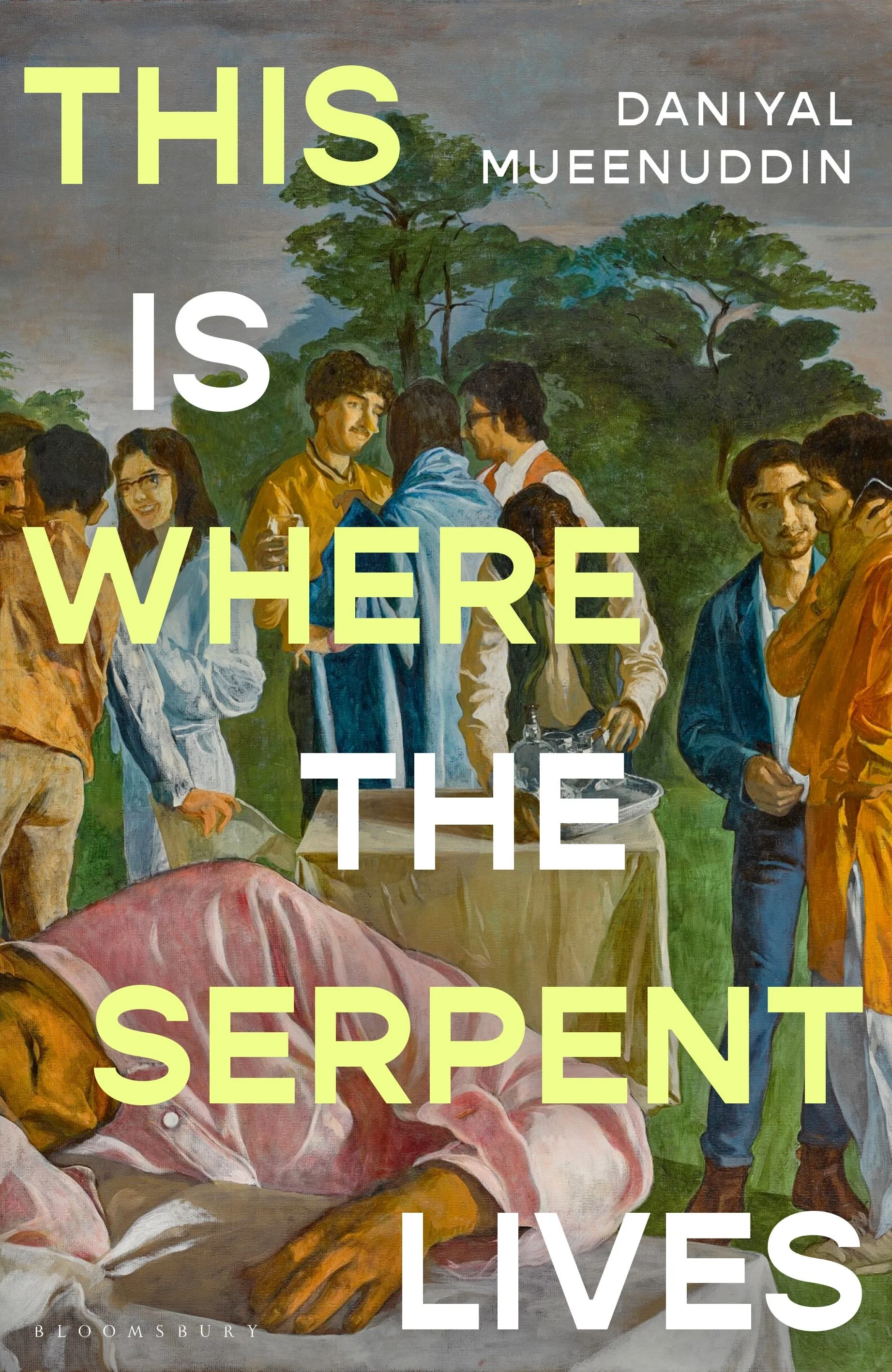
This Is Where The Serpent Lives by Daniyal Mueenuddin $35
Moving from Pakistan's sophisticated cities to its most rural farmlands, This Is Where the Serpent Lives captures the extraordinary proximity of extreme wealth to extreme poverty in a land where fate is determined by class and social station. Daniyal Mueenuddin's This Is Where the Serpent Lives paints a powerful portrait of contemporary feudal Pakistan and a farm on which the destinies of a dozen unforgettable characters are linked through violence and love, resilience, and tragedy. Yazid rises from abject poverty to the role of trusted servant to an affluent gangster; Saqib, an errand boy, is eventually trusted to lead his boss's new farming venture, where he becomes determined to rise above his rank by any means necessary. Saqib's boss, the wealthy landowner Hisham, reminisces about meeting his wife while she was dating his brother while Gazala, a young teacher, falls for Saqib and his bold promises for their future before learning about his plans to skim money from the farm's profits. In matters of both business and the heart, Mueenuddin's characters struggle to choose between the paths that are moral and the paths that will allow them to survive the systems of caste, capital, and social power that so tightly grip their country. [Paperback]
“Set to be a standout novel of 2026 — Brutal, funny and brilliantly told. Mueenuddin's writing is always fluent and often very funny. He brings the smells and tastes of Pakistan to vibrant life; the birds and trees feel as present as the weight of history and the impossible tangles within tangles of corruption and responsibility ... The portrayals are immediate, the storytelling instantly involving.” —Patrick Gale, Guardian
”Expect to see this novel all over prize lists in 2026. Mueenuddin is a literary magician.” —The Times
”Mueenuddin recalls Chekhov, but another writer comes to mind as well: Giuseppe Tomasi di Lampedusa, whose 1958 The Leopard offers a layered totalising portrait of a society that is both changing and failing to change. This Is Where the Serpent Lives has that kind of ambition and captures its world in the same exhilarating and unsparing way.” —Wall Street Journal
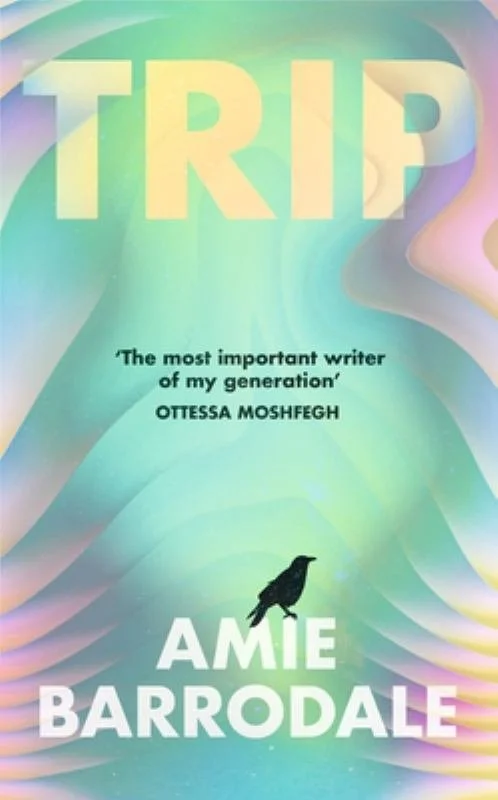
Trip by Amie Barrodale $38
"Three days after I died, my son ran away." Sandra dies unexpectedly at a conference in Nepal. Across the world, her teenage son, Trip, has run away from a centre for troubled youth in the North American desert. But Sandra soon discovers that a mother's work is never done, not even when you're dead. It turns out limbo is a great place from which to keep an eye on your errant son. When Trip is picked up on the side of the road by a strange man, Sandra is the only one who knows where he is. As Trip ventures further south towards the coast and directly into the eye of a hurricane, Sandra's struggle to save him from the other realm begins. From Florida's Gulf Stream to the raging seas, through Munich-bound aeroplanes and from one body to another, Trip takes us on an absurd, profound and irresistibly entertaining odyssey — a story of childhood and motherhood, life and death, and everything in between. [Paperback]
”Raw and funny, yet graceful and astonishingly precise, Trip is a book with the power to resonate in the most intimate ways for any reader. I read it in awe, as if Barrodale had written it just for me. Amie Barrodale is the most important writer of my generation.” —Ottessa Moshfegh
”Beautifully crafted, hard-boiled fun. Trip is a good time.” —Nell Zink
”Amie Barrodale's Trip is an extraordinary novel. It is as if Kurt Vonnegut and Hunter S. Thompson have joined together to write a tender story of a recently dead mom who wanders the bardo but is always drawn back to her imperiled son, an autistic teenager who is on a boat with a stranger, lost at sea…” —Akhil Sharma
>>Craft, critics, and the blurb economy.
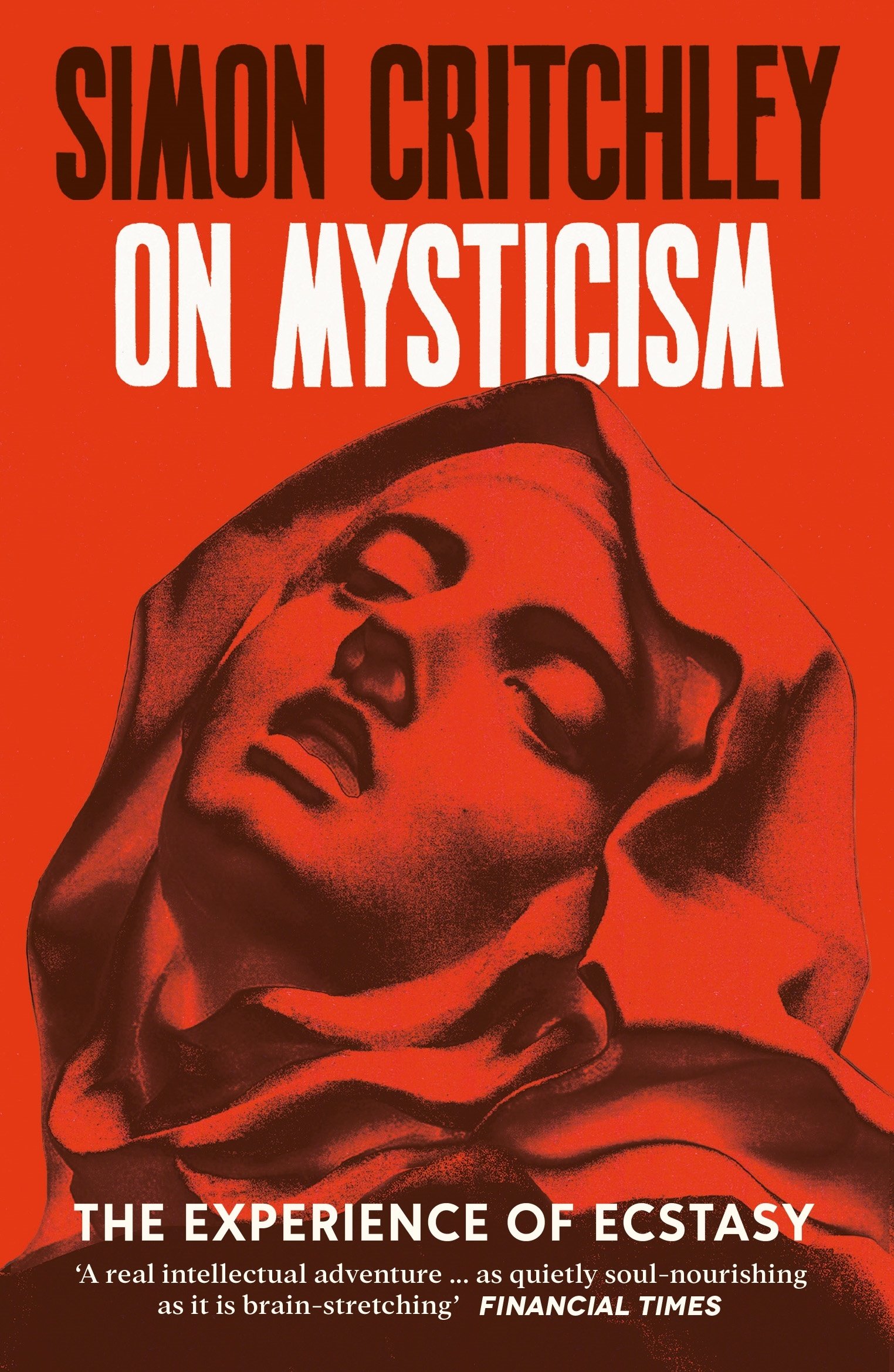
On Mysticism: The experience of ecstasy by Simon Critchley $30
Mysticism has been called 'experience at its most intense form', and here philosopher Simon Critchley asks: wouldn't you like to taste this intensity? Wouldn't you like to be lifted up and out of yourself? Mysticism is not a question of religious belief but of felt experience and practice. It is a way of freeing yourself of your standard habits, fancies and imagining so as to see what is there and stand with what is there ecstatically. It is the achievement of a fluid openness between thought and existence. This is a book about Julian of Norwich and medieval mystics that also ranges through the work of Anne Carson, Annie Dillard and T.S. Eliot. It looks at Nick Cave and German krautrock and considers how music relates to ecstasy. It opens the door to mysticism not as something unworldly and unimaginable, but as a way of life. [Paperback]
>>A few other books by Simon Critchley.
>>Critchley is the ‘Head Philosopher’ of the International Necronautical Society.
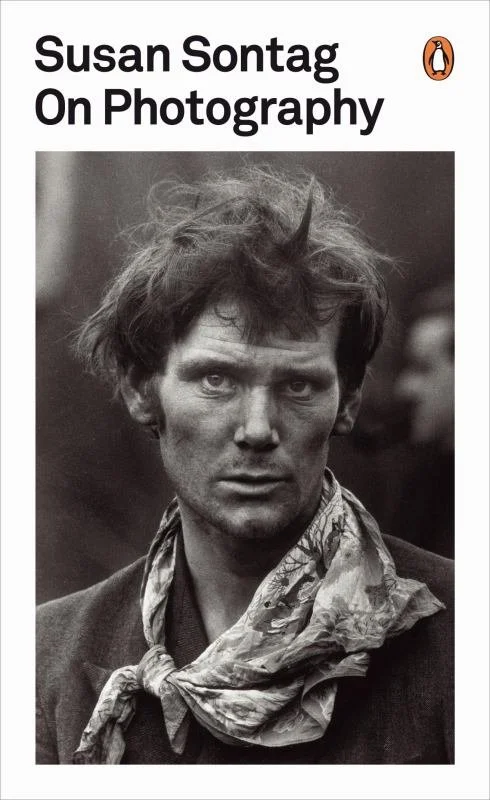
On Photography by Susan Sontag $30
Susan Sontag's groundbreaking critique of photography asks forceful questions about the moral and aesthetic issues surrounding this art form. Photographs are everywhere, and the 'insatiability of the photographing eye' has profoundly altered our relationship with the world. Photographs have the power to shock, idealize or seduce, they create a sense of nostalgia and act as a memorial, and they can be used as evidence against us or to identify us. In these six incisive essays, Sontag examines the ways in which we use these omnipresent images to manufacture a sense of reality and authority in our lives. [Paperback]
”Sontag offers enough food for thought to satisfy the most intellectual of appetites.” —The Times
”A brilliant analysis of the profound changes photographic images have made in our way of looking at the world, and at ourselves.” —Washington Post
”The most original and illuminating study of the subject.” —New Yorker
>>Read also Walter Benjamin.
>>Read also Roland Barthes.
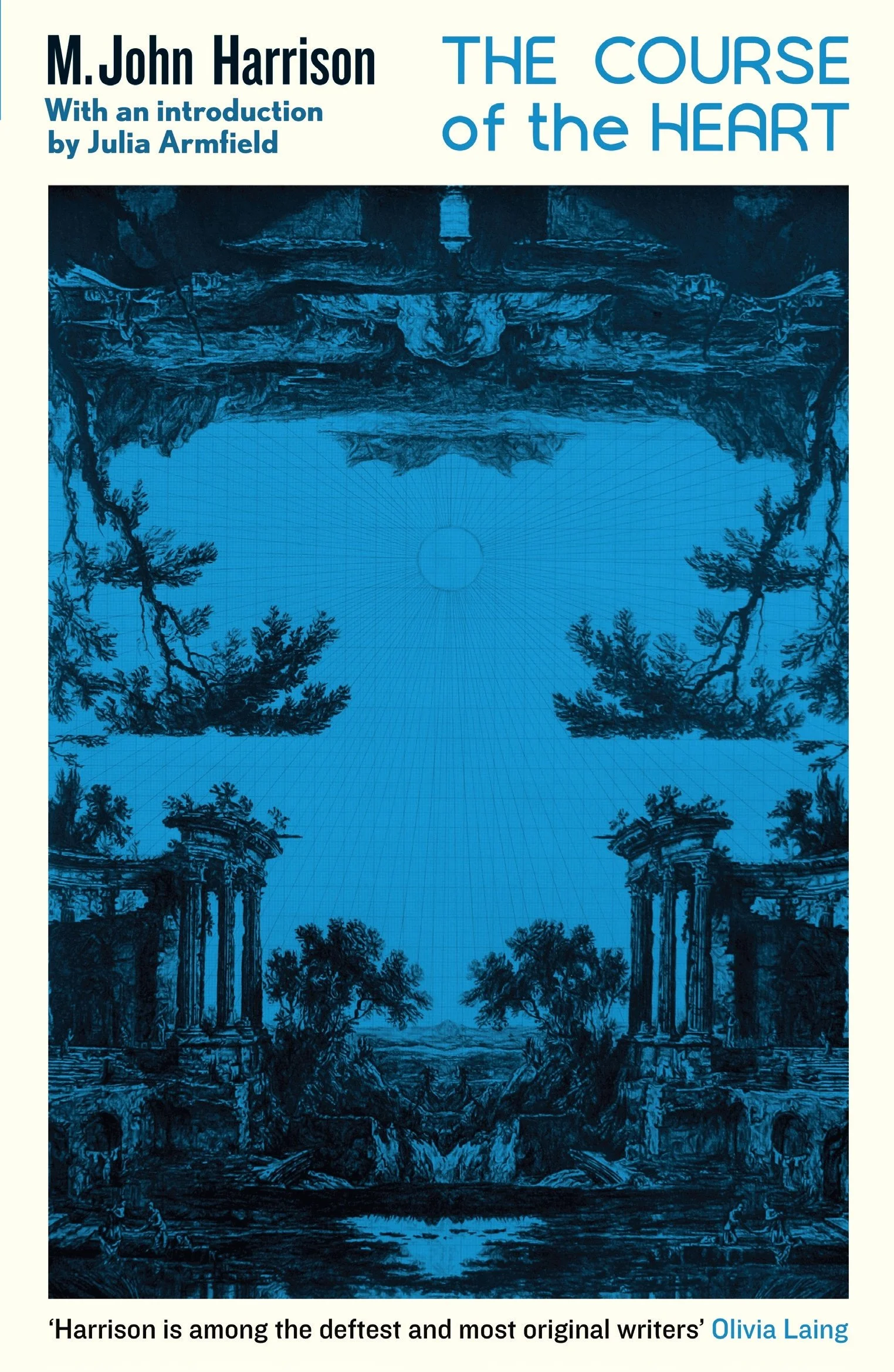
The Course of the Heart by M. John Harrison $28
On a hot May night, three Cambridge students carry out a ritualistic act that changes their lives. Decades later, none of the participants can remember what transpired; but their clouded memories bind them together. Unable to move on, Pam Stuyvesant has epilepsy and is plagued by sensual visions. Her husband Lucas believes that a dwarfish creature is stalking him, and invents histories to soothe Pam's fears. Self-styled Sorcerer Yaxley becomes obsessed with a terrifyingly transcendent reality. The narrator is seemingly the least effected participant in the ritual: he is haunted by the smell of roses, and his guilt as he attempts to help his friends escape the torment that has engulfed their lives. Strange, dreamlike and moving, The Course of the Heart is an examination of the edges of humanity where we lie, hide, hurt and heal. New edition, with an introduction by Julia Armfield. [Paperback]
”A gloriously intelligent, beautifully written and thoroughly maddening book.” —Independent
”A spare textual elegance and closure-denying restraint that impresses and fulfills.” —Iain Banks, Guardian
”One of the best writers currently at work in English.” —Robert Macfarlane
”Is M John Harrison the best writer at work today? He's certainly among the deftest and most original.” —Olivia Laing, Guardian
”A new generation will love discovering this book for themselves: it has the giddy thrill of youth, plenty of terror and metaphysical transcendence, but it's never silly; instead, M John Harrison unpicks the very notion of escapism.” —Observer
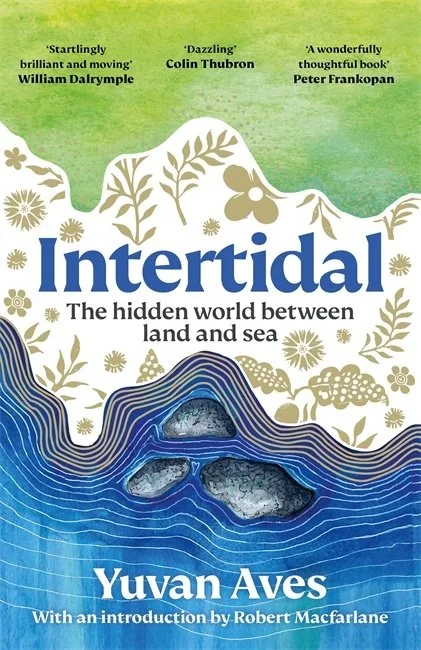
Intertidal: The hidden world between land and sea by Yuvan Aves $50
Over two years and three monsoons, Yuvan Aves pays scrupulous attention to the living world of his coastal city. The result is a diary of deep observation of coast and wetland, climate and self. Set in beaches and marshes, and the wild places of the mind, Intertidal comprises daily accounts of being in a multispecies milieu. In language that is jewel-like and precise, we hear frog calls through the night, spot butterflies miles into the ocean, find blue buttons washed ashore, see the churning of longshore currents and meditate on the composting abilities of worms. We also witness communities stand together to preserve the homes and livelihoods of the human and non-human inhabitants of the coast and the marsh. Intertidal asks us to reimagine values to live by in the here and now, heeding the living world and attending to the climate's calling, moving away from the old political, religious and cultural values that have proved to be ecologically disastrous. Yuvan Aves invites us to see beyond the binaries of sea and coast, mindscape and landscape, human and not human, self and other. Set in beaches, marshes, and the wild places of the mind, Intertidal revels in the healing power of nature and explores what it means to reclaim an ecology that has been colonised. [Hardback]
”Gentle and poetic, subtle, watchful and observant, writing very much in the tradition of Robert Macfarlane and haunted by the ghosts of Barry Lopez and J.A. Baker. This is a startlingly brilliant and moving debut.” —William Dalrymple
”Its intensity of vision' and stylistic flair reminds me of J.A. Baker's The Peregrine, and its democratic, inclusive account of ecology reminds me of Nan Shepherd's The Living Mountain. Intertidal is a wondrous work of walking, seeing and thinking.” —Robert Macfarlane

The Rocks Will Echo Our Sorrow — The Forced Displacement of the Northern Sámi by Elin Anna Labba (translated by Fiona Graham) $45
The deep and personal story — told through history, poetry, and images — of the forced displacement of the Sámi people from their homeland in northern Norway and Sweden and its reverberations today. More than a hundred years have passed since the Sámi were forcibly displaced from their homes in northern Norway and Sweden, a hundred years since Elin Anna Labba's ancestors and relations drove their reindeer over the strait to the mainland for the last time. The place where they lived has remained empty ever since. We carry our homes in our hearts, Labba shares, citing the Sámi poet Áillohas. How do you bear that weight if you were forced to leave? In a remarkable blend of historical reportage, memoir, and lyrical reimagining, Labba travels to the lost homeland of her ancestors to tell of the forced removal of the Sámi in the early twentieth century and to reclaim a place in history, and in today's world, for these Indigenous people of northern Scandinavia. When Norway became a country independent from Sweden in 1905, the two nations came to an agreement that called for the displacement of the Northern Sámi, who spent summers on the Norwegian coast and winters in Sweden. This "dislocation," as the authorities called it, gave rise to a new word in Sámi language, bággojohtin, forced displacement. The first of the sirdolaččat, or "the displaced," left their homes fully believing they would soon return. Through stories, photographs, letters, and joik lyrics, Labba gathers a chorus of Sámi expression that resonates across the years, evoking the nomadic life they were required to abandon and the immense hardship and challenges they endured: children left behind with relatives, reindeer lost when they returned to familiar territory, sorrow and estrangement that linger through generations. Starkly poetic and emotionally heart-wrenching, this dark history is told through the voices of the sirdolaččat, echoing the displacements of other Indigenous people around the world as it depicts the singular experience of the Northern Sámi. [Hardback]
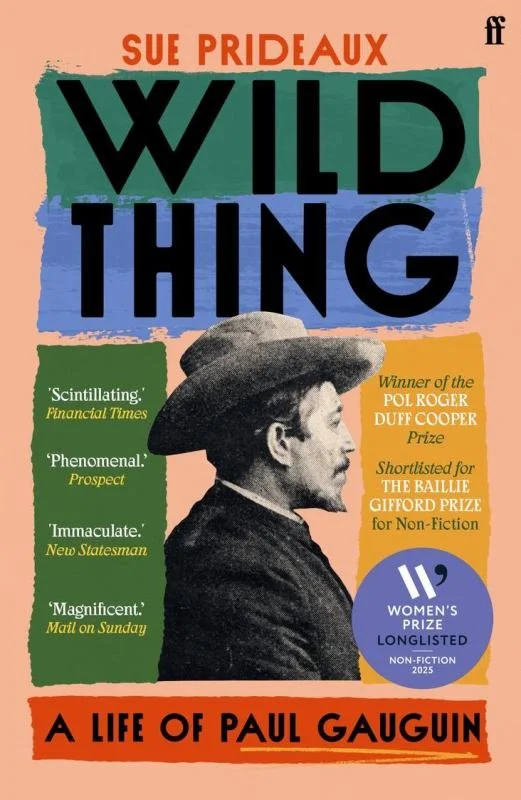
Wild Thing: A life of Paul Gaugin by Sue Prideaux $37
Paul Gauguin is chiefly known as the giant of post-Impressionist painting whose bold colours and compositions rocked the Western art world. It is less well known that he was a stockbroker in Paris and that after the 1882 financial crash he struggled to sustain his artistry, and worked as a tarpaulin salesman in Copenhagen, a canal digger in Panama City, and a journalist exposing the injustices of French colonial rule in Tahiti. In Wild Thing, the award-winning biographer Sue Prideaux re-examines the adventurous and complicated life of the artist. She illuminates the people, places and ideas that shaped his vision: his privileged upbringing in Peru and rebellious youth in France; the galvanising energy of the Paris art scene; meeting Mette, the woman who he would marry; formative encounters with Vincent van Gogh and August Strindberg; and the ceaseless draw of French Polynesia. Prideaux conjures Gauguin's visual exuberance, his creative epiphanies, his fierce words and his flaws with acuity and sensitivity. Drawing from a wealth of new material and access to the artist's family, this myth-busting work invites us to see Gauguin anew. Colour plates. [Now in paperback]
>>Casting new light.
>>A new world.
>>Also available in hardback!
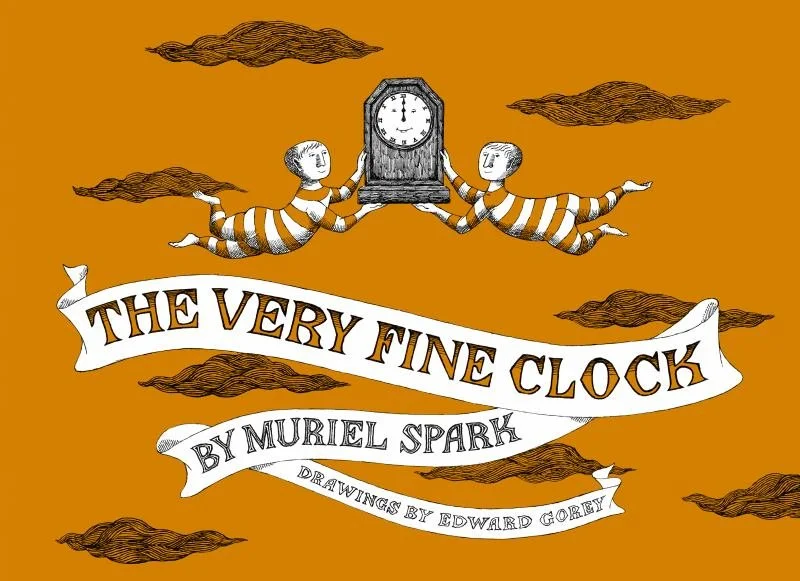
The Very Fine Clock by Muriel Spark, illustrated by Edward Gorey $35
Once there was a very fine clock named Ticky, who lived with Professor Horace John Morris and kept perfect time. Each night, at fourteen minutes past ten, his time was used to set the rest of the clocks in the house. When the professor's friends suggest that Ticky be made a professor, too, he explains what really happens during the quiet hours of the day when the professor is out, when all the rooms have been cleaned and dusted, and the clocks talk to one another and tell the stories of their lives. No artist is better suited to capture Ticky's quiet stateliness and grace than Edward Gorey, who brings this tale masterfully to life through his characteristic pen and ink drawings. Full of wit, wisdom, and affairs of the heart, The Very Fine Clock is a very fine picture book. [Hardback]
>>Look inside!
>>Electric Spark.
>>Born to Be Posthumous.
Read our latest newsletter
12 February 2026
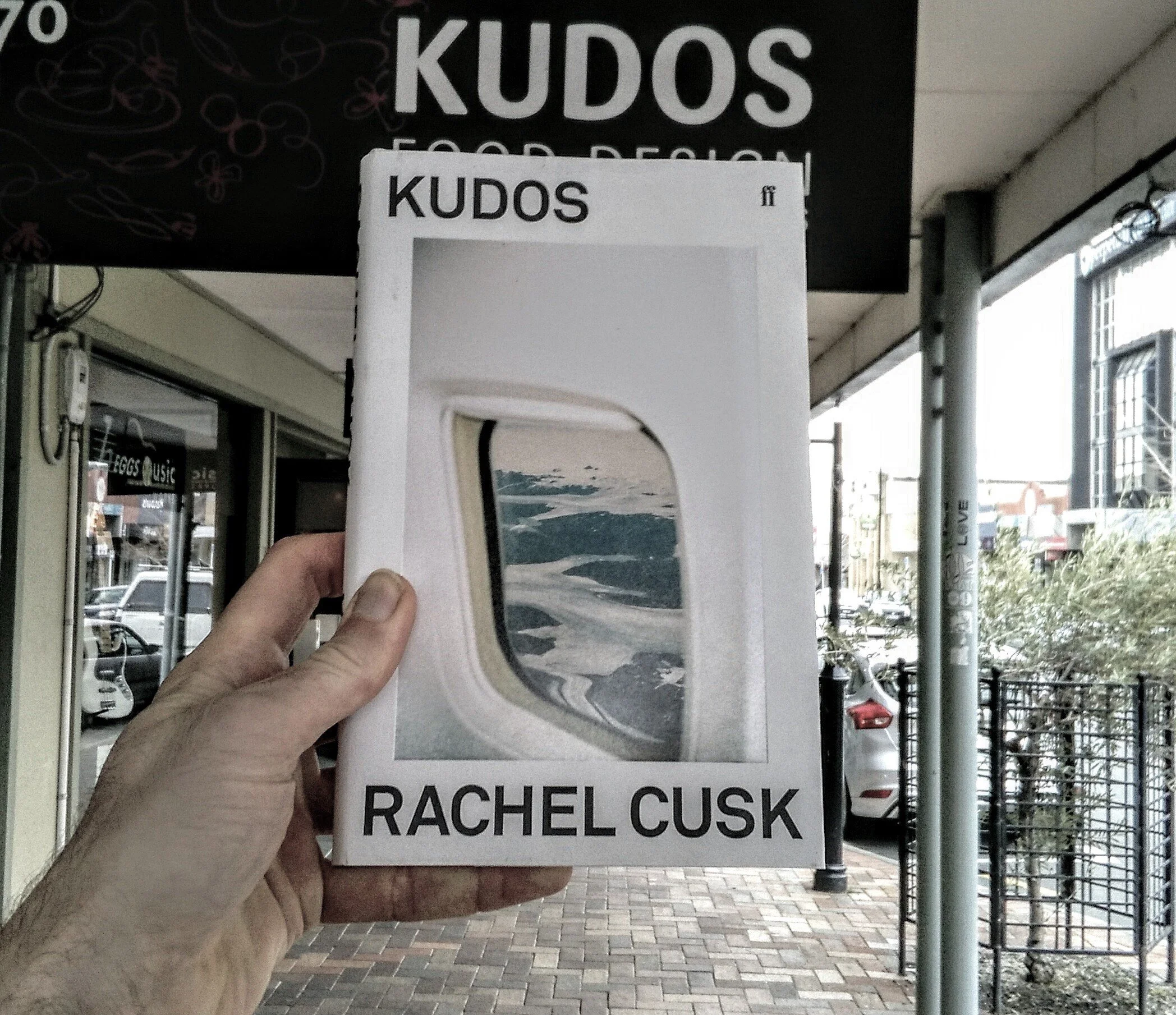
The man next to me on the plane was so tall he couldn’t fit in his seat. His elbows jutted out over the armrests and his knees were jammed against the seat in front, so that the person in it glanced around in irritation every time he moved. The man twisted, trying to get himself into a comfortable, or at least less uncomfortable, position in which he could hold his book at an acceptable distance from his eyes, a distance about which he was either uncommonly fussy or which was dictated by the possibly narrow focal range of his spectacles. “Sorry,” he said. He explained that he needed to write a review of the book by the end of the week, that he was a bookseller with a small bookshop in a provincial town, and that he and his partner, the joint owners of the bookshop, felt obliged to produce a review each every week for inclusion in their digital newsletter. Some weeks were short on reading time, he explained, what with the demands of the bookshop and of what he termed, somewhat vaguely, family life, so he needed to take every opportunity he could to finish reading his current book, in this case Kudos by Rachel Cusk, reading even in circumstances hardly conducive to reading well, such as in cramped seats aboard what he termed fictional aircraft, a context that not only tended to indelibly dominate whatever activity was performed in it, especially the memory of that activity, even more so than the actual performance in what he called the present tense, using a literary term hardly appropriate to what I would term living in real time, memory being, after all, surely, he remarked, the primary mode of a book review, but also left one vulnerable to conversation with whatever stranger one found oneself sitting next to, quite intimately, for an extended period of time, a period of time which neither party to the conversation has the capacity to shorten. I asked him whether he thought that perhaps the random, or at least seemingly random, encounters with members of what might be politely termed the public might not be in some way enriching, and he visibly recoiled at my choice of word, so I repeated it, to gauge its effect, and I immediately understood his reaction. Well, yes, he thought that such encounters might be a way of not so much generating narrative as of generating whatever might take the place of narrative in a work of fiction from which narrative, the possibility of narrative and even the principle of narrative has been expunged. This was very much, he said, what Rachel Cusk had achieved in Kudos, the taking-away from the novel of those principles, or as many of them as possible, that are generally considered to comprise a novel: plot, narrative, characters, development, interiority, but which are really just a set of conventions by which what we think of as novels expend or release their energy, so to call it, without that energy achieving the potentials of fiction, namely to transfer the experience of awareness between two minds, so to call them, in other words, what we think of as the essentials of a novel are the very things that may well reduce the potency of the novel, and, conversely, he thought, if a writer, such as Cusk, managed, as she has with Kudos, to excise from the novel as many as possible of these, what he termed novelistic antics, the novel could become potentised, “austere and astringent,” he called it, cleansing our faculties and getting them to work properly, not just for the reading of fiction but for the living of life, “whatever that might consist of”. When I suggested that perhaps not writing at all would be the apogee of fiction, he laughed briefly, or snorted, and replied that, yes, he was trying that experiment himself, with some success, even though the results suggested that fiction’s ultimate achievement in destroying itself closely resembled the complete absence of fiction. Cusk in the negativity of her fiction was austere, he said, but not as austere as him, who produced, if anything, less than nothing. “I would like the work to be a non-work,” he said, quoting Eva Hesse without attribution. Of course, he went on - and I realised, looking at my watch, partly in an attempt to estimate the proportion of our flight that remained, partly to implant in him some sort of subliminal message, that it would be hard to stop him talking now that I had succeeded in engaging him in conversation - of course it is the wall between the fictional and the actual, between the so-called subjective and the so-called objective aspects of experience, that it should be fiction’s prerogative to assail, to undermine, to cause to crumble, for it is this wall that is responsible for the maintenance of all manner of errors about identity and reality and, ultimately, responsibility, so to call them, errors that are either traps or crutches, he said, traps and crutches being largely indistinguishable from each other unless you know the nature of your affliction, which can only be ascertained by the removal, at least temporarily, of the crutch upon which one has been leaning. I seemed, I thought, to have triggered in him a kind of mania of exposition, which I was beginning to regret, though I had done little more than make what I thought of as small talk with a man whose enthusiasm for literature must surely be an embarrassment to himself. He did not appear to blame me for this, at least, rather, he had become by this stage oblivious to anything but his own train of thought. In many ways, he said, Kudos resembled the work of Thomas Bernhard, a writer for whom he evidently had a great deal of respect, especially in the layering or nesting of narrative within several levels of reportage. In fact, nothing actually happens in the novel until the very last, memorable paragraph, other than the minimum necessary for the interchange of the series of characters - a man who sat beside her on an aeroplane, various writers and interviewers she encounters at a literary festival, a guide, her editor and her translator, her sons who telephone her - whose conversations with her, or, rather narrations to her, the narrator narrates. For instance, at one stage Cusk, one step more invisible even than her invisible narrator, tells us of the narrator telling of a writer named Linda telling of the woman who sat beside Linda on the plane telling Linda of how she came to break her bones. In another passage, during a conversation with an interviewer, the narrator describes to the interviewer what the interviewer had described to the narrator during a previous conversation. The narrator reveals nothing of herself, he explained with a patience that seemed unpredicated on either my understanding of or my interest in what he was explaining, other than that which is revealed by her function as a conduit for the stories, and voices, of others. By reducing herself to so very little, to almost nothing, the narrator is able to enter and own the stories of others, he said, or, rather, Cusk is able to use the narrator as a device to enter and own stories, the layers of narrative, hearsay and reportage rendering the distinction between fiction and actuality entirely extraneous. Also, this authorial or narratorial intrusion frequently breaches the distinctions between the levels of narrative, he said, what he called the narrator’s first person reduced and sharpened to such a pinprick that it enters and appropriates details in quoted speech and reported speech, in second- and third-person narratives of secondary and tertiary narratives in the second person - I must say I couldn’t follow quite what he was telling me, but, I must also say, I wasn’t trying very hard - sometimes ultimately reporting information that the narrator could in fact have no access to through those conversations, information that could not be at less than a step or two's remove. Although I was by this stage hardly encouraging him, the bookseller was unstoppable. “All fiction is inherently a transgression of the sovereignty of persons, although this transgression is by no means limited to fiction but can also be observed in all attempts at the so-called understanding of, or, rather, representation of, actual others.” The trappings of fiction and the conventions of social interaction try their hardest to mask this unconscionable intrusion and appropriation, but this intrusion and appropriation is at the nub of things, fictional and otherwise, he said, and ultimately destabilise any notions we might have of identity, reality and, ultimately, responsibility. I suggested that he might have gone over this ground before, or so it seemed to me, but he continued. “Who owns whose narrative?” he demanded, not, I think, of me. He was quiet a moment, but not longer. “Listen to this,” he said, and proceeded to quote a passage he had marked in the book: “‘I said that while her story suggested that human lives could be governed by the laws of narrative, and all the notions of retribution and justice that narrative lays claim to, it was in fact merely her interpretation of events that created that illusion. … The narrative impulse might spring from the desire to avoid guilt, rather than from the need - as was generally assumed - to connect things together in a meaningful way; that it was a strategy calculated, in other words, to disburden ourselves from responsibility.’ What do you think?” he asked. I hadn’t quite caught it all, he had been reading too fast and we were sitting near the engines, so I hesitated before he went on, seemingly unaware that I had not replied. Cusk’s work was a work of great clarity, which, he said, as well as being very pleasurable to read, was a work of liberating negativity, a reformulation of the purpose and capacities of fiction, no less. The purpose of art is to turn upon and destroy itself, he said, or words to that effect, and at the same time and by this process to change the nature of our relationship with the actual. He turned to another marked passage, in which Cusk’s narrator, Faye, relates to an interviewer what had been said to her by her son during a telephone call, something about “‘passing through the mirror into the state of painful self-awareness where human fictions lose their credibility,’” a process he appeared to ascribe to the fiction, such as Kudos, that he valued most. I told him that I was sorry, but he had actually managed, by his overcomplicated enthusiasm for it, to put me off buying a book I would no doubt otherwise have enjoyed, having enjoyed Cusk’s two previous books, Outline and Transit, and he obliged me by keeping quiet for what remained of the flight.

When your cat looks at you like you’ve done her a disservice by not sharing your Friday night snacks, despite the fact they are not cat treats, you realise that the cat has tipped into personhood. No longer just a cat, but a person leveling a malevolent stare at you and eyeing up your glass of ginger beer. (Lucy doesn’t like ginger beer, but has been known to sneak a sip at a cup of tea.) (1)
In Anna Jackson’s wonderful prose poem her hens feature throughout: their hen-ness evident on the page, and their personhood developing as the relationship between bird and human develops. But this is not an ode to hens, rather there are questions about what we think about when we think about (2) hens or contemplate our relation with domestic pets or our wider connection with nature. Don’t be misled for this is not nature writing, but then again it could be. (3) This is not a domestic poem, but it also is: — Jackson’s home and the familial feature on the page throughout the five seasonal sections. There is an autobiographical thread: Jackson’s thinking, her thoughts, the central cadence.(4). Yet this is not inward gazing, not a personal diary, rather a nod to diarists and keepers of memories. (5). And yet saying this I recall the poems about social anxiety, about uncertainty, about knowing. So I find myself saying it is a diary of sorts after all. Time plays its role. The collection is arranged by its five parts — five seasons — we travel from one summer to another. The ebb and flow not only being about time, but about the way thoughts arise and dissipate; how words work on the page, how poetry comes into being. Jackson’s reading (6) of other poets, essays, novels, non-fiction, philosophy mingle with her thoughts: — knowledge like residue landing in interesting places. Some profound, others extremely funny.(7). Terrier, Worrier: A poem in five parts is a deeply enjoyable and intelligent collection of thought-work and poetic good measure. It is as much about the idea of thoughts, of thinking, as it is about the thoughts themselves. Brilliant!
Notes:
1. Anna Jackson wrote these poems with a cat sitting on her lap.
2. This makes me think about What We Think about When We Think about Football (philosopher Simon Critchley) and What I Talk About When I Talk About Running (Murakami), and then I wonder about this turn of phase, and did it originate with Raymond Carver’s What We Talk About When We Talk About Love?
3. I discovered something about sparrows I did not know (and which will forever change my perception of them — in a good way!)
4. There is music. The whales that sing. The repeating lines “I thought”, “I wondered”, “I dreamed”, “I read” (but mostly “I thought”) tap out a steady and compelling beat.
5. Do read the Notes. They are fascinating.
6. Jan Morris, Olivia Laing, Ludwig Wittgenstein, social media, Carlo Rovelli, Virginia Woolf, Oliver Sacks, and more…
7. Pedal car.
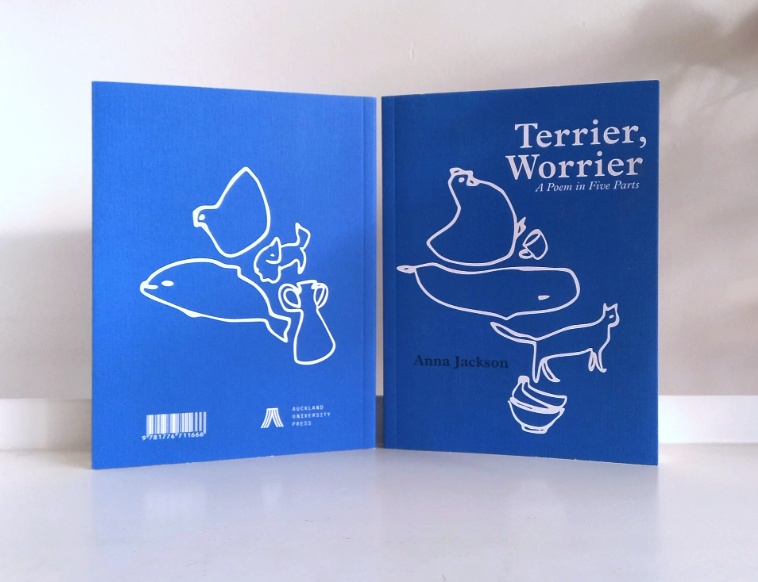
Thought takes place wherever it finds purchase, which, if you think about it, is pretty much everywhere. When we stand in the centre of our personal worlds we stand also in the centre of our thoughts, which stretch to the edges of our awareness and contain others who seem to us also to think. What are the thoughts like of these others? How do the thoughts of animals, for instance, differ from or suggest themselves to be similar to our own thoughts, and what could this difference or similarity tell us not only about what thought could be but also about what makes a person, and who or what else, apart from us, might be persons? Anna Jackson’s very enjoyable and thought-provoking book blends domestic circumstance, scientific factoids, hens, and philosophical conundra into a kind of thought generator, spilling thought, both Jackson’s and the reader’s own, in a way that makes it pleasurably impossible to tell which is which. Terrier, Worrier demonstrates the benefits of including the associative method of poetry alongside the Socratic method and the scientific method as useful modes of seeking knowledge of our world. {T}