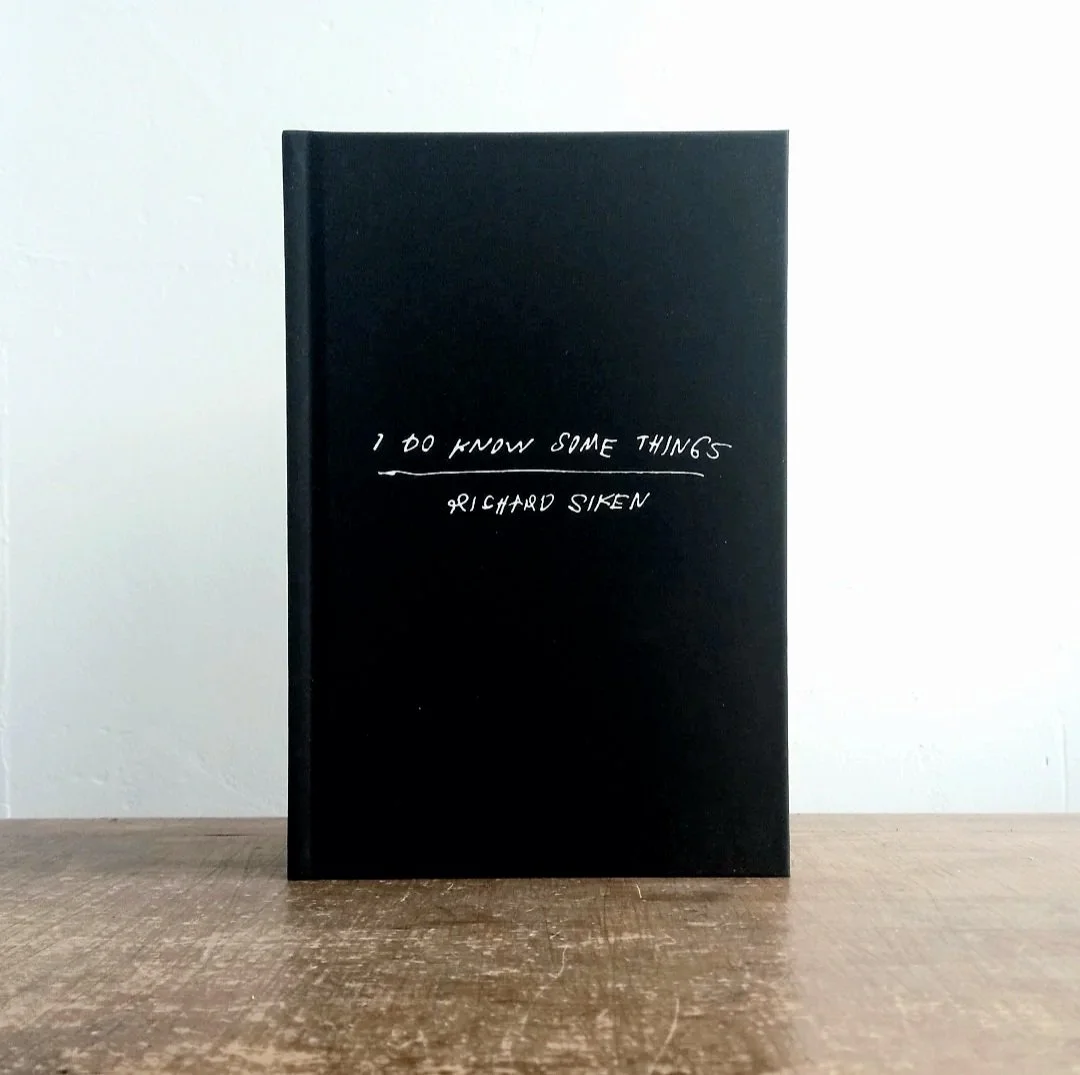
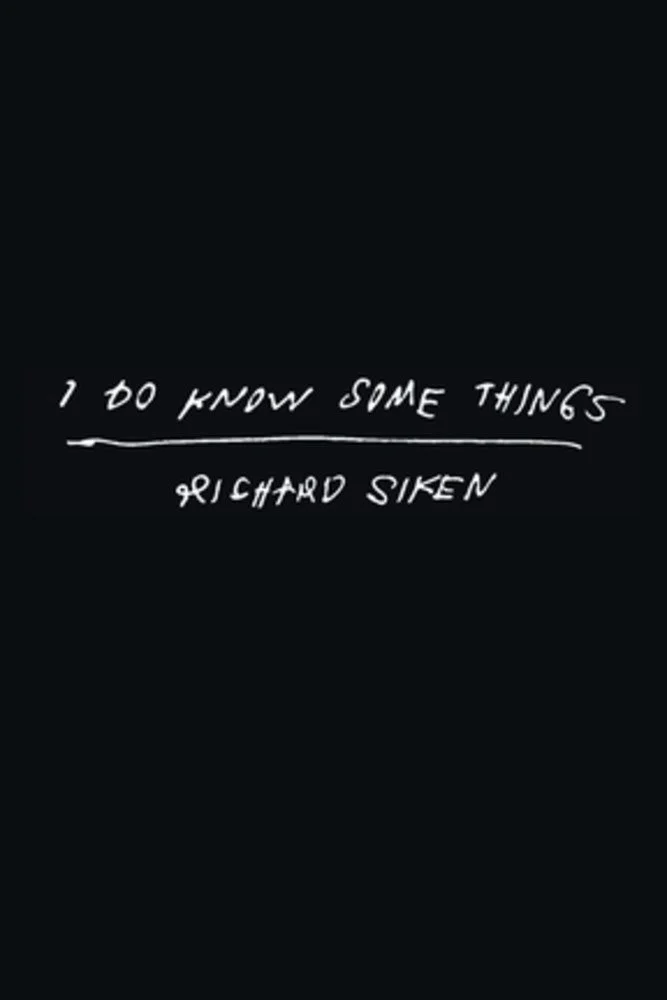
Book of the Week: I DO KNOW SOME THINGS by Richard Siken

Following a stroke that was initially mistaken for a panic attack, the poet Richard Siken found himself having to completely rebuild his relationship with his body, with his world, and with language itself — the medium that previously had come most naturally to him. This wonderful, darkly hilarious book, both vitriolic and tender, began as a series of exploratory and explanatory survival notes to himself and built into a series of playful interrogations of memories, traumas and losses, a pinning of personal phantoms, a renegotiation of the contract between inner and outer worlds, and an unfurling of new and vulnerable possibilities in language and in life. Recommended.

"An astonishing feat of poetic prowess. Siken has created 'an encyclopedia of myself,' a kaleidoscope of memory, language and identity that reveals — at times revels — in the faultiness of our own narratives. Siken's voice — and language — is both rooted and aloft, even as he avers that these are not 'poems of song.' Beyond such marvels, this is a virtuosity of candor and technique, bound by a seemingly effortless linguistic choreography that leans into multiplicity and mutability, with continuous sparks and joys, from one of our finest contemporary poets." —Mandana Chaffa, Chicago Review of Books

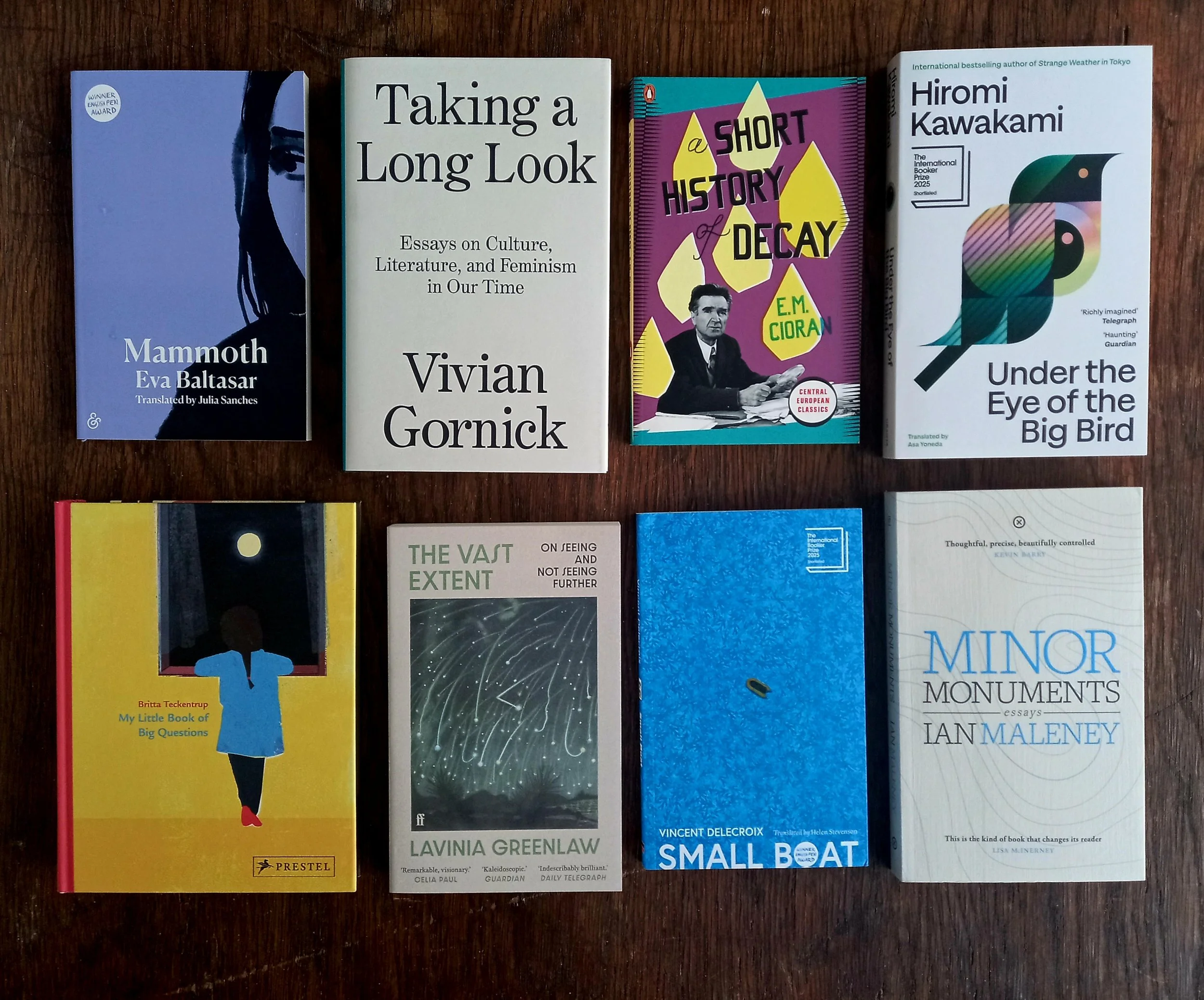
MY LITTLE BOOK OF BIG QUESTIONS by Britta Teckentrup — Review by Stella

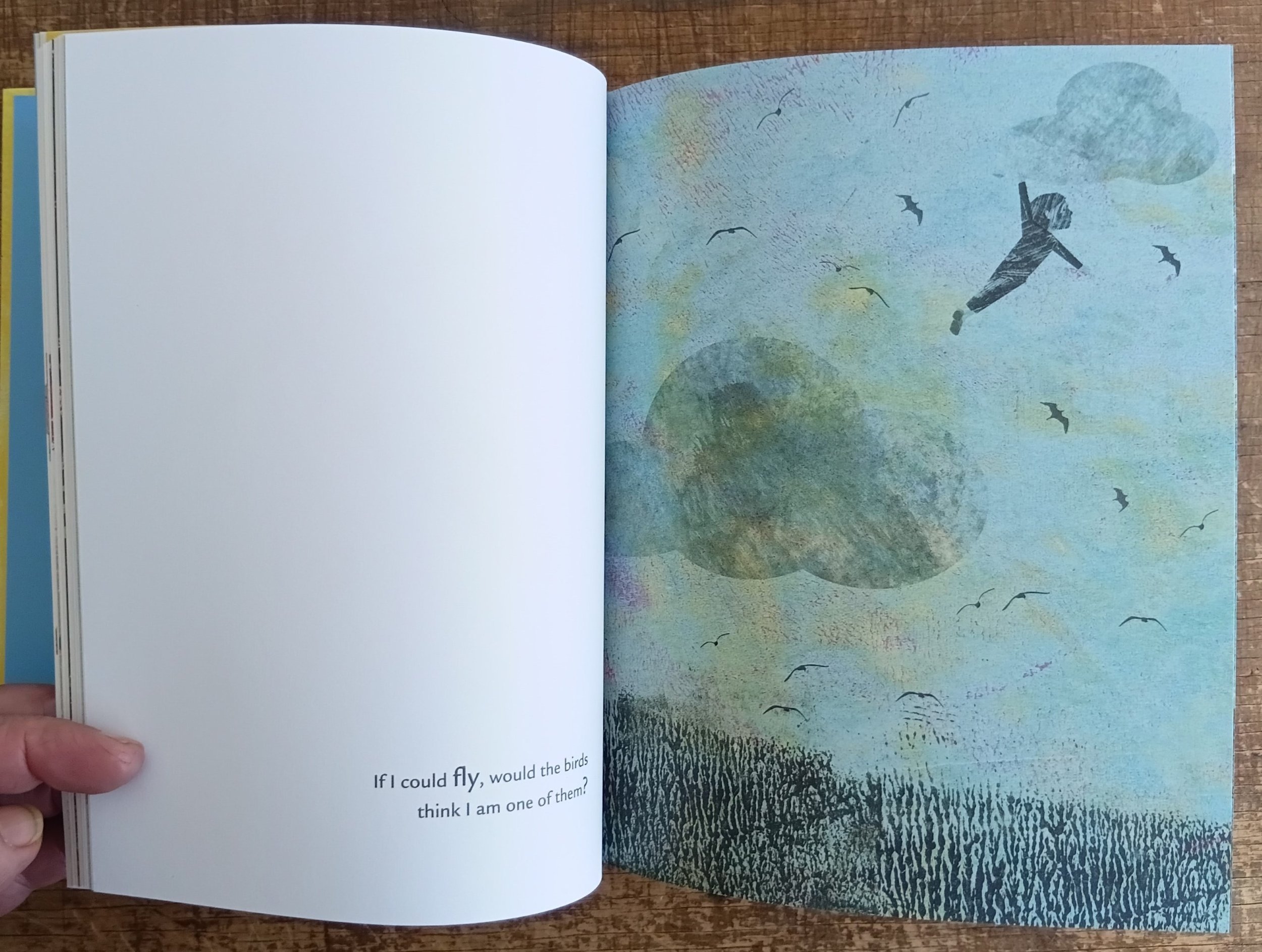
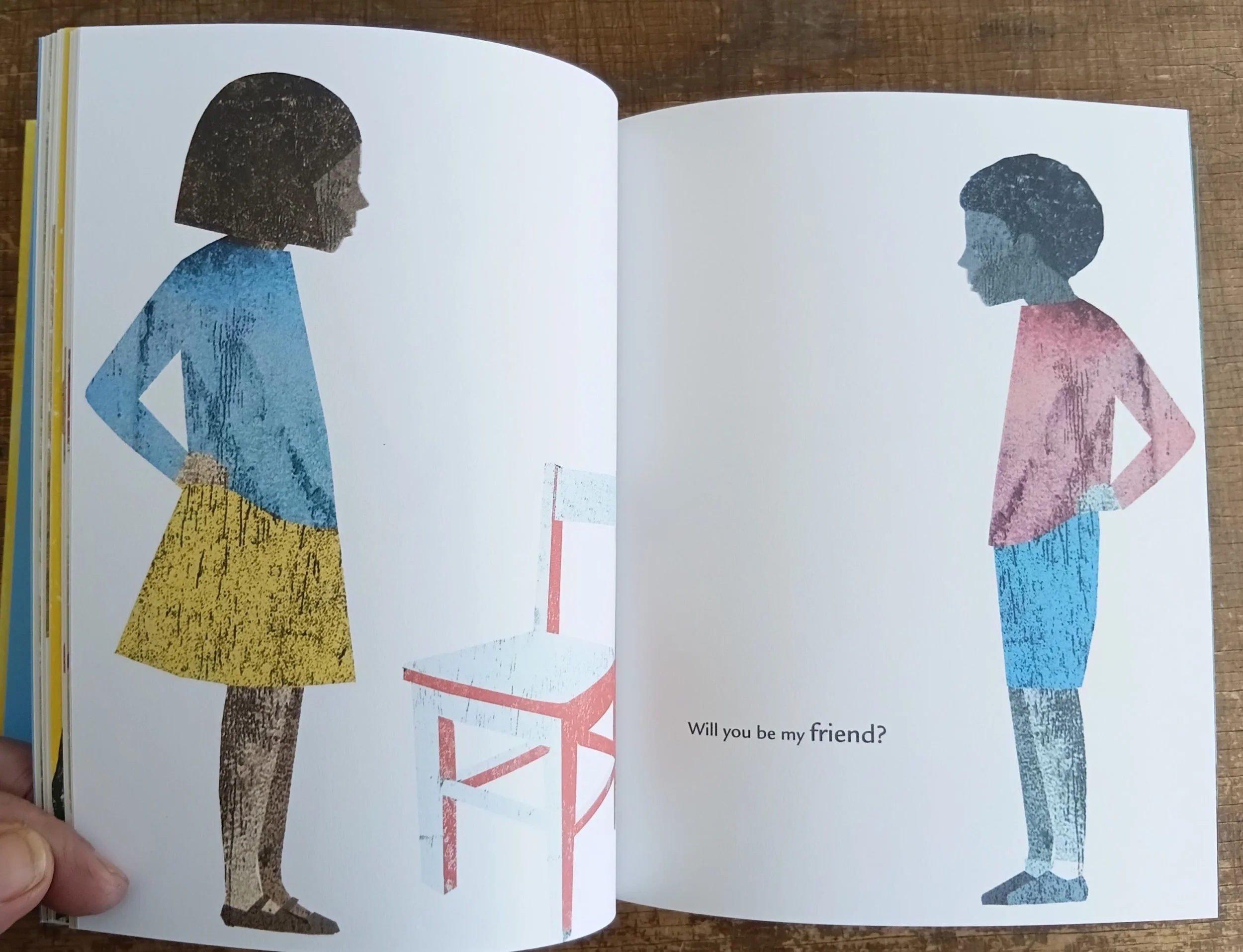
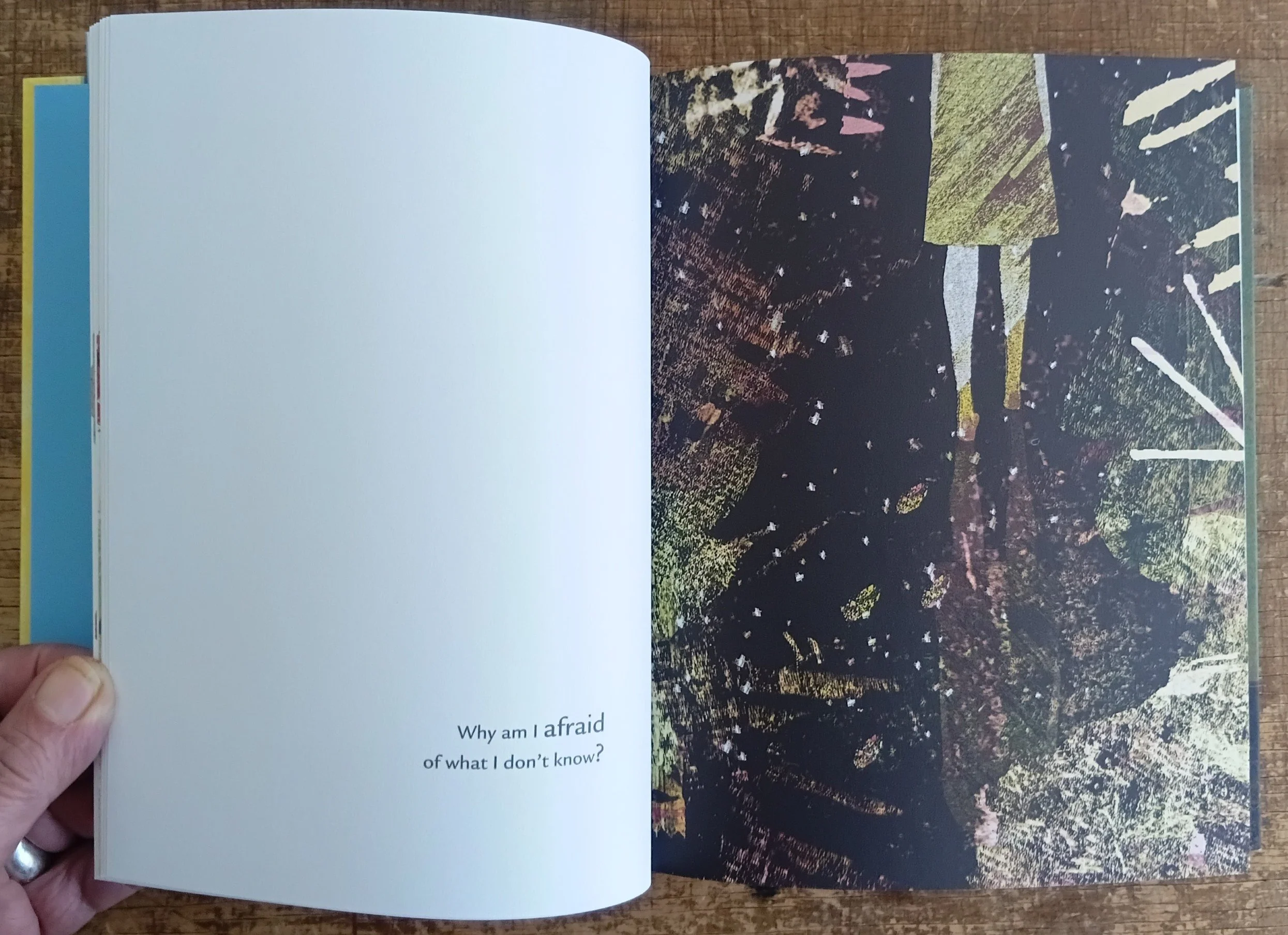
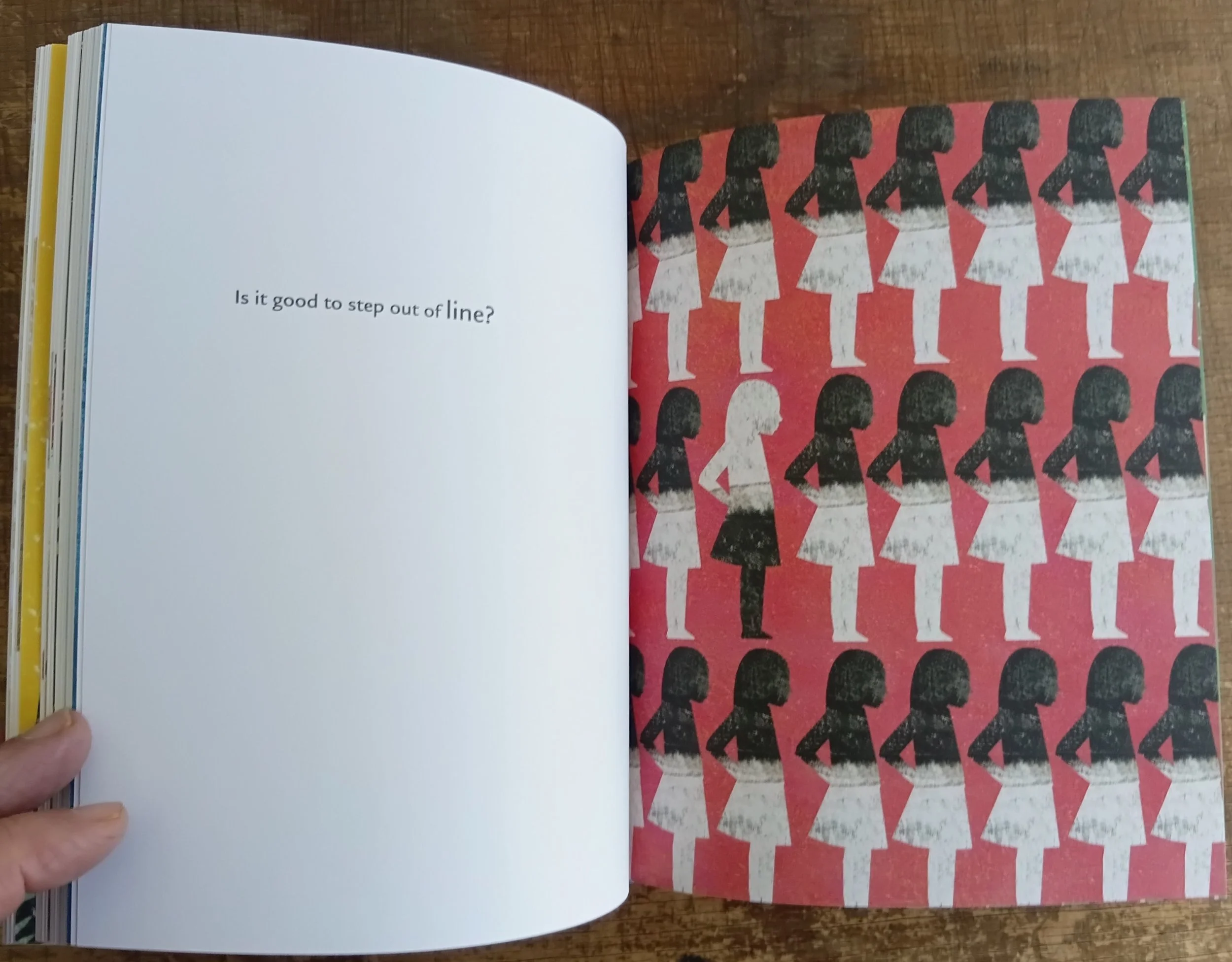
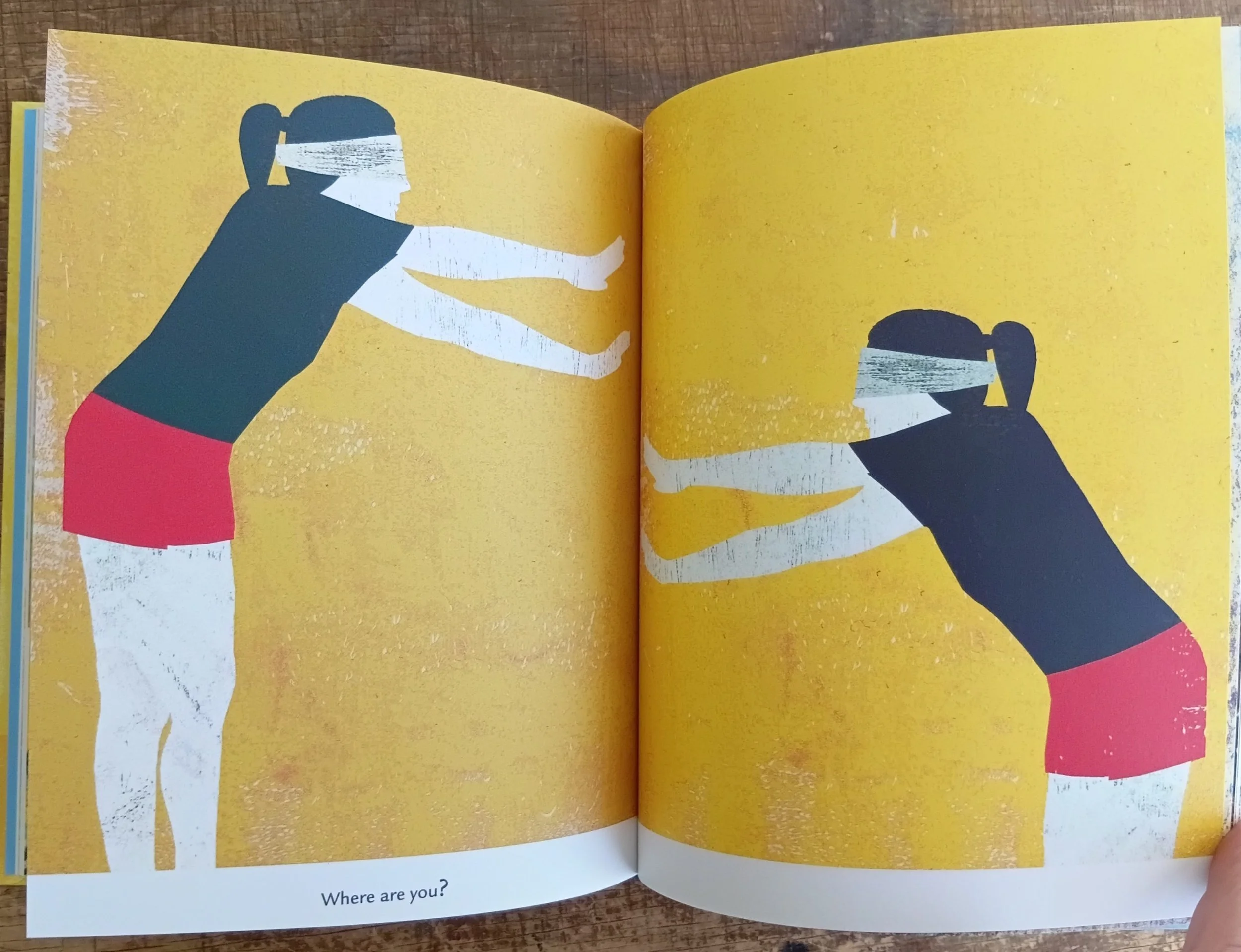
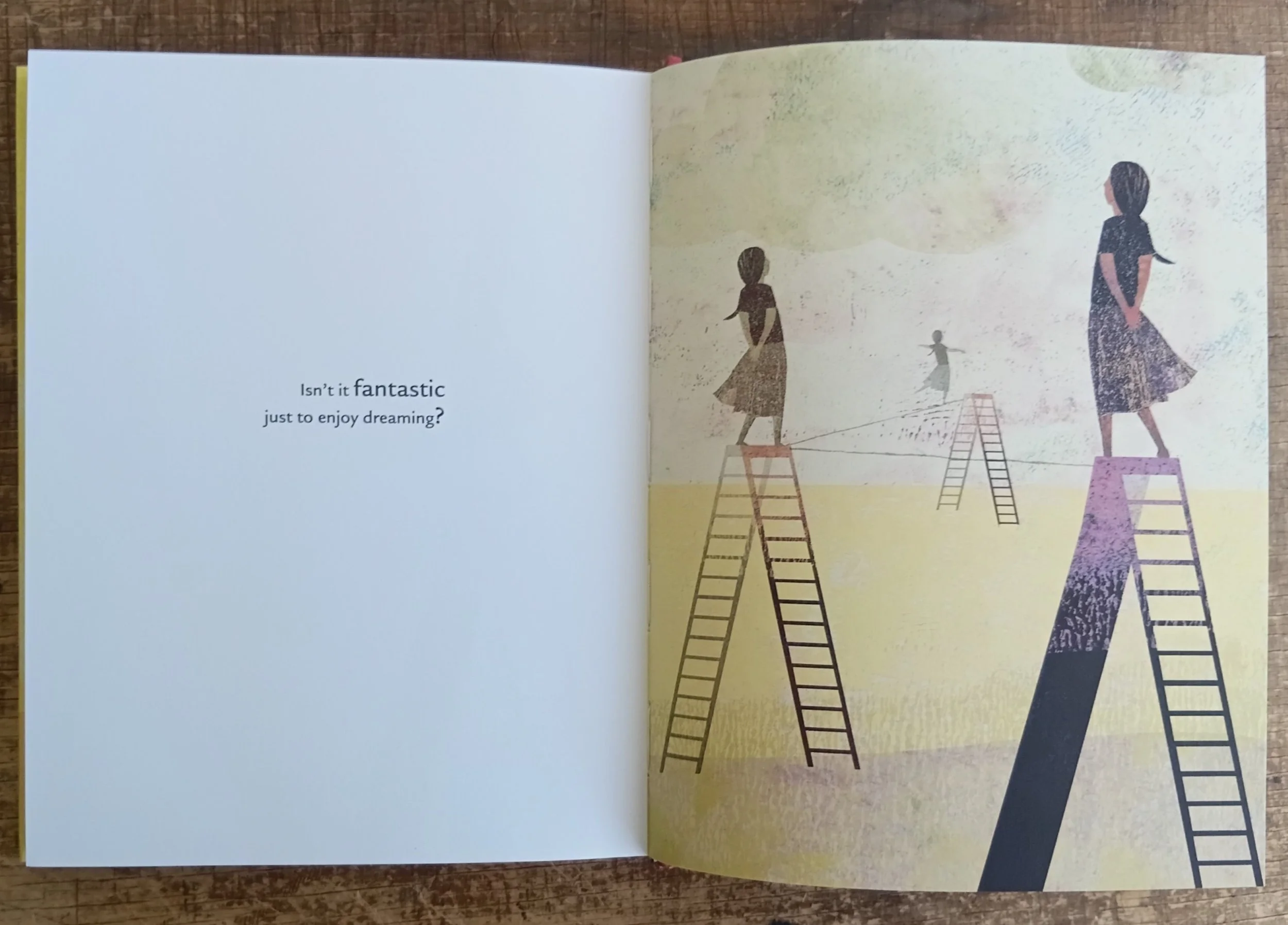
Britta Teckentrup is a German illustrator and author with over 70 children’s books to her name. Published in over 20 countries, she illustrates her own as well as other authors’ picture books. Many of her books quickly become favourites, and they range from board books to sophisticated picture books. What they all have in common is a desire to instill a feeling of wonder and curiosity. My favourite of her books is My Little Book of Big Questions. This is packed with ideas, beautifully illustrated, and filled with questions, both familiar and surprising. At 190 pages this is a substantial small hardback. The questions suit any age — from youngsters to adults. The ideas within these pages can be set free to roam in the imagination or used as conversation starters or prompts for writing or other creative responses. The questions range from the whimsical and tentative to the philosophical and provocative. Some questions may have answers and every reader will respond in their own way; other questions lead to more questions, opening doors to stories and journeys; while others will illicit a response of ‘who knows?’ Some questions trigger emotions, while other may send you on a fact-finding mission.

Here’s a small selection:
Will I be able to fly someday?
Who will be my friend?
Why I am afraid of what I don’t know?
Am I special?
Why is nature so colourful?
Are dreams as true as reality?

The illustrations, eye-catching and attractive, are variously thoughtful, joyful and enigmatic. Teckentrup uses colour, texture, silhouettes, and line to capture mood and emotion. There is joy in the light sky of a cartwheeling child. There is the brilliant blue of a dive into a pool of water. Rich textures adorn a field where a quest to find something hidden is under way. The bright yellow light of the future in seen through a window frame as a child looks from the familiar to the promise of what is to come. There is simpliicity of line and colour for quiet thoughts, and bold colours and energetic forms for questions that spur us to action.

This is a delightful book, one that I never tire of opening. It is brimming with ideas, both big and small, about feelings, human interactions, the meaning and the mysteries of life, and how all these things spark our imagination and keep us curious.

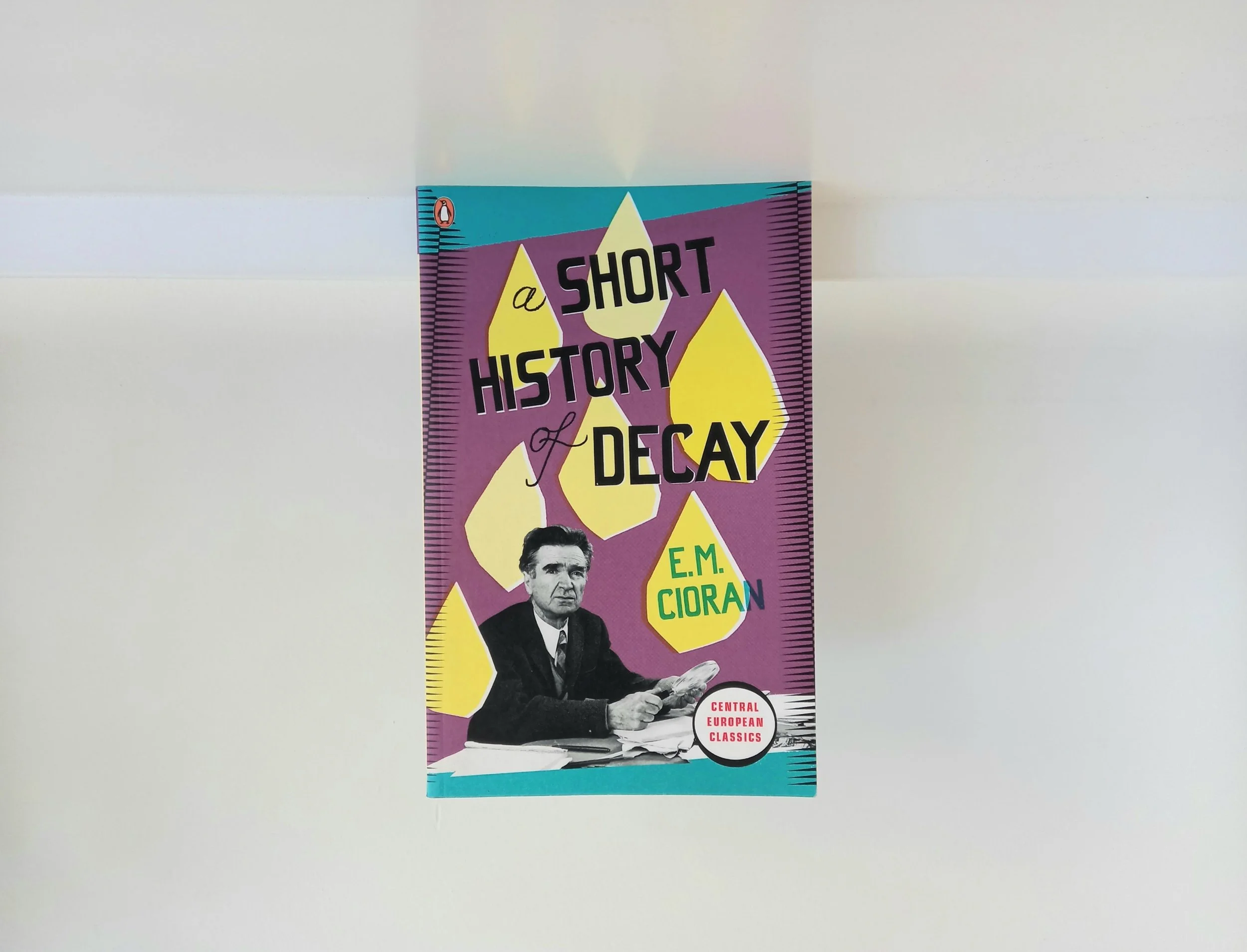
A SHORT HISTORY OF DECAY by E.M. Cioran — reviewed by Thomas

Emil Cioran is the philosopher of personal and collective frailty and failure, of emptiness, of hopelessness, of the eschewing of all answers (“Having resisted the temptation to conclude, I have overcome the mind.”). He rails against society, against both choice and necessity, against all values. I thought I would like him more than I do. Perhaps it is that he trumpets his nihilism, that he shouts out the immanence of our demise from the event horizon of whatever black hole we are heading towards, that his pessimism is, above all, dramatic (does this call its authenticity into question? (I don’t think so)), that makes me tire of him (he should perhaps be read (by me, at least) in small doses). Our differences are perhaps more of temperament than of territory; to me the underlying nullity of existence is more irredeemable than tragic, and I am to a degree suspicious of the heroic trappings and lyricism of his despair. That said, Cioran is an important, interesting (and frequently amusing) thinker, an heir to Nietzsche, and there is much to admire (and be amused by) in his books. His words dissolve civilisation as acetone dissolves paint (that’s got to be a good thing). The contents page of this book reads like the publishing list of an American academic publisher (“Genealogy of Fanaticism – In the Graveyard of Definitions – Civilisation and Frivolity – Supremacy of the Adjective – Apotheosis of the Vague – The Reactionary Angels – Militant Mourning – Farewell to Philosophy – Obsession of the Essential” &c, &c), and the book itself contains enough nihilistic aphorisms to fill a lifetime’s worth of anti-inspirational calendars (now, there’s a publishing project…), for example (although this is typically insensitive to anyone with literal leprosy): “One is ‘civilised’ insofar as one does not proclaim one’s leprosy.” Great stuff.

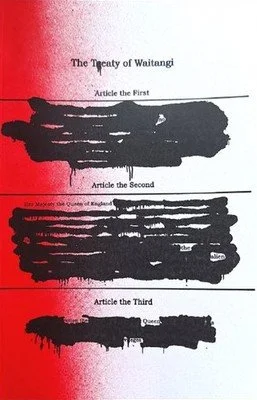
Some books on Te Tiriti o Waitangi

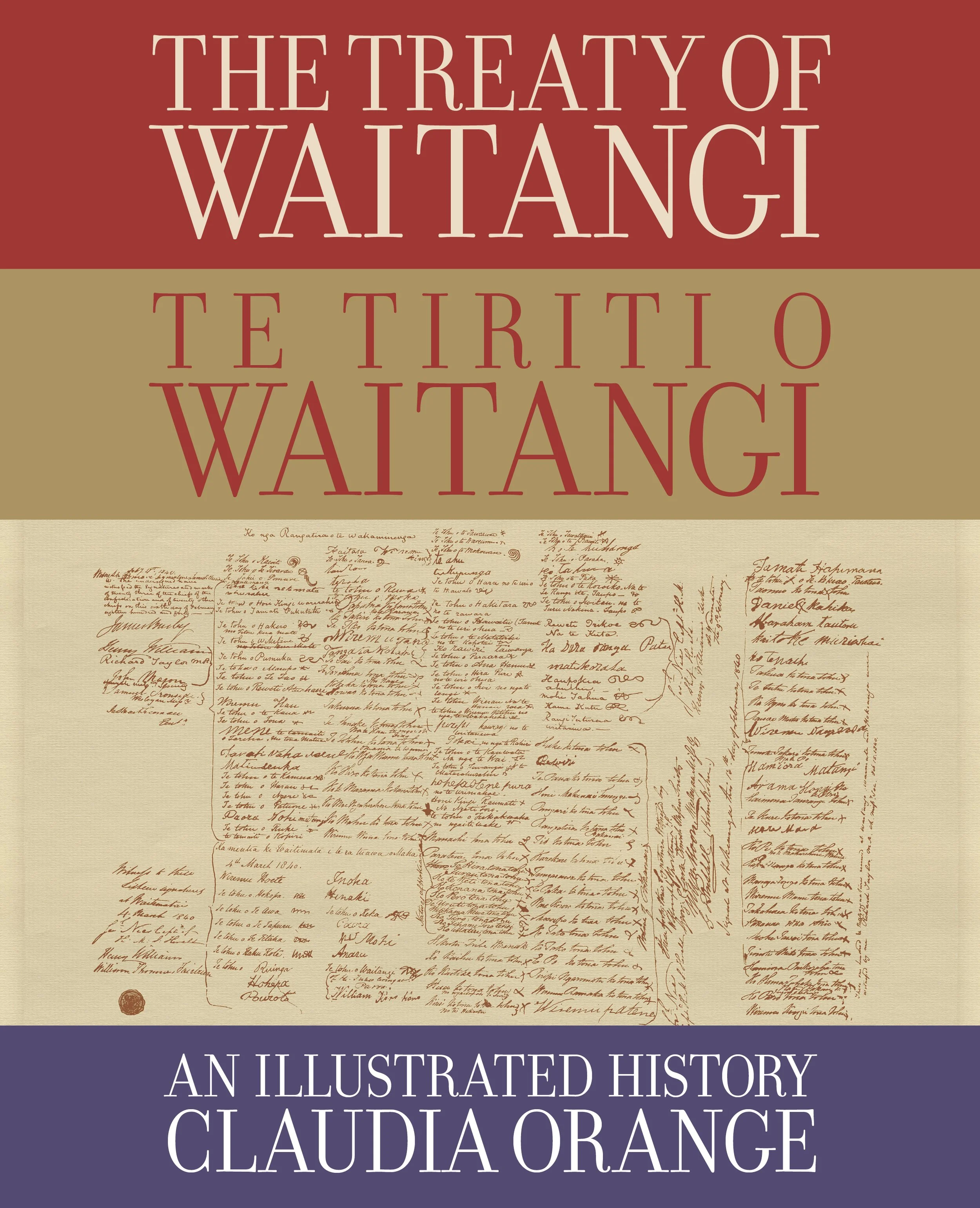
The Treaty of Waitangi | Te Tiriti o Waitangi: An iIlustrated history by Claudia Orange $50
Claudia Orange's writing on the Treaty of Waitangi has played a central role in national understanding of this foundational document. This third edition of her standard work is the most comprehensive account yet, presented in full colour and drawing on Dr Orange’s recent research into the nine sheets of the Treaty and their signatories.


50 Years of The Waitangi Tribunal edited by Carwyn Jones and Maria Bargh $65
The collection highlights the breadth of issues considered by the Tribunal and also the impact the Tribunal has had on complex legal concepts, representation of communities, and understanding of te Tiriti o Waitangi.


Understanding Te Tiriti: A handbook of basic facts about te Tiriti o Waitangi by Roimata Smail $25
Distills essential information clearly and concisely.


Undersranding Hauroa: A Handbook of basic facts about te Tiriti o Waitangi and the Health System by Roimata Smail $25
A short, accessible guide explains what hauora really means — not just healthcare, but the wellbeing of body, mind, spirit, and whānau, grounded in the whenua — and how Te Tiriti o Waitangi guaranteed Māori authority over it.


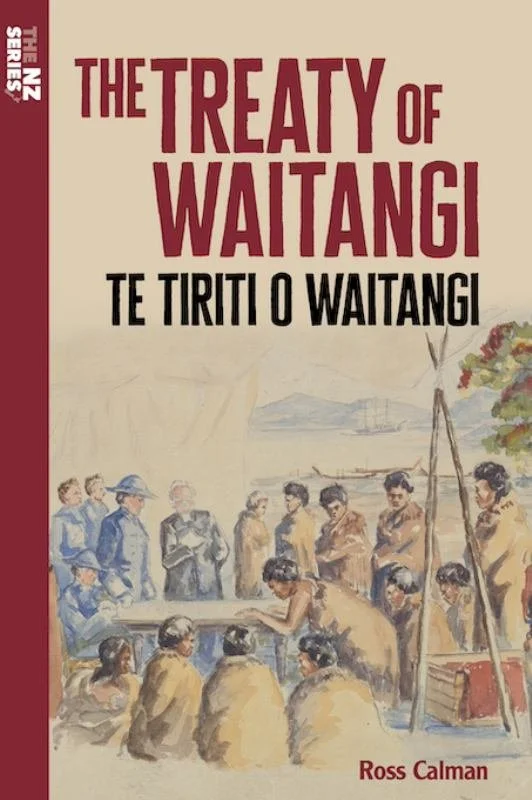
The Treaty of Waitangi — Te Tiriti o Waitangi  by Ross Calman $30
A non-fiction resource for general readers and schools, introducing complex subjects in concise terms. Illustrated with explanatory graphics, fact boxes, and photos.


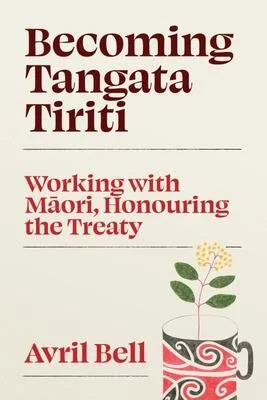
Becoming Tangata Tiriti: Working with Māori, Honouring the Treaty by Avril Bell $30
Becoming Tangata Tiriti brings together twelve non-Māori voices — dedicated professionals, activists and everyday individuals — who have engaged with te ao Māori and have attempted to bring te Tiriti to life in their work.


Te Tiriti o Waitangi / The Treaty of Waitangi by Toby Morris, Ross Calman, Mark Derby, and Piripi Walker $25
Full-colour graphic novel about Te Tiriti o Waitangi/The Treaty of Waitangi. This reorua (bilingual) graphic-novel-style flip book presents important information in a visually appealing and engaging way.


Te Waka Hourua Whītiki, Mātike, Whakatika!  $30
Te Waka Hourua is a tangata whenua-led, direct action, climate and social justice rōpū.


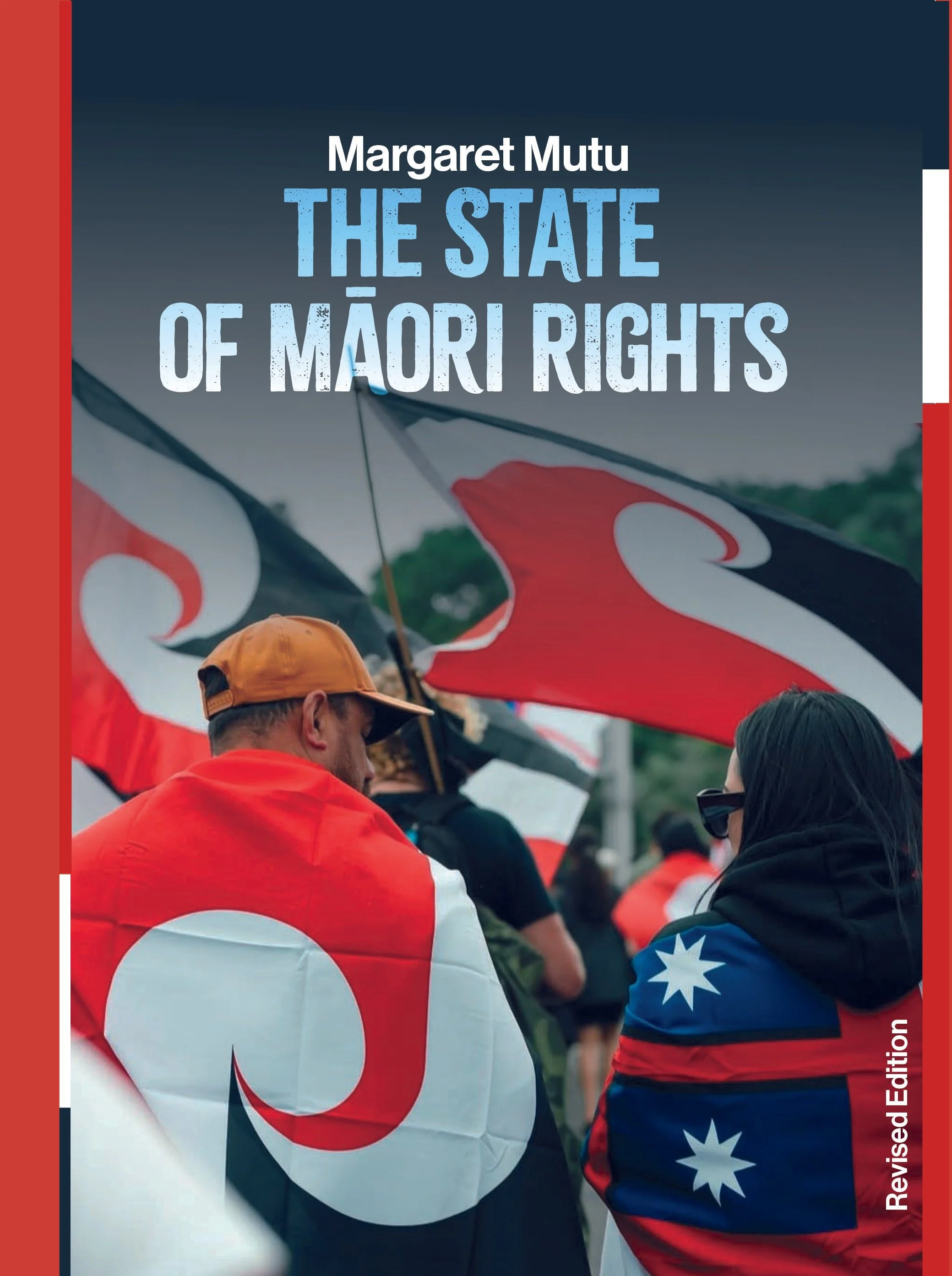
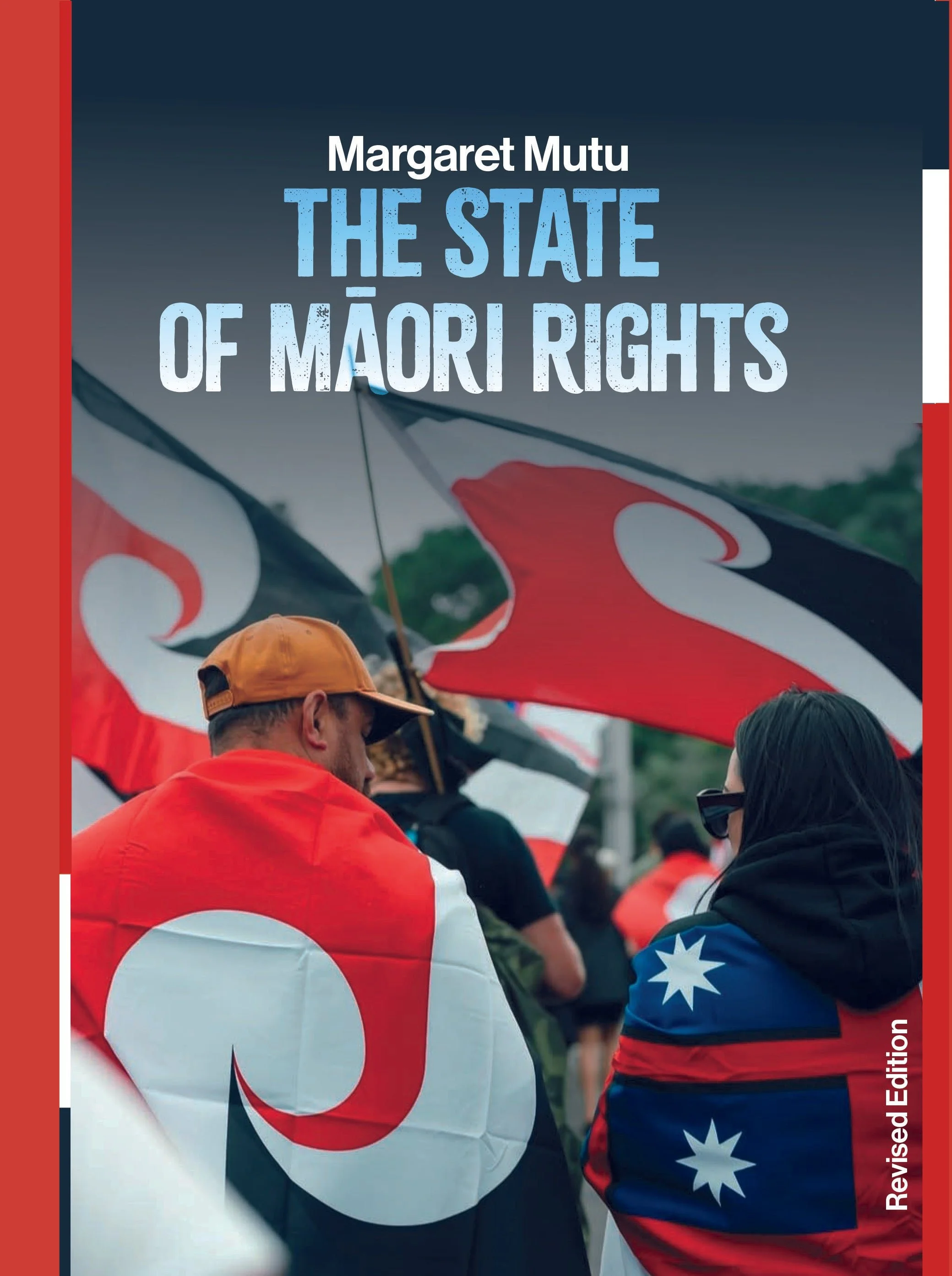
The State of Māori Rights by Margaret Mutu $55
Mutu documents the state of Māori rights over a thirty-year period and speaks to the determination of Māori as indigenous people.


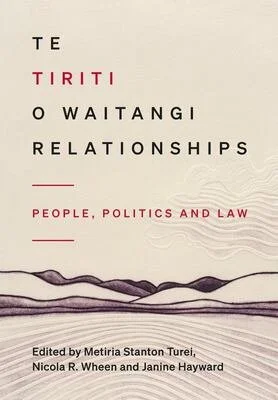
Te Tiriti o Waitangi Relationships: People, Politics and Law edited by Metiria Stanton Turei, Nicola R Wheen, and Janine Hayward $50
This group of essays takes a dynamic approach to understanding Tiriti relationships, acknowledging the ever-evolving interplay between the Crown and Māori through time. 


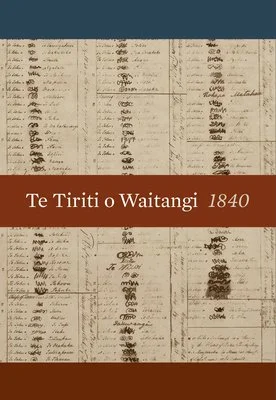
Te Tiriti o Waitangi, 1840 introduced by Claudia Orange $40
The nine sheets of the Treaty are shown, with a vivid account of their signing. Names, iwi and hapu are given for the Treaty signatories, along with information about their lives.


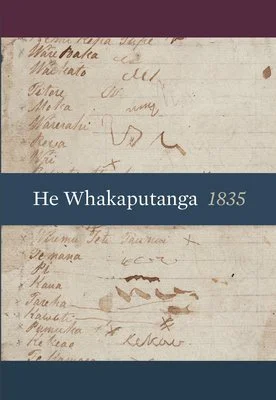
He Whakaputanga, 1835 introduced by Vincent O’Malley $40
He Whakaputanga o te Rangatiratanga o Nu Tireni/The Declaration of Independence of New Zealand was signed by fifty-two rangatira from 1835 to 1839. It was a powerful assertion of mana and rangatiratanga.


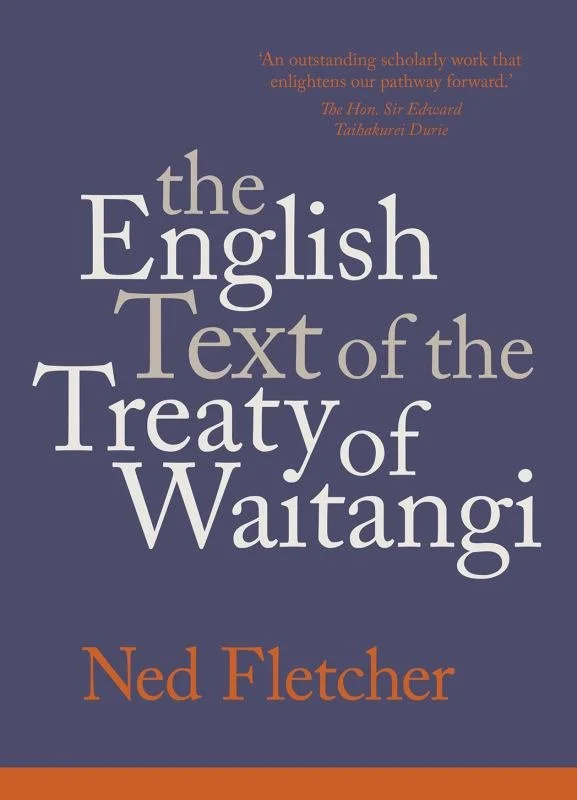
The English Text of the Treaty of Waitangi by Ned Fletcher $70
How was the English text of the Treaty of Waitangi understood by the British in 1840? That is the question addressed by historian and lawyer Ned Fletcher, in this authoritative work. 


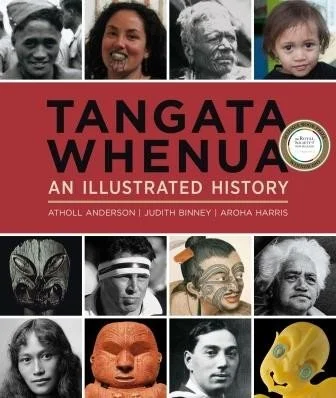
Tangata Whenua: An illustrated history by Atholl Anderson, Judith Binney, and Aroha Harris $100
This remarkable book charts the sweep of Māori history from ancient origins through to the twenty-first century. Through narrative and images, it offers a striking overview of the past, grounded in specific localities and histories. This should be on everyone’s bookcase.
>>Also available as a unillustrated paperback.


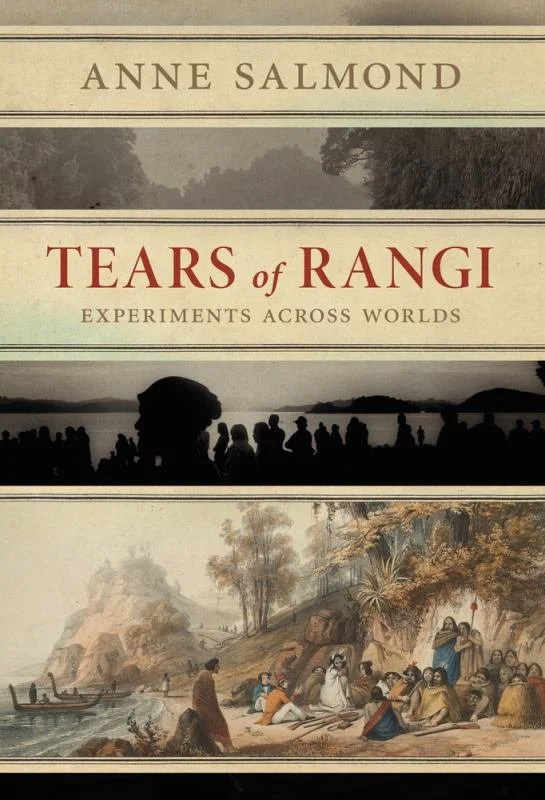
Tears of Rangi: Experiments Across Worlds by Anne Salmond $50
A study of New Zealand as a site of cosmo-diversity, a place where multiple worlds engage and collide. Beginning with a fine-grained inquiry into the early period of encounters between Māori and Europeans in New Zealand (1769-1840), Salmond then investigates such clashes and exchanges in key areas of contemporary life - waterways, land, the sea and people.


Introducing He Whakaputanga by Vincent O’Malley and Jared Davidson $20
He Whakaputanga o te Rangatiratanga o Nu Tireni/The Declaration of Independence of New Zealand was signed by fifty-two rangatira from 1835 to 1839.


Introducing Te Tiriti o Waitangi by Claudia Orange and Jared Davidson $20
In 1840, over 500 Māori leaders put their names to a significant new document: Te Tiriti o Waitangi or the Treaty of Waitangi. Through their signatures, moko or marks they were making an agreement with the British Crown.


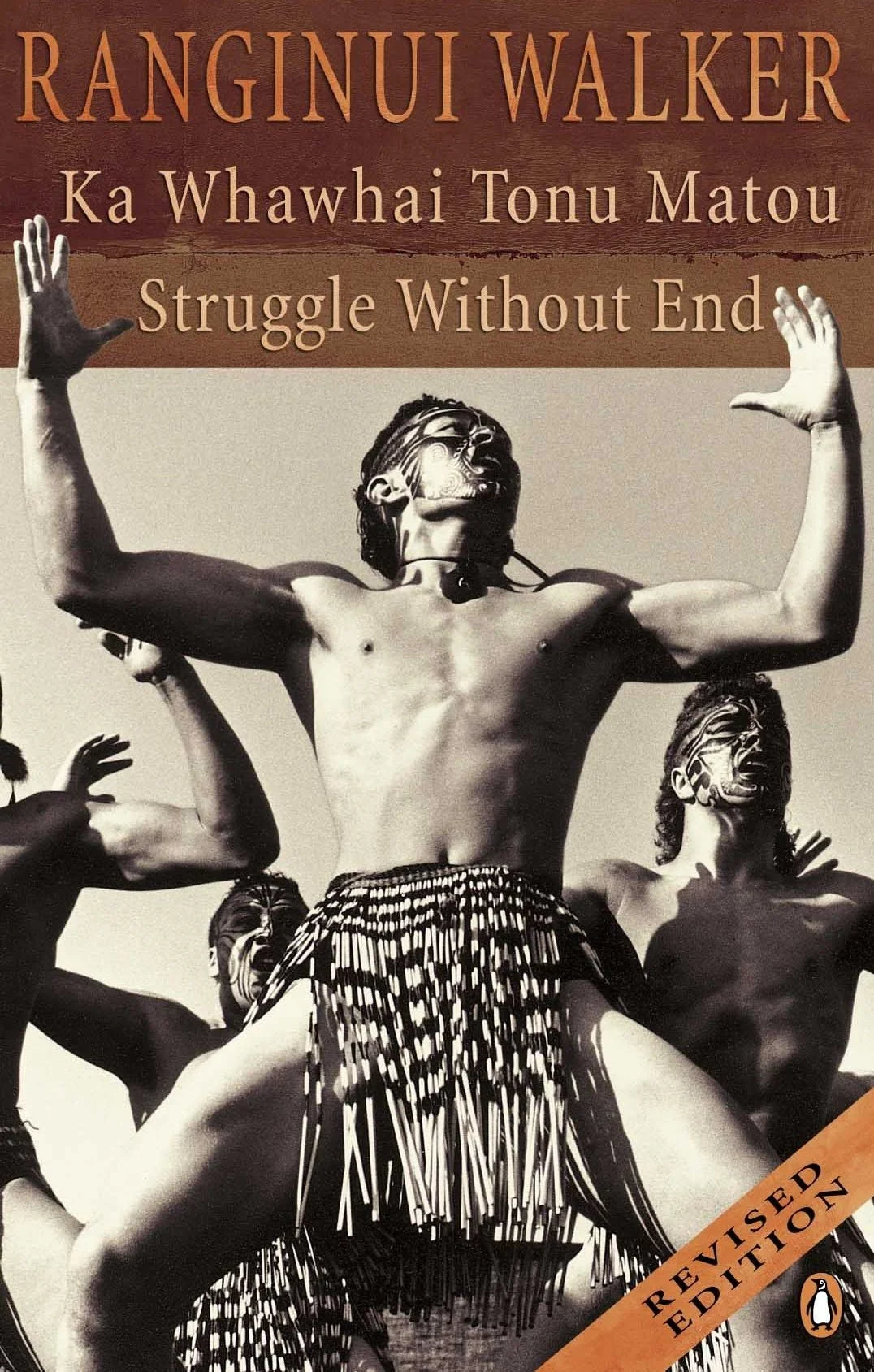
Ka Whawhai Tonu Mātou: Struggle without End by Ranganui Walker $45
Since the mid-nineteenth century, Māori have been involved in an endless struggle for justice, equality and self-determination. In this book Dr Walker provides a uniquely Māori view, not only of the events of the past two centuries but beyond to the very origins of Māori people.


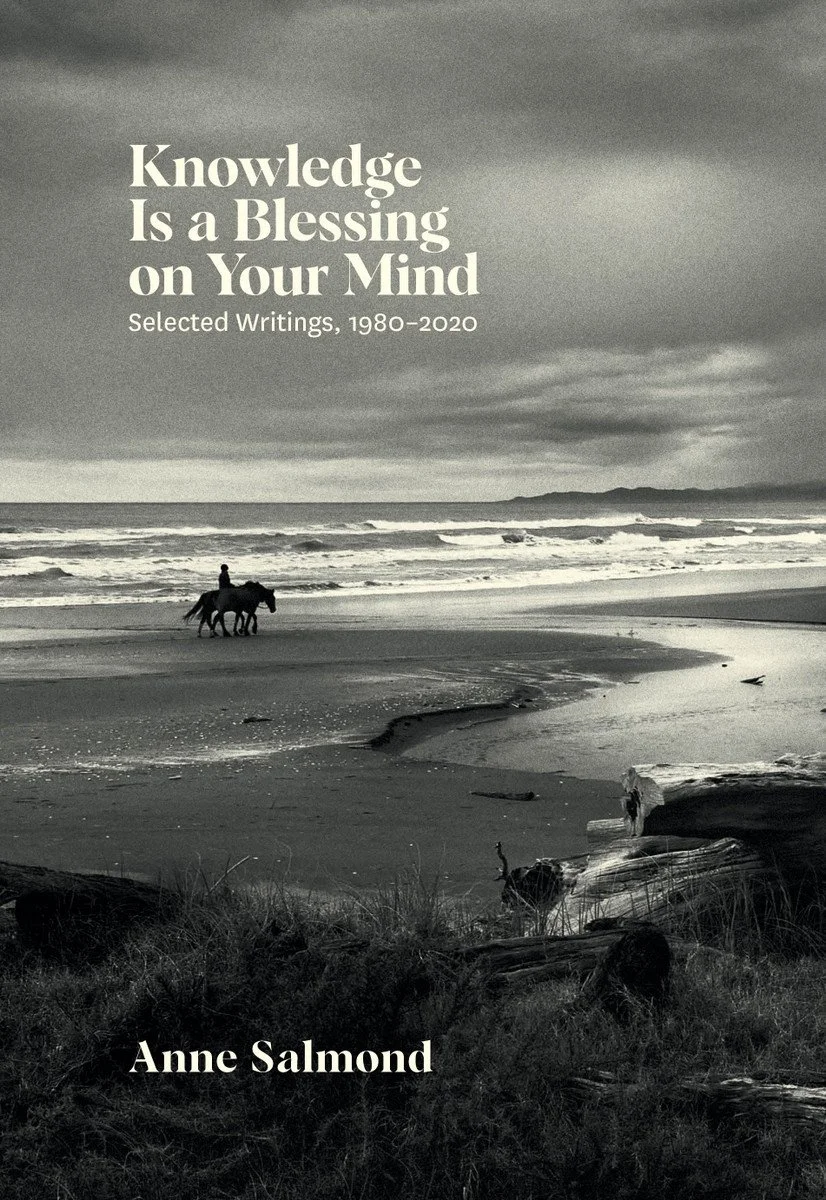
Knowledge Is a Blessing on Your Mind: Selected Writings, 1980–2020 by Anne Salmond $65
This book traces Anne Salmond's journey as an anthropologist, as a writer and activist, as a Pakeha New Zealander, bringing together her key writing on the Maori world, cultural contact, Te Tiriti and the wider Pacific.

 
VOLUME BooksBook lists
NEW RELEASES (4.2.26)

All your choices are good! Click through to our website (or just email us) to secure your copies. We will dispatch your books by overnight courier or have them ready to collect from our door in Church Street, Whakatū.

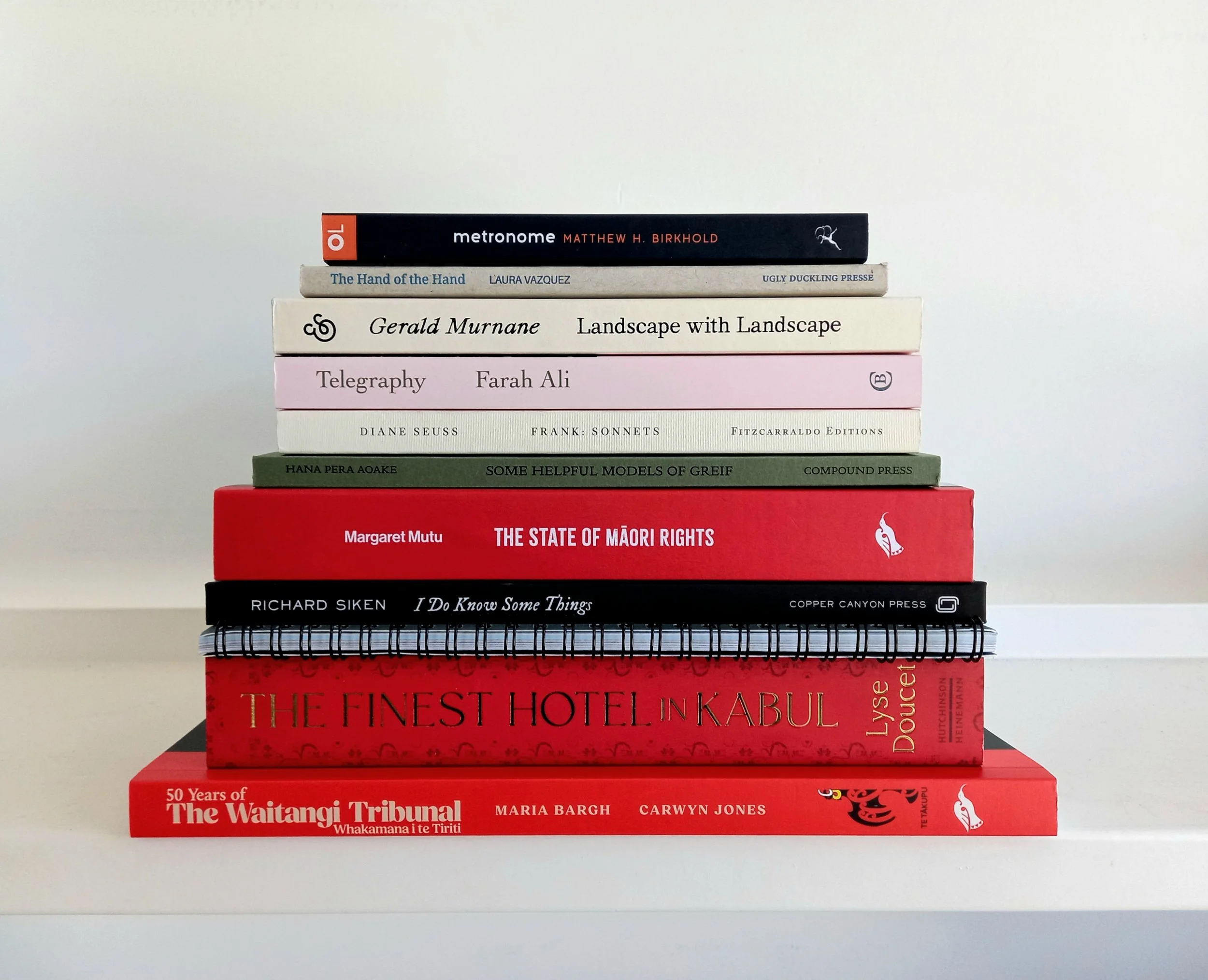
I Do Know Some Things by Richard Siken $50
Richard Siken's long-anticipated third collection, I Do Know Some Things, navigates the ruptured landmarks of family trauma: a mother abandons her son, a husband chooses death over his wife. While excavating these losses, personal history unfolds. We witness Siken experience the death of a boyfriend and a stroke that is neglectfully misdiagnosed as a panic attack. Here, we grapple with a body forgetting itself — "the mind that / didn't work, the leg that wouldn't move...". Meditations on language are woven throughout the collection. Nouns won't connect and Siken must speak around a meaning: "dark-struck, slumber-felt, sleep-clogged." To say "black tree" when one means "night." Siken asks us to consider what a body can and cannot relearn. "Part insight, part anecdote," he is meticulous and fearless in his explorations of the stories that build a self. Told in 77 prose poems, I Do Know Some Things teaches us about transformation. We learn to shoulder the dark, to find beauty in "The field [that] had been swept clean of habit." Recommended. [Hardback]
"An astonishing feat of poetic prowess. Siken has created 'an encyclopedia of myself,' a kaleidoscope of memory, language and identity that reveals — at times revels — in the faultiness of our own narratives. Siken's voice — and language — is both rooted and aloft, even as he avers that these are not 'poems of song.' Beyond such marvels, this is a virtuosity of candor and technique, bound by a seemingly effortless linguistic choreography that leans into multiplicity and mutability, with continuous sparks and joys, from one of our finest contemporary poets." —Mandana Chaffa, Chicago Review of Books
"The second-person strategies of Crush are abandoned in I Do Know Some Things for a more direct style, but Siken's signature intensity still throbs between sentences. Siken's prose is often deft and exciting. As he relearned everything, the prose poem helped him rediscover how to create poetic tension, how to be dynamic without the gravity-defying magic of enjambment. Syntactic variation. Quick, unexpected shifts in register. Artful repetition. These are all refined strategies in the collection. The prose is also a steadying element. It is another way of not losing oneself, of not falling through the cracks." —Richie Hoffman, Yale Review
>>Wiped clean.
>>The most fundamental poetic device.
>>Landmarks for meaning.


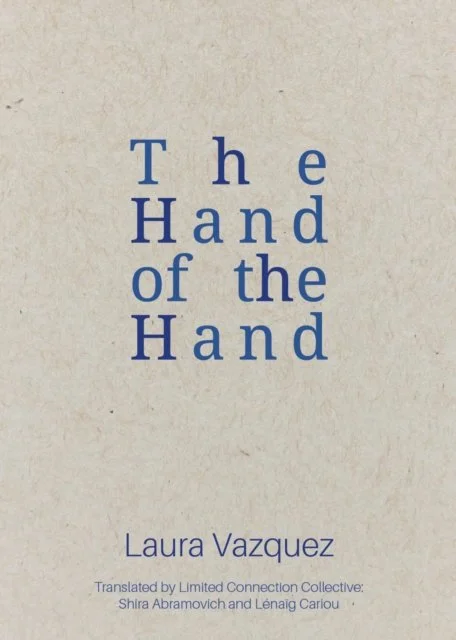
The Hand of the Hand by Laura Vazquez (translated from French by Shira Abramovich and Lénaïg Cariou) $48
The Hand of the Hand brings us poetry from a visceral alternate world in which earth, animal, and human intertwine — where stomachs have meadows, milk pours itself over trees, and flies wash the dead. Vazquez pulls deceptively simple, bare language into puzzling formations, creating an ambient unease. By turns lyrical and absurd, The Hand of the Hand explores the mystery and strangeness of what it means to be both speech and body, tongue and dirt. English/French bilingual edition. [Paperback]
”The tentacular porousness of Laura Vazquez’s début collection sweeps selfhood off its feet.” —Sarah Riggs
”This remarkable and subtle poetic series moves continually outward—one thing leads to another and another, gaining momentum until its evocations achieve a true fusion of body and world. Whether through forests, ants, stones, or words, it’s a fusion that allows the reader, too, to become one with the world as a unified gesture, and it’s the hand—as bridge, as touch, as grasp—that animates this gesture, this hand that seems ubiquitous, which, in fact, it is. “ —Cole Swensen
”In this knockout first collection in English, Laura Vazquez shows us the simplicity and the complexity of the real. But what is the real? It’s these poems, written right on the very skin of it, where the human and everything else feel it. These poems, like Lucretius’, explain the world to us at the granular, allowing us to see these strange perceptions and arrangements of body (‘I folded my tongue, the way I know how’) in all its pleasure and wonder.” —Eleni Sikelianos
>>Read some extracts.
>>The Endless Week.


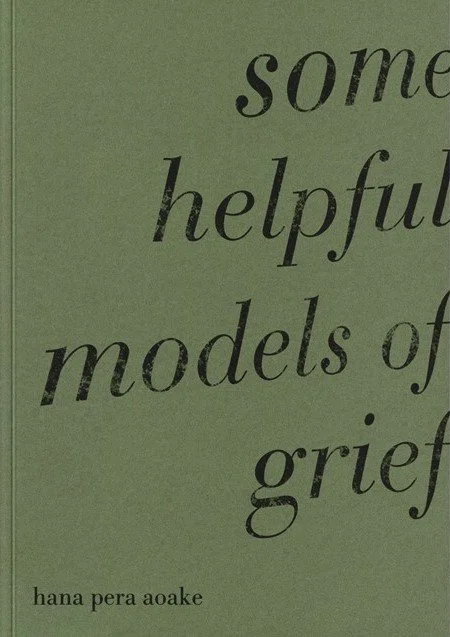
Some Helpful Models of Grief by Hana Pera Aoake $30
A composite chronicle of various loves — desired, lost, or never realised — and their corresponding joys and griefs against the backdrops of contemporary art and late capitalism. These poems radiate with Aoake's characteristic force, tenderness, intelligence, and humour, often all within the very same breath. The personal is the political is the personal. [Paperback]
”Everything Hana writes has a pulse. It could be moss, Britney or Plato but it sings a song that is nervous, in the body and out of the body. You’d be a fool not to take in all of Hana’s grins.” —Talia Marshall
”Hana’s writing is daring, elliptical, charismatic and above all, interesting. The kind of writer where it doesn’t matter what the subject is, you know you are always in good company.” —Hera Lindsay Bird
“He haerenga whakatautau, he haerenga atamai, he haerenga ngoto. Sometimes difficile, always différente, Some helpful models of grief is an unique, polymorphous panorama of pāmamae that will be sure to beguile any reader.” —Vaughan Rapatahana
”Hana has always had a way of using words to weave together complex stories and narratives. The words and pieces found throughout this collection are tender and beautiful.” —Khadro Mohamed
>>Read some extracts!
>>Look inside.
>>A bathful of kawakawa and hot water.


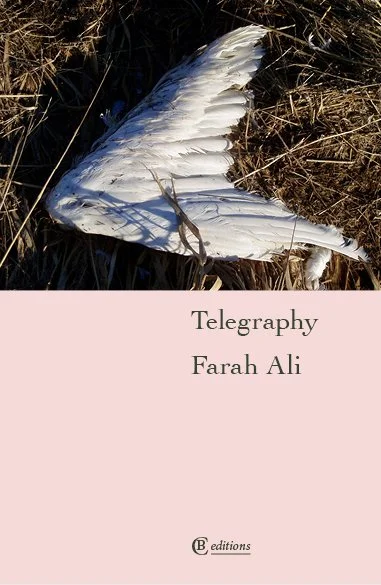
Telegraphy by Farah Ali $38
Growing up in Pakistan, Annie experiences the death of her mother, goes to college in Karachi, falls in love with a singer in a band, marries the wrong man, and all her life has visions and illnesses no doctor can explain. Signals are received by the body from across time and space. Passages interwoven with Annie’s narrative include Vesalius stealing the corpse of a hanged man, a visit to the house of the 17th-century Dutch anatomist Frederik Ruysch, correspondence between far-flung friends in the 19th-century Ottoman Empire, a family’s centuries-long dispersal following an earthquake in Kibyra in 23 CE, and a man stepping onto a landmine in contemporary Waziristan. [Paperback with French flaps]
‘“Farah Ali’s novel, Telegraphy, connects the past with the present, the mythical with the ‘real’. It connects our desires, our longing, the fear that haunts even waking hours, with what we end up becoming — pieces of a whole that was fractured from the beginning, the skin around the bones just a fragile casing for the unbearable weight of suffering. Well crafted, deeply pensive, this is a novel that speaks to each one of us, if we dare to speak to ourselves.” —Feryal Ali Gauhar
Telegraphy is a deeply strange book. The ethereal quality of Farah Ali’s writing holds this curious, clever, almost devious book with such tenderness, I felt I was in the hands of a writer who had been working for decades to distil this fine work.” —Lara Pawson
”A true book of the body, its pains and resonances, and a bold, unique structure with a captivating voice.” —Han Smith 


Landscape with Landscape by Gerald Murnane $48
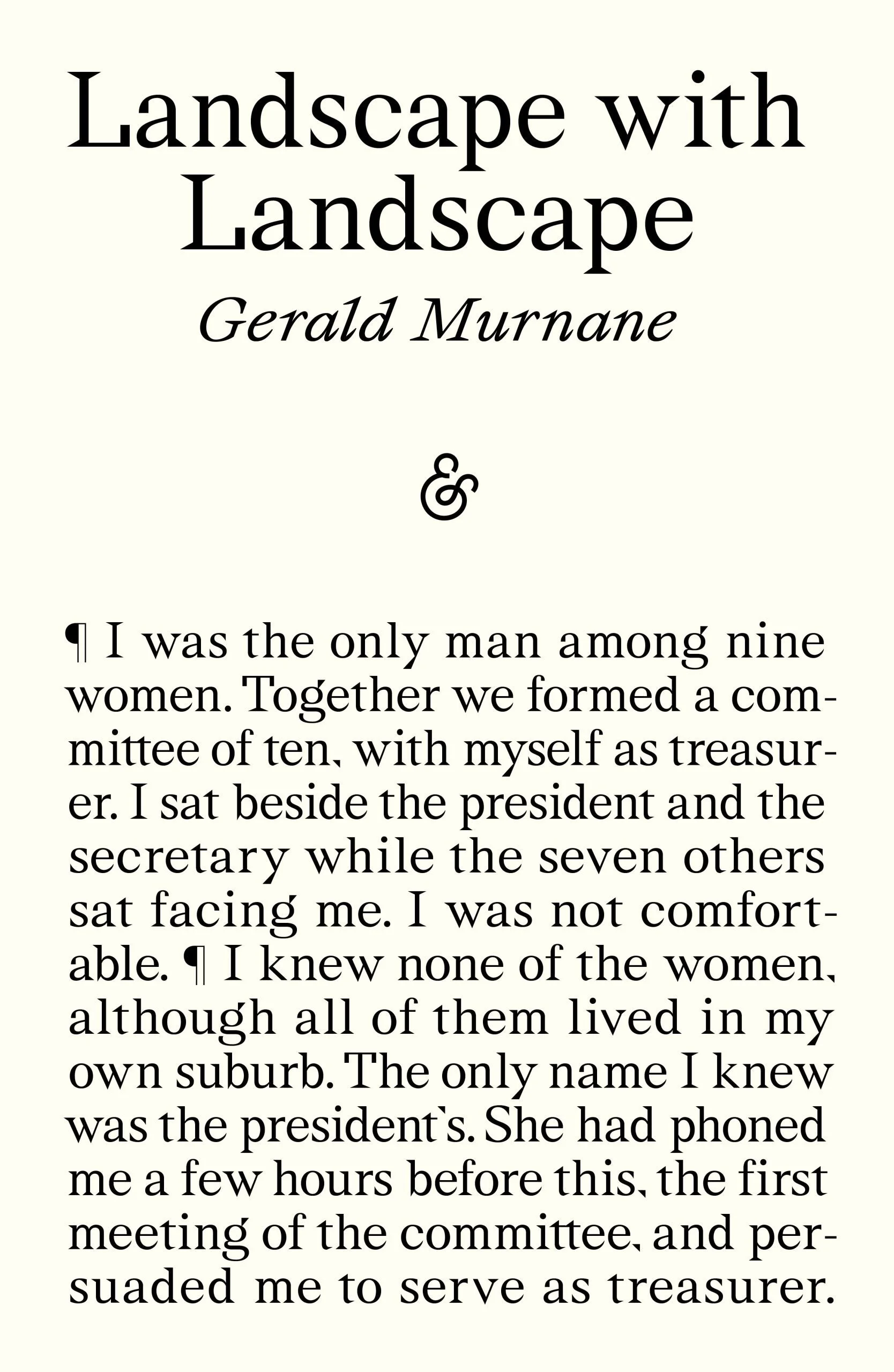
Landscape with Landscape was Gerald Murnane's fourth book, after The Plains, and his first collection of short fiction. When it was first published, thirty years ago, it was cruelly reviewed. "I feel sorry for my fourth-eldest, which of all my book-children was the most brutally treated in its early years," Murnane writes in his foreword to this new edition. In hindsight it can be seen to contain some of his best writing, and to offer a wide-ranging exploration of the different landscapes which make up the imagination of this extraordinary Australian writer. Five of the six loosely connected stories also trace a journey through the suburbs of Melbourne in the 1960s, as the writer negotiates the conflicting demands of Catholicism and sex, self-consciousness and intimacy, alcohol and literature. The sixth story, 'The Battle of Acosta Nu', is remarkable for its depth of emotion, as it imagines a Paraguayan man imagining a country called Australia, while his son sickens and dies before his eyes. [Paperback with French flaps]
”Murnane is unlike anyone else, the sort of writer who demands to be read in a new way but, above all, demands to be read.” —Brian Evenson, Chicago Review of Books
The emotional conviction is so intense, the sombre lyricism so moving, the intelligence behind the chiselled sentences so undeniable, that we suspend all disbelief.” —J. M. Coetzee
”This is some of his finest writing, and a major work by any measure.” —Michael LaPointe, Times Literary Supplement
>>Read Thomas’s reviews of some others of Murnane’s fictions.


frank: sonnets by Diane Seuss $35
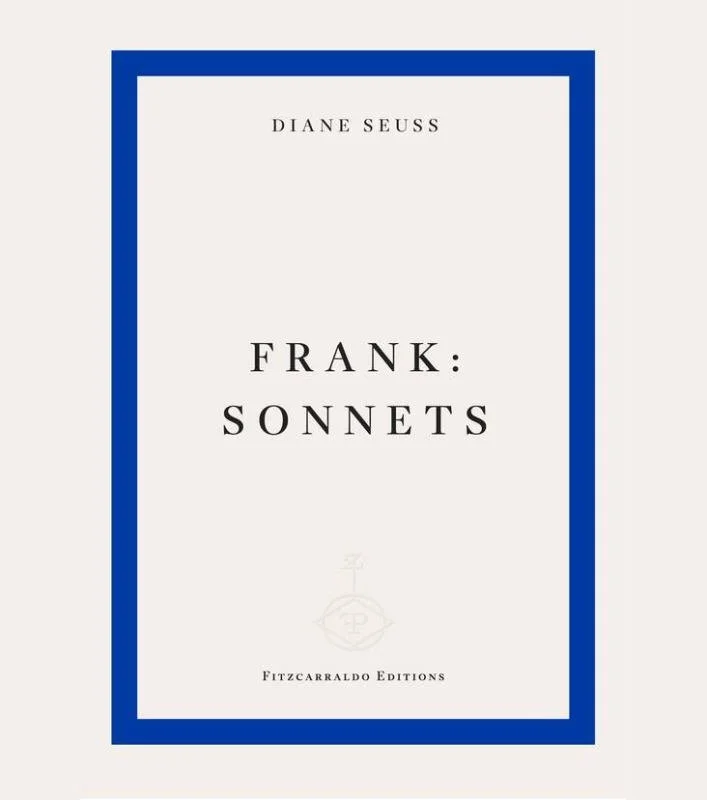
”The sonnet, like poverty, teaches you what you can do / without,” Diane Seuss writes in this brilliant, candid work, her most personal collection to date. These poems tell the story of a life at risk of spilling over the edge of the page, from Seuss's working-class childhood in rural Michigan to the dangerous allures of New York City and back again. With sheer virtuosity, Seuss moves nimbly across thought and time, poetry and punk, AIDS and addiction, Christ and motherhood, showing us what we can do, what we can do without, and what we offer to one another when we have nothing left to spare. Like a series of cells on a filmstrip, frank: sonnets captures the magnitude of a life lived honestly, a restless search for some kind of 'beauty or relief'. Seuss is at the height of her powers, devastatingly astute, austere, and — in a word — frank. [Paperback with French flaps]
”This book is a response to death, a way of living in knowledge of death's privations. What Seuss is hoping for is an extended enough death to allow for a witty recognition of the shape it is imposing on the life it ends. Beyond that, though, what she wants is enough life to make her death into a kind of 'last rhyme', a sound that radiates both into the past and into the future, where it might make contact with your body, or mine.” —Kamran Javadizadeh, London Review of Books
”Seuss layers the work with a litany of cultural and literary references. It is at that bright, fascinating collision between tradition and innovation that these poems reside.” —Soft Punk Magazine
”These poems are taut and careful glimpses into a life lived on the fringes but threaded with wildness; there is a constant sense that everything they contain might erupt at any moment. If autobiographical writing is an attempt to fix a life inside language, frank: sonnets and Modern Poetry are both convincing arguments for the absolute impossibility of ever really succeeding in doing so. Instead, they offer an alternative: debris, glimpses, constellations, ghosts. Suffering and all its attendant bewilderment is given the space it deserves, and pleasure, transcendence, and love are all given due space alongside it.” —Maija Makela, Stinging Fly
>>What is a coffin for?
>>Body parts will always wash up.


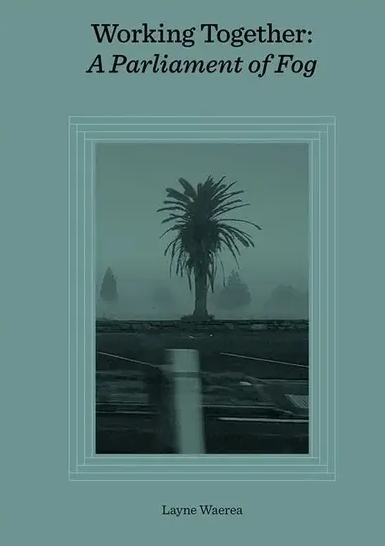
A Parliament of Fog by Layne Waerea $35
For more than a decade, fog has rematerialised throughout the work of lawyer-turned-artist Layne Waerea. Her public interventions and performances explore what she describes as “legal-social subjectivities”, centering the implications of Te Tiriti o Waitangi as Aotearoa New Zealand’s only living treaty with Māori. For Waerea, the act of chasing fog pursues a physical or ideological space where borders can be tested — “a fertile area where there are lots of question marks” — and where imagination, hope, participation, and failure can be explored. A Parliament of Fog celebrates ten years of Waerea’s ongoing project the chasing fog club (Est. 2014), and also marks the occasion of its second-ever “Annual General Meeting.” Developed over 2023-24 within a fraught political climate leading up to the New Zealand elections and the first term of a new right-wing coalition government, the publication approaches the club — and Waerea’s recent practice — as a springboard for taking the pulse of the moment. Reflecting on the recent activities of the club in dialogue with a group of collaborators, A Parliament of Fog considers how conditions of opacity, uncertainty, and transition might offer space for collective reimagining. Featuring contributions by the chasing fog club (Est 2014), Sophie Davis, Ioana Gordon-Smith, Deborah Rundle, and Layne Waerea. [Paperback (appropriately spiral-bound)]
>>Look inside.


50 Years of the Waitangi Tribunal: Whakamana i te Tiriti edited by Maria Bargh and Carwen Jones $50
The Waitangi Tribunal has been a unique and integral part of the Aotearoa New Zealand judicial and legislative process, upholding te Tiriti o Waitangi and providing expertise on historical claims, Maori language, land, resources and contemporary issues. This collection contains chapters on themes of land, water and the natural environment, the settlements process, the Kaupapa Inquiries, and issues of social policy, mana, and rangatiratanga, each written by an expert in the area. There are also interviews with two past chairpersons of the Tribunal. The collection highlights the breadth of issues considered by the Tribunal and also the impact the Tribunal has had on complex legal concepts, representation of communities, and understanding of te Tiriti o Waitangi. [Paperback]


The State of Māori Rights by Margaret Mutu $55
The State of Māori Rights was first published in 2011 and brought together a Māori view of events and issues that occurred between 1994 and 2009 with a direct impact on Māori. This includes the 1994 fiscal envelope policy debate, the 50,000-strong protest march against the foreshore and seabed legislation, the Waitangi Tribunal and its Treaty claims process, and media attacks on Māori MPs. This new edition, revised and updated with new chapters, brings Margaret Mutu’s The State of Māori Rights through to 2024, a time when Māori rights under the Treaty of Waitangi are once again being violated. Mutu covers Māori responses to COVID-19 and to national disasters such as the White Island eruption and the Christchurch Mosque Attacks on the Muslim community. Māori initiatives and success stories run through these years too, which, in Mutu’s words, “encourage us not to lose sight of our ancestors’ vision”. [Paperback with French flaps]


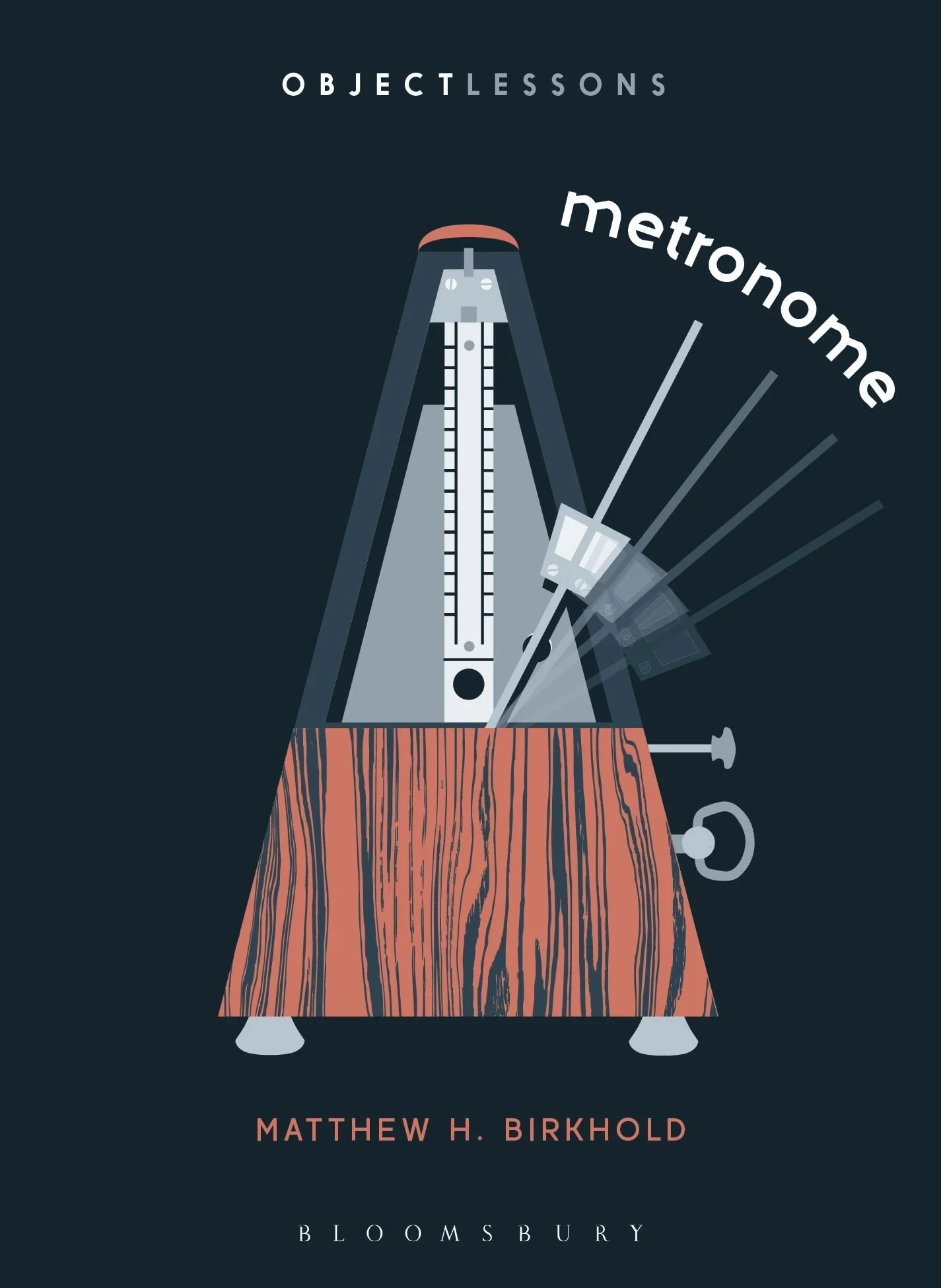
Metronome by Matthew H. Birkhold $23
When the metronome was invented in 1815, it transformed the music world. Composers and musicians now had a tool that could help them maintain a precise and consistent tempo. And while giants of classical music like Beethoven early embraced the metronome and proponents came to see its essential role in music instruction, critics believed it created mindless players and inhibited the creation of great art. The metronome evokes strong feelings because of its uncompromising power. Through it, we are connected to the past, propelled into the future, and kept focused on the present. For that reason, this object has appeared in unlikely settings as athletes, scientists, psychologists, authors, and other professionals have found uses for it beyond music. Metronome uncovers the surprising and fraught history of a timeless object. [Paperback with French flaps]
”In this clever and thoughtful exploration, Matthew Birkhold reveals how a simple ticking device became both liberator and tyrant, reshaping not just how we make music but how we understand rhythm, precision, and ultimately, our own humanity.” —Christopher Cerrone
”Matthew Birkhold reveals the fascinating history of the metronome that not only covers music, but touches upon dance, art, education, philosophy, physics, psychology, and sports medicine. Devised by Johann Nepomuk Maelzel in 1815, Beethoven was an early supporter, but soon Maelzel's metronome (the original M.M.) inspired passionate debates amongst musicians, conductors, composers, pedagogues, and musicologists. Birkhold has successfully unveiled the deeper meanings of an innocuous device that spells out perfect time, as opposed to human time. An illuminating read.” —Fumi Tomita
>>How starfish move without a brain.
>>Other books in the excellent ‘Object Lessons’ series.


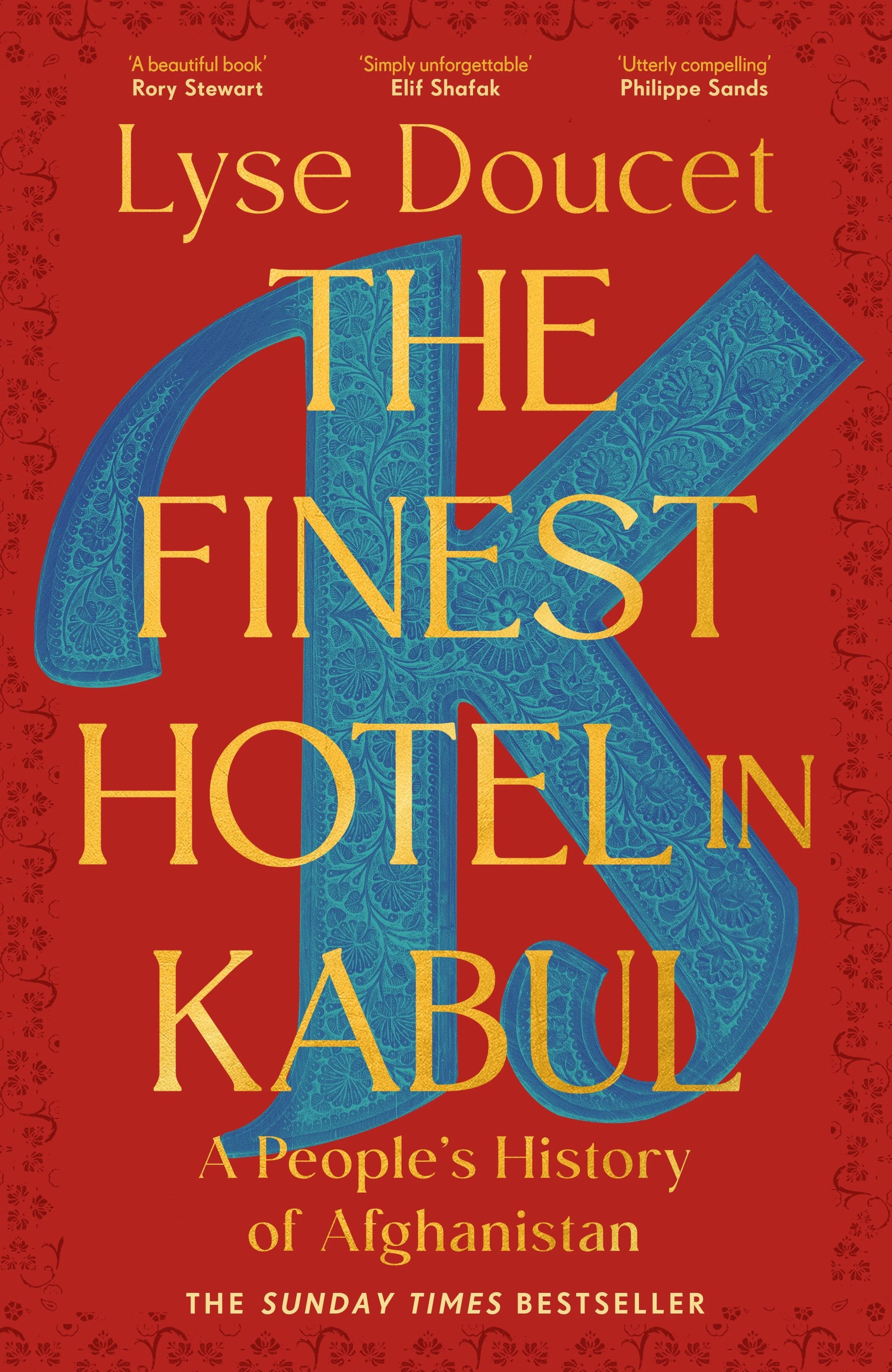
The Finest Hotel in Kabul: A people’s history of Afghanistan by Lyse Doucet $40
When the Inter-Continental Hotel opened in Kabul in 1969, it reflected the hopes of the country: a glistening white edifice that embodied Afghanistan's dreams of becoming an affluent, modern power. Five decades later, and the Inter-Continental is a dilapidated, shrapnel-damaged shell. It has endured civil wars, terrorist attacks, the US occupation, and the rise, fall and rise of the Taliban. But its decaying grandeur still hints at ordinary Afghans' hopes of stability and prosperity. Lyse Doucet, the BBC's Chief International Correspondent, has been staying at the Inter-Continental since 1988. She has spent decades meeting its staff and guests, and listening to their stories. And now, she uses their experiences to offer an evocative history of modern Afghanistan. It is the story of Hazrat, the octogenarian receptionist who for five decades has been witnessing diplomats and journalists, mujahideen and US soldiers, passing through the hotel's doors. It is the story of Abida, the first female chef to work in the Inter-Continental's famous kitchen after the fall of the Taliban in 2001. And it is the story of Sadeq, the 24-year-old front-desk worker who personifies the ambitions of a new generation of Afghans. The result is a remarkably vivid account of how ordinary Afghans have experienced half a century of disorder. [Paperback]

 
VOLUME BooksNew releases
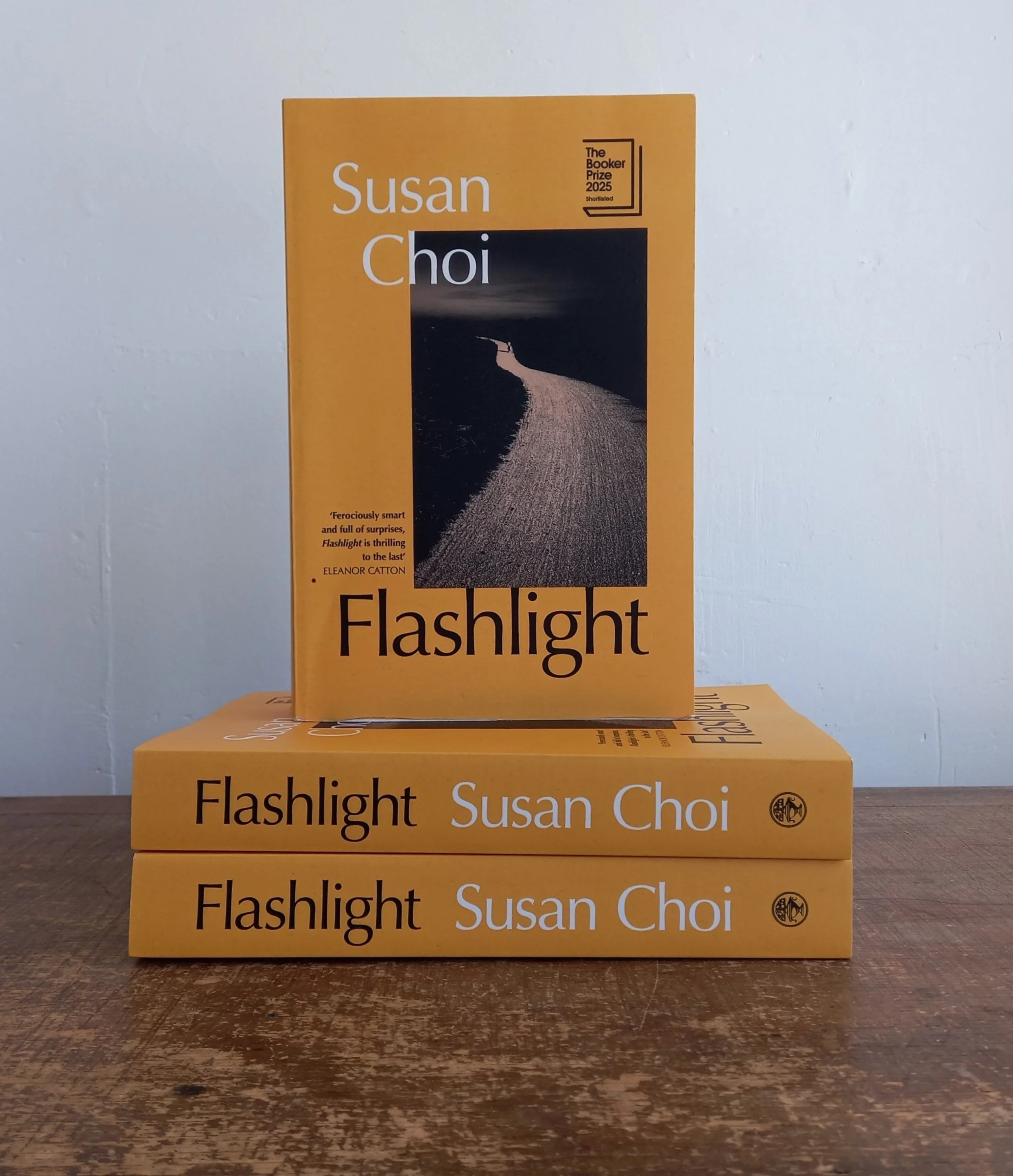
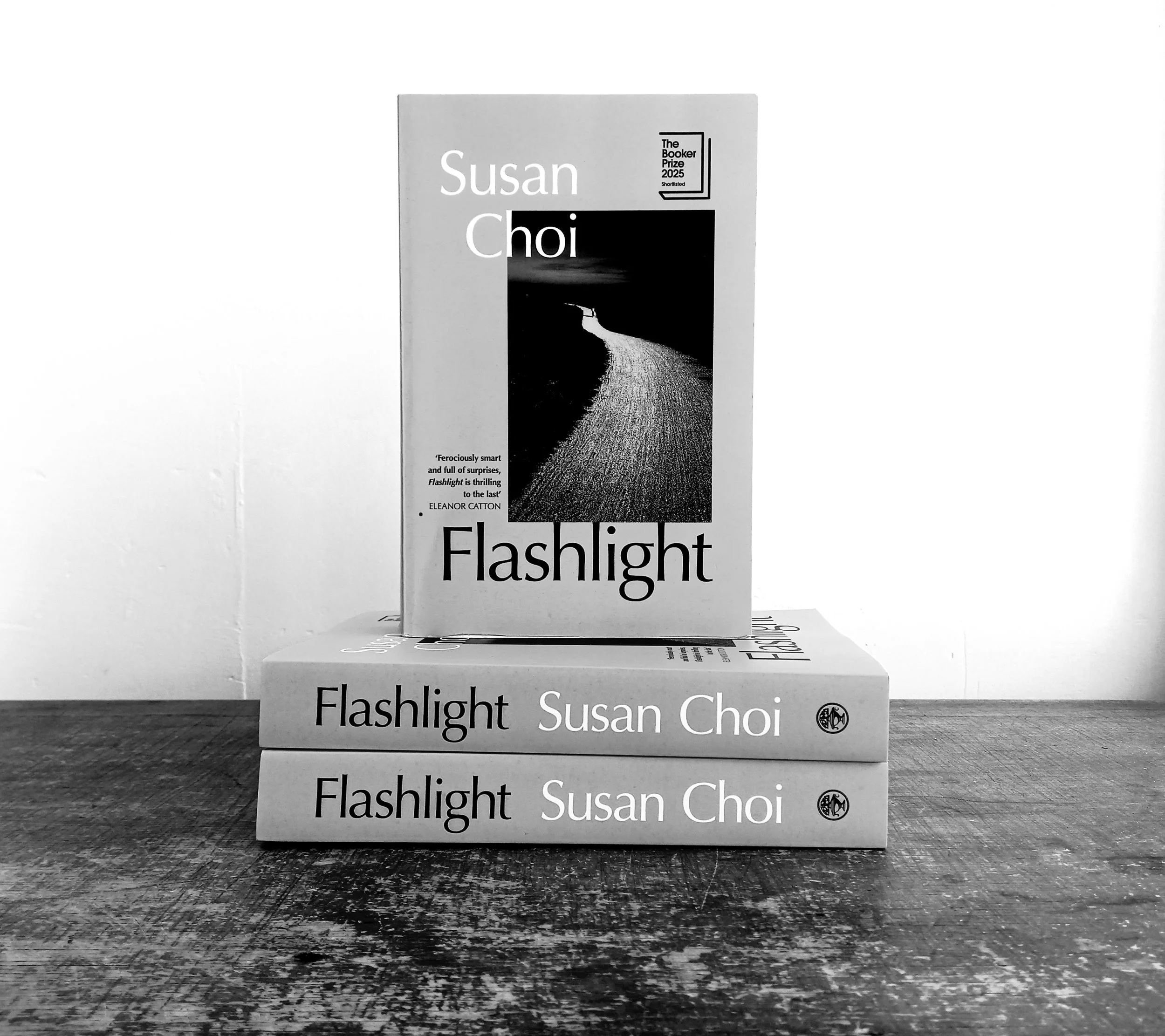
FLASHLIGHT by Susan Choi — Review by Stella

A night walking on the beach with her father Serk, looking at the stars, turns to tragedy for 10-year-old Louisa. Her father disappears, and is presumed drowned. She survives the tumult of the sea and is washed up on the shore, blue with cold, but in one piece aside from her memory of the evening’s events. Her last being the beam of the flashlight in her father’s hand, the light not revealing enough for a coherent story of what happened. Louisa and her parents have been living in Japan for the year. Louisa, although a conspicuously tall American-Korean child, had fitted in at school and her new neighbourhood. Unlike her mother, Anne, who struggled with the language, a husband who ignored her, and the onset of a degenerative disease. Serk and Anne had been at an impasse for a while, their relationship fraught and mechanical, sometimes violent. Each alone in their secrets and discontent. The distance and secrets continued to grow. Anne has made contact with Tobias, her son she had at nineteen, and doesn’t tell Serk. Serk is seeking his family, who left Japan to be repatriated to Korea, not to the island they were from, but to North Korea on the promise of a better life. A decision that Serk strongly disagreed with. In Flashlight, Choi swings the beam of the light from one to the other, taking us into the worlds and stories of each character. We head to the past. Serk’s childhood, where he is known as Hiroshi at school, and Seok by his family. (His name changes depending on his circumstances, Americanised, nickname, erased.) Here is the child that refuses to return to Korea, who thinks of himself as Japanese, but as a young man becomes embittered by his position in that society, and when an opportunity to leave comes, America beckons. Study and later a middling academic job. And a wife, and a child. We meet Anne, a girl mostly ignored, wanting something more than what is expected of her. Anne falls pregnant and her child is taken from her by the man she thought would save her from a dull life. Despite this deep sadness, she makes her way and is fiercely independent. Her marriage to Serk is another adventure, but one that after the first blush holds very little joy for her (or Serk) but they have Louisa. Louisa is cherished by both, but also caught in the crosshairs. She has Serk’s intelligence and Anne’s stubbornness. A fiery, as well as guilt-laden, relationship exists between mother and child; a tension that never resolves. Flashlight is a study in trauma, family dynamics, and in self. It’s outward and external in its telling of a piece of history of which I was oblivious (no spoilers here) and in relating the dynamics of this family unit with each other and in the world over several decades. It’s inward and internal in exploring the suffering, resilience, and resolve experienced by each of the main characters. There aren’t exactly happy endings here, but there is a sense of completion, which a less able novelist would have struggled with. This is a big novel — Flashlight is a novel that has much packed into it. Complex characters, with weaknesses and strengths; intriguing history which puts a spotlight on political power and nation-states; family relationships and secrets that hold no easy answers; and sharp writing that pulls it all together.


Book of the Week: FLASHLIGHT by Susan Choi

Flashlight is a sprawling novel that weaves stories of national upheavals with those of Louisa, her Korean Japanese father, Serk, and Anne, her American mother. Evolving from the uncertainties surrounding Serk’s disappearance, it is a riveting exploration of identity, hidden truths, race, and national belonging. In this ambitious book that deftly criss-crosses continents and decades, Susan Choi balances historical tensions and intimate dramas with remarkable elegance. We admired the shifts and layers of Flashlight’s narrative, which ultimately reveal a story that is intricate, surprising, and profound.” —Booker Prize judges’ citation

NEW RELEASES 26.1.26

All your choices are good! Click through to our website (or just email us) to secure your copies. We will dispatch your books by overnight courier or have them ready to collect from our door in Church Street, Whakatū.

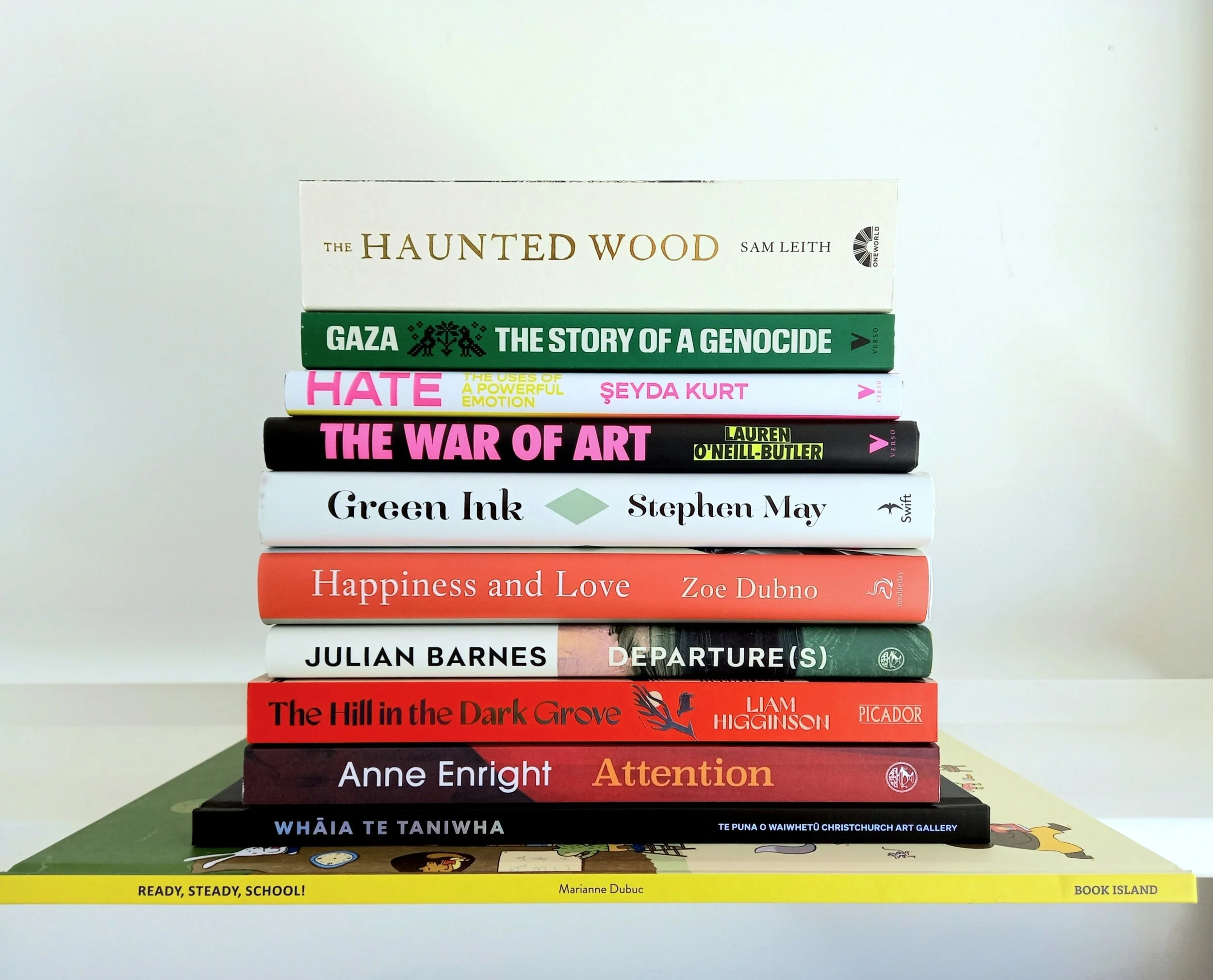
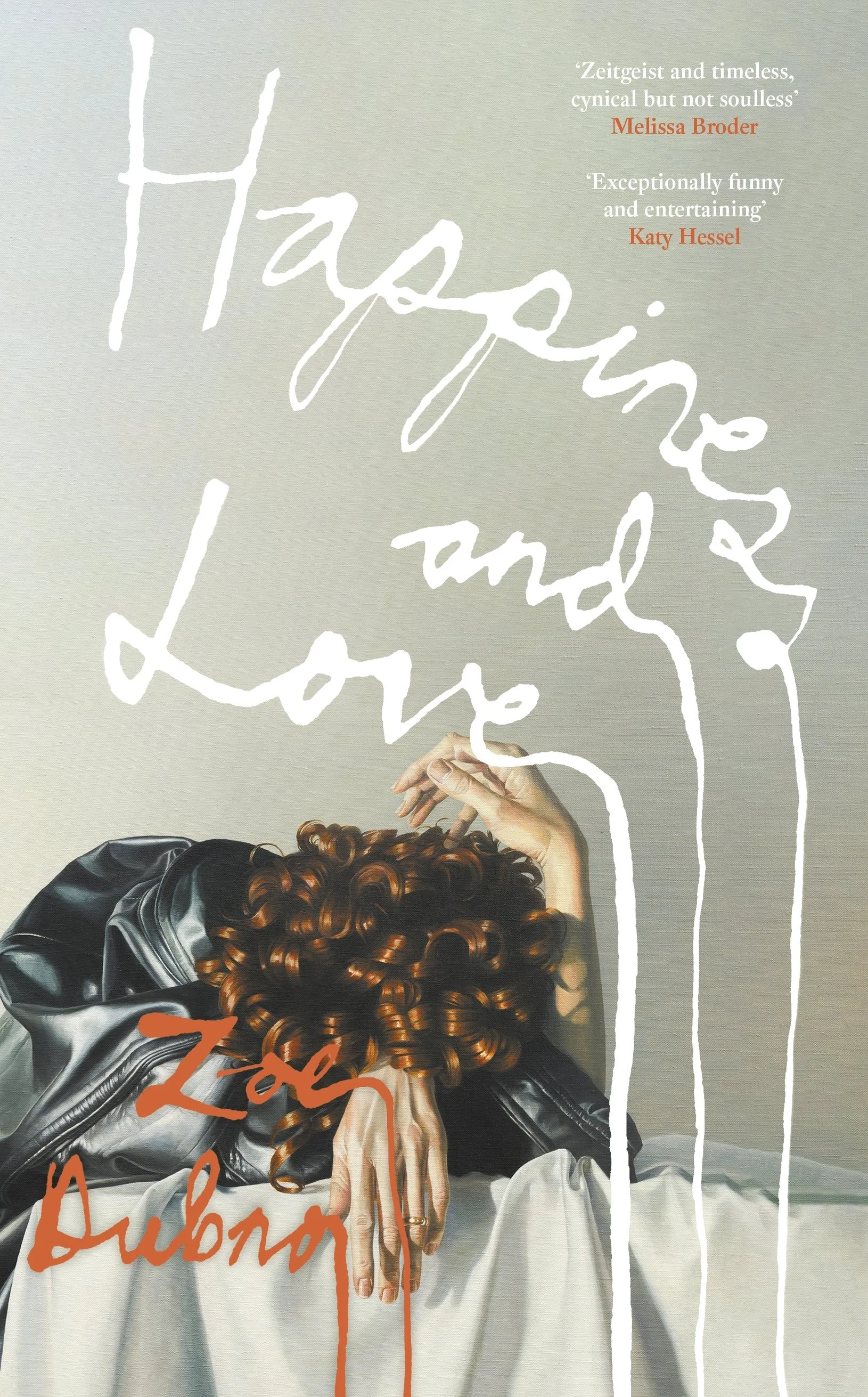
Happiness and Love by Zoe Dubno $38
An unnamed narrator who has fled a set of friends she despised, who bring out the very worst in her and each other, finds herself once more sat at their dinner table for a single, hideous evening. Years after escaping her unbearable artworld friends in New York for a new life in London, an unnamed writer finds herself back on the Lower East Side attending a dinner party hosted by Eugene and Nicole — an artist-curator couple — and attended by their pretentious circle. It's the evening after the funeral of their mutual friend, a failed actress, and if the narrator once loved and admired Eugene and Nicole and their important friends, she now despises them all. Most of all, however, she despises herself for being lured back to this cavernous apartment, to this hollow, bourgeois social set, for a dinner party that isn't even being thrown in their deceased friend's honour, but in the honour of an up-and-coming actress who is by now several hours late. As the guests sip at their drinks and await the actress's arrival, the narrator, from her vantage point in the corner seat of a white sofa entertains herself — and us — with a silent, tender, merciless takedown. [Hardback]
”As observant as a sniper, and just as ruthless, Zoe Dubno in Happiness and Love pulls off an unlikely yet ultimately very successful literary metempsychosis. Bernhard's fierce sarcasm and disappointment resonate very clearly in her voice; despite the distance that separates his 1980s Vienna from her contemporary New York, Dubno shows us — at times comically, at times despairingly — that the superficiality, hypocrisy, and flatness never change.” —Vincenzo Latronico
”Zoe Dubno examines character and human relations in the same way an art critic looks at a painting. Digging deeper and deeper into the thoughts behind thoughts, feelings behind feelings and questioning everything, Happiness and Love is an ecstatic performance of heightened perception.” —Chris Kraus
>>Read Stella’s review.
>>Cutting wood in New York.
>>The book is ‘based’ on Thomas Bernhard’s Woodcutters.


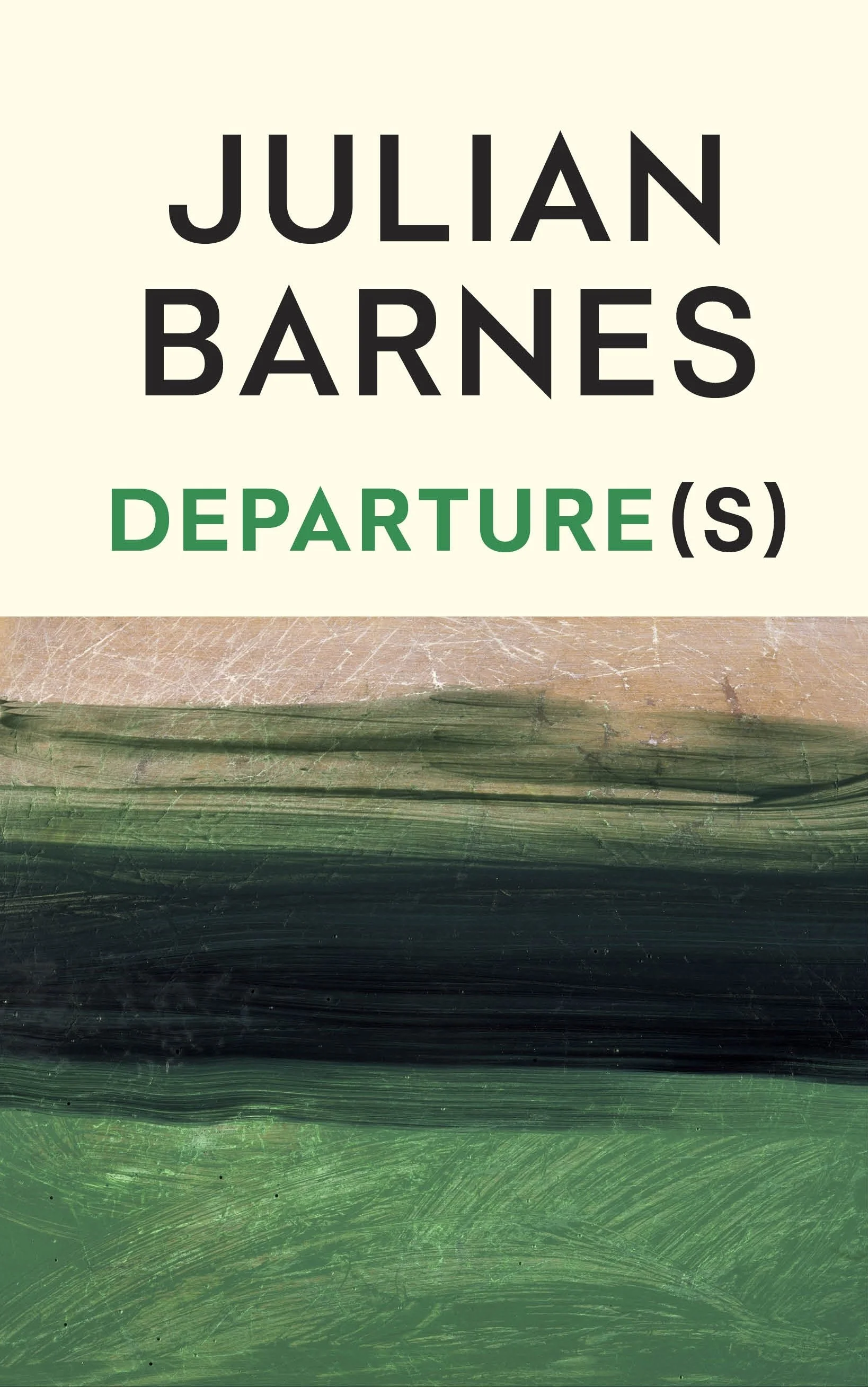
Departure(s) by Julian Barnes $38
Departure(s) is a work of fiction — but that doesn't mean it's not true. Departure(s) is the story of a man called Stephen and a woman called Jean, who fall in love when they are young and again when they are old. It is the story of an elderly Jack Russell called Jimmy, enviably oblivious to his own mortality. It is also the story of how the body fails us, whether through age, illness, accident or intent. And it is the story of how experiences fade into anecdotes, and then into memory. Does it matter if what we remember really happened? Or does it just matter that it mattered enough to be remembered? It begins at the end of life — but it doesn't end there. Ultimately, it's about the only things that ever really mattered — how we find happiness in this life, and when it is time to say goodbye. [Hardback]
”A moving, engaging book. Barnes’s humorous narrative explores the effect of time on love. A rather lovely swansong.” —Independent
”An elegant, thoughtful final book, which considers old age, fate and happiness. It's an arch blend of memoir and make-believe — and rather touching.” —The Times
”A richly layered autofiction. Artfully constructed to seem casually conversational, it braids erudite essayism and fiction, and every line is turned inside out with qualifications.” —Observer
”At a little over 150 pages, Departure(s) is brief but it is not slight and, each time I read it, I thought about it for days afterwards. If this is his [Barnes's] last book, he has given his career a triumphant ending.” —Financial Times
”Disparate elements are bound together by the skilful management of theme and tone. Departure(s) is at once confidently authoritative and tentatively questioning. Barnes assumes a personal relation with his readers, built on the kind of intimacy that cancer's company doesn't provide.” —Times Literary Supplement
>>Changing My Mind.


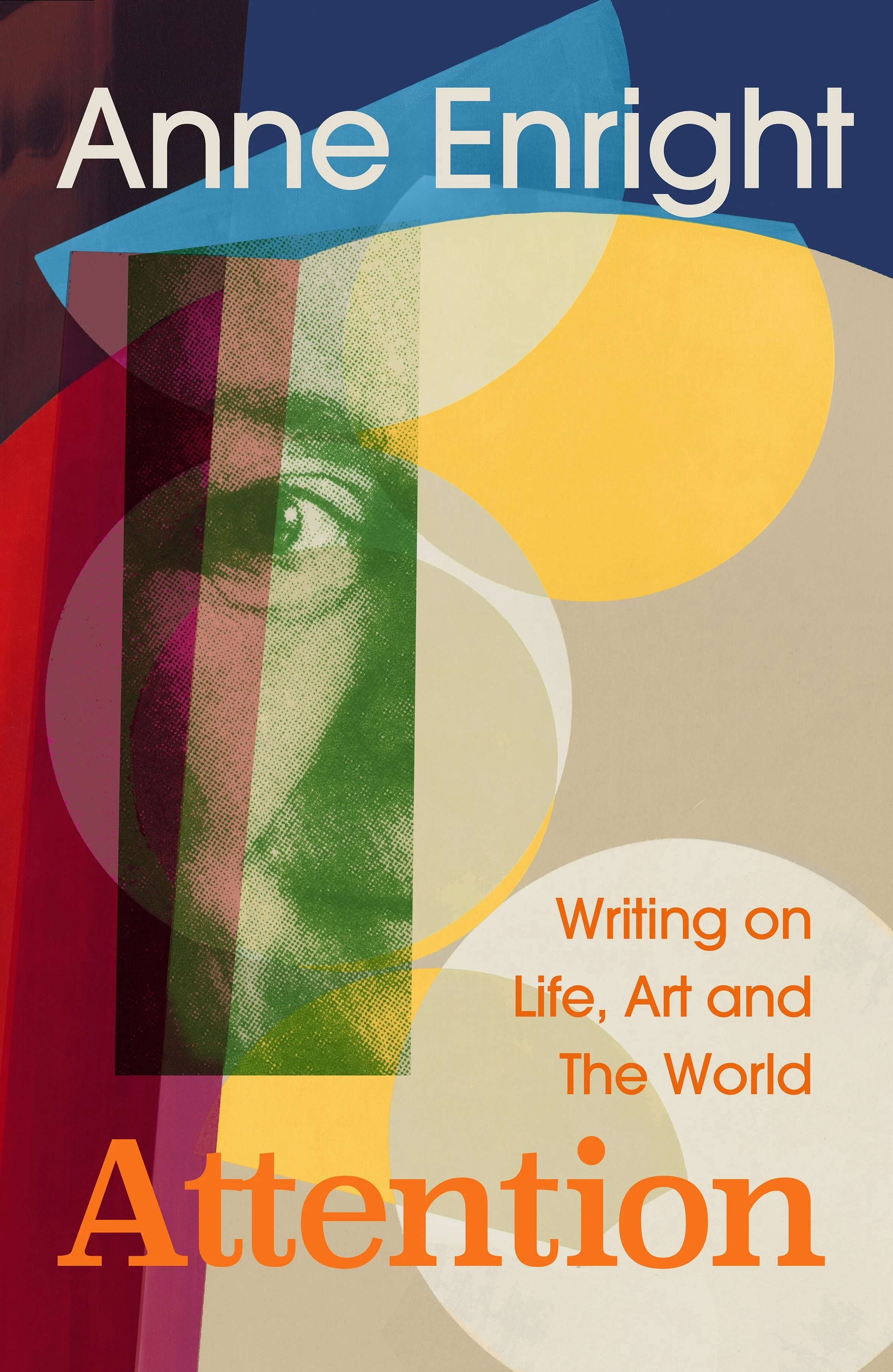
Attention: Writing on Life, Art, and The World by Anne Enright $40
Anne Enright has always been alert to the places where public and private meet, where individual lives are caught by, or alter, the sweep of history. These essays, collated from across Enright's career, take us from Dublin to Galway, Canada to Honduras, and through voices, bodies and time. They delve into Enright's own family history, and explore the free voices and controlled bodies of women in society and fiction. Enright has spent a lifetime reading as well as writing, and she offers new perspectives on writers including Alice Munro, Toni Morrison, James Joyce, Helen Garner and Angela Carter. Attention brings Anne Enright's wide-ranging cultural criticism, literary and autobiographical writing together for the first time. In Enright's fiction, speech can transform, rupture, enliven and liberate. [Paperback]
”With all its incisiveness, wit and brilliant sanity, Anne Enright's Attention provides a glorious antidote to the mad, sad world.” —Eimear McBride
”Anne Enright's essays are a joy to read: incisive, wise, often humorous, they are explorations of the way we live in the world today. I turned down so many page-corners as I read that I now cannot shut my copy of the book.” —Maggie O'Farrell


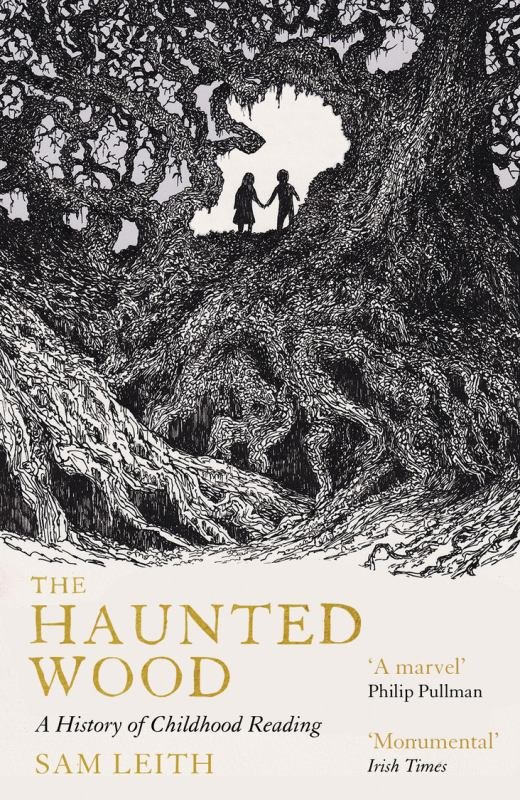
The Haunted Wood: A history of childhood reading by Sam Leith $30
Can you remember the first time you fell in love with a book? The stories we read as children matter. The best ones are indelible in our memories; reaching far beyond our childhoods, they are a window into our deepest hopes, joys and anxieties. They reveal our past — collective and individual, remembered and imagined — and invite us to dream up different futures. In a pioneering history of the children's literary canon, The Haunted Wood reveals the magic of childhood reading, from the ancient tales of Aesop, through the Victorian and Edwardian golden age to new classics. Excavating the complex lives of our most beloved writers, Sam Leith offers a humane portrait of a genre and celebrates the power of books to inspire and console entire generations. [Now in paperback]
”Sam Leith has been encyclopedic and forensic in this journey through children's books. It's a joy for anyone who cares or wonders why we have children's literature.” —Michael Rosen
”Scholarly but wholly accessible and written with such love, The Haunted Wood is an utter joy.” —Lucy Mangan
”One of the best surveys of children's literature I've read. It takes a particular sort of sensibility to look at children's literature with all the informed knowledge of a lifetime's reading of 'proper' books, and neither patronise (terribly good for a children's book) nor solemnly over-praise. Sam Leith hits the right spot again and again. The Haunted Wood is a marvel, and I hope it becomes a standard text for anyone interested in literature of any sort.” —Philip Pullman


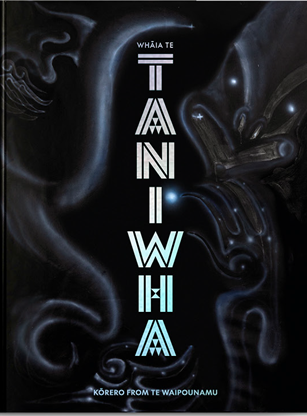
Whāia te Taniwha: Kōrero from Te Waipounamu edited by Chloe Cull and Karuna Thurlow $30
Taniwha have shaped the land and navigated the waterways of Te Waipounamu for generations. They are shapeshifters, oceanic guides, leaders, ancestors, adversaries, guardians and tricksters who have left their marks on the land around us. Let the twelve Kāi Tahu artists and writers in this new book for rakatahi take you on a journey around the motu as we follow the tales of taniwha, both ancient and new. Weaving together te reo Māori and English, they explore how we can learn from taniwha — and what they can teach us about ourselves and our ever-changing world. Highlights: —A compelling introduction to taniwha for tamariki and rangatahi aged 8 to 15. —Stories located in Te Waipounamu South Island, by Kāi Tahu artists and writers. —Bilingual texts for te reo Māori speakers and learners alike, with a particular emphasis on te reo o Kāi Tahu. —Perfect for use by kaiako and ākonga in both English Medium and Māori Medium education contexts. Contributors: Justice-Manawanui Arahanga-Pryor, Leisa Aumua, Conor Clarke, Lucy Denham, A. J. Manaaki Hope, Meriana Johnsen, Moewai Rauputi Marsh, Waiariki Parata-Taiapa, Andrea Read, Jayda Janet Siyakurima, Ruby Solly, Paris Tainui. [Hardback]
>>Look inside.


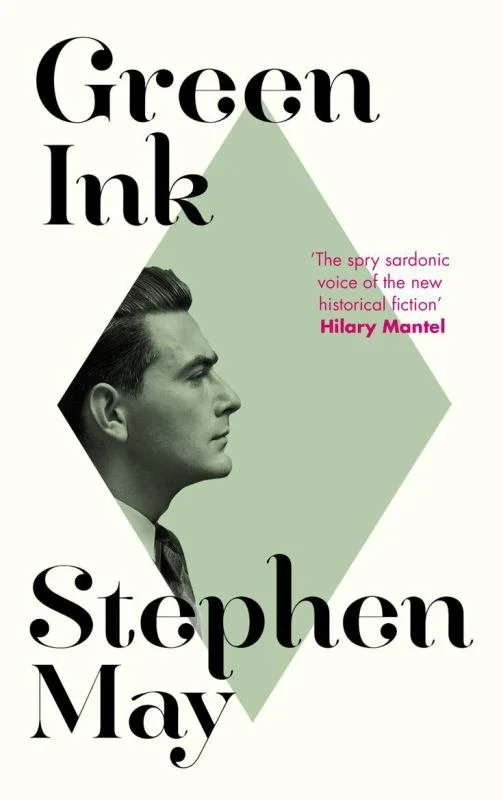
Green Ink by Stephen May $40
David Lloyd George is at Chequers for the weekend with his mistress Frances Stevenson, fretting about the fact that his involvement in selling public honours is about to be revealed by one Victor Grayson. Victor is a bisexual hedonist and former firebrand socialist MP turned secret-service informant. Intent on rebuilding his profile as the leader of the revolutionary Left, he doesn't know exactly how much of a hornet's nest he's stirred up. Doesn't know that this is, in fact, his last day. No one really knows what happened to Victor Grayson — he vanished one night in late September 1920, having threatened to reveal all he knew about the prime minister's involvement in selling honours. Was he murdered by the British government? By enemies in the socialist movement (who he had betrayed in the war)? Did he fall in the Thames drunk? Did he vanish to save his own life, and become an antiques dealer in Kent? Whatever the truth, Green Ink imagines what might have been with brio, humour and humanity. [Hardback]
 “May skilfully orchestrates a large cast of both historical and fictional characters. The novel's period detail is impeccable. One of its chief pleasures is the authorial voice, which, with its maxims on pity, ambition, boredom and so forth, is of an omniscience rarely encountered in contemporary fiction.” —Financial Times
”An idiosyncratic, rather dreamlike novel: it doesn't so much bring history to life as use a clutch of historical figures to showcase the author's own captivatingly offbeat intelligence.” —Jake Kerridge, The Telegraph 
A vivid and wholly credible recreation of post-Great War London. All is imagined here in convincing and sardonic — and frequently hilarious — detail.” —Robert Edric 
”Stephen May is the spry, sardonic voice of the new historical fiction.” —Hilary Mantel
>>War, trauma, and politics.
>>A firebrand’s last day.
>>On Victor Grayson.


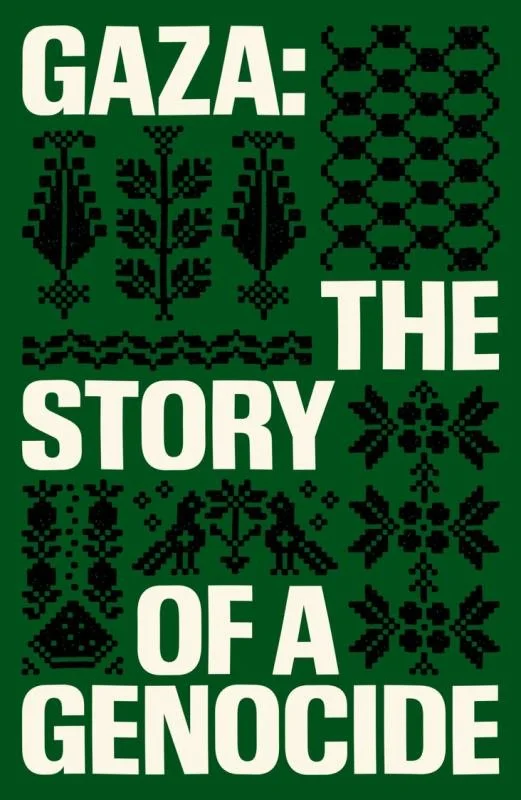
Gaza: The story of a genocide edited by Fatima Bhutto and Sonia Faleiro $30
"Genocide destroys cities and claims lives, but it also remakes the psyches of those it spares." The story of genocide belongs first to its survivors. In this urgent and powerful collection, Ahmed Alnaouq recounts the devastating loss of twenty-one family members. Noor Alyacoubi offers a searing account of starvation in Gaza. Mariam Barghouti examines the brutality of Israeli settler violence in the West Bank, while Lina Mounzer reports on the aftermath of Israel's simultaneous bombing of Lebanon. Their testimonies, along with those of many others, illuminate the enduring psychological and physical toll of state violence. Gaza: The Story of a Genocide brings together personal testimony, expert analysis, poetry, photography, and frontline reportage to document the full scope of destruction inflicted on the indigenous Palestinian people — their lives, their land, and their future. With illustrations by Joe Sacco and Mona Chalabi, it includes the work of the late poet Hiba Abu Nada, who was killed by an Israeli airstrike on her home in Khan Younis, Gaza, on October 20, 2023. Other contributors include Mosab Abu Toha, Susan Abulhawa, Laila Al-Arian, Tareq Baconi, Eman Basher, Omar Barghouti, Yara Eid, Huda J. Fakhreddine, Dr. Tanya Haj-Hassan, Yara Hawari, Maryam Iqbal, Nina Lakhani, Ahmed Masoud, Lina Mounzer, Malaka Shwaikh, Shareef Sarhan, and Mary Turfah. [Paperback]


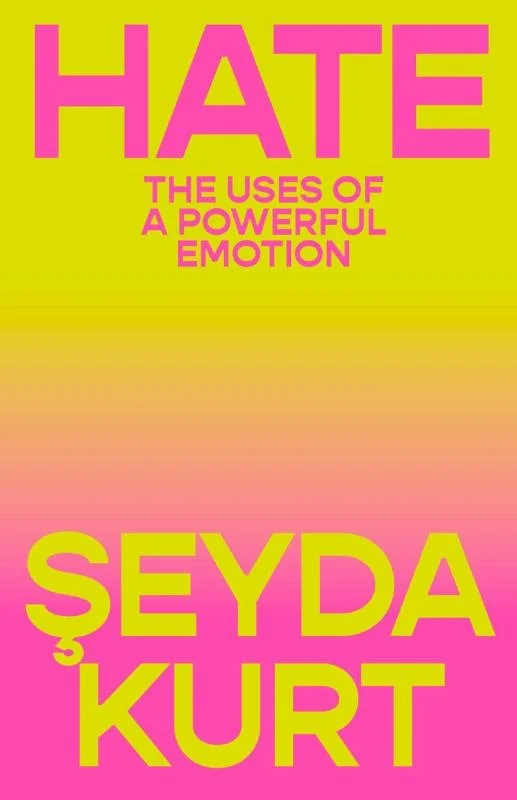
Hate: The uses of a powerful emotion by Şeyda Kurt $37
Hatred is typically characterised as ugly, destructive and, above all, the political tool and dominant emotion of intransigent right-wingers. But is something important lost in this simplistic depiction? Don't those engaged in anticolonial, feminist, or class struggles — the very people who, in mainstream narratives, are usually portrayed as victims and objects of hate — have just reasons for feeling hatred? Şeyda Kurt, who approaches the topic from both personal and historical angles, challenges the consensual liberal perspective, reframing the exploited and oppressed as vehicles as well as targets of hatred. She weaves together the stories of Jewish avengers resisting German fascism, the Haitian revolutionaries, contemporary abolitionists, and many others, ultimately arriving at the revolution in Syrian Kurdistan and the question of a just peace. Kurt argues that the pursuit of justice is sometimes spurred by destructive impulses and hostility. What happens then to the tenderness we share as human beings? When we allow ourselves to hate, what becomes of the kindness we would bestow upon a world we are striving to protect? Kurt examines strategic hatred as a powerful force driving resistance, abolition, and even, paradoxically perhaps, radical care. [Hardback]
”A brilliant meditation on the relationships between hate, domination, and resistance. Kurt shows how the concept of hate is deployed to stigmatize and discredit anti-colonial, anti-racist, and feminist resistance, and how liberal moral stances against hate operate to pacify and to justify state violence through appeals to democracy and rule of law. This book is a vital tool for demystifying hate, so that we might see its role in liberation struggles.” —Dean Spade
>>Is hate politically useful?


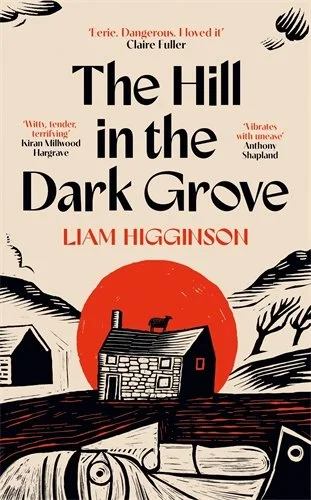
The Hill in the Dark Grove by Liam Higginson $38
Carwyn and Rhian — the last in a long family line of sheep farmers — are living out a brutal year in their hillside farm, deep in the mountains of Eryri, North Wales. When Carwyn stumbles across a stone circle and some sort of burial mound in one of the fields on their land, he quickly develops an obsession. His wife, Rhian, meanwhile, is confronted with the growing realization that the man with whom she shares her life and home is slowly becoming a frightening stranger. As the harsh mountain winter closes in, Rhian finds herself alone with her increasingly peculiar husband, the mountains, and the looming megalithic stones. The Hill in the Dark Grove is a story of a lost way of life and the lengths we go to to protect what we know. [Paperback]
”Witty, tender, ultimately terrifying. Evocative and deftly done; The Hill in the Dark Grove is a book of echoes, haunted by the sheer vastness of time and landscape, and how they enact upon us and the stories we tell. A celebration of love's persistence, a summoning of ancient lore, a superb debut.” —Kiran Millwood Hargrave
”Liam Higginson is a new talent in Welsh storytelling; atmospheric, chilling and incredibly touching, The Hill in the Dark Grove holds the reader in its arms, and shows us how our stories, our objects and memories, are shaped and held by the land.” —Joshua Jones
The Hill in the Dark Grove is a sumptuously written, dark meditation on aging, obsolescence, and the brutalising march of time and progress, as well as a chilling folk horror novel. There's something long buried in the mountains of North Wales and within the sheep herders, Carwyn and Rhian, who are economically pushed beyond their limits; Liam Higginson expertly brings it all to the surface.” —Paul Tremblay


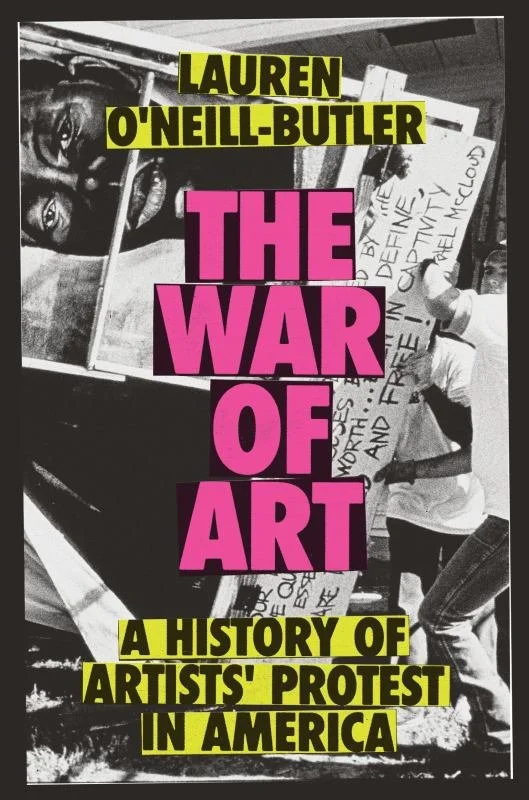
The War of Art: A history of artists’ protest in America by Lauren O’Neill-Butler $45
Artists in America have long battled against injustices, believing that art can in fact "do more." The War of Art tells this history of artist-led activism and the global political and aesthetic debates of the 1960s to the present. In contrast to the financialized art market and celebrity artists, the book explores the power of collective effort - from protesting to philanthropy, and from wheat pasting to planting a field of wheat. Lauren O'Neill-Butler charts the post-war development of artists' protest and connects these struggles to a long tradition of feminism and civil rights activism. The book offers portraits of the key individuals and groups of artists who have campaigned for solidarity, housing, LGBTQ+, HIV/AIDS awareness, and against Indigenous injustice and the exclusion of women in the art world. This includes: the Black Emergency Cultural Coalition (BECC), Women Artists in Revolution (WAR), David Wojnarowicz's work with ACT UP, Top Value Television (TVTV), Agnes Denes, Edgar Heap of Birds, Dyke Action Machine! (DAM!), fierce pussy, Project Row Houses, and Nan Goldin's Prescription Addiction Intervention Now (PAIN). Based upon in-depth oral histories with the key figures in these movements, and illustrated throughout, The War of Art is an essential corrective to the idea that art history excludes politics. [Hardback]
”A wonderfully smart, readable and informative study of a topic that matters to almost everyone interested in art, which is more than enough to recommend it. But gems like the luminous chapter on Agnes Denes and the eye-opening revisionary discussion of her relation to Smithson make it something even better. Essential reading.” —Walter Benn Michaels


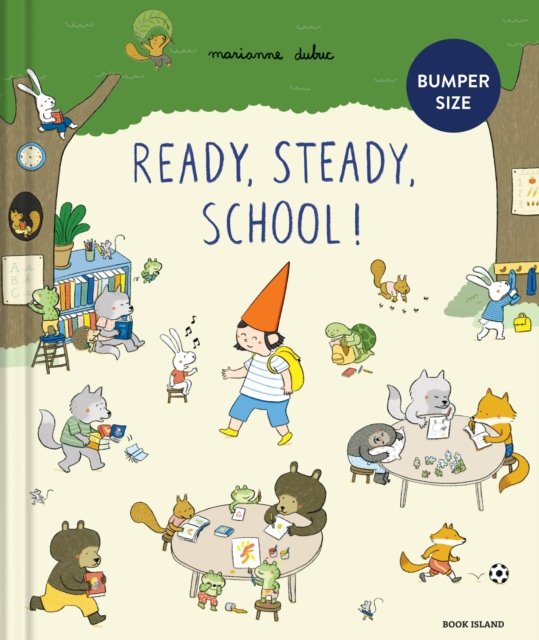
Ready, Steady, School! by Marianne Dubuc $48
A wonderful large-format search-and-find book. Next year, Pom will be starting school. But a year's too long to wait when you're excited. Today, Pom has decided to visit some friends by dropping in on different animal schools. At Little Leapers, the rabbits are learning how to read, write and count. At Bulrushes, the frogs are creating beautiful artwork. At F is for Foxtrot, the foxes are playing different sports.. What if Pom's dream school was a little bit of all that? One thing's for sure: school is an amazing adventure! This book is perfect for those keen to start school and for those who might need a little reassurance. [Hardback]
>>Look inside!

 
VOLUME BooksNew releases
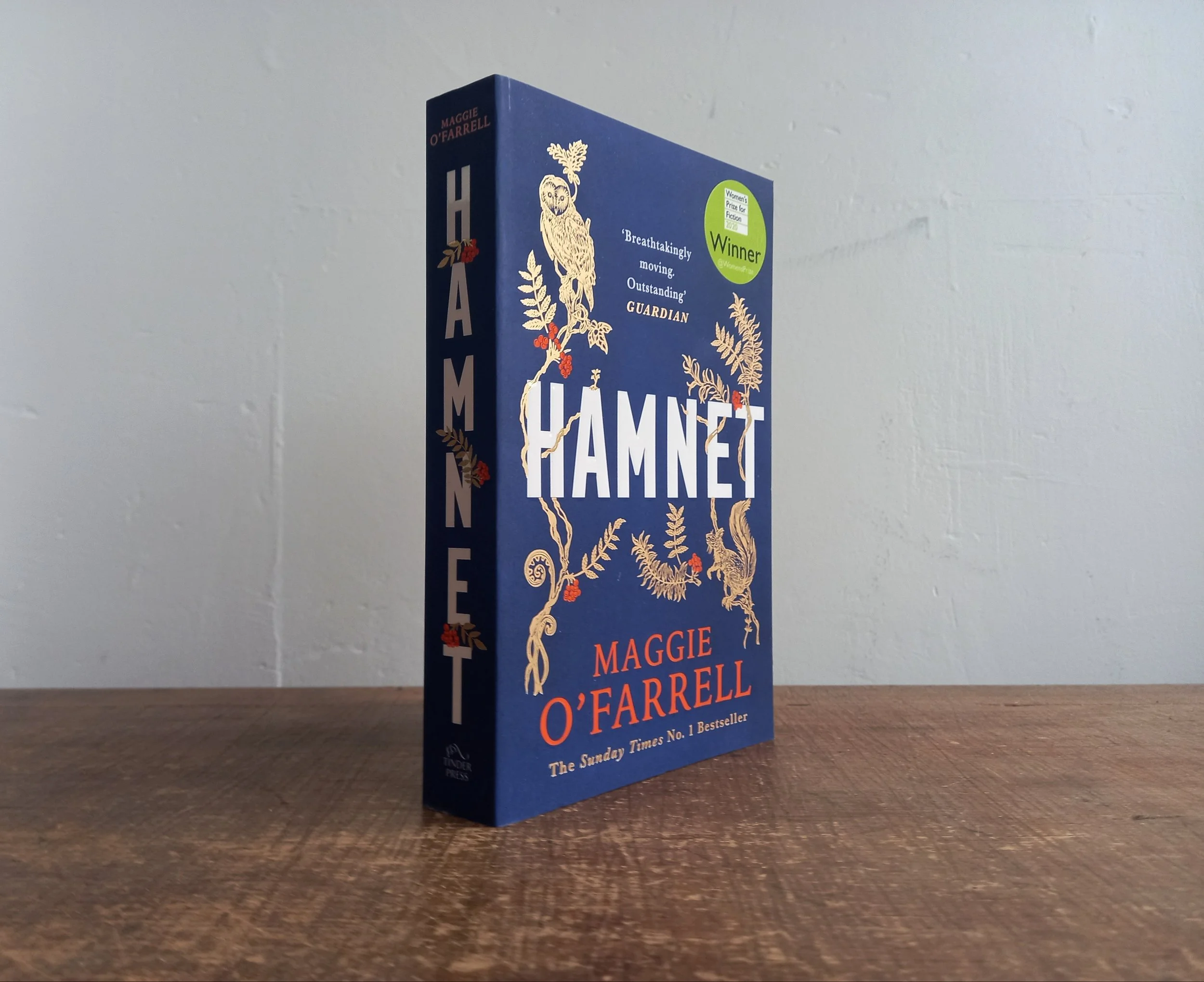
HAMNET by Maggie O'Farrell — reviewed by Stella

This evocative, heart-breaking, and revealing story of grief lays bare the genesis of Shakespeare’s most famous play, Hamlet. Yet in Maggie O’Farrell’s novel, Hamnet, Shakespeare as we know him hardly has a role. Set almost exclusively in the village of Stratford-upon-Avon and centred around the domestic life of his wife and family, Will is referred to as the Latin tutor, the glover’s son, the father, the husband. and is often working away — letters arriving at intervals. Who do we meet on the first pages, but the son — desperately searching for an adult to help him. His sister is unwell and the plague is present. From here, as time and the shadow of death make their presence known, we circle back increment by increment into the world of this child and his sister, of the mother, of the extended family and the village. We circle further back to the young Latin tutor gazing out the window, bored by the tedium of his job with boys who will never become any great things, and spying a youth (at first he mistakes his future wife for a lad) with a bird (later we meet this kestrel) upon her arm; and circle back again to the reasons why he is entrenched in this wearisome role — his violent and domineering father. Agnes is central and crucial in this novel. O’Farrell takes what little knowledge of Shakespeare's wife and brings her to the reader as a full and fascinating woman in her own right. She reels from the pages with her supposed eccentricities — she is a gifted healer, a lover of plants and the wilderness (seen by some in the community as a wild thing — a woman shunned by some but needed by others) — and her independent life. Emotional and emotive, sly and quiet, when death visits at her door, her grief is unbounded. Life has been snatched from her in a startling and, to her, an uncomprehending way. Agnes and Hamnet hold you in the grooves of this novel, make you want more, and they will stay with you long after the covers are closed. You reside within Hamnet’s mind as he navigates his twin sister’s illness, as he tries to find sense in the madness of the fever and the adult world that stands just outside his grip. You walk alongside Agnes as she loses herself in nature’s wildness to emerge into a world that can only tear at her, yet is necessary for survival and the memories that bind her child to her. Each character offers up a story —  a way of seeing this world and telling its tale — a tragedy wrapped in intrigue on a small stage with rippling emotions. Hamnet is historical fiction at its best — in the vain of Hilary Mantel’s Thomas Cromwell series — it sets you fair and square in this time with all its life, death and drama. Immersive, compelling and rich in language and tale.  

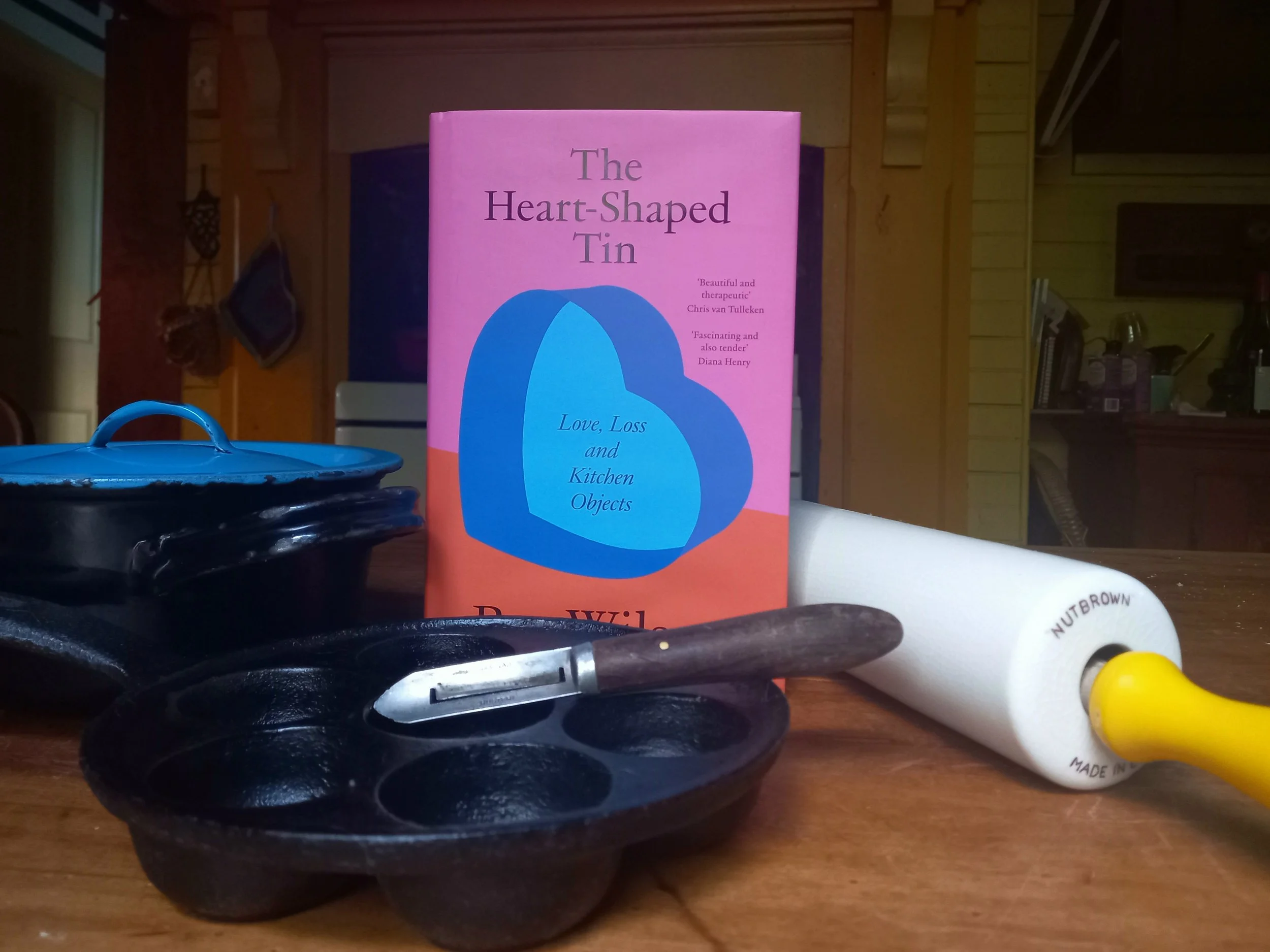
Book of the Week: THE HEART-SHAPED TIN: LOVE, LOSS, AND KITCHEN OBJECTS by Bee Wilson

Perhaps the objects that carry the most meaning in our lives, the ones that are most imbued with the connections we have with the significant people in our pasts, the ones that both store and release the memories that are fundamental to our idea of ourselves, are not so much the precious heirlooms or heritage pieces but rather the ordinary objects that we use every day, just as, perhaps, their previous owners used them every day before us. The kitchen probably holds the greatest concentration of such useful-and-meaningful objects, come to us in many different ways, each with its own story. Bee Wilson’s thoughtful and beautifully written book tells the stories attached to 35 kitchen objects of many origins, and gives insight into the texture of the lives of the people who used them, and their importance to the people who use them now.

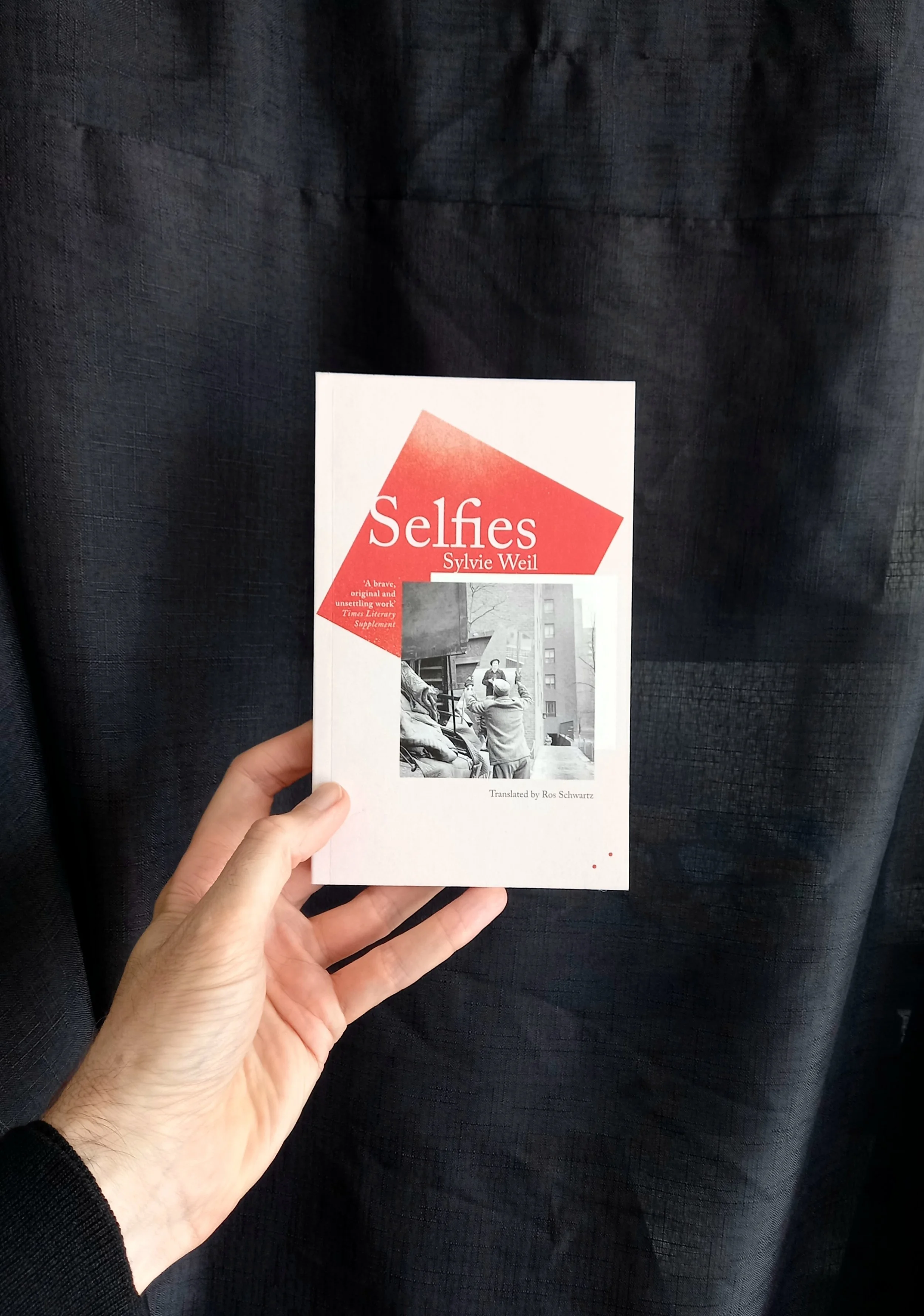
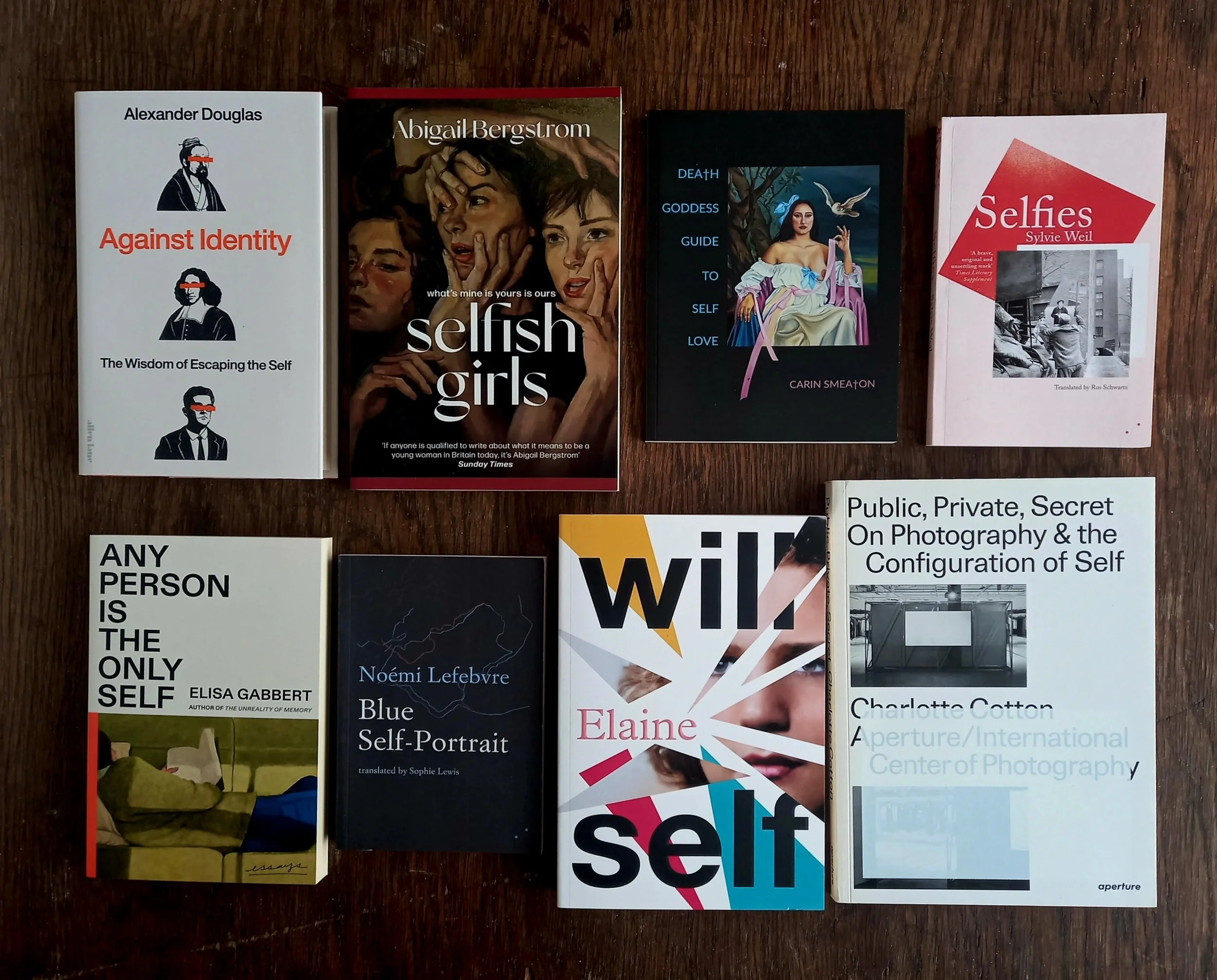
SELFIES by Sylvie Weil (translated from French by Ros Schwartz) — reviewed by Thomas

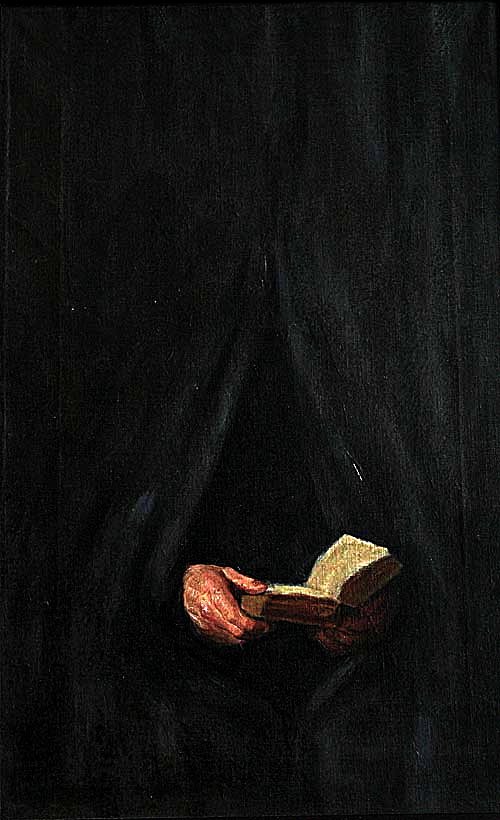
The hands holding the book in the painting by Markus Schinwald, and the black curtains between which they protrude, are painted in such a way as to make the viewer suspect that they are looking at a painting, or a part of a painting, by some Old Master, and the viewer, upon researching further, feels a little cheated to find that the artist is still alive. Had we perhaps confused even the name Markus Schinwald with that of some minor Germanic Old Master — perhaps a painter of agonising crucifixions, memento mori and surgically accurate Sts. Sebastians — which would have given this painting, in which the person holding the book into the light is effectively bodiless, concealed behind curtains, a disconcertingly suppressed reference to physical suffering? Maybe we should not feel cheated. Maybe it is the reference to the reference, by way of our confusion, that gives the painting, for us, its meaning. 

In the picture I didn't end up taking of myself I am sitting in an elderly armchair, the pile of its plush worn to the ghost of its original pattern on the arms and upper back. Beside me is a rather spindly green table upon which sits a vase of lilies, somewhat past their best, and a small empty coffee cup, a lip-mark of coffee at its rim. The sideboard behind me is stacked with books, and the fading light falls from my right onto the book I hold at an odd angle as if trying to postpone the moment in which I will have to get up and switch on a light. I am wearing something black and nondescript, seemingly a skivvy of some sort, liberally decorated with white cat hairs, and my head is thrust awkwardly forward over the oddly angled book, which I seem to be on the verge of finishing. Its title can be read despite the shadow: Selfies by Sylvie Weil. 
*
The thirteen exquisite pieces of memoir that comprise Selfies each begin with a description of an actual artwork, a self-portrait by a woman ranging from the thirteenth century to today. This ekphrasis is followed by a description of a (possibly hypothetical) self-portrait by Weil which echoes or resonates with the historical work and provides a means of access to the third section of each piece, a more (but variously) lengthy examination of one of the more significant or uncomfortable aspects of Weil’s life. This tripartite structure demonstrates how viewing art can unlock new levels of understanding of our own lives, and how the communication of a stranger’s moment by means of a surface invariably stimulates the viewer’s memory to read that moment in terms of moments from the viewer’s own life, moments pressing at the surface of consciousness from the other side, so to speak. Viewing is remembering. The rigour and delicacy Weil demonstrates in viewing the artists’ works allows her to apply a similar set of criteria to her own memory-images, resulting in a remarkably nuanced set of realisations to be accessed and conveyed, potentially provoking a similar deepening of access in a reader to their his own memories. Weil’s prose, pellucidly translated from the French by Ros Schwartz, gauges subtle shifts of tone, frequently shifting our understanding of situations or persons before any knowledge about them is attained. The awful American mathematician with whom Weil had a love affair, her son’s mother-in-law, the close friend of her mother’s, the unsympathetic owners of a “Jewish” dog, are all revealed as having complex and often ambiguous relationships with the surfaces they present. Weil’s sentences, at once so straight-forward and so subtle, can move both outwards and inwards at once, operating at various depths simultaneously, as when Weil describes responses to her adult son’s mental breakdown: “I reply politely to friends who say: ‘I wouldn’t be able to cope if something like that happened to my son.’ I didn’t tell them that it could happen to anyone. And that they would cope, as people do. They’d have no choice. I don’t reply that they deserve to have it happen to them. Deep down, I agree that it is unlikely to happen to them. Not to them.” Precision often leads us to the verge of humour, as when Weil describes “the remains of a smile abruptly cut short, as if by the sudden and unexpected arrival of a dangerous animal.” The ‘Self-portrait as an author,’ springing from a description of a 1632 self-portrait of Judith Leyster seen as an advertisement for her portrait commissions (a commercial imperative), is a devastatingly perfect, almost Cuskian account of the people who visited Weil’s signing table at a literary festival. The book is full of images, or moments, details, that implant themselves in the mind of the reader and continue to resonate there in a way similar to the reader’s own memories. What is the purpose of self-depiction? “Everyone takes selfies,” Weil observes. “It’s a way of going unnoticed,” but at the same time each selfie is a form of searching, an attempt to locate oneself, somehow, in the circumstances that comprise one’s life. Memory is the only way we have to attempt to make sense of these moments. 

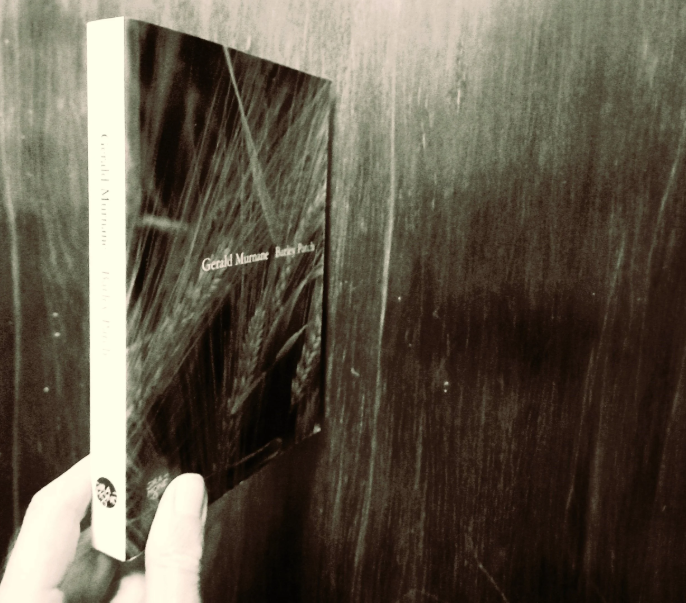
BARLEY PATCH by Gerald Murnane — reviewed by Thomas

This book begins with the question that prompted its author to stop writing for fourteen years: “Must I write?” In finally finding himself capable of addressing this question, Murnane also addresses its corollary: “Why had I written?" What follows is a subtle and often profound examination of the relationship between the ‘actual’ world and the image world from which fiction arises. Inverting the traditional Romantic model of fiction, Murnane disavows the so-called ‘imagination’ and instead stakes out the primary territory of his image world: “what I call for convenience patterns of images, in a place that I call for convenience my mind, wherever it may lie or whatever else it may be a part of”. By emphasising the porosity of a work of fiction, which is “capable of devising a territory more extensive and more detailed by far than the work itself”, Murnane shows that although the territory is landmarked by images introduced from the memory of events or fictions or artworks or other experiences, both author and reader inhabit the spaces between and surrounding these landmarks, find themselves exploring and enlarging the backgrounds of pictures and the spaces surrounding texts, and forming relationships with ‘personages’ who are both part of, and give rise to, the personages of both author and reader. Every region written about implies a further region not yet written about, “a country on the far side of fiction”, inhabited by personages who may be accessible to the personages in fiction but not yet to us. In tracing (and correlating) the memories of the personage of the narrator-Murnane and the memories of the main character in the book he abandoned when he stopped writing, Murnane gives an exacting topography of his mind (“so to call it”) and a precisely worded description of its operations, and of the yearning, distance and loneliness that both underlie and seek remedy in fiction. 

ART BOOK SALE

Feed your shelves. Feed your mind. Feed your muse.
For a 20% discount on this selection of wonderful art books, just enter the code ART when checking out.
This sales ends on 31 January. Single copies only at these prices (first in, first served). 

VOLUME Books
NEW RELEASES (20.1.26)

All your choices are good! Click through to our website (or just email us) to secure your copies. We will dispatch your books by overnight courier or have them ready to collect from our door in Church Street, Whakatū.

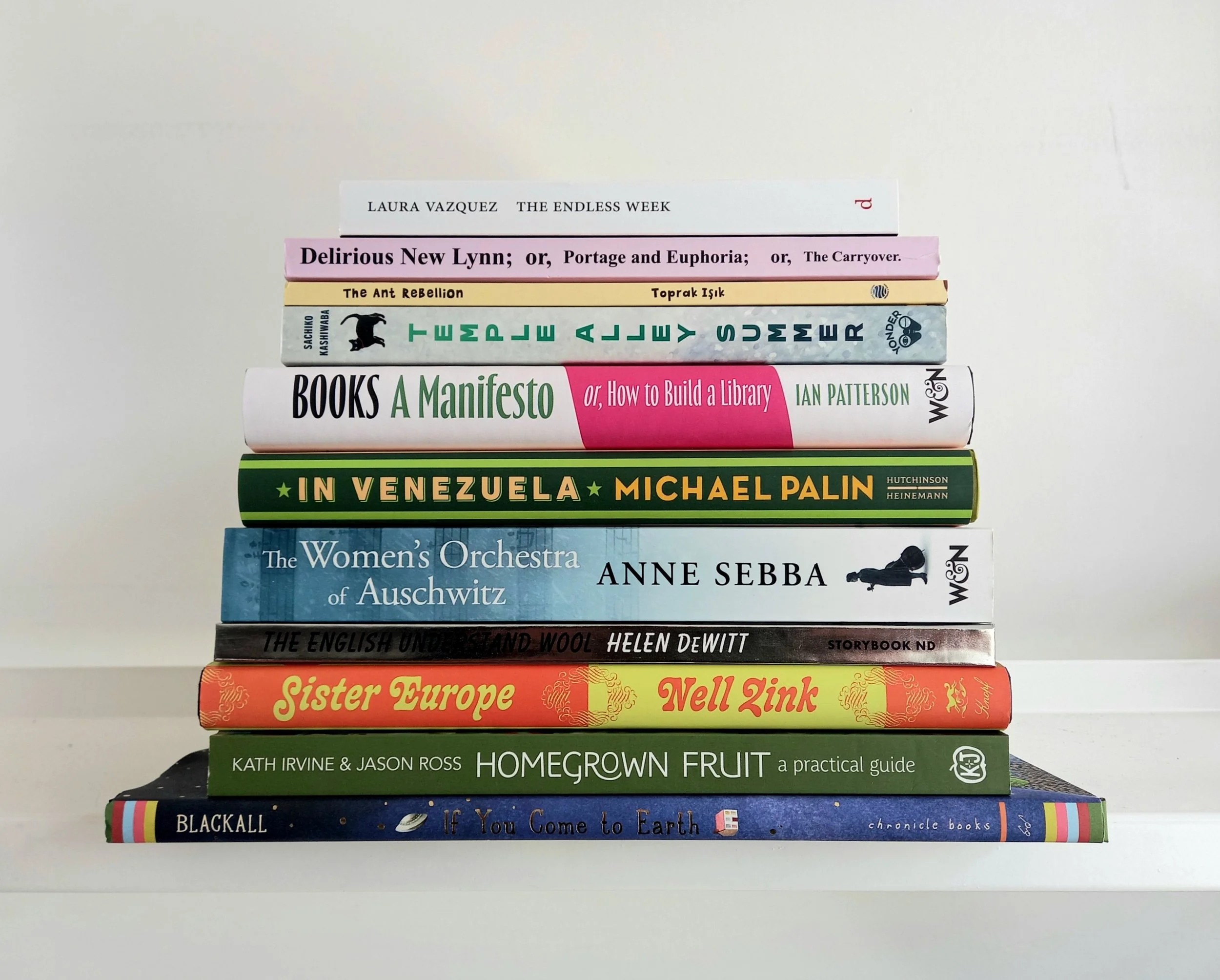
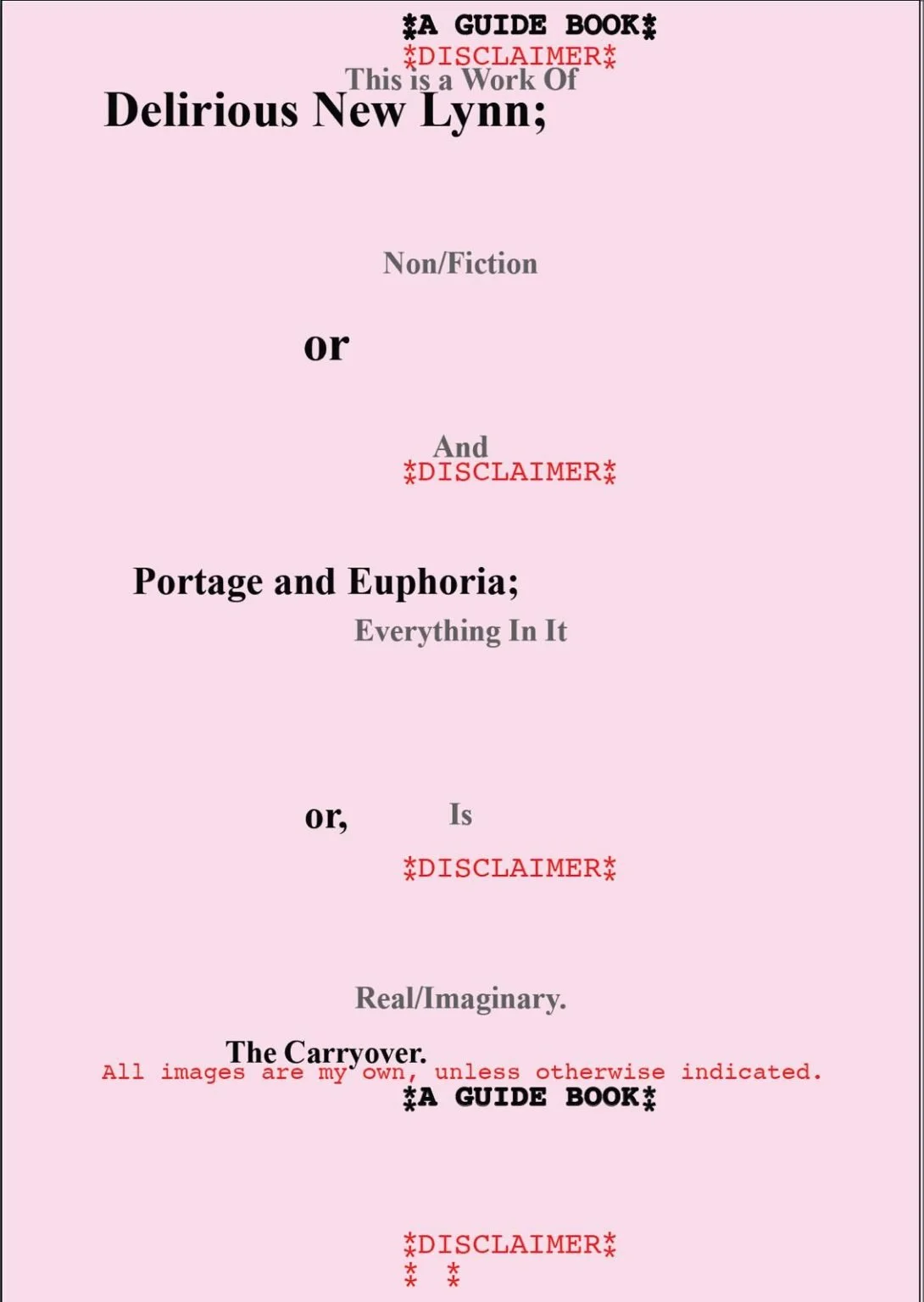
Delirious New Lynn, or, Portage and Euphoria, or, The Carryover: A guidebook by Oscar Mardell $35
Delirious New Lynn is the record of an obsession with an unnavigable backwater, a voracious drift down various culs-de-sac, an anti-psychogeography, a map of the schisms between mind and place, a poetics of trash, a rummage through the wastelands of Neoliberalism, a scavenger-hunt for meaning and nothingness, coincidence and randomness, beauty and ugliness, comedy and tragedy, comfort and horror, magnificence and absurdity, and spirituality too. Above all, it is a profusion of lists and digressions. This new book from the author of Great Works will have you in intellectual stitches as it snidely nails the Auckland suburb (and so much else about life in these times and on these shores). [Paperback]
>>Read an extract.
>>Look inside.


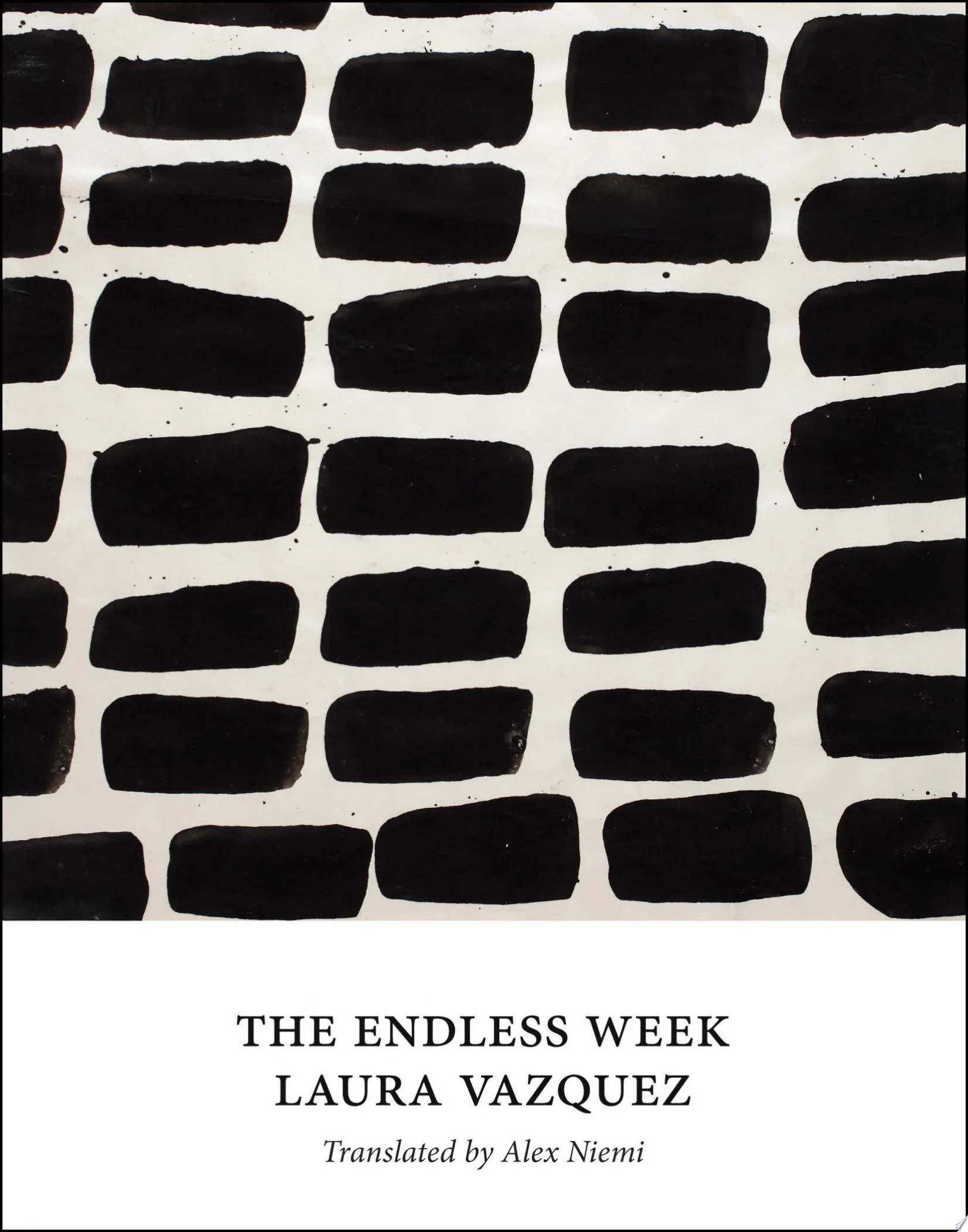
The Endless Week by Laura Vazquez (translated from French by Alex Niemi) $48
Like Beckett's novels or Kafka's stranger tales, The Endless Week is a work outside of time, as if novels had never existed and Laura Vazquez has suddenly invented them. And yet it could not be more contemporary, as startling and constantly new as the scrolling hyper-mediated reality it chronicles. Its characters are Salim, a young poet, and his sister Sara, who rarely leave home except virtually; their father, who is falling apart; and their grandmother, who is dying. To save their grandmother, Salim and Sara set out in search of their long-lost mother, accompanied by Salim's online friend Jonathan, though their real quest is through the landscape of language and suffering that saturates both the real world and the virtual. The Endless Week is sharp and ever-shifting, at turns hilarious, tender, satirical, and terrifying. Not much happens, yet every moment is compulsively engaging. [Paperback]
 "Reading this book feels like falling into a whirlpool: it's inescapable." —Maggie Lange, W Magazine
"Vazquez has created a unique and enduring novel. Something hard and real and tangible glitters amid the vapour of text and image she describes." —Dustin Illingworth, New Left Review
"Are the kids ok? Are the elders? Are the gods? Are the dead? In this mesmeric novel, loneliness and the (online) community, language and image, the immediate and the mediated, violence and care construct a tender, precarious microzone called intimacy. A lumbar puncture of a book, a golden strain." —Joyelle McSweeney
"It's a rigorously unsettling reading experience, without plot, tension, or character development. But the details and countless vignettes deliver an immense range of emotion. Grotesquely inventive and amusing, like a corner torn from a Hieronymus Bosch painting." —Kirkus
"They say a truly great author can write about anything and make it interesting, and with The Endless Week Laura Vazquez proves that true on every page. If you're in search of an ultra-contemporary novel that shatters all the rules with inimitable humor and style to spare, look no further — she's arrived." —Blake Butler
>>Inside out experience.


Sister Europe by Nell Zink $65
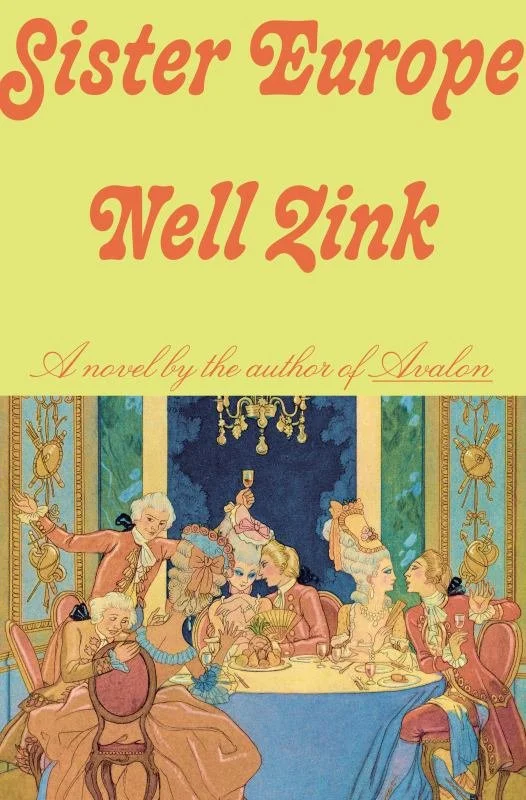
As a Berlin night draws in around the pristine glass exterior of the Hotel Interconti, a ragtag group of friends, family, and potential lovers find themselves frustrated. By promise or threat, they have all gathered at a lavish celebration of an elderly author's venerable career. But dinner is delayed, the speeches are a drag and the gang — a young trans teen and her father; an ageing publisher and his flakey date; a dog, a troubled heiress and an Arab Prince — begin to feel the pinch of boredom, hunger and horniness. Together they will make their bid for freedom, and will soon embark on an exhilarating odyssey through the city's shadow and light. Sophisticated, sexy and exquisitely funny, Sister Europe is the remarkable new novel from one of the most singular, brilliant writers working today: a vivid tale of growing up, growing old and getting down. [Hardback]
"To stay out late in Zink's world, loitering, is a pleasure. Her voice is cool and fastidious, but she has a screwball quality-a comic sensibility rooted in pain. She grinds her own sophisticated colors as a writer; her ironies are finely tuned; she is uniquely alert to the absurdities of human conduct." —Dwight Garner, The New York Times Book Review
"This sly, sprightly novel provides a distraction from the news while the news is all over it. One of the pleasures of Sister Europe is that it's thoroughly up-to-date but still shaped in the timeless way of Wodehousian comedy of errors." —Sam Sacks, The Wall Street Journal
"Zink is one of the most humane writers we've got, and one of the best. As ever, Zink is funny in a way that requires careful observation and precision. The night narrated here feels like the kind of time outside of time in which classical comedies take place — a liminal space in which characters experience transformations impossible in the everyday world. Here, some characters find each other, some find their way home, and some get a bit closer to finding themselves." —Kirkus Review
”Nell Zink is a writer of extraordinary talent and range. Her work insistently raises the possibility that the world is larger and stranger than the world you think you know.” —Jonathan Franzen
”Zink writes with a joyful recklessness that makes her one of the freshest talents around.” —The Guardian
>>Not entirely sure.
>>Connecting the dots.
>>At the back.
>>Somehow connected.


Books: A manifesto, Or, How to build a library by Ian Patterson $50
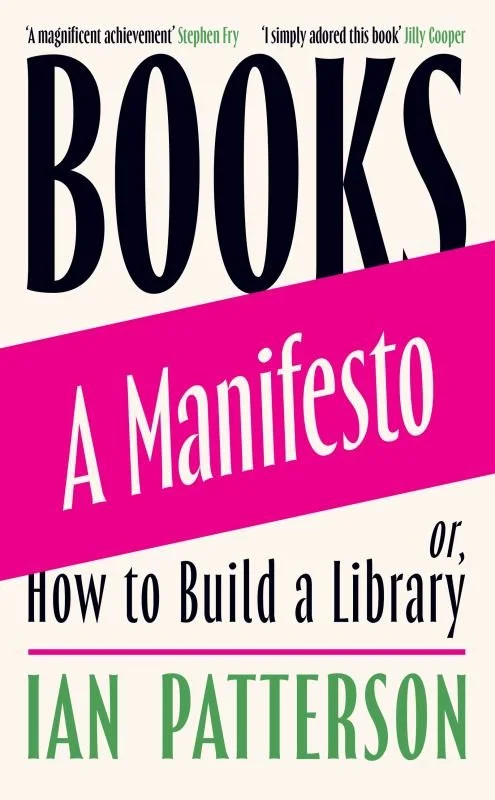
This is a book about books, about the subversive power of reading and the strange, enduring magic of books as objects. Ever since childhood, books have been at the centre of Ian Patterson's life, as a poet, teacher, translator, bookseller, and collector. As he constructs the last of many libraries, he makes an impassioned case for the radical importance of reading in our lives — from Proust to Jilly Cooper, from golden-age detective novels to avant-garde poetry. Wise, irreverent and exhilaratingly wide-ranging, Books: A Manifesto reminds us that poems know things that we might not yet know ourselves, urges us to seek out the puzzles alive in the art of translation and celebrates the singular elasticity of the 'bookshop minute'. But even more than this, the book insists on reading not as a luxury but a necessary part of reality: we live within language, and when we think, it's with the tools that reading gives us. Our time of cultural and political crisis demands more than books — but without them, and without the breadth of knowledge, sense of history, awareness of alternatives and hope for the future they offer, things will not get better. At once a primer for enriching your own library and a manifesto for why that matters, this book is an invitation to a deeper, richer world of thought and feeling — and a reminder of just how much books matter. [Hardback]
”A bibliophile's autobiography, a supremely generous instruction in reading and collecting, a short history of antiquarian bookselling, a celebration of unserious pleasures and a polemic for the most serious ones — Books: A Manifesto is all of this and more. Of course Patterson hasn't read everything: he's reread it, bought and sold it a few times, might even have translated it, and has profound and genial thoughts.” —Brian Dillon


Temple Alley Summer by Sachiko Kashiwaba (translated from Japanese by Avery Fischer Udagawa), illustrated by Mihi Satake $23
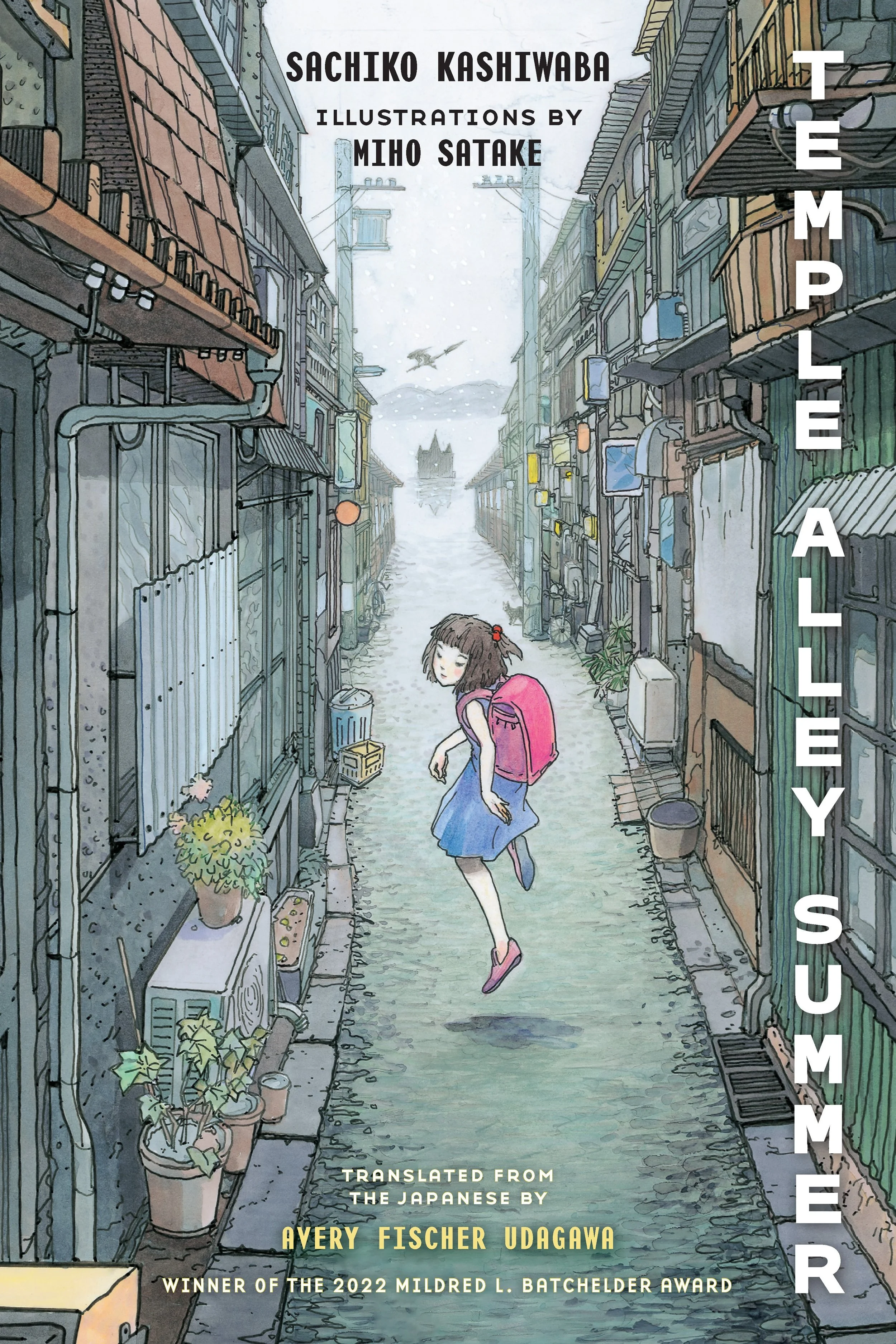
Kazu knows something odd is going on when he sees a girl in a white kimono sneak out of his house in the middle of the night was he dreaming? Did he see a ghost? Things get even stranger when he shows up to school the next day to see the very same figure sitting in his classroom. No one else thinks it's weird, and, even though Kazu doesn't remember ever seeing her before, they all seem convinced that the ghost-girl Akari has been their friend for years! When Kazu's summer project to learn about Kimyo Temple draws the meddling attention of his mysterious neighbour Ms. Minakami and his secretive new classmate Akari, Kazu soon learns that not everything is as it seems in his hometown. Kazu discovers that Kimyo Temple is linked to a long forgotten legend about bringing the dead to life, which could explain Akari's sudden appearance is she a zombie or a ghost? Kazu and Akari join forces to find and protect the source of the temple's power. An unfinished story in a magazine from Akari's youth might just hold the key to keeping Akari in the world of the living, and it's up to them to find the story's ending and solve the mystery as the adults around them conspire to stop them from finding the truth. [Paperback]
”This imaginative tale, enchantingly written and charmingly illustrated by veteran Japanese creators for young people, has a timeless feel. Its captivating blend of humor and mystery is undergirded with real substance that will provoke deeper contemplation. Udagawa's translation naturally and seamlessly renders the text completely accessible to non-Japanese readers. An instant classic filled with supernatural intrigue and real-world friendship. This charming story is both a layered, profound reflection on living life with purpose and a funny, suspenseful book with all the hallmarks of classic middle-grade literature.” —Kirkus Reviews


The English Understand Wool by Helen DeWitt $36
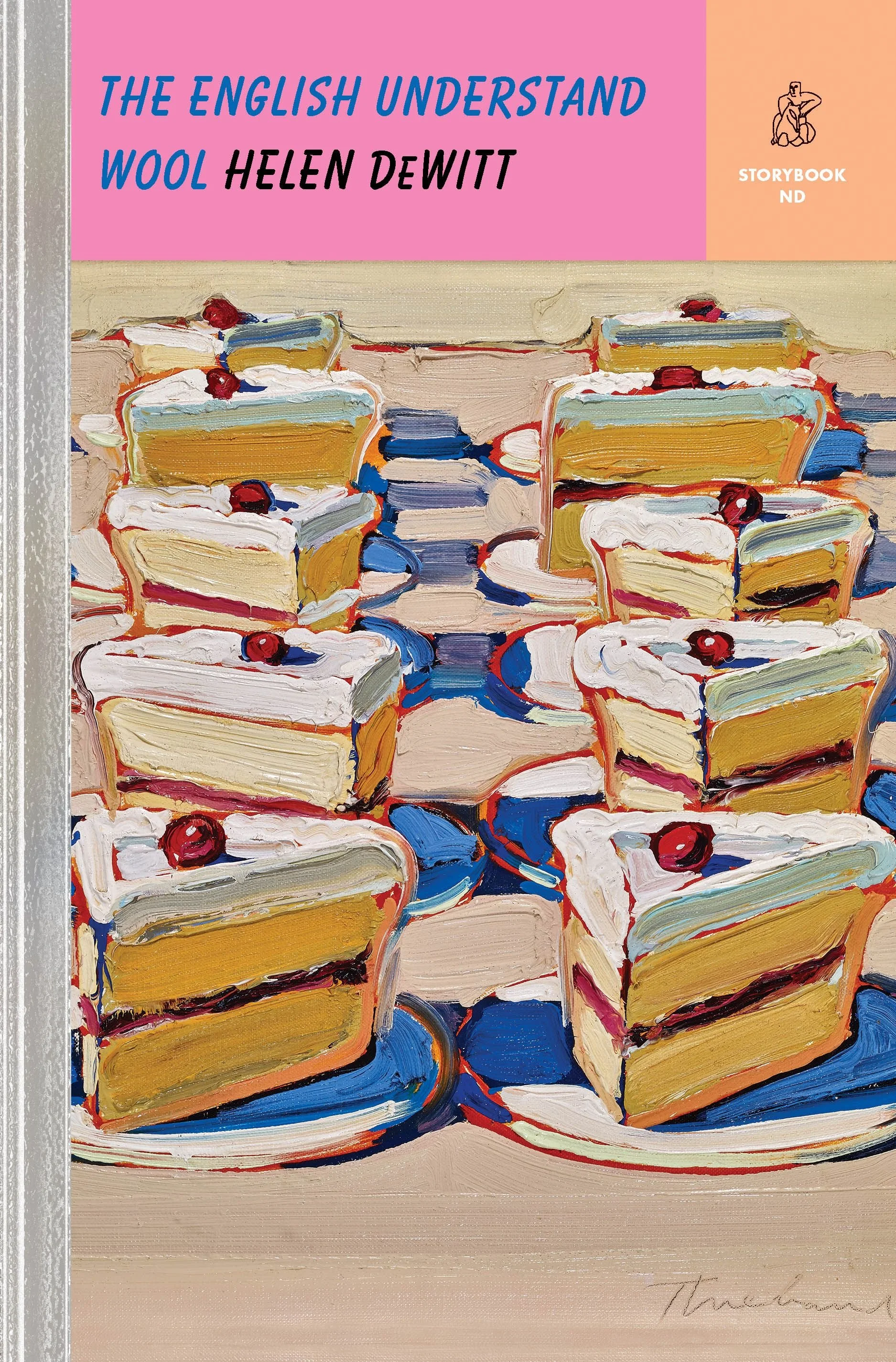
Maman was exigeante — there is no English word-and I had the benefit of her training. Others may not be so fortunate. If some other young girl, with two million dollars at stake, finds this of use I shall count myself justified.” Raised in Marrakech by a French mother and English father, a 17-year-old girl has learned above all to avoid mauvais ton ("bad taste" loses something in the translation). One should not ask servants to wait on one during Ramadan: they must have paid leave while one spends the holy month abroad. One must play the piano; if staying at Claridge's, one must regrettably install a Clavinova in the suite, so that the necessary hours of practice will not be inflicted on fellow guests. One should cultivate weavers of tweed in the Outer Hebrides but have the cloth made up in London; one should buy linen in Ireland but have it made up by a Thai seamstress in Paris (whose genius has been supported by purchase of suitable premises). All this and much more she has learned, governed by a parent of ferociously lofty standards. But at 17, during the annual Ramadan travels, she finds all assumptions overturned. Will she be able to fend for herself? Will the dictates of good taste suffice when she must deal, singlehanded, with the sharks of New York? A testament to the power of false friends. [Glazed hardback]
"A staggeringly intelligent examination into the nature of truth, love, respect, beauty and trust. This is that rare thing, or merle blanc, as maman might say: a perfect book. I've read it four times, which you can do between breakfast and lunch." —Nicola Shulman, The Times Literary Supplement
"This is a short, sharp sliver of a story-only 64 pages — but every single word is pitch perfect. Think of it as the literary equivalent of a shot of ice-cold vodka-Belvedere or Grey Goose only, of course." —Lucy Scholes, Prospect
"A wonderfully sideways take on the complex intersections between class, wealth and power — intersections that invariably favour those who have most of them already." -- Alex Clark, The Observer
"The English Understand Wool is Helen DeWitt's best and funniest book so far — quite a feat given the standards set by the rest of her work. Its pages are rife with wicked pleasures. It incites and rewards re-reading." —Heather Cass White, The Times Literary Supplement


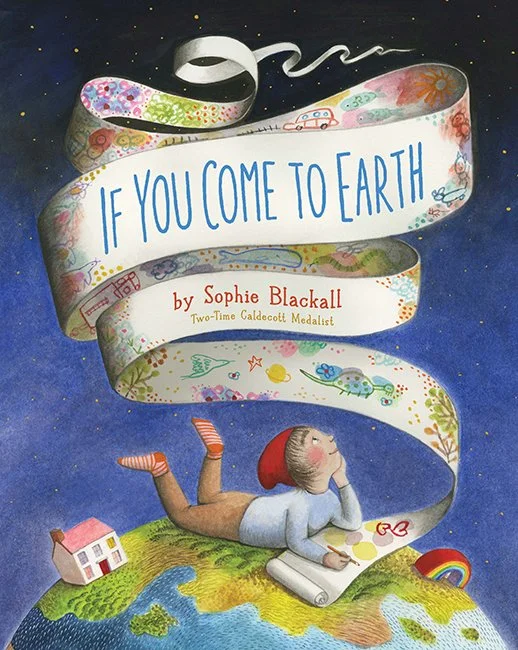
If You Come to Earth by Sophie Blackall $45
Inspired by the thousands of children she has met in travels around the word for Save the Children and UNICEF, two-time Caldecott winner Sophie Blackall has crafted an ambitious yet child-accessible book of ... well ... everything. Simultaneously funny and touching, it is a call to each of us to take care of both the Earth and each other, and to celebrate the many way that people live their lives on earth. [Hardback]
>>Look inside!


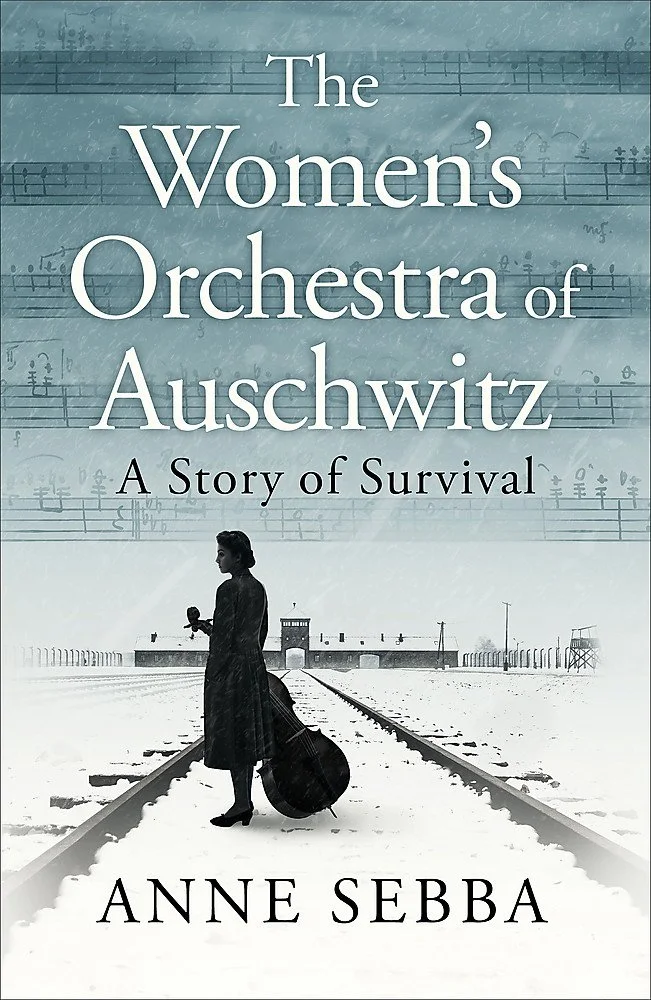
The Women’s Orchestra of Auschwitz by Anne Sebba $40
In 1943, German SS officers in charge of Auschwitz-Birkenau ordered that an orchestra should be formed among the female prisoners. Almost fifty women and girls from eleven nations were drafted into a hurriedly assembled band that would play marching music to other inmates, forced labourers who left each morning and returned, exhausted and often broken, at the end of the day. While still living amid the most brutal and dehumanising of circumstances, they were also made to give weekly concerts for Nazi officers, and individual members were sometimes summoned to give solo performances of an officer's favourite piece of music. It was the only entirely female orchestra in any of the Nazi prison camps and, for almost all of the musicians chosen to take part, being in the orchestra was to save their lives. What role could music play in a death camp? What was the effect on those women who owed their survival to their participation in a Nazi propaganda project? And how did it feel to be forced to provide solace to the perpetrators of a genocide that claimed the lives of their family and friends? Sebba traces these tangled questions of deep moral complexity with sensitivity and care. From Alma Rose, the orchestra's main conductor, niece of Gustav Mahler and a formidable pre-war celebrity violinist, to Anita Lasker-Wallfisch, its teenage cellist and last surviving member, Sebba draws on meticulous archival research and exclusive first-hand accounts to tell the full and astonishing story of the orchestra, its members and the response of other prisoners for the very first time. [Paperback]


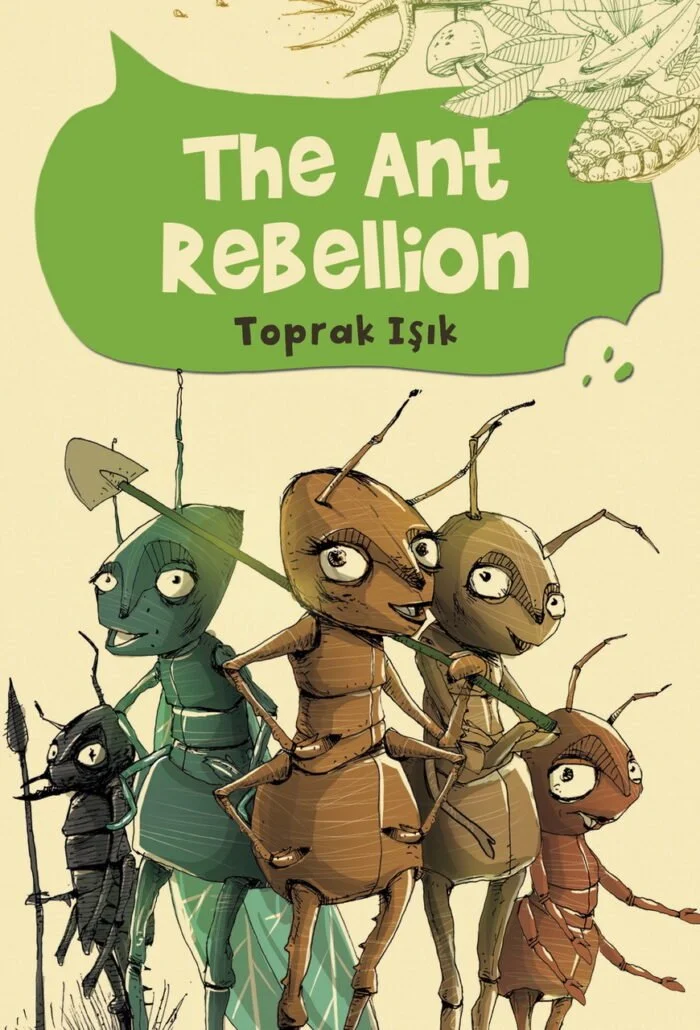
The Ant Rebellion by Toprak Işık (translated from Turkish by Alvin Parmar), illustrated by Sedat Girgin $26
Ants are famous for their hard work, but some ants prefer exploiting others rather than doing it themselves. One day the warrior ants discover the nest of the farmer ants and set out to make the farmers their slaves — but they don’t count on the spirit of resistance from the farmers. The Ant Rebellion is a universal allegory about freedom, resistance and change, featuring memorable characters from the loving couple Honey and Glasswing to the hilarious beetle Loafer. [Paperback]


In Venezuela by Michael Palin $45
In February 2025, Michael Palin travelled to Venezuela to get a sense of what life is like in one of South America's most culturally rich, vibrant but also troubled nations. In the journal he kept during his trip he gives a vivid account of the towns and cities he visited, the landscapes he travelled through, and the people he met. Illustrated throughout with colour photographs taken on the trip, and permeated with his warmth and humour, this is a vivid and varied portrait of a complex country. [Hardback]


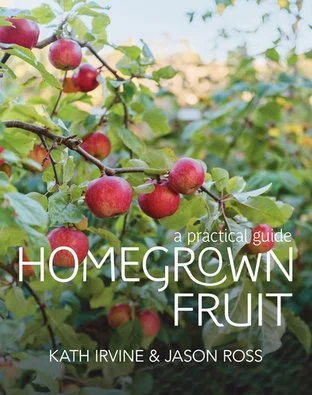
Homegrown Fruit: A practical guide by Kath Irvine and Jason Ross $58
Kath and Jason take you step by step to create a naturally, healthy orchard that thrives with minimal effort. You’ll learn how to choose the right varieties, plan a productive layout, build a living soil, assess tree health, and confidently prune, train, and care for your trees year-round. Real-world examples, sample plans and down-to-earth advice provide simple, practical solutions for gardens of every shape, size and climate. This inspiring, accessible book is perfect for beginners setting up a new orchard, busy people who want homegrown fruit without the fuss, and seasoned growers seeking deeper knowledge. Kath and Jason have over 25 years experience designing and managing home orchards in a diversity of environments across Aotearoa. The book's focus is on creating a healthy setup and choosing well-suited varieties. From this solid foundation fruit trees flourish, care is easy, there are a lot fewer pests and diseases and, most importantly, growing is fun! [Paperback]

 
VOLUME BooksNew releases