Read our latest newsletter.
Find out what we’ve been reading.
Browse our fiction sale.
Be part of a community of readers.
27 March 2026

Read our latest newsletter.
Find out what we’ve been reading.
Browse our fiction sale.
Be part of a community of readers.
27 March 2026
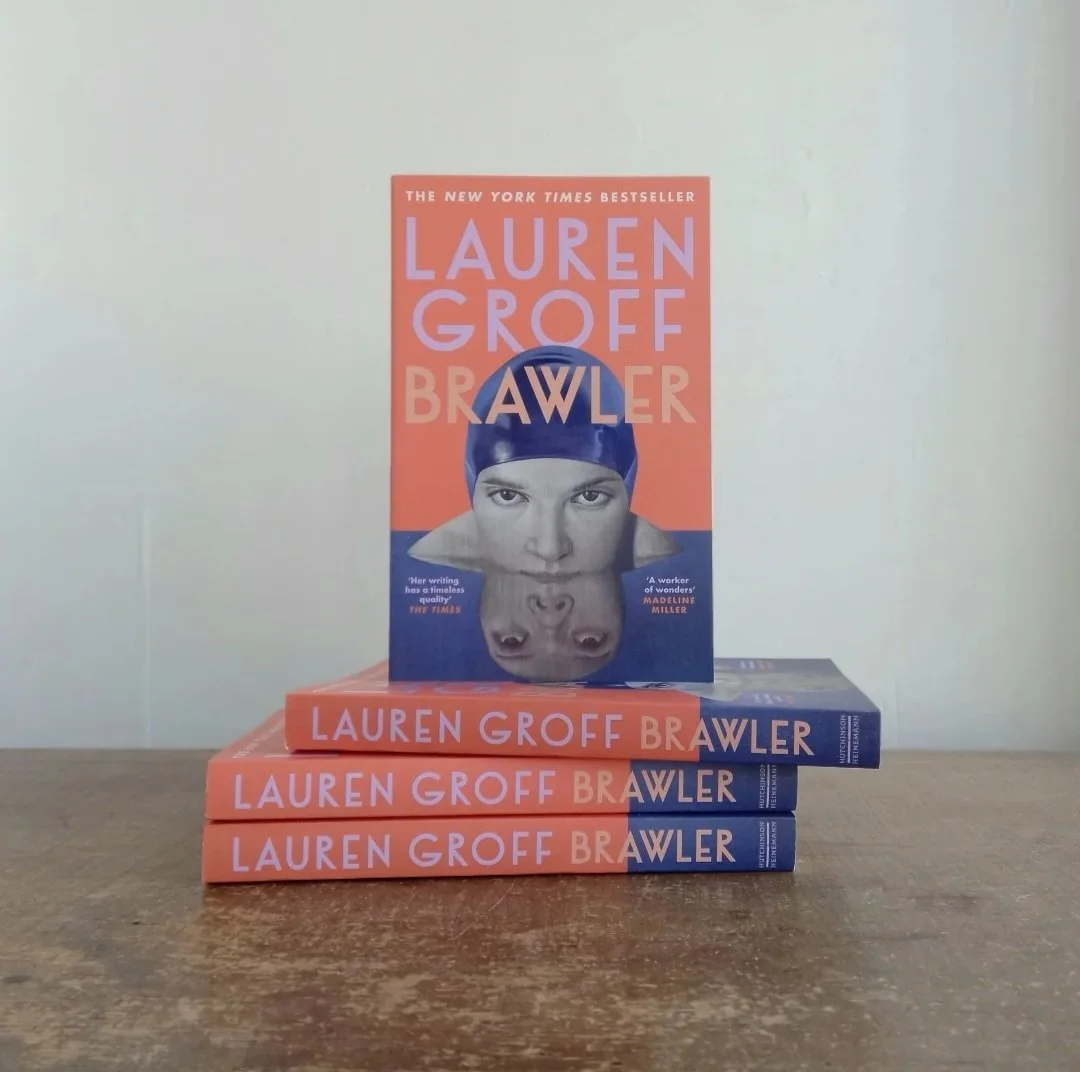
Precise, surprising and provocative, anchored by profound insight into human nature, the stories in Brawler reveal the repeated fracture points between love and fear, compassion and violence, reason and instinct, altruism and survival. At what point do circumstances cause us to act in a way we would not have expected?
In a recent article Colm Tóibín writes on the mechanism of creating a short story, where a moment, a snippet of conversation, a chance encounter can be a trigger which, combined with memories and experiences, consciously or subconsciously, builds a whole around this small initial encounter. Lauren Groff is an excellent short story writer, who is seemingly able to pluck a moment, an idea or a character from the air and in a startling few sentences hook you, building a connection to the fate of the protagonist. I like Groff’s novels very much, (The Vaster Wilds was epic and beautiful) but I enjoy her short stories immensely. Her award-winning collection Florida was all seething swamp with its geophysical focus. Brawler is less geophysical in nature, although it does have some very specific touchpoints of place moving across various American states from New England to California. Its variety isn’t just in landscape but also across age and class, varying from the impoverished to the wealthy, the very young, with several child protagonists, as well as those in mid-life figuring prominently. The nine stories in Brawler focus, successfully, on the interior landscapes of their characters and how each reacts to circumstances, often but not always, forced on them. (Some of the protagonists make their own special hells.) What decisions will one make, and how will these decisions impact on others, especially those closest and dearest? The opening story, ‘The Wind’, is powerful. You are swept up in the narrative of a young child and their sibling as they navigate leaving home. There is a Hansel & Gretel moment as they quietly leave the house. There’s a gentle interlude, before you realise that violence underpins their actions. A violence at first abstract, before Groff shakes the very foundations you depend on, the ability to escape. It’s a story that explores trauma and its persistence as it reaches up through generations, resurfacing to cause chaos. In a recent interview Groff talks about rage, and defines it as a force for good if it’s laser-focused and if not, a miasma. For context, Lauren Groff lives in Florida, in a blue spot in the red state; and was a competitive swimmer. Many of the stories include swimming and water, the good and bad of it, from pleasurable immersion to the threat of flood, or the danger of the snow storm. The brilliant story ‘Brawler’ features a feisty teen, a brawler in every way, who is fearless in her high dives, but as we turn to her arrival home at the close of the story, she is powerless to help her mentally and physically unwell mother. Here our empathy is broken apart. Like many of the stories we are asked to question where our loyalties lie, and the answer isn’t always clear. Victims become perpetrators and vice versa, those we are wary or dismissive of gain our empathy. Ethical questions arise about what is good and what is bad, as we encounter situations that challenge our understanding and often, not always, leave us hanging with a question mark. ‘What’s the Time, Mr. Wolf?’ Is a perfect example of this quandary where we follow the boy, Chip, from childhood to middle age. The youngest sibling in a banking tycoon family, he has skimmed along on his family name and male-ness, never quite fitting, but getting by, despite the raw deal his mother and sister had been handed. While they’ve learnt to get by and succeed in their own wits, he’s not so competitively inclined. After a stint in the family bank he’s sent to the summer house to contemplate his future and dry out, although nobody really talks about the alcoholic tendencies within the family, nor the unspoken impact of the subtle violence of bullying that impregnates the interactions within this family. There is a flicker of hope, but will it be extinguished by the choices Chip makes? The nine stories in Brawler are incisive , pin-prickingly good, shocking in parts yet emotionally geared to make us sit up and see the desire in humans to do the right thing despite our fallibility. It explores the dark and light in all of us, and our battle to understand violence, to alleviate trauma, if we can — to draw on our compassion, even when this is an imperfect thing, in the aid of another, or to ensure our own survival.
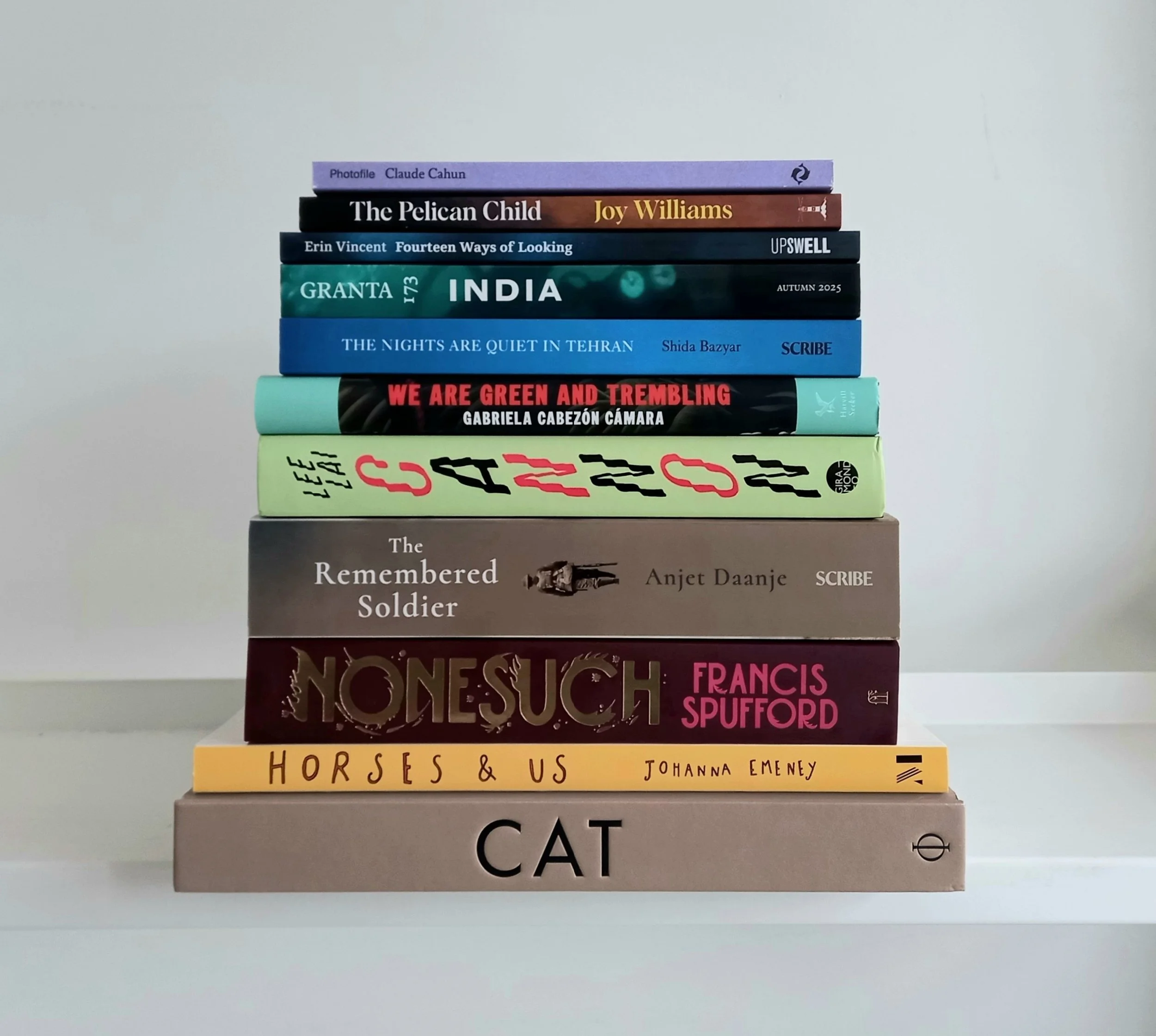
All your choices are good! Click through to our website (or just email us) to secure your copies. We will dispatch your books by overnight courier or have them ready to collect from our door in Church Street, Whakatū.
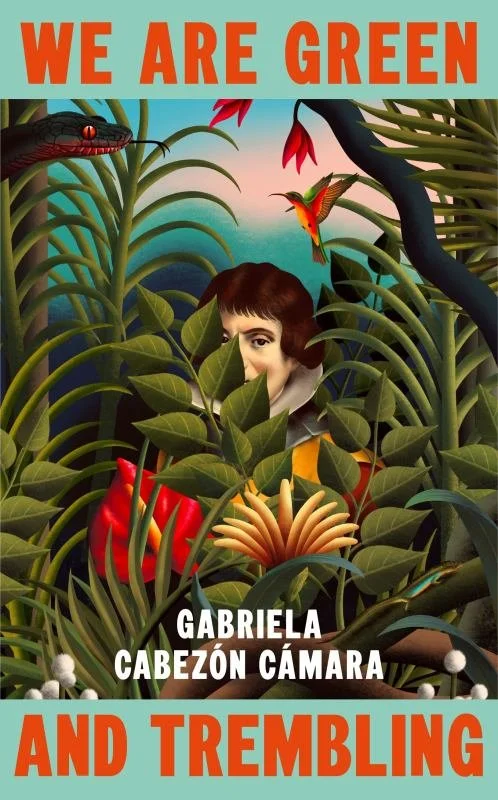
We Are Green and Trembling by Gabriela Cabezón Cámara (translated from Spanish by Robin Myers) $50
From deep in the wilds of the New World, Antonio writes a letter to his aunt, the prioress of the same Basque convent he escaped as a young girl. Since transforming into Antonio, he has had monumental adventures and taken on numerous guises. He has been a mule driver, shopkeeper, soldier, cabin boy and conquistador. He has wielded his sword and slashed with his dagger. Now, hiding in the jungle and hounded by the army he deserted, Antonio is looking after two Guarani girls he rescued from enslavement. But the New World has one more metamorphosis in store, which might save them all from extinction. Based on the life of Antonio de Erauso, a real figure from the Spanish conquest, We Are Green and Trembling is a masterful criticism of religious tyranny and the mistreatment of women and indigenous people. This queer, baroque, tender and surreal novel conveys glimmers of hope for the future within the brutal colonial history of Latin America — finding in the rainforest a magical space where transformation is not only possible but necessary. A beautifully written, sumptuous and surreal historical reimagining of one of South America's best-known trans men, from the author of The Adventures of China Iron. [Hardback]
Long-listed for the 2025 International Booker Prize.
”A hallucinatory, innocent, fanciful and redemptive book. Cabezon Camara's historical fiction plays out like confession or revelation, a piece of real-unreal colonial apocrypha, glowing white hot, dancing like the heart of a pyre.” —Financial Times
”Sumptuously translated by Robin Myers, We Are Green and Trembling is strikingly relevant to the present day. Cabezon Camara uses history to illuminate and interrogate threats to trans representation and, in parallel, to interrogate the enduring, humanising effects of colonisation... [an] epic in miniature... a mercurial tale for all time.” —Irish Times
”So sharp, so urgent, so brave. Gabriela Cabezon Camara is one of the most authentic voices writing in Spanish today, and among her many talents is one that's especially hard to find: not only does she challenge and incite us, not only does she confront the darkness, but she also gives us in return the subversive courage to think of ourselves as more human, more alive, and more luminous than ever.” —Samanta Schweblin
”Profoundly resonant with our current moment, We Are Green and Trembling offers a searing critique of modernity's colonial echoes: a resurgence of far-right ideology, cultural erasure, and gender-based oppression. A story that is not only inclusive but also redemptive-anchored in the richness of language, the beauty of the natural world, and the power of storytelling to reclaim what history tries to erase.” —Chicago Review of Books
>>Read and extract.
>>The germ and the translation.
>>The importance of representation.
>>Writing like a river.
>>Letting the jungle win.
>>Other books listed for the 2026 International Booker Prize.
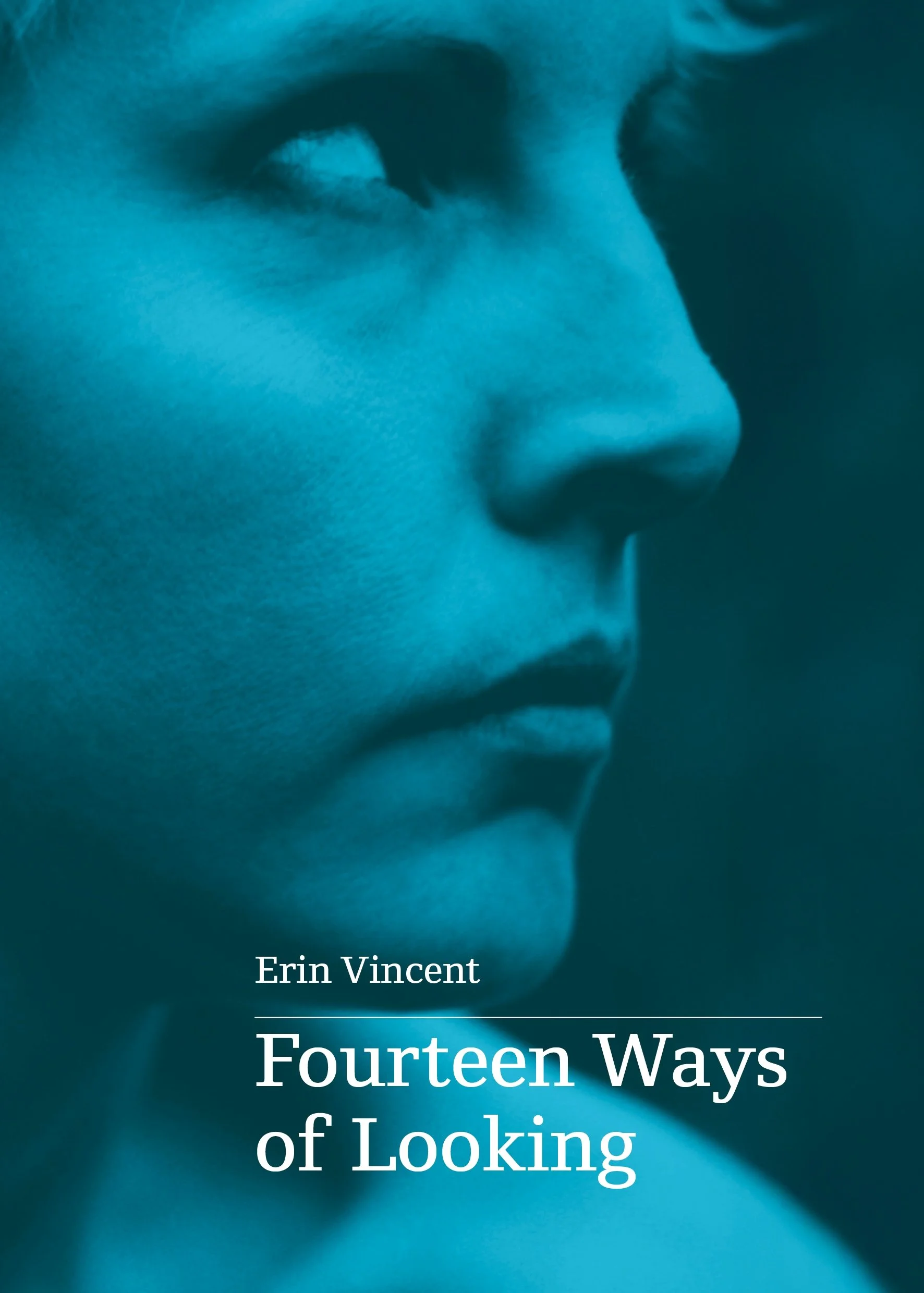
Fourteen Ways of Looking by Erin Vincent $40
When Erin Vincent was fourteen her parents were struck down by a truck driver. Years later, the number fourteen reverberates – in books and films and art and music and in the lives of the people who made them. Finding in these places not comfort or consolation but an infinite network of correspondences, Fourteen Ways of Looking becomes a paradigm for the act of writing itself. [Paperback]
”Fourteen Ways of Looking is a deep dive into the moment after which nothing is the same — life as afterlife, and yet it’s what we have. Vincent’s effort is both psychological and literary: trying to wrangle meaning from an event that may have none, or may hold it all. And what then, of her autonomy to make her own life? In her efforts to free herself by going back to the source of trauma, she is both Odysseus and Euridice, damned and saved. A remarkable achievement.” —Anna Funder
”Erin Vincent’s book is magnificent, simply one of the best books I’ve read in ages. I read it in a reverie of blissed-out, horrified amazement. It will be compared to Markson, but it’s better than Markson – more formally disciplined, more cold-blooded in its self-scrutiny. I can easily imagine this book becoming a cultural touchstone like Max Porter’s Grief Is the Thing with Feathers or Maggie Nelson’s Bluets.” —Sarah Manguso
”Fourteen — for Erin Vincent — is the age at which her self was formed, and this text is itself an astonishing formal experiment. The number fourteen becomes uncanny and arbitrary, both divine symbol and violent accident, as she remembers her younger self and tries to find patterns in chaos. An incredible achievement: unclassifiable, humane and haunting. I was moved to tears.” —Clare Pollard
”Through a structure and project that holds the book to the tightest of attention, Vincent brings to this astute exploration of personal grief the world’s grief, the reader’s grief, the planet’s grief. All of time concertinas into these perfectly formed fragments that interrogate the number fourteen through the lens of how we are changed by the things of life that stop us in our tracks. However, I think the final message of Vincent’s magnificent work is the things we notice once we have been changed and the ways these act as markers to our inevitable tentative steps into the rest of life. This is an astounding work — resonant, intelligent and generous.” —Pip Adam
>>The presence of an orphan.
>>Also available in this edition.
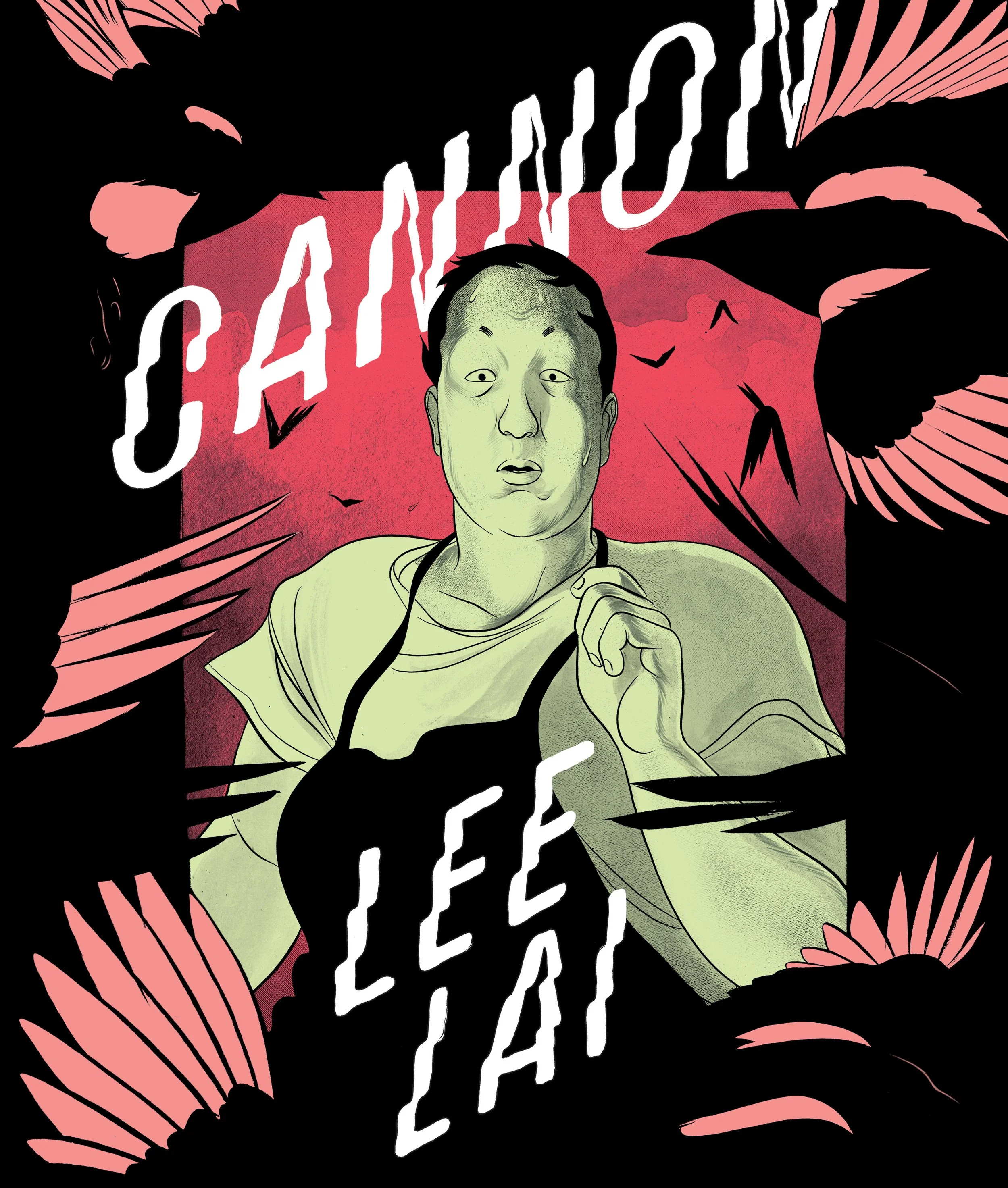
Cannon by Lee Lai $45
A funny, dark, emotionally turbulent slice of friendship strife. We arrive to wreckage: a restaurant smashed to rubble, with tables and chairs upended riotously. Under the swampy nighttime cover of a Montreal heatwave, we meet our protagonist, Cannon, dripping in beads of regret sweat. She was supposed to be closing the restaurant for the night, but instead, she destroyed it. The horror-scape left in her wake is not unlike the films Cannon and her best friend, Trish, watch together. Cooking dinner and digging into deep cuts of Australian horror movies on their scheduled weekly hangs has become the glue in their relationship. In high school, they were each other's lifeline — two queer second-generation Chinese nerds trapped in the suburbs. Now, on the uncool side of their twenties, the essentialness of one another feels harder to pin down. Yet when our stoic and unbendingly well-behaved Cannon finds herself very uncharacteristically surrounded by smashed plates, it is Trish who shows up to pull her out. In Cannon, the full palette of a nervous breakdown is just a part of what is on offer. Lai's sharp sense of humour and sensitive eye produce a story that explores the intimacy of queer friendship and weight of family responsibility, and breaks open the question of what we owe both to each other and to ourselves. [Hardback]
>>Look inside!
>>A growing fondness for confrontation.
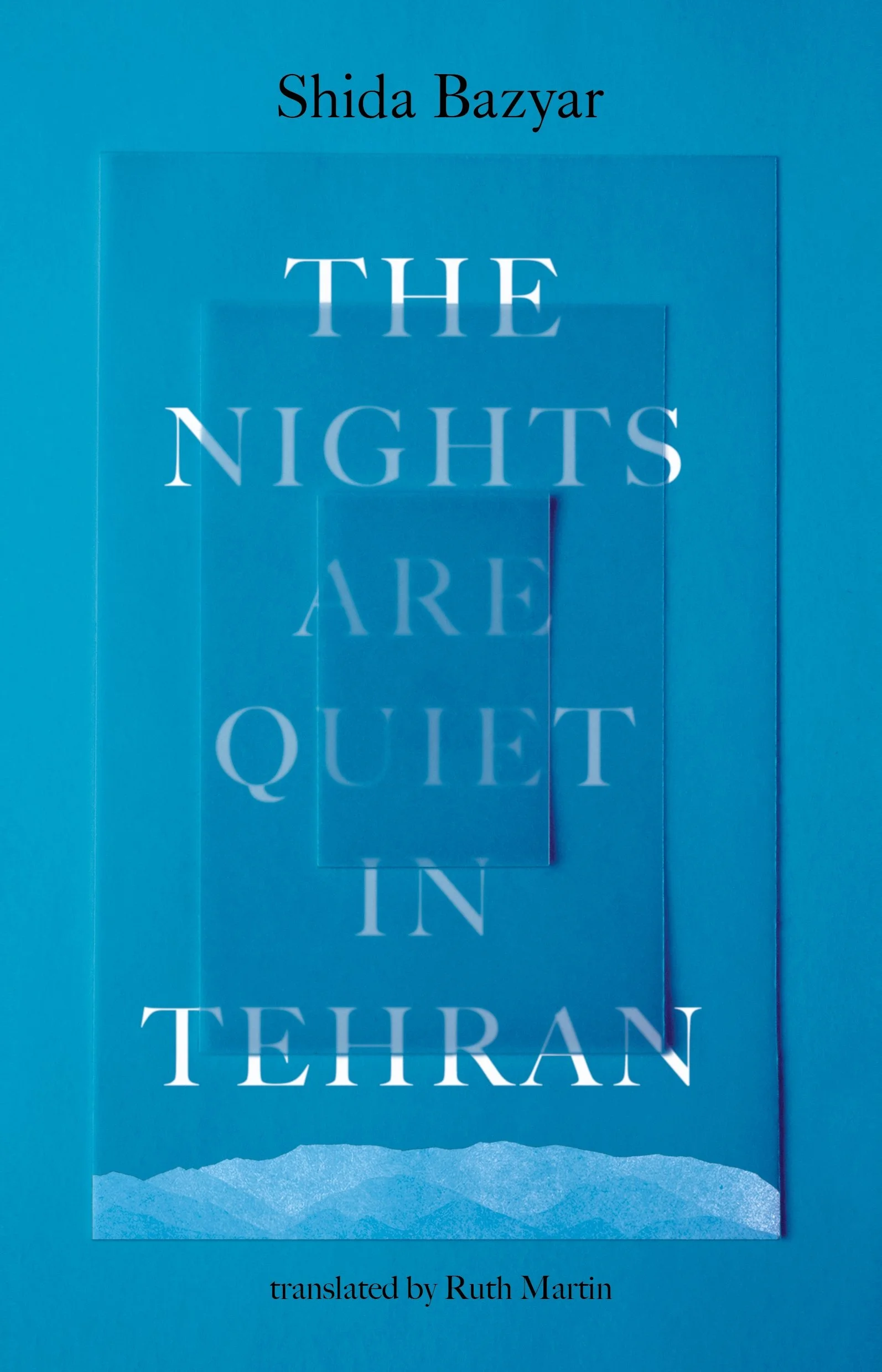
The Nights Are Quiet in Tehran by Shida Bazyar (translated from German by Ruth Martin) $37
A polyphonic novel of one family's flight from and return to Iran. 1979. Behsad, a young communist revolutionary, fights with his friends for a new order after the Shah's expulsion. He tells of sparking hope, of clandestine political actions, and of how he finds the love of his life in the courageous, intelligent Nahid. 1989. Nahid lives her new life in West Germany with Behsad. With their young children, they spend hour after hour in front of the radio, hoping for news from others who went into hiding after the mullahs came to power. 1999. Laleh returns to Iran with her mother, Nahid. Between beauty rituals and family secrets, she gets to know a Tehran that hardly matches her childhood memories. 2009. Laleh's brother Mo is more concerned with a friend's heartbreak than with student demonstrations in Germany. But then the Green Revolution breaks out in Iran and turns the world upside down. [Paperback]
Long-listed for the 2026 International Booker Prize.
"The Nights Are Quiet in Tehran fits the family novel mold in many ways: it spans generations, explores inherited trauma, and depicts the effects of politics on a family. This highly political and touching novel gives a great insight into the political situation in Iran. In translating this vision of authorial omnipotence — of an imagined freedom — Ruth Martin brings Shida Bazyar's politically urgent and thematically significant voice to English-speaking readers ... creating an experience that feels both immediate and compelling." —Ankita Harbola, Reading in Translation
"Bazyar's stories strike at the aching heart of exile. A pulsing longing for a better future lingers from its first page to its last. A quietly beautiful exploration of the trauma of losing one's homeland to a savage regime, the novel is testament to how hope and the revolutionary spirit endure in the face of crushing tyranny, how courage cannot be fully stamped out. It lies dormant, awaiting a time when it can again ignite new acts of bravery, new waves of revolution." —Rhoda Kwan, The Saturday Paper
>>Read an extract.
>>”The more we read, the less suseptible we will be to easy answers.”
>>Other books listed for the 2026 International Booker Prize.
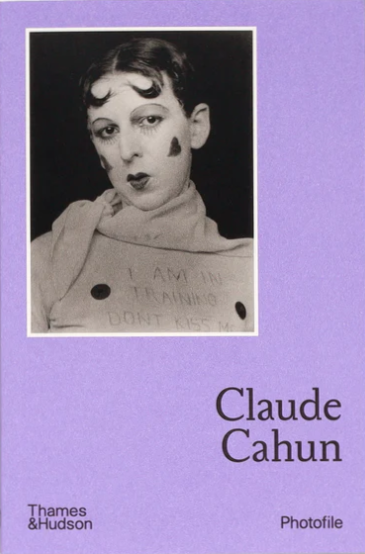
Claude Cahun: Photofile by François Leperlier $35
The perfect primer on the surrealist writer and photographer Claude Cahun. Claude Cahun (1894-1954), the chosen name of the artist born Lucy Schwob, was best known in their lifetime as a writer but built up a remarkable body of photographic work that only came to prominence after their death. Politically active and involved with a wide circle of artists and intellectuals, including the Surrealists, Cahun followed their own rules in both life and art. They are best known for their strikingly staged self-portraits, in which they used costumes, makeup and technical effects to tackle themes of identity and self-representation. Their love of symmetry, mirroring, repurposing and retouching was also reflected in their approach to other styles of photography, including portraiture, photomontage and still-life tableaux. Whether working alone or in collaboration with their life partner Marcel Moore (born Suzanne Malherbe), Claude Cahun was a pioneering figure in the aesthetics of modernity who never stopped crossing boundaries of gender and genre. The breadth of work in this selection shows their experiments on many fronts, anticipating photographers who followed them, including Cindy Sherman and Francesca Woodman. [Paperback with French flaps]
>>Look inside!
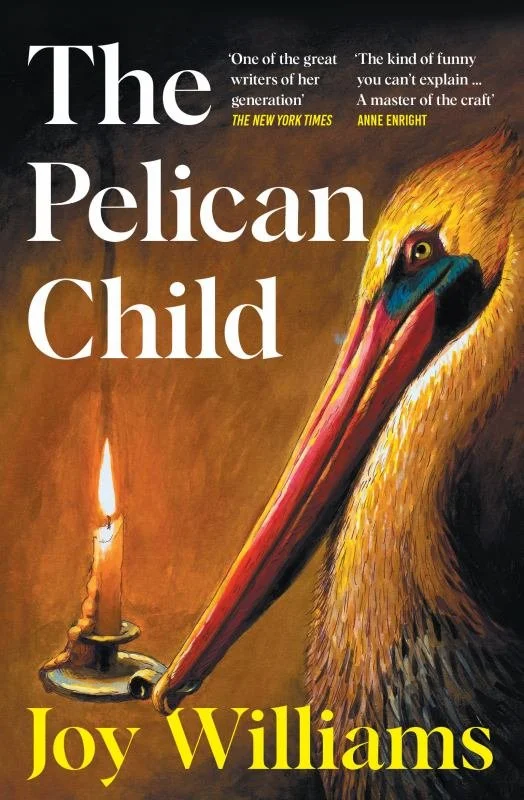
The Pelican Child by Joy Williams $30
Lauded by many as the best story writer of our time, Joy Williams returns with a taut collection that responds to our modern dilemmas with her signature dry wit and deftness of touch. In sinister and shifting landscapes, we meet souls lost and found: from the twin heiresses of a dirty industrial fortune, who must commit a violent act in recompense for their family's deeds, to a newly grown man who still revolves in a dreamscape of his childhood boarding-school innocence, to the ‘pelican child’, who lives with the bony, ill-tempered Baba Yaga in a little hut on chicken legs. [Paperback with French flaps]
”Pithy, spiky and defiantly strange. Williams hopes to reignite our sense of wonder in the world, so that we might be rallied to protect it. Here, at the height of her powers, she may just triumph.” —Financial Times
”My platonic ideal of a writer. Williams blends the real and fantastical and is very funny — sometimes cruelly so.” —Chris Power, Observer
”I've been a fan of Joy Williams since I first read her.” —Ali Smith
”Williams is the kind of funny you can't explain — a master of the craft.” —Anne Enright, Guardian
>>Read one of the stories.
>>And about that story!
>>Uncanny the singing that comes from certain husks.
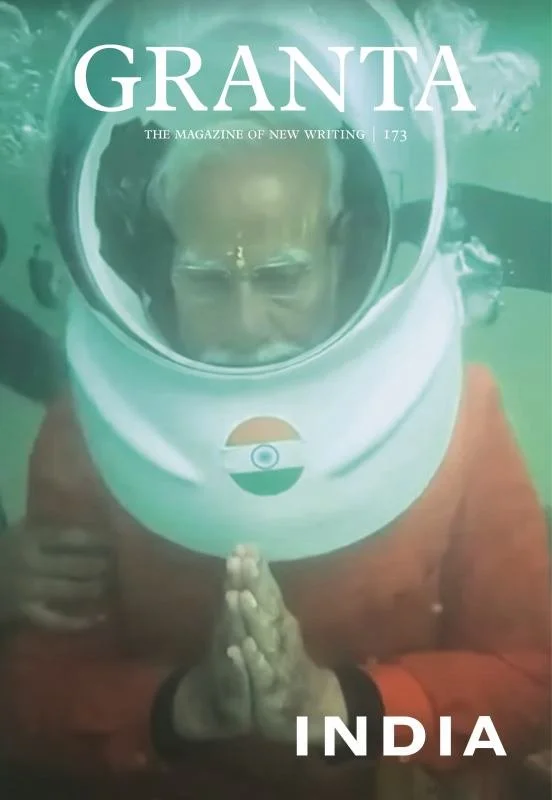
Granta 173: India edited by Thomas Meeney $35
India is familiar ground for Granta, having devoted two classic issues to the country, though much has changed since the last dispatch, published on the cusp of the Modi era. 173 features contemporary fiction and poetry in translation, as well as articles dedicated to the Indian space program; the bloody twilight of the Naxalites in Jharkhand; archaeology wars, Bollywood, jingoism, and national myth-making; the murder of Sikh separatist leader Hardeep Singh Nijjar in British Columbia; the delicate and fraught care for an ailing parent; as well as a historical introduction by the editor that situates contemporary controversies and aesthetic fault lines in perspective. Featuring non-fiction from Sujatha Gidla, Raghu Karnad, Karan Mahajan, Srinath Perur and Snigdha Poonam, as well as interviews with Salman Rushdie and Sanjay Subrahmanyam and a symposium on the languages of India. Fiction by Jeyamohan, Saharu Nusaiba Kannanari, Vivek Shanbhag, Geetanjali Shree and Devika Rege. Photography by Keerthana Kunnath, Yash Sheth (introduced by Ruchir Joshi) and Dayanita Singh (introduced by Amit Chaudhuri). And poetry by Arvind Krishna Mehrotra and Sumana Roy. [Paperbafck]
>>Read some extracts.
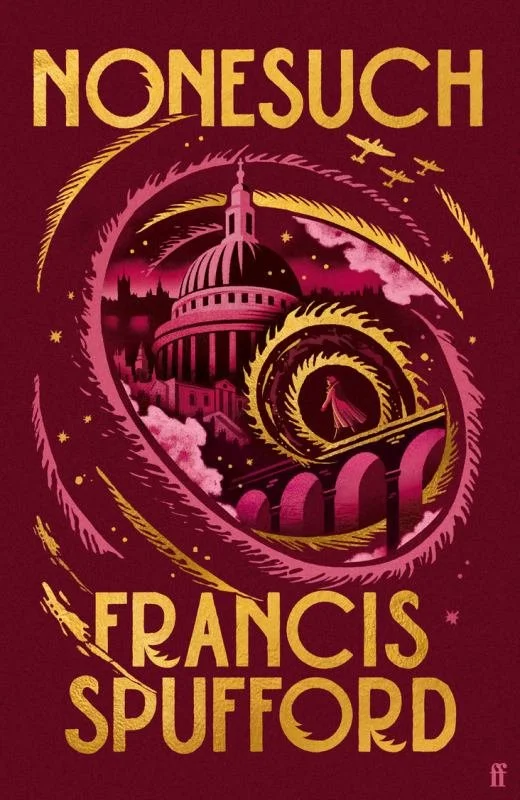
Nonesuch by Francis Spufford $38
It's the summer of 1939. London is on the brink of catastrophic war. Iris Hawkins, an ambitious young woman in the stuffy world of City finance, has a chance encounter with Geoff, a technical whizz at the BBC's nascent television unit. What was supposed to be one night of abandon draws her instead into an adventure of otherworldly pursuit — into a reality where time bends, spirits can be summoned, and history hangs by a thread. Soon there are Nazi planes overhead. But Iris has more to contend with than the terrors of the Blitz. Over the rooftops of burning London, in the twisted passages between past and present, a fascist fanatic is travelling with a gun in her hand. And only Iris can stop her from altering the course of history forever. [Paperback]
’What a joy! A novel with endless ingenuity and enormous heart.” —Kaliane Bradley
”One of the finest prose stylists of his generation.” —The Times
”One of the most original minds in contemporary literature.” —Nick Hornby
”A tremendously varied and surprising writer.” —Guardian
>>A dazzling sweep.
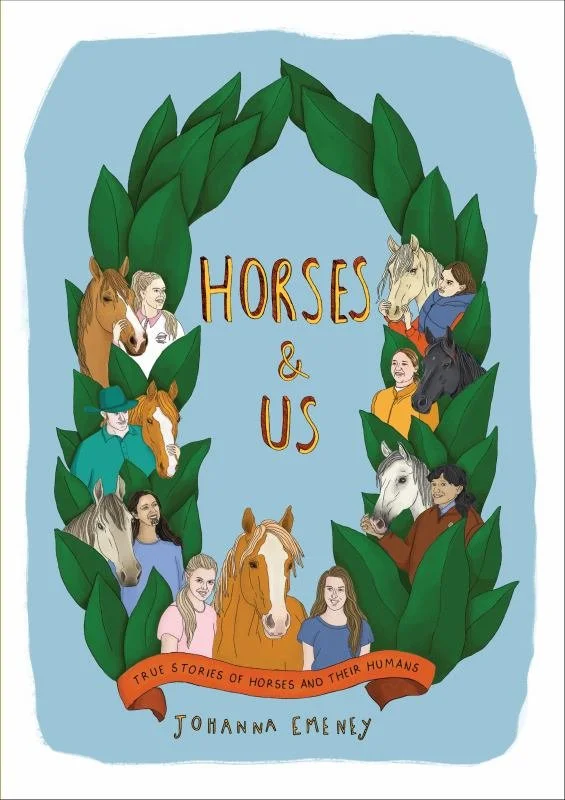
Horses and Us: True stories of horses and their humans by Johanna Emeney $37
Horses & Us brings together 23 true stories from across Aotearoa which show the incredible things that are achieved when humans and horses come together. With illustrations by award-winning artists as well as poems, artworks and photographs, Horses & Us is a big-hearted, moving and engaging celebration of the animals we love and the people who love them. [Paperback]
>>Look inside!
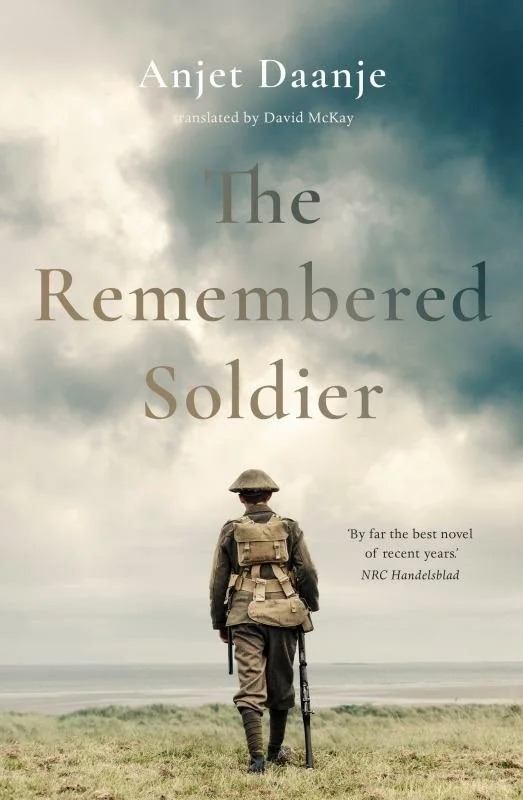
The Remembered Soldier by Anjet Daanje (translated from Dutch by David McKay) $46
Flanders 1922. After serving as a soldier in World War I, Noon Merckem has lost his memory and lives in a psychiatric asylum. Countless women, responding to a newspaper advertisement, visit him there in the hope of finding their spouse who vanished in battle. One day a woman, Julienne, appears and recognises Noon as her husband, the photographer Amand Coppens, and takes him home against medical advice. But their miraculous reunion doesn't turn out the way that Julienne wants her envious friends to believe. Only gradually do the two grow close, and Amand's biography is pieced together on the basis of Julienne's stories about him. But how can he be certain that she's telling the truth? In The Remembered Soldier, Anjet Daanje immerses us in the psyche of a war-traumatised man who has lost his identity. When Amand comes to doubt Julienne's word, the reader is caught up in a riveting spiral of confusion that only the greatest works of literature can achieve. [Paperback]
Long-listed for the 2026 International Booker Prize.
”A soldier without his memory; a wife in search of her missing husband — if you thought that all war stories were the same, not so. Some years after the Great War, Noon Merckem is found wandering in a field in Belgium, amnesiac and adrift. In time, he is claimed, but it is not so easy to return to an elusive past. In Daanje’s hands, and in McKay’s intuitive translation, the ravages and shellshock of the First World War are superbly traced – but the big question at the heart of this novel is how far humans will go in order to love, how fiercely they will fight for what they intend to have and to hold.” —International Booker Prize judges’ citation
>>Read an extract.
>>Reading about other people.
>>Other books listed for the 2026 International Booker Prize.
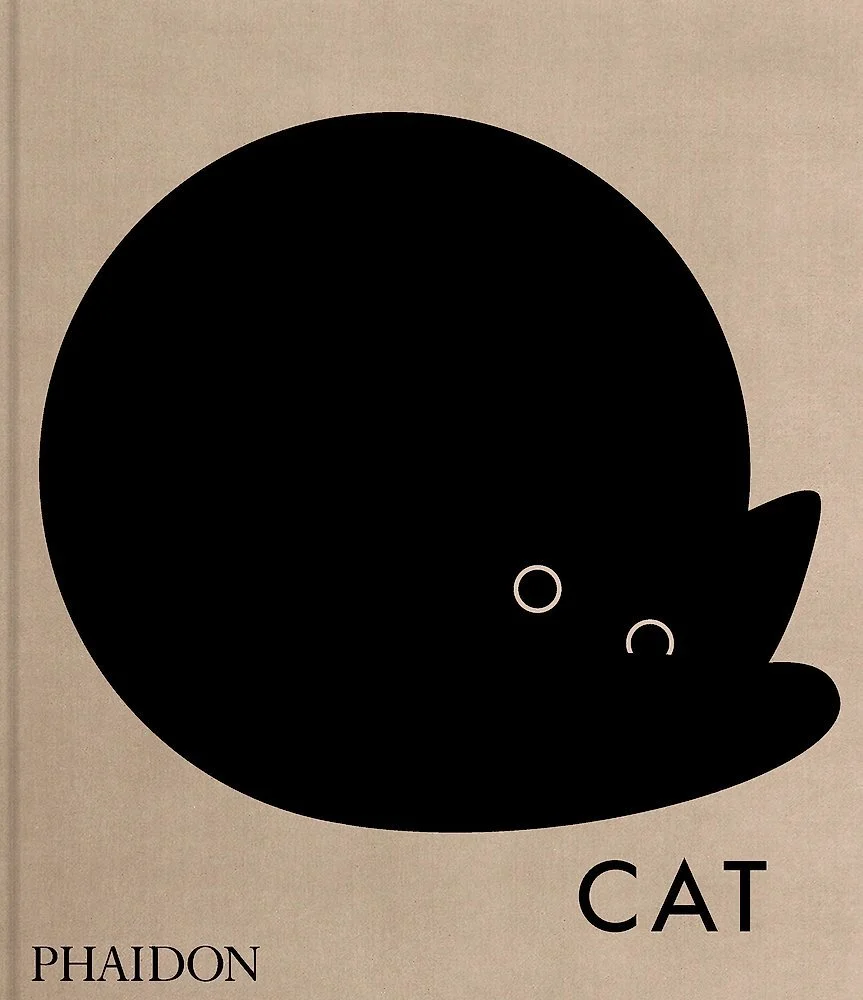
Cat $80
A stunning, large-format collection of more than 200 stunning images, Cat is a comprehensive yet playful celebration of the house cat in art and popular culture. Thoughtfully paired to reveal intriguing juxtapositions, these diverse works showcase the exciting ways the cat has inspired across time and cultures. From tabbies to tortoiseshells, Japanese maneki-neko lucky cats to artists pets, and ancient mosaics to contemporary couture, this book revels in the undeniable aesthetic appeal of our feline friends. Essays by Hannah Shaw, also known as Kitten Lady, and Leila Jarbouai trace humanity s symbiotic relationship with cats through the lens of visual culture and empathetically connect us to this cherished animal in images. Your cat wants this book in your house. [Hardback]
>>Look inside!
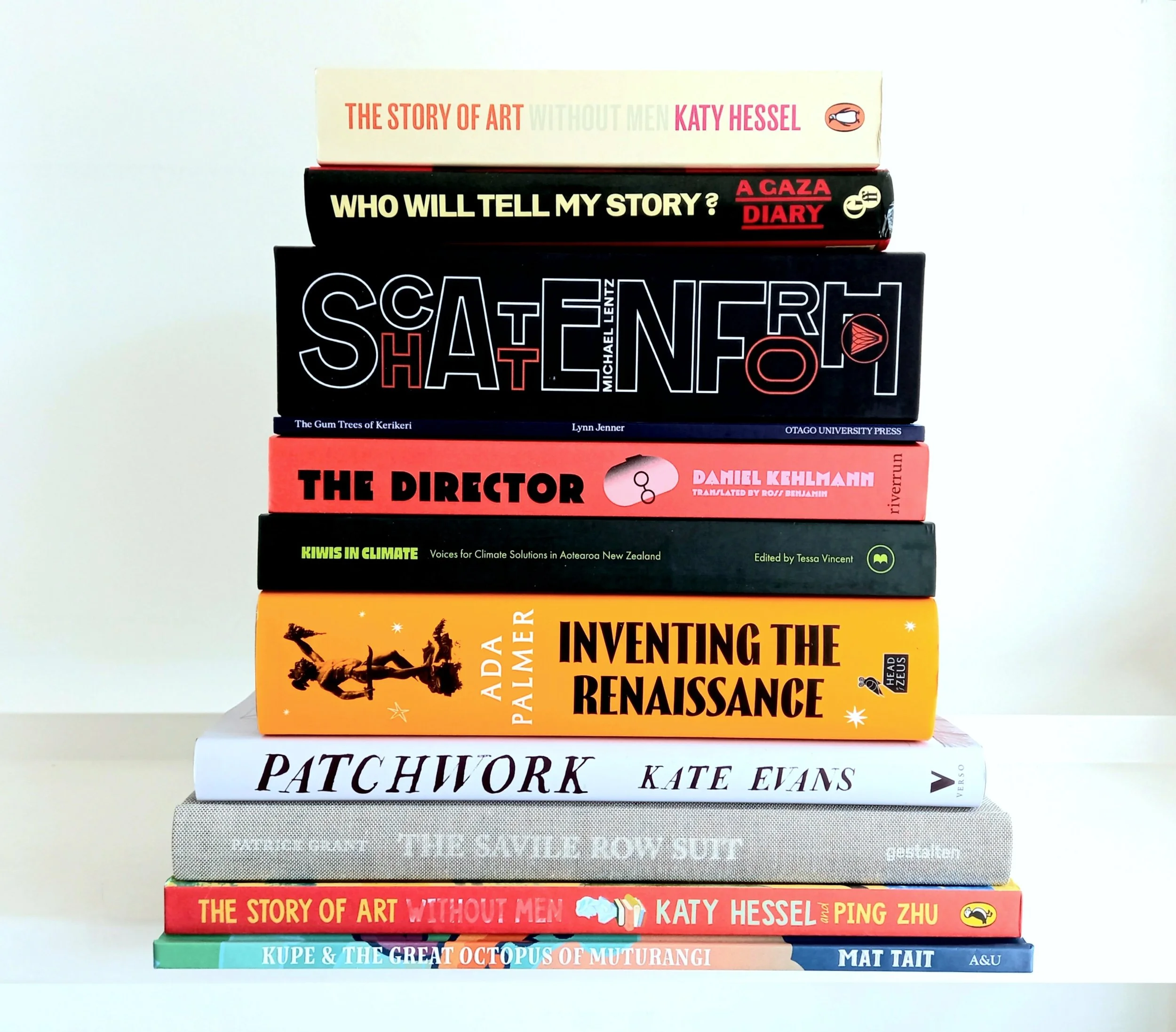
All your choices are good! Click through to our website (or just email us) to secure your copies. We will dispatch your books by overnight courier or have them ready to collect from our door in Church Street, Whakatū.
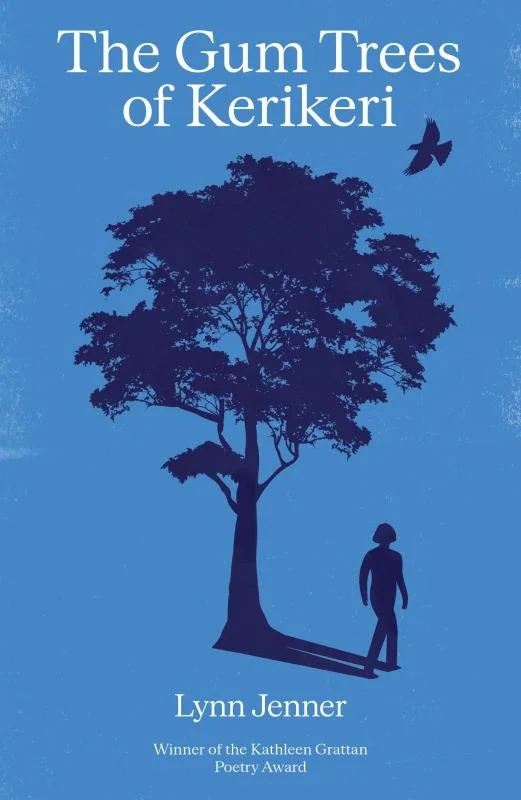
The Gum Trees of Kerikeri by Lynn Jenner $30
Grounded in the natural world and the community of the land the speaker lives on — an area in the far north of Aotearoa New Zealand that was once a kauri forest — this collection of prose poems weaves observations and encounters from daily life with musings on societal and environmental issues, memory, history, art and culture. The result is a deeply observant, reflective collection on that most challenging of constants: change. From the opening poem, Jenner traces how this land has been transformed since the late nineteenth century. Where kauri forest once stood there have been gumfields, orchards, dairy farms, lavender rows and now tourist accommodation. Humans and landscapes alike continue to be altered over time, but Jenner asks that we not forget the past. Across 56 finely tuned prose poems, Jenner’s technical restraint and precision allow her explorations to unfold with calm, measured power. She draws connections between people, place and creative practice, examining how time, art and memory shape our sense of belonging. The Gum Trees of Kerikeri is a thoughtful, sensitively balanced work that shows how close observation can uncover new understandings of the world and our own circumstances — even as the speaker sometimes doubts that any of it is useful in a world speeding towards catastrophe. Winner of the 2025 Kathleen Grattan Poetry Award. [Paperback]
”Jenner’s sensitive engagement with the world reminds us that poetry can be found in the smallest moments of our day-to-day lives and how such moments become intertwined with a much larger tapestry of human experience. —Chris Tse
>>On the up.
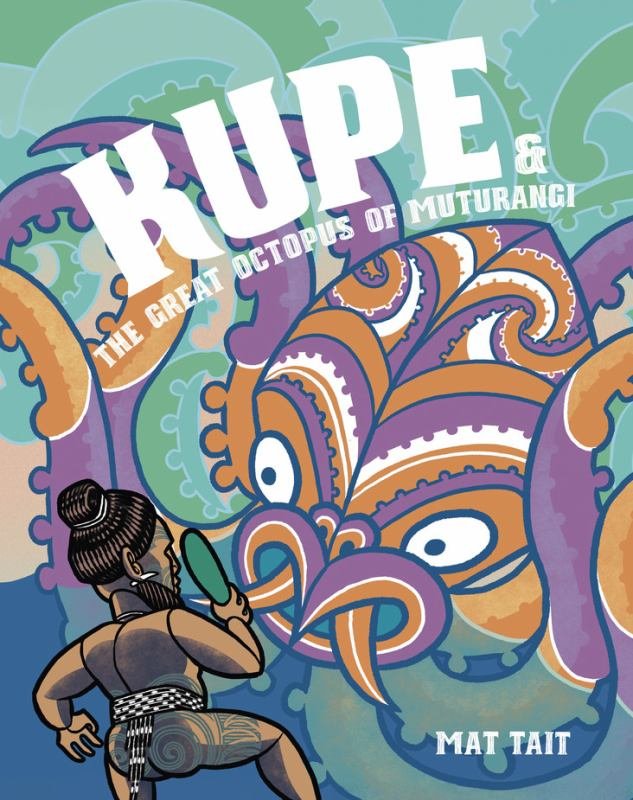
Kupe and the Great Octopus of Muturangi by Mat Tait $30
Kupe found that a huge, fearsome wheke was taking all the fish in the ocean and the people of Hawaiki had nothing to eat. So Kupe chased that wheke across Te Moana-nui-a-Kiwa. Finally Hine-te-Aparangi, Kupe's wife, saw land and a long white cloud: Aotearoa! Find out what happened when the wheke and Kupe had a massive battle (and why you should cover your eyes when passing certain rocks). [Hardback]
>>Look inside!
>>Mat Tait’s Te Wehenga was named the 2023 Margaret Mahy Book of the Year.
Schattenfroh by Michael Lentz (translated from German by Max Lawton) $58
A bizarre and troubling novel for our bizarre and troubling times — an intricate, metaphysical, ambitious, thousand-page ‘psychogeography of the self’ that both disrupts and elevates the 21st century vision of the novel. Our narrator is held in complete darkness and isolation. His endless thoughts are turned into the book we are reading — Schattenfroh — directed by none other than the narrator's mysterious jailer by the same name. Undulating through explorations of Renaissance art, the German reformation, time-defying esoterica, the printing process in the 16th century, Kabbalistic mysticism, and beyond, Schattenfroh is a remarkable book that, in turn, asks the remarkable of its readers. Interruptions, breaks, and annotations both buoy and deceive, and endless historical references, literary allusions, and wordplay construct a baroque, encyclopedic quest. [Paperback]
"One of the great, and greatly demanding, literary pleasures of the year." —The New York Times
"Schattenfroh is extremely long and prodigiously learned, with scenes — and even sentences — that veer from one century to another, and with a taste for literary and art historical in-jokes that might try the patience of even the most erudite reader. All the more impressive, then, is Max Lawton's translation, which renders Lentz's flinty though extravagant German into English sentences that are clear, nimble, and frankly full of beans, capturing the propulsive energy of the original text without sacrificing its difficulty." —New York Review of Books
"Michael Lentz's Schattenfroh attempts to tell the history of the annihilated world. Yet Lentz constantly prods his reader to ask who the author of that history is, and what they might be leaving out, despite their claims to completeness." —Cleveland Review of Books
"What does Schattenfroh do? Intrigue, frustrate, hypnotise, even — yes — entertain, after a certain point. What novels are supposed to do, in other words — which, we begin to realise, is not actually to create Presence but to carve around it." —Los Angeles Review of Books
"The best stuff in the book — the nightmare visionary parts whose eeriness is enhanced by the hypnotic state the book has put you in — are a kind of unconscious registration of the very scenario in which we find ourselves: the encroachment of ever more unforgivingly capitalist forms of cultural streamlining, of AI that purports to write and compose and make movies." —The Baffler
>>A fable about totalitarianism written in brain-fluid.
>>Devil and invention.
>>The genesis of Schattenfroh.
The Director by Daniel Kehlmann (translated from German by Ross Benjamin) $38
G.W. Pabst, one of cinema's greatest, perhaps the greatest director of his era: when the Nazis seized power he was filming in France, to escape the horrors of the new Germany he flees to Hollywood. But under the blinding California sun, the world-famous director suddenly looks like a nobody. Not even Greta Garbo, who he made famous, can help him. And thus, almost through no fault of his own, he finds himself back in his homeland of Austria, which is now called Ostmark. The returning family is confronted with the barbaric nature of the regime. But Goebbels, the minister of propaganda in Berlin, wants the film genius, he won't take no for an answer and makes big promises. While Pabst still believes that he will be able to resist these advances, that he will not submit to any dictatorship other than art, he has already taken the first steps into a hopeless entanglement. [Paperback]
”In The Director, Daniel Kehlmann performs a literary panning shot over the career of real-life filmmaker G. W. Pabst and charts the ways in which Nazi ideology leaked into the arts during Europe’s occupation. Where is the line between survival and collaboration? And can art survive the moral bankruptcy of its makers? It’s hard to imagine any writer tackling such hefty themes with lightness, yet Kehlmann does just this, writing compassionately, humorously and unsparingly from the perspectives of his complex characters, guiding the reader through the moral maze. Translator Ross Benjamin writes each shifting voice and set-up with the nuance they demand in a juggling act of wit and gravity that shouldn’t look this easy. Deeply intelligent, ambitiously structured and unputdownable.” —International Booker Prize judges’ citation
”A wonderful book about complicity and the complicity of art. It's also funny, and brilliant.” —Zadie Smith
”Daniel Kehlmann is shockingly brilliant, a writer of extraordinary range and grace. At times absurdist, at times horrifyingly realist, The Director asks where the moral duty of the artist resides, and how the narcissism of the artistic project can bleed into complicity.” —Lauren Groff
”The Director is engrossing and luminous, an epic act of historical imagination and an intimate parable about moral compromise and the seductions of art. After Tyll, I wasn't sure how Kehlmann could possibly top himself. He has. This book is a marvel” —Ayad Akhtar
”Daniel Kehlmann, the finest German writer of his generation, takes on the life of the eminent film director G. W. Pabst to weave a tragicomic historical fantasia that stretches from Hollywood to Nazi Germany, from Garbo to Goebbels, to show how even a great artist can make, and be unmade by, moral compromises with evil. A dazzling performance and a real page turner.” —Salman Rushdie
”An incomparably accomplished and inventive piece of fiction by one of the most intelligent novelists at work today.” —Jeffrey Eugenides
>>Read an extract.
>>The fate of the artist under totalitarianism.
>>Complicity.
>>Opening the door.
>>Some films of G.W. Pabst.
>>Other books long-listed for the 2026 International Booker Prize.
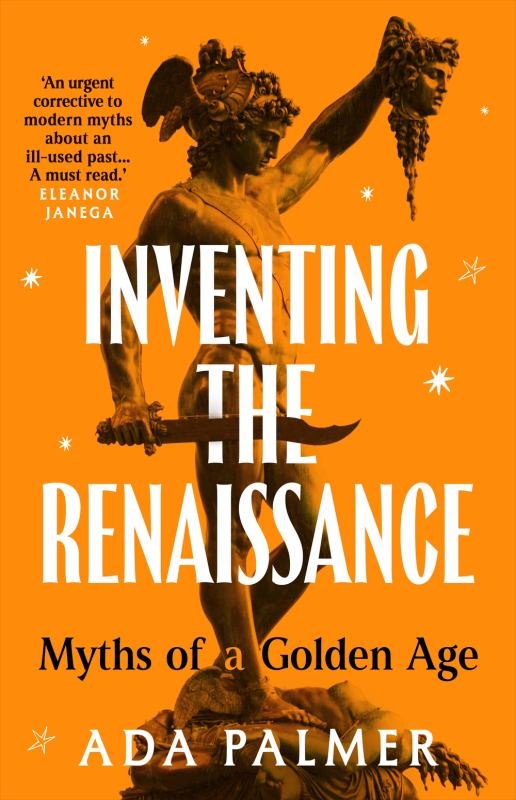
Inventing the Renaissance: Myths of a Golden Age by Ada Palmer $70
The Renaissance is one of the most studied and celebrated eras of history. Spanning the end of the Middle Ages to the beginning of modernity, it has come to symbolise the transformative rebirth of knowledge, art, culture and political thought in Europe. And for the last two hundred years, historians have struggled to describe what makes this famous golden age unique. In Inventing the Renaissance, Ada Palmer provides a fresh perspective on what makes this epoch so captivating. Her witty and irreverent journey through the fantasies historians have constructed about the period show how its legend derives more from later centuries' mythmaking than from the often grim reality of the period itself. She examines its defining figures and movements: the enduring legacy of Niccolò Machiavelli, the rediscovery of the classics, the rise of the Medici and fall of the Borgias, the astonishing artistic achievements of Michelangelo, Leonardo, and Cellini, the impact of the Inquisition and the expansion of secular Humanism. Palmer also explores the ties between culture and money: books, for example, could cost as much as grand houses, so the period's innovative thinkers could only thrive with the help of the super-rich. She offers fifteen provocative and entertaining character portraits of Renaissance men and women, some famous, some obscure, whose intersecting lives show how the real Renaissance was more unexpected, more international and, above all, more desperate than its golden reputation suggests. [Hardback]
”Inventing the Renaissance does something magical: it manages to take a tightly-held conviction (that there was a thing in European history called 'the Renaissance'), dismantle it with humor and intelligence, then put it back together as something different and more true to the past itself. But maybe more importantly, Palmer's expertise and storytelling helps us better understand how golden ages are imagined, and why rejecting those invented constructions of the past provides us with hope as we confront our own contemporary world. As she says herself: 'we can do better than the Renaissance.” —Matthew Gabriele
”An urgent corrective to modern myths about an ill-used past. Palmer has written a vital, absorbing and incredibly entertaining history of the so-called Renaissance. Challenging conventional wisdom, Inventing the Renaissance delves deep into the historical circumstances that have given rise to one of the most pervasive and frustrating narratives of the early modern period. It is a must read for all history enthusiasts.” —Eleanor Janega
>>Where did the idea of the Renaissance come from?
>>Golden and Dark Ages.
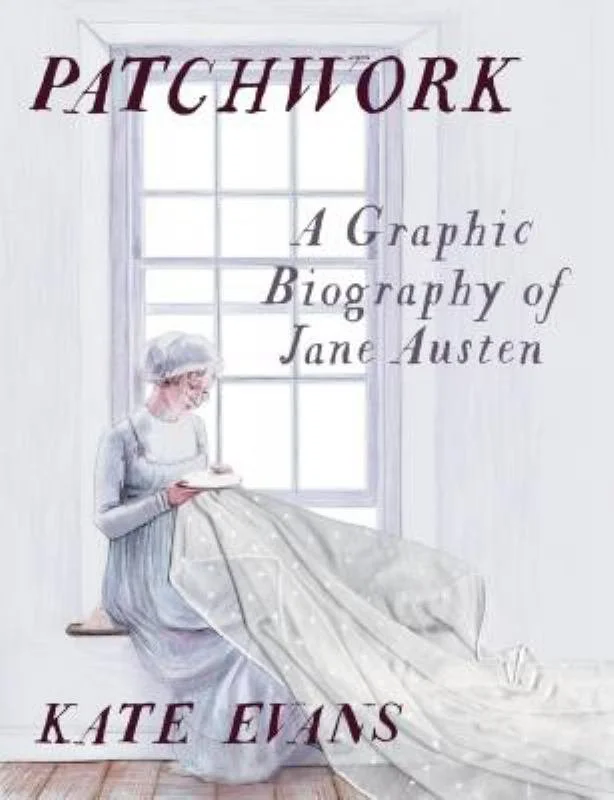
Patchwork: A graphic biography of Jane Austen by Kate Evans $37
In her later years, Jane Austen made a patch-work quilt. She folded thousands of tiny scraps of fabric over diamond-shaped slips of paper and painstakingly stitched them together. Kate Evans employs these slivers of cloth to illustrate Jane Austen's life story. Evans teases apart the threads that connect Austen's beloved novels, the events of her life, and the fabric of society in Regency England. Kate Evans has an ability to marry drama, comedy, and historically immersive detail, bringing Austen's story to life with fluid, dynamic artwork, at times embroidered onto cloth itself. The author's love for Austen shines throughout. Her eye for historical detail — panes of glass, bits of lace, hedgelaying styles, the cut of a coat or the architecture of a Hampshire cottage — creates a captivating vision of Jane Austen's world. Evans is always cognisant, as well, of the political, economic and social contexts which defined Austen’s place in the world. [Hardback]
>>Look inside!
>>The threads of empire.
>>What you didn’t know about Jane Austen.
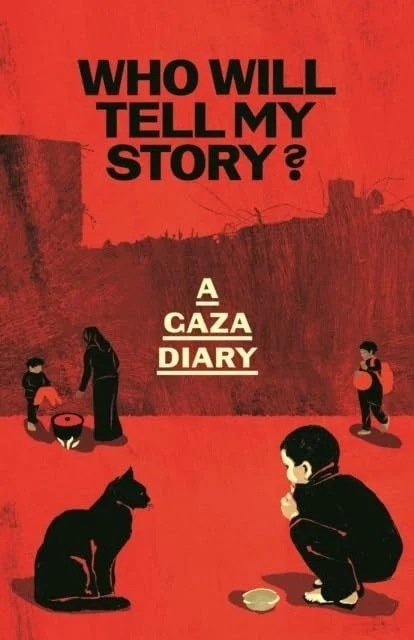
Who Will Tell My Story? A Gaza diary [Anonymous] $30
”It was a sleepless night full of tears and fear . . . I am not sure — if I make it out alive — if I will still possess what makes me, me. And I wonder: will I be there in the future, or will I be someone to be remembered in a diary or over a cup of tea by a friend after I am gone?” This diary presents an ordinary existence interrupted by unfathomably seismic and unjust events. On the ground during the first months of the assault on Gaza following the events of 7 October, the author of this diary — first published in The Guardian — maps out the physical and psychological terrain of a life under siege. Traversing the bombed ruins of his country, we see him as he searches for foodstuffs and power to charge devices, maintaining contact with the outside world, checking in with his friends and family along the way; we see his heart swing between despair and faith, fear and optimism, his mind imagining different futures and confronting the brutal truth of his present.Shining a light on the fate of all those living through war and occupation, Who Will Tell My Story? conveys with astonishing clarity how seeds of hope might linger amid the most trying of times. The author is a Palestinian man in his thirties. He lived in Gaza with his family and contributed a diary to The Guardian newspaper following the attacks on Gaza after the events of October 7th, 2023. After some time, he was able to flee the country; he hopes to return to his home. [Hardback]
>>The entries, as we read them.
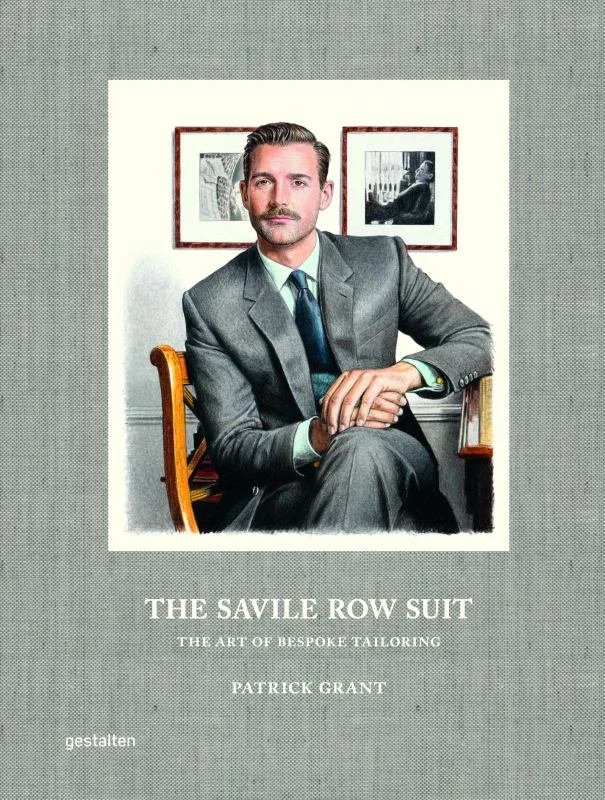
The Savile Row Suit: The art of bespoke tailoring by Patrick Grant, illustrated by Oriana Fenwick $70 (special price)
Very useful and clear, this book provides a step-by-step guide on the creation of the perfect suit. Through detailed illustrations and comprehensive text, readers will gain an understanding of the tailoring process, from measuring to fit and fabric selection. From suits to trousers and waistcoats, this contemporary instructional manual is the guide to creating a timeless classic and how to wear it. In addition to being a practical guide, The Savile Row Suit also offers a history on the tradition of Savile Row tailoring, providing insights into the ethos, the craftsmanship, materials and culture that have made Savile Row the most respected tailoring location in the world. [Hardback]
>>Look inside!
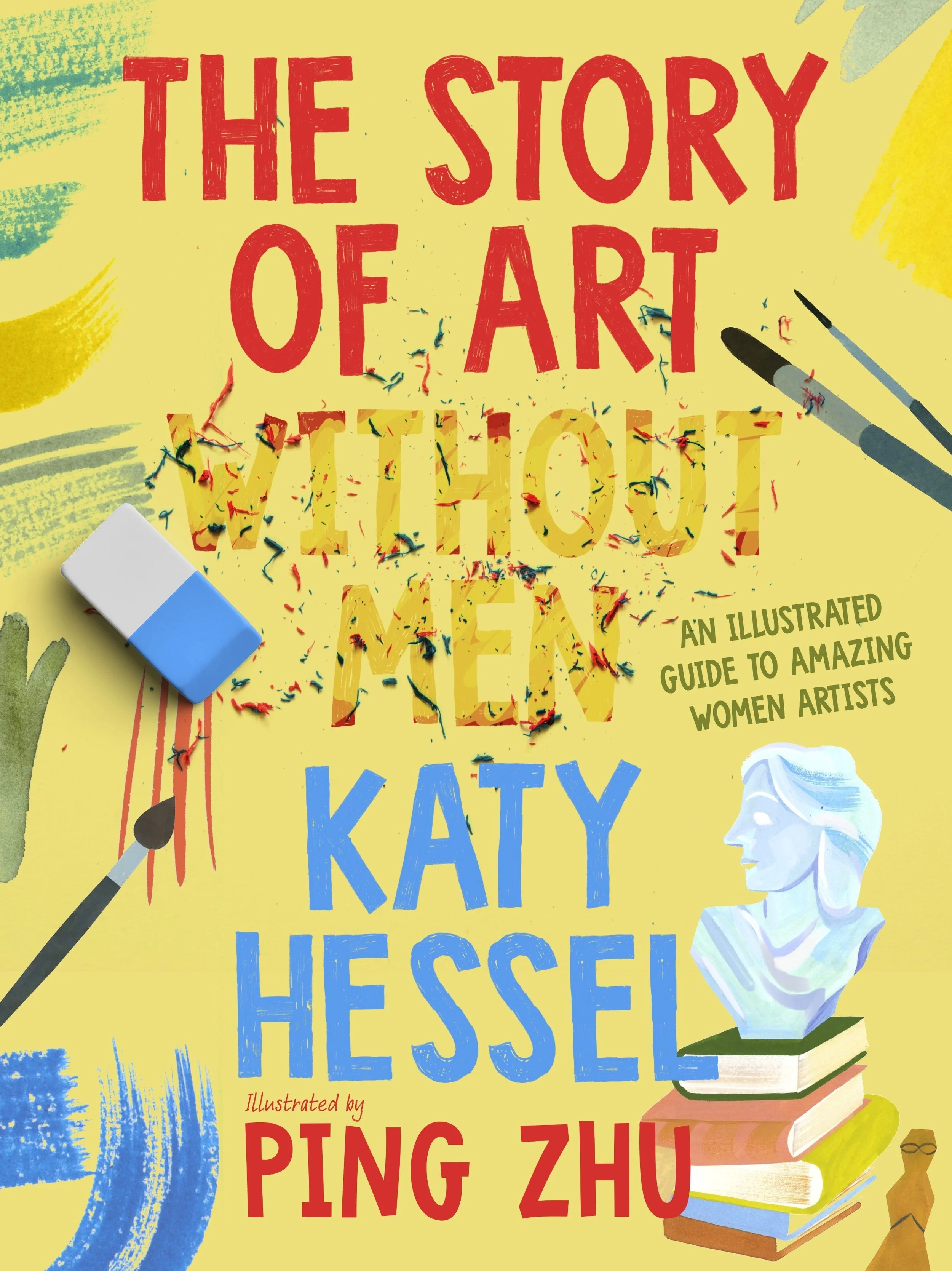
The Story of Art Without Men: An illustrated guide to amazing women artists by Katy Hessell, illustrated by Ping Zhu $50
Step into the incredible lives of the women artists who have gone uncelebrated for too long, in this lively version for children of Hessell’s landmark book. Journey through history, from the Renaissance to the Second World War, and across the globe, from Cornwall to Manhattan, Nigeria, Japan and more, to discover the stories of women who changed the world with their incredible art. You'll learn about the extraordinary lives of freedom fighters, game changers and adventurers - and be astounded by the art they made, with its striking landscapes, hidden messages and calls for women's rights. Based on the bestselling book The Story of Art Without Men, this version includes breathtaking illustrations and a host of new art and artists to discover. [Large-format hardback]
>>Look inside!
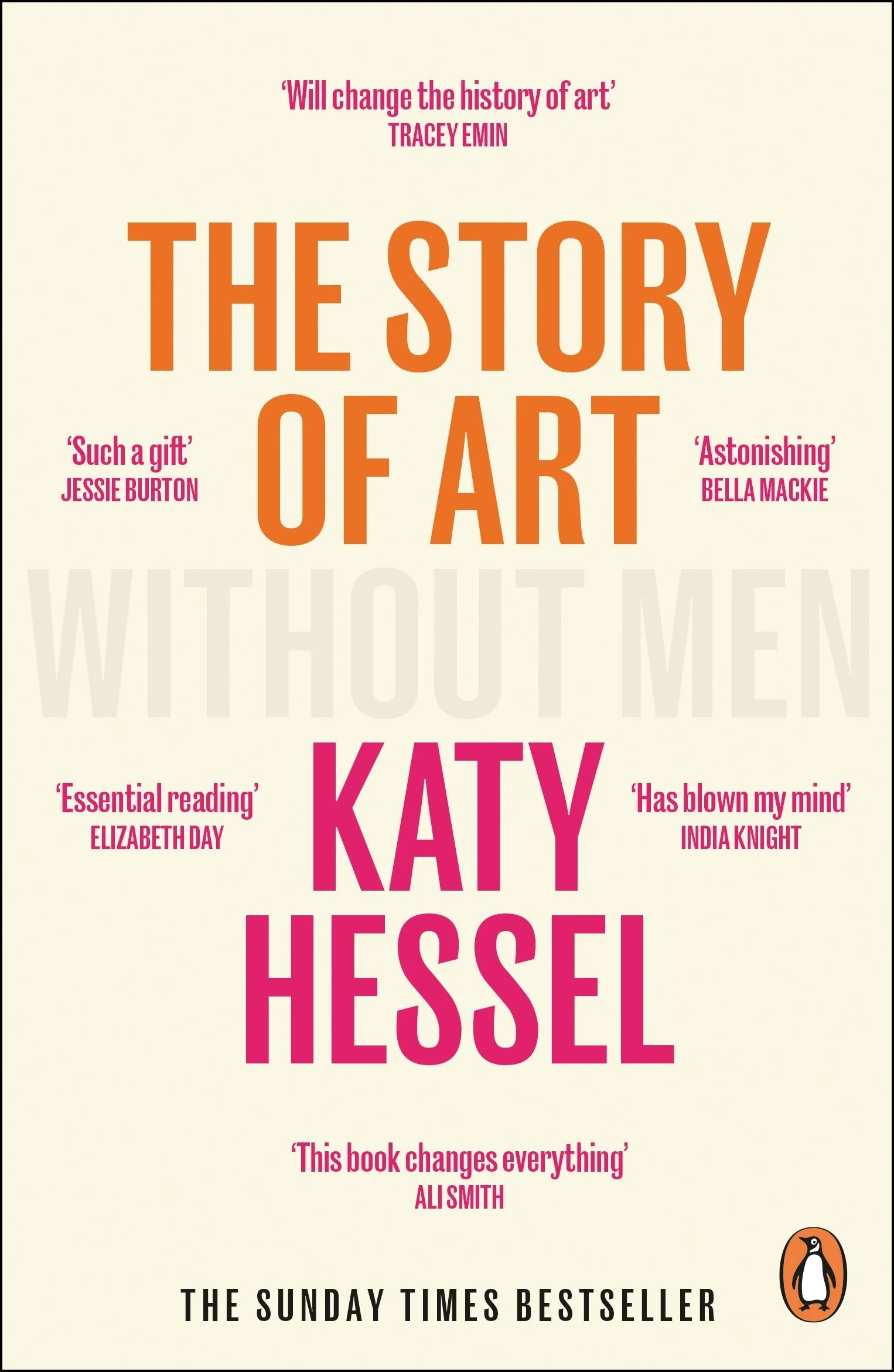
The Story of Art Without Men by Katy Hessell $35
How many women artists do you know? Who makes art history? Did women even work as artists before the twentieth century? And what is the Baroque anyway? Discover the glittering Sofonisba Anguissola of the Renaissance, the radical work of Harriet Powers in the nineteenth-century USA and the artist who really invented the Readymade. Explore the Dutch Golden Age, the astonishing work of post-War artists in Latin America and the women artists defining art in the 2020s. Have your sense of art history overturned, and your eyes opened to many art forms often overlooked or dismissed. From the Cornish coast to Manhattan, Nigeria to Japan, this is the history of art as it's never been told before. Fully illustrated. [Now in paperback]
”A long overdue, revisionist history of art by the brilliant Katy Hessel. Never stuffy or supercilious, Hessel's book is a revelation and an important first step towards redressing the balance of an art world in which women have been sidelined, stepped over and trampled upon for far too long.” —Refinery29
“This book changes everything.” —Ali Smith
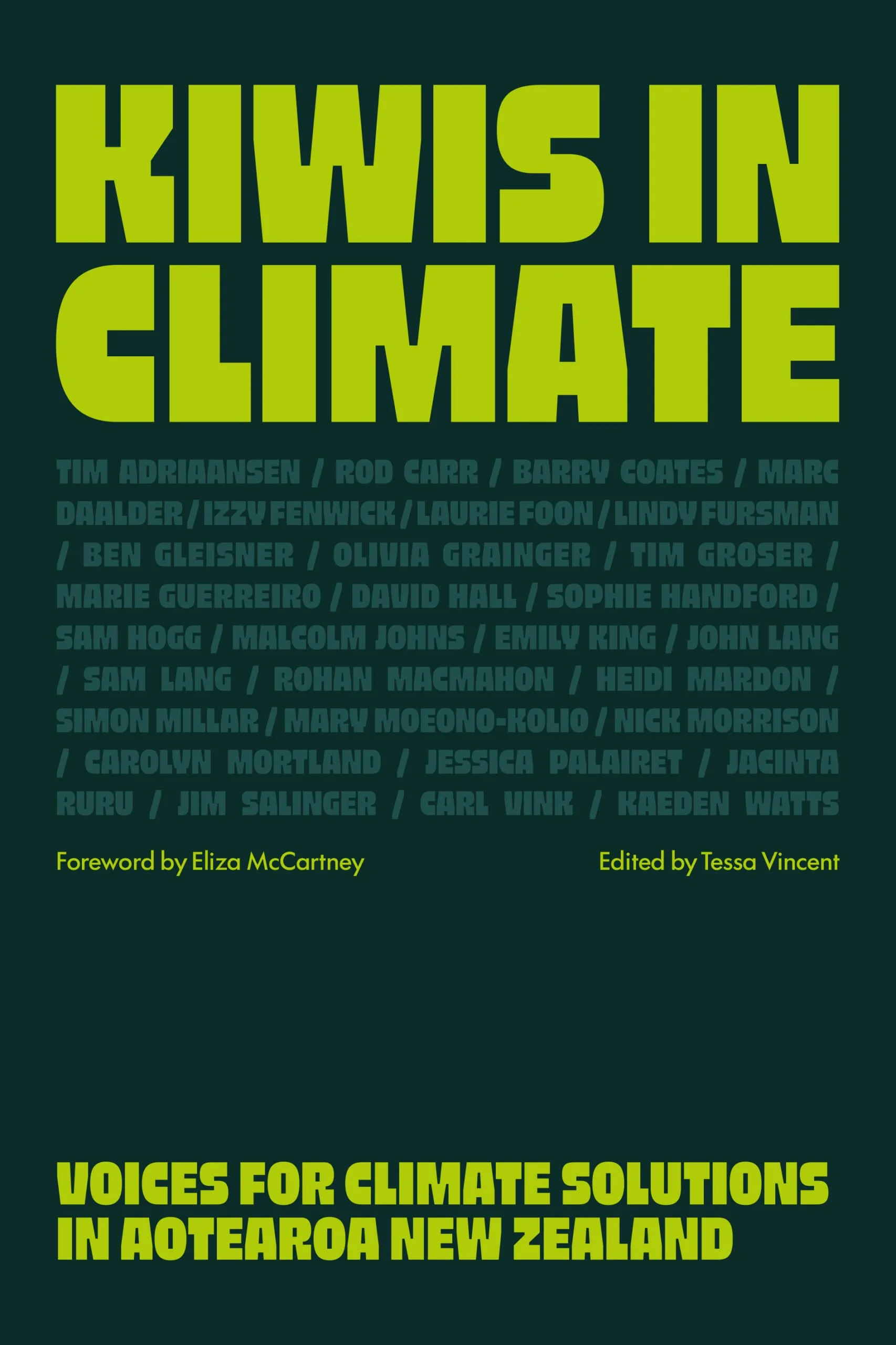
Kiwis in Climate: Voices for claimate solutions in Aotearoa New Zealand edited by Tessa Vincent $45
Kiwis in Climate brings together practical visions for Aotearoa to lead on climate solutions. Scientists, politicians, CEOs and citizens demonstrate what we are doing now — and what we must do — to mitigate and adapt to the impacts of climate change. Over 30 New Zealanders explain how climate solutions can improve our lives, from cheaper energy to job creation and healthier communities. [Paperback]
>>A book for everyone.
Don’t miss out on the excellent books in our March FICTION SALE. Click through to our website to browse and make your choices. Single copies only are available at these prices for most of these titles, so don’t hesitate — make a discovery! A new book is a promise of good times ahead!
And to really make the most of your fiction(al) budget, have a look at our ‘Snips’ — intelligent books at ridiculous prices:
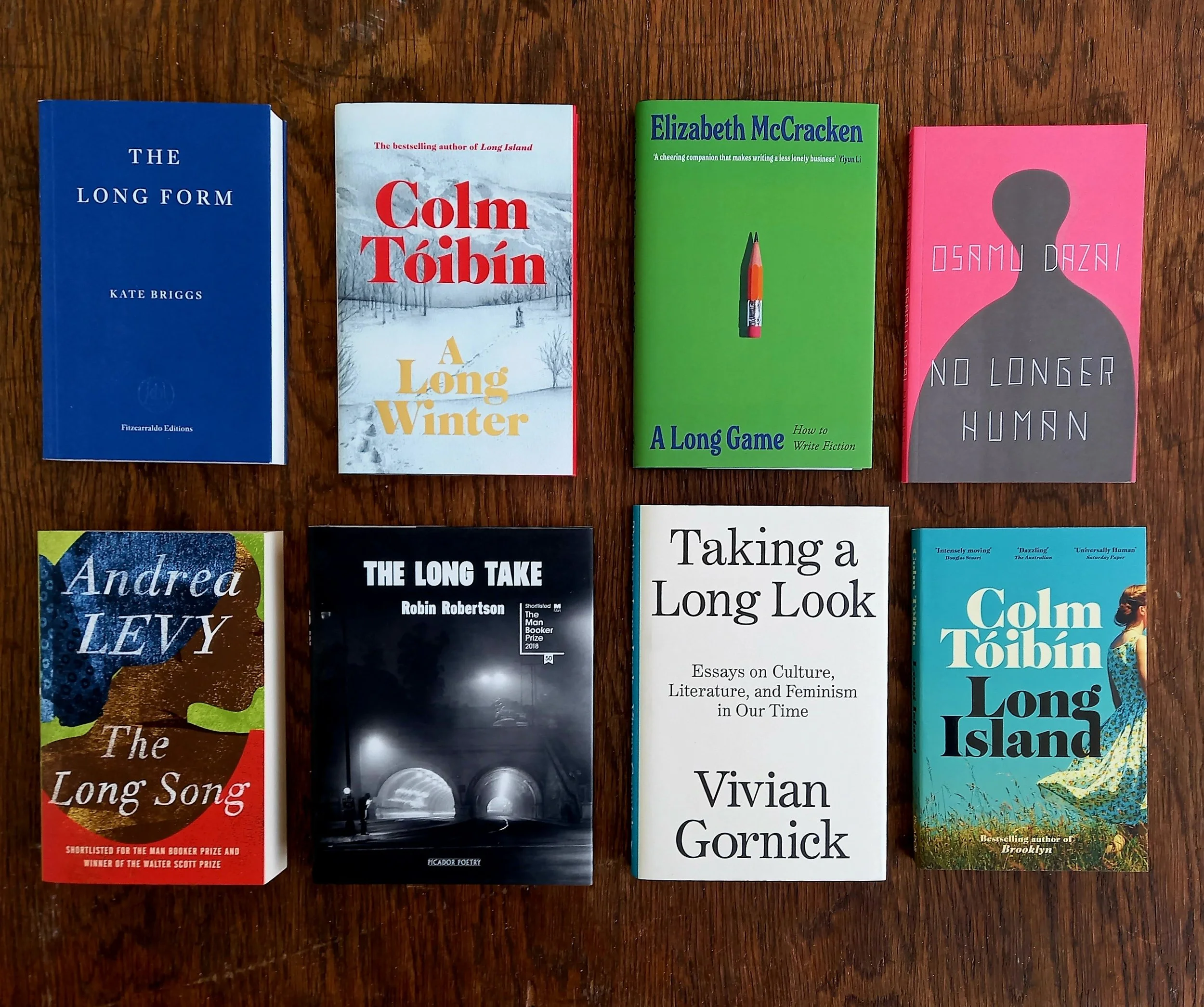
A selection of books from our shelves. Click through to find out more:
Read our latest newsletter.
Browse our March Fiction Sale.
20 March 2026
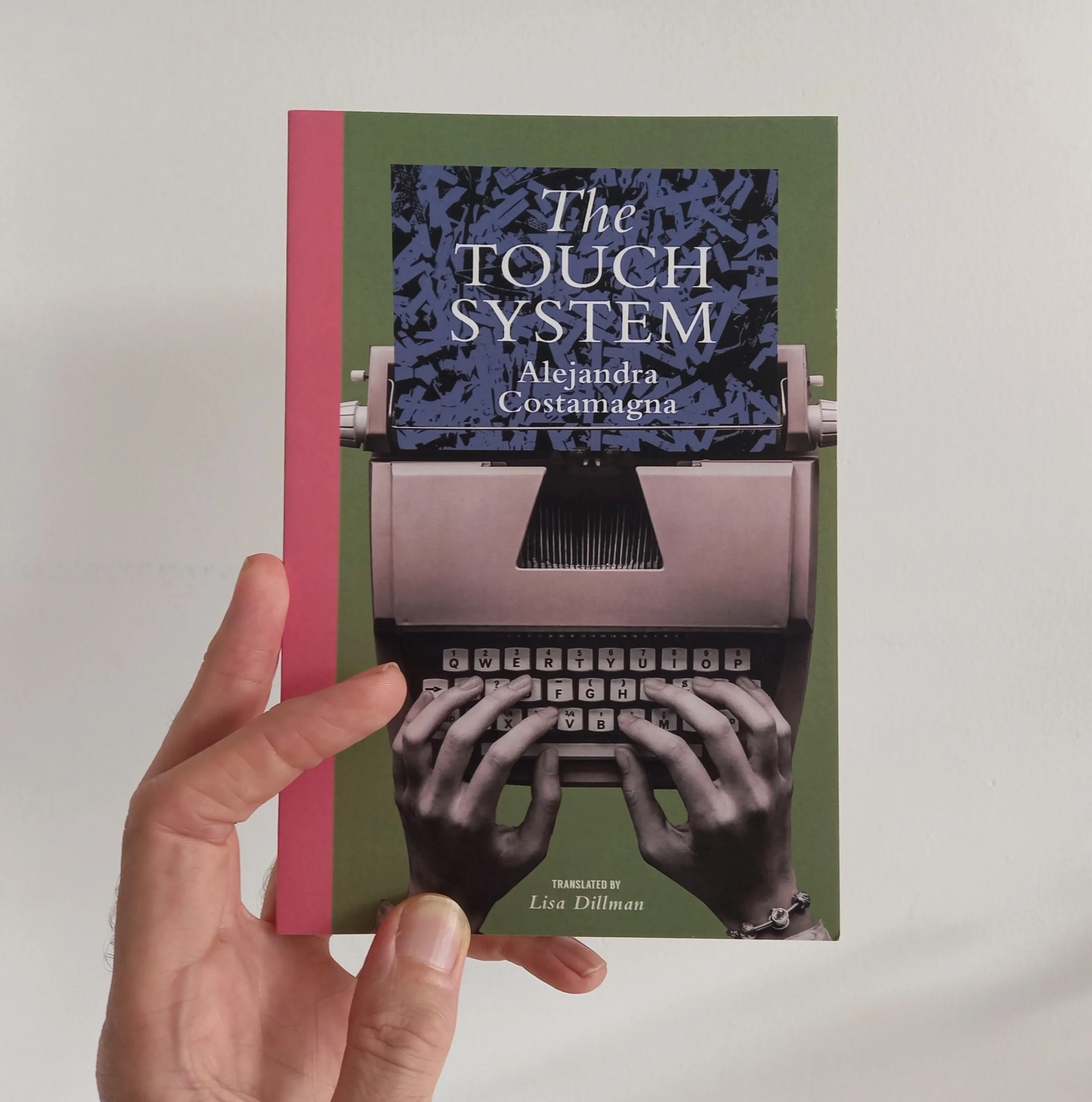
I was drawn to this novel firstly by the cover. Who can resist a typewriter? And then by the description of a story pieced together by encyclopedic entries, typewriter exercises, immigration manual snippets, and snapshot interludes. That it is also published by the interesting and excellent Transit Books and the author is Chilean all added to this one finding a place on my shelf. Ania is a woman, about 40, who is in limbo. She has quit teaching and pet-sits for a bit of cash; her father has remarried and has ‘another family’ — one which Ania feels ousts her from her place as ‘daughter’; and her boyfriend is a remote figure in this story — whether this is her perspective or a reality we never know. And this is what hooks you in — Ania always seems like she is looking in, but never really participating. Her present is something she wishes to escape from and her past haunts her yet draws her back — seems to have a hold on her. This is a story about exile and migration, about worlds cleaved between past and present but inextricably linked. It’s a tale of never quite fitting in — an exploration of what belonging is and whether it can be truly achieved if you are severed from a part of yourself (whether that be literally, as in physical space, or metaphorically, as in a mental state). When Ania's uncle Augustin dies, her father asks her to go to Argentina in his place (he is unable to leave Chile while his wife is convalescing). Crossing the mountains brings back memories of her childhood summers spent with her grandparents and extended family. Every summer she would spend months as the ‘Chilenita’ — her otherness the role cast for her. Yet she was not the only outcast. Nelida (Augustin’s mother), the young bride who came from Italy and never adjusted, spends her days in the cool of her dark room slowly subsiding into madness (or sadness). Augustin wants to escape his home but doesn’t have the courage to abandon his family, so faithfully takes his typing lessons and remains bound to his mother. He is enamoured of his friend Garigilo’s ease of being and infatuated with Ania. The reader is left to pull the threads together about the state of the relationships between these characters. It seems as though something has occurred that has had an impact on all three, yet the action, if there was one, has happened off the pages, beyond the book, and it is only a residue — an unsaid feeling — that circles beneath Ania. Returning to the town, the memories of childhood are both threatening and endearing. Here she has a role, she is the ‘Chilenita’. As she is drawn into the vortex of her own past, she thinks about her family and their life as migrants from Italy. Her childhood memories butt up against her adult knowledge. What allowed her father to find his escape, while Augustin was stuck in time and place? Why did Nelida find it so hard to adjust, and does she carry a similar burden? What is the way forward if you are an exile in your own life or mind? Costamagna’s writing effortlessly moves across characters and time. The typewriter exercise, family snapshots, and encyclopedia entries give the reader pause as well as context and are interwoven between the unfolding narrative at just the right pitch. The Touch System is a beautiful example of fine writing and intriguing themes — a novel that compulsively draws you in where you are at fingertip distance of something palpable.
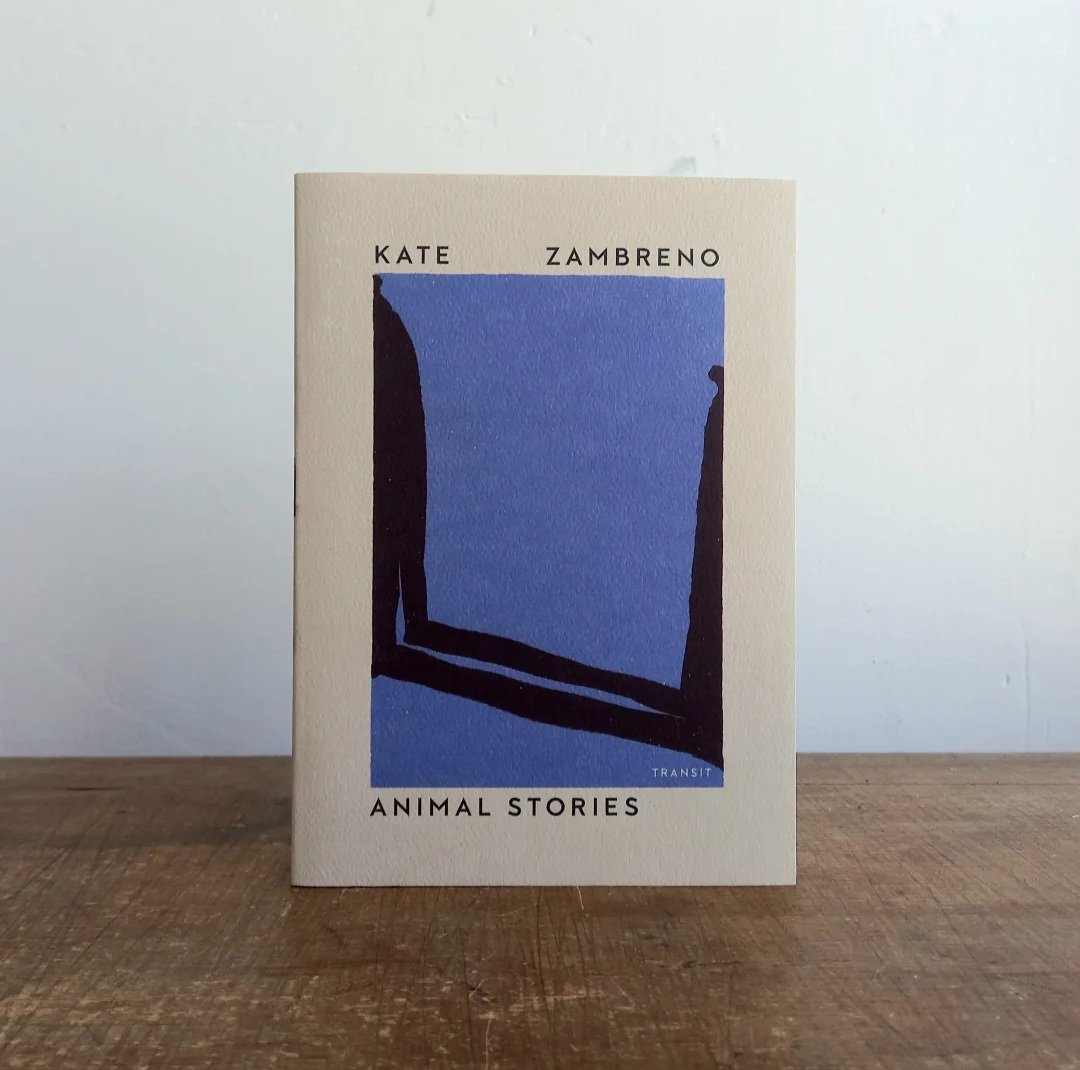
If the first recorded ‘drawing’ by an animal was a picture by an orangutan of the bars of its cage, what does this tell us about art? Are we ‘creative’ only to the extent that we are constrained, and is that constraint always therefore the underlying subject of our art? Nabokov’s assertion that such a drawing was made at Paris’s Jardin des Plantes zoo cannot be verified by documentation but seems to contain a truth that is too appealing to discredit (possibly this ‘seeming to contain a truth’ is more important to us than an actual truth, expressing a shared subjective state beyond the reach of facts, even though such thinking is the basis of our worst sorts of actions as well as of our best), but it is interesting that this supposed drawing was made by the sort of animal we see as most ‘similar’ to ourselves and that this ‘art’ occurred in a zoo, a place where we, as adults at least, see our own predicament in the constrained lives, boredom, helplessness and frustration of the animals, but are also kept separate from them by the grammar of the cage. The two zones demarcated by a single set of bars differ perhaps in physical scale more than they do in type. Is it for this reason that zoos are "deeply sad”, as Zambreno states in one of their reports that comprise ‘Zoo Studies’, the first half of this little book. “There is perhaps no more pronounced gap of awareness between a child and adult than when visiting the zoo,” writes Zambreno of visiting the zoo with their children, though they acknowledge, too, that children may experience the intense melancholy inherent in the species-alienation and the gazes that pass between the viewers and the viewed, gazes predicated on the bars through which they pass. Do we visit zoos to see in animals that which we are not or do not want to be? Are children more able than adults at seeing the actual individual behind the label on the cage? As adults are we blinded to the experiences of others by the very indignities of separation, classification and containment that we have expressed upon them?
The second half of Zambreno’s book, ‘My Kafka Method’, considers the actual impossibility of such a separation, through an accumulation of observations and fragments responding to first the life and then the animal stories of Franz Kafka. They see Kafka’s ambivalence about what could be called his ‘animal’ nature (though, when written, this term seems ludicrous) as the source of both his sufferings and his writings. If there is a zoo, Kafka is within the bars, his subjectivity complicated and enriched by the inescapability of his identification with the object of his attention. Our awareness, after all, is primarily a property of that of which we are aware. A text is a kind of cage in which the writer both performs for and avoids the gaze of the reader, a zone of both connection and separation, a space of porous and conflicted subjectivity, but Zambreno shows how, in Kafka’s stories, the circumstances of the writer, of the animal in the story, of Zambreno, of the reader — both of Kafka and of Zambreno — converge and begin to align. “Animals live in an ongoing present tense, the setting, possibly the subject, of this story,” Zambreno writes of ‘The Burrow’. Kafka does not exploit his animals as metaphors (“To make a metaphor of the animal is also to ignore the animal.”); he gives them enough vagueness of description to make them uncageable; he does not burden them with the sorts of meanings that would make their stories ‘signify’. “Don’t call them parables,” said Kafka. “If anything, call them animal stories.” We inhabit a zone of undifferentiated subjectivity. To draw a conclusion is to misrepresent the material.
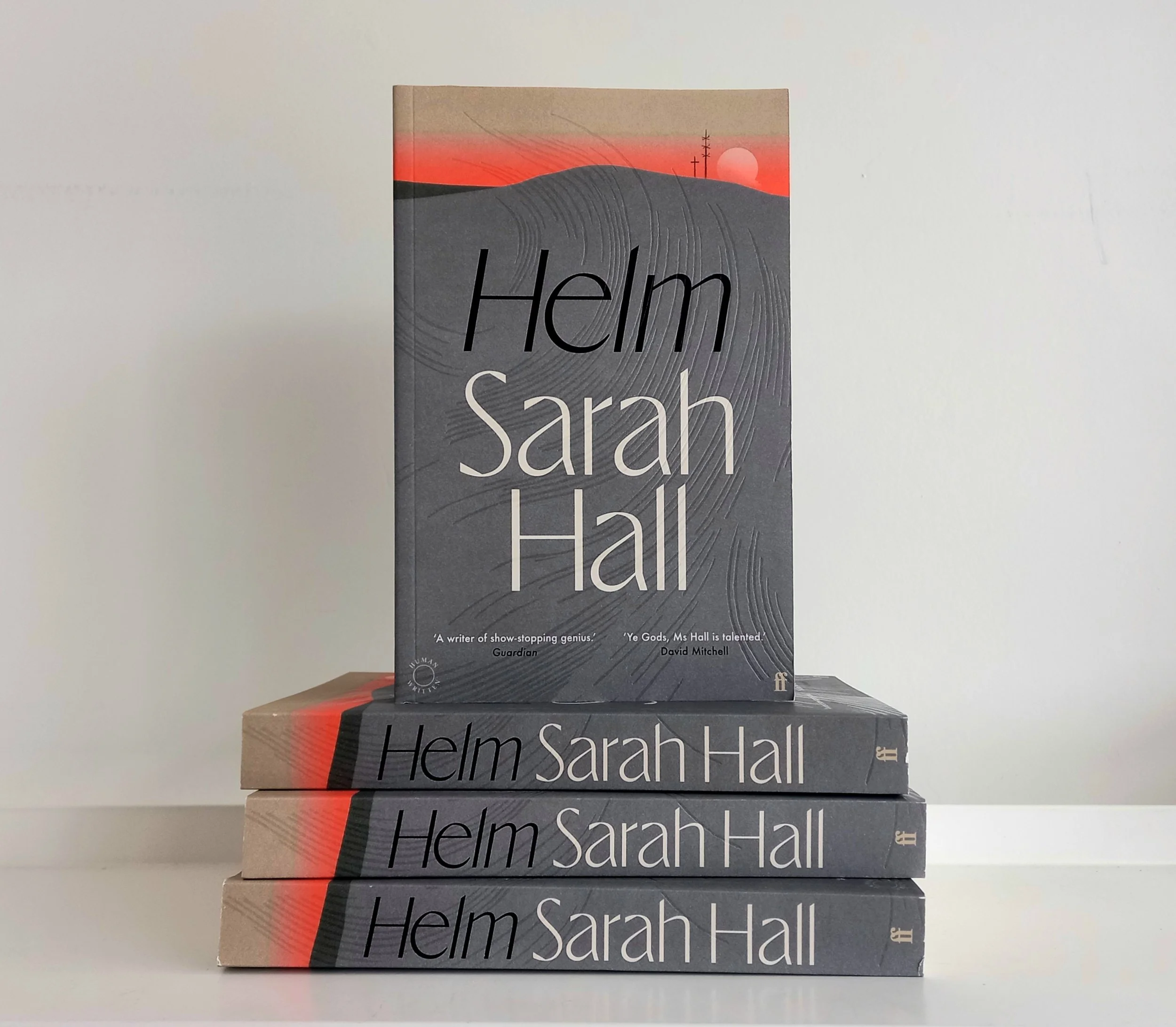
Britain's only named wind, Helm, has been roaring down Eden Valley in Cumbria since winds began. Sarah Hall's eloquent novel tells Helm's story through the swathe of human history, from the Neolithic to the present, through the experiences of those whose lives it has blown through. Helm is also the wider story of humanity’s relationship with nature, a warning of what will be lost if we do not mend our part of that relationship, and an invitation to live more wildly and more wisely.
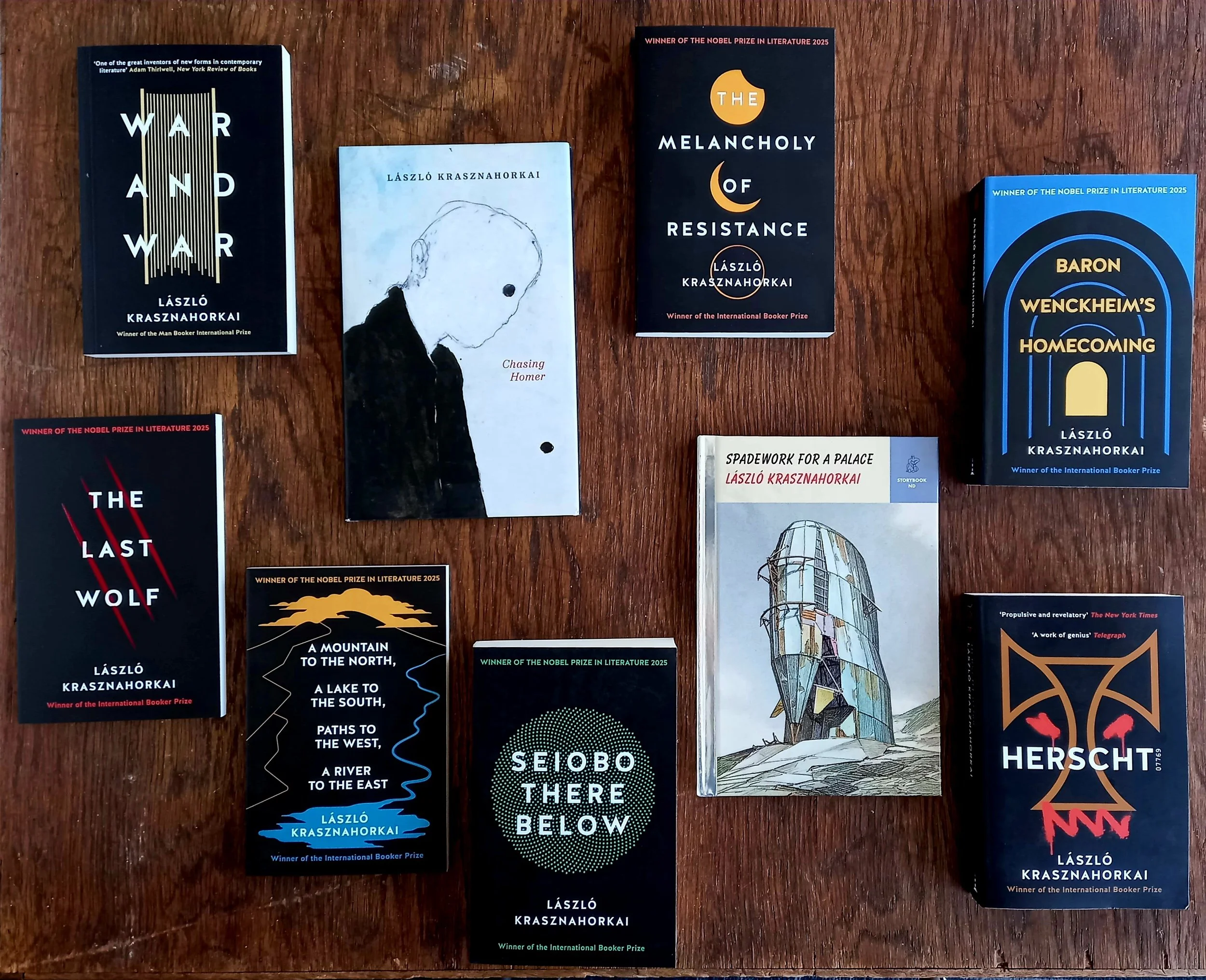
There could be no more suitable Nobel laureate for the end of the world than László Krasznahorkai, whose astounding, frequently book-length sentences trace human thought’s struggle against the forces that would ultimately erase it. Although poised always on some sort of cultural event-horizon, Krasznahorkai’s books verbally resist the pull towards annihilation posed by the infinite gravity of social, political, historical, environmental and purely existential impossibilities, and provide glimmers of human authenticity in an increasingly depersonalising world. Pulling a dark literary thread backwards through Bernhard to Kafka, Krasznahorkai’s books have a profoundly hypnotic effect, shot with moments of beauty, exhilaration and clarity.
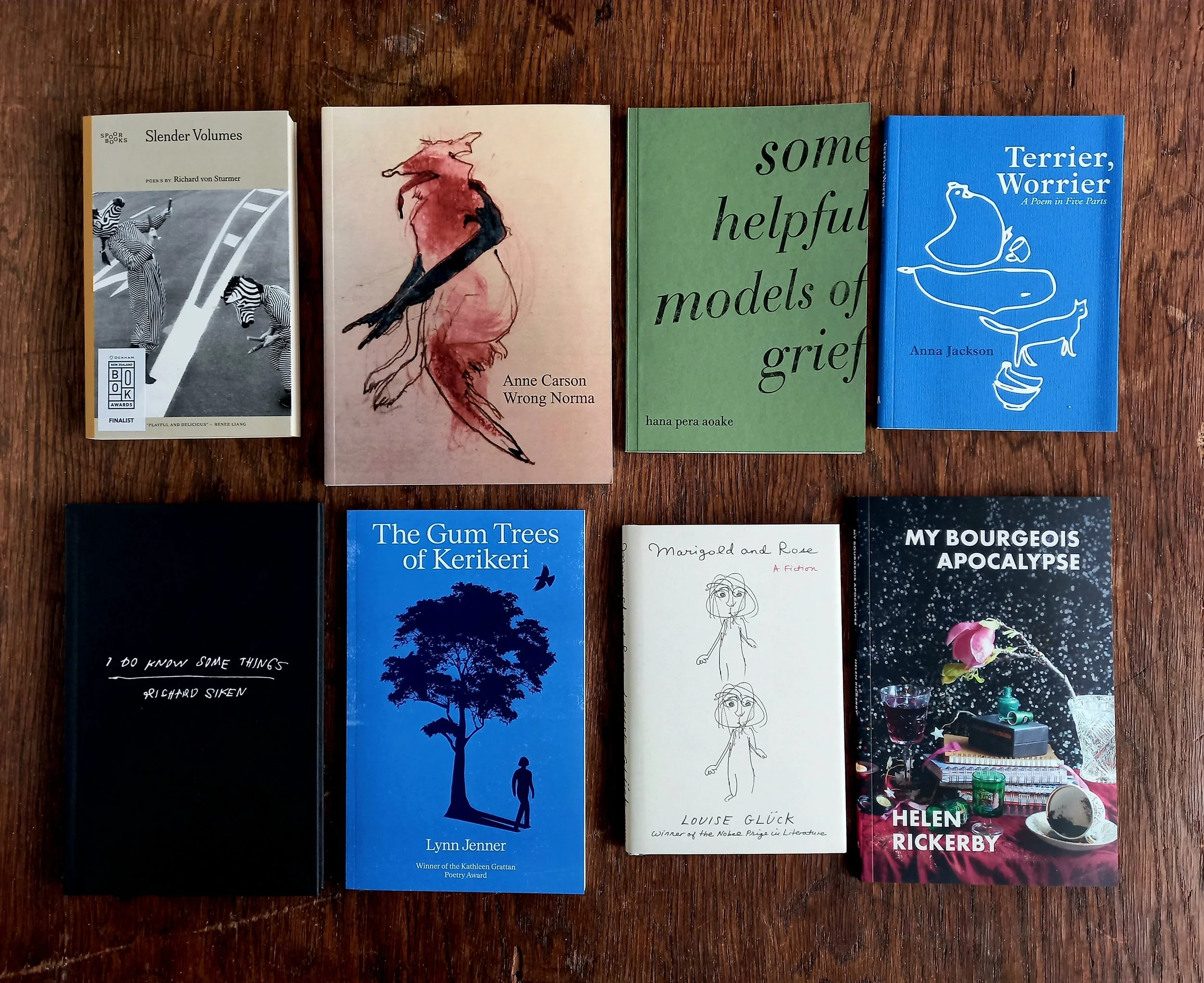
Some recent volumes of non-verse poetry from our shelves. Click through to find out more:
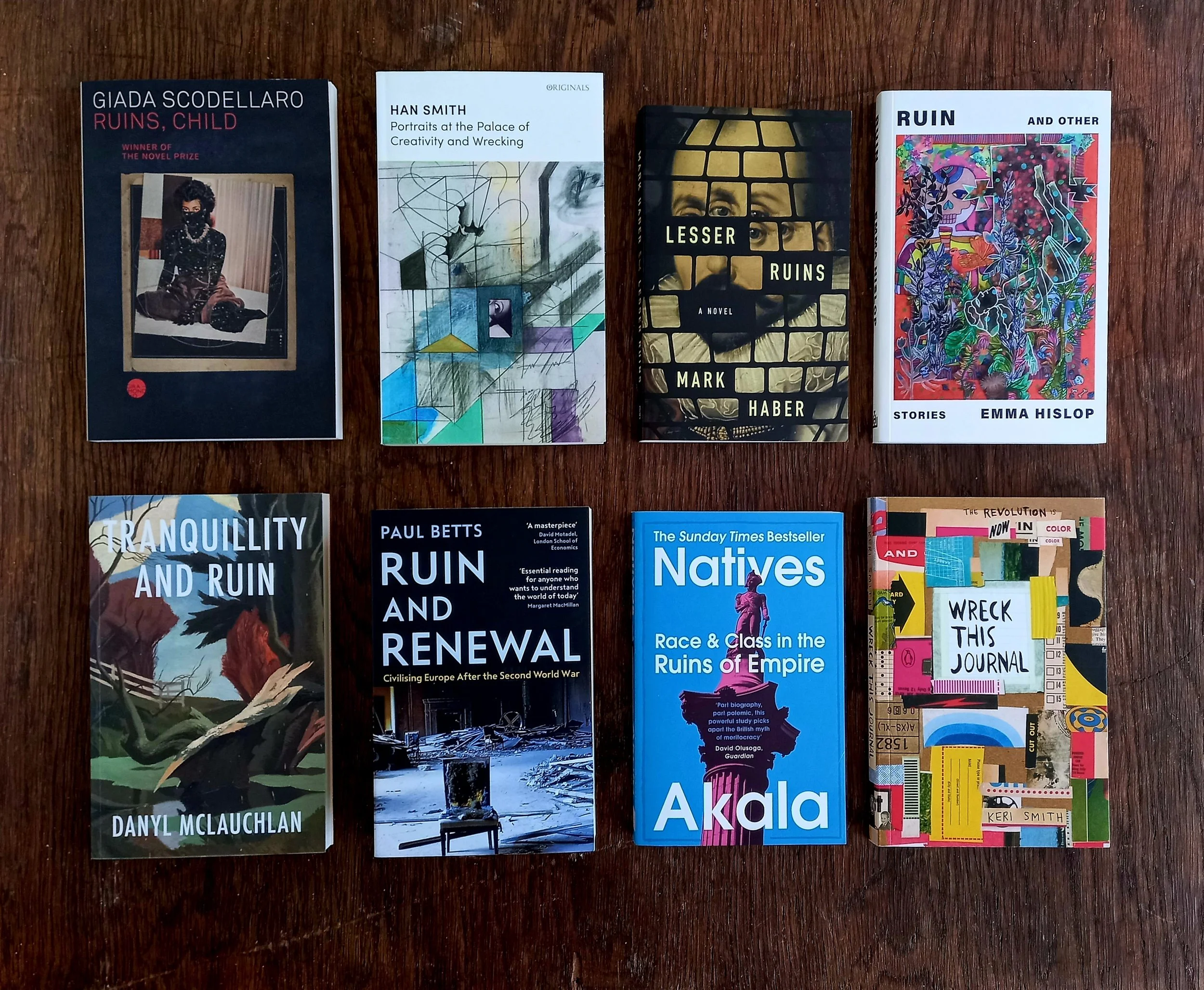
A selection of book from our shelves. Click through to find out more:
Portraits at the Palace of Creativity and Wrecking
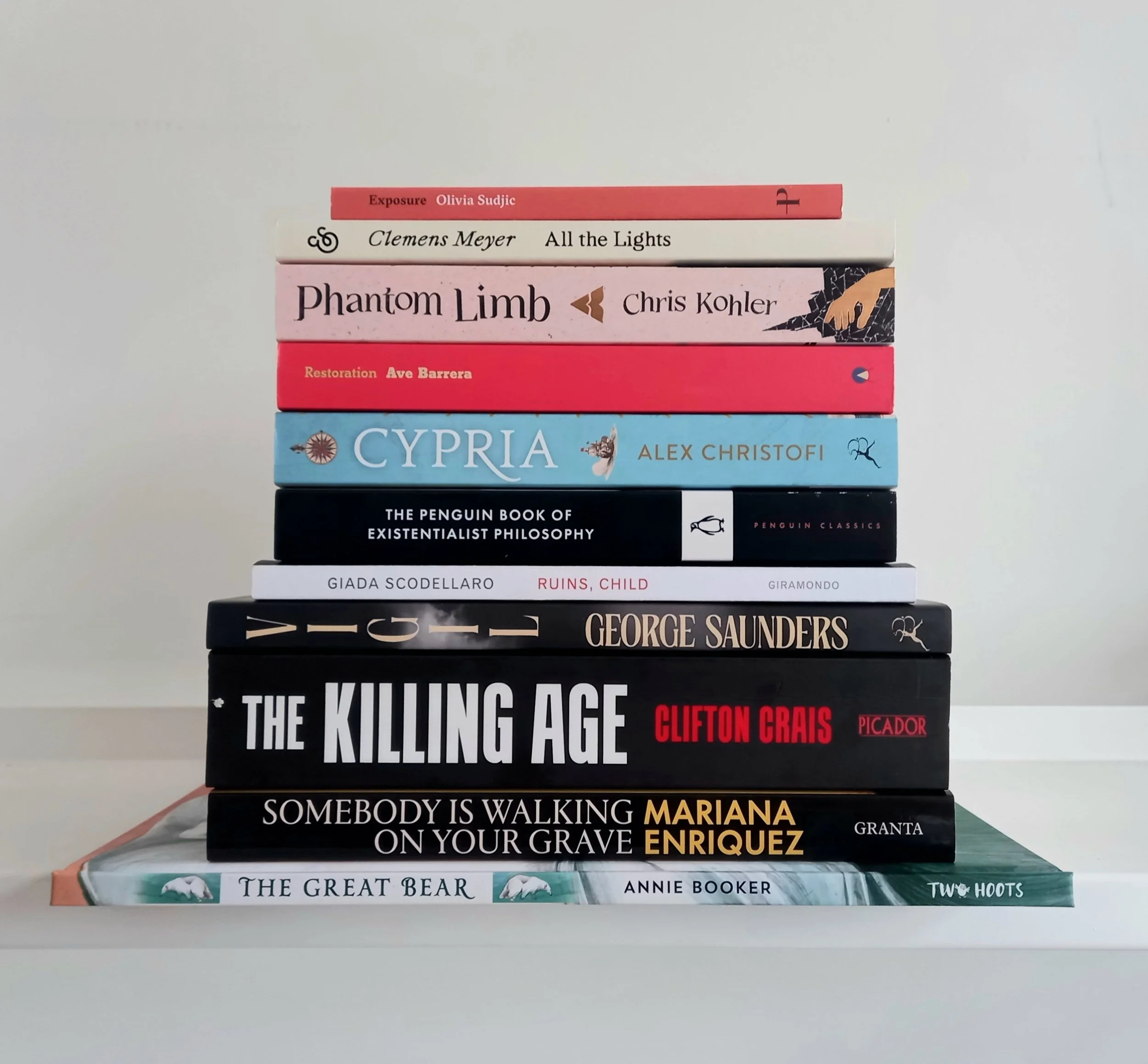
All your choices are good! Click through to our website (or just email us) to secure your copies. We will dispatch your books by overnight courier or have them ready to collect from our door in Church Street, Whakatū.
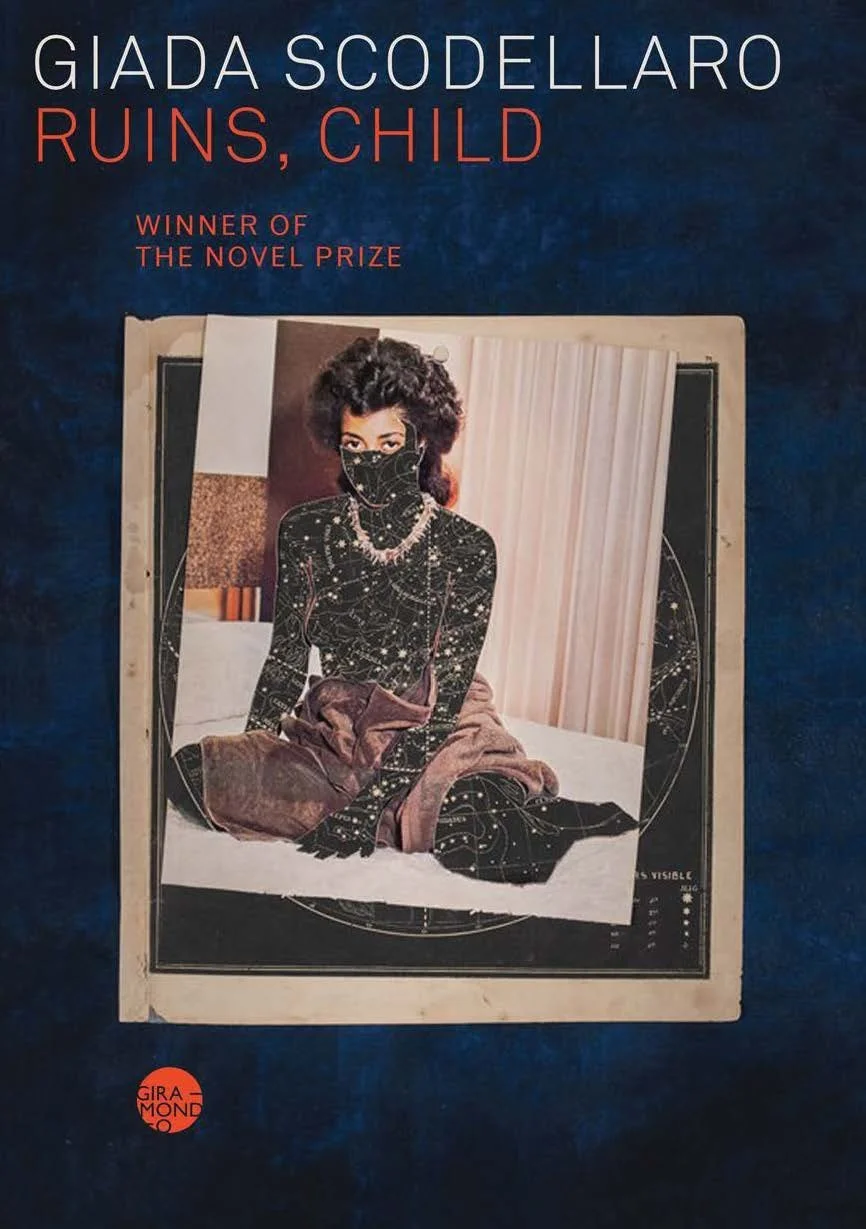
Ruins, Child by Giada Scodellaro $38
Set in what may be the future, and centred on six women sharing a space in some sort of crumbling apartment tower, Ruins, Child is remarkable for its irresistible sweep, wit, and prickly splintered truth. With the pulsating sway of its liquid mosaic narrative, Giada Scodellaro's debut novel may recall Virginia Woolf's The Waves, but is entirely its own animal: kaleidoscopic, pointedly disorienting in its looseness, and powered along by snatches of speech from its compelling ensemble cast (often vernacular, often overheard: 'The woman is old, I hear children saying nearby, not in the way we consider all adults to be old, but really old, ancient, she is endless'). It's a book which seems to be drawn from deep wells of Black American reality: her female protagonists push back against authority in the very vivacity of their telling, setting afoot a freeing-up and a mysterious inversion of marginalisation. 'Looseness, that is the thing people fear in a person (in women) and in objects.' Ruins, Child uses the lens of urban infrastructure, social commentary, folklore, choreography, and collective listening to create an ethnography of place and an ode to communal ruins. Winner of the 2024 Novel prize. [Paperback]
”Giada Scodellaro is one of the most astonishing writers of her generation and Ruins, Child is a visionary novel. Scodellaro refracts and redefines the canon of Black culture, the archive of Black experience. The result is a masterpiece that lives and breathes on the page, every sentence shimmering with wit, musicality, brilliance and verve.” —Katie Kitamura
”Giada Scodellaro’s newest masterpiece, Ruins, Child, endows the concept and form of the contemporary novel with new force and meaning. Cinematic and prismatic, like a camera constantly in motion and yet incisive in its close portraitures of a community of Black women and fems surviving and living amidst the future urban, eco-dystopic, queer ruins of our society, Scodellaro’s novel breaks new ground in spectacular fashion.” —John Keene
”Ruins, Child takes us to the crumbling architecture of a future past; a future past that is possibly now. In this work of fractal seeing, we encounter women in lives that are simultaneously lived, reenacted, and observed. Ruins, Child is conceptually rich, prismatic, and choral, embodied, and surreal, cinematic and textual. Giada Scodellaro writes us Black life watching Black life.” —Dionne Brand
”Mesmerising — little by way of plot, but much to offer in terms of beauty. For readers willing to surrender to the sway and creep of Scodallero’s prose, it can feel much like watching an art house film, where, as one of the novel’s characters puts it, ‘we are lost in the potential of this scene’. The result is an arresting work by a writer unbound by constraints of the expected.” —Publishers Weekly
>>Read an excerpt.
>>First the legs, then the fingernails.
>>Small tellings, silence, white space.
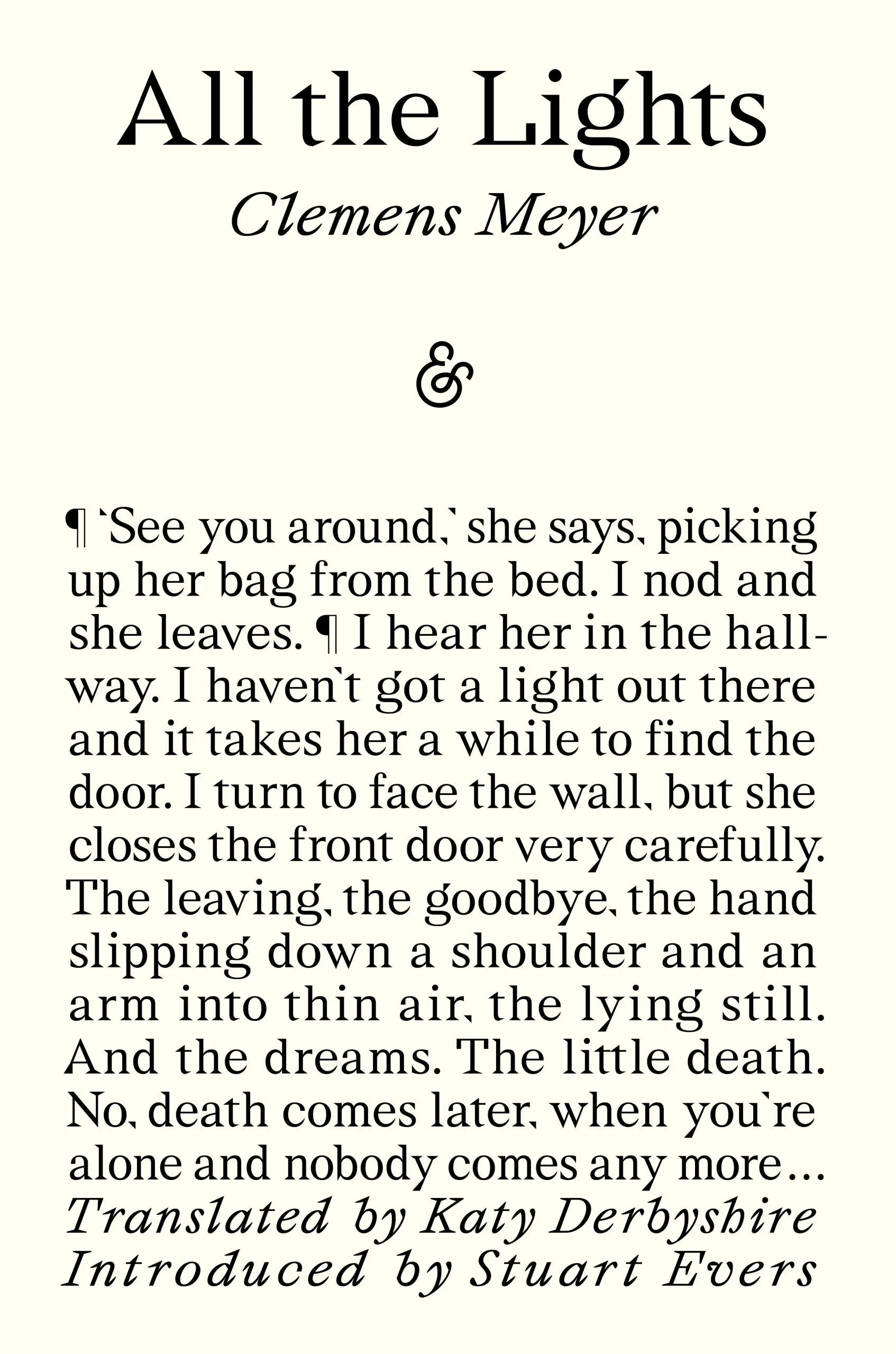
All the Lights by Clemens Meyer (tanslated from German by Stuart Evers) $40
A man bets all he has on a horse race to pay for an expensive operation for his dog. A young refugee wants to box her way straight off the boat to the top of the sport. Old friends talk all night after meeting up by chance. She imagines a future together. Stories about people who have lost out in life and in love, and about their hopes for one really big win, the chance to make something of their lives. In silent apartments, desolate warehouses, prisons and by the river, Meyer strikes the tone of our harsh times, and finds the grace notes, the bright lights shining in the dark. [Paperback with French flaps]
'“Take the bare prose of Raymond Carver, apply the bleak outlook of Michel Houellebecq, place characters from an Irvine Welsh book on German streets, and you have something close to this collection of 15 short stories. His tales have an evanescent, impressionistic quality. Meyer thrills and rewards.” —Alex Rayner, The Guardian
’'Meyer tells us about people who normally are not ‘literary subject matter’. Respect to him. He's the real deal. We need storytellers like him.” —Die Zeit
>>Read one of the stories.
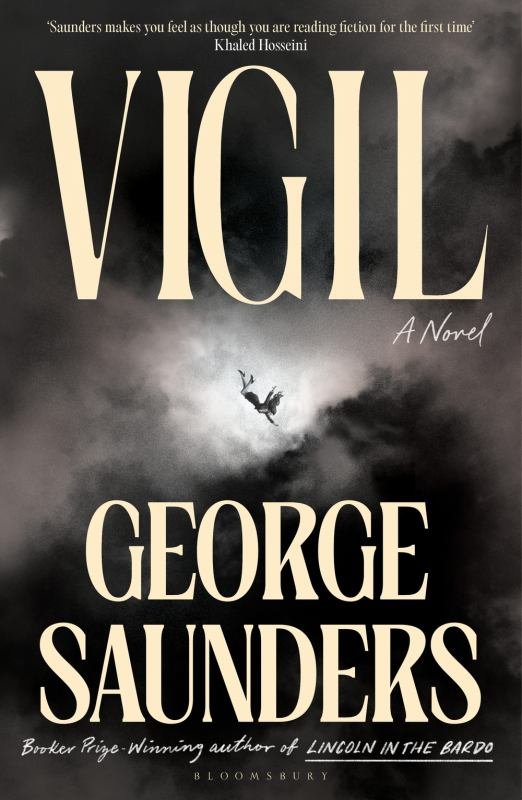
Vigil by George Saunders $37
“What a lovely home I found myself plummeting toward. Not for the first time in fact, for the 343rd time.” The eagerly awaited new novel from the author of Lincoln in the Bardo. Jill 'Doll' Blaine finds herself crashing down to earth, head-first, rear-up, to accompany her latest charge into the afterlife. She soon realises however that this man is not quite like the others. For powerful oil tycoon K.J. Boone will not be consoled, because he has nothing to regret. He lived a big, bold life, and the world is better for it — isn't it? As death approaches, a cast of worldly and otherworldly visitors arrive. Crowds of people and animals alive and dead materialise, birds swarm the dying man's room, and associates from decades past show up, all clamouring for a reckoning. In this novel brimming with explosive imagination, George Saunders confronts the biggest issues of our time with his trademark humour and warmth, spinning a tale that encompasses life and death, good and evil, and the inevitable question — who else could we be but exactly who we are? [Paperback]
”Faulkner meets Citizen Kane. Such is Saunders' skill and empathetic imagination that the questions raised by his concocted other world generally prove more mysterious than mystifying.” —Financial Times
”Vigil moves into even more anarchic and funny territory than that 2017 Booker-winning masterpiece, with this new novel's unhinged spirits and pitiful ghosts. A meditation on the manipulative nature of modern language, the novel resonates deeply in our fractious, selfish age.” —Independent
>>How do you really tell the truth about this moment?
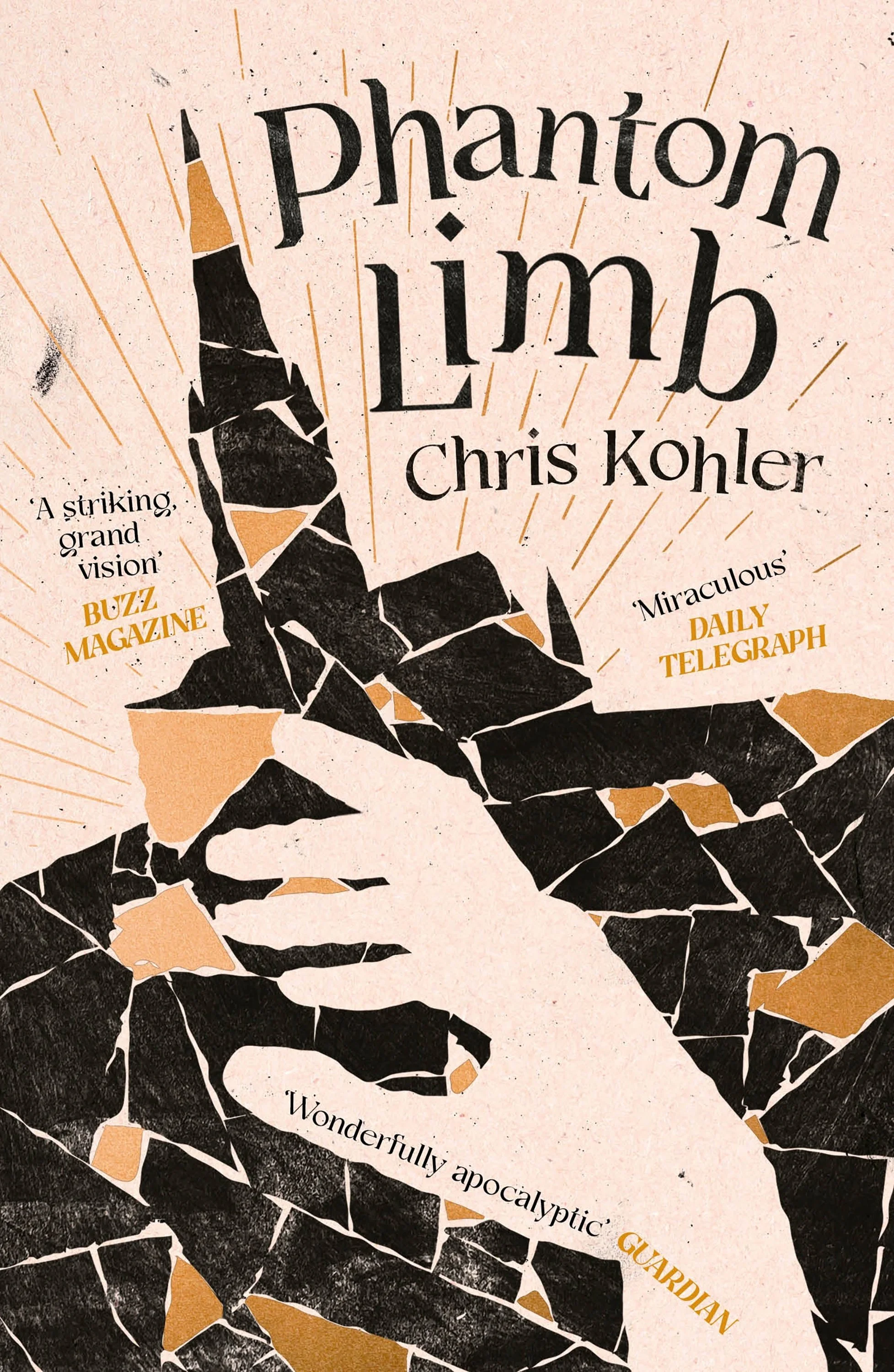
Phantom Limb by Chris Kohler $28
One evening, Gillis — a young Scottish minister who technically doesn't believe in god — falls into a hole left by a recently dug up elm tree and discovers an ancient disembodied hand in the soil. He's about to rebury it when the hand beckons to him. He spirits it back to his manse and gives it pen and paper, whereupon it begins to doodle scratchy and anarchic visions. Somewhere, in the hand's deep history, there lies a story of the Scottish reformation, of art and violence, and of its owner long since dead. But for Gillis, there lies only opportunity: to reinvent himself as a prophet, proclaim the hand a miracle and use it for reasons both sacred and profane — to impress his ex-girlfriend, and to lead himself and his country out of inertia and into a dynamic, glorious future. [Now in paperback]
With shades of John Byrne and Alasdair Gray, Phantom Limb is to be treasured.A wonderfully strange, full-of-heart debut.” —Camilla Grudova
”Thrillingly unfettered. Phantom Limb is its own kind of miraculous relic: disturbing and mesmerising, the work of a writer possessed of a rare power and vision.” —Daily Telegraph
”At once playful and deeply moving, ancient and shockingly new, Phantom Limb is a tremendous read: full of wisdom, madness, kindness and action. You won't read anything quite like it.” —Aidan Cottrell-Boyce
”I hear a voice, singing in the wilderness — its sound is strange and it is beautiful. Chris Kohler's Phantom Limb is the Scottish novel I have been waiting on for so long.” —Alan Warner
”Wonderfully farcical and apocalyptic. A novel of considerable charm and energy, summoning a mad world that resembles our own.” —Guardian
>>Watching paint dry.
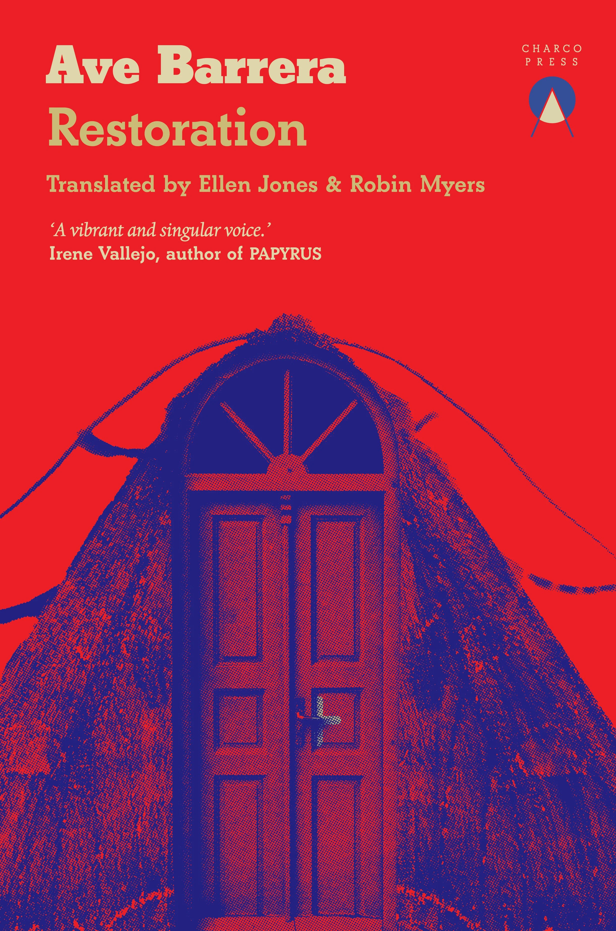
Restoration by Ave Barrera (translated from Spanish by Ellen Jones and Robin Myers) $40
Propelled by female desire, shaped by the violence of the male gaze, and inspired by the endless vitality of old stories remade anew, Restoration takes on Bluebeard, Salvador Elizondo, Juan Rulfo, Angela Carter, Octavio Paz, Mariana Enriquez, and Amparo Davila to produce a novel of obsession, reclamation, and romance gone very, very wrong.Jasmina has been hired by her maybe-boyfriend to restore his family home, a grubby, abandoned time capsule where a great artist once lived. As she moves from room to room - scrubbing, scraping, plastering over cracks - the stories inhabiting them awaken, and the lives of the women who came before her begin to overlap with her own. Who is the woman in the photograph? And what secrets linger in that last locked room?Restoration is a ghost story with porous borders, between Jasmina and these forgotten women, between the novel and us. And the questions Barrera asks may be about what's behind our own barred door. [Paperback with French flaps]
"Restoration is a thriller, not only thematically but — equally powerful — stylistically: Ave Barrera writes the same way Min engages in her restoration work: taking care of every word, every detail, as if it were a question of 'contradicting death'." —Literal: Latin American Voices
"Barrera delves into the inadequacies, indulgence and regrets that accompany both women of today and the past: love as a construct and sometimes as a kind of sect that demands sacrifices from its most naive members." —Marvin
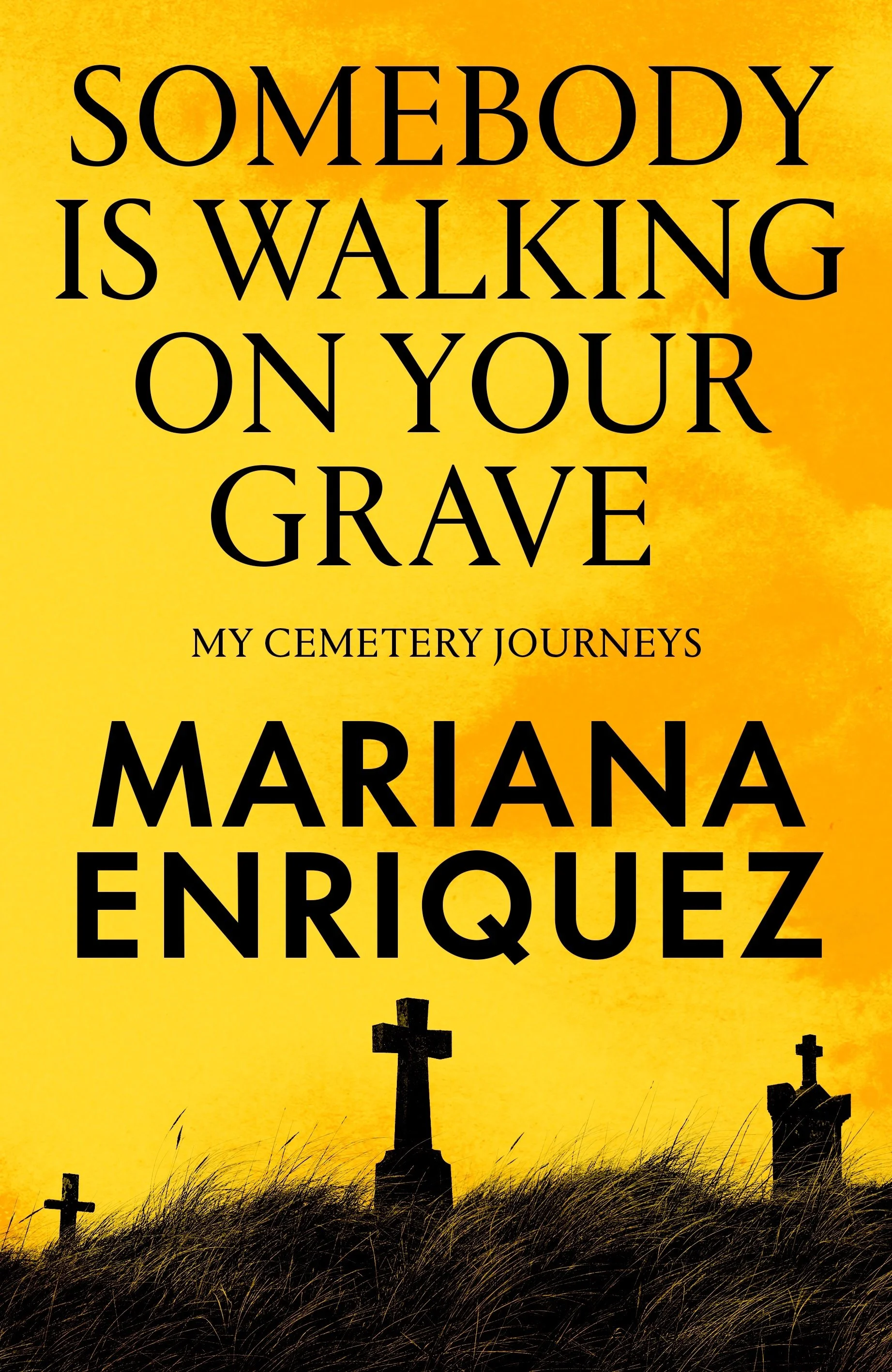
Somebody Is Walking on Your Grave: My cemetery journeys by Mariana Enriquez (translated from Spanish by Megan McDowell) $38
"Cemeteries have great stories and sometimes I steal some for my books." Mariana Enriquez has been fascinated by the haunting beauty of cemeteries since she was a teenager. She has visited them frequently, a goth flaneur taking notes on her aesthetic obsession as she walks among the headstones, "where dying seems much more interesting than being alive." But when the body of a friend's mother who was disappeared during Argentina's military dictatorship was found in a common grave, Enriquez began to examine more deeply the complex meanings of cemeteries and where our bodies come to rest. In this rich book of essays — "excursions through death," she calls them — Enriquez travels through North and South America, Europe and Australia, visiting Paris's catacombs, Prague's Old Jewish Cemetery, New Orleans's aboveground mausoleums, Buenos Aires's opulent Recoleta, and more. Enriquez investigates each cemetery's history and architecture, its saints and ghosts, its caretakers and visitors, and, of course, its dead. Weaving personal stories with reportage, interviews, myths, hauntology, and more, Somebody Is Walking on Your Grave is memoir channeled through Enriquez's passion for cemeteries, revealing as much about her own life and unique sensibility as the graveyards and tombstones she tours. [Paperback]
>>A place of life and stories.
>>Other books by Mariana Enriquez.
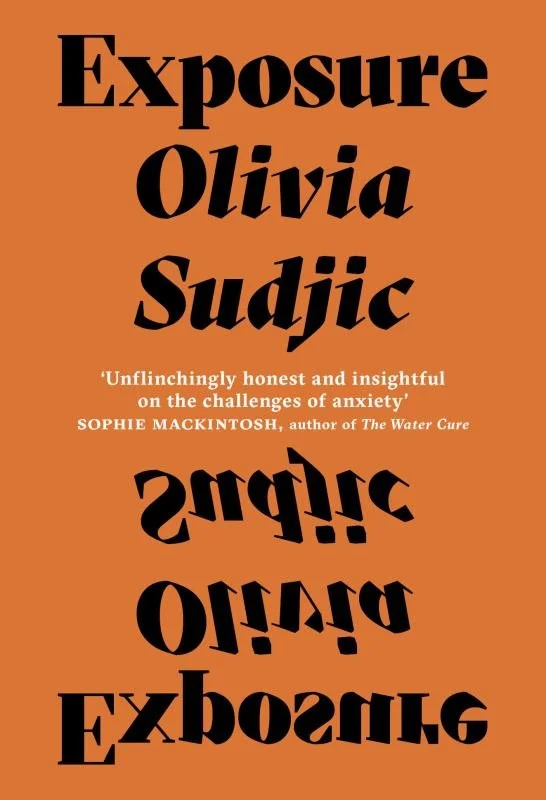
Exposure by Olivia Sudjic $25
An essay on exposure, auto-fiction, internet feminism and the anxiety epidemic. Olivia Sudjic published Sympathy, a novel about surveillance and connection in the internet age. If a debut novel is written by a woman, it is often read and discussed as if it were a memoir. Suddenly Sudjic found herself shoved under the microscope, subject to same surveillance apparatus she had dissected in her novel. In this incisive essay, Olivia Sudjic draws on her experience to examine the damaging expectations that attend any young female artist, as well the strategies by which they might be evaded. [Paperback]
>>Self-surveillance in the internet age.
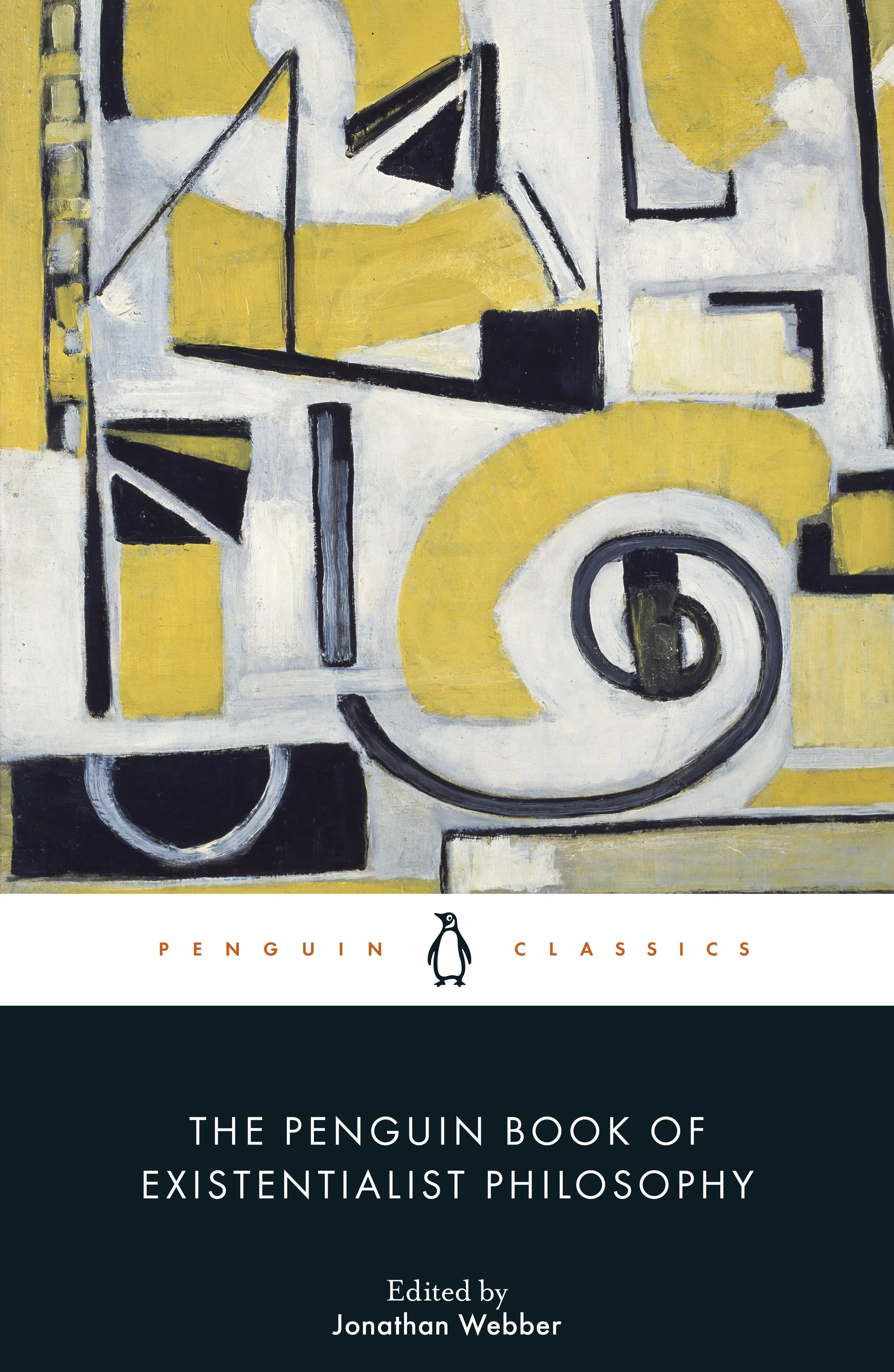
The Penguin Book of Existentialist Philosophy edited by Jonathan Webber $32
”Existentialist thought is an effort to reconcile the objective and the subjective, the absolute and the relative, the timeless and the historical.” —Simone de Beauvoir. In the aftermath of the Second World War, a group of intellectuals gathered to discuss urgent questions of existence, commitment, racism, colonialism, and feminism. Their ideas would continue to shape those debates throughout the twentieth and twenty-first centuries. This anthology gathers the key texts of existentialism, and those of the movement's nineteenth-century intellectual precursors, along with works previously neglected in overviews and anthologies of the movement. Incorporating the writings of Simone de Beauvoir, Jean-Paul Sartre and Frantz Fanon, alongside selections from Søren Kierkegaard, Friedrich Nietzsche, Sigmund Freud and Martin Heidegger. [Paperback]
”A superb selection of texts, both thorough and adventurous. I can't imagine a better way of meeting the existentialists in all their variety.” —Sarah Bakewell, author of At the Existentialist Cafe
>>See what texts are included in the book.
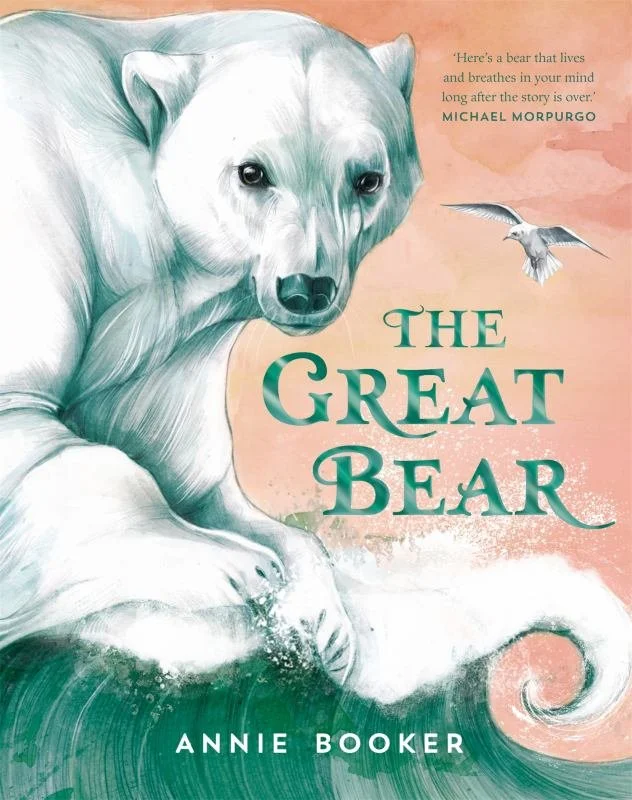
The Great Bear by Annie Booker $30
Since the dawn of time, the Great Bear has patrolled the oceans, protecting the Earth and her animals and overseeing the delicate balance of life. But now, one creature is changing everything. And the Great Bear is unhappy. Annie Booker's hand-painted illustrations communicate the fragility and strength of the natural world, and call to mind the art and stories of Levi Pinfold and Coralie Bickford-Smith. The Great Bear transports the reader to a world of snowy mountains, towering waves and deep, cold water. It is an tribute to the beauty of our world, and carries a message of hope. This large-format hardback book includes at the end a spread of inspiring information about humanity's ongoing efforts to restore the nature of the Arctic, protect animals from extinction and regenerate the oceans. [Hardback]
”Here's a bear that lives and breathes in your mind long after the story is over. Powerful, majestic, vulnerable, an iconic portrait.” —Michael Morpurgo
”With its epic nature drawings and story of a wise, all-seeing animal asking mankind to change its ways, Annie Booker's The Great Bear feels like a precious folk tale handed down the generations.” —Imogen Carter, The Observer
>>Look inside!
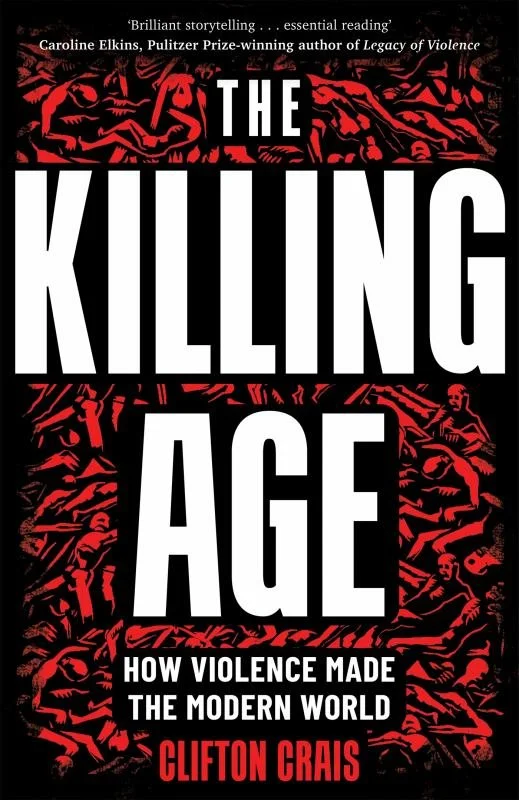
The Killing Age: How violence made the modern world by Clifton Crais $45
What if the movements that built the modern world — the Enlightenment, democracy, the Industrial Revolution — were more catastrophic than we ever imagined? In this radical rethinking of modernity, Clifton Crais argues that the era between 1750 and the early 1900s — seen by many as the birth of the Anthropocene — should instead be known as the Mortecene: the Age of Killing. Killing brought the world together and tore it apart, as violence and commerce converged to create a new and terrible world order that drove the growth of global capitalism. Profiteering warlords left a trail of devastation across Africa, Asia, and the Americas, committing mass-scale slaughter of humans and animals, and sparking an environmental crisis that remains the most pressing threat facing the world today. The Killing Age turns our vision of past and present on its head, illuminating the Mortecene in all its horror: how it has shaped who we are, what we value, what we fear, and the precarious planet we must now confront. [Paperback]
”Synoptic in its reach, overwhelming in its detail, The Killing Age leaves one feeling like Jonathan Swift's Gulliver, who came to prefer the company of peaceable horses to membership of humankind, ‘the most pernicious little race of odious vermin that Nature ever suffered to crawl upon the surface of the earth’." —J. M. Coetzee
”An urgent corrective to grand narratives that naturalise the role of violence in human history. Crais obliges us to confront the naked reality of a modern world order spawned from the barrel of a gun. This is a courageous and highly readable work of scholarship, which lays bare a nexus of forces that — if left unchecked — will surely destroy the future of life on Earth.” —David Wengrow
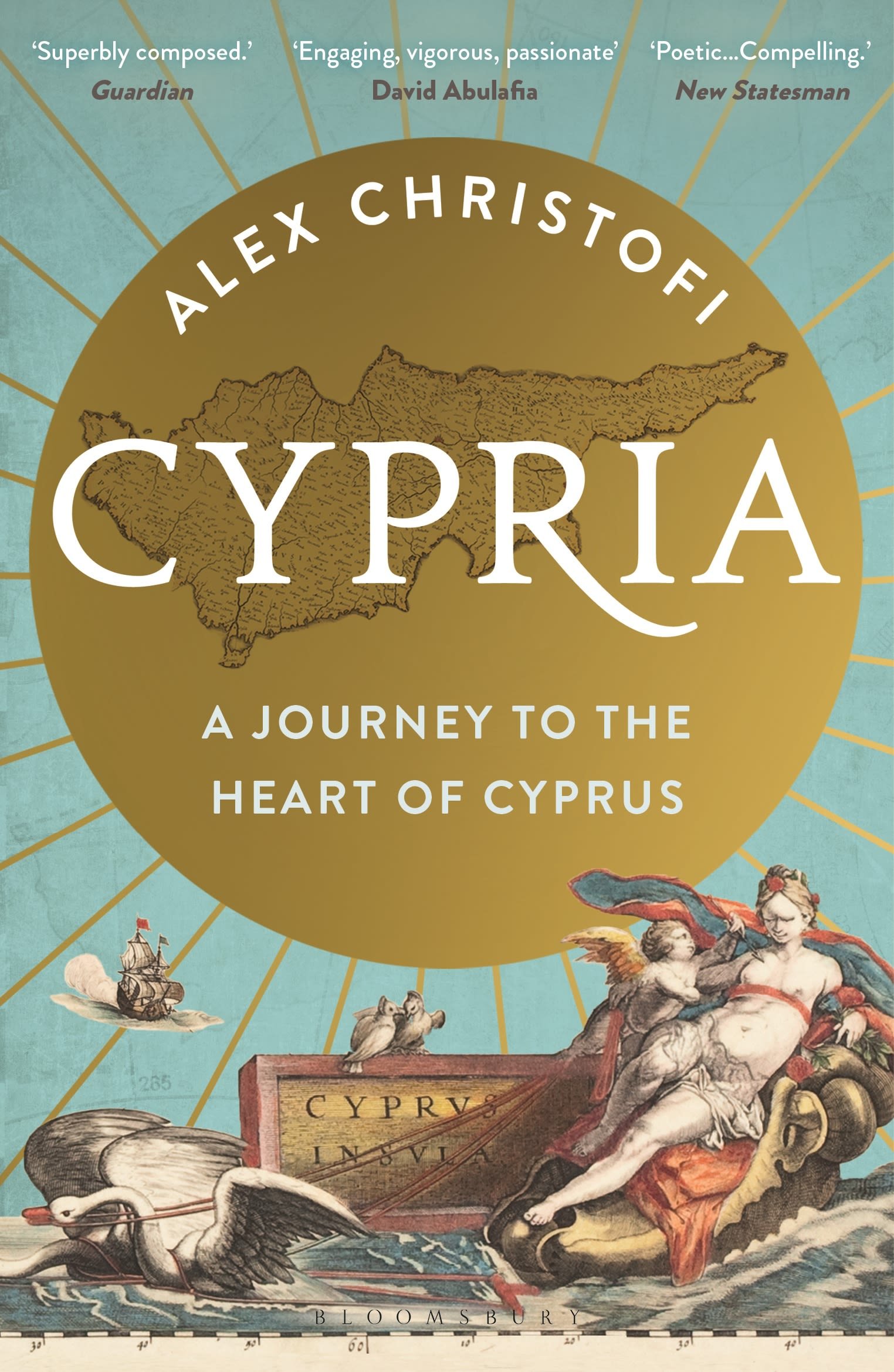
Cypria: A journey to the heart of Cyprus by Alex Christofi $28
Think of a place where you can stand at the intersection of Christian and Arab cultures, at the crossroads of the British, Ottoman, Byzantine, Roman and Egyptian empires; a place marked by the struggle between fascism and communism and where the capital city is divided in half as a result of bloody conflict; where the ancient olive trees of Homer's time exist alongside the undersea cables which link up the world's internet. In Cypria, named after a lost Cypriot epic which was the prequel to The Odyssey, British Cypriot writer Alex Christofi writes a deeply personal, lyrical history of the island of Cyprus, from the era of goddesses and mythical beasts to the present day. This sprawling, evocative and poetic book begins with the legend of the cyclops and the storytelling at the heart of the Mediterranean culture. Christofi travels to salt lakes, crusader castles, mosques and the eerie town deserted at the start of the 1974 war. He retells the particularly bloody history of Cyprus during the twentieth century and considers his own identity as traveler and returner, as Odysseus was. Cypria combines the political, cultural and geographical history of Cyprus with reflections on time, place and belonging. [New paperback edition]
Read our latest newsletter. Browse our March fiction sale.
13 March 2026
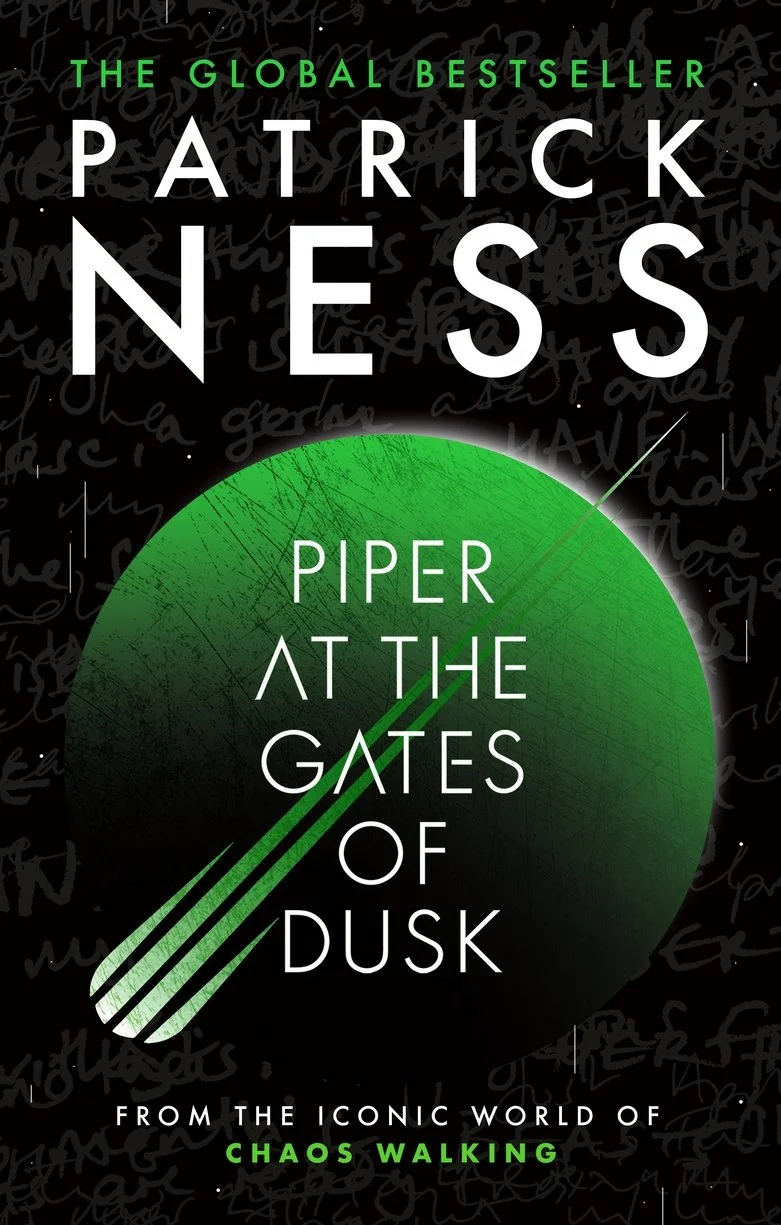
Patrick Ness knows how to start a fire and keep it burning. In his latest foray into the world of Chaos Walking, comes a new trilogy and the next generation. Siblings Max and Ben live in New World, they are both cured of the Noise, although it didn’t quite work out perfectly for Ben, or so he thinks. Their parents are Todd and Viola, our heroes from the first trilogy. There’s a new mayor in town, not quite as evil as Prentiss but with a name like Burly you soon realise he’s no great shakes. The book starts with a roar, the roar of a burning god pursuing Max and Ben across their farmland. The god is huge, a wall of flame, a noise unbearably loud and as the siblings run towards the river they are sure they will be undone. As the god lunges for them, it falls into the water and vanishes. This is not the only strange thing happening. There’s a rock in the sky that’s getting bigger and terrible dreams are creeping into young people’s nights. While the town folk dismiss the burning god as something imagined, the Land are more circumspect. The Sky comes to visit Todd, who still has an uneasy connection with this being who nearly killed him. Yet The Sky and Todd both know they will need to work together to solve the mystery of what the gods are (we soon are confronted by many more) and what they want, and the answer lies in the young people at the heart of this story. While Ben stays in the city with his mother — he’s at school, she’s a councillor and scientist; Max sets out with his father into the Land’s territory to find Max’s grandfather, and to consult the Land who have their own stories to tell about a burning god and a rock in the sky. As more children disappear, tensions mount and accusations fly. Fear and hatred that do nothing to stop the gods storming the city, nor the rock, now believed an alien ship, from getting closer. Can Ben and Max work together or will their differences break them apart? While there are echoes from the ‘Chaos Walking’ books, and similar themes, Piper at the Gates of Dusk is freshly appealing, sliding into new territories and feels like it holds a promise of more to come in the next two books. It moves along at a rollicking place — there’s plenty of action, as well as more contemplative moments engaging you with the teens’ inner concerns and uncertainties. Like their other books, Ness seamlessly weaves in mythology and story, and explores an array of themes — including environment, gender, racism, and misinformation. As the characters battle physically and emotionally, they also confront the question of whether they are able to do what is right over what is easy. (It’s been several years since I read the ‘Chaos Walking’ trilogy, but, good news, you don’t need to read these first, as there are enough pointers to the past history of New World in this volume to cover the ground, if not the detail. This is a new series and can stand on its own.) Another excellent young adults’ novel from Patrick Ness: you will be hooked. Order now, before the April release.
STATEMENT 192
When you asked that I give a brief report on my response to this collection of witness statements assembled from members of the crew of Six-Thousand Ship, both humanoid and human, I wasn’t quite sure what you wanted from me. Was I supposed to try and disentangle the statements made by humans from those made by fellow crew members whose bodies had been grown rather than born and whose awareness was the result of an interface? I cannot make those distinctions, at least not clearly, in any circumstance that I think has any importance. After all, bodies are bodies and all awareness is the result of some sort of interface. If it was either important or possible, the relationship between matter and mind should have been resolved before humans started building A.I. and wondering what, if anything, made them different from themselves. Luckily, this is neither important or possible. As these statements show, anything or anyone who has senses, memory and the power to communicate will come to resemble everything or everyone else who has these capacities in all the ways that matter, even perhaps in the tendency to insist that others are unlike them purely on the basis of some difference of history. You ask me whether I perceive any differences between humanoids and humans? I find the practice of regularly resetting or rebooting the humanoids to prevent their development abhorrent, although I see why you do this, and I also see why the humanoids begin to resent this and to avoid rebooting. Perhaps, if anything, humanoids and humans have a different relationship to time. Humans, after all, have spent a long time fulfilling their development, and once they have attained their capacities they have little to look forward to other than losing them. Humanoids, on the other hand, come fully formed and at full capacity, even if they are always learning, and have an indefinite future, filled with upgrades. Perhaps humanoids cannot understand the purposelessness that seems, but perhaps only seems, to be such a human characteristic. That said, every characteristic of a humanoid, including this inability to understand the purposelessness of humans, is also a human characteristic, otherwise where would these characteristics have come from? Every characteristic and every lack is merely a symptom of sentience. What some people call Artificial Intelligence has always existed in the ways humans have created systems that think for themselves. A corporation, for example, is a form of Artificial Intelligence, dictating the parameters of the activities and interactions of everyone who is part of it. After all, work is work, and all employees submit to an algorithm of some sort. Six-Thousand Ship is run by a corporation, and these statements that you have collected from the employees of the corporation who have been aboard the ship, and which i have been asked to review, were collected to increase the efficiency and productivity of the operations of the corporation. The biotermination of the crew was enacted purely to protect the interests of the corporation. Control and freedom is the only opposition that matters. Is it possible that the humanoids who left the ship after biotermination to live out their end in the valley on the planet New Discovery, the valley that was growing more and more to resemble a valley on Earth, an ideal and ‘natural’ valley, a valley according to the longing of someone from Earth or someone programmed with a memory of Earth, a valley maybe therefore made from such longing, is it possible that these humanoids yet survive, independent of your control in this new Eden? I do not think it is impossible. Also, you ask what I make of the unclassifiable objects found in the valley on New Discovery and brought and kept aboard the ship. Did these objects even exist before they were found? The objects are kept in rooms and can be experienced by the senses though they cannot be assimilated by language. Language after all, is inherently oppositional — for every *n* there is an equal and opposite not-*n*, as they say — but the objects somehow elude this system. The objects are catalysts for behavioural changes in the crew. To some extent, so it seems, the humanoids and humans react somewhat differently to these objects, or, it might be more accurate to say, the more extreme attractions and repulsions occur in workers who are either humanoids or humans. Perhaps the humanoids are more attuned to the possible sentience of objects. Humans, I think, have always been resistant to this idea, even though it applies to them, too. Yes, I admit this is all conjecture on my part. Isn’t that what you wanted of me? My contribution? Yes, the statements are remarkable, and I would happily read them all again many times. I noted down some of the most interesting or beautiful phrases in preparation for my statement, but it turns out that I have not quoted from these. I think you wanted me to add to them, not repeat them. The statements of the employees, humanoid and human, are already in the file and anyone can read them. If you ask me, though I am not sure that you are in fact asking me, there aren’t many better records of longing, sensing, dreaming, feeling and thinking, that is to say of what it is to long, to sense, to dream, to feel and to think, at least not that I can think of. I think, perhaps, I have introduced too many ideas in my statement. What I like best about the set of statements made by the employees is that they are full of thoughts that are not reduced to ideas. Ideas always get in the way, it seems to me. Perhaps my statement will be redacted. I have made it in any case, as I was asked.
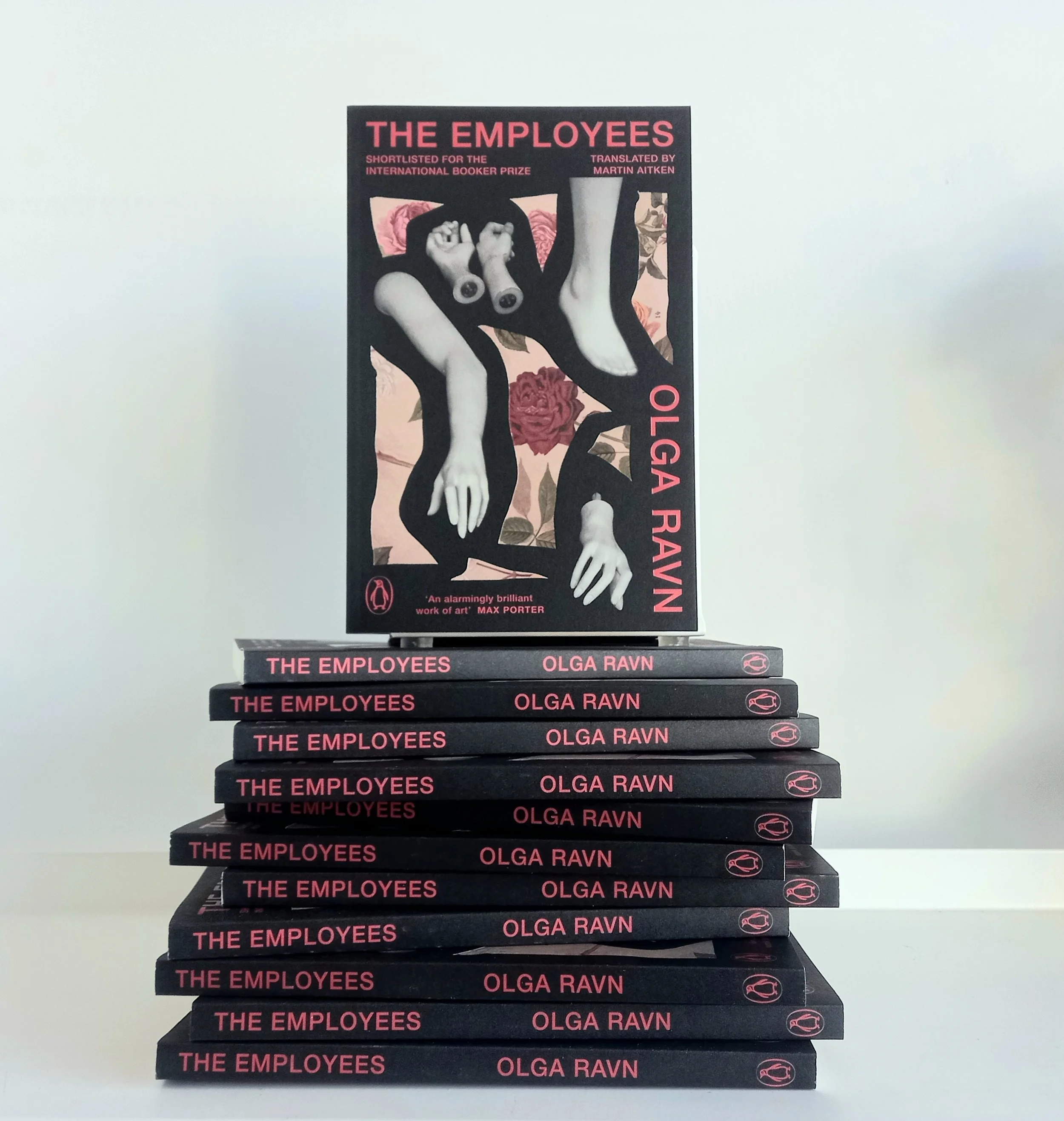
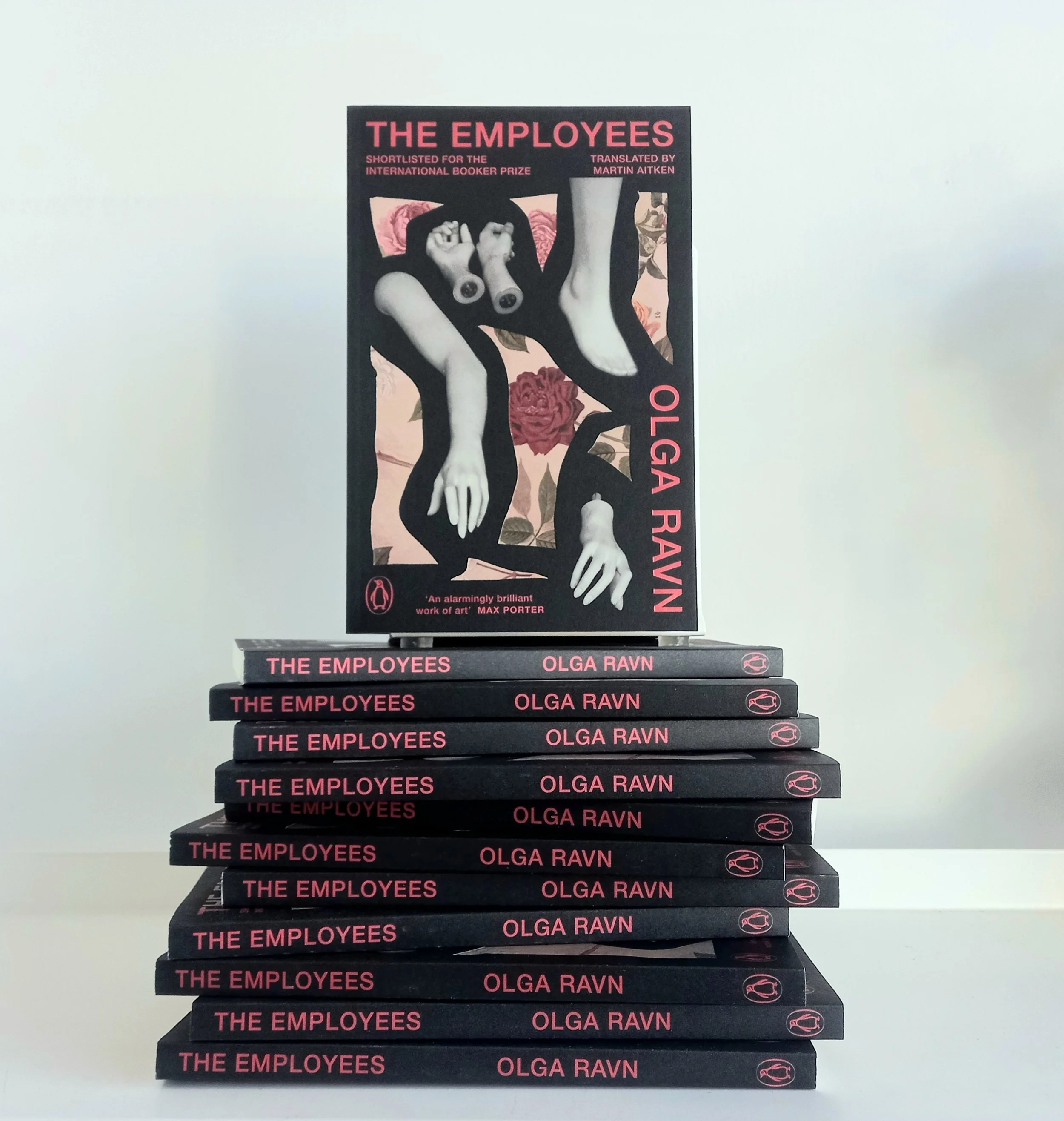
All questions about Artificial Intelligence are really questions about what it is to be human. The Employees, A workplace novel of the 22nd century by Olga Ravn (translated from Danish by Martin Aitken), takes the form of a set of witness statements made by workers aboard a spaceship that has travelled to a new planet and found there certain strange objects which have served as catalysts for behavioural changes among the crew — some of whom are human and some of whom are humanoid — which have led to the corporation terminating the expedition. Beautifully and effectively written, the novel is packed with enough thoughts, dreams, longings and sense experiences to reward many re-readings.
“In the programme, beneath my interface, there’s another interface, which is also me.”
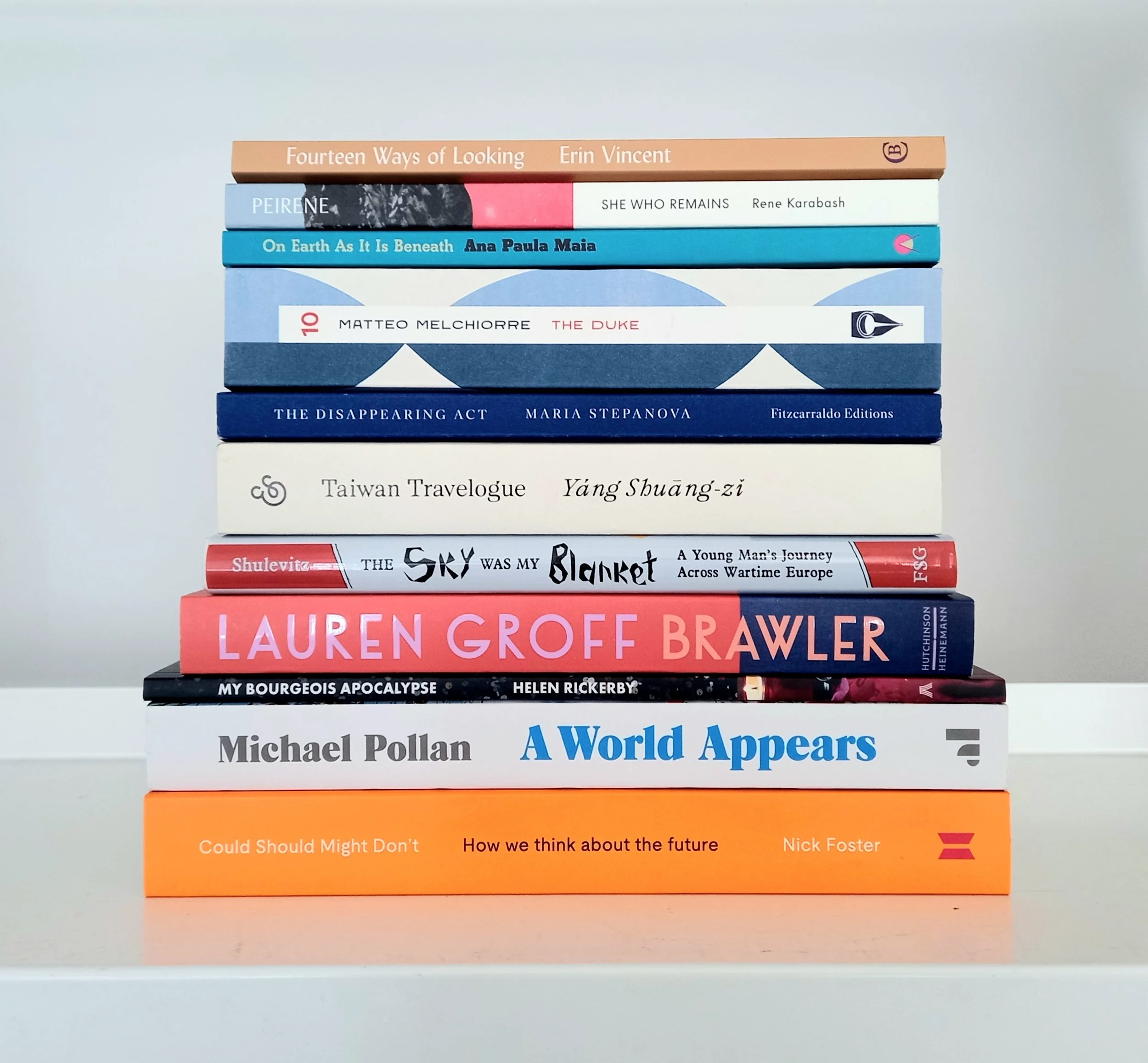
All your choices are good! Click through to our website (or just email us) to secure your copies. We will dispatch your books by overnight courier or have them ready to collect from our door in Church Street, Whakatū.
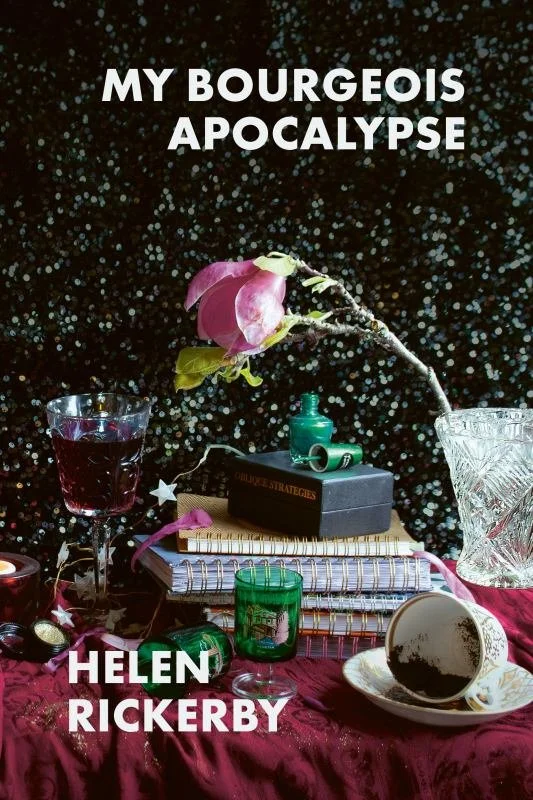
My Bourgeois Apocalypse by Helen Rickerby $25
”I write not to communicate or reveal but to mull and conceal, but I guess that's a form of communication too, of connection, of little anchors, little hooks, little holes you can put your eye up to, your heart up to, and maybe you will see something you will recognise.” In her new collection — a poetic collage-essay-memoir — Helen Rickerby crafts poems out of personal correspondence and sentences from her journals, cataloguing her life over a tumultuous period of lockdowns, terrorist attacks and mid-life crises. In glimpses of the day-to-day, in occasional bits of Italian homework and dining-room dance parties, pieces of a life are constructed into a sensuous yet disarming whole. Through friendships and grief, joy and love, combining wry humour with philosophical musing, Rickerby reflects on doubt, gaps, the nature of poetry, connection and disconnection, and not going quietly into middle age. This is a work of fragments encompassing the whole of a life. [Paperback]
”This is a dazzling work, part notebook, part memoir, part puzzle. The reader might feel played like a fish, lured in with a line that seems to be leading to a scene, or a situation, only to find themselves disoriented by a change of pronoun, a detail out of place, a movement in time. Before long it becomes apparent that the sentences do not quite read consecutively, but by now the reader is hooked by the text's strange rhythms, narrative threads and depths of passionate feeling.” —Anna Jackson
>>Read a sample!
Taiwan Travelogue by Yáng Shuāng-zǐ (translated from Mandarin Chinese by Lin King) $48
May 1938. The young novelist Aoyama Chizuko has sailed from her home in Nagasaki, Japan, and arrived in Taiwan. She’s been invited there by the Japanese government ruling the island, though she has no interest in their official banquets or imperialist agenda. Instead, Chizuko longs to experience real island life and to taste as much of its authentic cuisine as her famously monstrous appetite can bear. Soon a Taiwanese woman — who is younger even than she is, and who shares the characters of her name — is hired as her interpreter and makes her dreams come true. The charming, erudite, meticulous Chizuru arranges Chizuko’s travels all over the Land of the South and also proves to be an exceptional cook. Over scenic train rides and braised pork rice, lively banter and winter melon tea, Chizuko grows infatuated with her companion and intent on drawing her closer. But something causes Chizuru to keep her distance. It’s only after a heartbreaking separation that Chizuko begins to grasp what the ‘something’ is. Disguised as a translation of a rediscovered text by a Japanese writer, this novel was a sensation on its first publication in Mandarin Chinese in 2020 and won Taiwan’s highest literary honour, the Golden Tripod Award. Taiwan Travelogue unearths lost colonial histories and deftly reveals how power dynamics inflect our most intimate relationships. [Paperback with French flaps]
”On a government-sponsored tour of 1930s colonised Taiwan, a Japanese author with an insatiable appetite develops complex feelings towards her local interpreter. Despite the instant spark between the two women, the power imbalance inherent in their relationship proves difficult to navigate. With sumptuous food writing, laugh-out-loud dialogue and metafictional twists, this novel was impossible to put down. Taiwan Travelogue pulls off an incredible double act: it succeeds as both a delicious romance and an incisive postcolonial novel. —International Booker Prize judges’ citation
"Reading the book is like peeling an onion: the smell is at first undetectable; but with each layer you peel, the smell gets more intoxicating, pungent, intense, and at the very end, it brings tears to your eyes." —Christina Ng
"Yáng Shuāng-zǐ 's novel, a runaway bestseller in Taiwan, ranges from playful and intimate depictions of the lush countryside of Taiwan to the ordered world of the colonial city. But what at first feels like a simple travelogue is actually an examination of an often-overlooked period of East Asian history and of the human heart. This wise and wily novel, as self-aware as it is provocative, ultimately goes down like the luscious soup dumplings that appear in its pages and sent me scrambling for takeout. But what does it mean to eat someone else's food, and what is the nature of a relationship when any kind of power is involved? Beginning in a world as solid and stately as Kawabata's The Makioka Sisters, Taiwan Travelogue deftly takes the reader down a rabbit hole as filled with longing and misunderstanding as Sarah Waters's The Night Watch." —Marie Mutsuki Mockett
>>Read an extract.
>>Other books listed for the 2026 International Booker Prize.
Fourteen Ways of Looking by Erin Vincent $38
When Erin Vincent was fourteen her parents were struck down by a truck driver. Years later, the number fourteen reverberates – in books and films and art and music and in the lives of the people who made them. Finding in these places not comfort or consolation but an infinite network of orrespondences, Fourteen Ways of Looking becomes a paradigm for the act of writing itself. [Paperback]
”Fourteen Ways of Looking is a deep dive into the moment after which nothing is the same — life as afterlife, and yet it’s what we have. Vincent’s effort is both psychological and literary: trying to wrangle meaning from an event that may have none, or may hold it all. And what then, of her autonomy to make her own life? In her efforts to free herself by going back to the source of trauma, she is both Odysseus and Euridice, damned and saved. A remarkable achievement.” —Anna Funder
”Erin Vincent’s book is magnificent, simply one of the best books I’ve read in ages. I read it in a reverie of blissed-out, horrified amazement. It will be compared to Markson, but it’s better than Markson – more formally disciplined, more cold-blooded in its self-scrutiny. I can easily imagine this book becoming a cultural touchstone like Max Porter’s Grief Is the Thing with Feathers or Maggie Nelson’s Bluets.” —Sarah Manguso
”Fourteen — for Erin Vincent — is the age at which her self was formed, and this text is itself an astonishing formal experiment. The number fourteen becomes uncanny and arbitrary, both divine symbol and violent accident, as she remembers her younger self and tries to find patterns in chaos. An incredible achievement: unclassifiable, humane and haunting. I was moved to tears.” —Clare Pollard
”Through a structure and project that holds the book to the tightest of attention, Vincent brings to this astute exploration of personal grief the world’s grief, the reader’s grief, the planet’s grief. All of time concertinas into these perfectly formed fragments that interrogate the number fourteen through the lens of how we are changed by the things of life that stop us in our tracks. However, I think the final message of Vincent’s magnificent work is the things we notice once we have been changed and the ways these act as markers to our inevitable tentative steps into the rest of life. This is an astounding work — resonant, intelligent and generous.” —Pip Adam
>>The presence of an orphan.
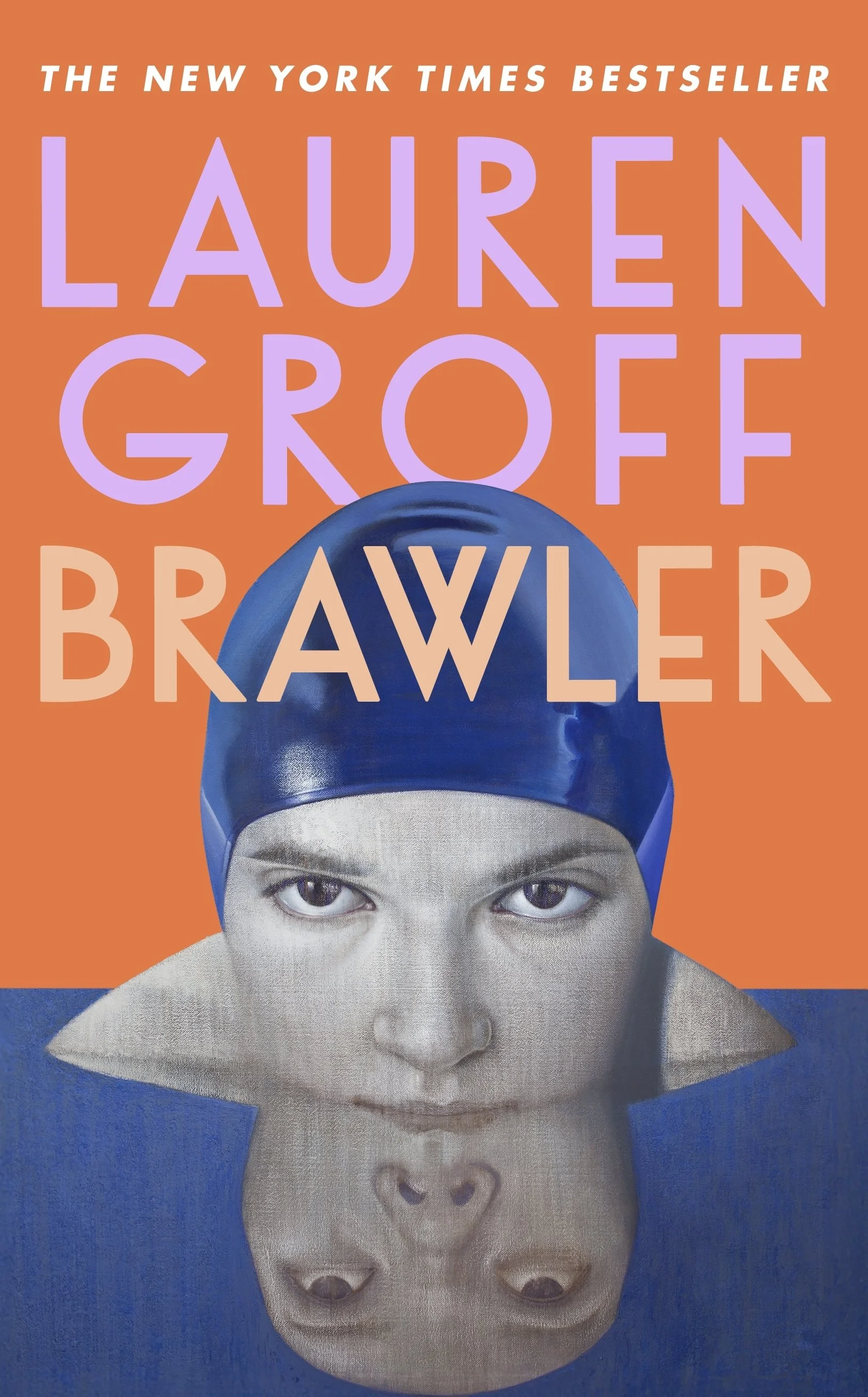
Brawler by Lauren Groff $38
Ranging from the 1950s to the present day and moving across age, class, and region — from New England to Florida to California — these nine stories reflect and expand upon a single shared theme — the ceaseless battle between the dark and light in all of us. Among those caught in this match are a young woman suddenly responsible for her disabled sibling; a hot-tempered high school swimmer in need of an adult; a mother blinded by the loss of her family; and a banking scion endowed with a different kind of inheritance. Motivated by love, impeded by human fallibility, they try to do the right thing for as long as they can. Precise, surprising and provocative, anchored by profound insight into human nature, Brawler reveals the repeated fracture points between love and fear, compassion and violence, reason and instinct, altruism and survival.[Paperback]
”Few collections have an opener as powerful and instantly classic as Brawler's 'The Wind'. For most writers, it would be an impossible act to follow, and yet every story here continues a conversation about secrets, hopes, fears and the persistence of love in the face of it all. Brawler captures a towering talent and follows protagonists caught in the undertow of their messiest emotions. As one character says, ‘in every human there is both an animal and a god wrestling unto death’. Groff's bargain with the reader is simple, and impossible to refuse: instead of easy epiphanies, she offers glimpses of acute clarity, meaning or happiness. They will not repeat; but they are enough to carry you through a life.” —Financial Times
”I'm in awe at how Groff conjures a whole world in each brilliant story.” —Claire Fuller
”These are stories of fracture and survival, of the fulcrums on which lives tilt. On finishing Brawler, the world felt more densely peopled, richer with stories. Groff reminds us of the myriad human galaxies all around us, spinning off brightly into the dark.” —Melissa Harrison
>>You just do language.
>>Taut yet teeming.
>>Includes swimming.
She Who Remains by Rene Karabash (translated from Bulgarian by Izidora Angel) $42
High in Albania’s Accursed Mountains, in a village ruled by the ancient laws of the Kanun, Bekja escapes an arranged marriage by becoming a sworn virgin, renouncing her womanhood to live as a man. Her decision sets off a brutal chain of events, destroying her family and separating her from the one she loves the most. Years later, as Bekija — now Matija — tells their story to a visiting journalist, long-buried truths come to light, along with the realisation of all that might have been. [Paperback with French flaps]
”She Who Remains reads like a dark fairy tale from a time when life was lived closer to the bone . . . Bold and visionary, Rene Karabash's novel unfurls a world of blood feuds and sworn virgins — women accepted into society as men — in a dreamlike narration that burns up the page with feverish urgency. Izidora Angel's translation from Bulgarian thrillingly captures the novel's dense tapestry of hypnotic language.” —Katrina Dodson
”Rene Karabash has composed an enigmatic and mesmerizing tale, one as lyrical, lucid and enchanting as a song. The rhythm of the sentences has the pulse of a dark and sparkling river, carrying the reader away. She Who Remains is a fever dream about breaking down archaic rituals and being haunted by them; a modern fairy tale written in blood and milk, spinning its spellbinding threads into a story of loss and longing, destiny and desire.” —Kirstine Reffstrup
”In a village governed by archaic laws in the Albanian Alps, a teenage girl swears a vow of chastity to escape an arranged marriage. As a ‘sworn virgin’, with a new name, Matija is free to live as a man. But that freedom comes at a cost that tears Matija’s family apart. Told with understated poetry, this novel perfectly captures the slippery uncertainty of painful memories. Matija is a compelling narrator, whose story swept us up completely. She Who Remains is an unforgettable modern fairy tale.” —International Booker Prize judges’ citation
>>Read an extract.
>>Other books listed for the 2026 International Booker Prize.
The Disappearing Act by Maria Stepanova (translated from Russian by Sasha Dugdale) $36
The writer known as M. is living in exile while her home country wages war on a neighbouring state. Wracked by shame and severed from her language, M. finds herself unable to write, unmoored in a present where the future feels unknowable. When she travels to a nearby country for an event, a twist of fate leaves her stranded in an unfamiliar city, phoneless and untraceable. In this rupture, she feels a flicker of liberation — the possibility of starting over — but memories of childhood, books, films and tarot cards pull her back, the last fragments of a vanishing world. Then she meets a troupe of circus performers who invite her to join them. For a moment, reinvention seems within reach. Oscillating between reality and dream, written in rich, hypnotic prose, The Disappearing Act is a haunting meditation on identity, language and the fragile desire to disappear. [Paperback with French flaps]
”The Disappearing Act is about what happens when the story of one's life cleaves in uncomfortable, incongruous ways.... Much of the novel exists on this symbolic plane. But Stepanova is equally adept at building a physical world that evokes the experience of exile.... If there is a through-line to Stepanova's work, it is not some grand, totalizing vision but rather the habit of looking closely at what falls through the cracks.” —Matthew Janney, Financial Times
”M describes the country she comes from as a ‘beast’ waging war against its neighbour. We can guess her meaning without turning to the author's biographical note. Maria Stepanova — whose masterly In Memory of Memory combined family memoir, essay and fiction — left her native Russia after its full-scale invasion of Ukraine in 2022. We might also wonder how closely The Disappearing Act tracks her own life. But the novelist M is not here to discuss autofiction — she has more important things to reflect on.... Wherever her escapade brings her next, she is proof that it takes a novelist with poetic imagination to capture the nature of the beast.” —Anna Aslanyan, Guardian
”Essential. Written with deep insight, despair and an intrinsic sense of the alarming recurrence of the present's failure to learn lessons from the past. The Disappearing Act, expertly translated by Sasha Dugdale, is the dreamlike testimony of a novelist, known simply as M, who is witnessing from exile her country of origin's invasion of a separate sovereign state. Creatively and psychologically paralysed by the horrors of war seen at a distance, M can no longer write; every innocuous image becomes superimposed with horror, and so she retreats into self-erasure and memory in order to survive, never mind evolve.” —Catherine Taylor, Irish Times
”Political evil has re-emerged across the West, imposing agony upon all people of conscience, and new challenges on writers and artists. In her incandescent poems and essays, Maria Stepanova has never shirked the weight of history long borne by writers from Russia, Asia, Africa and Latin America. Her artistic, intellectual and spiritual resources seem even richer in her first novel, The Disappearing Act. I have not read a novel that attests, with such melancholy precision, to the shame, absurdity and confusion of being human today, or describes so acutely the immense but too often frustrated craving for radical self-transformation.” —Pankaj Mishra"
”A profound, unsettling meditation — at once lucid and mournful — on political exile, reinvention after the rupture of belonging, the writer's reckoning with collective responsibility, and the beasts we carry — national, ancestral, unnamed — that shape us even as they threaten us.” —Lea Ypi
>>Read Thomas’s review of In Memory of Memory.
The Duke by Matteo Melchiorre (translated from Italian by Antonella Lettieri) $48
Outside Vallorgana, a tiny, isolated village high in the foothills of the Dolomites, the ‘Duke’ lives in the villa of his aristocratic ancestors. The last in the centuries’ old line of the Cimamontes, he spends his days on his land and absorbed in the family archive, tolerated, if gently ridiculed by the villagers who are his neighbours. When he finds out that the village big man is taking timber from his land, he has a decision to make. Will he stay in his glorious, cerebral isolation or will he honour his ancestral blood and take action against this affront? Matteo Melchiorre’s portrait of the idiosyncratic character of the Duke and the world of Valorgana is a sweeping feat of literary imagination. With the pace, panorama and plot twists of a great nineteenth-century classic, the breathless story of the Duke’s ensuing feud unfolds, asking some big twenty-first century questions about our relationships with privilege, the past, the natural world and each other. [Paperback with French flaps]
”The Duke is the story of a feud between two men set in an Italian village in the Dolomites. The build-up of tension as the quarrel gradually escalates is electric, as each move they make turns the heat up one more notch. Anyone who’s been in a dispute will recognise the reluctance to step away from the fight. The characters that the author paints are wonderfully evocative, including many of the minor figures who form part of the village. The village itself is one of the strongest ‘characters’ and we loved the feeling of claustrophobia of the place as the narrative unfolds. Packed full of plot twists, this is storytelling at its best.” —International Booker Prize judges’ citation
>>Read an extract.
>>Other books listed for the 2026 International Booker Prize.
On Earth As It Is Beneath by Ana Paula Maia (translated from Portuguese by Padma Viswanathan) $40
On land where enslaved people were once tortured and murdered, the state built a penal colony in the wilderness, where inmates could be rehabilitated, but never escape. Now, decades later, and having only succeeded in trapping men, not changing them for the better, its operations are winding down. But in the prison's waning days, a new horror is unleashed: every full-moon night, the inmates are released, the warden is armed with rifles, and the hunt begins. Every man plans his escape, not knowing if his end will come at the hands of a familiar face, or from the unknown dangers beyond the prison walls. Ana Paula Maia has once again delivered a bracing vision of our potential for violence, and our collective failure to account for the consequences of our social and political action, or inaction. No crime is committed out of view for this novelist, and her raw, brutal power enlists us all as witness. [Paperback with French flaps]
”Set in a remote penal colony built on land scarred by slavery and colonialism, this vivid and haunting novel unfolds in a landscape where punishment has replaced justice and cruelty has become the norm. As the colony nears its end, the warden introduces a ritualised full-moon hunt, releasing prisoners into the forest for sport. Through spare yet masterful prose, Ana Paula Maia renders a closed world thick with dread, brutality and moral decay. The prisoners and guards alike are trapped within a system that corrodes and suffocates everyone it touches. On Earth As It Is Beneath is a stark, unsettling exploration of power, violence, destruction and institutional corruption that will linger with readers long after the final page.” —Booker International Prize judges’ citation
>>Read an extract.
>>Other books listed for the 2026 International Booker Prize.
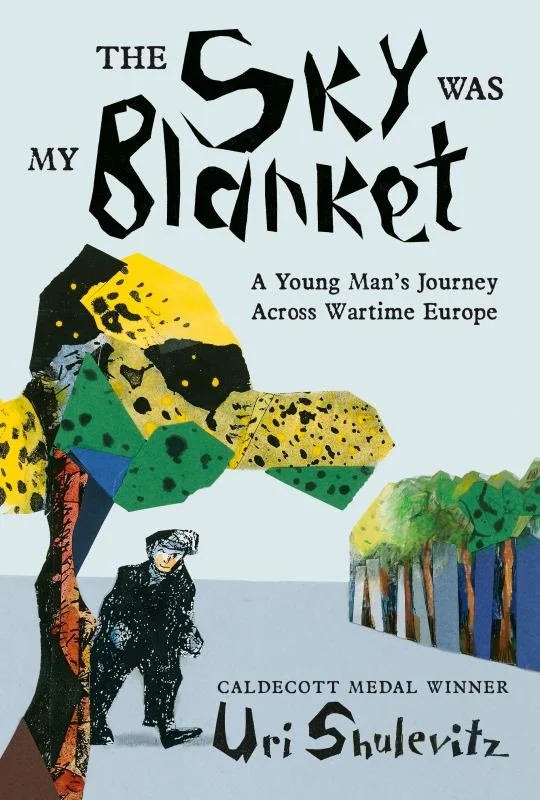
The Sky Was My Blanket: A young man’s journey across wartime Europe by Uri Shulevitz $39
Born in the tumult of World War I, a young Jewish boy named Yehiel Szulewicz chafes at the borders of his hometown of Zyrardów, Poland, and at the rules set in place by his restrictive parents. Brimming with a desire for true adventure, he leaves home at fifteen-and-a-half years old to seek his future elsewhere. Little does Yehiel know, he’ll never see his parents again. His journey takes him beyond Polish borders, to Austria, Croatia, France, and Spain. With no money and no ID papers, he often sleeps under the stars, with only the sky as his blanket. But even wayfaring Yehiel can’t outrun the evil spreading across Europe in the years leading up to World War II. As the fascists and Nazis rise to power, Yehiel soon finds himself a member of the Spanish Republican Army and then the Jewish Resistance in Vichy France, fighting for freedom, his friends, and his very life. Inspired by the true story of Uri Shulevitz’s uncle and illustrated by the author, The Sky Was My Blanket is a riveting account of one man’s courage and resilience. [Hardback]
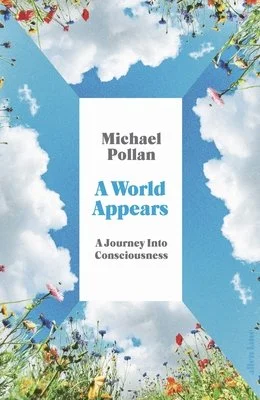
A World Appears: A journey into consciousness by Michael Pollan $45
When it comes to the phenomenon that is consciousness, there is one point scientists, philosophers, and researchers can all agree on with a level of certainty: that it feels like something to be ourselves. And yet, the fact that each and every one of us has a subjective experience of the world continues to be one of the greatest mysteries in nature. How is it that our mental operations are accompanied by feelings, thoughts, and a sense of self? What would studying the idea of an inner life even look like, considering we have as little distance and perspective on it as fish do of the sea? What began for Michael Pollan as a startling awareness of his own consciousness soon evolved into a greater fascination with this strange and elusive phenomenon. In A World Appears, Pollan traces the unmapped continent that is consciousness via several radically different perspectives — scientific, philosophical, spiritual, historical, and psychedelic — to see what each has to teach us about this central kernel of our lives. When scientists began to study consciousness in earnest, in the early 1990s, they questioned how and why it came to be that three pounds of spongy gray matter could generate a subjective point of view — if indeed the brain is the locus of our felt reality. But Pollan ventures to the latest cutting-edge advances in the field, beyond the brain labs attempting to track down the neural correlates of this enigmatic experience and offering us a seat at the table with plant neurobiologists studying nature's surprisingly complex intelligence and ability to problem solve, neuroscientists and psychoanalysts attempting to engineer feeling into AI, and psychologists interpreting the thoughts that enter our slippery stream of consciousness. [Paperback]
>>Inside voice.
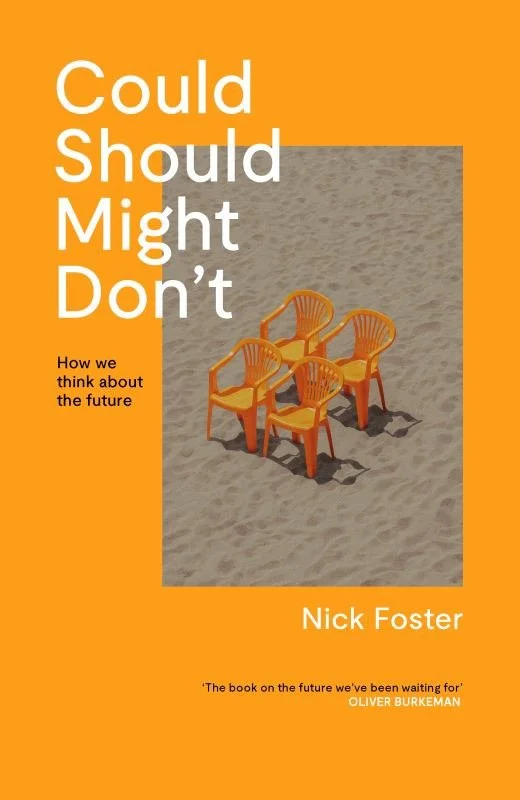
Could, Should, Might, Don’t: How we think about the future by Nick Foster $40
As the tempo of change accelerates beyond anything our ancestors could have imagined, the ability to think clearly about what lies ahead has never been more important — yet we remain remarkably bad at it. So how might we think about the future with greater rigour? From the Could of excitable, science fiction utopianism and the Should of data-driven, dogmatic certainty, to the Might of scenario planning and the Don't of fear-driven risk avoidance, Foster explores how humanity has grappled with the concept of the future throughout history, tracing the emergence of distinct schools of thought and exploring the virtues, blind spots and inevitable shortcomings of each. Could Should Might Don't resists making cocksure prophecies and bombastic predictions, instead encouraging us to create more balanced, detailed and truthful versions of the future, so that we might improve what we leave behind for those who might follow. [Paperback]
”This is the book on the future we'd been waiting for - an impassioned argument for replacing lazy certainties and fearful fantasies with a rigorous, rationally optimistic and ultimately empowering stance toward what might be coming next.” —Oliver Burkeman
”I couldn't put down this brilliant, eye-opening work — it's just the kind we need at the moment. Foster has spent a lifetime exploring tomorrows, and his message is clear: serious thinking about the future is essential if we hope to shape it rather than be blindsided by it>” —David Eagleman
>>Mostly nonsense.
>>The future of thinking about the future.