
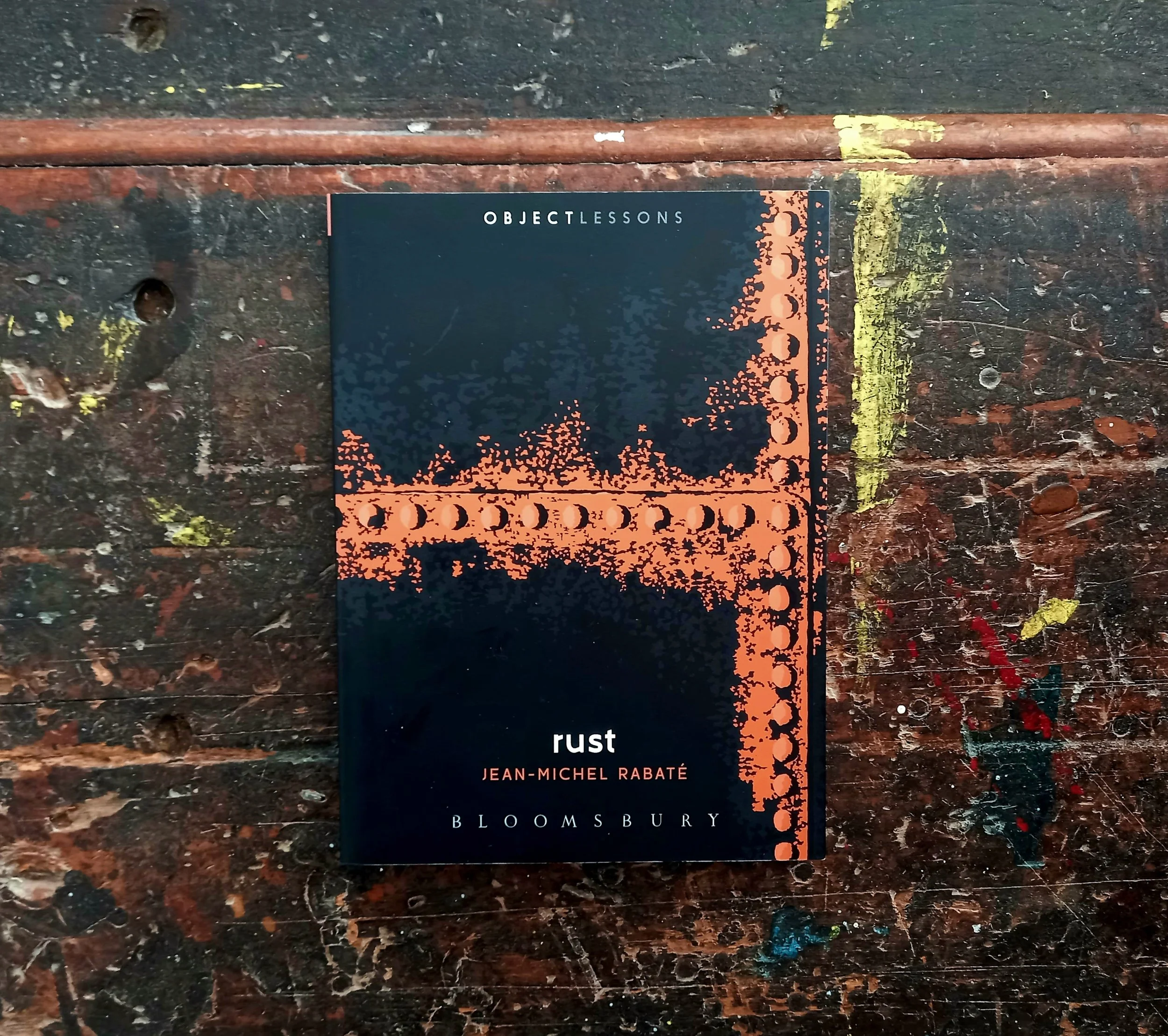
From the rusting hulks of the industrial era, from China to America, from the bodily functions of blood to the philosophical musings on the allegories of nature and man, Jean-Michel Rabaté’s Rust in the 'Object Lessons' series is a fascinating exploration of this chemical process. Fittingly introducing us to his subject through the most obvious - and what comes to mind immediately (for me at least) when we consider rust - Rabaté describes industrial wastelands and the slow decay of iron as it oxidises creating layers of rust. In a country where corrugated iron and steel infrastructure is synonymous with growth and decline, construction and patched sheds, placing ourselves in the world of the American Dust Bowl or the industrial decline of China or the agricultural wastelands of Australia is more a matter of scale than of foreign territory. In these discussions of rust, Rabaté draws on cultural references in literature and film: Paul Hertneky’s memoir Rust Belt Boy, Wang Bing’s documentary Rust, and an Australian novel by Paddy O'Reilly, The Fine Colour of Rust. Where the reader starts with the idea of decay and decline, Rabaté's analysis moves us to see rust also as a saviour, a surprising and not always negative keeper of time. Using the same method, the conversation moves towards the metaphoric, and here again texts illustrate the author’s thinking. Coetzee’s The Life and Times of Michael K is explored as a metaphor for renewal and the land giving, through its richness in iron, a plentiful supply of vegetables — the one the main character is most enamoured of being the red-orange (rust-coloured) pumpkin. As we are drawn into this examination of the notion of rust, oxidation, iron — the ideas of nature in flux — the text moves into deeper discussions of the works of several philosophers: Hegel and Ruskin each have chapters devoted to them, lovingly entitled 'Hegel and the Restlessness of Rust' and 'Ruskin: Nothing Blushes like Rust'. These are thoughtful, lively and witty explorations worth re-reading. Alongside these more academic musings are anecdotal tales from the author’s childhood - his pet turtle features with her rust coloured shell, as does his anaemia and the prescribed medicine of fresh horse’s blood. Another writer explored in response to the ideas of rust and decay is Kafka, and his story ‘Jackals and Arabs’, which features rusty scissors and is also an allegory for his views on the politics and machinations of Zionism and its effect upon the Arab communities of Palestine. In the final parts of the book Rabaté extends the conversation of rust to imperfection, to the flaw that makes an object exquisite — the mark of time, nature and artist — in the Japanese concept of wabi-sabi, in the sculptural works of monuments purposely made to alter over time through oxidisation, and in architecture that allows the metal to record time on its facades. The concluding chapter introduces the hopefulness of rust - the discovery of ‘green rust’, an ecological tool that can clean iron-heavy waters and that may lead to technology that will break down waste. Rust is ‘infinitely restless’ in all its guises — physically, emotionally and intellectually — and Rabaté’s musings are infinitely provocative with their eclectic amalgams. Another excellent addition to the 'Object Lessons' series.
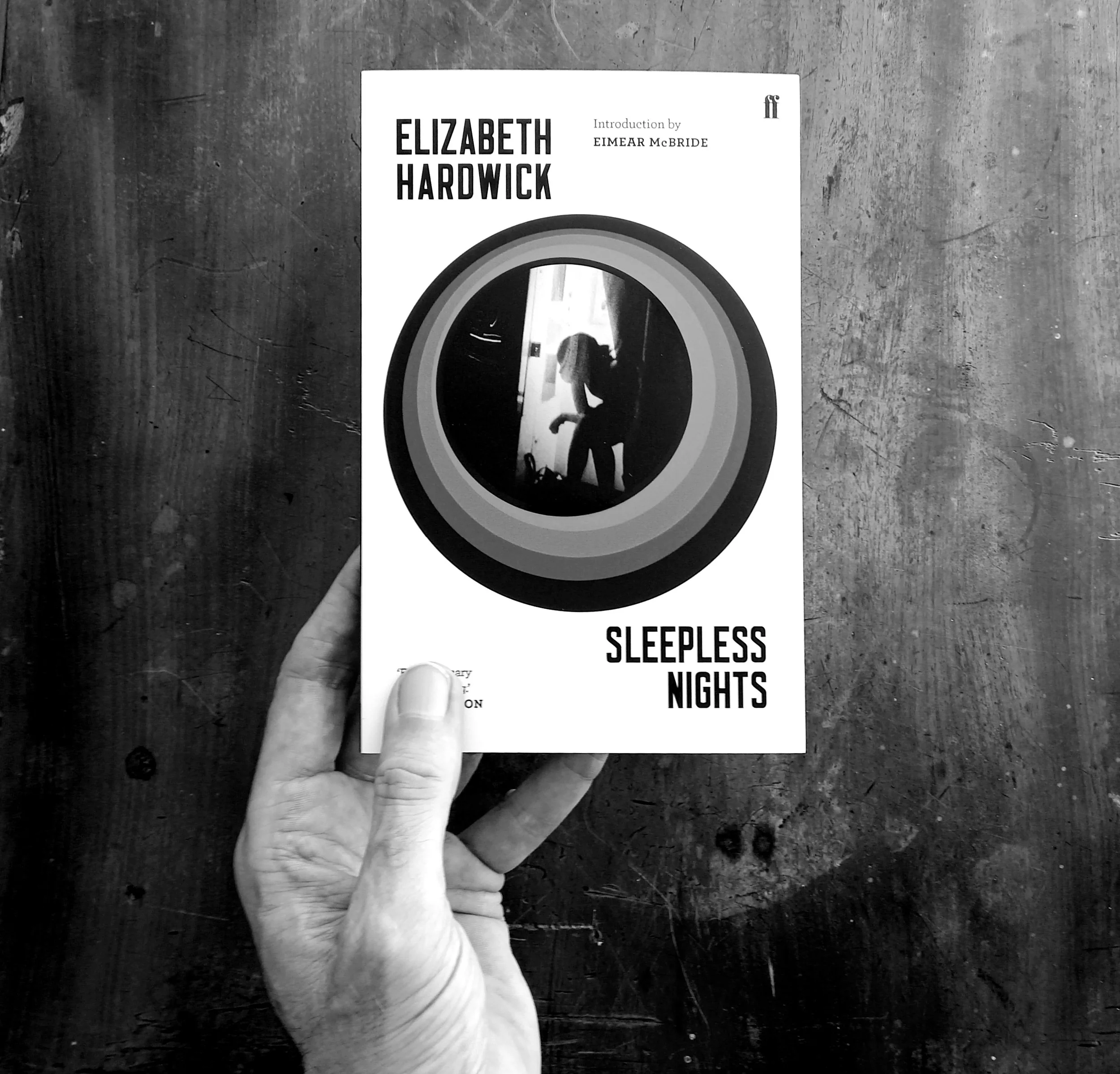
“Fact is to me a hindrance to memory,” writes the narrator in this remarkable collage of passages evoking the ways in which past experiences have impressed themselves indelibly upon her. The sleepless nights of the title are not so much those of the narrator’s youth, though these are either well documented or implied and so the title is not not about them, but those of her present life, supposedly as “a broken old woman in a squalid nursing home”, waking in the night “to address myself to B. and D. and C.— those whom I dare not ring up until morning and yet must talk to through the night.” As if the narrator is a projection of the author herself, cast forward upon some distorting screen, the ten parts of the book make no distinction between verifiable biographical facts and the efflorescence of stories that arise in the author’s mind as supplementary to those facts, or in substitution for them. Elizabeth the narrator seems almost aware of the precarity of her role, and of her identity as distinct from but overlapping that of the author: “I will do this work of transformed and even distorted memory and lead this life, the one I am leading today.” Hardwick writes mind-woundingly beautiful sentences, many-commaed, building ecstatically, at once patient and careening, towards a point at which pain and beauty, memory and invention, self and other are indistinguishable. Spanning over fifty years, the book, the exquisite narrowness of focus of which is kept immediate by the exclusion of summary, frame or context, records the marks remaining upon the narrator of those persons, events or situations from her past that have not yet been replaced, or not yet been able to be replaced, by the ersatz experiences of stories about those persons, events and situations. “My father…is out, because I can see him only as a character in literature, already recorded.” Hardwick and her narrator are aware that one of the functions of stories is to replace and vitiate experience (“It may be yours, but the house, the furniture, strain toward the universal and it will soon read like a stage direction”), and she/she writes effectively in opposition to this function. Observation brings the narrator too close to what she observes, she becomes those things, is marked by them, passes these marks on to us in sentences full of surprising particularity, resisting the pull towards generalisation, the gravitational pull of cliches, the lazy engines of bad fiction. Many of Hardwick’s passages are unforgettable for an uncomfortable vividness of description—in other words, of awareness—accompanied by a slight consequent irritation, for how else can she—or we—react to such uninvited intensity of experience? Is she, by writing it, defending herself from, for example, her overwhelming awareness of the awful men who share her carriage in the Canadian train journey related in the first part, is she mercilessly inflicting this experience upon us, knowing it will mark us just as surely as if we had had the experience ourselves, or is there a way in which razor-sharp, well-wielded words enable both writer and reader to at once both recognise and somehow overcome the awfulness of others (Rachel Cusk here springs to mind in comparison)? In relating the lives of people encountered in the course of her life, the narrator often withdraws to a position of uncertain agency within the narration, an observatory distance, but surprises us by popping up from time to time when forgotten, sometimes as part of a ‘we’ of uncertain composition, uncertain, that is, as to whether it includes a historic ‘you’ that has been addressed by the whole composition without our realising, or whether the other part of we is a third person, indicating, perhaps, that the narrator has been addressing us remotely all along, after all. All this is secondary, however, to the sentences that enter us like needles: “The present summer now. One too many with the gulls, the cry of small boats on the strain, the soiled sea, the sick calm.”
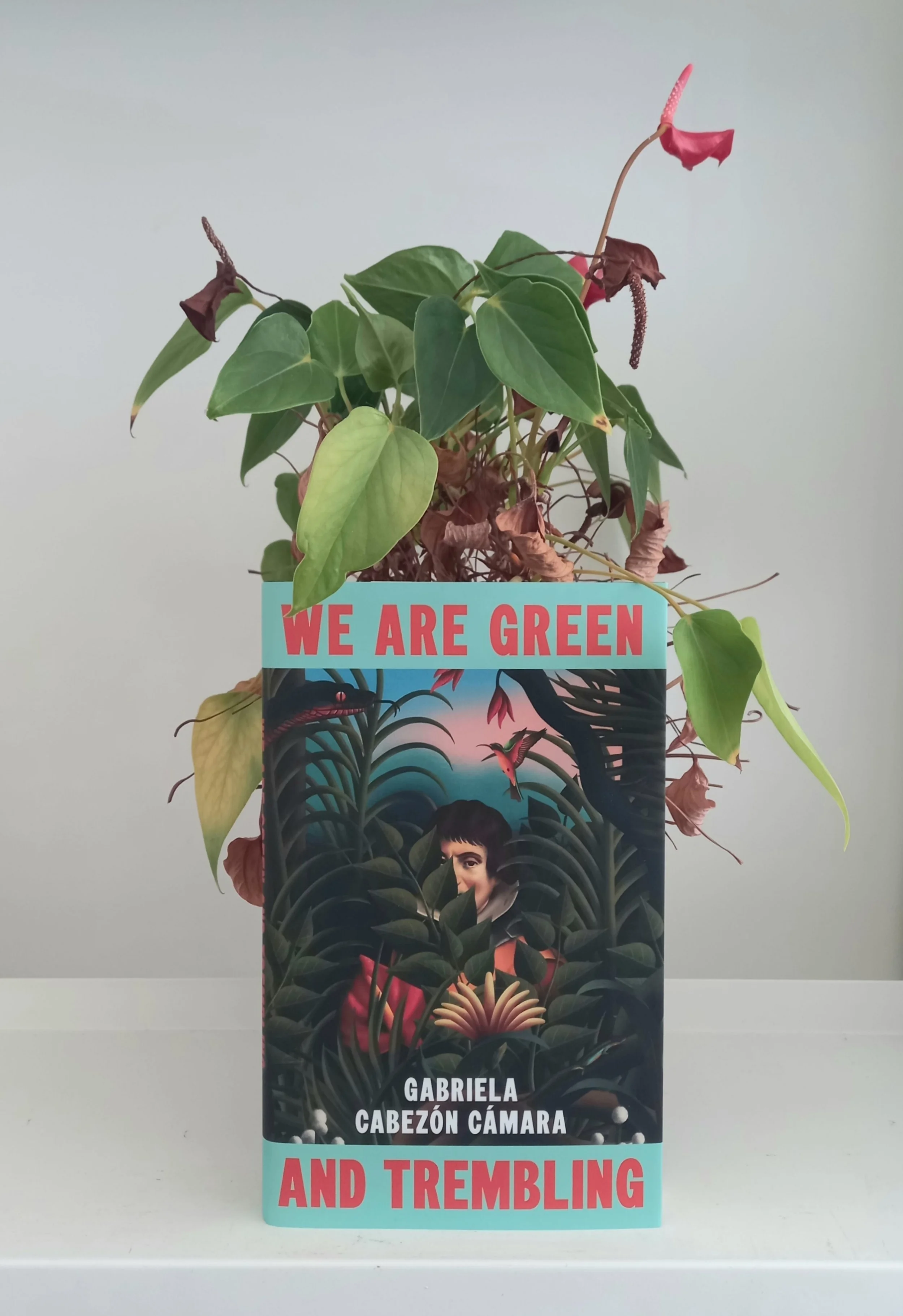
Written in beautiful, surprising, vegetal prose as if written by the rainforest in which it is set rather than by a human hand, this novel incants to life Antonio de Erauso, a real figure from the Spanish conquest of South America, a trans man disgusted with religion and authority, hiding in the jungle with two Guarani girls he has rescued from slavery. Only in the jungle, where the categories imposed by human understanding are in flux, can transformation and liberation be effected.
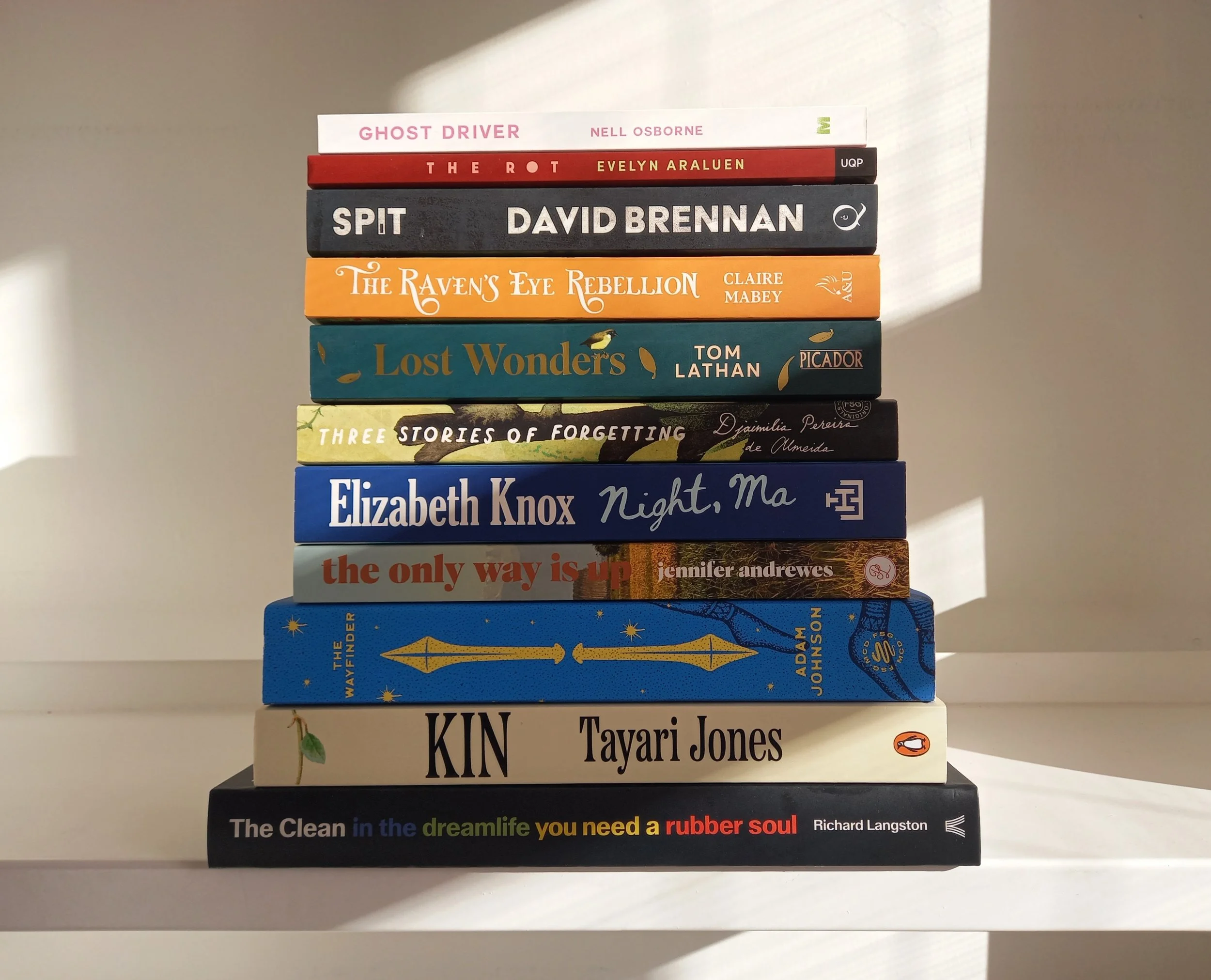
All your choices are good! Click through to our website (or just email us) to secure your copies. We will dispatch your books by overnight courier or have them ready to collect from our door in Church Street, Whakatū.
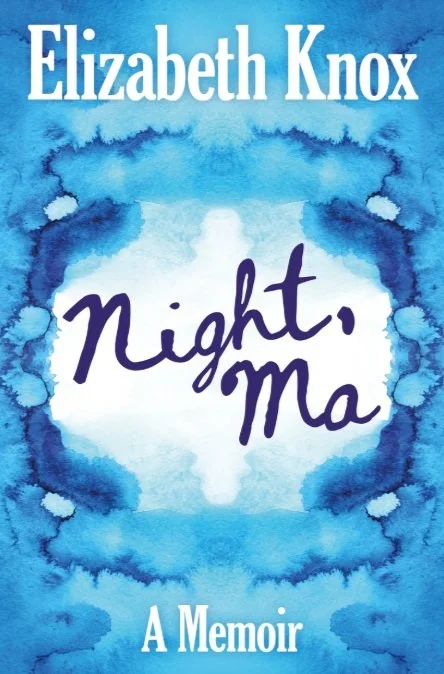
Night, Ma by Elizabeth Knox $40
For three and a half years, calamities hit Elizabeth Knox and family in rapid succession. Her sister suffered a psychotic break and was hospitalised against her will, her husband’s brother died by violence, and her mother was diagnosed with motor neurone disease. In time, she was able to write about it. Night, Ma is a book about the net of family which people are held by, but also slip through. About the actual daily work of love; the physical and cognitive work love requires. Knox is a gifted storyteller who has given us other worlds; now she invites us into her own. With characteristic generosity and transcendence, she guides us through time, illness, loss, and the loneliness of unutterable experiences. [Paperback with French flaps]
”Absolutely brilliant. This radiant, radically honest memoir pulls the pin on a sequence of domestic grenades, from the perils of semi-feral childhood to a cruelly compacted series of family crises that, like shock waves, sweep all before. Armed with inimitable wit, the consolation of cats and a forensic gaze that spares no one, least of all herself, Knox interrogates the act of caring; the ties that burn and bind, that we somehow survive.” —Diana Wichtel
”An unforgettable record of love and pain, as wide and deep as the ocean and as mighty. There is such life in this, such wit and goodness. Telling the truth of how we are, all of us, trembling on the edge of a great and terrible mystery.” —Noelle McCarthy
>>Never letting up.
>>Workshopping.
>>The film that laid an egg.
>>The closely noticed husband.

The Clean: In the dreamlife you need a rubber soul by Richard Langston $50
In 1978 in Dunedin the Kilgour brothers, Hamish and David, and their schoolfriend Peter Gutteridge, got together to form a band called The Clean. When Robert Scott joined in 1980 the band found a combination that endured for nearly forty years. The Clean profoundly changed alternative music: hitting the New Zealand charts for months with a single made for $50, 'Tally Ho!'; helping establish Flying Nun and a music scene independent of the big labels; pioneering a low-fi, do-it-yourself approach to rock music; and touring internationally to influence bands like Pavement and Yo La Tengo. Raw and immediate, this is the story as told by members of The Clean and their inner circle - fellow musicians such as Chris Knox, Martin Phillipps, Graeme Downes and Ira Kaplan, friends and family, pub promoters and sound engineers, and their good friend, Richard Langston. From teenagers in a Dunedin practice room to New York City on 9/11 - this is the band's history as it unfolds. A remarkable piece of multivocal oral history, bursting with images both familiar and surprising. [Flexibound]
”Much needed and long overdue. … A book that tells the story of the band at the heart of New Zealand underground music and that became synonymous with things like Flying Nun Records and the "Dunedin Sound" that travelled around the world. It is written by the ideal author who was not only there when it all happened, but who also recognised why it really mattered more than most.” —Matthew Goody, author of Needles and Plastic: Flying Nun Records, 1981-1988
”In 1980 The Clean blew my mind open at Coronation Hall on a Sunday afternoon. I stood adrift on a sea of wooden floorboards, drinking classic clanging brilliant amp sound, guitar notes shimmering all around me like scattered metal hail . . . All I knew was that this was where all music came from.” —Alastair Galbraith
>>Look inside.
>>Anything could happen.
>>Getting older.
>>Obscurity blues.
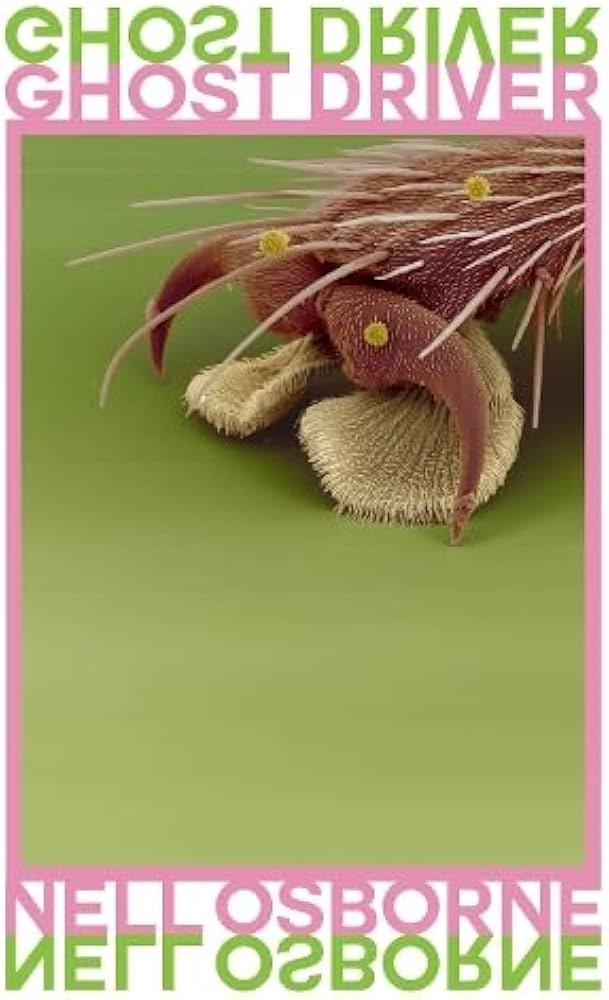
Ghost Driver by Nell Osborne $42
Malory walks home after an ordinarily gruelling night out, having escaped the company of her associates. Something ripples in the darkness. The shape of a figure. So begins a chain of events with the texture of dream plasma. A story of persecution mania. Professional ignominy. A sudden disappearance. The terror of seeing oneself too clearly... Part horror story, part tragicomic nightmare, Ghost Driver is a slim shudder of a novel about a woman who has taken every wrong turn available to her. [Paperback]
”Ghost Driver devises a new genre of administrative horror: by turns addictively morbid, comic and discomfortingly familiar. Malory's inner and outer worlds, like the novel's prose, feel agonisingly poised on a knife edge - gothic in the cruellest, off-kilter sense. I am obsessed.” —Daisy Lafarge
”Nell Osborne is a genius. Ghost Driver is brilliant and hilarious and dark and true. I loved it.” —Sarah Bernstien
>>Every wrong turn.
>>Getting evil freely.
>>A tapestry of humiliation.
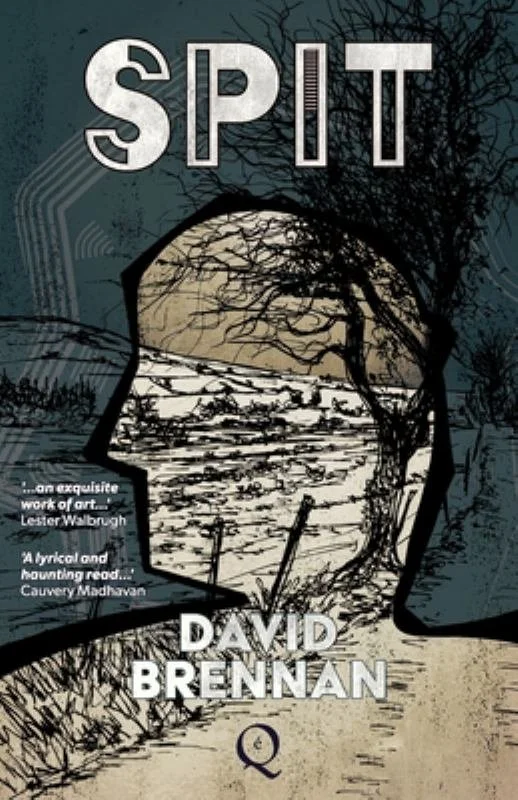
Spit by David Brennan $38
Welcome to the village of Spit, where Danny Mulcahy is losing the run of himself, and where, as he and his friends dream of escaping, an unexpected death sets the rumour mill into motion. Suffering an unexplained, perpetual banishment the Spook of Spit is watching everyone and everything - nothing goes unnoticed. Bearing witness to the village's half-truths and suppressed secrets, fragments of its own dark and obscured history are unveiled. As events spiral out of control, the past, present and future are set to collide. Can there be redemption for past deeds? How do you escape when you are fated to remain? What does it take to break free from the confines of Spit? [Paperback]
”There are whispers of Synge and Kevin Barry but Brennan has a full-throated and thrilling voice of his own. Spit gets hold of you and won't let you go.” —Estelle Birdy, The Irish Independent
”Crackling with dark humour and incantatory force, every line pulses with linguistic relish.” —The Irish Times
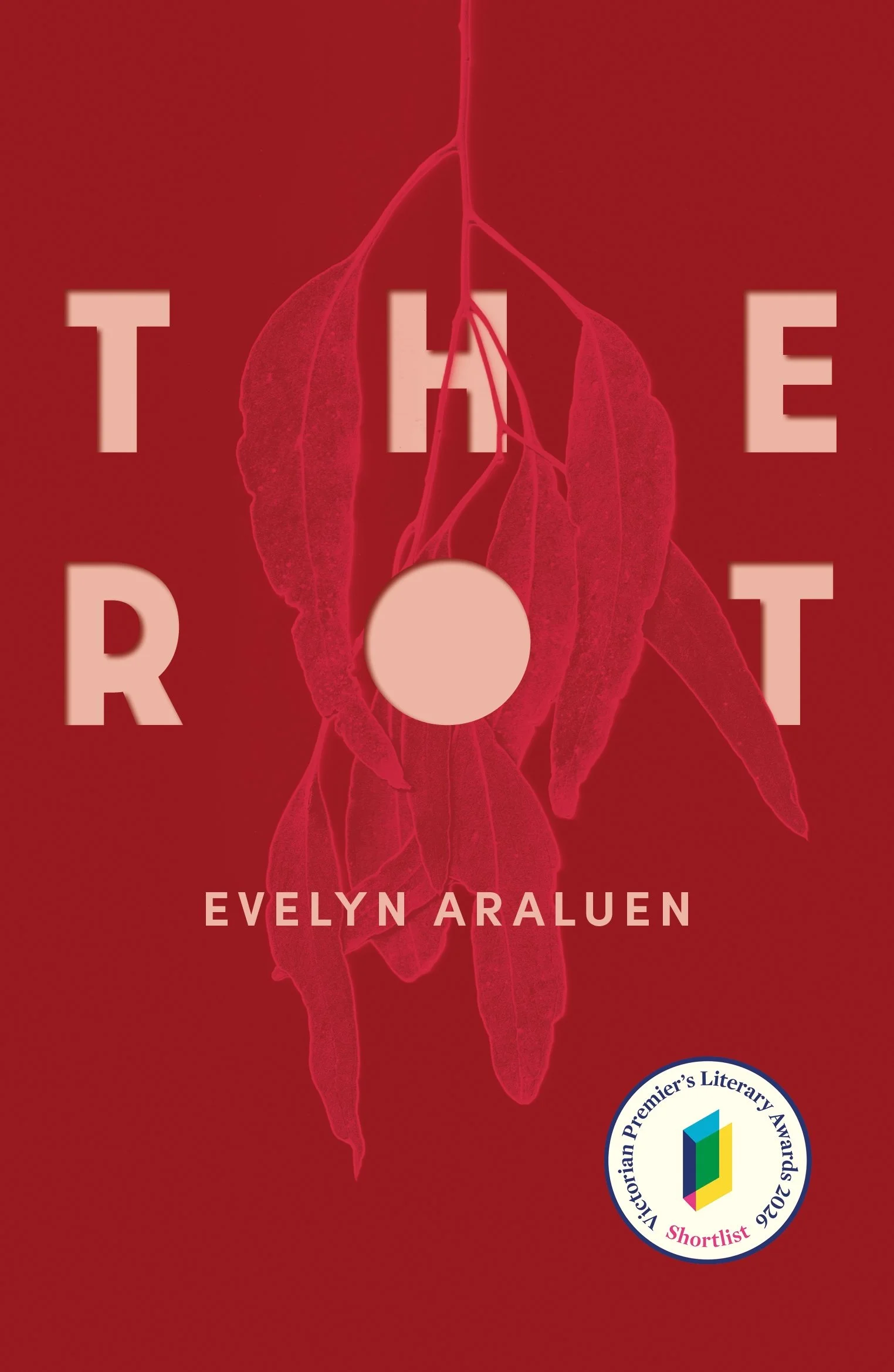
The Rot by Evelyn Araluen $30
The Rot is a recalcitrant study of the decaying romances, expired hopes and abject injustices of the world. A liturgy for girlhood in the dying days of late-stage capitalism, these poems expose fraying nerves and tendons of a speaker refusing to avert their gaze from the death of Country, death on Country, and the bloody violence of settler colonies here and afar. Across sleepless nights, fractured alliances and self-destructive coping strategies, The Rot is what happens when poetry swallows more rage than it can console, quiet or ironise. From the author of Dropbear, winner of the 2022 Stella Prize. [Paperback]
Short-listed for the 2026 Stella Prize.
”Rageful, desireful, artful, sorrowful, hauntful. A blaze of a book.” —Michelle de Kretser
”Evelyn Araluen's poetry and prose is created with a passionate intensity, razor-sharp intellect, beauty and compassion as she turns her mind to the broad sweep of history and a dynamic engagement with the spirit of our times.” —Alexis Wright"
”Blistering, brilliant, lacerating, wry, elegiac, The Rot is a hymn to girlhood, to resistance, to solidarity. Araluen is a masterful stylist, braiding air-fryer abjectioncore with bathtub meditations on the machinery of colonialism — and the whiplash and fury of witnessing and protesting genocide in the digital age. For all its allusions to mould and decay, The Rot is exhilarating in its defiance and staunchness.” —Jennifer Down
>>Dissecting the rot.
>>Poetry, rage, and the power of not surrendering.
>>”I wrote The Rot.”
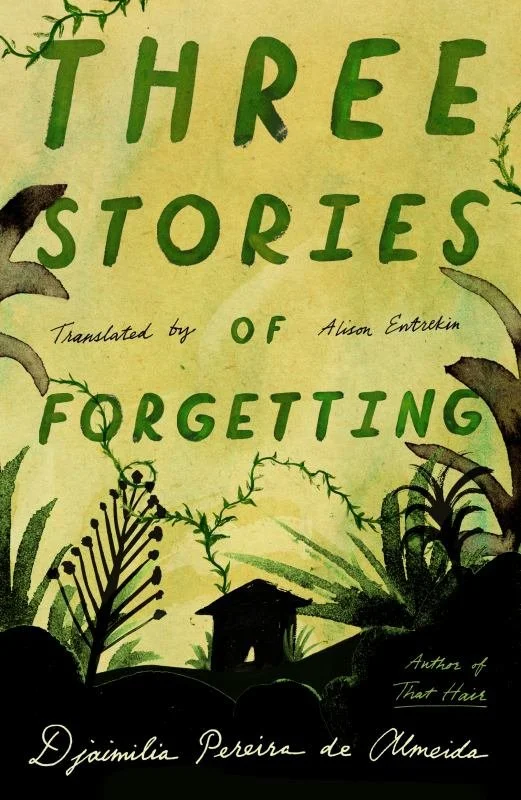
Three Stories of Forgetting by Djaimilia Pereira de Almeida (translated from Portuguese by Alison Entrekin) $35
Three men haunt these pages. Perhaps they are tormented ghosts who cannot find rest. All three have been expelled in some way, sent on solitary journeys into the night. Celestino, an old slave trader, returns to the solitude of his home and garden after a life of horrors. Boa Morte da Silva, an Angolan who served on the Portuguese side in the Colonial War and has become a valet in Lisbon, writes endlessly to his daughter, asking for her forgiveness. And Bruma, an enslaved man, initiates a young writer, Eça de Queirós, into the world of literature. In discrete yet overlapping tales, Djaimilia Pereira de Almeida’s Three Stories of Forgetting explores the experiences of those who live within the legacies of slavery, colonialism, and the Portuguese Empire. In these unstable chapters, we find incarnations of our despair at the questions that history does not answer, and allegories that may yet reveal new ways of seeing through the dark. [Paperback]
"A brilliant, yet understated, critique of a past that Portugal most likely hopes to forget. Lyrical, enigmatic, and subtle: an accomplished work." —Kirkus Reviews
>>What the garden remembers.
>>600 years of colonialism.
>>Co-creatoirs.
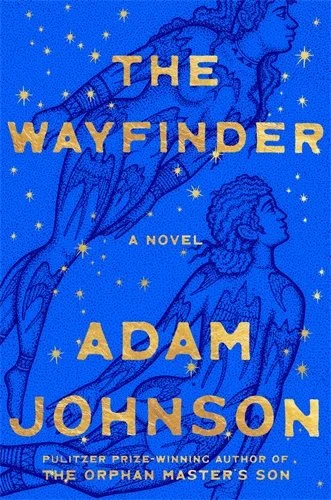
The Wayfinder by Adam Johnson $48
The Wayfinder is an epic, sweeping novel set in the Polynesian islands of the South Pacific during the height of the Tu’i Tonga Empire. At its heart is Korero, a young girl chosen to save her people from the brink of starvation. Her quest takes her from her remote island home on a daring seafaring journey across a vast ocean empire built on power, consumption, and bloodshed. With the grandeur of Wolf Hall, Shogun, and War and Peace, The Wayfinder immerses readers in a world untouched by Western influence, evoking the lost art of oral storytelling. Far from a conventional swashbuckling adventure, it conjures a world of outrigger canoes and celestial navigation, weaving a narrative that is as much about survival and self-discovery as it is about the sweeping history of the Tongan people. In this monumental literary work, Adam Johnson explores themes of indigeneity, ecological balance, and the resilience of humanity in the face of scarcity, marking the novel as a meditation on both individual and cultural legacy. [Paperback]
"Novels are long divorced from the oral tradition; few are designed to last beyond their reading. But some books — Gabriel Garcia Marquez's One Hundred Years of Solitude (1967), for instance, or Larry McMurtry's Lonesome Dove (1985) — continue to be passed down, like legends. Predicting posterity is impossible, but The Wayfinder is this kind of work, modern and mythological. It is good enough, wondrous enough, to endure." —The Wall Street Journal
"An epic that feels less created than unearthed, Johnson's dizzying attention to the mercurial crosscurrents of conquest recalls Olga Tokarczuk's The Books of Jacob. His bold melding of magic and psychological realism casts a spell as captivating as Marlon James's Black Leopard, Red Wolf. Yet The Wayfinder is sui generis — a tapestry of South Pacific myth, archetypal quest, political allegory, environmental jeremiad and feminist revision that feels both ancient and impossibly relevant." —The Washington Post
>>Celestial navigation.
>>A very real experience.
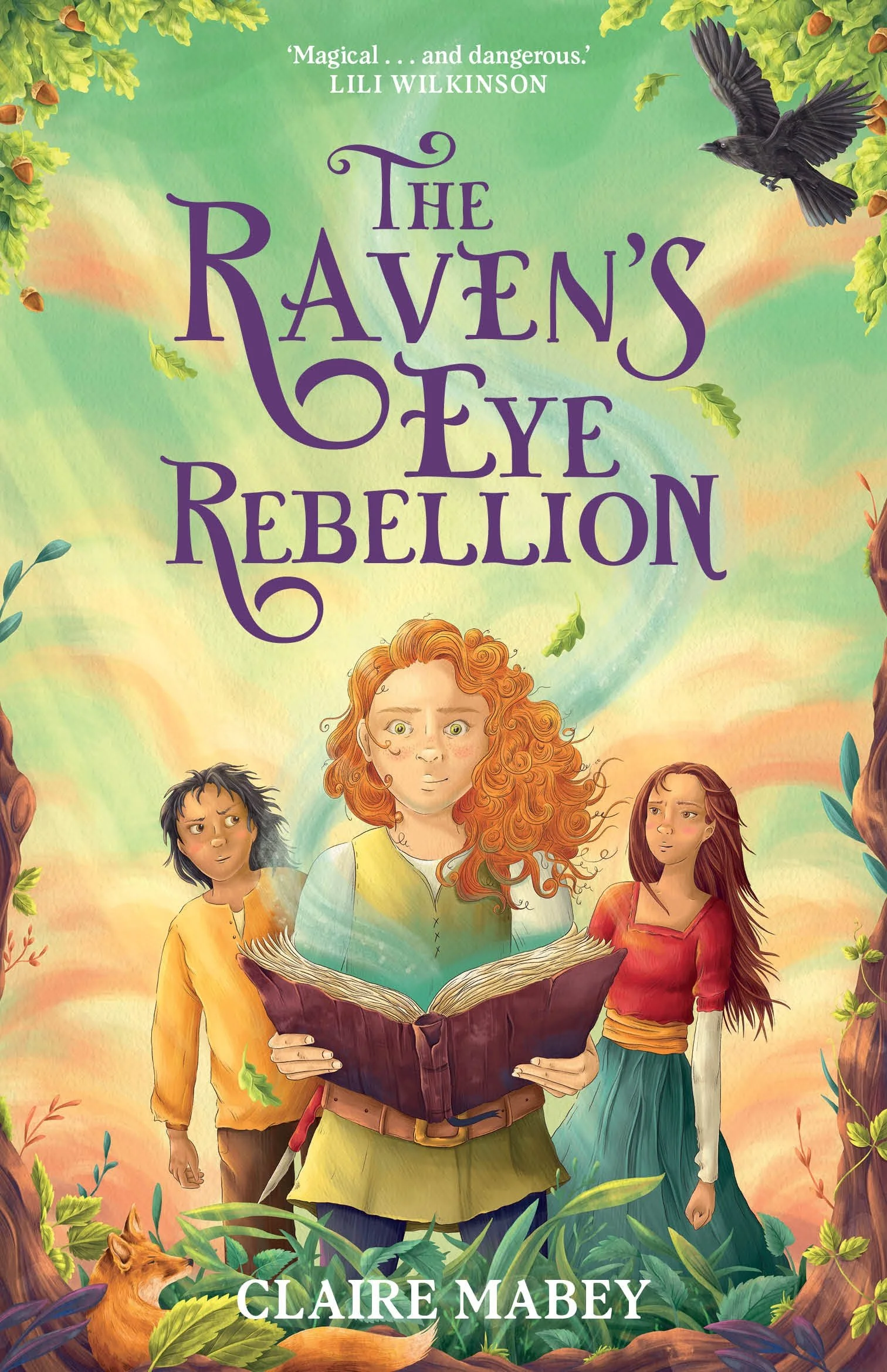
The Raven’s Eye Rebellion by Calire Mabey $25
When Getwin, Lea and Buckle — with the help of Sharp the raven — unearth the trickster Book of Blacke, they embark on a quest to undo the controls on their world, seeking justice for the Scribes who are forced to work and for those who have never been allowed to read or write. The city of Wyle comes alive with danger and intrigue as our heroes contend with the secrets of the Scholars Library, a magical boat, curious creatures, a secret reading and writing society, sleeping trees and the twists and turns of the ancient city. Can the friends stay safe? Will they be able to free the Scribes? Will Getwin's family ever be reunited? This sequel to award-winning The Raven's Eye Runaways is rich with wonder and a thirst for justice. [Paperback]
”Sparky and spooky, humorous and luminous.” —Elizabeth Knox
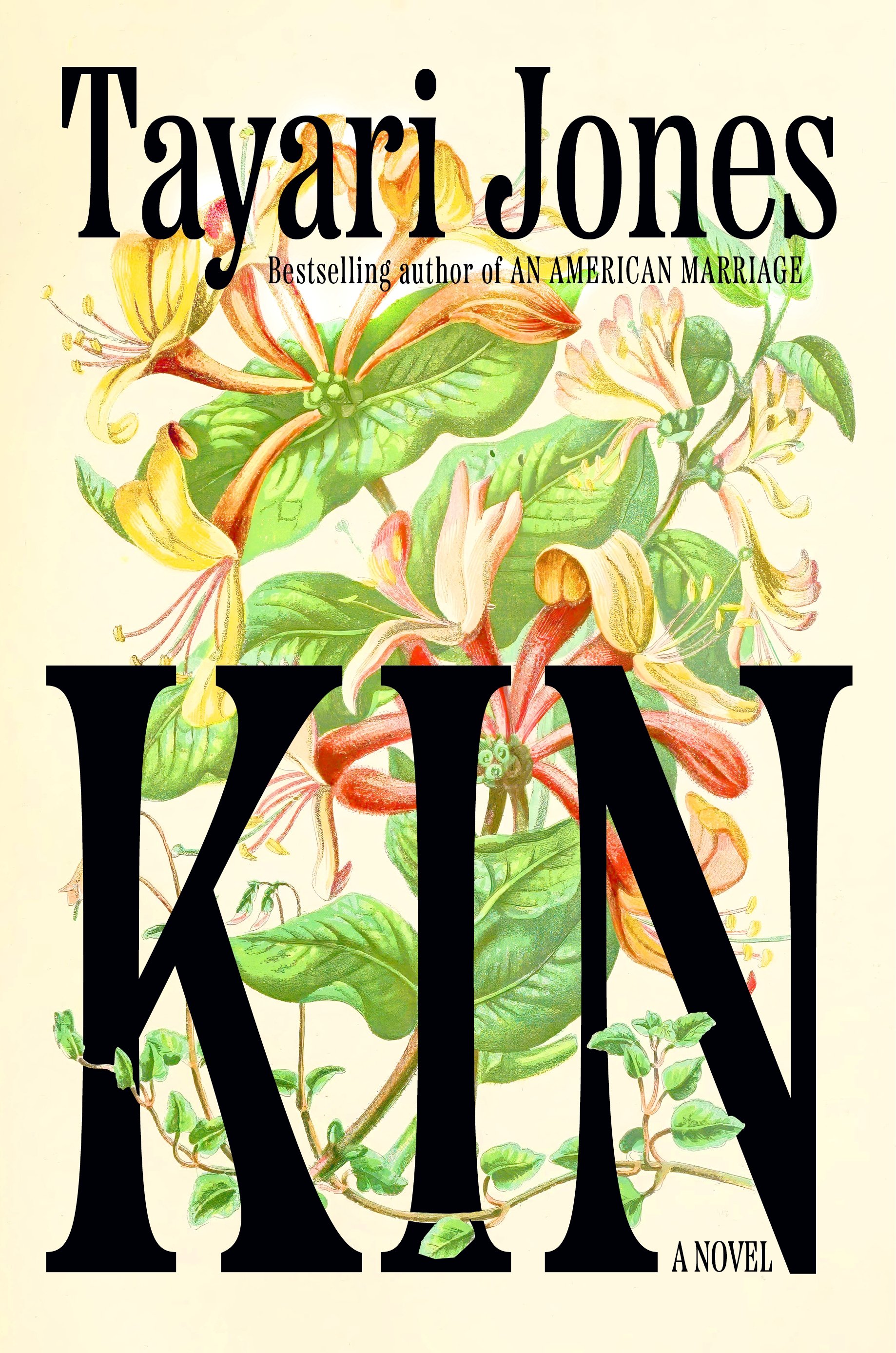
Kin by Tayari Jones $38
Vernice and Annie, two motherless daughters raised in Honeysuckle, Louisiana, have been best friends and neighbors since earliest childhood, but are fated to live starkly different lives. Raised by a fierce aunt determined to give her a stable home in the wake of her mother's death, Vernice leaves Honeysuckle at eighteen for Spelman College, where she joins a sisterhood of powerfully connected Black women and marries into an affluent family. Annie, abandoned by her dissolute mother as a child, and fixated on the idea of finding her and filling the bottomless hole left by her absence, sets off on a journey that will take her into a world of peril and adversity, as well as love and adventure, and culminate in a battle for her life. A novel about mothers and daughters, about friendship and sisterhood, and the complexities of being a woman in the American South. From the author of An American Marriage. [Paperback]
"Tayari Jones's great subject is family loyalty. Kin alternates with metronomic precision between her main characters' first-person narratives. Loyalties and fortitude are repeatedly tested in this immersive drama. Resilience abounds." —The Wall Street Journal
"Jones's dazzling novel traces the complex range of the Black experience — rich and poor, queer and straight, blessed and cursed — in the Jim Crow South." —People
"One of the many pleasures of Kin is how deftly Jones builds the story within the context of the Jim Crow South in mid-twentieth century America. Another novelist might have made these broad social concerns the focus of the story, but Jones foregrounds her characters and lets them navigate these national tensions as naturally and confidently as they move through the streets of Atlanta and Memphis." —Ron Charles
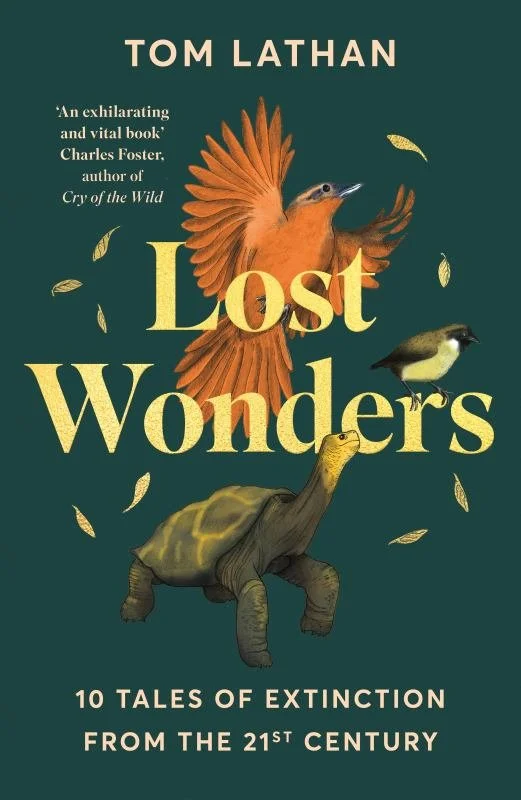
Lost Wonders: 10 tales of extinction from the 21st century by Tom Lathan $28
Lost Wonders is a series of fascinating encounters with subjects that are now nowhere to be found on Earth. From giant tortoises to minuscule snails the size of sesame seeds, from ocean-hopping trees to fish that wag their tails like puppies, Tom Lathan brings these lost wonders briefly back to life and gives us a tantalizing glimpse of what we have lost within our own lifetime. Drawing on the personal recollections of the people who studied these species, as well as those who tried but ultimately failed to save them, Lost Wonders is an intimate portrait of the species that have only recently vanished from our world. It is also an urgent warning to hold on all the more tightly to those now slipping from our grasp. Most of the species considered in this interesting book were unique to isolated locations in the Pacific. [Paperback]
”Lathan's superb storytelling makes ecological crisis personal, local and often scarily visible. He doesn't let the tragedy hide, as it usually does, behind graphs and abstractions. Yet there's hope here too, in spades. This is an exhilarating and vital book.” —Charles Foster, author of Cry of the Wild
”A beautifully crafted elegy for the lost species of our age. In repopulating the world with extinct snails, lizards, bats and rats, Tom Lathan makes us marvel and care almost as much as the conservationists who tried and failed to save them.” —Kate Teltscher
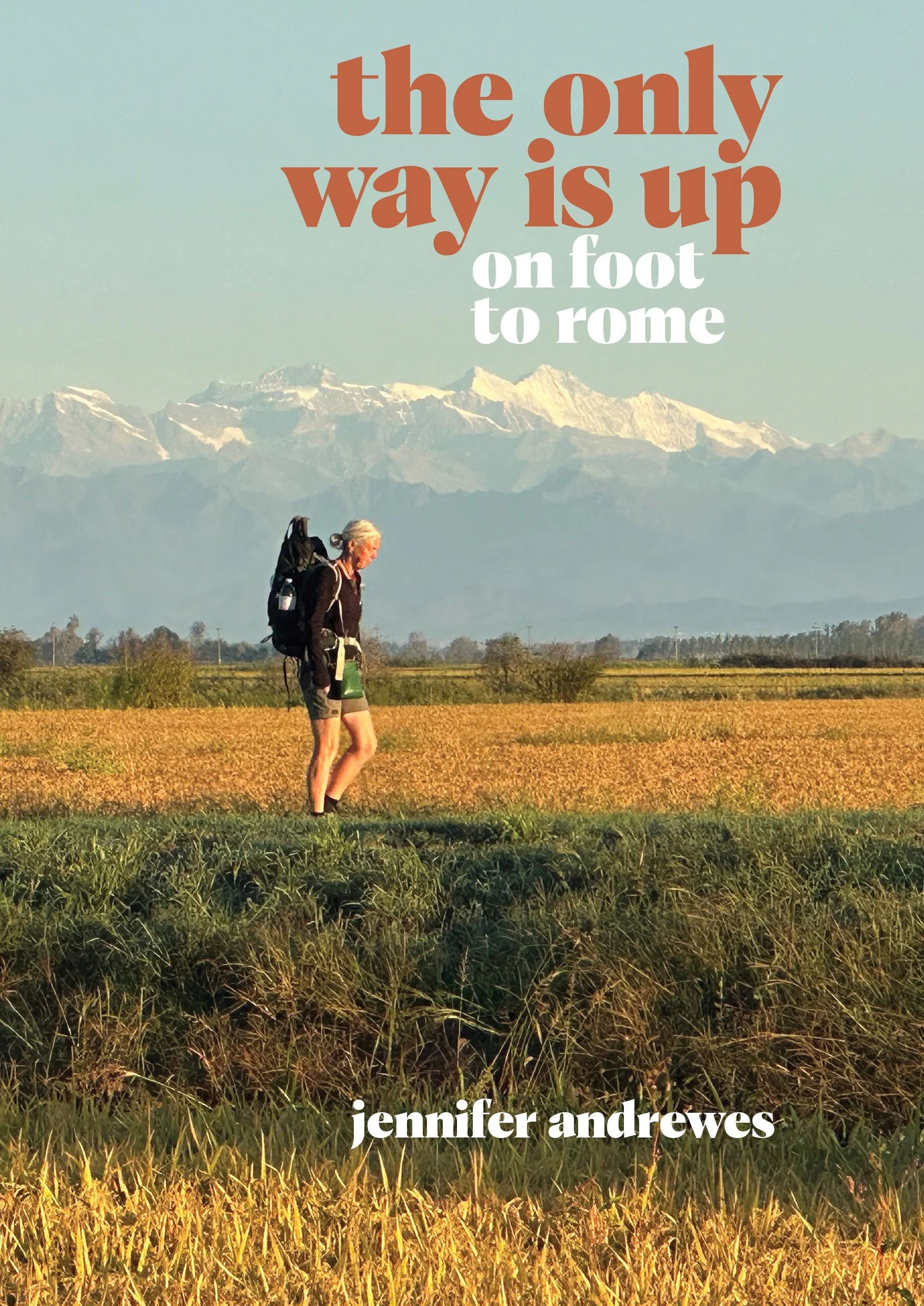
The Only Way Is Up: On foot to Rome by Jennifer Andrewes $38
Setting out from Canterbury and walking some 2400 km to Rome along the Via Francigena, Jennifer Andrewes undertakes a personal journey across England, France, Switzerland and Italy. What begins as a physical journey soon becomes something deeper: an exploration of momentum, mindset, and the quiet power of putting one foot in front of the other when the way ahead is uncertain. Structured as a series of daily stages, the book follows the rhythms of pilgrimage life — early starts, long days on the road, chance encounters, moments of solitude, and the simple rituals that sustain a walker: coffee stops, conversations, rest, reflection. Along the way, Jennifer meets fellow walkers from around the world, navigates doubt and discomfort, and learns to trust the unfolding path rather than trying to control the outcome. While written through the lens of walking to Rome, The Only Way Is Up speaks to anyone standing at a crossroads. The author’s experience living with Parkinson’s is part of the landscape, but it does not dominate the narrative. [Paperback]
”'I have not walked the Via Francigena, but I recognise much in Jennifer's account from my own journeys on foot. Walking has always given me clarity, perspective and a steadier sense of leadership and decision-making. This book captures that rhythm beautifully. With insight and honesty, Jennifer shows how sustained movement builds resilience, momentum, and unexpected connection. A generous, reflective and uplifting account of pilgrimage as a framework for navigating change.” —Helen Clark, former Prime Minister of New Zealand
>>The power of walking.
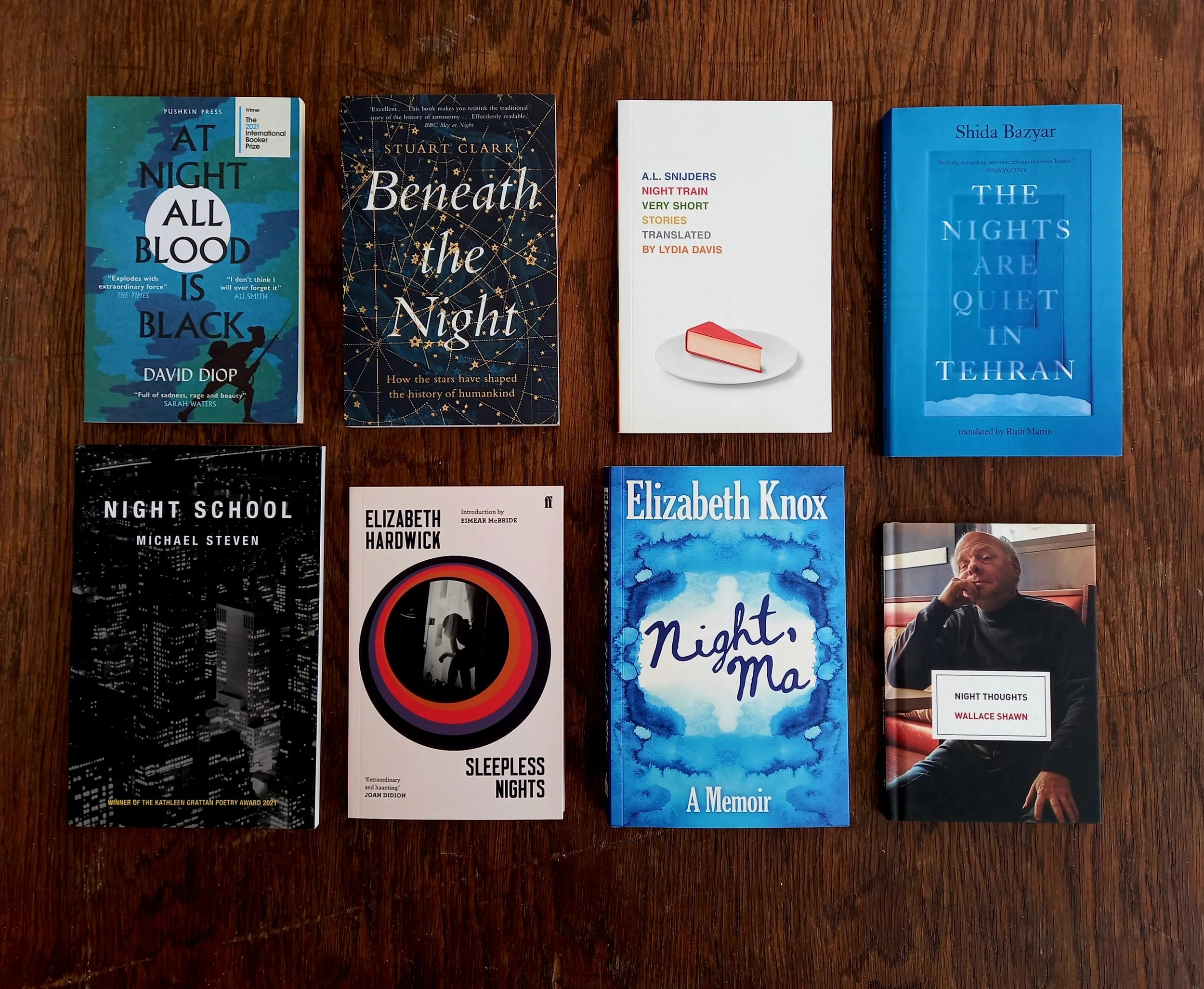
A selection of books from our shelves. Click through to find out more:
Read our latest newsletter.
Find out which books have been short-listed for the 2026 International Booker Prize.
Find out what we’ve been reading.
2 April 2026
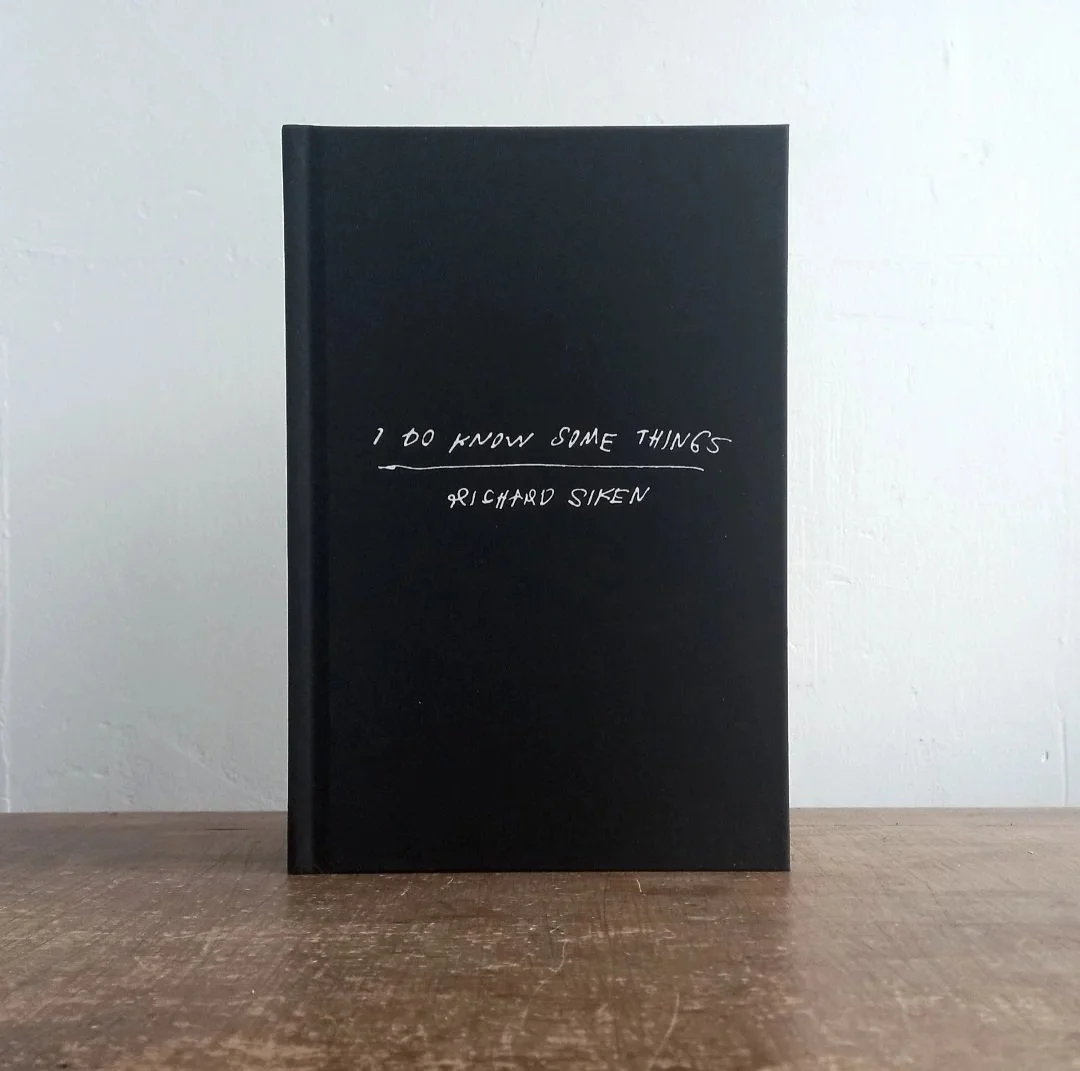
In 2012, lying in a hospital bed, clinging to language, wondering what my brain was doing, I wrote: “my inability to sleep my inability to remain asleep imperfect inability in either case my imperfect inability to fall asleep therefore a slight ability to fall asleep perhaps all it takes not much of a claim my nearly complete inability to fall asleep my nearly complete inability to remain asleep nothing remarkable there in either case all sleepers awake perhaps sooner perhaps later excepting those who will not ever wake but who will no longer be asleep in any case my nearly complete inability to remain asleep for more than a few seconds no my complete inability to remain asleep for more than a few seconds so it seems who knows eyes open in the dark my complete inability to fall asleep…”. I had driven myself to the hospital one-handed (I shouldn’t have done that) after finding that my left arm had become entirely unresponsive and discovering how hard it is to peel an egg for lunch using only one hand (typing had been manageable and I had really wanted to finish what I was working on). They gave me all the tests. My stroke was a small one compared with the one that wiped out poet Richard Siken in 2019, though his was at first misdiagnosed at the hospital as a panic attack. Afterwards he found himself having to completely rebuild his relationship with his body, with his world, and with language itself — the medium that previously had come most naturally to him. To help him with this, or, rather, to grab desperately and uncertainly at both language and memory, he wrote a series of short paragraphs, firstly just to explain himself to himself, that later formed the core of the book I Do Know Some Things. The 77 prose poems are written in the empty place made clean by the stroke, they are careful and simply constructed, the experiences they delineate are immediate, ordinary, and often tragically personal, and yet shafts of sublime poetry and insight strike often when least expected, sublimity and insight that surely would not have been possible without the emptiness cleared in Siken’s world by the stroke. Also, notably, this is a darkly hilarious book, both vitriolic and tender. What began for Siken as a series of exploratory and explanatory survival notes to himself built into a series of playful interrogations of memories, traumas and losses, a pinning of personal phantoms, a renegotiation of the contract between inner and outer worlds, and an unfurling of new and vulnerable possibilities in language and in life — new and vulnerable possibilities that could not have been accessed but from a place of helplessness and hopelessness. “If it can be done, there’s a way to do it poorly,” writes Siken of his failure to properly fill a place in the world, but it is this failure, this struggle and attendance to the most basic problems of living and thinking, that provides access to new ways of writing, where the quotidian and the ecstatic, the simple and the infinite, the personal and the universal, the tragic and the treasured, death and renewal, the gauche and the inspired are barely separate at all. Surely this is what poetry is always aiming for. “A man lies down in leaves, singing, so we’re surrounded by trees in wind. His song is a mountain and all the ladders that every living thing is climbing. He will sing his beast into a larger beast and trample the open field of himself into wonderment. These things happen. It frightens me, this availability to the world, the vulnerability it takes for possible joy.”
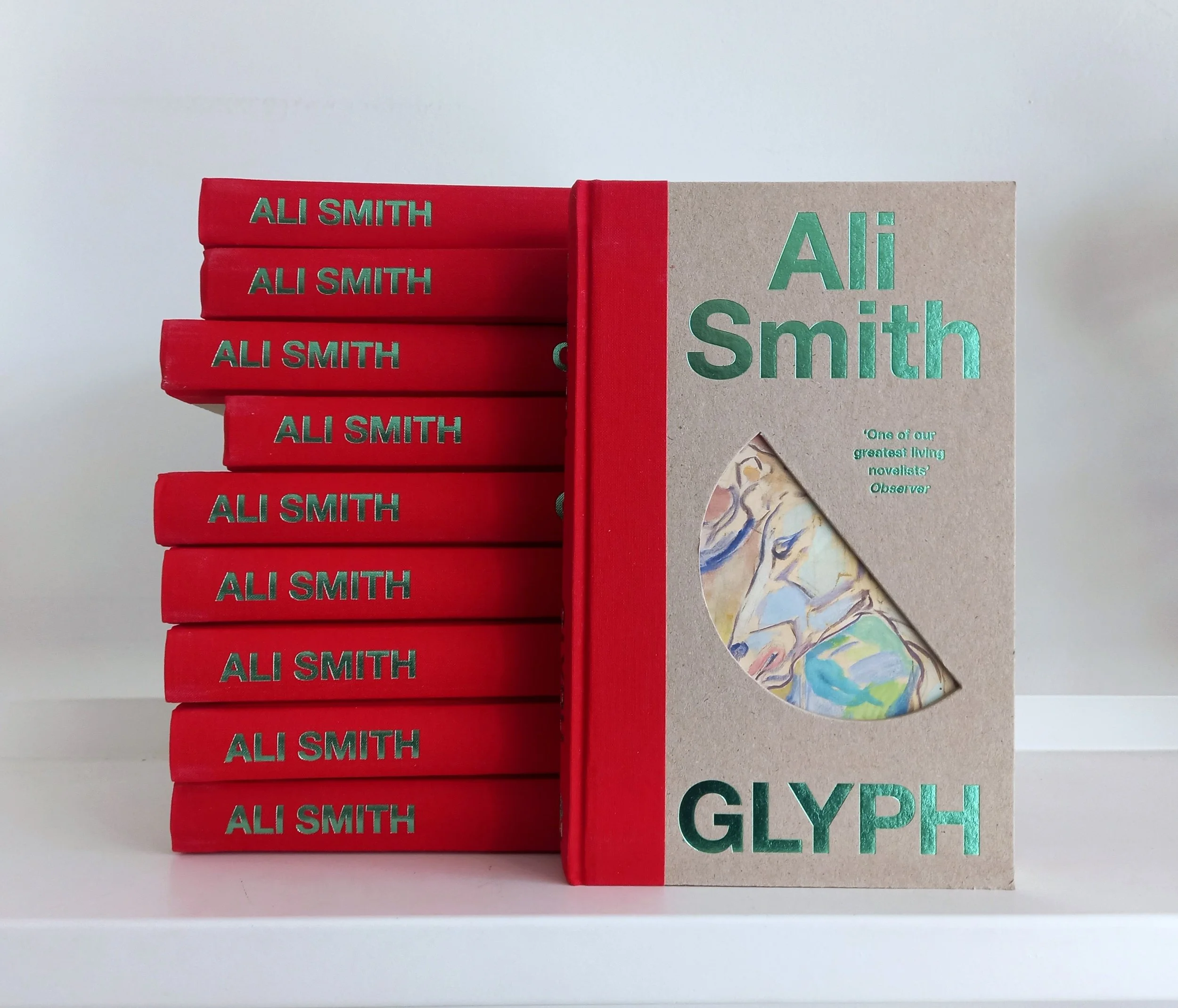
Addressing our increasingly antagonistic and frightening times, Ali Smith’s new novel asks if we are attending to the history that made us and to the history that we are making. Smith’s playful writing, her sympathetic characters, and her seemingly inexhaustible reserves of knowedge and care, provide hopeful paths towards better lives, not only for her characters but also for us. Glyph is about what our imaginations are for and how, in a broken, brutal and divided time, we can rekindle care, solidarity, resistance and openness.
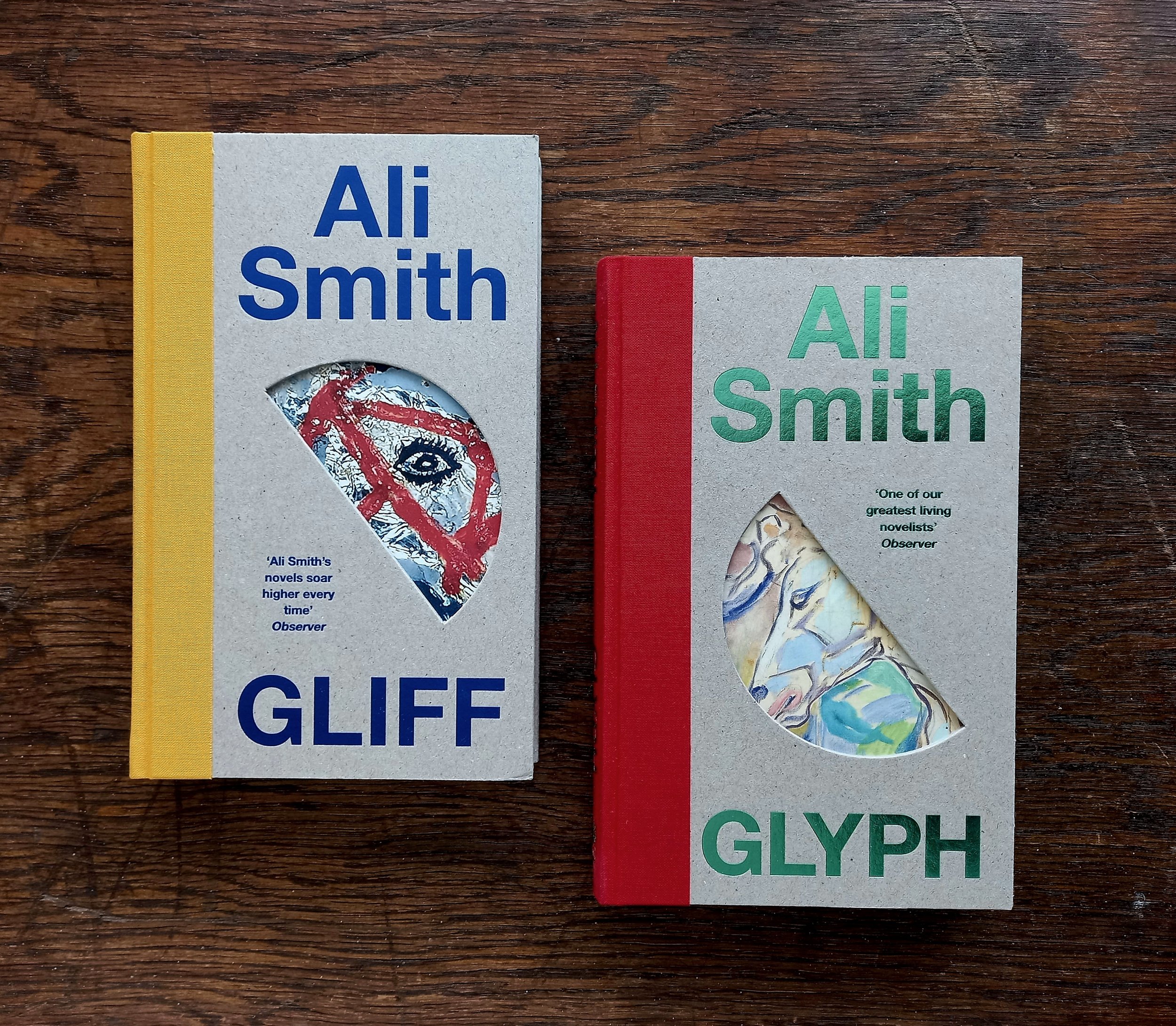
I’ve been reading Ali Smith for decades. From her debut novel, Like, through her short story collections, Hotel World springs to mind, her retelling of mythologies, Girl Meets Boy and The Story of Antigone, to the discomfort of There But For The and the unexpected visitor in The Accidential, to the art of How to Be Both, Smith’s books have always been intriguing, centred on human interactions and our ability to live in the world. Yet it was the seasonal quartet: Autumn, Winter, Spring, Summer; and the books that have followed: Companion Piece, Gliff, and now Glyph; with their immediacy and provocation to act, to be part of the story that pushed her writing and the reading of her work into a realm where only Ali Smith could take us. Her ability to use language, to incorporate art, culture, and politics is invigorating, pointed and surprising.
Here are some of the things I said in my reviews at the close of reading each of the quartet novels and Gliff: “….a book that will both stun you and fill you with hope, moments of kindness, forgiveness, and a window to a better world if we dare to step through.”, “..a meditation on time, ….and the surprising things that the past can reveal to us in the present.”; “…with a hammering of words that are explosive…demands your attention. Ferocious and tender.”, “…draws richness out of desolation…and she does it with intelligence, wit and style.”, “To stay in this playfulness of words, the richness of language and story, to be suspended with curiosity, while also confronted by the urgency of our 21st century landscape must surely be a work of genius.”
In Ali Smith’s novels I have been introduced to artists, and experienced writers and mythology in new ways. I am asked to see, to shift or sharpen my perspective bringing the telescope’s lens to its best advantage, even when that clarity is frightening. Characters are brave, and also cowards. The curtains of the theatre that allow a player to be revealed, and then escape and hide, are constantly in motion. We flex our emotions. The reader is emboldened, then stunned. We remember why we should ask the most important question: Why? Ali Smith feeds our desire for story, for narrative, not at its surface level, but at its core: why narrative is important; whether that is in words, art, myth, nature, politics; and how it is used and how we can claim it. We can read the world, see it for what it is and more importantly what it could be. I think reading books is a subversive act: in reading we acquire knowing. We are in the book, and this action does not allow interference. If a book makes you curious, curious enough to ask questions, you are thinking. If you are thinking, this is a good thing. I have two new Ali Smiths on my reading pile, Glyph and So in the Spruce Forest. Autmnn will be a good reading season.
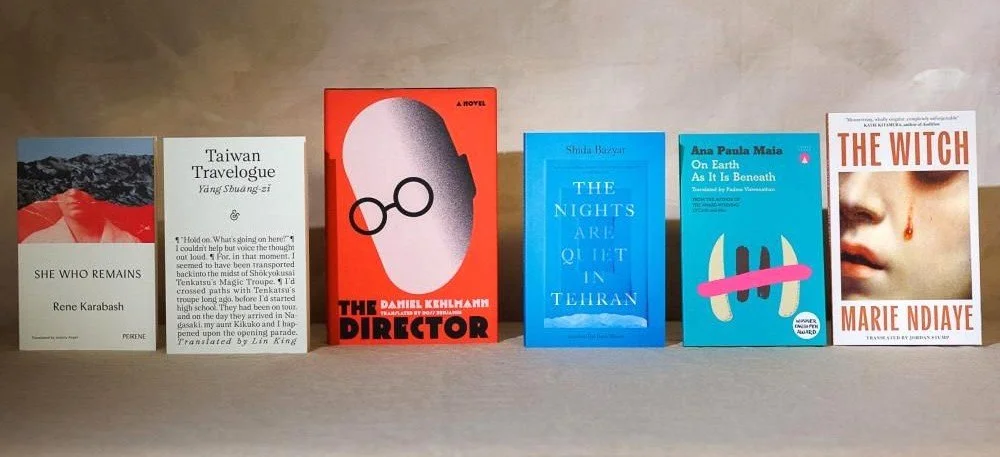
The International Booker Prize recognises the authors, translators and publishers of excellent fiction translated into English. The judges’ selections provide an opportunity to both broaden and deepen your reading.
Find out below what the judges thought of the books they short-listed this year, and then click through to our website to find out more and to place your orders. We can dispatch your books by overnight courier or have them ready to collect from our door in Church Street, Whakatū.
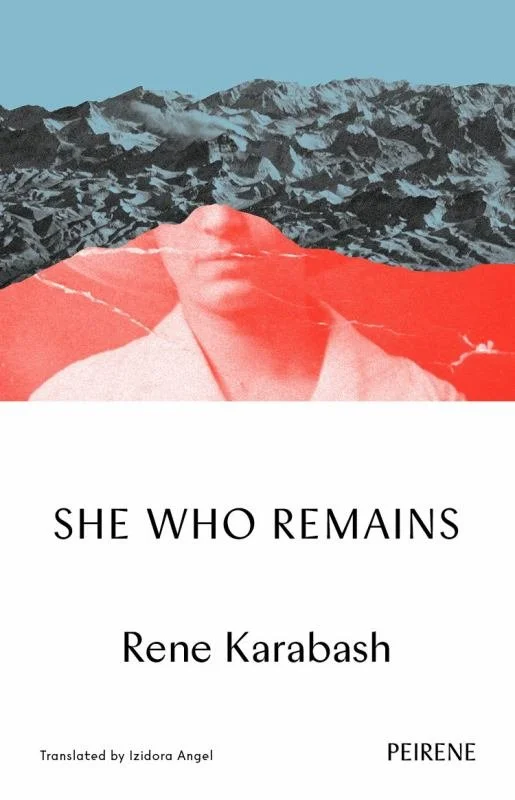
She Who Remains by Rene Karabash (translated from Bulgarian by Izadora Angel) $42
”In a village governed by archaic laws in the Albanian Alps, a teenage girl swears a vow of chastity to escape an arranged marriage. As a ‘sworn virgin’, with a new name, Matija is free to live as a man. But that freedom comes at a cost that tears Matija’s family apart. Told with understated poetry, this novel perfectly captures the slippery uncertainty of painful memories. Matija is a compelling narrator, whose story swept us up completely. She Who Remains is an unforgettable modern fairy tale.”
>>Read an extract.
>>Read an interview.
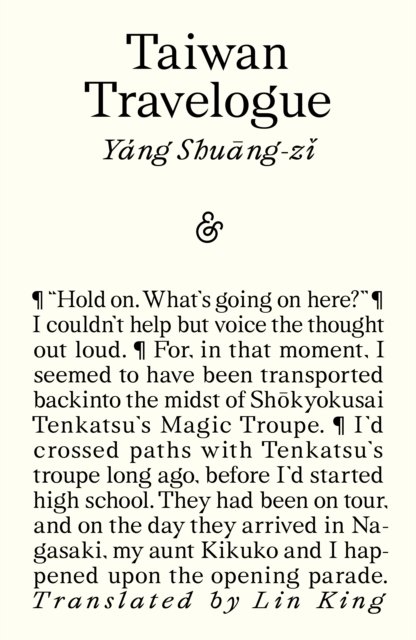
Taiwan Travelogue by Yáng Shuāng-zǐ (translated from Mandarin Chinese by Lin King) $48
”On a government-sponsored tour of 1930s colonised Taiwan, a Japanese author with an insatiable appetite develops complex feelings towards her local interpreter. Despite the instant spark between the two women, the power imbalance inherent in their relationship proves difficult to navigate. With sumptuous food writing, laugh-out-loud dialogue and metafictional twists, this novel was impossible to put down. Taiwan Travelogue pulls off an incredible double act: it succeeds as both a delicious romance and an incisive postcolonial novel.”
>>Read an extract.
>>Read an interview.
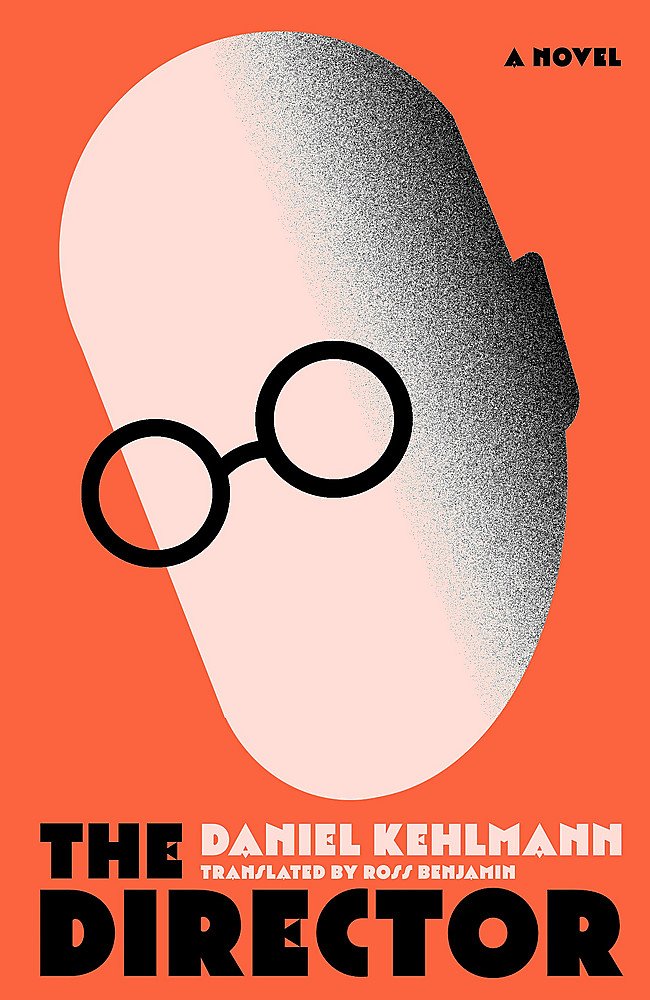
The Director by Daniel Kehlmann (translated from German by Ross Benjamin) $38
”In The Director, Daniel Kehlmann performs a literary panning shot over the career of real-life filmmaker G. W. Pabst and charts the ways in which Nazi ideology leaked into the arts during Europe’s occupation. Where is the line between survival and collaboration? And can art survive the moral bankruptcy of its makers? It’s hard to imagine any writer tackling such hefty themes with lightness, yet Kehlmann does just this, writing compassionately, humorously and unsparingly from the perspectives of his complex characters, guiding the reader through the moral maze. Translator Ross Benjamin writes each shifting voice and set-up with the nuance they demand in a juggling act of wit and gravity that shouldn’t look this easy. Deeply intelligent, ambitiously structured and unputdownable.”
>>Read an extract.
>>Read an interview.
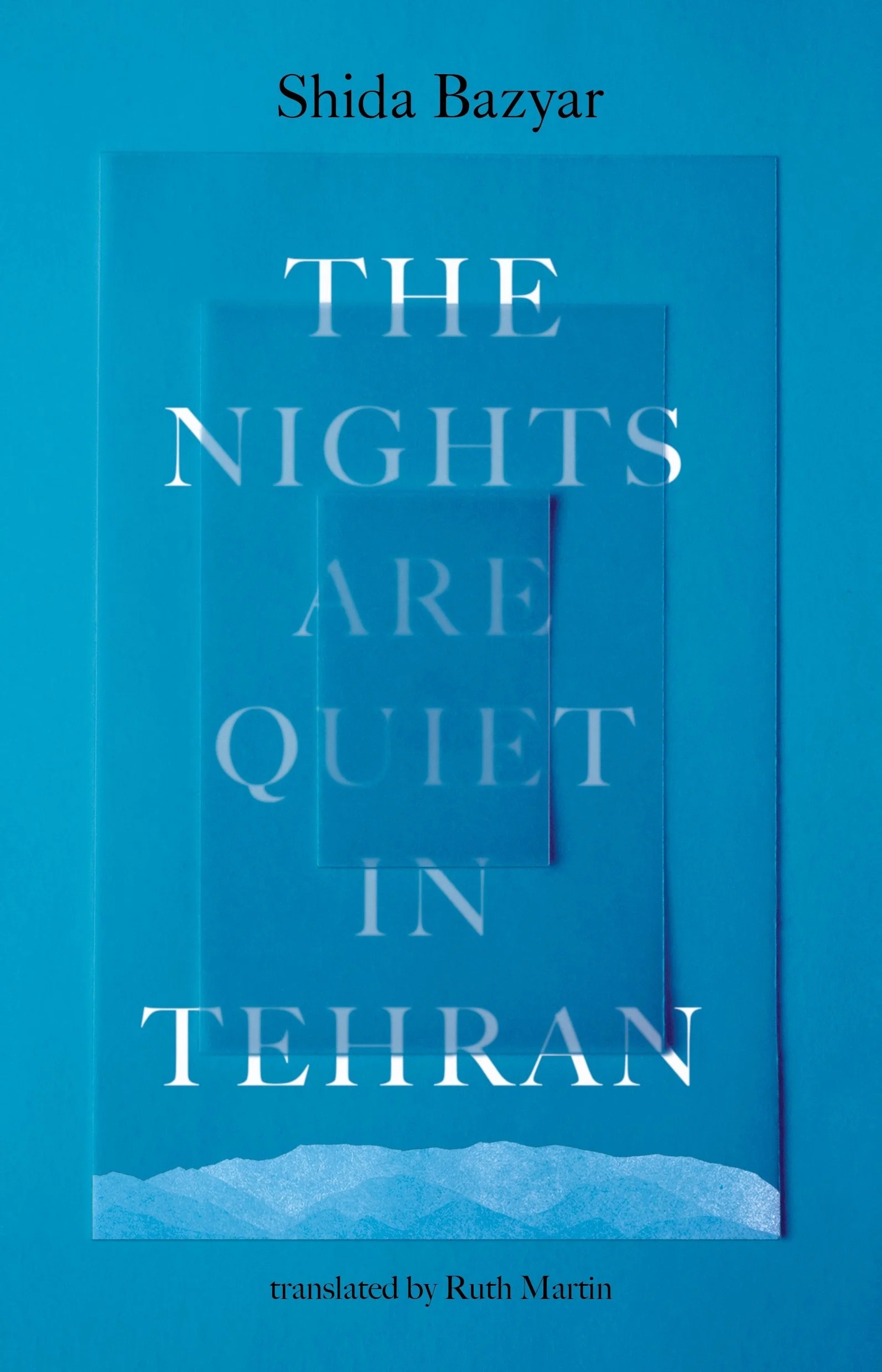
The Nights Are Quiet in Tehran by Shida Bazyar (translated from German by Ruth Martin) $37
”What actually happens after a revolution? Through cycles of flight and return, exile and assimilation, Shida Bazyar takes readers through four decades in the lives of an Iranian family – two of them young revolutionaries, Behzad and Nahid, who flee to West Germany with their children. One generation yearns for their homeland; the other makes new beginnings; some visit home, some dream of return, some find going back too painful. The pages of The Nights Are Quiet in Tehran pulse with solidarities and betrayal, with heartache and humour. And for all exiles, migrants, once-and-future revolutionaries, Bazyar captures what it means to always live in hope.”
>>Read an extract.
>>Read an interview.
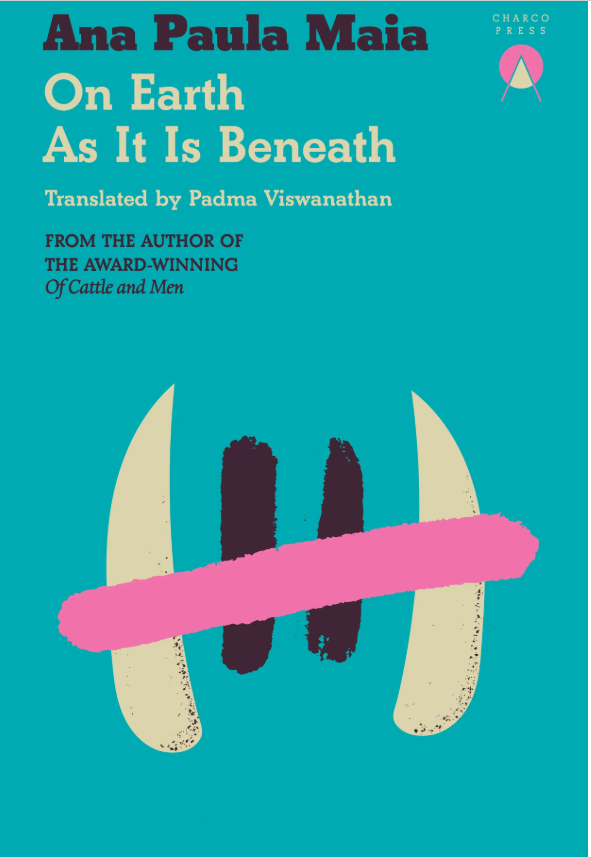
On Earth As It Is Beneath by Ana Paula Maia (translated from Portuguese by Padma Viswanathan) $40
”Set in a remote penal colony built on land scarred by slavery and colonialism, this vivid and haunting novel unfolds in a landscape where punishment has replaced justice and cruelty has become the norm. As the colony nears its end, the warden introduces a ritualised full-moon hunt, releasing prisoners into the forest for sport. Through spare yet masterful prose, Ana Paula Maia renders a closed world thick with dread, brutality and moral decay. The prisoners and guards alike are trapped within a system that corrodes and suffocates everyone it touches. On Earth As It Is Beneath is a stark, unsettling exploration of power, violence, destruction and institutional corruption that will linger with readers long after the final page.”
>>Read an extract.
>>Read an interview.
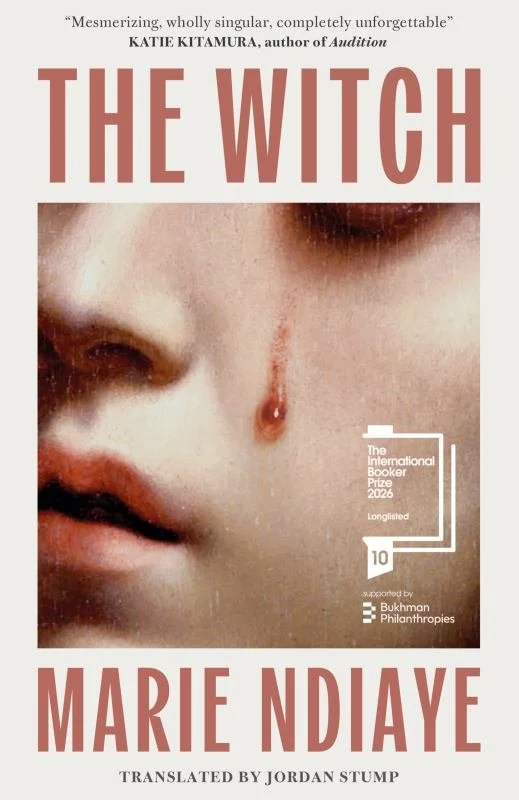
The Witch by Marie NDiaye (translated from French by Jordan Stump) $37
”Lucie, a long-suffering housewife, inducts her daughters into a secret practice passed down by the women in her family: witchcraft. As the two girls begin to explore their new powers, Lucie’s husband disappears, upsetting the balance of their stifling, suburban life. The language in this novel – and in Jordan Stump’s translation – is exquisite: sentences twist and transform in unexpected ways. Each character is observed with icy precision. Through Lucie’s daughters – with their nonchalant acceptance of the immense power they’re beginning to wield – the nuances of motherhood are brought into sharp focus. The Witch is pure magic.”
>>Read an extract.
>>Read an interview.
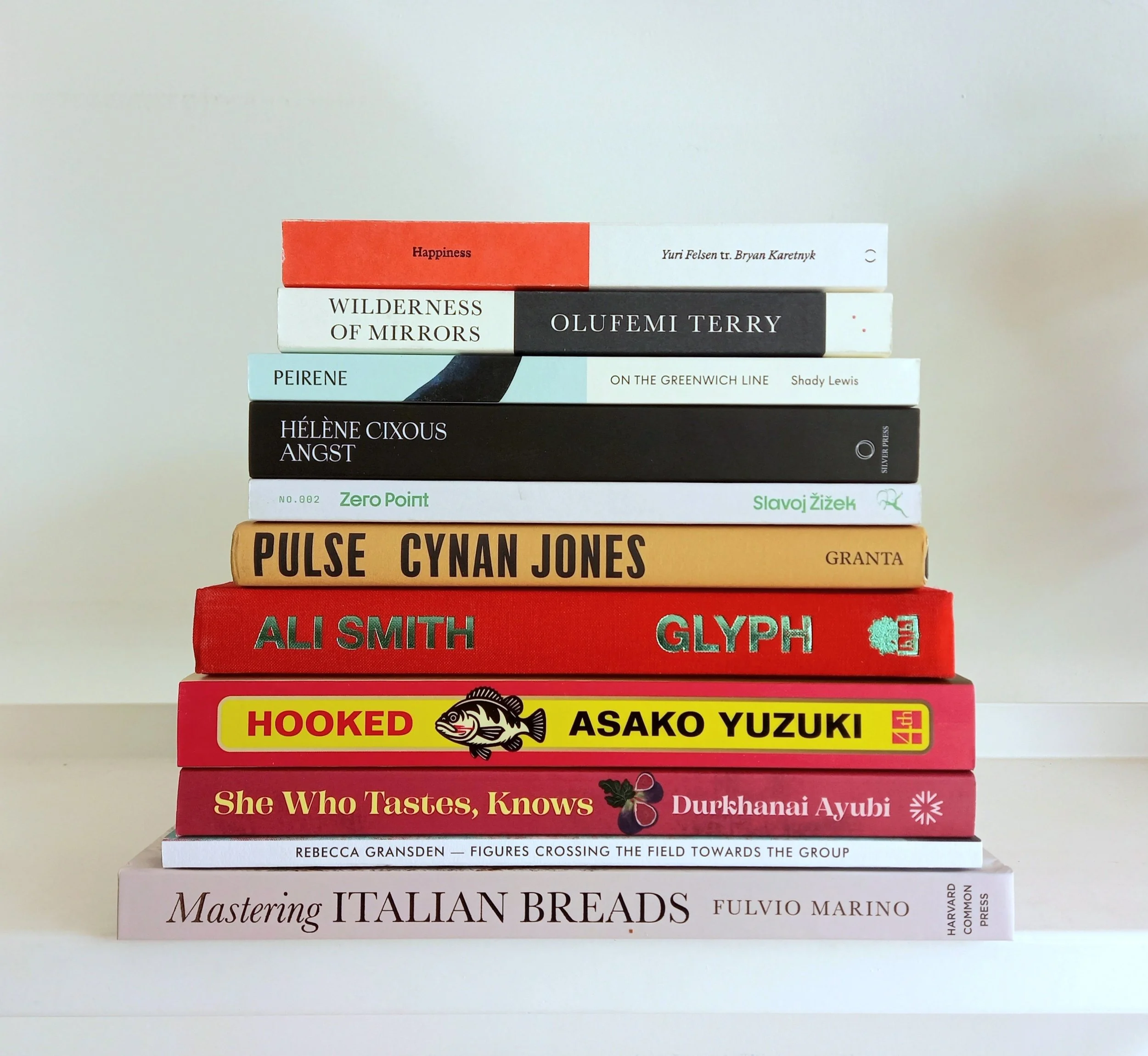
All your choices are good! Click through to our website (or just email us) to secure your copies. We will dispatch your books by overnight courier or have them ready to collect from our door in Church Street, Whakatū.
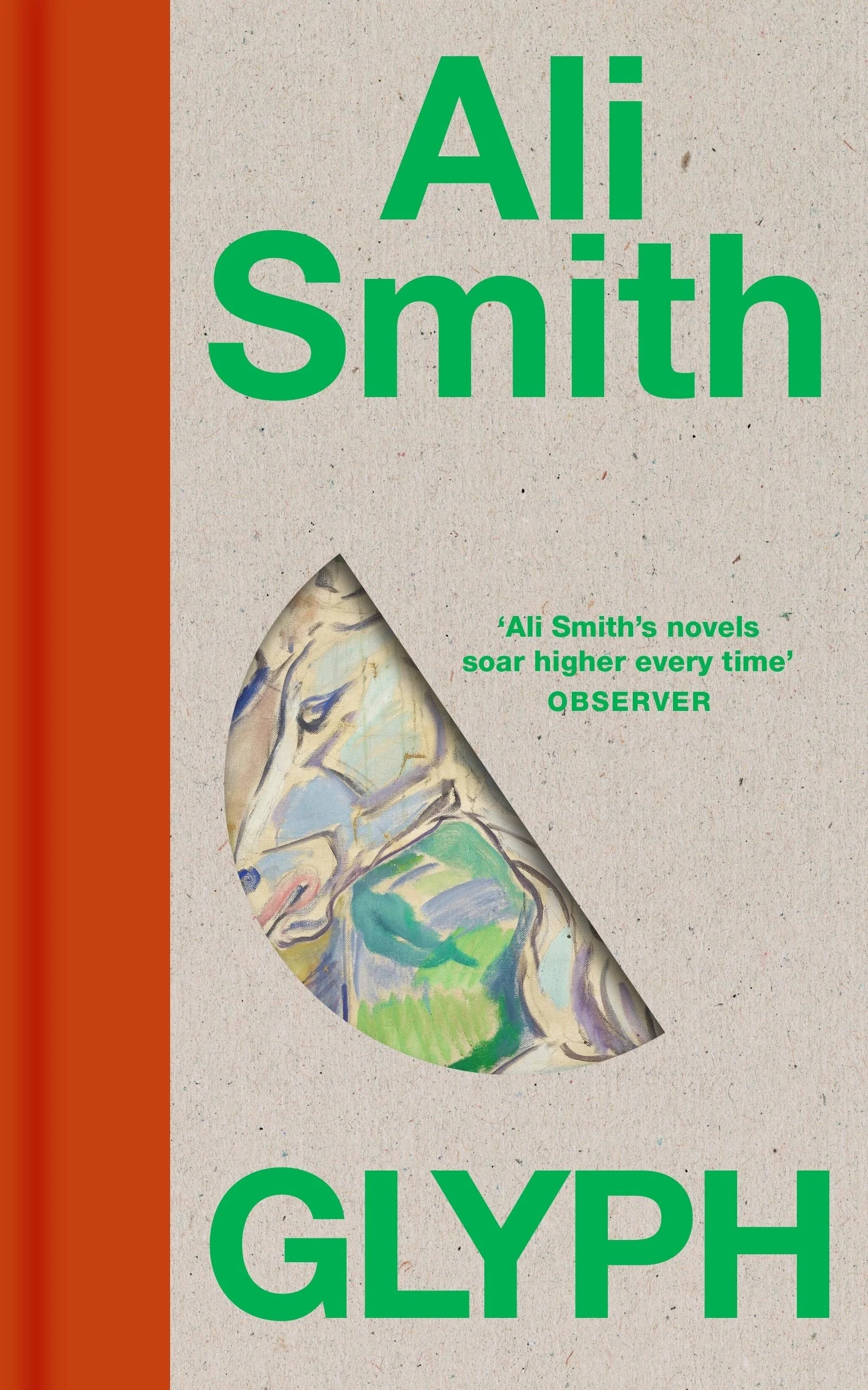
Glyph by Ali Smith $45
It sounds like Gliff? Well, it's something else altogether. Glyph follows Ali Smith's 2024 novel Gliff and tells a story hidden in the first novel. Ghosts don't exist. They don't. End of. Story, however. It is haunting. Everything tells it. It all starts when Petra and her little sister Patch hear a horrifying story from the past and find themselves making up a ghost. Is it imaginary? Is it real? Then it all starts again thirty years later when Petra, now estranged from Patch, finds a phantom horse kicking the furniture to pieces in her bedroom. What to do? She phones her sister. In a chiaroscuro dance through our increasingly antagonistic era, Glyph asks if we’re attending to the history that’s made us and to the history we’re making. A funny, warm and clear-eyed take on where we are now, Glyph is about what our imaginations are for and how, in a broken, brutal and divided time, we rekindle care, solidarity, resistance and openness. This anti-war novel, Ali Smith’s most soulful, playful and vital yet, is a work of lightness that goes deep to counter the forces currently flattening the modern world. [Hardback]
”Glyph's primary power comes from its commitment to excavating the sediments of language; its etymological resonance and inference. Smith's tonal skill as a writer is also used to great effect when dealing with bureaucratic, authoritarian absurdity. It is a bold move to be so morally unflinching, especially in the face of a perceived aesthetic orthodoxy that so often privileges distance and irony, but in Glyph we see a major British writer answering the call of the day when so many others have equivocated or turned away. There is also something about Smith's relentless focus on language that makes her particularly well suited to the task. Smith's sensibility is fine-tuned to grapple with the avalanche of passive-voice headlines, asymmetric categorisations, outright linguistic inversions and semantic absurdities that have accompanied the increasingly desperate attempts to justify the unjustifiable.” —Keiran Goddard, Guardian
”Smith is an exceptionally gifted storytelle. She can bring any sentence alive with the verve of her wordplay, as her characters spark off one another in speech, echoing, patterning and discovering the energy contained in a single moment. Smith's capacity for hope is infectious, and the hope posited by these books is that storytelling can restore not just our humanity but our political responsibility and agency. Between them, Gliff and Glyph offer a world of endlessly proliferating gliffs: slivers of conscience that Smith imbues with a power that is not illusory simply because it is imagined. Indeed, Smith suggests that made-up stories may, at this point, be the least illusory things we have.” —New Statesman
>>Exhilirating/excoriating.
>>Read Stella’s review of the companion volume, Gliff.
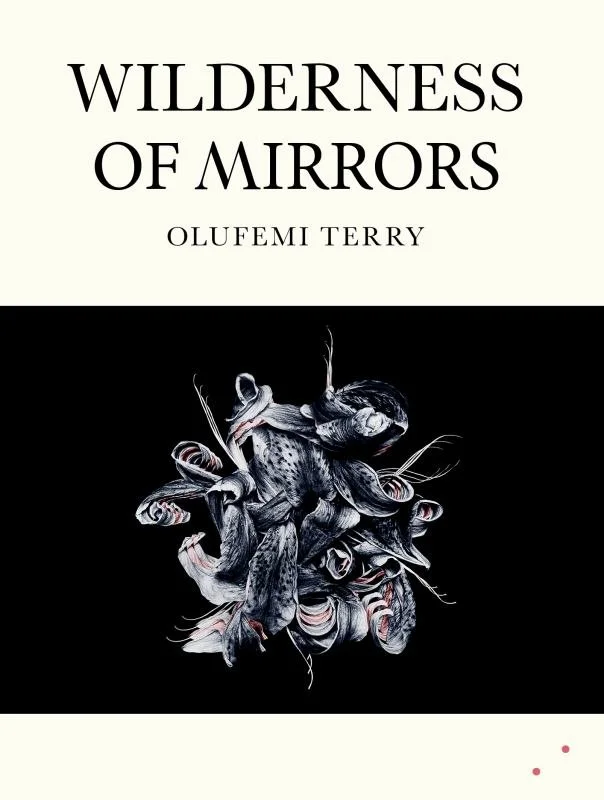
Wilderness of Mirrors by Olufemi Terry $48
When Emil’s father suggests that he set aside his studies to help steady his cousin’s life, the young neurosurgeon-in-training moves in with indifferent relatives in Stadmutter, an unfamiliar, deeply divided city at Africa’s southern tip. There he is drawn to tamsin, a white doctoral student, and Bolling, a wealthy Haitian-German whose reactionary ideas hold a curious allure. Beneath Stadmutter’s languid surface, a gathering Creole movement is straining the country’s fragile racial peace. Through Bolling’s machinations, Emil is pulled into events that threatne his future and pushed towards irrevocable choices. [Paperback with French flaps]
”I loved this novel, at once vivid and mysterious, beautiful and frightening. Olufemi Terry speaks with great clarity and precision to the aimlessness and self-disconnect of youth, the formlessness of relationships developed under liminal conditions, and the frightening sensation of being gradually absorbed into something vast and opaque. Emil is a fascinating protagonist; Wilderness of Mirrors follows his movements closely, yet he remains — to himself, too — often half-absent, though occasionally brought into sharp focus and placed under the lens of his own self-analysis. Wilderness of Mirrors follows Emil's search for meaning and emotion amidst the mysteries of himself and of the parallel South Africa in which the novel is set, to deeply absorbing, often destabilising effect.” —Harriet Armstrong, author of To Rest Our Minds and Bodies
”In Wilderness of Mirrors, Olufemi Terry conjures up a parallel South Africa where, although apartheid is decades gone, its young people move through an existential transience, fitfully straining to reckon with the gaps their country's history has left them. For Emil and Tamsin, there's no coming of age, only a hollow sense that they should be doing more with selves they are still figuring out. It's a world that is all too familiar, yet Terry transfixes the reader such that we are loath to turn away.” —Evan Narcisse, author of Rise of the Black Panther
>>Read an extract.
>>What lies beneath?
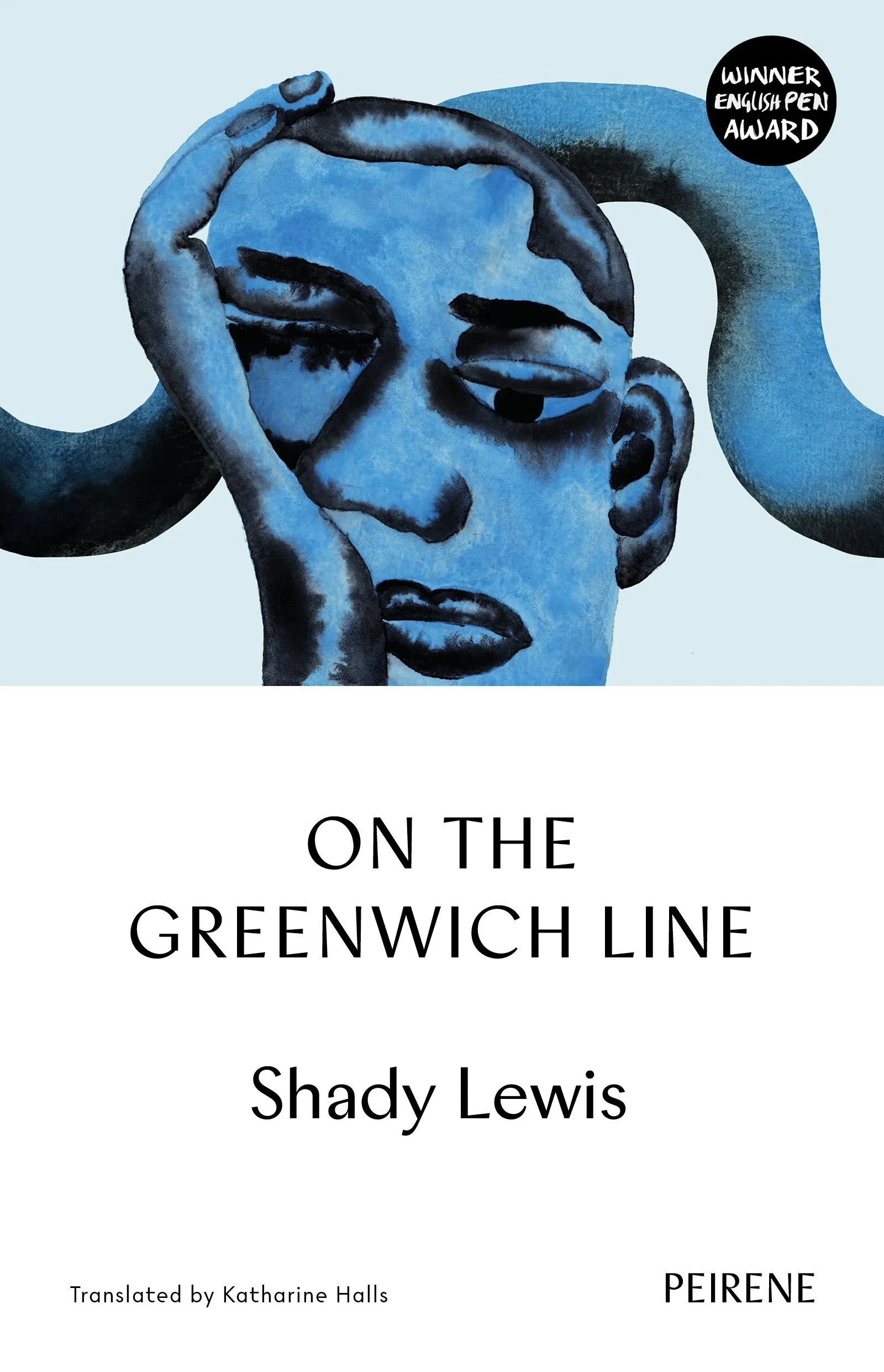
On the Greenwich Line by Shady Lewis (translated from Arabic by Katharine Halls) $43
In a run-down East London housing office, migrants and frustrated local government employees cross paths and try to work out what the latest policy means for them. As a favour to a friend, one man finds himself roped into organizing the funeral of Ghiyath, a young Syrian refugee. It is not until his life collides with Ghiyath's death that he realises just how much he has in common with those who've fallen through the cracks. Told with a wry cynicism and deadpan wit, On the Greenwich Line traces the absurdities of racism, austerity, and bureaucracy in contemporary England. This is a story about systemic failure and human courage, and about London and its many lost souls, full of insight, humour and profound humanity. [Paperback with French flaps]
”I was riveted and charmed by this funny, humane and poignant novel. It's written in a voice that is as ardent as it is sensitive, one marked by history and yet managing to remain beautifully unruly and independent.” —Hisham Matar
”Shady Lewis makes fun of everything and everyone with great humanity: we become attached to these characters who are more lost than crazy, who do what they can keep going. Lewis, with scathing humour and a healthy lightness of touch, examines everything: from the god Khnum to Margaret Thatcher via Karl Marx, freedom of expression, Facebook, romantic breakups, colonization, identity and religious tensions - nothing escapes his acerbic and lucid gaze. A delicious tragicomic novel about contemporary society.” —Nina Chastel, Orient XXI
”This introspective novel delights with its finesse and depth, and invites us to look at reality from the author's sensitive perspective. In painfully beautiful, funny and tragic prose, Shady Lewis skilfully and accurately expresses the difficulty of being excluded and stigmatized because of their difference.” —Nadia Leila Aissaoui, l'Orient litteraire
>>Madness and philosophy.
>>The translator reads a passage (and there’s a slideshow).
>>Fifty shades of whiteness.
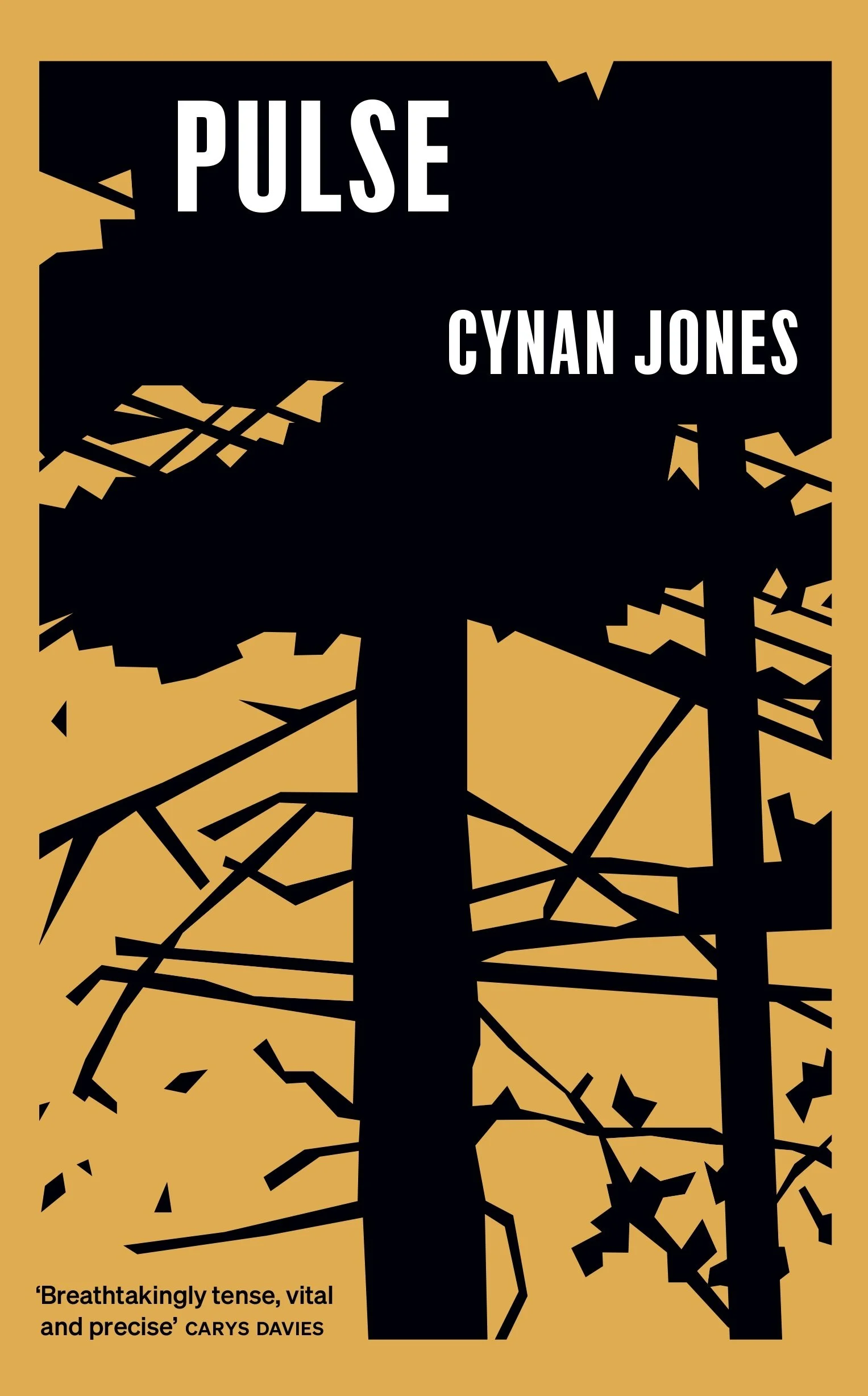
Pulse by Cynan Jones $35
A collection of viscerally powerful short stories in which man is pitted against nature, against circumstance, and against himself. A man heads into the snow to hunt down the bear that has been taking stock from farms in the valley. A father tries to make something go right for the son he no longer lives with. A partner is called to help when a cow's labour goes horribly wrong. A fierce storm threatens to bring down a tree on powerlines over a family's home. Fear, vulnerability, tension and resolve course through these arresting and indelible stories from the Welsh author of The Dig and Cove. [Hardback]
”Breathtakingly tense, vital and precise. Cynan Jones has a rare gift for making us experience, moment by moment, the struggles of his characters to survive.” —Carys Davies
”Pellucid clinical sentences craft a loving symphony of meat and magic, mucous, mud and mire. Cynan Jones's writing is pure electric energy. Every story thrums and squirms with life. The accumulative affect is to deliver a shock to the heart of what a wild, strange and wonderful thing it is to be human.” —Megan Barker
”Each paragraph reads like a beautiful, multi-layered prose poem. The crystalline language conveys, with real emotive power, the squelch and suck of mud and manure, the stink of blood, the skin-feel of drizzle. Spending time with this collection is a sensory, immersive experience.” —Niall Griffiths
”Cynan Jones is a blast of fresh air, a stumble in the dark, and a sudden chill in the guts.” —Tim Winton
”The six tales in Cynan Jones’s new collection vibrate with fear. Jones introduces a mood of fearful expectation on the first page and maintains it, with few moments of respite. Much of the tension arises from our not knowing what is going on. Such withholding of information is a studied technique on the author’s part, a means of creating mystery, sparking our curiosity and prompting us to ask questions. Pared-down though his writing may be: it is shot through with moments of arresting originality and beauty. The painterly effect is exquisite, the first sentence of the first story exemplifying the quiet power of Cynan Jones’s prose.” —Times Literary Supplement
>>Nature and non-linear love.
>>Writing in your head.
Angst by Hélène Cixous (translated from French by Sophie Lewis) $48
A woman replays her abandonment by her mother, who is sometimes addressed as a male mother-god. She is also abandoned by her lover, to whom she is in thrall. She tries repeatedly to make or receive phone calls with the beloved figures, without success. She waits for their letters and imagines their contents. In a dream-like, torrid sequence, suffering, fear, fatigue and imperfection are apostrophised. Forgetting is examined and toyed with from every angle. Mythical hybrid creatures are invoked: a snake-headed lion, wolf-snakes, a wolf-peacock. How did this come to be? In a cunningly, wittily wrought rush, the unique, unpredictable voice of the narrator speaks from multiple perspectives to express powerful anguish and, ultimately, catharsis. [Paperback]
”Cixous reminds us that women have long spoken from a wound. To be is already to be abandoned, already to have lost, and still to love. To read Cixous is to tarry with this open wound, to hear how writing becomes testimony to its own possibility.” —Jamieson Webster
”Language in Cixous’s hands is molten, constantly opening onto fresh possibilities.” —Maggie Nelson
”With Hélène Cixous you must close your eyes and open your mouth. Wider. So open your throat opens. Your esophagus. Your lungs. Wider. So open your spine unclatters. Your hips swim loose. Your womb worlds itself. Wider. Open the well of your sex. Now speak your body from your other mouth. Yell corporeal prayer. This is writing.” —Lidia Yuknavitch
>>On Angst.
>>Very close, very far.
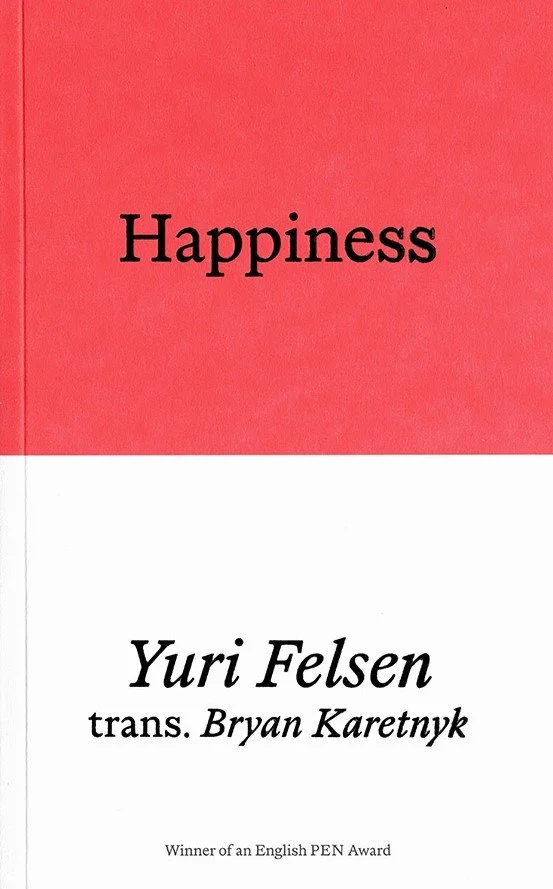
Happiness by Yuri Felsen (translated from Russian by Bryan Karetnyk) $42
Influenced by the great modernists such as Marcel Proust, James Joyce and Virginia Woolf, Yuri Felsen’s writing stood at the forefront of aesthetic and philosophical currents in European literature. Set among the exiled Russian community of interwar Paris, Happiness offers both a vivid social snapshot and an unnerving psychological portrait, and its exploration of desire, rivalry, masculinity and self-deception, shaped by shifting sexual and emotional mores, feels strikingly modern. Written as a diary addressed to his beloved Lyolya, Happiness unfolds as an intense stream of consciousness in which Volodya — its anxious, self-scrutinising narrator — revisits the fragile equilibrium of their difficult relationship. When new figures enter Lyolya’s orbit, Volodya’s hard-won certainties begin to collapse. Forced to contend with a series of rivals — a Soviet film star, a dashing ex-soldier, a wealthy businessman — he is driven ever deeper into jealousy and self-analysis, with tragic results. As the relationship fractures, Volodya probes the uneasy bond between emotional suffering and artistic creation, and the elusive nature of happiness itself. Felsen’s writing has only recently been rediscovered. At the height of his career, following the Nazi occupation of France, he was deported and killed in the gas chambers at Auschwitz, and his legacy and archive were largely destroyed by the Nazis. [Paperback]
”Felsen has rightly been compared to Proust in his determination to make language capture every atom of the mind’s workings. This translation is a formidable achievement.” —Literary Review
”The miracle of Yuri Felsen is how his apparently Nabokovian rhythms lull you into a false sense of security, before a sudden and chilling exposure to the weather of a walk where the whole elegantly interwoven conceit of the narrator is ripped apart. And the pain of someone like Walser glints through a decadent surface of exiled life in Paris, to hint at darker shadows to come.” —Iain Sinclair
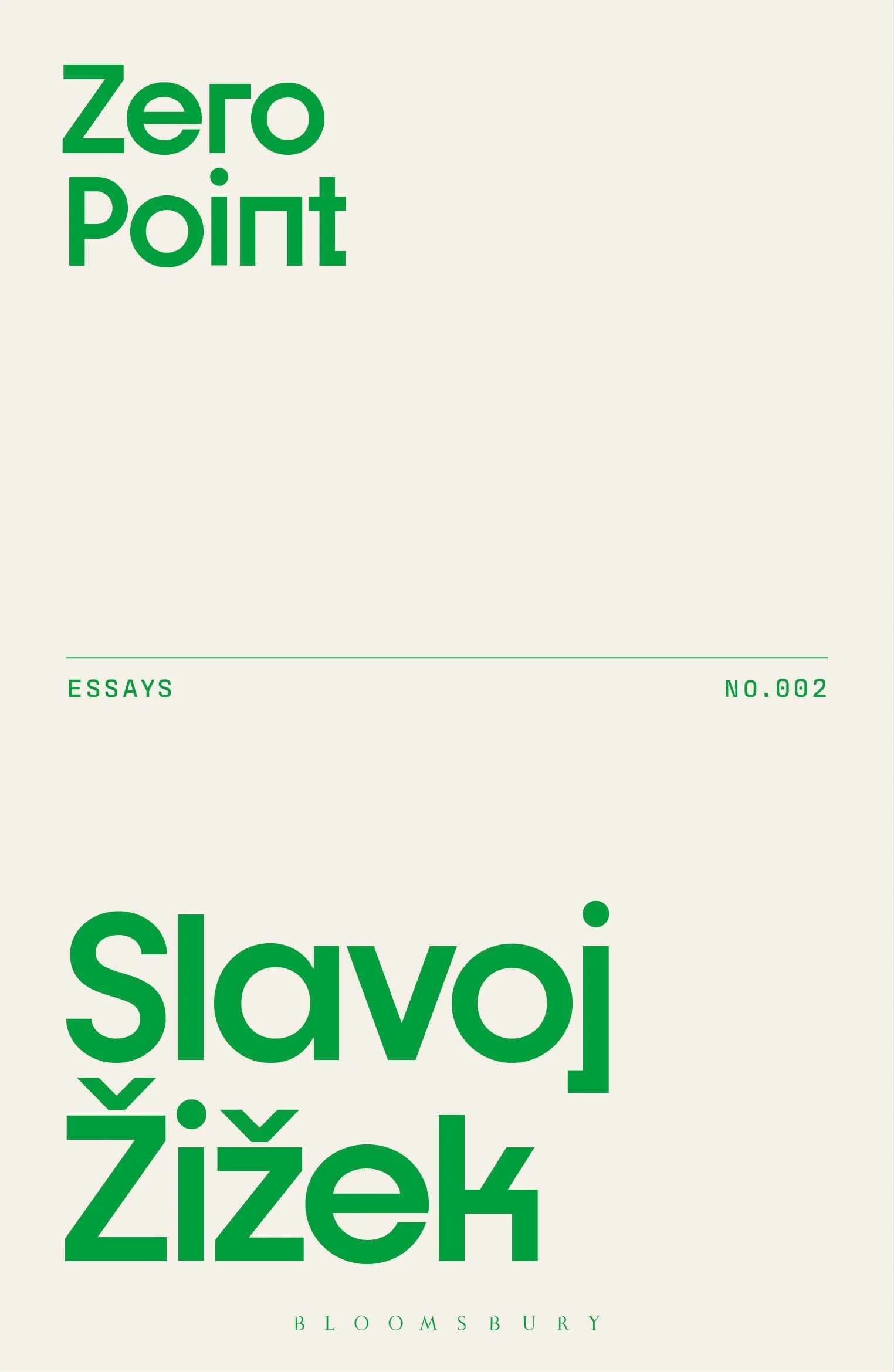
Zero Point by Slavoj Žižek $22
The essays in Zero Point ask how we distinguish defeat from disaster, and how we confront despair without collapsing into it — questions never more pertinent than the current moment in the wake of electoral victories for authoritarian populists and unceasing news of violent atrocities. The 'zero-point' of the title is ground level, rock bottom, the place to which one retreats and where one regroups. Taken from Vladimir Lenin's 1922 piece 'On Ascending a High Mountain, in which Lenin considers the complexities of how one 'retreats' while keeping faith in the cause, the central simile of the climber offers a blueprint for resilience, flexibility, and the persistence of hope. This is the revolutionary as living out the Beckettian motto — 'Try again. Fail again. Fail better.' In Žižek’s hands, this becomes the formula for confronting the antagonisms of existing world order. With a particular focus on the Middle East — the point at which all our tensions threaten to explode — Žižek argues nothing can be addressed meaningfully without such a confrontation. [Paperback]
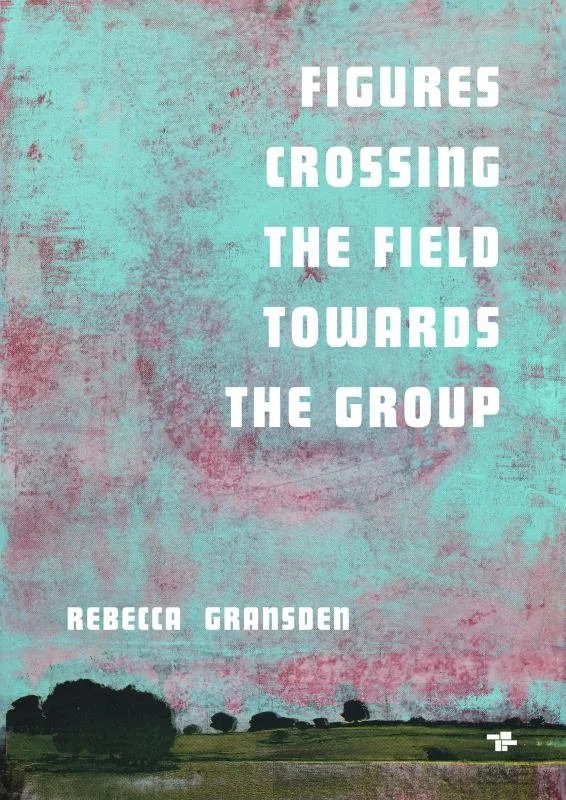
Figures Crossing the Field Towards the Group by Rebecca Gransden $40
In the midst of an apocalyptic event of unknown provenance — a mass of red spreading north from the southern counties — a young girl sets out on a journey. Along the way she encounters a series of eccentric characters, the few left behind in the wake of a widespread evacuation. Some of these individuals are ravaged and on the edge of death, while others are immersed in their own hermetic practices, be they solipsistic, nihilistic, or otherwise. None wish to engage for more than the brief time necessary to offer their meagre assistance. There is talk of 'anti-spores', pools of blood, and of a hum spreading through communication wires. The hum has altered the very appearance of written language, pushing words apart, leaving only single syllables behind. This constraint is present in the third-person narration we read but is removed during periods of dialogue. This results in a rhythmic, chantlike flow to the prose. As with the best of work that employs the tropes of apocalyptic fiction, Rebecca Gransden's unusual novella ends with many of its questions floating in the scarlet haze it generates, leaving them for the reader to ponder in the wake of what is surely a singular literary experience. [Paperback]
"Linguistically inventive, alert in every sense, and propelled with such narrative force that hairs burn on the unsuspecting reader’s neck." —Iain Sinclair
>>The way of salt and sin.
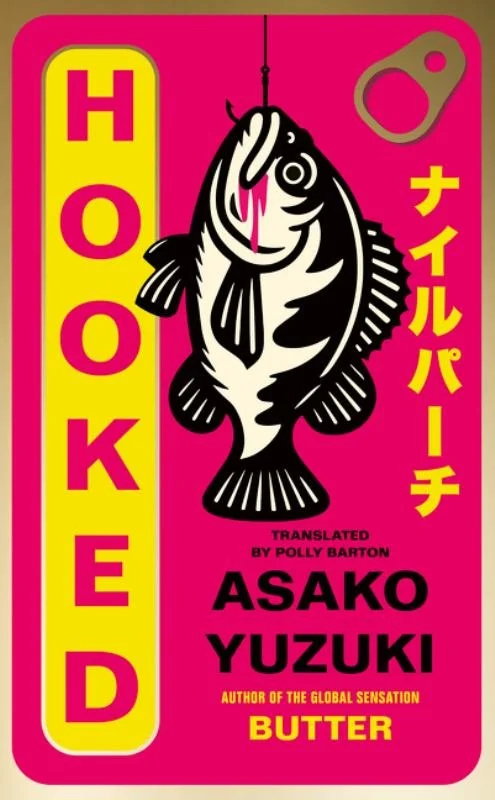
Hooked by Asako Yuzuki (tranlsated from Japanese by Polly Barton) $37
The new novel from the author of Butter. Eriko really wouldn't mind being savaged, if it was her best friend doing the savaging. Eriko's life appears perfect — devoted parents, spotless apartment and a job in the seafood division of one of Japan's largest trading companies. Her latest project, to reintroduce the controversial Nile perch fish into the Japanese market, is characteristically ambitious. But beneath her flawless surface she is wracked by loneliness. Eriko becomes fascinated with a popular blog written by a housewife, Shoko. Shoko's posts about eating convenience store food and her untidy home are the opposite of the typical Japanese housewife's manicured lifestyle. When Eriko tracks Shoko down at her favourite restaurant and befriends her, Shoko is at first charmed by her new companion. But as Eriko's obsession with Shoko deepens, her increasingly possessive behaviour starts to raise suspicion. As Eriko's carefully laid plans begin to unravel, how far will she go to hold on to the best friend that she's ever had? [Paperback]
”Obsession, tension and toxic loneliness: Hooked had me in a headlock. No one writes about the hidden depths and lurking monstrosities of womanhood quite like Asako Yuzuki.” —Alice Slater
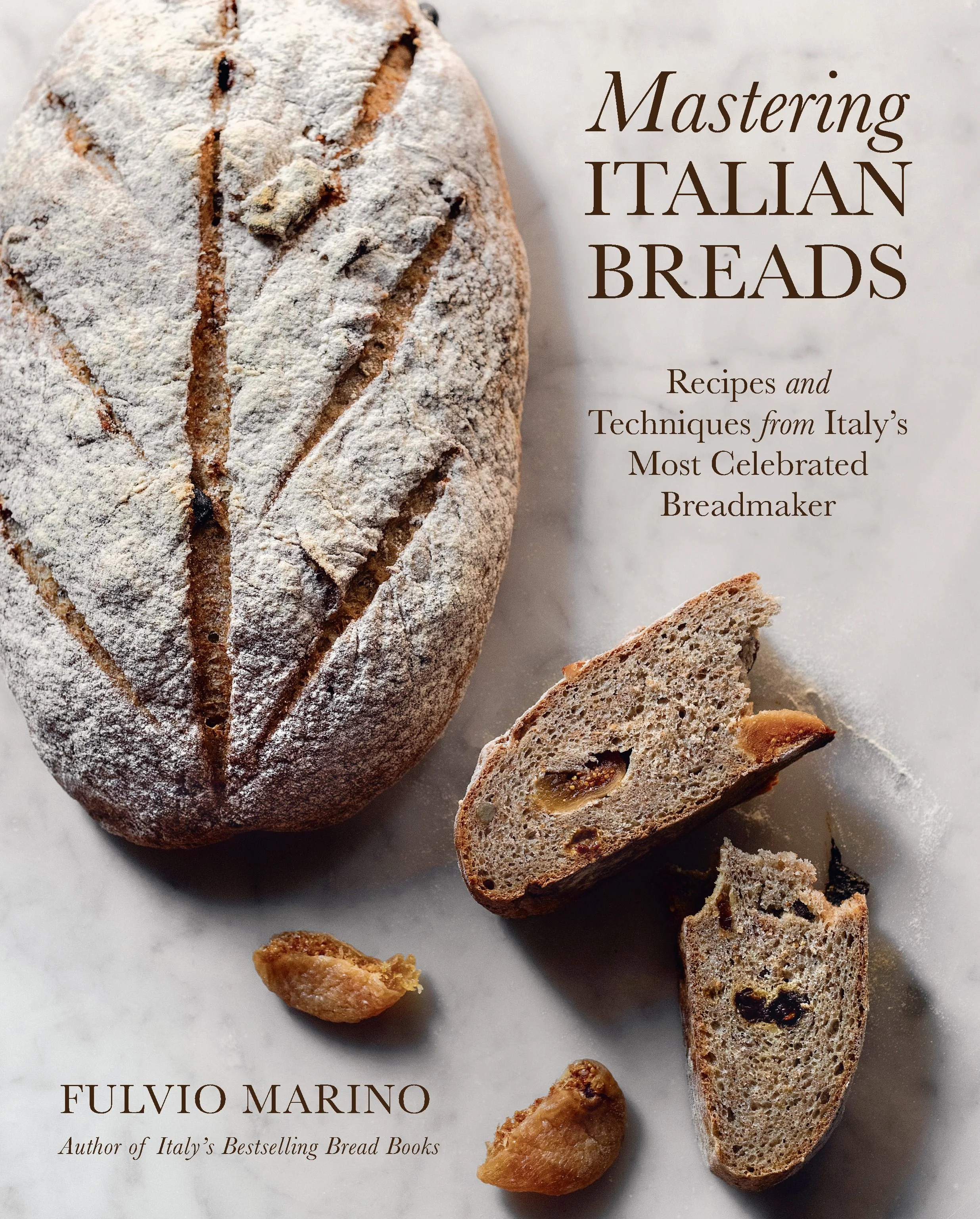
Mastering Italian Breads: Recipes and techniques from Italiy’s most celebrated breadmaker by Fulvio Marini $60
From humble homes in the mountain villages of Umbria and the Piedmont to the grand bakeries of Milan and Rome, the Italians know bread-baking. The same breads they make are also made in fancy, expensive bakeries outside of Italy, too, but few people realize how easy, gratifying, and inexpensive it is to make these spectacular loaves at home. Enter Fulvio Marino, one of Italy's most celebrated bread-makers, who has made it his mission to teach everyday home cooks the secrets of Italian artisan breads. He has written a big, colorful book that reveals his secrets and those of his fellow artisans. Illustrated with hundreds of step-by-step color photos that show you how the breads are folded and shaped, Mastering Italian Breads includes well-known classics like Focaccia, Ciabatta, Crostata, and Pan DolceLesser known-but worth discovering! —Italian regional breads like Pane Pugliese and Teglia alla Romana. —More than a dozen Italian spins on rolls, biscuits, and breadsticks. —Six rustic and delicious versions of pizza doughs. —Breads with a sweet side, such as Cannoli and Panettone. Authoritative, easy-to-follow advice about yeasts, wheat varieties, proofing, rising, shaping, and baking. Both useful and inspiring. [Hardback]
>>Look inside!
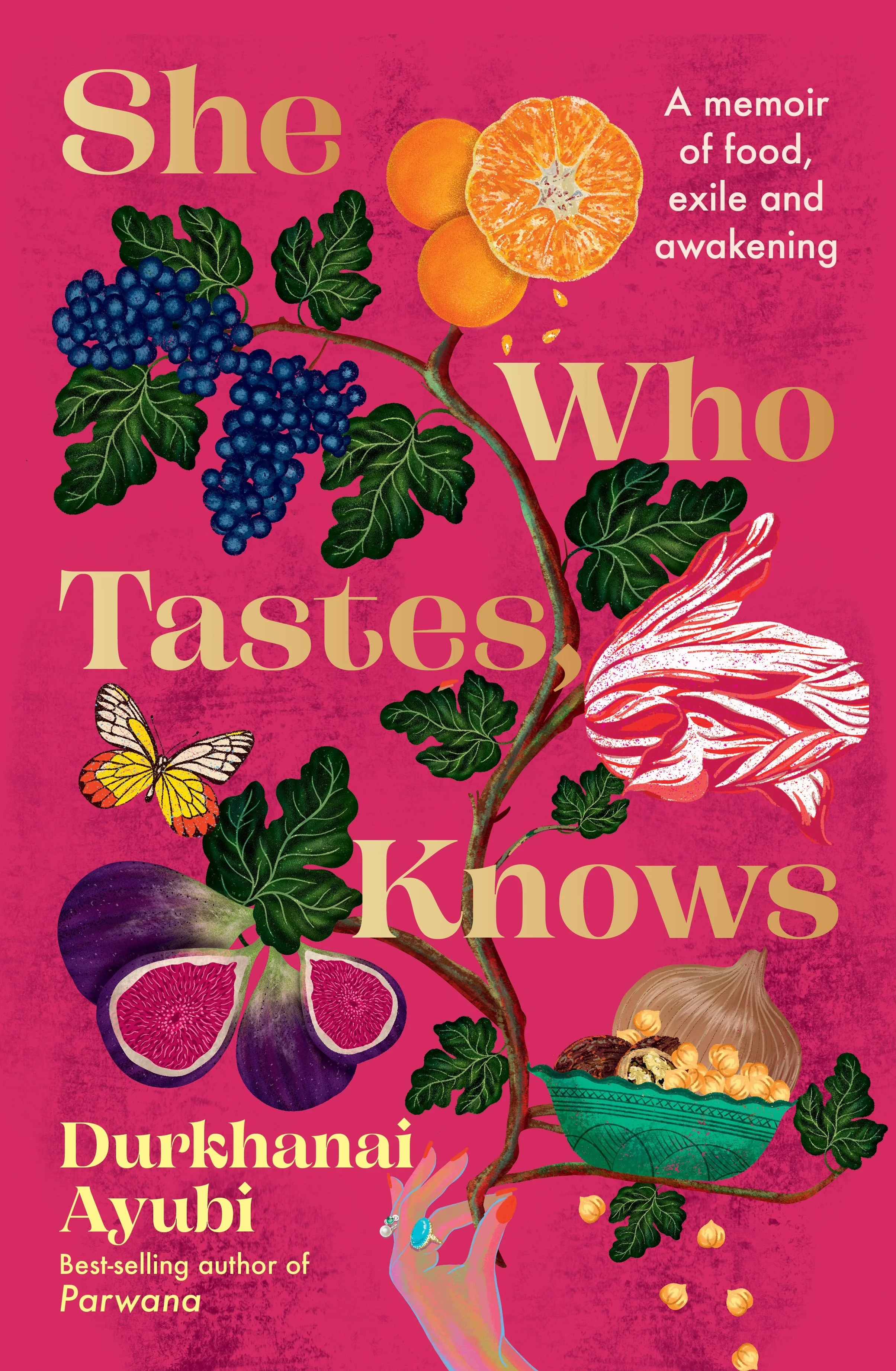
She Who Tastes, Knows: A memori of food, exile, and awakening by Durkhanai Ayubi $38
To truly understand things, we need to know them. We need to taste them. This is a story of how food connects us all — not only at the table but to each other's cultures and histories. Durkhanai Ayubi was born in Afghanistan in the 1980s, and she and her family became refugees when she was a small child. She's grown to see her ancestral lands be misunderstood as a desolate war zone of helpless people, with no history or culture worthy of mention, when the reality is in fact steeped in rich, complex histories of incredible cultural significance. Living in Australia, Durkhanai's only tangible connection to the histories of her homeland was through food, first through cooking with her family, and then as an owner of her much-loved award-winning Adelaide family restaurant, Parwana. Years on, and following Afghanistan's systemic collapse in 2021, Durkhanai realised that it was time to revisit those histories and tell the previously untold stories that can help shape a more optimistic future. She Who Tastes, Knows is an expansive history of Durkhanai's homeland and a vivid, moving story about what it truly means to understand another's culture. Through stories of food, family, belonging and migration, the book traverses cultural boundaries, weaving a tapestry of dignity, empathy and understanding. Each chapter draws on a particular ingredient important to Durkhanai's cultural identity, and explores their life cycles to uncover unseen histories of Afghan culture, the complexities of migrant and refugee experience, and how we as a society might work towards unifying our disparate cultures and ways of seeing the world. In our modern world, which can feel so disjointed, this book shows us how new possibilities for connection are just under the surface, waiting to bloom. [Paperback]
>>Ayubi is best known as the author of the Afghan cookbok Parwana.
Read our latest newsletter.
Find out what we’ve been reading.
Browse our fiction sale.
Be part of a community of readers.
27 March 2026
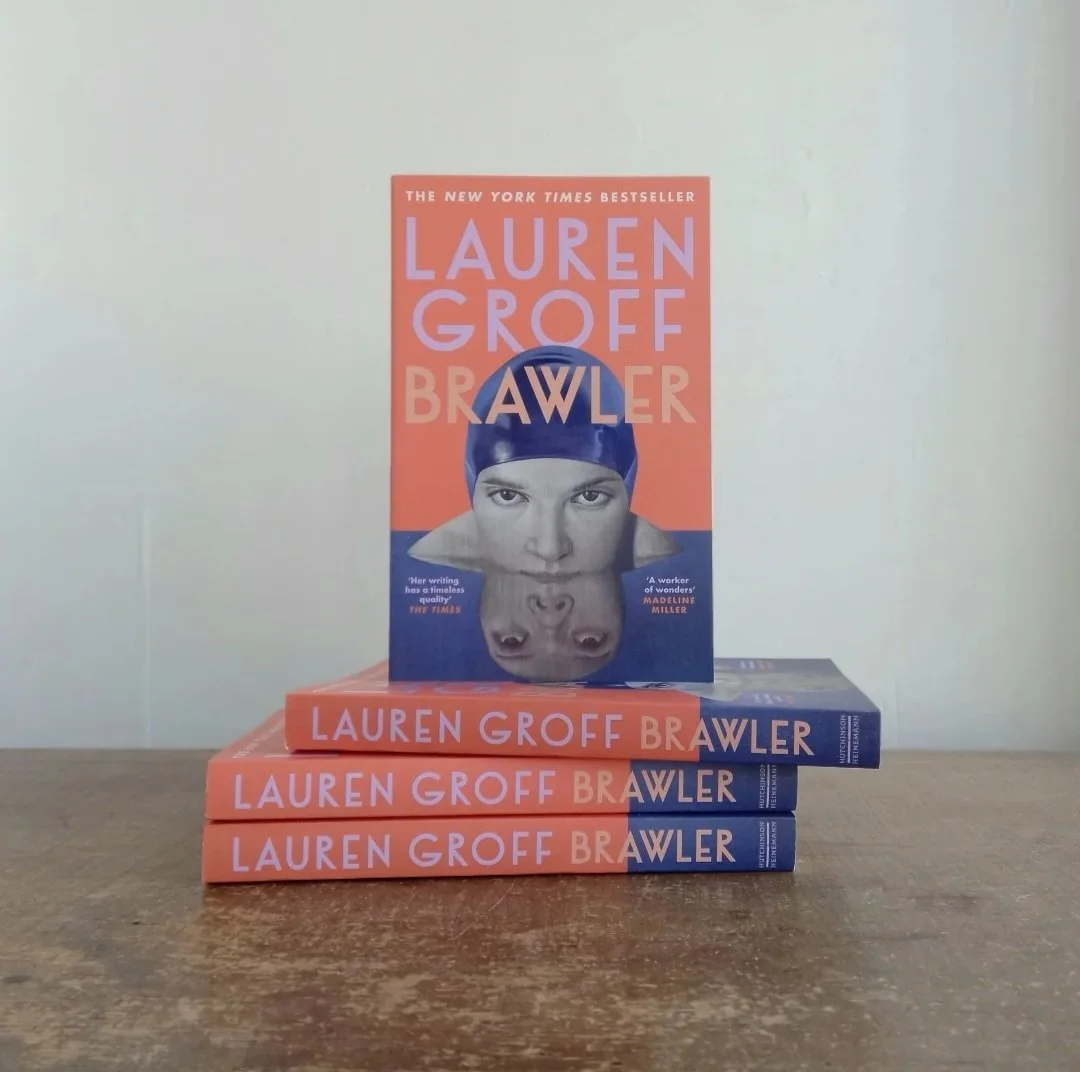
Precise, surprising and provocative, anchored by profound insight into human nature, the stories in Brawler reveal the repeated fracture points between love and fear, compassion and violence, reason and instinct, altruism and survival. At what point do circumstances cause us to act in a way we would not have expected?
In a recent article Colm Tóibín writes on the mechanism of creating a short story, where a moment, a snippet of conversation, a chance encounter can be a trigger which, combined with memories and experiences, consciously or subconsciously, builds a whole around this small initial encounter. Lauren Groff is an excellent short story writer, who is seemingly able to pluck a moment, an idea or a character from the air and in a startling few sentences hook you, building a connection to the fate of the protagonist. I like Groff’s novels very much, (The Vaster Wilds was epic and beautiful) but I enjoy her short stories immensely. Her award-winning collection Florida was all seething swamp with its geophysical focus. Brawler is less geophysical in nature, although it does have some very specific touchpoints of place moving across various American states from New England to California. Its variety isn’t just in landscape but also across age and class, varying from the impoverished to the wealthy, the very young, with several child protagonists, as well as those in mid-life figuring prominently. The nine stories in Brawler focus, successfully, on the interior landscapes of their characters and how each reacts to circumstances, often but not always, forced on them. (Some of the protagonists make their own special hells.) What decisions will one make, and how will these decisions impact on others, especially those closest and dearest? The opening story, ‘The Wind’, is powerful. You are swept up in the narrative of a young child and their sibling as they navigate leaving home. There is a Hansel & Gretel moment as they quietly leave the house. There’s a gentle interlude, before you realise that violence underpins their actions. A violence at first abstract, before Groff shakes the very foundations you depend on, the ability to escape. It’s a story that explores trauma and its persistence as it reaches up through generations, resurfacing to cause chaos. In a recent interview Groff talks about rage, and defines it as a force for good if it’s laser-focused and if not, a miasma. For context, Lauren Groff lives in Florida, in a blue spot in the red state; and was a competitive swimmer. Many of the stories include swimming and water, the good and bad of it, from pleasurable immersion to the threat of flood, or the danger of the snow storm. The brilliant story ‘Brawler’ features a feisty teen, a brawler in every way, who is fearless in her high dives, but as we turn to her arrival home at the close of the story, she is powerless to help her mentally and physically unwell mother. Here our empathy is broken apart. Like many of the stories we are asked to question where our loyalties lie, and the answer isn’t always clear. Victims become perpetrators and vice versa, those we are wary or dismissive of gain our empathy. Ethical questions arise about what is good and what is bad, as we encounter situations that challenge our understanding and often, not always, leave us hanging with a question mark. ‘What’s the Time, Mr. Wolf?’ Is a perfect example of this quandary where we follow the boy, Chip, from childhood to middle age. The youngest sibling in a banking tycoon family, he has skimmed along on his family name and male-ness, never quite fitting, but getting by, despite the raw deal his mother and sister had been handed. While they’ve learnt to get by and succeed in their own wits, he’s not so competitively inclined. After a stint in the family bank he’s sent to the summer house to contemplate his future and dry out, although nobody really talks about the alcoholic tendencies within the family, nor the unspoken impact of the subtle violence of bullying that impregnates the interactions within this family. There is a flicker of hope, but will it be extinguished by the choices Chip makes? The nine stories in Brawler are incisive , pin-prickingly good, shocking in parts yet emotionally geared to make us sit up and see the desire in humans to do the right thing despite our fallibility. It explores the dark and light in all of us, and our battle to understand violence, to alleviate trauma, if we can — to draw on our compassion, even when this is an imperfect thing, in the aid of another, or to ensure our own survival.
All your choices are good! Click through to our website (or just email us) to secure your copies. We will dispatch your books by overnight courier or have them ready to collect from our door in Church Street, Whakatū.
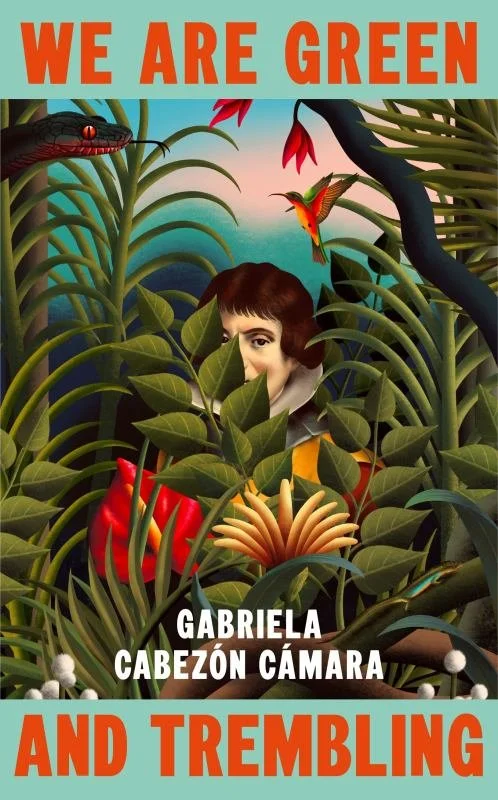
We Are Green and Trembling by Gabriela Cabezón Cámara (translated from Spanish by Robin Myers) $50
From deep in the wilds of the New World, Antonio writes a letter to his aunt, the prioress of the same Basque convent he escaped as a young girl. Since transforming into Antonio, he has had monumental adventures and taken on numerous guises. He has been a mule driver, shopkeeper, soldier, cabin boy and conquistador. He has wielded his sword and slashed with his dagger. Now, hiding in the jungle and hounded by the army he deserted, Antonio is looking after two Guarani girls he rescued from enslavement. But the New World has one more metamorphosis in store, which might save them all from extinction. Based on the life of Antonio de Erauso, a real figure from the Spanish conquest, We Are Green and Trembling is a masterful criticism of religious tyranny and the mistreatment of women and indigenous people. This queer, baroque, tender and surreal novel conveys glimmers of hope for the future within the brutal colonial history of Latin America — finding in the rainforest a magical space where transformation is not only possible but necessary. A beautifully written, sumptuous and surreal historical reimagining of one of South America's best-known trans men, from the author of The Adventures of China Iron. [Hardback]
Long-listed for the 2025 International Booker Prize.
”A hallucinatory, innocent, fanciful and redemptive book. Cabezon Camara's historical fiction plays out like confession or revelation, a piece of real-unreal colonial apocrypha, glowing white hot, dancing like the heart of a pyre.” —Financial Times
”Sumptuously translated by Robin Myers, We Are Green and Trembling is strikingly relevant to the present day. Cabezon Camara uses history to illuminate and interrogate threats to trans representation and, in parallel, to interrogate the enduring, humanising effects of colonisation... [an] epic in miniature... a mercurial tale for all time.” —Irish Times
”So sharp, so urgent, so brave. Gabriela Cabezon Camara is one of the most authentic voices writing in Spanish today, and among her many talents is one that's especially hard to find: not only does she challenge and incite us, not only does she confront the darkness, but she also gives us in return the subversive courage to think of ourselves as more human, more alive, and more luminous than ever.” —Samanta Schweblin
”Profoundly resonant with our current moment, We Are Green and Trembling offers a searing critique of modernity's colonial echoes: a resurgence of far-right ideology, cultural erasure, and gender-based oppression. A story that is not only inclusive but also redemptive-anchored in the richness of language, the beauty of the natural world, and the power of storytelling to reclaim what history tries to erase.” —Chicago Review of Books
>>Read and extract.
>>The germ and the translation.
>>The importance of representation.
>>Writing like a river.
>>Letting the jungle win.
>>Other books listed for the 2026 International Booker Prize.
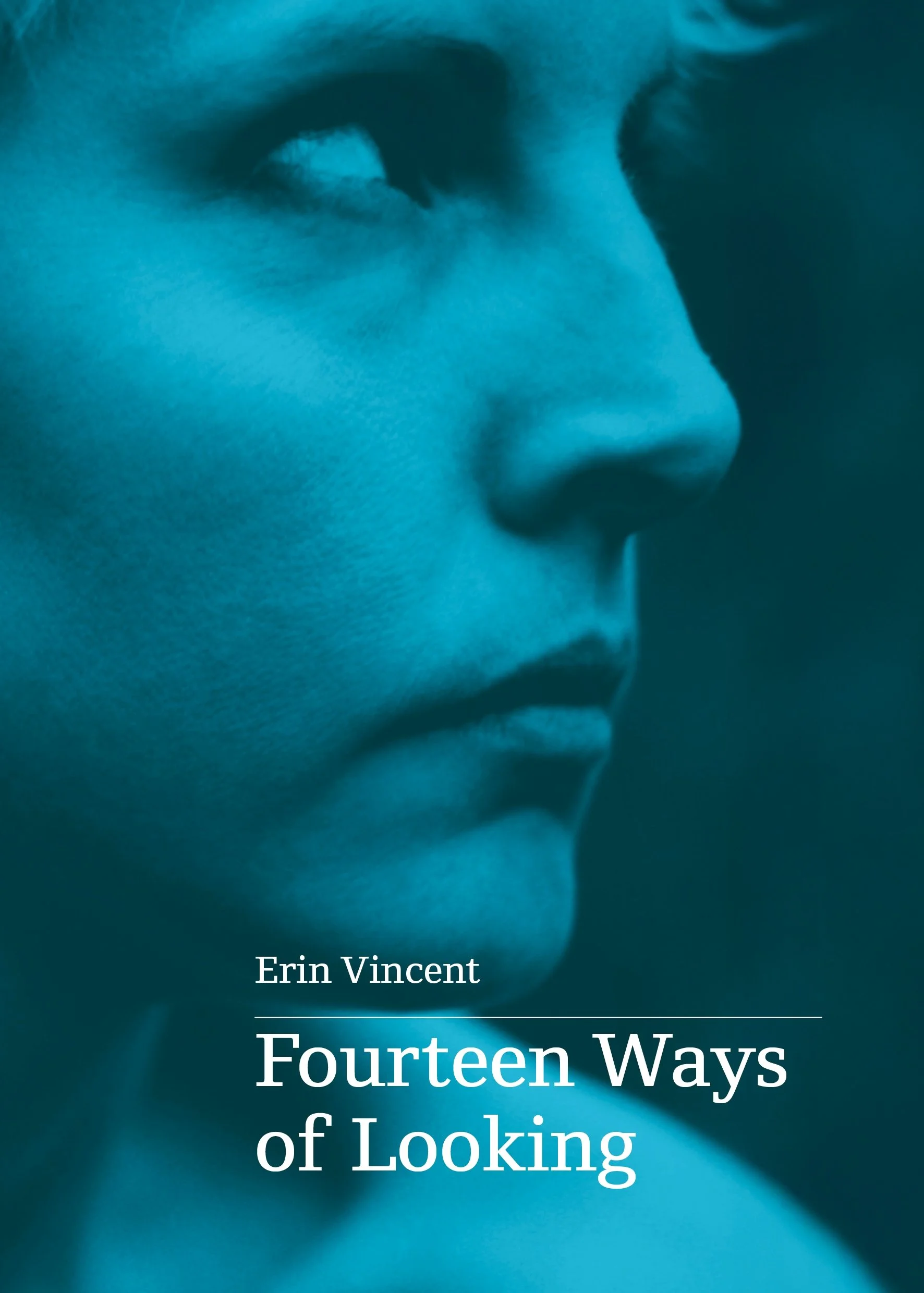
Fourteen Ways of Looking by Erin Vincent $40
When Erin Vincent was fourteen her parents were struck down by a truck driver. Years later, the number fourteen reverberates – in books and films and art and music and in the lives of the people who made them. Finding in these places not comfort or consolation but an infinite network of correspondences, Fourteen Ways of Looking becomes a paradigm for the act of writing itself. [Paperback]
”Fourteen Ways of Looking is a deep dive into the moment after which nothing is the same — life as afterlife, and yet it’s what we have. Vincent’s effort is both psychological and literary: trying to wrangle meaning from an event that may have none, or may hold it all. And what then, of her autonomy to make her own life? In her efforts to free herself by going back to the source of trauma, she is both Odysseus and Euridice, damned and saved. A remarkable achievement.” —Anna Funder
”Erin Vincent’s book is magnificent, simply one of the best books I’ve read in ages. I read it in a reverie of blissed-out, horrified amazement. It will be compared to Markson, but it’s better than Markson – more formally disciplined, more cold-blooded in its self-scrutiny. I can easily imagine this book becoming a cultural touchstone like Max Porter’s Grief Is the Thing with Feathers or Maggie Nelson’s Bluets.” —Sarah Manguso
”Fourteen — for Erin Vincent — is the age at which her self was formed, and this text is itself an astonishing formal experiment. The number fourteen becomes uncanny and arbitrary, both divine symbol and violent accident, as she remembers her younger self and tries to find patterns in chaos. An incredible achievement: unclassifiable, humane and haunting. I was moved to tears.” —Clare Pollard
”Through a structure and project that holds the book to the tightest of attention, Vincent brings to this astute exploration of personal grief the world’s grief, the reader’s grief, the planet’s grief. All of time concertinas into these perfectly formed fragments that interrogate the number fourteen through the lens of how we are changed by the things of life that stop us in our tracks. However, I think the final message of Vincent’s magnificent work is the things we notice once we have been changed and the ways these act as markers to our inevitable tentative steps into the rest of life. This is an astounding work — resonant, intelligent and generous.” —Pip Adam
>>The presence of an orphan.
>>Also available in this edition.
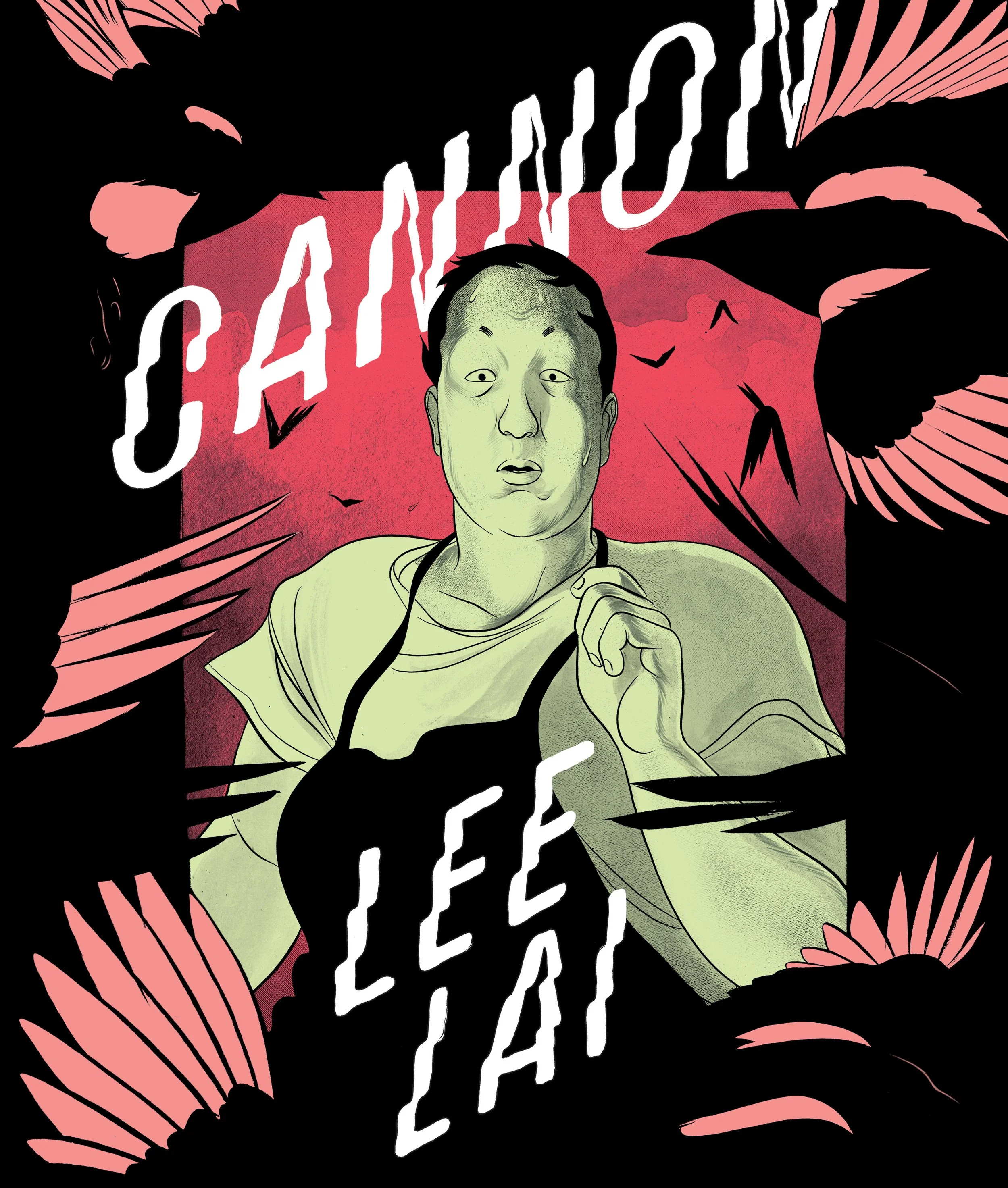
Cannon by Lee Lai $45
A funny, dark, emotionally turbulent slice of friendship strife. We arrive to wreckage: a restaurant smashed to rubble, with tables and chairs upended riotously. Under the swampy nighttime cover of a Montreal heatwave, we meet our protagonist, Cannon, dripping in beads of regret sweat. She was supposed to be closing the restaurant for the night, but instead, she destroyed it. The horror-scape left in her wake is not unlike the films Cannon and her best friend, Trish, watch together. Cooking dinner and digging into deep cuts of Australian horror movies on their scheduled weekly hangs has become the glue in their relationship. In high school, they were each other's lifeline — two queer second-generation Chinese nerds trapped in the suburbs. Now, on the uncool side of their twenties, the essentialness of one another feels harder to pin down. Yet when our stoic and unbendingly well-behaved Cannon finds herself very uncharacteristically surrounded by smashed plates, it is Trish who shows up to pull her out. In Cannon, the full palette of a nervous breakdown is just a part of what is on offer. Lai's sharp sense of humour and sensitive eye produce a story that explores the intimacy of queer friendship and weight of family responsibility, and breaks open the question of what we owe both to each other and to ourselves. [Hardback]
>>Look inside!
>>A growing fondness for confrontation.
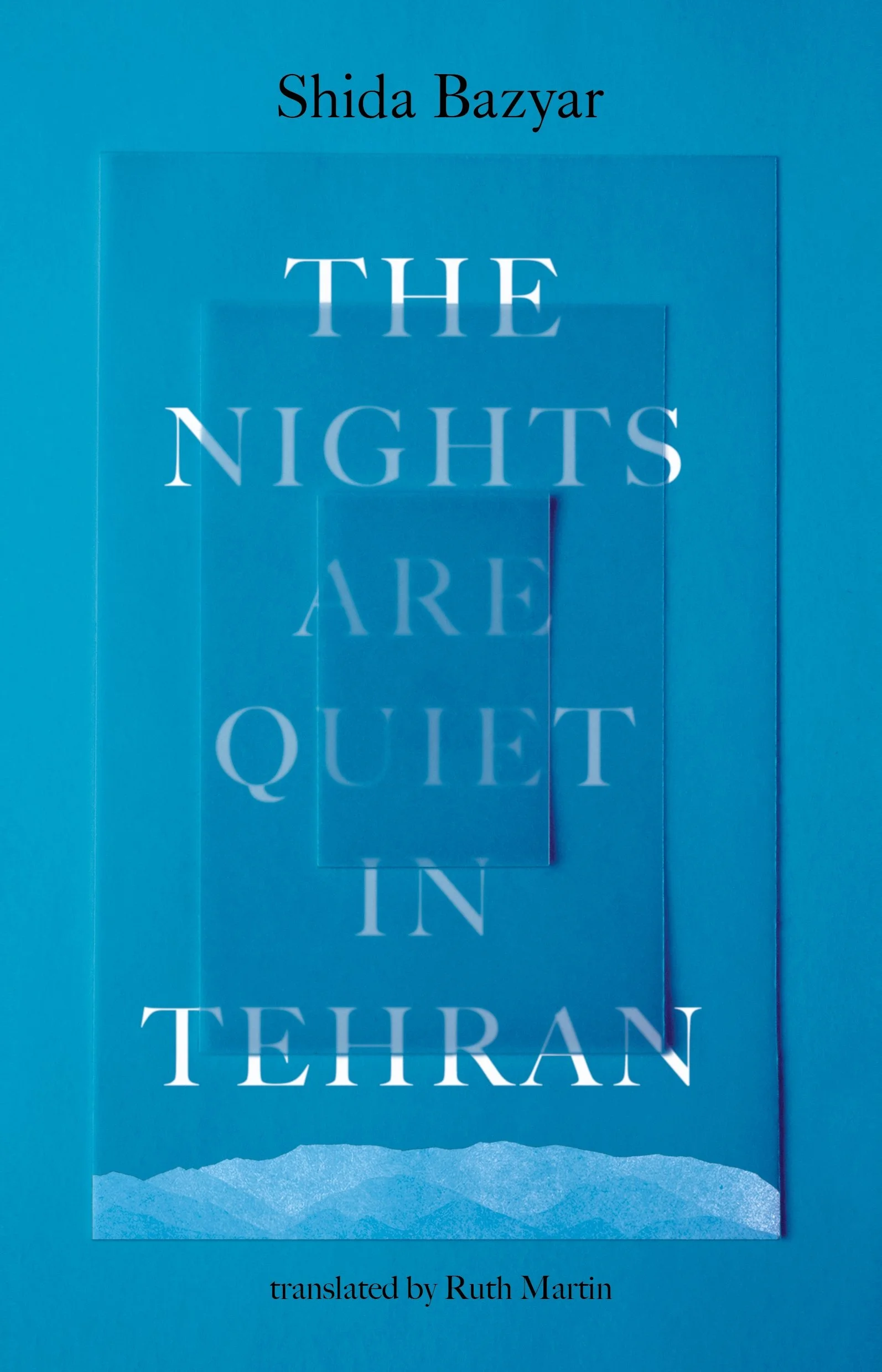
The Nights Are Quiet in Tehran by Shida Bazyar (translated from German by Ruth Martin) $37
A polyphonic novel of one family's flight from and return to Iran. 1979. Behsad, a young communist revolutionary, fights with his friends for a new order after the Shah's expulsion. He tells of sparking hope, of clandestine political actions, and of how he finds the love of his life in the courageous, intelligent Nahid. 1989. Nahid lives her new life in West Germany with Behsad. With their young children, they spend hour after hour in front of the radio, hoping for news from others who went into hiding after the mullahs came to power. 1999. Laleh returns to Iran with her mother, Nahid. Between beauty rituals and family secrets, she gets to know a Tehran that hardly matches her childhood memories. 2009. Laleh's brother Mo is more concerned with a friend's heartbreak than with student demonstrations in Germany. But then the Green Revolution breaks out in Iran and turns the world upside down. [Paperback]
Long-listed for the 2026 International Booker Prize.
"The Nights Are Quiet in Tehran fits the family novel mold in many ways: it spans generations, explores inherited trauma, and depicts the effects of politics on a family. This highly political and touching novel gives a great insight into the political situation in Iran. In translating this vision of authorial omnipotence — of an imagined freedom — Ruth Martin brings Shida Bazyar's politically urgent and thematically significant voice to English-speaking readers ... creating an experience that feels both immediate and compelling." —Ankita Harbola, Reading in Translation
"Bazyar's stories strike at the aching heart of exile. A pulsing longing for a better future lingers from its first page to its last. A quietly beautiful exploration of the trauma of losing one's homeland to a savage regime, the novel is testament to how hope and the revolutionary spirit endure in the face of crushing tyranny, how courage cannot be fully stamped out. It lies dormant, awaiting a time when it can again ignite new acts of bravery, new waves of revolution." —Rhoda Kwan, The Saturday Paper
>>Read an extract.
>>”The more we read, the less suseptible we will be to easy answers.”
>>Other books listed for the 2026 International Booker Prize.
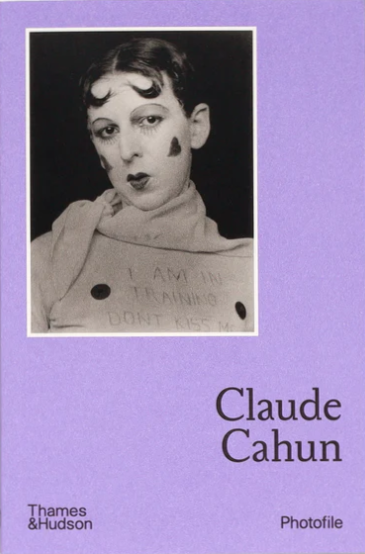
Claude Cahun: Photofile by François Leperlier $35
The perfect primer on the surrealist writer and photographer Claude Cahun. Claude Cahun (1894-1954), the chosen name of the artist born Lucy Schwob, was best known in their lifetime as a writer but built up a remarkable body of photographic work that only came to prominence after their death. Politically active and involved with a wide circle of artists and intellectuals, including the Surrealists, Cahun followed their own rules in both life and art. They are best known for their strikingly staged self-portraits, in which they used costumes, makeup and technical effects to tackle themes of identity and self-representation. Their love of symmetry, mirroring, repurposing and retouching was also reflected in their approach to other styles of photography, including portraiture, photomontage and still-life tableaux. Whether working alone or in collaboration with their life partner Marcel Moore (born Suzanne Malherbe), Claude Cahun was a pioneering figure in the aesthetics of modernity who never stopped crossing boundaries of gender and genre. The breadth of work in this selection shows their experiments on many fronts, anticipating photographers who followed them, including Cindy Sherman and Francesca Woodman. [Paperback with French flaps]
>>Look inside!
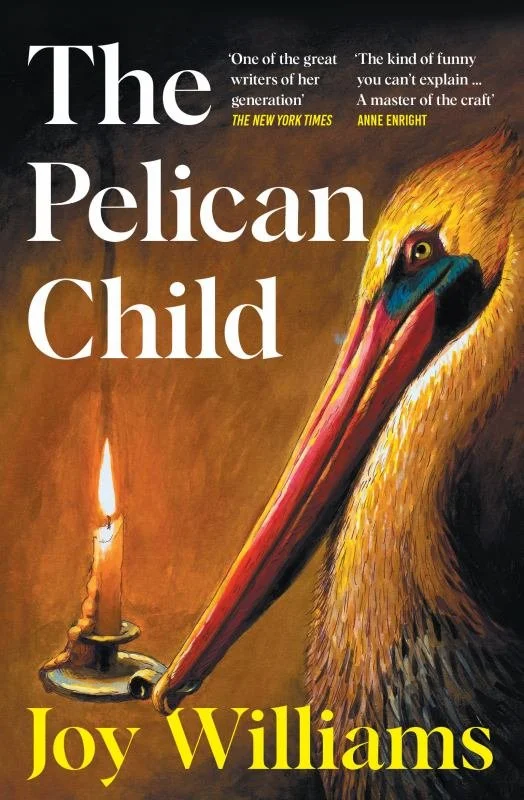
The Pelican Child by Joy Williams $30
Lauded by many as the best story writer of our time, Joy Williams returns with a taut collection that responds to our modern dilemmas with her signature dry wit and deftness of touch. In sinister and shifting landscapes, we meet souls lost and found: from the twin heiresses of a dirty industrial fortune, who must commit a violent act in recompense for their family's deeds, to a newly grown man who still revolves in a dreamscape of his childhood boarding-school innocence, to the ‘pelican child’, who lives with the bony, ill-tempered Baba Yaga in a little hut on chicken legs. [Paperback with French flaps]
”Pithy, spiky and defiantly strange. Williams hopes to reignite our sense of wonder in the world, so that we might be rallied to protect it. Here, at the height of her powers, she may just triumph.” —Financial Times
”My platonic ideal of a writer. Williams blends the real and fantastical and is very funny — sometimes cruelly so.” —Chris Power, Observer
”I've been a fan of Joy Williams since I first read her.” —Ali Smith
”Williams is the kind of funny you can't explain — a master of the craft.” —Anne Enright, Guardian
>>Read one of the stories.
>>And about that story!
>>Uncanny the singing that comes from certain husks.
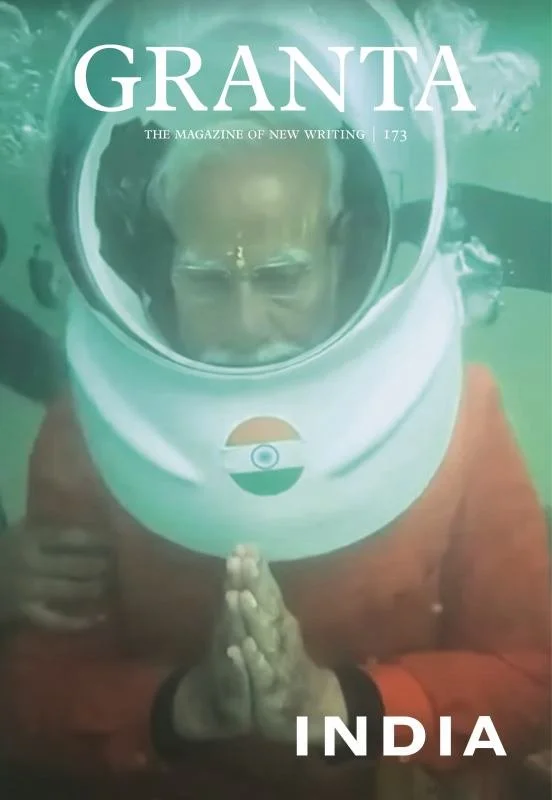
Granta 173: India edited by Thomas Meeney $35
India is familiar ground for Granta, having devoted two classic issues to the country, though much has changed since the last dispatch, published on the cusp of the Modi era. 173 features contemporary fiction and poetry in translation, as well as articles dedicated to the Indian space program; the bloody twilight of the Naxalites in Jharkhand; archaeology wars, Bollywood, jingoism, and national myth-making; the murder of Sikh separatist leader Hardeep Singh Nijjar in British Columbia; the delicate and fraught care for an ailing parent; as well as a historical introduction by the editor that situates contemporary controversies and aesthetic fault lines in perspective. Featuring non-fiction from Sujatha Gidla, Raghu Karnad, Karan Mahajan, Srinath Perur and Snigdha Poonam, as well as interviews with Salman Rushdie and Sanjay Subrahmanyam and a symposium on the languages of India. Fiction by Jeyamohan, Saharu Nusaiba Kannanari, Vivek Shanbhag, Geetanjali Shree and Devika Rege. Photography by Keerthana Kunnath, Yash Sheth (introduced by Ruchir Joshi) and Dayanita Singh (introduced by Amit Chaudhuri). And poetry by Arvind Krishna Mehrotra and Sumana Roy. [Paperbafck]
>>Read some extracts.
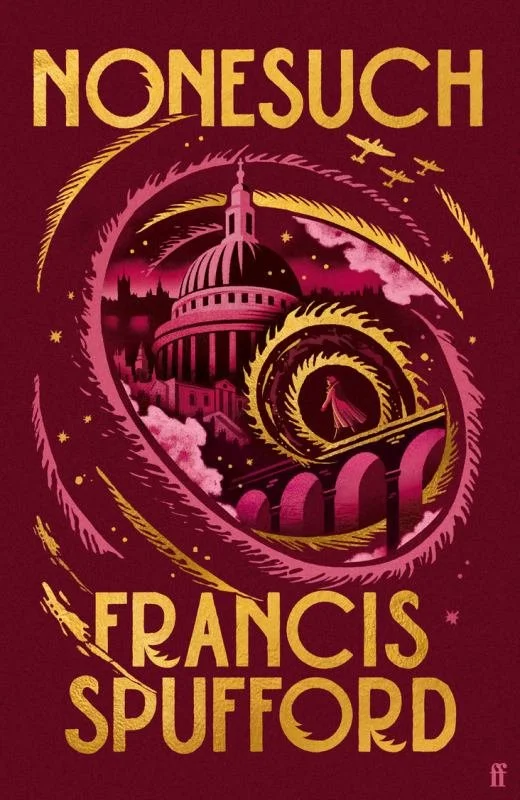
Nonesuch by Francis Spufford $38
It's the summer of 1939. London is on the brink of catastrophic war. Iris Hawkins, an ambitious young woman in the stuffy world of City finance, has a chance encounter with Geoff, a technical whizz at the BBC's nascent television unit. What was supposed to be one night of abandon draws her instead into an adventure of otherworldly pursuit — into a reality where time bends, spirits can be summoned, and history hangs by a thread. Soon there are Nazi planes overhead. But Iris has more to contend with than the terrors of the Blitz. Over the rooftops of burning London, in the twisted passages between past and present, a fascist fanatic is travelling with a gun in her hand. And only Iris can stop her from altering the course of history forever. [Paperback]
’What a joy! A novel with endless ingenuity and enormous heart.” —Kaliane Bradley
”One of the finest prose stylists of his generation.” —The Times
”One of the most original minds in contemporary literature.” —Nick Hornby
”A tremendously varied and surprising writer.” —Guardian
>>A dazzling sweep.
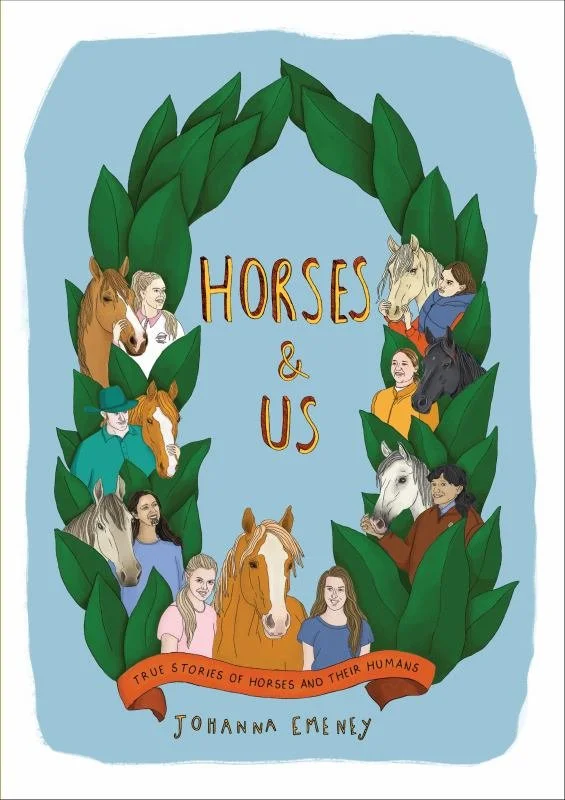
Horses and Us: True stories of horses and their humans by Johanna Emeney $37
Horses & Us brings together 23 true stories from across Aotearoa which show the incredible things that are achieved when humans and horses come together. With illustrations by award-winning artists as well as poems, artworks and photographs, Horses & Us is a big-hearted, moving and engaging celebration of the animals we love and the people who love them. [Paperback]
>>Look inside!
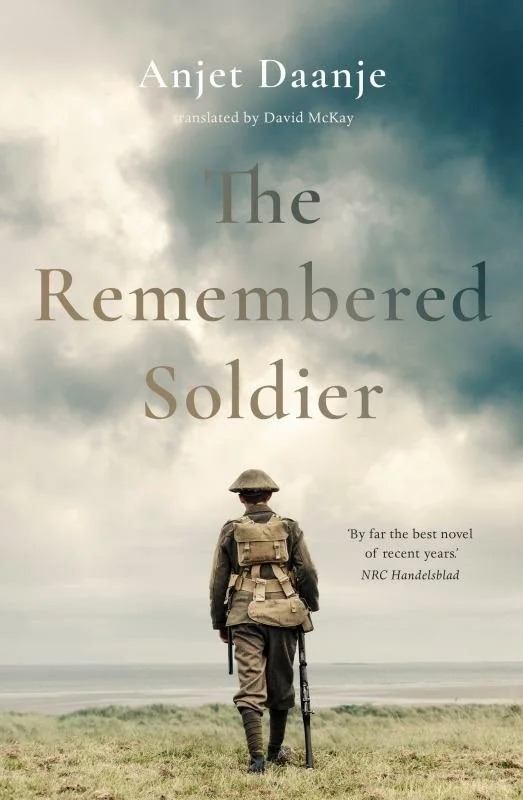
The Remembered Soldier by Anjet Daanje (translated from Dutch by David McKay) $46
Flanders 1922. After serving as a soldier in World War I, Noon Merckem has lost his memory and lives in a psychiatric asylum. Countless women, responding to a newspaper advertisement, visit him there in the hope of finding their spouse who vanished in battle. One day a woman, Julienne, appears and recognises Noon as her husband, the photographer Amand Coppens, and takes him home against medical advice. But their miraculous reunion doesn't turn out the way that Julienne wants her envious friends to believe. Only gradually do the two grow close, and Amand's biography is pieced together on the basis of Julienne's stories about him. But how can he be certain that she's telling the truth? In The Remembered Soldier, Anjet Daanje immerses us in the psyche of a war-traumatised man who has lost his identity. When Amand comes to doubt Julienne's word, the reader is caught up in a riveting spiral of confusion that only the greatest works of literature can achieve. [Paperback]
Long-listed for the 2026 International Booker Prize.
”A soldier without his memory; a wife in search of her missing husband — if you thought that all war stories were the same, not so. Some years after the Great War, Noon Merckem is found wandering in a field in Belgium, amnesiac and adrift. In time, he is claimed, but it is not so easy to return to an elusive past. In Daanje’s hands, and in McKay’s intuitive translation, the ravages and shellshock of the First World War are superbly traced – but the big question at the heart of this novel is how far humans will go in order to love, how fiercely they will fight for what they intend to have and to hold.” —International Booker Prize judges’ citation
>>Read an extract.
>>Reading about other people.
>>Other books listed for the 2026 International Booker Prize.
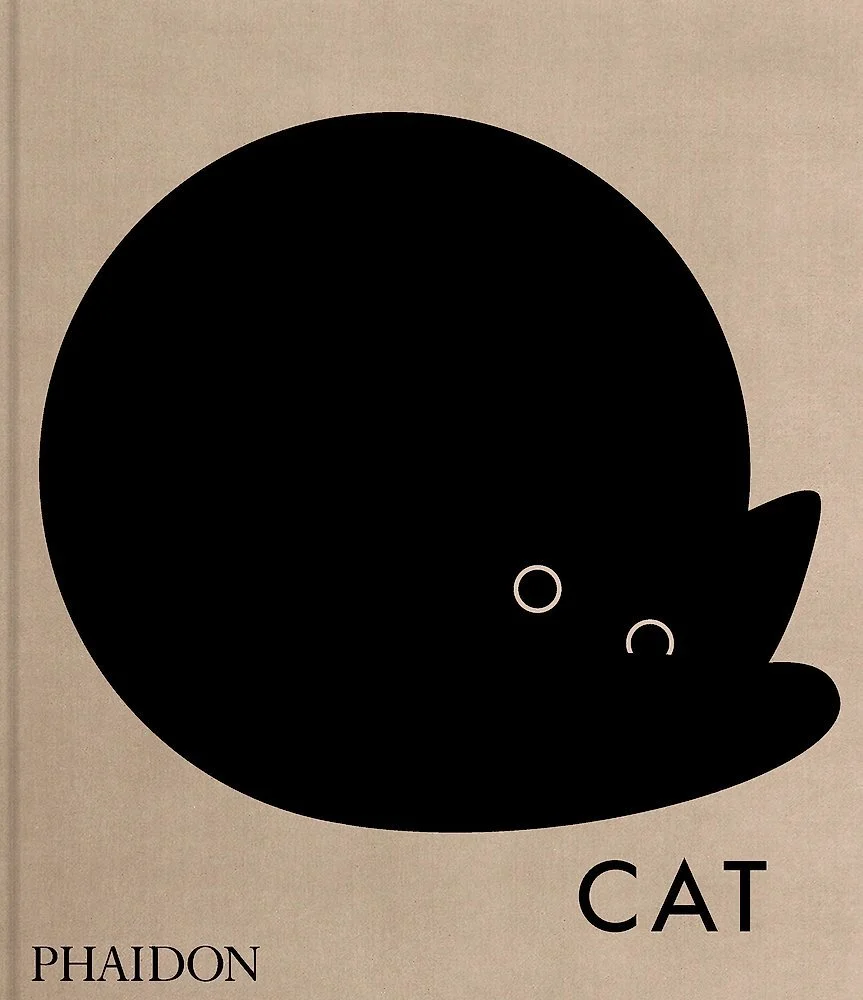
Cat $80
A stunning, large-format collection of more than 200 stunning images, Cat is a comprehensive yet playful celebration of the house cat in art and popular culture. Thoughtfully paired to reveal intriguing juxtapositions, these diverse works showcase the exciting ways the cat has inspired across time and cultures. From tabbies to tortoiseshells, Japanese maneki-neko lucky cats to artists pets, and ancient mosaics to contemporary couture, this book revels in the undeniable aesthetic appeal of our feline friends. Essays by Hannah Shaw, also known as Kitten Lady, and Leila Jarbouai trace humanity s symbiotic relationship with cats through the lens of visual culture and empathetically connect us to this cherished animal in images. Your cat wants this book in your house. [Hardback]
>>Look inside!
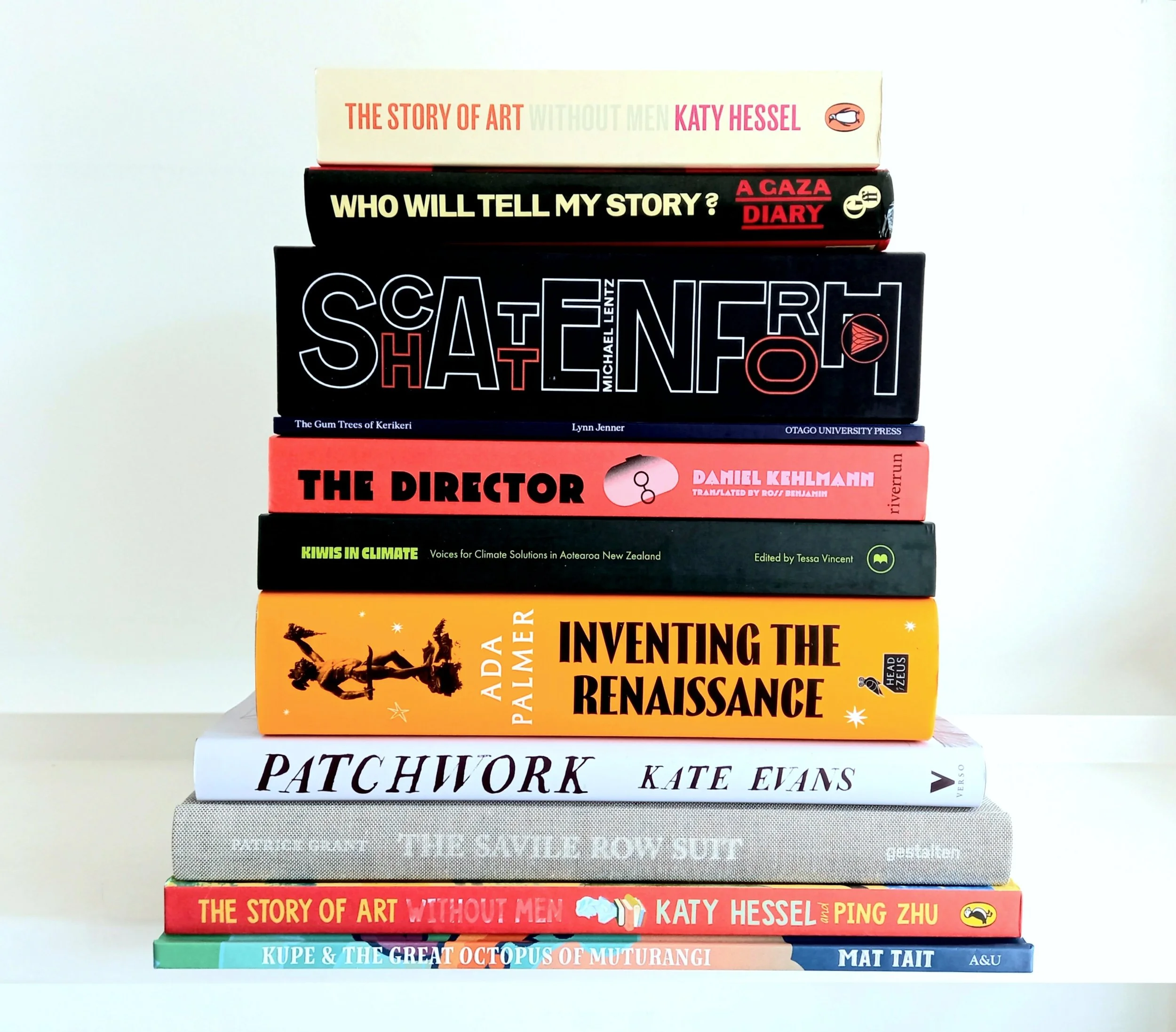
All your choices are good! Click through to our website (or just email us) to secure your copies. We will dispatch your books by overnight courier or have them ready to collect from our door in Church Street, Whakatū.
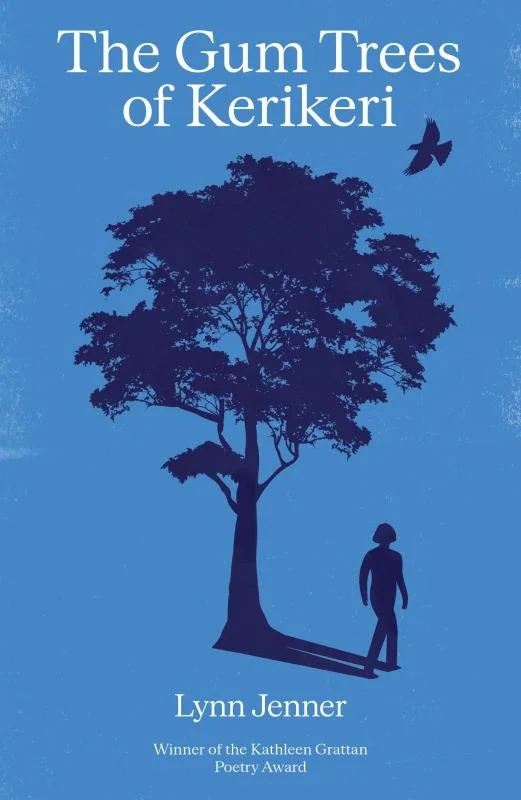
The Gum Trees of Kerikeri by Lynn Jenner $30
Grounded in the natural world and the community of the land the speaker lives on — an area in the far north of Aotearoa New Zealand that was once a kauri forest — this collection of prose poems weaves observations and encounters from daily life with musings on societal and environmental issues, memory, history, art and culture. The result is a deeply observant, reflective collection on that most challenging of constants: change. From the opening poem, Jenner traces how this land has been transformed since the late nineteenth century. Where kauri forest once stood there have been gumfields, orchards, dairy farms, lavender rows and now tourist accommodation. Humans and landscapes alike continue to be altered over time, but Jenner asks that we not forget the past. Across 56 finely tuned prose poems, Jenner’s technical restraint and precision allow her explorations to unfold with calm, measured power. She draws connections between people, place and creative practice, examining how time, art and memory shape our sense of belonging. The Gum Trees of Kerikeri is a thoughtful, sensitively balanced work that shows how close observation can uncover new understandings of the world and our own circumstances — even as the speaker sometimes doubts that any of it is useful in a world speeding towards catastrophe. Winner of the 2025 Kathleen Grattan Poetry Award. [Paperback]
”Jenner’s sensitive engagement with the world reminds us that poetry can be found in the smallest moments of our day-to-day lives and how such moments become intertwined with a much larger tapestry of human experience. —Chris Tse
>>On the up.
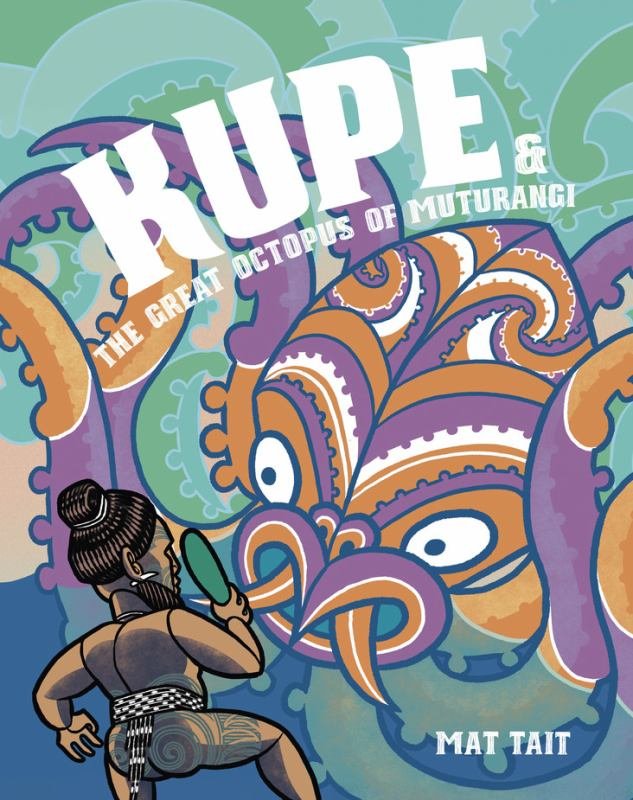
Kupe and the Great Octopus of Muturangi by Mat Tait $30
Kupe found that a huge, fearsome wheke was taking all the fish in the ocean and the people of Hawaiki had nothing to eat. So Kupe chased that wheke across Te Moana-nui-a-Kiwa. Finally Hine-te-Aparangi, Kupe's wife, saw land and a long white cloud: Aotearoa! Find out what happened when the wheke and Kupe had a massive battle (and why you should cover your eyes when passing certain rocks). [Hardback]
>>Look inside!
>>Mat Tait’s Te Wehenga was named the 2023 Margaret Mahy Book of the Year.
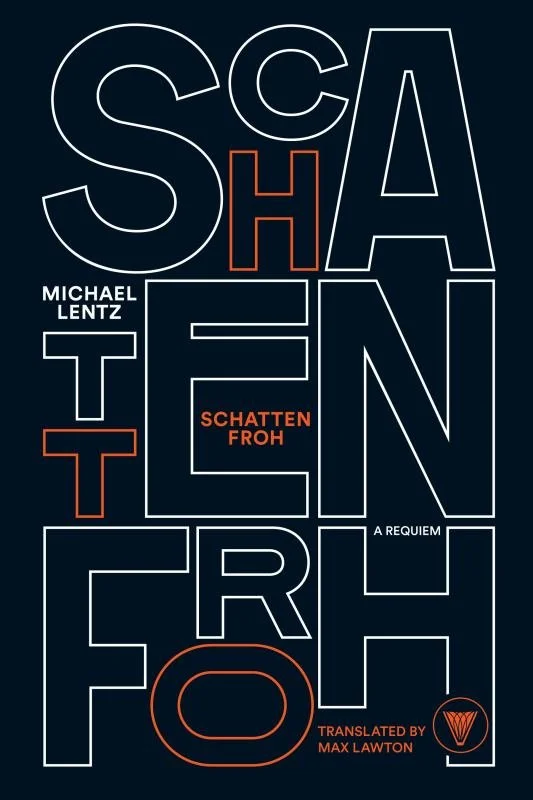
Schattenfroh by Michael Lentz (translated from German by Max Lawton) $58
A bizarre and troubling novel for our bizarre and troubling times — an intricate, metaphysical, ambitious, thousand-page ‘psychogeography of the self’ that both disrupts and elevates the 21st century vision of the novel. Our narrator is held in complete darkness and isolation. His endless thoughts are turned into the book we are reading — Schattenfroh — directed by none other than the narrator's mysterious jailer by the same name. Undulating through explorations of Renaissance art, the German reformation, time-defying esoterica, the printing process in the 16th century, Kabbalistic mysticism, and beyond, Schattenfroh is a remarkable book that, in turn, asks the remarkable of its readers. Interruptions, breaks, and annotations both buoy and deceive, and endless historical references, literary allusions, and wordplay construct a baroque, encyclopedic quest. [Paperback]
"One of the great, and greatly demanding, literary pleasures of the year." —The New York Times
"Schattenfroh is extremely long and prodigiously learned, with scenes — and even sentences — that veer from one century to another, and with a taste for literary and art historical in-jokes that might try the patience of even the most erudite reader. All the more impressive, then, is Max Lawton's translation, which renders Lentz's flinty though extravagant German into English sentences that are clear, nimble, and frankly full of beans, capturing the propulsive energy of the original text without sacrificing its difficulty." —New York Review of Books
"Michael Lentz's Schattenfroh attempts to tell the history of the annihilated world. Yet Lentz constantly prods his reader to ask who the author of that history is, and what they might be leaving out, despite their claims to completeness." —Cleveland Review of Books
"What does Schattenfroh do? Intrigue, frustrate, hypnotise, even — yes — entertain, after a certain point. What novels are supposed to do, in other words — which, we begin to realise, is not actually to create Presence but to carve around it." —Los Angeles Review of Books
"The best stuff in the book — the nightmare visionary parts whose eeriness is enhanced by the hypnotic state the book has put you in — are a kind of unconscious registration of the very scenario in which we find ourselves: the encroachment of ever more unforgivingly capitalist forms of cultural streamlining, of AI that purports to write and compose and make movies." —The Baffler
>>A fable about totalitarianism written in brain-fluid.
>>Devil and invention.
>>The genesis of Schattenfroh.
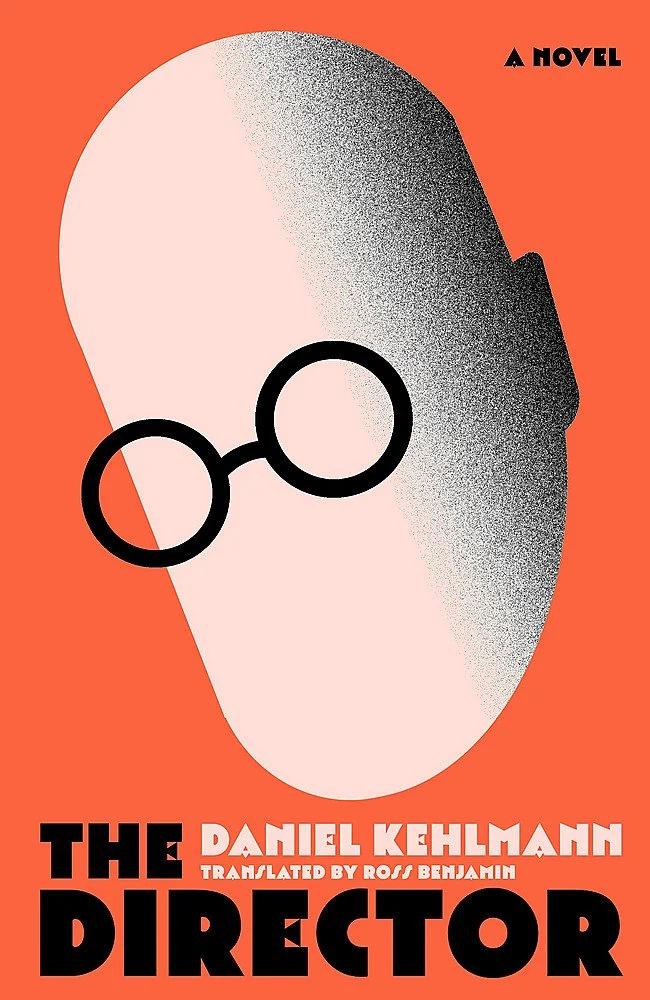
The Director by Daniel Kehlmann (translated from German by Ross Benjamin) $38
G.W. Pabst, one of cinema's greatest, perhaps the greatest director of his era: when the Nazis seized power he was filming in France, to escape the horrors of the new Germany he flees to Hollywood. But under the blinding California sun, the world-famous director suddenly looks like a nobody. Not even Greta Garbo, who he made famous, can help him. And thus, almost through no fault of his own, he finds himself back in his homeland of Austria, which is now called Ostmark. The returning family is confronted with the barbaric nature of the regime. But Goebbels, the minister of propaganda in Berlin, wants the film genius, he won't take no for an answer and makes big promises. While Pabst still believes that he will be able to resist these advances, that he will not submit to any dictatorship other than art, he has already taken the first steps into a hopeless entanglement. [Paperback]
”In The Director, Daniel Kehlmann performs a literary panning shot over the career of real-life filmmaker G. W. Pabst and charts the ways in which Nazi ideology leaked into the arts during Europe’s occupation. Where is the line between survival and collaboration? And can art survive the moral bankruptcy of its makers? It’s hard to imagine any writer tackling such hefty themes with lightness, yet Kehlmann does just this, writing compassionately, humorously and unsparingly from the perspectives of his complex characters, guiding the reader through the moral maze. Translator Ross Benjamin writes each shifting voice and set-up with the nuance they demand in a juggling act of wit and gravity that shouldn’t look this easy. Deeply intelligent, ambitiously structured and unputdownable.” —International Booker Prize judges’ citation
”A wonderful book about complicity and the complicity of art. It's also funny, and brilliant.” —Zadie Smith
”Daniel Kehlmann is shockingly brilliant, a writer of extraordinary range and grace. At times absurdist, at times horrifyingly realist, The Director asks where the moral duty of the artist resides, and how the narcissism of the artistic project can bleed into complicity.” —Lauren Groff
”The Director is engrossing and luminous, an epic act of historical imagination and an intimate parable about moral compromise and the seductions of art. After Tyll, I wasn't sure how Kehlmann could possibly top himself. He has. This book is a marvel” —Ayad Akhtar
”Daniel Kehlmann, the finest German writer of his generation, takes on the life of the eminent film director G. W. Pabst to weave a tragicomic historical fantasia that stretches from Hollywood to Nazi Germany, from Garbo to Goebbels, to show how even a great artist can make, and be unmade by, moral compromises with evil. A dazzling performance and a real page turner.” —Salman Rushdie
”An incomparably accomplished and inventive piece of fiction by one of the most intelligent novelists at work today.” —Jeffrey Eugenides
>>Read an extract.
>>The fate of the artist under totalitarianism.
>>Complicity.
>>Opening the door.
>>Some films of G.W. Pabst.
>>Other books long-listed for the 2026 International Booker Prize.
Inventing the Renaissance: Myths of a Golden Age by Ada Palmer $70
The Renaissance is one of the most studied and celebrated eras of history. Spanning the end of the Middle Ages to the beginning of modernity, it has come to symbolise the transformative rebirth of knowledge, art, culture and political thought in Europe. And for the last two hundred years, historians have struggled to describe what makes this famous golden age unique. In Inventing the Renaissance, Ada Palmer provides a fresh perspective on what makes this epoch so captivating. Her witty and irreverent journey through the fantasies historians have constructed about the period show how its legend derives more from later centuries' mythmaking than from the often grim reality of the period itself. She examines its defining figures and movements: the enduring legacy of Niccolò Machiavelli, the rediscovery of the classics, the rise of the Medici and fall of the Borgias, the astonishing artistic achievements of Michelangelo, Leonardo, and Cellini, the impact of the Inquisition and the expansion of secular Humanism. Palmer also explores the ties between culture and money: books, for example, could cost as much as grand houses, so the period's innovative thinkers could only thrive with the help of the super-rich. She offers fifteen provocative and entertaining character portraits of Renaissance men and women, some famous, some obscure, whose intersecting lives show how the real Renaissance was more unexpected, more international and, above all, more desperate than its golden reputation suggests. [Hardback]
”Inventing the Renaissance does something magical: it manages to take a tightly-held conviction (that there was a thing in European history called 'the Renaissance'), dismantle it with humor and intelligence, then put it back together as something different and more true to the past itself. But maybe more importantly, Palmer's expertise and storytelling helps us better understand how golden ages are imagined, and why rejecting those invented constructions of the past provides us with hope as we confront our own contemporary world. As she says herself: 'we can do better than the Renaissance.” —Matthew Gabriele
”An urgent corrective to modern myths about an ill-used past. Palmer has written a vital, absorbing and incredibly entertaining history of the so-called Renaissance. Challenging conventional wisdom, Inventing the Renaissance delves deep into the historical circumstances that have given rise to one of the most pervasive and frustrating narratives of the early modern period. It is a must read for all history enthusiasts.” —Eleanor Janega
>>Where did the idea of the Renaissance come from?
>>Golden and Dark Ages.
Patchwork: A graphic biography of Jane Austen by Kate Evans $37
In her later years, Jane Austen made a patch-work quilt. She folded thousands of tiny scraps of fabric over diamond-shaped slips of paper and painstakingly stitched them together. Kate Evans employs these slivers of cloth to illustrate Jane Austen's life story. Evans teases apart the threads that connect Austen's beloved novels, the events of her life, and the fabric of society in Regency England. Kate Evans has an ability to marry drama, comedy, and historically immersive detail, bringing Austen's story to life with fluid, dynamic artwork, at times embroidered onto cloth itself. The author's love for Austen shines throughout. Her eye for historical detail — panes of glass, bits of lace, hedgelaying styles, the cut of a coat or the architecture of a Hampshire cottage — creates a captivating vision of Jane Austen's world. Evans is always cognisant, as well, of the political, economic and social contexts which defined Austen’s place in the world. [Hardback]
>>Look inside!
>>The threads of empire.
>>What you didn’t know about Jane Austen.
Who Will Tell My Story? A Gaza diary [Anonymous] $30
”It was a sleepless night full of tears and fear . . . I am not sure — if I make it out alive — if I will still possess what makes me, me. And I wonder: will I be there in the future, or will I be someone to be remembered in a diary or over a cup of tea by a friend after I am gone?” This diary presents an ordinary existence interrupted by unfathomably seismic and unjust events. On the ground during the first months of the assault on Gaza following the events of 7 October, the author of this diary — first published in The Guardian — maps out the physical and psychological terrain of a life under siege. Traversing the bombed ruins of his country, we see him as he searches for foodstuffs and power to charge devices, maintaining contact with the outside world, checking in with his friends and family along the way; we see his heart swing between despair and faith, fear and optimism, his mind imagining different futures and confronting the brutal truth of his present.Shining a light on the fate of all those living through war and occupation, Who Will Tell My Story? conveys with astonishing clarity how seeds of hope might linger amid the most trying of times. The author is a Palestinian man in his thirties. He lived in Gaza with his family and contributed a diary to The Guardian newspaper following the attacks on Gaza after the events of October 7th, 2023. After some time, he was able to flee the country; he hopes to return to his home. [Hardback]
>>The entries, as we read them.
The Savile Row Suit: The art of bespoke tailoring by Patrick Grant, illustrated by Oriana Fenwick $70 (special price)
Very useful and clear, this book provides a step-by-step guide on the creation of the perfect suit. Through detailed illustrations and comprehensive text, readers will gain an understanding of the tailoring process, from measuring to fit and fabric selection. From suits to trousers and waistcoats, this contemporary instructional manual is the guide to creating a timeless classic and how to wear it. In addition to being a practical guide, The Savile Row Suit also offers a history on the tradition of Savile Row tailoring, providing insights into the ethos, the craftsmanship, materials and culture that have made Savile Row the most respected tailoring location in the world. [Hardback]
>>Look inside!
The Story of Art Without Men: An illustrated guide to amazing women artists by Katy Hessell, illustrated by Ping Zhu $50
Step into the incredible lives of the women artists who have gone uncelebrated for too long, in this lively version for children of Hessell’s landmark book. Journey through history, from the Renaissance to the Second World War, and across the globe, from Cornwall to Manhattan, Nigeria, Japan and more, to discover the stories of women who changed the world with their incredible art. You'll learn about the extraordinary lives of freedom fighters, game changers and adventurers - and be astounded by the art they made, with its striking landscapes, hidden messages and calls for women's rights. Based on the bestselling book The Story of Art Without Men, this version includes breathtaking illustrations and a host of new art and artists to discover. [Large-format hardback]
>>Look inside!
The Story of Art Without Men by Katy Hessell $35
How many women artists do you know? Who makes art history? Did women even work as artists before the twentieth century? And what is the Baroque anyway? Discover the glittering Sofonisba Anguissola of the Renaissance, the radical work of Harriet Powers in the nineteenth-century USA and the artist who really invented the Readymade. Explore the Dutch Golden Age, the astonishing work of post-War artists in Latin America and the women artists defining art in the 2020s. Have your sense of art history overturned, and your eyes opened to many art forms often overlooked or dismissed. From the Cornish coast to Manhattan, Nigeria to Japan, this is the history of art as it's never been told before. Fully illustrated. [Now in paperback]
”A long overdue, revisionist history of art by the brilliant Katy Hessel. Never stuffy or supercilious, Hessel's book is a revelation and an important first step towards redressing the balance of an art world in which women have been sidelined, stepped over and trampled upon for far too long.” —Refinery29
“This book changes everything.” —Ali Smith
Kiwis in Climate: Voices for claimate solutions in Aotearoa New Zealand edited by Tessa Vincent $45
Kiwis in Climate brings together practical visions for Aotearoa to lead on climate solutions. Scientists, politicians, CEOs and citizens demonstrate what we are doing now — and what we must do — to mitigate and adapt to the impacts of climate change. Over 30 New Zealanders explain how climate solutions can improve our lives, from cheaper energy to job creation and healthier communities. [Paperback]
>>A book for everyone.
Don’t miss out on the excellent books in our March FICTION SALE. Click through to our website to browse and make your choices. Single copies only are available at these prices for most of these titles, so don’t hesitate — make a discovery! A new book is a promise of good times ahead!
And to really make the most of your fiction(al) budget, have a look at our ‘Snips’ — intelligent books at ridiculous prices:
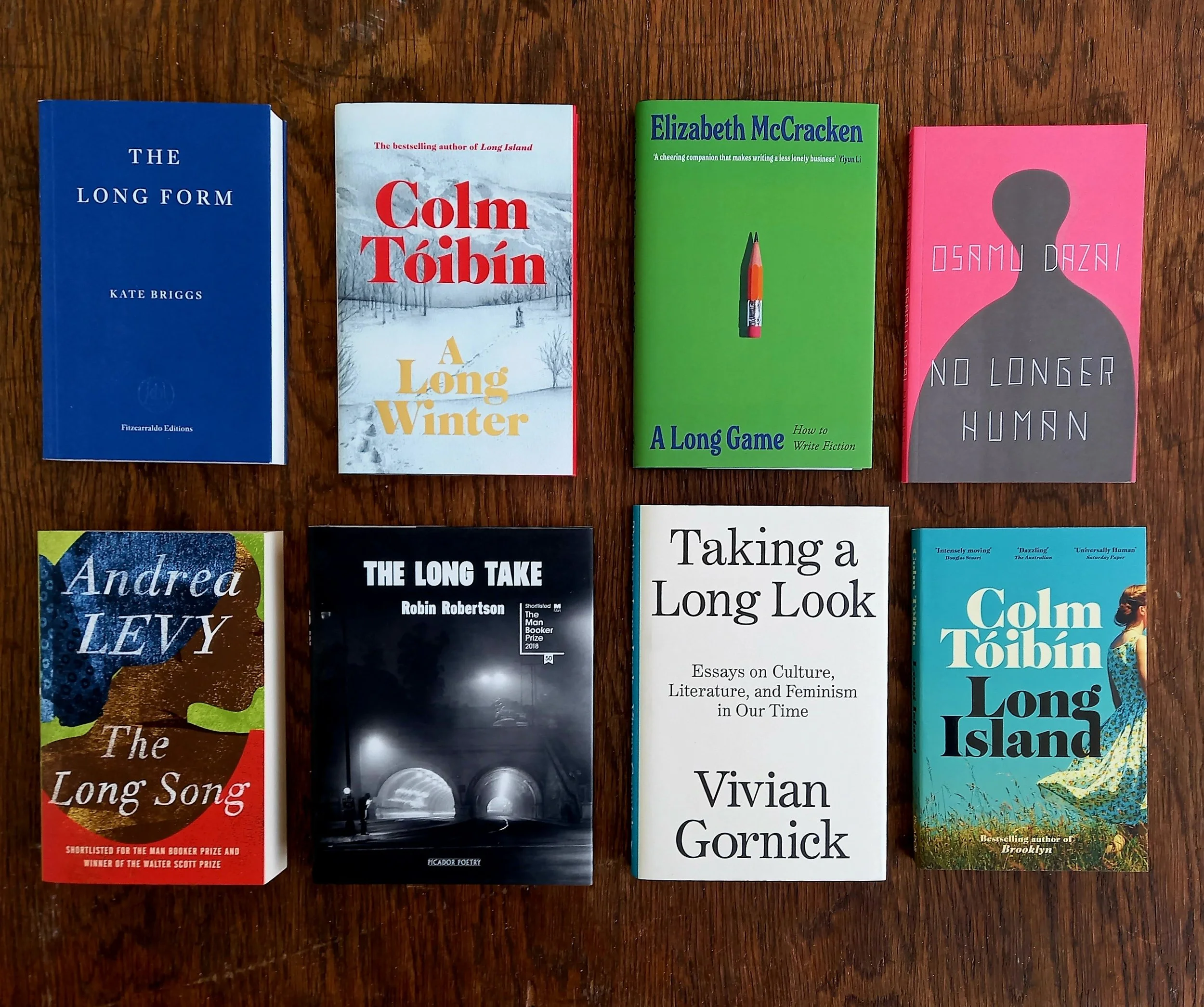
A selection of books from our shelves. Click through to find out more:
Read our latest newsletter.
Browse our March Fiction Sale.
20 March 2026
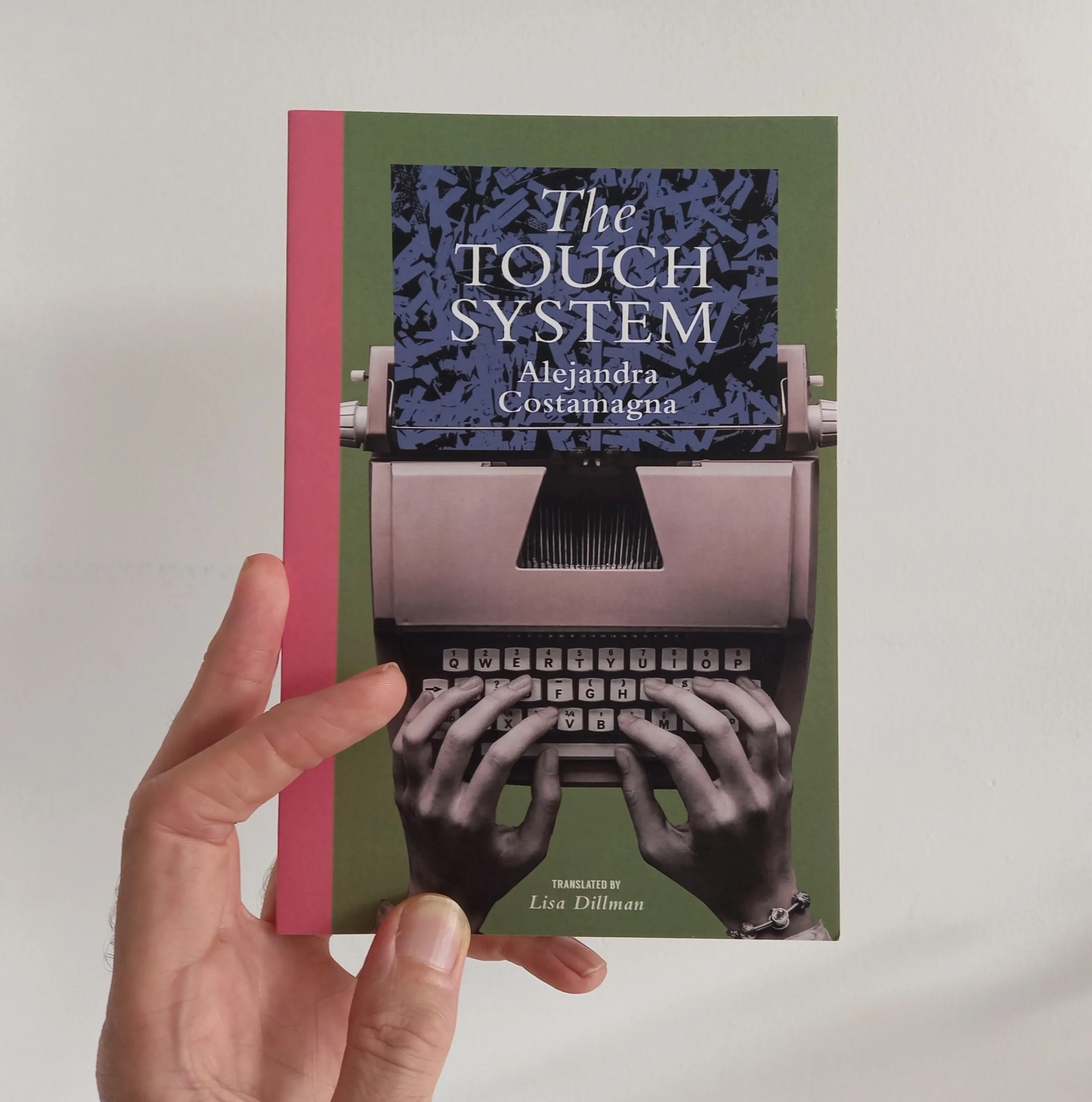
I was drawn to this novel firstly by the cover. Who can resist a typewriter? And then by the description of a story pieced together by encyclopedic entries, typewriter exercises, immigration manual snippets, and snapshot interludes. That it is also published by the interesting and excellent Transit Books and the author is Chilean all added to this one finding a place on my shelf. Ania is a woman, about 40, who is in limbo. She has quit teaching and pet-sits for a bit of cash; her father has remarried and has ‘another family’ — one which Ania feels ousts her from her place as ‘daughter’; and her boyfriend is a remote figure in this story — whether this is her perspective or a reality we never know. And this is what hooks you in — Ania always seems like she is looking in, but never really participating. Her present is something she wishes to escape from and her past haunts her yet draws her back — seems to have a hold on her. This is a story about exile and migration, about worlds cleaved between past and present but inextricably linked. It’s a tale of never quite fitting in — an exploration of what belonging is and whether it can be truly achieved if you are severed from a part of yourself (whether that be literally, as in physical space, or metaphorically, as in a mental state). When Ania's uncle Augustin dies, her father asks her to go to Argentina in his place (he is unable to leave Chile while his wife is convalescing). Crossing the mountains brings back memories of her childhood summers spent with her grandparents and extended family. Every summer she would spend months as the ‘Chilenita’ — her otherness the role cast for her. Yet she was not the only outcast. Nelida (Augustin’s mother), the young bride who came from Italy and never adjusted, spends her days in the cool of her dark room slowly subsiding into madness (or sadness). Augustin wants to escape his home but doesn’t have the courage to abandon his family, so faithfully takes his typing lessons and remains bound to his mother. He is enamoured of his friend Garigilo’s ease of being and infatuated with Ania. The reader is left to pull the threads together about the state of the relationships between these characters. It seems as though something has occurred that has had an impact on all three, yet the action, if there was one, has happened off the pages, beyond the book, and it is only a residue — an unsaid feeling — that circles beneath Ania. Returning to the town, the memories of childhood are both threatening and endearing. Here she has a role, she is the ‘Chilenita’. As she is drawn into the vortex of her own past, she thinks about her family and their life as migrants from Italy. Her childhood memories butt up against her adult knowledge. What allowed her father to find his escape, while Augustin was stuck in time and place? Why did Nelida find it so hard to adjust, and does she carry a similar burden? What is the way forward if you are an exile in your own life or mind? Costamagna’s writing effortlessly moves across characters and time. The typewriter exercise, family snapshots, and encyclopedia entries give the reader pause as well as context and are interwoven between the unfolding narrative at just the right pitch. The Touch System is a beautiful example of fine writing and intriguing themes — a novel that compulsively draws you in where you are at fingertip distance of something palpable.